Sharp Unveils Prototype VR Controller, Combining Haptic Gloves & Standard Buttons

9

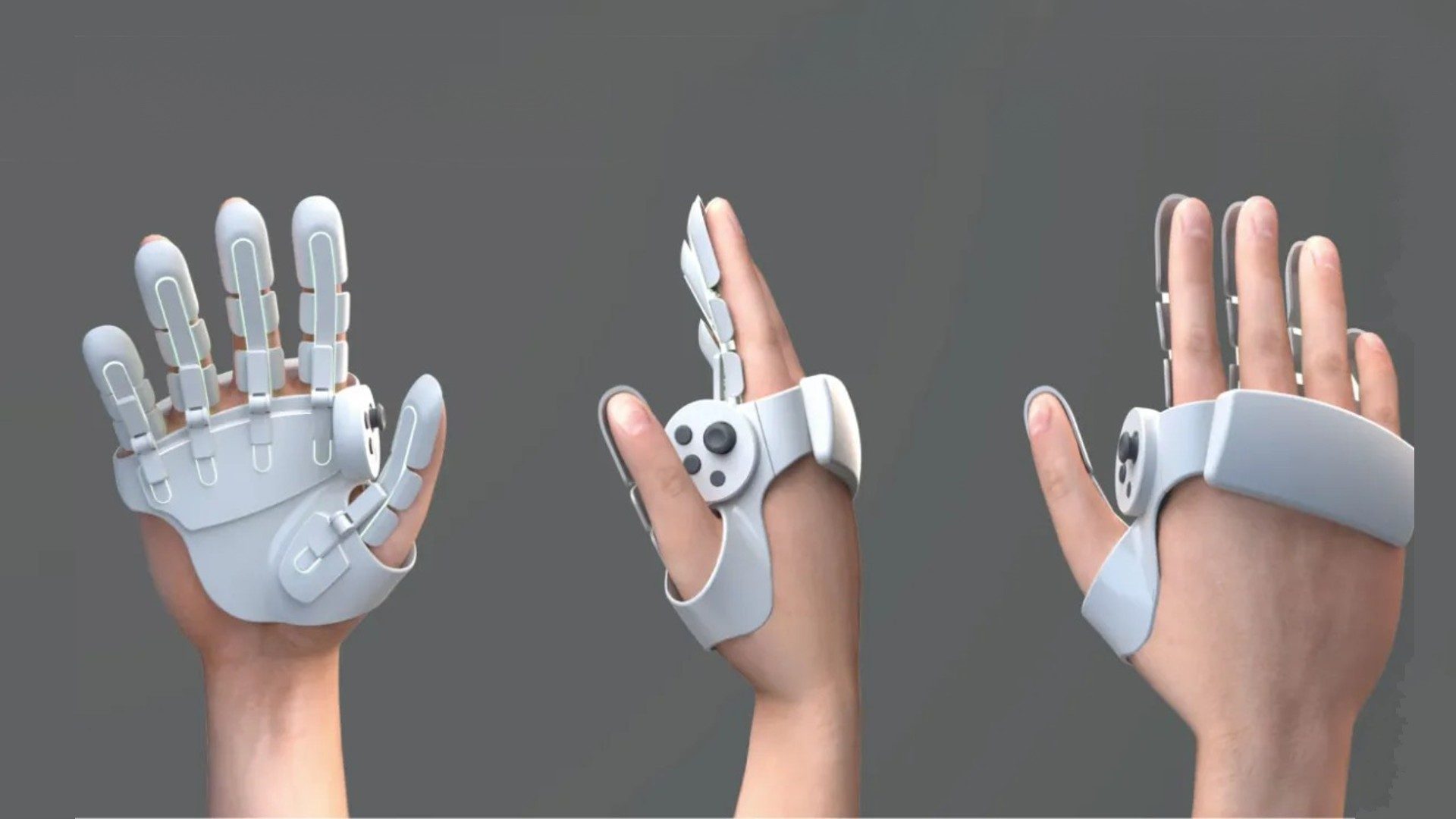
Sharp announced it’s releasing a prototype VR haptic controller in Japan, which aims to reproduce the sense of touch in VR while serving a familiar button layout.

Japan-based Sharp says its VR haptic controllers can let users sense texture thanks to “multi-segmented tactile elements” placed on the device’s fingertips. Various vibration patterns on the surface are meant to convey different textures, such as smooth, rough, etc., the company says.

“Although the haptics are not at a level that reproduces the real thing, by changing the parameters we have been able to achieve a variety of tactile sensations,” Sharp says on the project’s Japan-facing website. “Rather than leaving it in-house until the developers are satisfied with it, we plan to work with our users to improve the quality of the content.”
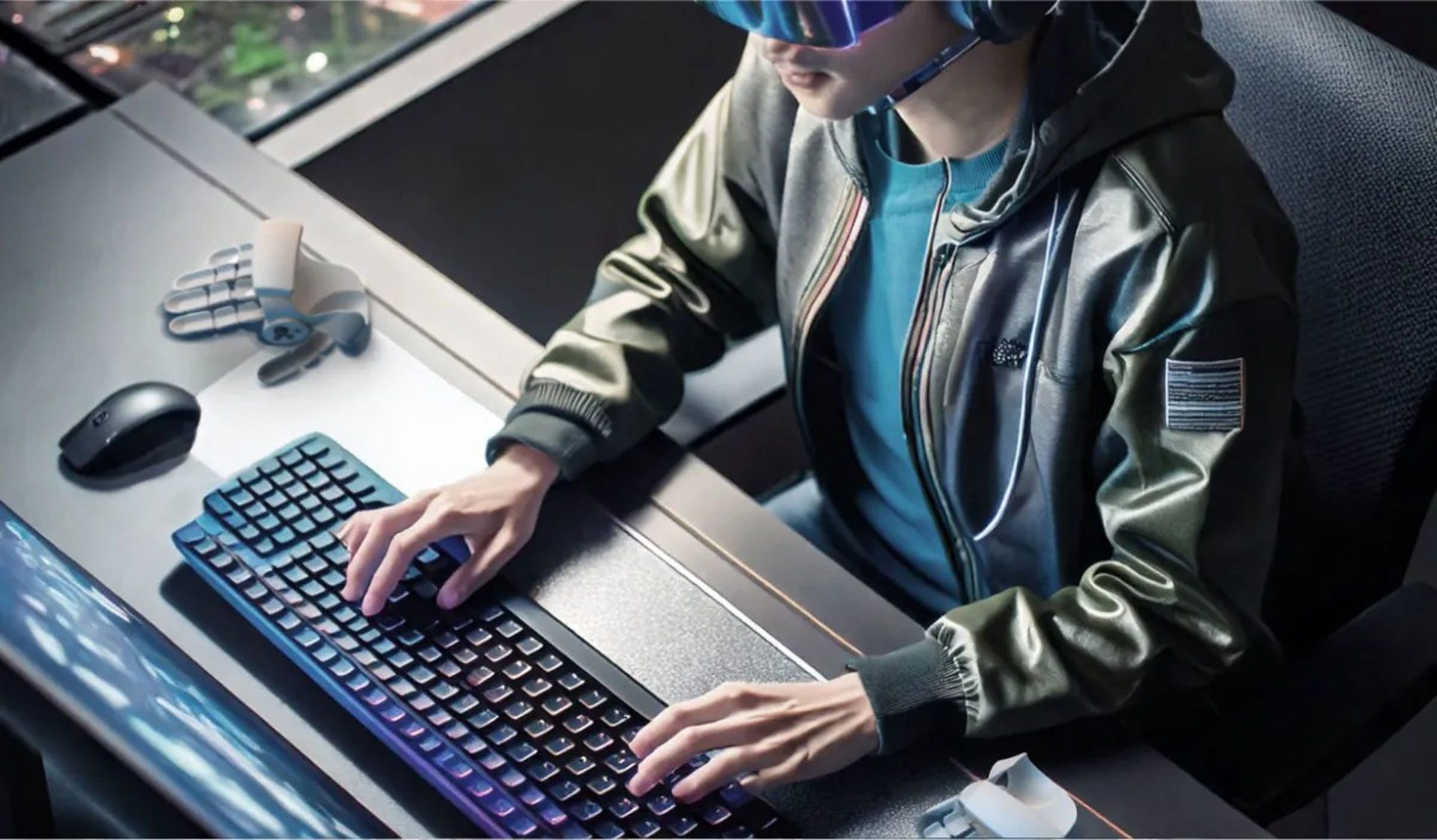
Image courtesy Sharp

Sharp says the device, which will arrive in a left and right pair, “does not allow for delicate finger tracking like glove types.” It also lacks force feedback, or any sort of temperature feedback.

The prototype is supposed to also function like a standard controller, including sticks and buttons, the company says. One thing that isn’t clear though is how the gloves will be tracked, which Sharp says could include mounts for “high market share” tracking standards.

SEE ALSO
Godot Gets Big OpenXR Update Aiming to Attract XR Devs from Unity

Sharp says the device is currently undergoing demonstration experiments, so it’s not clear whether it will eventually be commercialized; we haven’t seen anything beyond renders at this time. The company is aiming to put early iterations of the device in the hands of the paying public though, at least in Japan.

The company recently closed pre-registrations through its Japan-facing website, pricing units at ¥100,000 (~$680). “Please note that development or release may be canceled,” the company warns.

Granted, Sharp has more experience in XR than you might think. As the leading OEM supplier of high-end VR displays, at one time Sharp was the top display supplier for Meta Quest 2. In late 2024, Sharp and Japan’s largest telecom NTT Docomo also launched a pair of AR glasses, called MiRZA.
This article may contain affiliate links. If you click an affiliate link and buy a product we may receive a small commission which helps support the publication. See here for more information.

Well before the first modern XR products hit the market, Scott recognized the potential of the technology and set out to understand and document its growth. He has been professionally reporting on the space for nearly a decade as Editor at Road to VR, authoring more than 4,000 articles on the topic. Scott brings that seasoned insight to his reporting from major industry events across the globe.
  • Rogue Transfer

    And by "high market share" tracking standards, that would be attaching Vive tracking pucks, that have mount points for this very purpose.

  • George Vieira IV

    Is that image just for demonstration purposes? How would one operate the controller aspect with the thumb attachment in place?

    • Dylan

      you move your thumb out of the hand and onto it. Your fingers are free to move out of the surface, which is why it's open in the back.

  • XRC

    Vive trackers would add considerable offset weight to the dorsal side, I've built prototype "tracker controllers" using Vive 3.0 and it wasn't great for longer sessions because of this issue. You can get integrated steamVR tracking down to 40 grammes so it's worth them going down that route.

  • Huh well it's nice to see someone exploring different concepts for VR input and feedback. It does feel kinda over engineered though.
    I don't imagine the thumb sleeve thing would get much use, at least from a gaming perspective, as you'd almost always have your thumbs close to the buttons. You'd practically only really need the index middle and ring fingers with this. Pinky doesn't really do a ton except reenforce your ring finger
    Having some kind of feedback sensation on those finger tips even if simple sounds like a great improvement though.
    At this point strapped controllers should be THE standard and there should be a little LRA on the back of your hand. We anchor UI interactions to the back of the hand all the time in VR, haptic feedback there would be really helpful.

    • XRC

      From Project Modular in 2022 (using haptic motor mounted to rear of hand strap):

      "Boasting a very small but punchy ERM haptic motor (max 3nm), mounted onto a molded plastic body, with a carbon fiber safety shield on top, and a firm rubber skin contact base.

      Discovered during last year’s development work, when I built a haptic test mule called “squirrel”, I noticed that firing even low-power haptics straight into the hand’s metacarpals provides a very powerful “in hand” stimulation, but only required a low-power budget (compared to using several larger, in-body motors). This is very interesting to prevent quick discharge of the battery during haptic-rich applications.

      Another very interesting finding was that de-coupling the haptics from the tracking system improves stability, as some Index controller owners have reported problems with tracking when the haptics fire."

  • It looks a bit weird

  • Arno van Wingerde

    “Rather than leaving it in-house until the developers are satisfied with it, we plan to work with our users to improve the quality of the content.”
    Finally! Somebody who admits that people have to pay – in this case – $680 for the Privilege of becoming beta testers.

  • mohsenmeta

    mohsenmeta