
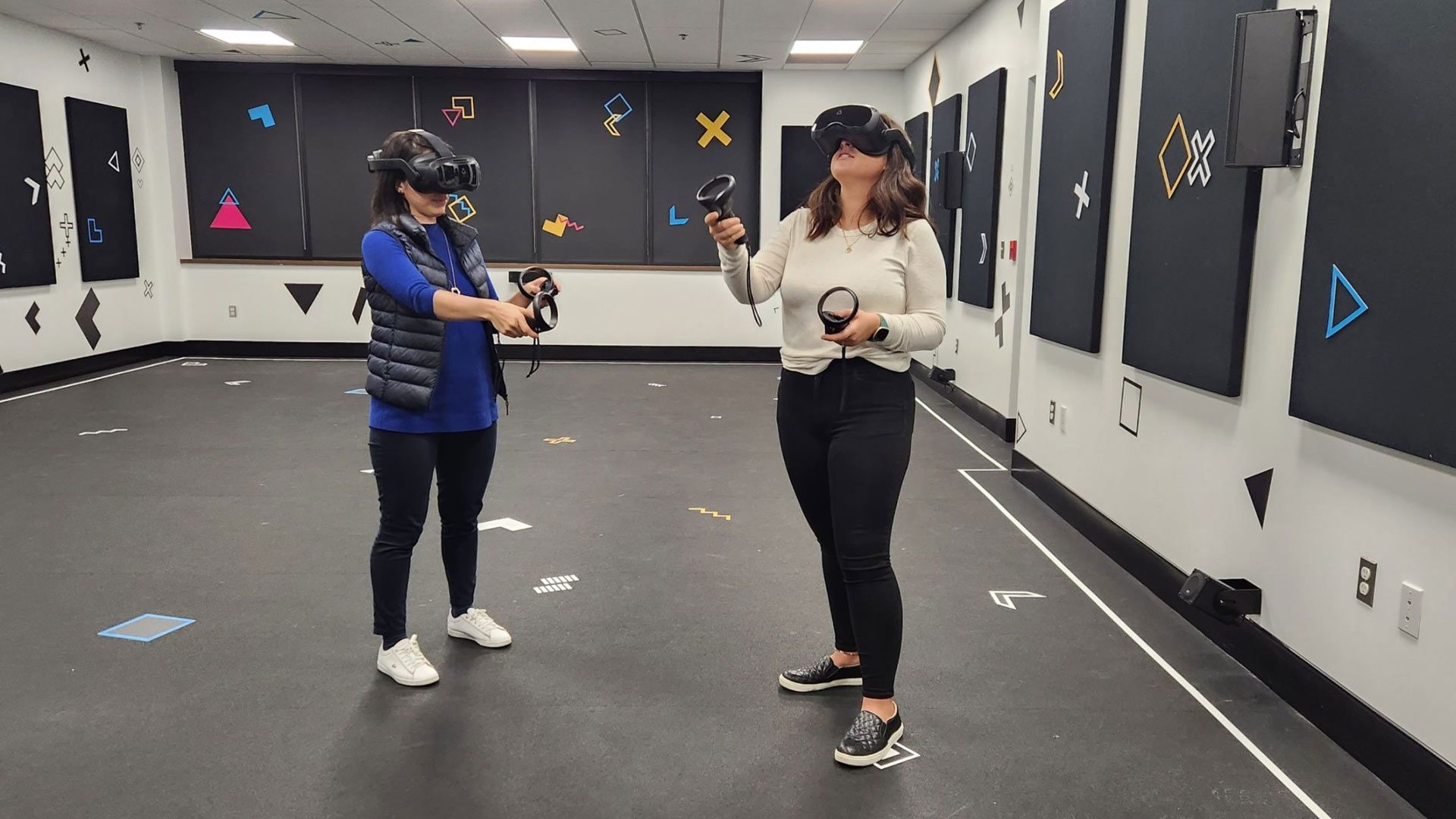
Virtualware Seals €5M Deal to Support Virtual Vocational Training in Spain

1

Virtualware, the Spain-based XR and 3D simulation software company, announced it’s secured a €5 million ($5.8 million) deal to broadly roll out its VIROO platform in vocational training facilities supported by Spain’s Ministry of Education.

The six-year contract allows Virtualware to bring its XR enterprise platform VIROO to 66 new ‘Centres of Excellence for Vocational Training’ (VET), the company says in a press statement, which are run by Spain’s Ministry of Education, Vocational Training and Sport (MEFPD).

The rollout to Spain’s VET Centres will join the more than 25 vocational training centers across the country already equipped with VIROO. In Spain, VET supports initial training of young people as well as the continuing up-skilling and re-skilling of adults across a variety of industries.

SEE ALSO
Godot Gets Big OpenXR Update Aiming to Attract XR Devs from Unity

“We are opening a new chapter of growth and pedagogical innovation, allowing thousands of students to train with state-of-the-art immersive simulators developed and deployed through VIROO platform, raising their technical skills from day one,” says Virtualware founder and CEO Unai Extremo. “Our goal is to bring immersive technology to every vocational training classroom in Spain, through a sustainable model for content creation and deployment”

Founded in 2004, the Bilbao, Spain-based company has recently focused on expanding its capabilities to support a number of key industries, including energy, automotive, transportation, defense, manufacturing, education, and healthcare.

Among Virtualware’s clients are GE Vernova, Petronas, Volvo, Gestamp, Alstom, ADIF, Bosch, Biogen, Kessler Foundation, Invest WindsorEssex, McMaster University, the University of El Salvador, Ohio University, the Spanish Ministry of Defense and the Basque Government.

Check out VIROO in action below, which was created to showcase the company’s work with the Spanish nation rail service, ADIF (Administrador de Infraestructuras Ferroviarias).


This article may contain affiliate links. If you click an affiliate link and buy a product we may receive a small commission which helps support the publication. See here for more information.

Well before the first modern XR products hit the market, Scott recognized the potential of the technology and set out to understand and document its growth. He has been professionally reporting on the space for nearly a decade as Editor at Road to VR, authoring more than 4,000 articles on the topic. Scott brings that seasoned insight to his reporting from major industry events across the globe.
  • Christian Schildwaechter

    TL;DR: Until a regular teacher can use these tools to quickly create custom content tailored to their own classes, these VR learning environments will be expensive gimmicks that mostly a couple of companies will use not for, but despite very questionable and rarely measured educational benefits.

    The problem with these solutions is that creating new custom learning experiences is f*&#ing expensive. I've been involved with e-learning in one way or the other since the mid 90s and have talked to a lot of companies, schools and organization about both the great opportunities and the difficulties. And most even fail to create simple animations to demonstrate something, let alone interactive 3D environments. To accompany a couple of standard texts, teachers still create a lot of the content for use in class themselves, and they mostly use Word and PowerPoint plus images they found somewhere.

    I've talked to a lot of companies that got one-time projects to build some specific multi-media training tools, and have been involved with some of these projects myself. A few years ago I created a (simple) VR-supported container harbor simulation for logistics students that allowed them to move containers from ships to trains and trucks and vice versa, and drive/control cranes, loaders, trucks etc., with a small gamification component in the form of a number of (container movement) quests to be solved. This was part of a project for 3D visualization of so called intermodal freight transport that I got slipped into for the interactive parts, paid by an industry lobby group trying to push intermodal logistics.

    The problem was that all this took a lot of time, meaning it was expensive, and in the end allowed for exactly one use, a little try and error to get an idea of the process, but in no way capable of training someone to actually do this in real life. Which would have been several magnitudes more expensive. We ended up with something that looked cool and was fun to interact with, but AFAIK it wasn't really used beyond the presentation of the project, partly because there was no easy way to adopt it to anything a teacher wanted to show, and it required a lot of setup to begin with that would have overwhelmed teachers (this was before standalone HMDs).

    And that has always been the problem with all types of e-learning, including in VR. They work for very specific use cases, for example training to control a specific industrial robot, or introducing new employees to some security procedures, but you always have to hire expensive specialists to create them, and then later can't alter anything without hiring them again. There are a lot of these projects for testing out things, and I am very grateful that they are, but they rarely have any lasting impact. And most of the time there isn't even enough budget to evaluate if they provided any benefit at all.

    Maybe VIROO's creation tools are so advanced that these aren't issues anymore, but just from the short video and the serious lack of screenshots from actual virtual learning environments on their website, I'd deduce that we are still in a phase where VR training is basically an experimental luxury niche paid for by special show-off budgets with very limited real world impact.

    I absolutely believe that e-learning esp. in VR can provide HUGE benefits, but realistically we will only be able to reap them once a regular teacher can create/adapt them the evening before the next class, without having to become a 3D artist and programmer first. It basically needs to become something like a (much improved and more capable) Meta Horizon World's in-game editor.

    But given that Meta has now shut down the in-world editor, and replaced it with a PC desktop editor that is more powerful, but again requires programming, we are probably very far from that for VR teaching. Meta is now of course trying to close the content creation gap by throwing AI at the editor that is supposed to create the worlds all by itself based on text prompts. But I'm pretty sure that all this would achieve for someone trying to create educational content would be wasting a lot of time with trying to find the proper prompts, never getting what they really want, and in the end returning to Word and PowerPoint.