University researchers at KU Leuven in Belgium have shown that monkeys can navigate complex virtual environments using a brain-computer interface (BCI) setup, which remarkably involves relatively little user training.
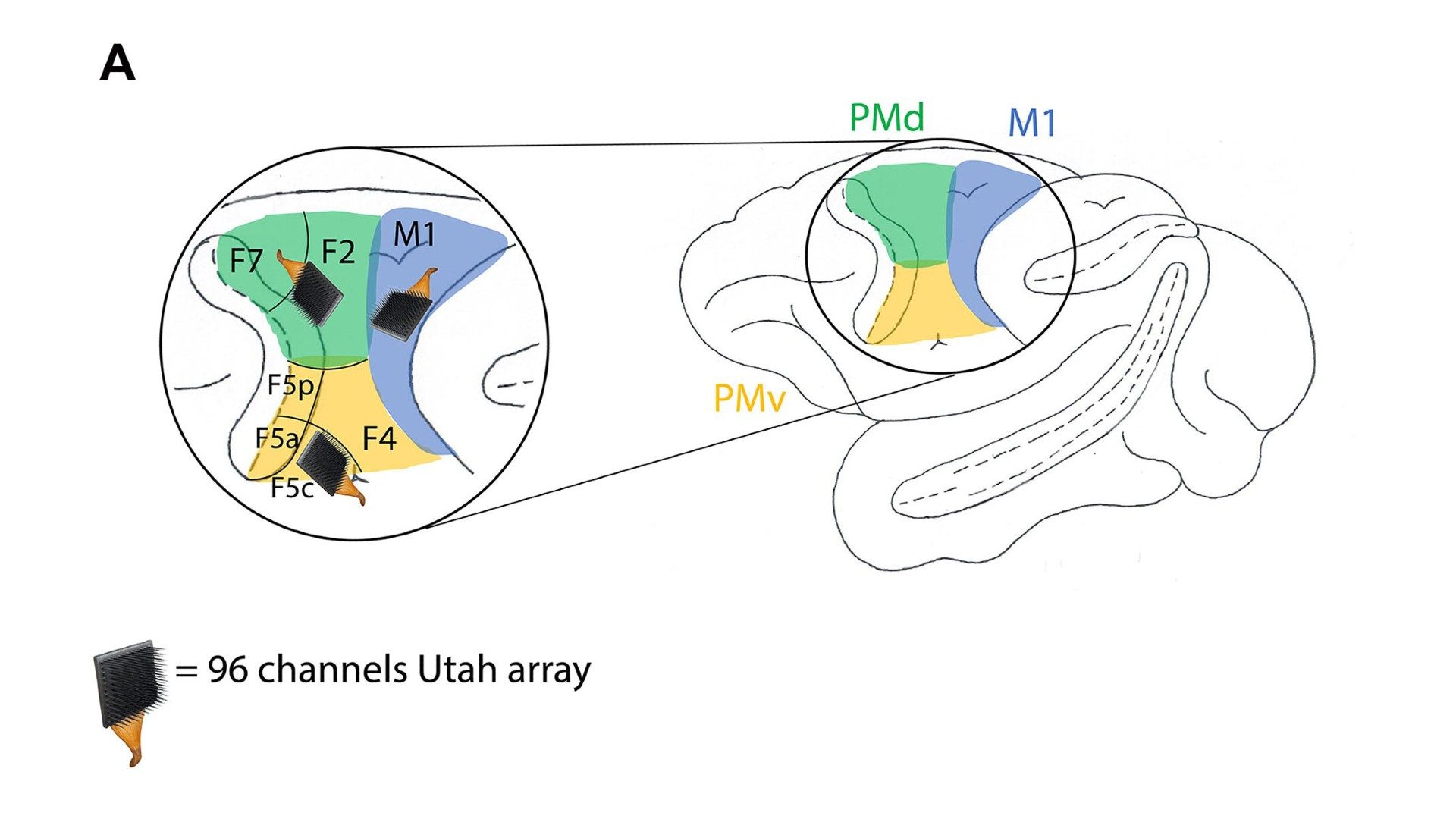
As reported in New Scientist, three rhesus macaques were implanted with Utah array BCI devices containing 96 electrodes in each of three brain regions: the primary motor cortex and the dorsal and ventral premotor cortices.
While the primary motor cortex is involved in voluntary movement, a region of the brain Elon Musk’s Neuralink taps into through its various animal research models and recent human clinical trials, the premotor cortices are thought to be dedicated to planning, organizing, and initiating those movements.
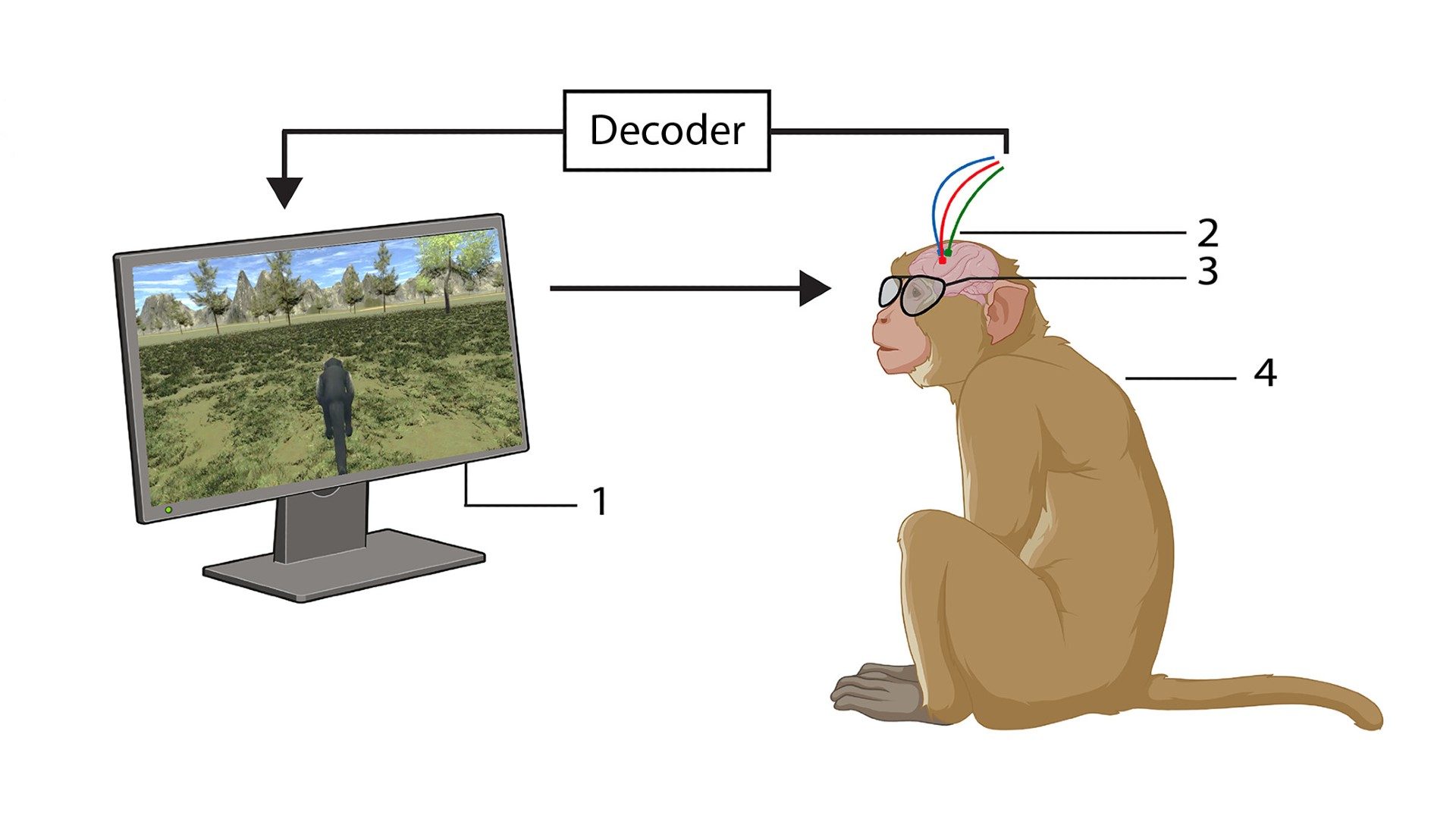
The key innovation isn’t the hardware itself though, as Utah arrays are widely used in research when reading neuronal activity, but rather the method the study goes about decoding that information, and making it actionable in 3D environments.
In the study, which was lead by KU Leuven’s Peter Janssen, the rhesus macaques were initially trained once from a short passive observation phase, and then were given a variety of virtual tasks while wearing 3D shutter glasses and monitor with stereoscopic images. Tasks included moving various objects in a virtual space, including a sphere, a monkey avatar, and even themselves via a first-person perspective.
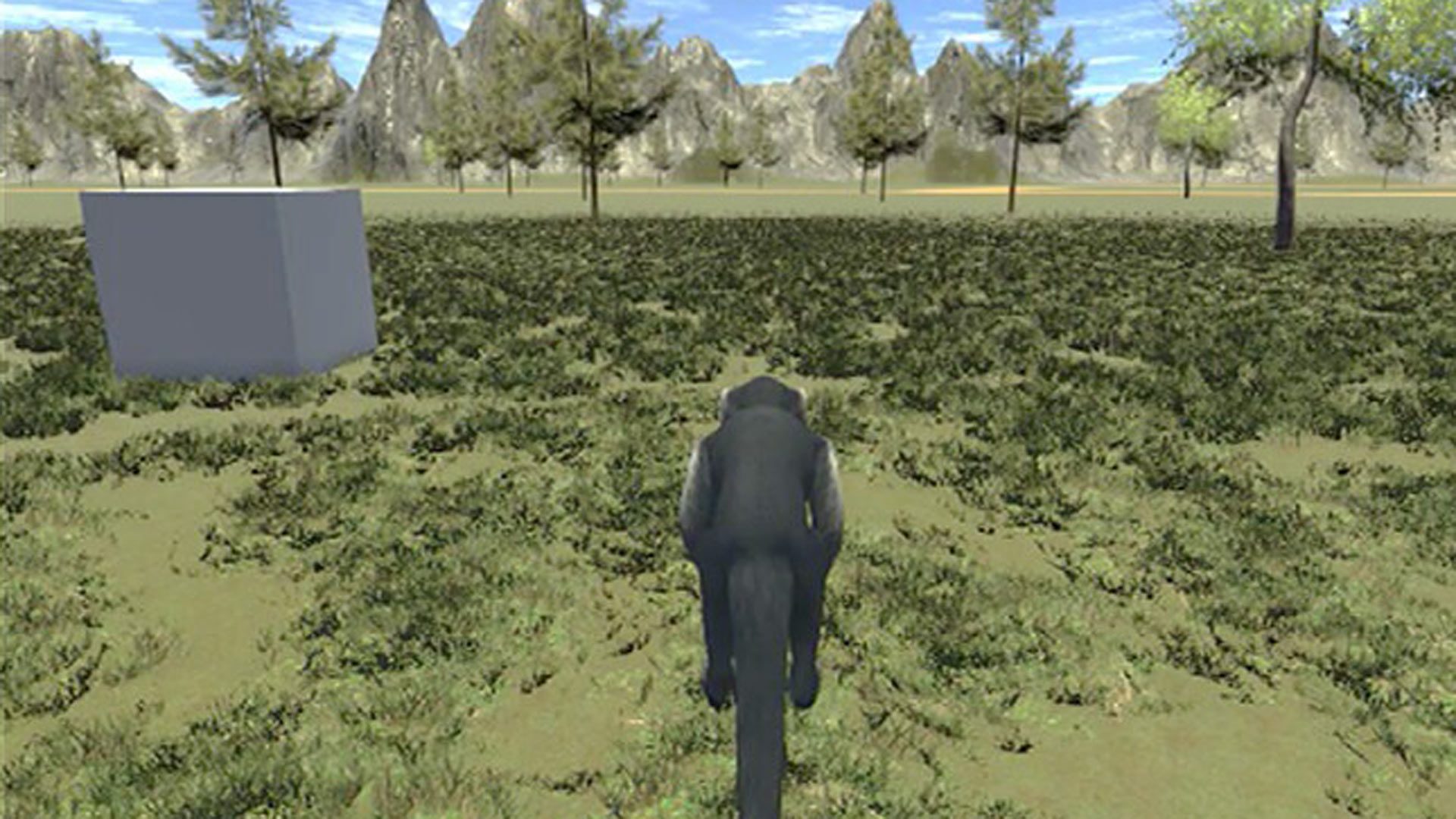
As noted by New Scientist, many previous human trials involve asking people to actively think of a physical movement, like raising or lowering a finger to move a cursor on a screen, which is then translated to on-screen movement. Janssen believes however the study’s specific placement of the BCI has accessed what could be a more intuitive connection to movement, potentially requiring less training.
“We cannot ask these monkeys, of course, but we just think that it’s a more intuitive way of controlling an a computer, basically,” Janssen tells New Scientist, who notes that current methods can feel as foreign to implant recipients as “trying to move your ears.”
While the study hopes to pave the way for similar results in humans, which could unlock things like controlling electric wheelchairs, Janssen also believes it could allow people with paralysis to intuitively navigate virtual worlds.
“There’s a bit of work necessary to know exactly where to implant a human because a lot of these areas are not very well known in humans, where they are exactly,” Janssen says. “But once we figure that out, it should be possible. It should actually be easier because you can explain to the human what they are supposed to do.”