
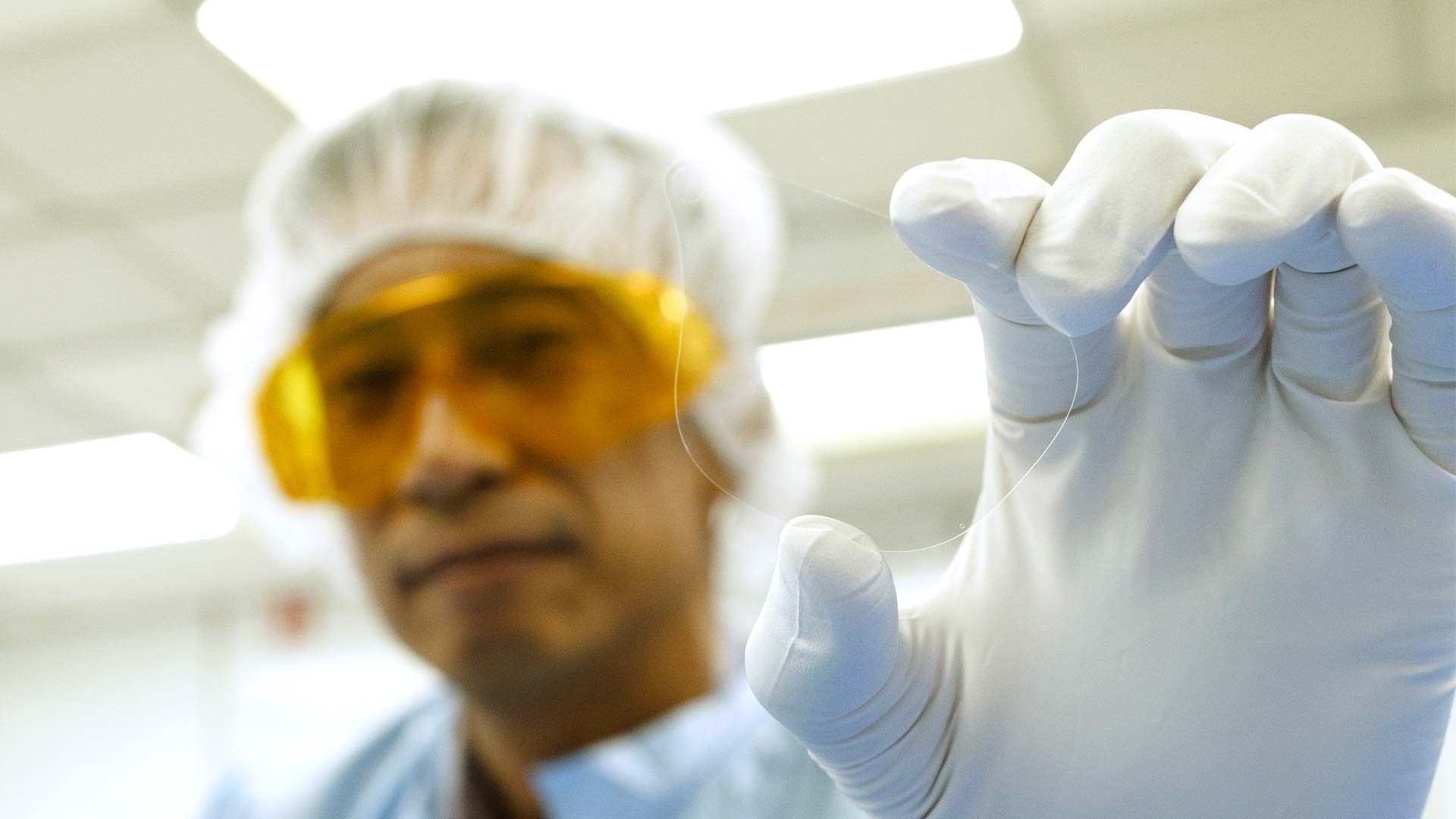
Magic Leap announced a manufacturing partnership with Pegatron, a major global electronics manufacturer, to scale production of AR glasses components, including Magic Leap’s waveguide technology.
The News
Under the agreement outlined in a press statement, Pegatron will apply its manufacturing capabilities to help turn Magic Leap’s optical designs into mass-produced components.
Taiwan-based Pegatron specializes in developing and producing computing, communications, and consumer electronics for major brands, in addition to being the parent company of PC component company ASRock.
Details are still under wraps, however Magic Leap Product and Partner Development exec Jade Meskill says the partnership will create “a clear path to bring AR components to market at scale.”
“This collaboration reflects the growing maturity of the AR ecosystem,” said Jason Cheng, Vice Chairman at Pegatron. “By combining Magic Leap’s component-level expertise with Pegatron’s manufacturing infrastructure, we can support more efficient pathways from development to production.”
This follows the announcement in October that Magic Leap was entering into a multi-year AR hardware partnership with Google.
My Take
Despite early market missteps that saw millions (if not billions) go to the development of its ML 1 and ML 2 headsets, Magic Leap seems to be making good on its pivot from AR headset creator to major AR component player, as the company is leveraging its designs, know-how and catalogue of patents to stay in the fight.
And despite the years of grinding, it’s a fight that still hasn’t really heated up just yet, as companies like Meta, Apple and Google are still in deep in preparation to create their own AR glasses (note: not smart glasses) for release sometime before 2030.
Still, if the coming AR revolution is anything like the smartphone revolution of the early 2000s, there will potentially be a lot of players beyond those three tech giants to spin up competition when AR components eventually get cheaper with economies of scale.
And while we’re not there yet, Magic Leap seems to have found a solid raison d’être in the meantime, and a much better shot at one day becoming profitable as a result.