
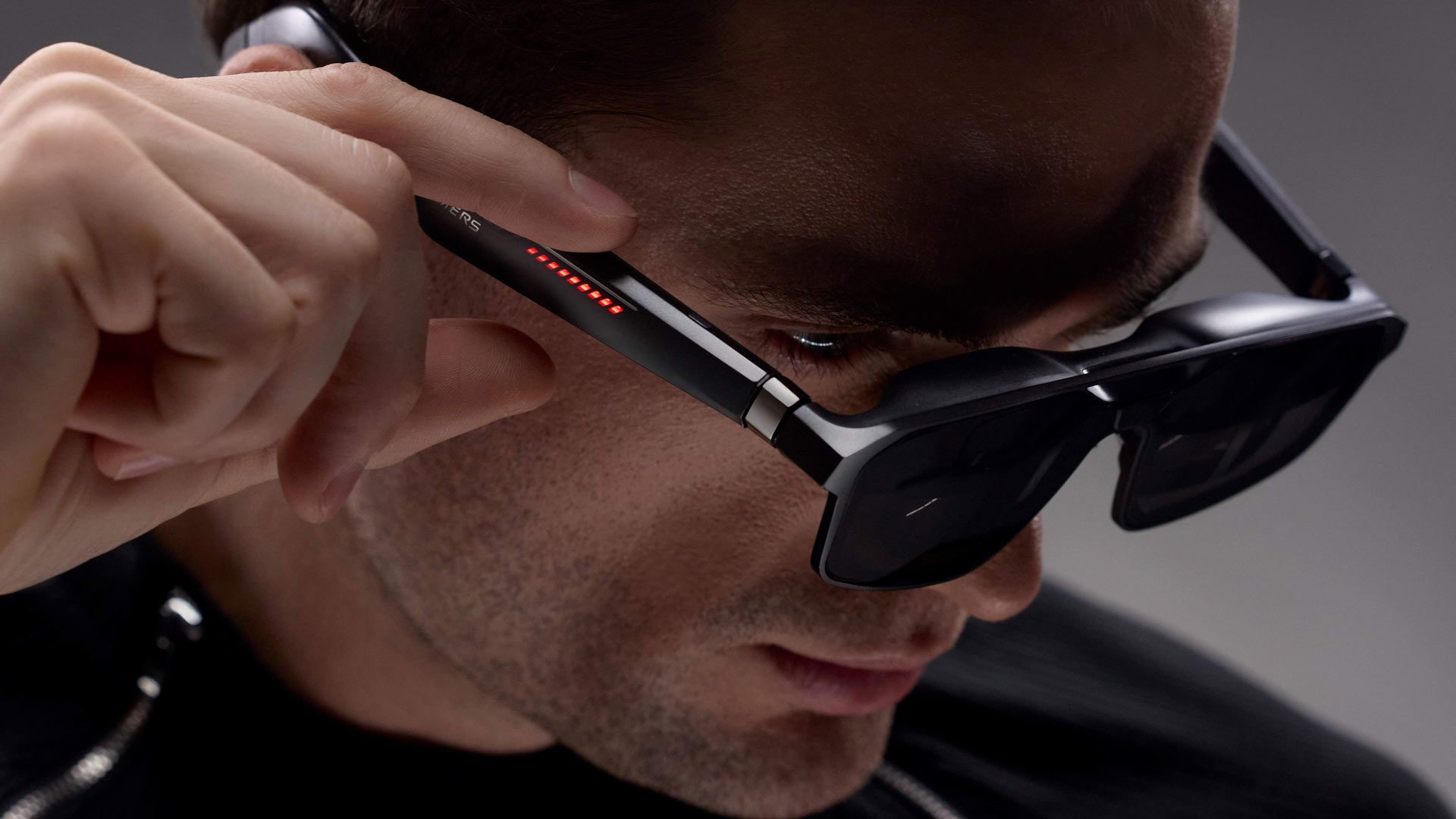
While the long-awaited Quest-style VR headset from Asus has been put on ice, the Taiwanese tech giant announced it has now partnered with XREAL on a pair of AR glasses for traditional gaming, which boast an impressive 240Hz refresh rate.
The News
In 2024, Asus and Lenovo announced they were creating Quest-style VR headsets running Horizon OS—the first third-party devices to do so. However last month, we learned that deal has been indefinitely “paused”.
At CES 2026 this week, Asus Republic of Gamers (ROG) announced it’s partnering with XREAL to release a pair of “gaming glasses” that feature dual 1,920 x 1,080 240Hz microOLED displays: ROG XREAL R1.
Similar to XREAL One Pro, the glasses are slated to offer a 57° field of view via its birdbath optics, 3DOF tracking, electrochromic tinting, and Sound by Bose audio.
ROG XREAL R1 is also shipping with an external ‘ROG Control Dock’ that extends connectivity to PCs and consoles with the addition of one DisplayPort 1.4 port and two HDMI 2.0 ports. Notably, it can also connect directly to supported USB-C devices, such as ROG Ally.
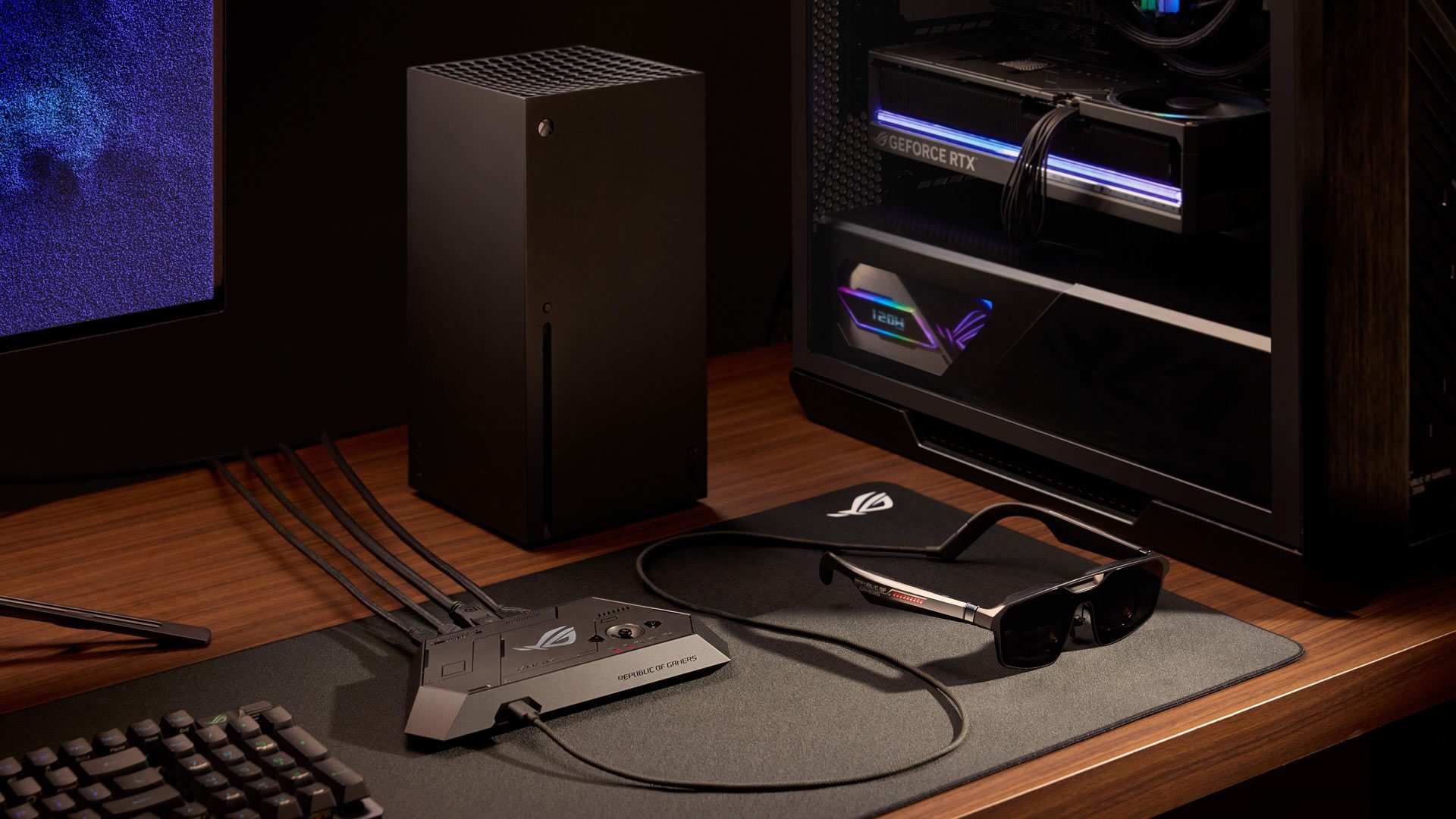
Like XREAL One Pro, Asus says ROG XREAL R1 serves up the equivalent of a 171-inch virtual screen at 4 meters, substantively making its 240Hz refresh microOLEDs the major outlying difference between the two; XREAL One Pro ($650) only features 120Hz refresh.
Asus hasn’t mentioned pricing or release date yet, however ROG XREAL R1 is expected to ship globally in the first half of 2026.
Check out the spec sheet below:
ROG XREAL R1 Specs
| Display |
Sony 0.55-inch micro-OLED
|
| Resolution | 1,920 x 1,080 |
| Refresh rate | 240Hz |
| Field of view (FOV) | 57° |
| Motion-to-photon latency | 2ms |
| Peak brightness | 700 nits |
| Color gamut | 107% sRGB |
| 3 Degrees of Freedom (DoF) |
Native 3DoF, 6DoF supported
|
| Adjustable lens transparency |
3-level adjustable
|
| Digital IPD adjustment | Yes |
| Audio | Sound by Bose |
| Weight | 91g |
ROG Control Dock Specs
| I/O ports (Input) |
2 x HDMI® 2.0
1 x DisplayPort™ 1.4 |
| I/O port (Output) | 1 x USB-C® |
| Video resolution | 4K@60Hz |
| Dimensions |
215 x 100 x 25mm
|
| Weight | 230g |
My Take
When Asus and Lenovo announced last year they were working with Meta to create their own XR headsets running Horizon OS, the game plan was pretty clear: ROG would appeal to enthusiast VR gamers while Lenovo would hone in on productivity, and maybe even enterprise.
And I’ll admit, I didn’t really know what that meant at the time. Neither company had the leeway to meaningfully change the underlying Quest 3 hardware without fracturing the Horizon OS ecosystem, which is mostly now geared to content made specifically for Quest 3 and 3S, both of which run the Qualcomm Snapdragon XR2 Gen 2.
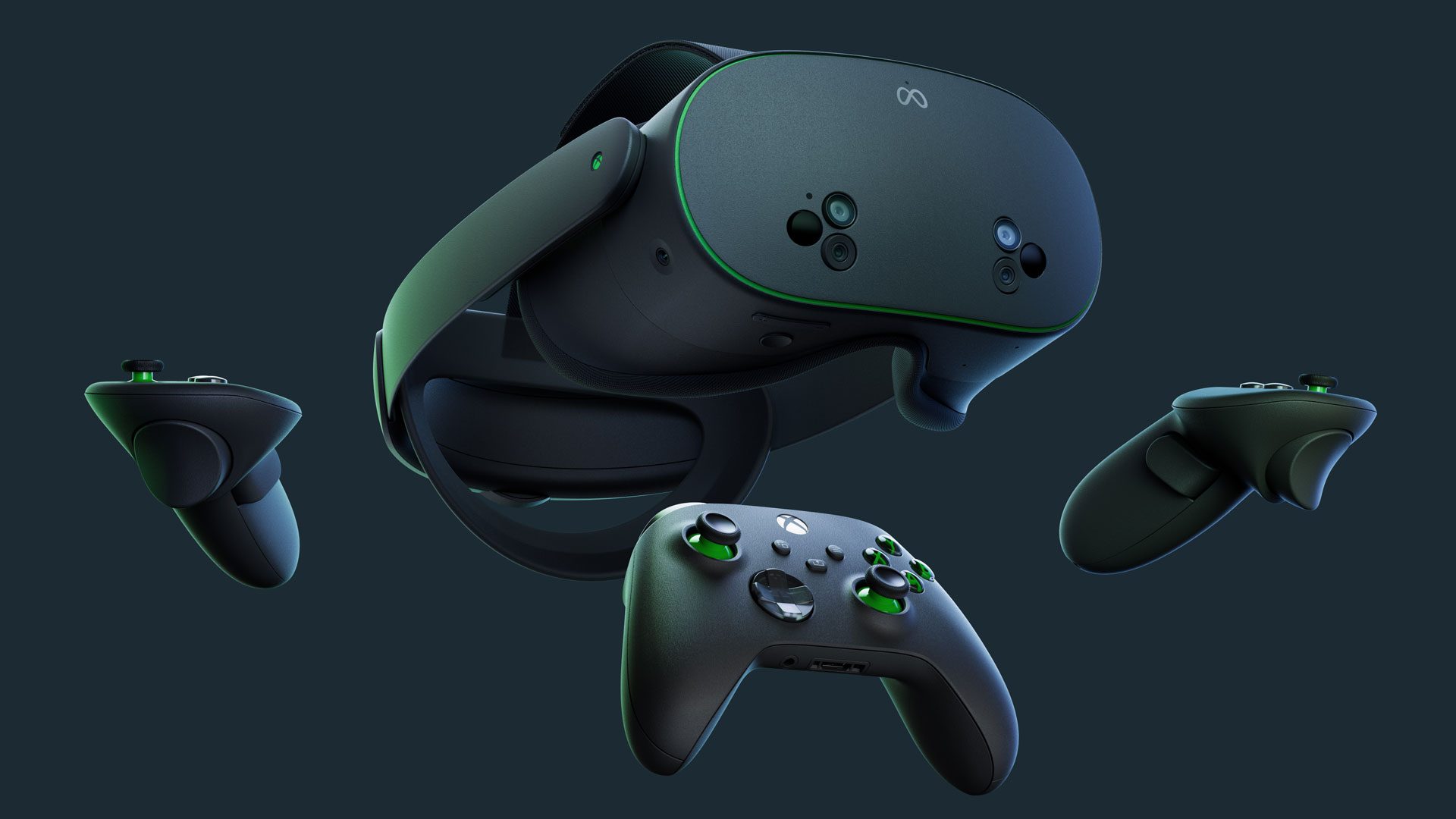
Light speculation: this essentially left Asus hamstrung. The company may have been faced with creating little more than an expensive, flashier Quest 3 running the same chipset—with maybe even the same resolution displays, and little else. Whatever the case, it was always going to be difficult to compete against Meta’s own subsidized first-party headsets without having a clear path towards differentiation.
Asus and Lenovo exiting the partnership may have come down to a shift in the overall competitive landscape. In 2024, getting third-party manufacturers in the mix was supposed to be Meta’s new ethos as the ‘open’ XR alternative—a foil to Vision OS, which, in Apple style, is a monolithic platform that will never be open to anyone but the Cupertino tech giant itself.
That ‘open’ ethos seems to be more of Google’s game with Android XR though—its opening salvo being the recently released Samsung Galaxy XR. I’d expect more Android XR-running headsets to come eventually too.
Meanwhile, Meta seems to be shifting the bulk of Reality Labs’ focus to developing AR and smart glasses, which feels especially relevant since ROG has decided to back long-time AR glasses maker XREAL instead of, say, announcing it was creating an Android XR headset in the vein of Quest.