
Meta Extends Commitment to Making XR Development First-class Citizen in Unity Game Engine

9

Meta and game engine creator Unity announced they’re extending multi‑year platform support and an enterprise agreement that aims to deepen the companies’ VR partnership.

The News

The companies’ collaboration dates back to the early Oculus Rift era of the mid-2010s, when Unity became one of the first engines to support consumer VR alongside Epic Games’ Unreal Engine.

While neither Meta nor Unity has previously disclosed the timing of any sort of formal multi-year partnership agreements, Meta has clearly encouraged Unity in the past to develop tools so developers could more easily create VR games.

Now, Unity and Meta say in a press statement they’re extending this partnership, as Unity has pledged to continue to provide support for Meta’s VR platform.
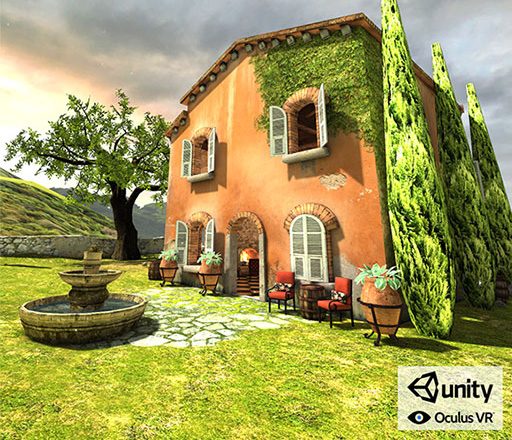
Oculus World SDK Tuscany
The Unity – Oculus World Demo, a VR tech demo included with the Oculus integration.

“Meta is the world’s leading VR platform, and we’re proud that Unity powers the majority of its top‑selling VR games,” said Unity COO Alex Blum. “Great content is what makes VR successful. By pairing Meta’s hardware and OS leadership with Unity’s role as the assembly point for interactive content creation, we’re making VR accessible to more developers so they can develop, deploy, and grow their games and business applications on Meta’s VR devices.”

“Unity is a critical partner for Meta across multiple initiatives, including our investment in the VR developer community,” said Ryan Cairns, VP of VR at Meta. “By extending our long-standing partnership, we’re making it easier for developers to bring high‑quality, performant experiences to the millions of people who use Meta’s VR devices.”

SEE ALSO
Virtuix Goes Public During a Turbulent Moment for Consumer VR

My Take

Meta may be trimming its consumer VR ambitions, but it’s not entirely cutting the lifeline to its biggest, most influential software partner Unity, who is the maker behind what’s arguably the dominant game engine in VR today.

Neither company has specified just what went into the partnership, although I’s hazard a guess that some amount of cash was handed over for Unity to develop tools for VR—which it notably did well before the first big boom in consumer VR.

Unity helped develop things like early VR editors that allowed devs to create and test their games in-headset in addition to some of the more seemingly mundane things we take for granted today, like cross-platform build pipelines, single-pass stereo rendering—things that have benefitted everyone.

Granted, this partnership extension may be just as simple as Meta not actively letting an important partnership wither on the vine, although I’d consider it a promising signal that all is not lost, and that consumer VR will live on, albeit just not at the scale we saw before—because Meta shut down some of its most influential internal game studios.


This article may contain affiliate links. If you click an affiliate link and buy a product we may receive a small commission which helps support the publication. See here for more information.

Well before the first modern XR products hit the market, Scott recognized the potential of the technology and set out to understand and document its growth. He has been professionally reporting on the space for nearly a decade as Editor at Road to VR, authoring more than 4,000 articles on the topic. Scott brings that seasoned insight to his reporting from major industry events across the globe.
  • eadVrim

    Tuscany House in Oculus DK1, that magical VR place

    • Christian Schildwaechter

      For those not familiar with it: the first Oculus Rift developer kit came with a three months license for Unity Pro, back then required for creating VR experiences with it. Tuscany Villa was the demo scene of Oculus' software development kit used with Unity. So this was the first VR a lot of the DK1 Kickstarter supporters ever experienced, which kind of makes it a cultural milestone for VR. All you could do was walk around and inside the mostly static villa with mouse and keyboard at 640*800 per eye, but it was very impressive nonetheless.

      Narrated Tuscany Villa walk-through with background infos
      [8:34] by eVRydayVr youtu_be/S4bNg1Hvkf4?t=94

      Elders react to Oculus Rift, a number of senior citizens trying Tuscany Villa, Rift Coaster and a short horror demo
      [8:00] by REACT youtu_be/hZ8Xj_I3aNU

      35 must-play Oculus DK1 experiences incl. Tuscany Villa at 6:35
      [9:22] by VR Review youtu_be/ShfCF-F284A

      Rift Coaster shown in the second and third video is based on another demo scene, Epic Citadel, that came with UDK, the free version of Unreal Engine 3. After more than a decade of improving VR hardware and experiences, it is difficult to convey how hard these early and by today's standards rather primitive demos hit, simply because there had never been anything like this before.

    • It is the first thing I tried in VR in my life!

  • NL_VR

    oh no VR is dying

    • MildlyConcernedToaster

      That comment was funny the first time someone posted it on reddit 5 years ago.

  • MildlyConcernedToaster

    Trolls gonna troll I guess.

    • NL_VR

      Some of them are not just trolls but just ignorant.
      Roadtovr has become when it comes to games and entertainment in VR just a newsplace for "Bad news". They dont even post big game updates and releases every month anymore but concentrate only on layoffs and close downs. And the negative Doom and gloomers which are no "real" vr users them self, feed on that. im just here to be the oposite. Because if i were a new vr user and visited this site and read the boards i probably would be depressed on all bad news and doom and glooming.

  • Christian Schildwaechter

    TL;DR: this looks like Meta's partnership with Qualcomm, makes a lot of sense after Horizon Worlds went mobile only, and might prove very beneficial for all of VR.

    "Extended multi‑year platform support and enterprise agreement" is certainly much better news than most of what we got in the last few months. It kind of makes sense to re-focus on Unity as the most popular XR game engine, now that Meta has limited their own Horizon Worlds engine efforts to support mobile phones only.

    It somewhat mirrors the "multi-year strategic partnership" they entered with Qualcomm after canceling their long running effort to build their own ARM chips. That partnership was about more than Qualcomm providing all the SoCs, the idea was also that Meta internal research like super low power NPUs MRL had developed to drive photorealistic avatars could be added to Qualcomm silicon.

    Meta over time came up with a lot of pretty cool VR software tech like AppSW, which was made available through their own SDK. This sometimes conflicted with their attempt to move to OpenXR as an industry standard, as the standard moves somewhat slowly, adding new concepts first as company specific extensions, then generic extensions to OpenXR based on the company specidic ones, and finally in the next revision of the spec. The latest OpenXR version still doesn't standardize eye tracking, though there is now an official extension that will become part of the spec in the future. As a consequence, Valve's Steam Deck will/has to support numerous Meta specific OpenXR extensions directly for APK compatibility instead of just the offical specification.

    Now that Meta slowed down their own XR activities, there isn't an as obviously easy way to get their own developments adopted in the wild, and it will become harder if a future, unsubsidized Quest 4 sells in lower numbers. Unity has already tried to cover VR incompatibilities between different vendors by adding its own XR layer sitting first on top of various vendor SDKs, and then moving towards "OpenXR everywhere (except AVP)". So they would be a great partner for Meta to not only support VR developers, but also push VR forwards faster by integrating interesting VR software coming out of MRL directly into the most popular XR game engine, without having to wait for the slowly meandering OpenXR.

    Now that they are no longer trying to make Quest the base of their future hundreds-of-millions XR user base, there is probably also less incentive to keep that tech proprietary, and more motivation to make it accessible to the whole VR market to keep it going. So this partnership with Unity might prove to be very beneficial for VR even beyond Meta committing to more support for their own Quest platform.

    • VR Slut

      OpenXR is not one company, so they cannot cut deals with them. Unity is the next best thing and a possible way to also swallow VR Chat, or parts of it, some day.