
Pico Reportedly Developing Slim & Light Mixed Reality ‘Goggles’ to Rival Next-Gen Meta Headset

16

Pico, the XR headset maker owned by TikTok parent ByteDance, is reportedly developing a mixed reality device aimed at rivaling Meta’s next-generation XR headset.

According to a report from The Information, Pico is currently working on a pair of mixed reality “goggles” codenamed ‘Swan’, which are said to be thin and lightweight—reportedly weighing around just 100 grams.

Citing three people with direct knowledge of the project, The Information reports that the device features a hybrid design that offloads processing to a tethered compute puck. This approach allows the glasses portion of the device to be significantly thinner and lighter than current-generation XR headsets like the Quest 3 or Pico 4 Ultra.
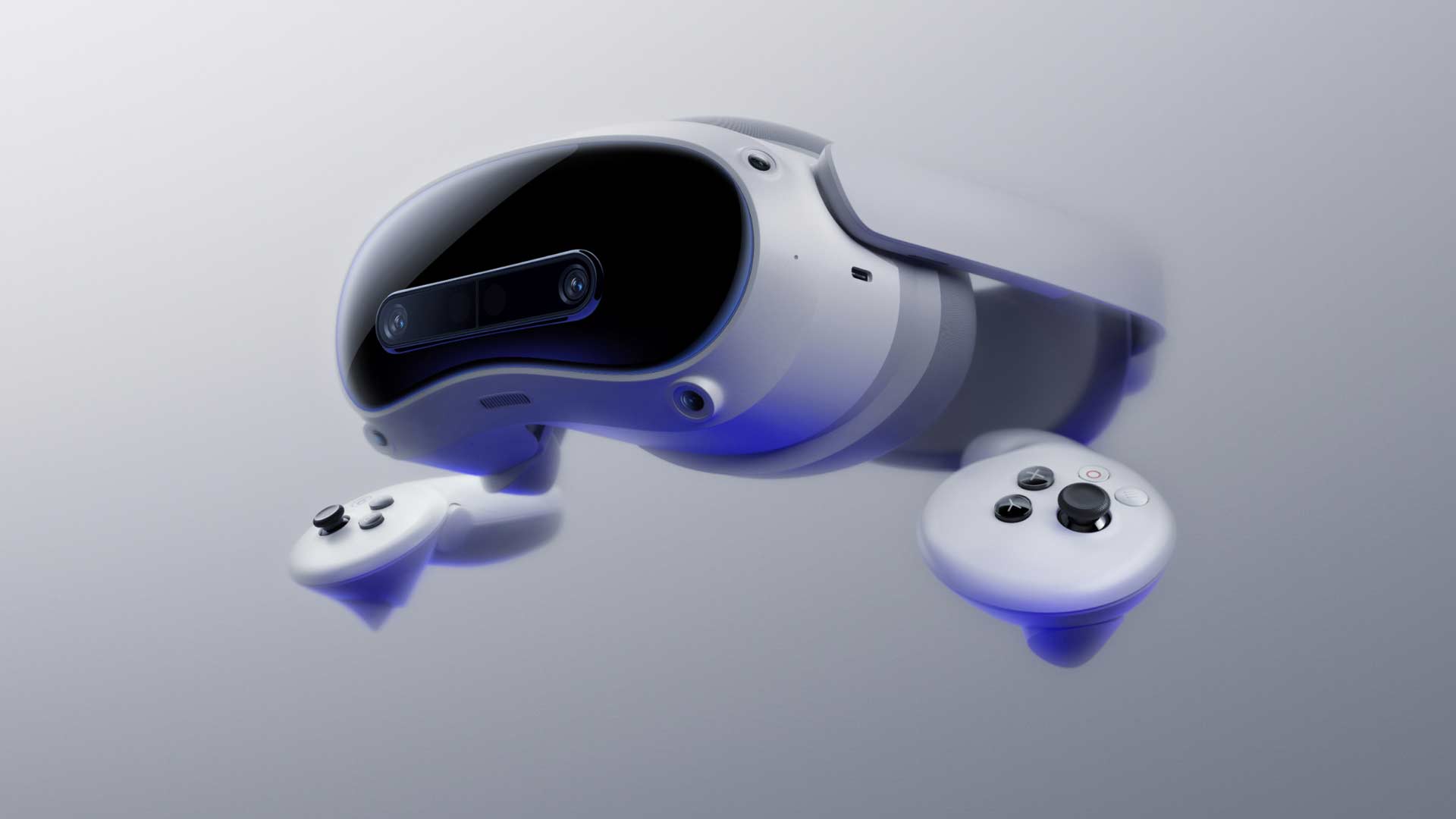
Pico 4 Ultra | Image courtesy Pico

Swan is also said to rely primarily on eye and hand tracking for input, moving away from physical controllers. Furthermore, the report notes that Pico is developing “specialized chips for the device that will process data from its sensors to minimize the lag or latency between what a user sees in AR [sic] and their physical movements.”

Swan is said to be conceptually similar to Meta’s reportedly upcoming mixed reality device codenamed ‘Phoenix’, which also includes a compute puck and a glasses-like form factor. According to a recent Wall Street Journal report, Meta’s headset could launch in either 2026 (WSJ’s estimate) or 2027 (as cited by The Information) and may cost under $1,000.

SEE ALSO
'Thief VR: Legacy of Shadow' Review – So Close to Stealing My Heart

The codename itself is still a matter of speculation: The Information refers to Meta’s headset as ‘Phoenix’, while the WSJ uses ‘Loma’, and online sources have also mentioned ‘Puffin’.

That said, there is currently no information on what Swan will cost or where it will ship. In the past, Pico’s consumer headsets have typically been priced slightly above Meta’s equivalents and have been available primarily in East and Southeast Asia and Europe—but not in North America.

This article may contain affiliate links. If you click an affiliate link and buy a product we may receive a small commission which helps support the publication. See here for more information.

Well before the first modern XR products hit the market, Scott recognized the potential of the technology and set out to understand and document its growth. He has been professionally reporting on the space for nearly a decade as Editor at Road to VR, authoring more than 4,000 articles on the topic. Scott brings that seasoned insight to his reporting from major industry events across the globe.
  • Andrew Jakobs

    tethered compute puck

    Nope, that's a big no, anything tethered is just awful, from my own experience with the HTC Vive Pro 'wireless'module. The hassle of having to connect the wire to the module, having to put the module in your pocket or in your belt drives the theshold for being able to start playing down. And many times the module pops off your belt or out of your pocket during gameplay while doing certain moves, or the cable just hooks to your elbow or somethingelse and yanks at your headset, yeah you can use clips to secure the cable to your body, but that just adds to the time to start playing.
    there is enough room to shave some tens of gramms of the Pico 4 headset, and still keep it very comfortable, with all the hardware and battery in the headset itself.
    I can imagine for an AR only device, as that's something you would wear outside.
    Also not relying on physical controllers, for gaming, is something even Apple is treading back from.
    Since I've bought my Pico 4 as a test, I really haven't used my HTC Vive Pro/'wireless'module/index controllers very much, as the Pico 4 is just so much more convenient as the Vive Pro, and that's even using it mostly standalone as I only have old Wifi 5 and an intel core i7 4770/RTX2060Super for steamVr, but to my big surprise, even THAT ran better as I expected (and was told).

    • ichigo

      Trade offs with everything. Your personal experience may also be different from others. I don't have a problem without or with a cable depending on what i gain with a cable. I am however concerned about the dogmatic people when it comes to anything with a cable or even the slight mention of it. Especially when i see them attacking people for having different opinions. Xbox or PS, Wired or Wireless….how about both as they have their benefits.

      I put comfort above everything when it comes to picking up a headset and playing. I find counterweights make huge improvements to headset along with halo straps. I like the idea of putting battery or even compute unit in the back of strap. That being said if i get better balance/comfort by having a cable to my pocket i'm perfectly fine with that. I also prefer to have the headset off my face fed up with the goggle marks and the heat.

      There are a lot of sit down VR people out there. Who prefer to mix VR with tried and tested classic methods of gaming to relax. And not wave your arms about in some gimmicky VR game mechanic (yanking wires). Although i understand it's good for fitness and keeping the kids happy and i bet they would love wireless everything for that.

      I fully agree on controllers if you base is the corpo unwanted "toxic" gamers not having a controller is going to hit corpo sales. It's gamers IMO pushing VR and supporting it much to the chagrin of the Rich corporations like META, Apple etc who want the phone market and looking at their PR photos 1 specific group only.

    • ApocalypseShadow

      There are those that believe you can just keep stuffing powerful technology into a small space and think it'll all just fit and also be light on the head. Taking some of the weight off the head allows more comfort, more power and less heat for the head.

      I play 95 percent of the time tethered. Why? Because the analog stick removes the need to always physically turn in place. That's where smooth and click turning comes from. Most players playing in VR never move much at all and are standing in place. It's not too say that room scale and turning is bad. It's just that there are more than one option to pay in VR. Including sitting facing forward. Or when I sit, I have a swivel chair.

      Secondly, I have no need to put extra, heavy batteries on my head, which removes the need for another head strap. Which saves money overall. I can play as long as the power stays on in the house over worrying about swapping batteries.

      VR on stand alone should have been tethered originally. Why? Because then, and this is if all other features are in place like eye tracking, wide field of view, etc are there, then gamers could buy powerful arm pucks that they can afford just like PC has for VR. If you got the money, more power can be pushed towards VR. Stand alone should have been the same instead of trying to force all the tech into the face. We're not there yet to shrink all the power into a glasses like device. But a puck would have allowed that.

      So weird to see individuals complain about a wire when they are still completely untethered from the wall. If you got hooks and knobs and things sticking around and pulling the cord, that's a YOU problem.

      • Andrew Jakobs

        There are those that believe you can just keep stuffing powerful technology into a small space and think it'll all just fit and also be light on the head.

        And yet technology shows us each year that it's possible.

        Most players playing in VR never move much at all and are standing in place.

        wow, that's just utter bullshit, as I see most people move a lot when they are playing VR games, at least the non-simulator games.

        Without standalone VR it would have stayed even more a niche product.

        So weird to see individuals complain about a wire when they are still completely untethered from the wall.

        Maybe because the wire is still annoying, why do you think wireless headphones are a thing? People hate a wire from their head down to somewhere.

        You might not have a problem with it, but I do, and fir me it's from my own long experience having had only a wire from the headset down to a puck. Yeah it is a major improvement over a wire connected to a PC, but it still is a annoyance which a headset, with a good default headstrap like the Pico 4 solved (and which still has much room for improvements).

        • ApocalypseShadow

          Utter bullshit is actually what you're spewing. A cord coming from the waist, up the spine to the back of the headset, is not going to get caught on anything. You're just exaggerating. No one is diving to the ground or low crawling or doing jumping jacks. Watch someone play Beat Saber. Do you see them move beyond a fixed center? Nope. Watch Nathie or any other YouTuber play games in VR. They're standing in one spot with limited movement. They aren't running around the room. You lie.

          A headset with all those features built in I mentioned above would not need to be upgraded like Quest upgrade jumps. All you would need to buy is the next powerful puck and just plug it in. You make attaching a cable seem like one of those ridiculous commercials/ infomercials where something so easy and takes a few seconds is so hard. So, buy our product to make you life easier.

          Perfect example. Sony doesn't really need to update the PS VR 2 for PS6. The headset already has eye tracking, headset haptics, the controllers already work and have advanced haptics. HDR and high resolution is already there. But the power will come from the next console Sony makes. Could they do a refresh for PS6? Sure. But everything they need is built in. PS7 could still use the same headset. Because the graphics aren't powered by the headset. It's from the console.

          Same thing could apply to stand alone. Upgrade the puck eliminates the need to upgrade the headset. Unless it's a refresh. No worry about internal heat. Cord in the back, up the spine, is not a hassle. Battery is away from the head. Resulting in less weight on the face and neck. Snap the belt on, put on the headset and go. It's only a hassle for you. That would take literally, physically, 10 seconds. You're just blowing smoke.

          • Andrew Jakobs

            It looks to me you have no longtime experience with using a 'puck'. Maybe at first you don't mind, coming from a headset which is tethered to a computer, as in that case it already is a major improvement, but after a while the cable to tye puck really gets annoying, just like the headphone cables to your walkman or phone.

            and you might have a point if the headset would have everything already, but there isn't a headset out yet which doesn't need more improvements. PSVR2? Better displays, but biggest problem, the cable….
            at this time lenses and displays still require improvents, so must people will just buy a new complete headset anyway. And why a puck? A pcmcard type of slot in the headset or part of the headstrap could also accomplish that.

    • VRDeveloper

      Tip: If you buy a "fabric running belt" of those that fit at the waist, it will be perfect. Believe me, you won't even feel that there's something wired in the headset.

  • Tonanamous

    Change 'Developing' to 'Copying' in the title please. They only reverse engineer at Pico.

    • ichigo

      Reminds of the story of a man who invented some new gadget sent the design for moulds etc to China to be manufactured sign the contract for it etc. And was told they would be done in a few months. 1 month later Chinese fakes of his new gadget was already being sold. While he was still waiting for his to be made. (I think it was fidget or something)

      Meta send all their stuff to China i'm sure…Kind of deserve it when it is common knowledge China copy "Develop" everything. Like the (EU Trade) sending TOP secret weapons system for repairs to China. I'm sure they will be shocked to see China now have that same system….

      • Andrew Jakobs

        Yeah, another myth that hit the internet with absolutely no real evidence of it ever happened. Yes, copying does occur, but not only by China, the west does it just as well, our own dutch Delfs Blue is just a blatant copy of China's work, just to name something from a long time ago.

        • ichigo

          Oh wow just went to look for the article i originally read about 5 years ago that a journalist wrote it on. There are multiple journalist articles about this problem even on theguardian that's very pro Chinese. So many i can't find the specific article i originally read but plenty to backup what my point was.

          Funny thing as well even Google AI says

          "A common scenario for inventors, particularly those with innovative gadgets, is having their creations copied by Chinese manufacturers, often leading to a loss of revenue and market share."

          Look up "Top Gear – Copyright Infringement" that's a hilarious take on the problem while actually physically being in China.

          Trying to be dismissive on it while pointing at some general "well others do it to" is not really a good argument. Especially if your doing the "10% vs 90% is the same" argument on how much it happens while going back 200 years lol. And for a start in the west copyright laws are actually enforced heavily.

          I'm hoping you're not going to refuse reality and maybe humbly accept that it's a massive specific problem in China and you're wrong to say what about others.

    • Andrew Jakobs

      Sorry to burst your bubble, but Pico had a standalone headset already in 2017, and that wasn't Pico's first headset. So stop the BS that Pico only reverse engineers stuff as that's just not true.

      • ichigo

        So you're saying Chinese manufacturers released Pico Goblin a whole 1 year before Oculus Go standalone. What a rare timing that happens in China….and it looks so unique from Oculus Go….

  • Christian Schildwaechter

    that Pico is developing “specialized chips for the device that will process data from its sensors to minimize the lag or latency between what a user sees in AR [sic] and their physical movements.”

    That's inevitable for anything that moves compute away from the headset. HMDs are now packed full with camera sensors, from room, hand, controller and eye tracking to passthrough and specialized depth sensors, all creating a lot of data that needs to be processed. SoCs therefore have a lot of specialized camera interfaces. The XR2 Gen 1 in Quest 2 has seven, the XR2 Gen 2 in Quest 3 ten, the XR2+ Gen in Samsung's Project Moohan twelve. The Quest Pro already had to add a special FPGA for merging camera feeds because it ran out of camera ports on its XR2+ Gen 1.

    All Snapdragons/XRs also feature Spectra Image Signal Processors/ISPs and Hexagon Digital Signal Processors/DSPs, and Qualcomm has decided to make AI acceleration part of the DSP. Meta has done all tracking on the DSP since Quest 1, but much more compute is needed with higher accuracy hand tracking, correct passthrough projection and 3D object detection to properly place virtual objects behind real ones. AR and local object recognition will increase the processing needs further. And all this has to stay close to the sensors because of the bandwidth required to even getting all the data into the SoC and then process it in real time.

    Apple is sort of in the best position to put the compute part into a puck, because the R1 in AVP already connects all the cameras with mind-boggling bandwidth, and does all the tracking and passthrough by itself, so it would be possible to connect the SoC via one "slow" 40Gbit USB-C connection to mostly send the already analyzed sensor data and then receive a rendered stereo image from the puck. Everybody else using Qualcomm SoC basically has to replicate parts of the chips, simply because it's not possible to connect all the sensors over a long distance without at least some latency adding, quality reducing pre-processing. This will add significant cost, both because it requires creating very fast custom chips (mostly DSPs) that unlike Qualcomm's Snapdragons will not sell many millions to spread the cost across, and because it leaves existing functionality of the not exactly cheap Qualcomm XR SoC unused.

    • Arno van Wingerde

      Is there no chance of Qualcomm taking out part of the chip to go into the headset and a somewhat simplified chip in the puck, offering a set of two chips instead of one?

      • Christian Schildwaechter

        They of course could, but I doubt they would in the current market. For the foreseeable future the vast majority of XR devices will be Quest-like all-in-ones simply due to price sensitive buyers. Devices physically separating compute from display will be significantly more expensive both due to extra tech required and selling in lower numbers, and creating extra silicon for such a niche isn't what Qualcomm mostly selling to the smartphone mass market usually does.

        Even if they released an R1-like SoC just to handle sensor data, without the CPU/GPU for rendering VR, I doubt that they would release a separate XR line that drops the camera ports and ISP image processor/DSP digital signal processor. They'd instead still offer the regular XR SoCs for use in the compute puck, with the camera ports being unused, again because low numbers won't justify a separate product. The XR SoC themselves are mostly reconfigured Snapdragons dropping high performance and low power cores, produced on a cheaper Samsung process node, still inheriting pretty much everything from the SD optimized for phones, even if those parts aren't used/useful for XR.

        So even if Qualcomm releases an R1 like SoC, you'd still need a full XR SoC on the puck, again driving up cost and lowering unit numbers. It is of course always possible that Qualcomm provides a dedicated two chip solution despite it being uneconomical simply for strategic reasons, but it seems more likely that they will focus on their large number AR series SoCs for smart glasses and XR series SoCs for all-in-one XR HMDs.

        Anyone wanting to deviate from this will have to improvise, either by creating custom silicon or reusing something else. Meta merging video streams on Quest Pro with an FPGA to compensate for lacking camera ports is such a solution, as an FPGA is more expensive per unit than a mass produced SoC, but can be "programmed" for specific uses, so it is an economic solution for low unit number devices. Meta also used a Snapdragon 6XX intended for mid-range phones in each Touch Pro controller, which includes features like a GPU, display drivers and tons more, all useless in a controller. But it also features a Hexagon DSP, the same family as used in the XR, so Meta could connect lowres tracking cameras to the SD6XX camera ports and run their regular Quest tracking software that has been running on Hexagon DSPs since Quest 1. Certainly not an optimal solution regarding matching the SoC to the actual compute requirements, but extremely efficient considering Meta's development costs for an again low volume product.

        Technically there is no urgent need for Qualcomm to release an R1-like chip for use with external compute pucks, when a company like Pico or Meta could simply use a second XR-SoC on the HMD, with the GPU/CPU partly disabled and/or severally underclocked to lower power consumption, only reading sensor data and pushing it to the main XR SoC on the compute puck at full speed driven by larger batteries. Using two not exactly cheap XR SoCs would of course be expensive, so maybe we'll see another round of FPGA or midrange SD SoC hacks, or custom ASICs if compute pucks turn out to sell a lot more than I'd expect them to.