
Meta Separates ‘Horizon Worlds’ from Quest, Going “almost exclusively mobile”

1

Meta announced it’s separating Horizon Worlds from the Quest platform, as the one-time social VR app is going “almost exclusively mobile” moving forward.

The News

“Our goal remains constant: to empower developers and creators as they build long-term, sustainable businesses,” said Samantha Ryan, VP of Content at Reality Labs. “We used to have a pretty well-defined audience for VR, but as we’ve grown, we’ve attracted new audiences—who want different things—and the onus is on us to make sure that each of these distinct groups can find the apps and games that appeal to them.”

Here, Ryan is referring to evolution of it userbase. In February 2025, the company announced that younger users were helping to push a new emphasis on free-to-play content.

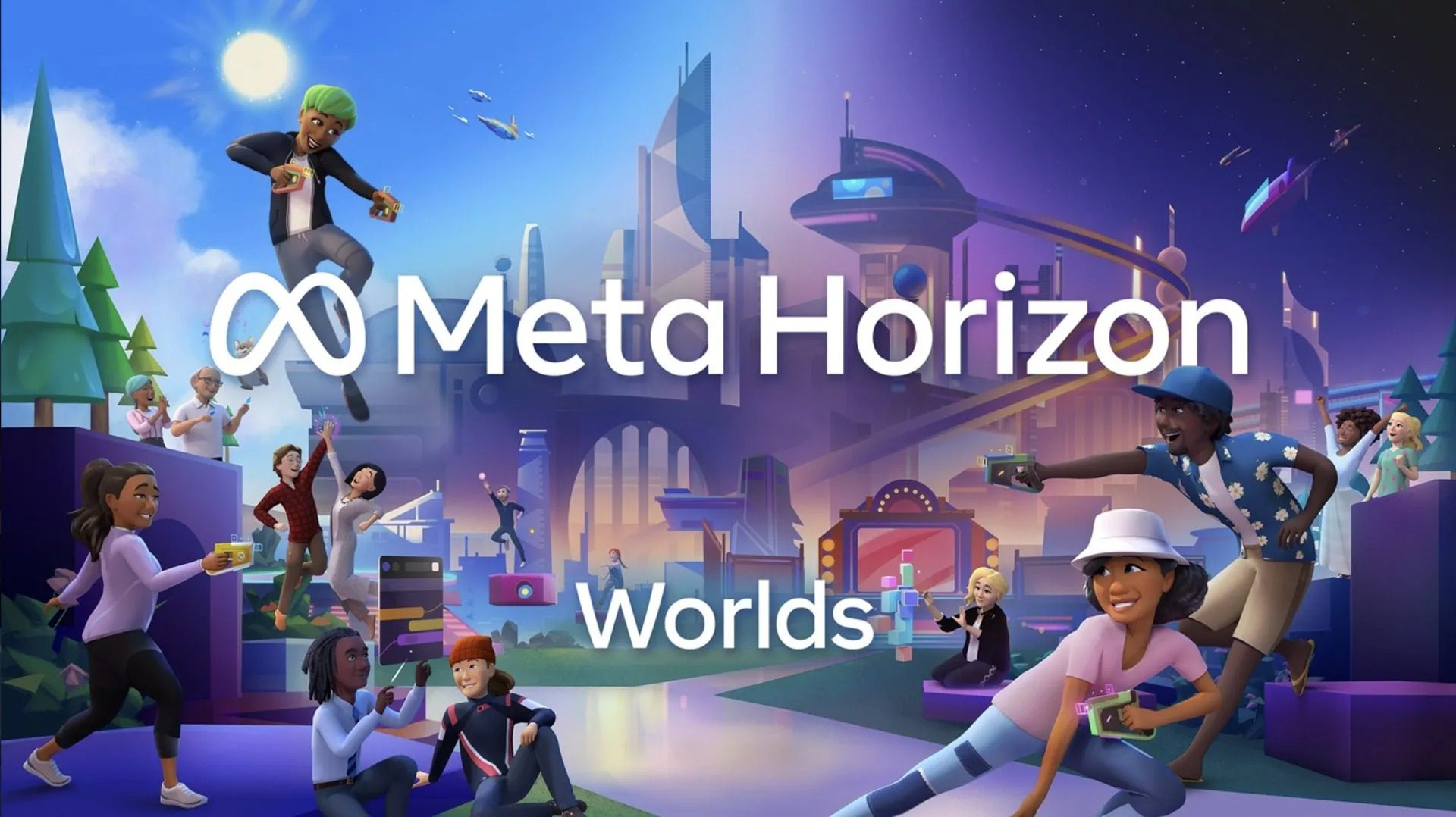
Image courtesy Meta

“That’s why we’re changing our roadmaps to increase your chances for success. We’re explicitly separating our Quest VR platform from our Worlds platform in order to create more space for both products to grow,” Ryan said. “We’re doubling down on the VR developer ecosystem while shifting the focus of Worlds to be almost exclusively mobile. By breaking things down into two distinct platforms, we’ll be better able to clearly focus on each.”

This largely echoes statements made by Meta CTO Andrew Bosworth last month defending layoffs affecting 10 percent of its Reality Labs, wherein he explained that higher costs and a fractured development process led to the decision.

“Having to build everything twice—once for mobile and once for VR—is a tremendous tax on the team. You’d rather grow a giant audience and then work from a position of strength,” Bosworth said.

While Worlds promotion is being removed from Quest’s suggested content feed, at the time of this writing Horizon Worlds is still downloadable from the Horizon Store for Quest. It remains to be seen when Worlds will be decoupled entirely.

SEE ALSO
Google is Rolling out Photorealistic 'Likeness' Avatars on Android XR to Compete with Apple's 'Personas'

My Take

While Meta has never shared concurrent user numbers for Horizon Worlds, one of the key limiters in the beginning was undoubtedly the need for a Quest headset to play. It wasn’t available on anything else, which is fine when you have a addressable concurrent userbase in the multimillions—something even the most popular VR platform can’t claim at this point.

Notably, before Meta released on Android and iOS in late 2023, other social VR platforms had already made strides in the direction of bringing support to mobile, including class leaders VRChat and Rec Room. So, Meta followed suit, and quickly found out that kids with cellphones were spending more time and money in Horizon Worlds than Quest users.

And ultimately, some of this came down to control. Ostensibly hoping to avoid publicly-damaging controversy from the get-go, Meta initially kept a fairly tight leash on user-generated content, including complexity and visual richness of worlds. Even now, user avatars are fairly basic, with the pipeline of customization funneled to purchasable accessories rather than user-generated avatars, like you might see in VRChat.

That said, Horizon Worlds experienced a much slower and rockier start than Meta likely thought it would following its initial release on Quest in 2021. In retrospect, Meta’s more recent decision to mix user-generated Worlds with actual VR apps in the Store feed was probably a last ditch effort to get Quest users finally interested in Worlds—even if by accident.


This article may contain affiliate links. If you click an affiliate link and buy a product we may receive a small commission which helps support the publication. See here for more information.

Well before the first modern XR products hit the market, Scott recognized the potential of the technology and set out to understand and document its growth. He has been professionally reporting on the space for nearly a decade as Editor at Road to VR, authoring more than 4,000 articles on the topic. Scott brings that seasoned insight to his reporting from major industry events across the globe.
  • Christian Schildwaechter

    TL;DR: Meta isn't removing Horizon Worlds from Quest, it is removing Quest from Horizon Worlds, and it was their last attempt to turn VR into a mass medium.

    All that talk about empowering VR developers or changing the roadmap to increase their chance of success is just sugarcoating for VR no longer being part of their platform plans. And looking at the numbers it is quite clear why.

    You may be happy to be rid of Horizon Worlds on Quest, and think that it was doomed anyway because it always sucked. But Quest is now dominated by rather young users looking more for a social VR gaming experience, and Gorilla Tag is by far the most popular game. And once Meta allowed "mobile only" worlds in early 2025, they saw monthly user numbers quadruple and in-game sales raising 250%, while software revenue stayed overall flat for VR.

    Horizon Worlds is now doing a lot better on mobile than it did in VR. So the problem wasn't that Horizon Worlds couldn't attract more users, the problem was VR itself. That may be hard to swallow for VR enthusiasts, but is what we have seen for years with very low adoption among gamers and low retention rates among those that actually got a Quest. And that despite prices falling dramatically, performance and overall specs improving a lot and now large game libraries.

    None of these advances really made a huge dent. Maybe a new generation of lighter headsets with reduced frictions will finally bring the breakthrough. But I doubt it, esp. since all of them will be much more expensive than the currently most popular Quest 3S. People simply don't want to wear HMDs for whatever reason. They didn't even want to wear 3D glasses. VR enthusiasts are willing to deal with the numerous inconveniences for the uniquely immersive experience, but very few other people are.

    Meta did a lot of things right. This time they stuck with Horizon Worlds as their latest attempt at social VR for years, unlike the first few times when they scrapped several previous attempts to start new from scratch, heavily criticized by many. And apparently Horizon Worlds is now actually somewhat popular with the Gorilla Tag/Fortnite crowd, as long as they don't have to wear a VR HMD., so the design kind of works. Meta also paid for both first party AAA titles and supported numerous VR game developers financially to push the platform with extra content besides Horizon Worlds. And of course sold the hardware at cost, investing billions into the venture. And it just didn't work, meaning it never generated the growth numbers they needed to become a large platform player.

    So what they are now doing isn't freeing Quest users of Horizon Worlds, they are freeing Horizon Worlds developers of any extra effort for supporting both mobile and VR. Developers could already choose this themselves once Meta allowed mobile-only worlds in 2025. And apparently most did, now causing Meta to cut off VR completely from it. They are still hoping to grow Horizon Worlds into a metaverse platform, competing with Fortnite or Roblox, and VR would apparently only slow it down.

    Meta invested around USD 100B total into XR with the goal to become a big platform player in whatever comes after smartphones. And that goal will now rest on smartphones and Horizon Worlds on mobile phones, with VR mostly cut off from the huge financial resources Meta previously provided, but left alive with the official goal to become self-sustainable. Which it didn't really achieve in over a decade despite sub-USD 300 HMDs. And given that these were the most sold VR HMDs by far, outselling Quest 3 by 4:1 and other HMDs by at least two digit factors, the odds that it will work with future, no longer subsidized hardware selling in much lower numbers, aren't all that great.

    Horizon World as now one of Meta's main focus areas is getting rid of VR, not the other way around, simply because VR didn't deliver. This will come at a huge price for VR. And all the theoretical benefits from less competition or more focus or better chances for competitors will be countered by a pretty much inevitable significant fall of VR user numbers and thereby shrinking market size.