

Amazon Reportedly Developing Smart Glasses with Display to Rival Meta

9

Amazon is reportedly developing a pair of consumer smart glasses which is slated to rival Meta’s rumored ‘Hypernova’ smart glasses with display, according to a report by The Information.

Citing two people with direct knowledge of the plans, The Information maintains the glasses, internally codenamed ‘Jayhawk’, are set to include include microphones, speakers, a camera, and a monocular, full-color display.

The report maintains Amazon is eyeing a consumer launch of Jayhawk in late 2026 or early 2027, however the price point is currently unknown.

Equally uncertain is whether Jayhawk will be marketed under Amazon’s ‘Echo Frames’ line, first introduced in 2019, including voice-controlled frames and music playback, calls, and smart home control powered by Alexa.
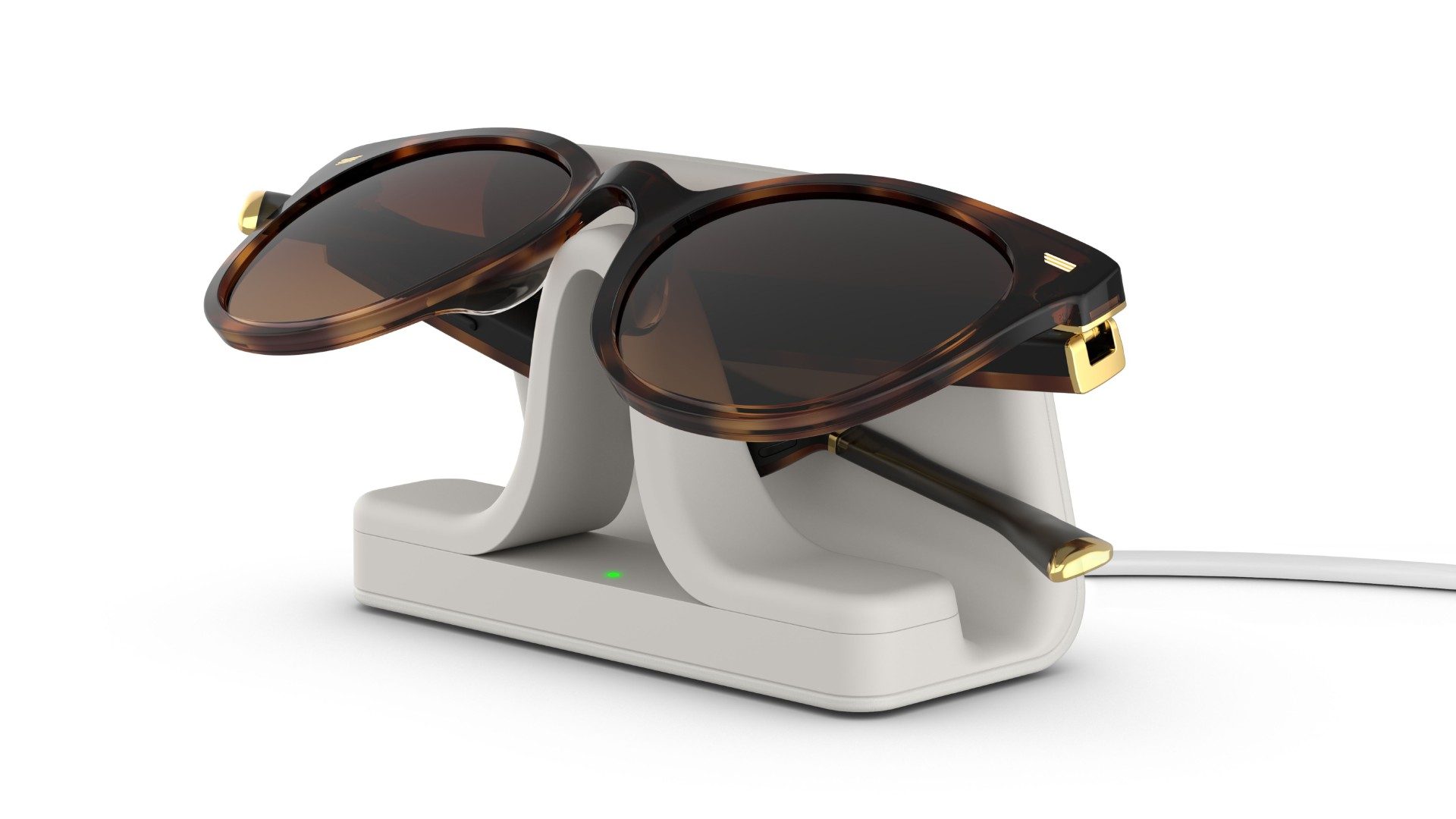
Third-gen Echo Frames | Image courtesy Amazon

Now in its third generation, launched in late 2023, Echo Frames offer essentially the same set of features as the first and second, with the notable outlier being any sort of camera (or display) for photos and video capture.

Additionally, The Information reports that Amazon is also creating smart glasses for its delivery drivers, said to be bulkier and less sleek than the consumer ‘Jayhawk’ model for consumers.

SEE ALSO
Mojo Vision Secures $75M Investment to Commercialize Micro-LED Displays for XR Glasses

Codenamed ‘Amelia’, the glasses are reportedly set to provide instructions to help sort and deliver packages. Those are said to rollout as soon as Q2 2026, and include an initial production run of 100,000 units.

In contrast, recent reports from supply chain analyst Ming-Chi Kuo and Bloomberg’s Mark Gurman maintain Meta is nearly ready to begin mass production of its own smart glasses with monocular display.

Internally codenamed ‘Hypernova’, and possibly marketed as ‘Celeste’, Meta’s forthcoming smart glasses are expected to cost around $800, according to Kuo.

– – — – –

The Information maintains in its reporting that the glasses will be “augmented reality”, however the device’s description puts it squarely in the smart glasses segment.

In short, AR glasses overlay spatially anchored 3D digital content into the real environment, while smart glasses mainly provide heads-up information or notifications, either by monoscopic or even stereoscopic displays. You can learn more about the difference between AR and smart glasses here.


This article may contain affiliate links. If you click an affiliate link and buy a product we may receive a small commission which helps support the publication. See here for more information.

Well before the first modern XR products hit the market, Scott recognized the potential of the technology and set out to understand and document its growth. He has been professionally reporting on the space for nearly a decade as Editor at Road to VR, authoring more than 4,000 articles on the topic. Scott brings that seasoned insight to his reporting from major industry events across the globe.
  • Good to see also Amazon entering the field! I mean, it was already there, but the previous glasses seemed more experiments than products that could have real chances of selling well

  • Christian Schildwaechter

    TL;DR: Amazon's Android app store gives them a (longterm) competitive advantage over other smartphone manufacturers like Meta that also aren't willing to hand over all software revenue to Google.

    Amazon has one big (theoretical) advantage over most other companies selling XR glasses: their own Android software store with a decent amount of apps. They have a number of devices like their Fire tablets and sticks all driven by their own Android fork, so they don't rely on Google Play Services that would require Amazon to give all the software revenue to Google, which will also be a requirement for all AndroidXR HMDs.

    That won't matter right now with most smartglasses featuring no displays at all, and the few that do only offering tiny monochrome displays in VGA resolution. But over time these will improve, and smartglasses will take over more and more of the features from smartphones.

    And just like a Quest with the Android based HorizonOS can run most (sideloaded) Android apps, smartglasses with high resolution displays could too. The discussion about XR productivity has somewhat cooled down in the last few months with AVP selling in low numbers and AndroidXR/Project Moohan still not available to customers, but the fundamental problem of Meta not having access to a store with flat Android apps remains.

    So even if for the next few years Meta and Amazon as two large companies competing based on features to offer smartglasses not locked into Google's Play Store, somewhere down the line the balance may shift in favor of Amazon, simply because they have more access to flat (productivity) apps that will be much more in demand on smartglasses worn all day than on VR HMDs.

  • Christian Schildwaechter

    TL;DR: for XR to survive, the companies involved have to find (longterm) strategies to make money, otherwise they'll at one point pull the plug. Amazon may be a lousy platform owner, but they at least already have a strategy, using subsidized hardware to lure customers into their subscription services for videos, audio and e-book, and getting shipped lots of junk.

    Me going for the financial viability first is probably more of a personal thing. My main interest in VR has never been about games, I have a background in clinical research that made me even more of a numbers person than I was before. I also have formal training as a game developer that came with a lot of producer courses involving Excel sheets to find and optimize items for monetization in F2P games, promotion strategies and more, because making a living as a game developer is challenging, to say the least.

    So while I love that we are now seeing more players entering the XR area, I'm also always concerned how sustainable this will be a couple of years down the road, when the initial venture capital is burned up. We currently don't have anything resembling a healthy market, with Meta both subsidizing prices, allowing more people to buy the hardware, but at the same time booting everybody else out of the (consumer) market by making it almost impossible to make money outside of their ecosystem, leading to a lack of competition that usually drives progress and lower prices.

    Amazon no doubt isn't the first, second or third choice for a good Android version, and according to rumors Amazon themselves is now considering dropping their own Android fork because it is so far behind. What they do well is subsidizing hardware, similar to Meta. But while Meta does this as an upfront investment, hoping to recoup the money in the future by becoming a platform owner like Google or Apple, Amazon does this to onboard people onto their subscription services like Prime video, Kindle or Audible. Them having a way to actually make money increases the chances of continued support. But they also have their own money burning machine with Alexa, generating billions in yearly data center costs, but not a lot of Amazon sales to compensate those.

    And Horizon Worlds on mobile absolutely has to break out for our long term plans to have a chance. If you don’t feel the weight of history on you then you aren’t paying attention. This year likely determines whether this entire effort will go down as the work of visionaries or a legendary misadventure.

    Meta CTO Andrew Bosworth in an internal memo about the future of XR at Meta from early 2025. Unfortunately not even Meta is guaranteed to pay for XR/VR/AR indefinitely. In reaction to too few Quest user buying too few apps, they are pushing the platform more towards Horizon Worlds. But as the quote above shows, their main focus is not even the VR version, but actually the one running on mobile phones. Simply because regarding virtual worlds with lots of users, they are trailing far behind Epic's Fortnite that has moved from a successful Battle Royal game to a place for lots of other games and activities like concerts.

    So yeah, I'm quite worried that Meta might effectively drop out of VR, focussing on smartglasses and Horizon Worlds on phones simply because monetizing VR never worked out. Monetization gets a bad rep, but without it, we very much depend on how long Meta is willing to lose billions each year, which could end at any time.

    • Bobobj

      Would VR enthusiasts and devs really be worse off if the Quest and its infantile userbase was not part of the picture? It's a "big market" that generally doesn't buy anything and turns off adult users..

      • Christian Schildwaechter

        They don't buy apps, but they pay for a lot of micro-transactions and in-game cosmetics, which made Gorilla Tag (one of) the most profitable VR apps ever, passing USD 100M in revenue a year ago. Beat Saber had passed that marker three years earlier, but by now Gorilla Tag might even have overtaken it it, with est. 1/3rd of the whole active Quest user base playing it, probably even more. Unfortunately this funnels much of the money made in VR to only two companies, Meta and Another Axiom

        We will never know what would have happened if Meta hadn't pushed Quest or even subsidized Rift before that. It's possible that this would have led to a healthier PCVR market and more (hybrid) PCVR games, but it is also possible that without all the money Meta pumped into VR, it would have shriveled even more, and due to higher prices and a general lack of interest we might not even have gotten UEVR to somewhat compensate for a lack of native VR games.

        And it's not like the enthusiasts bought enough Quest apps before the invasion of the Gorilla Tag crowd. High profile titles like RE4 or AW2 never stayed long in the sales Top 20, which for years has been mostly dominated by casual titles. Developers reacted and offered shorter, easier to consume titles, and now a lot of them try to get onto the F2P train. Many of them would probably rather work on more complex game selling at a decent price, but that market never really grew large enough to pay for such projects.

  • Christian Schildwaechter

    and it's too inconvenient to pull the phone out of your pocket?

    Yup, definitely, with having to look down and the phone occupying one of your two hands making it worse and way more distracting than smartglasses.

    Convenience is a mayor driving factor for technology adaption, and while a lot of people will complain that it's not really that much effort to use a smartphone, in reality friction is one of they main causes why people don't like VR HMDs. Glasses have a much higher form factor acceptance with roughly half the world's population using them.

    Enthusiasts always overestimate how much people are willing to put up with, but for example Google regularly posts infos about typical web user behavior, with one number being that 53% of people will abandon a web site if it takes longer than three seconds to load. "Meta, translate this" or "Alexa, show me the next exit" will work instantly on smartglasses, while pulling out your phone, unlocking it, starting Google lens or Maps and pointing it at whatever you want will take at least five seconds for someone fast, and much longer in most circumstances.

  • Andrew Jakobs

    All the attention is towards US companies and their future AR glasses, while china already released several AR glasses the past few years, with hardly anybody giving those any attention here.

  • Pontus

    I would say that translation is a very good use case for glasses like this. I have people every day talking in languages I dont understand and then being able to text in my view when I want would be great. Also reading mail or other messages without taking out the phone is very convenient (I already do it with the Even reality glasses).
    So I think there is lagre target group here with lots of use cases. But of course there will allways be people that dont like it and dont understand it.
    But just try it and I think many will see the benifits

  • Max-Dmg

    Every amazon app and peice of software is permanentl bug riddled. Looks like more shit software coming out from them.