
Meta CTO: VR Gaming “gravy train” Has Stopped, Customer Acquisition Now the Real Problem

57

Meta CTO and Reality Labs chief Andrew Bosworth detailed why he thinks he might have failed VR gaming fans, and why some people are angry, noting that it’s probably because the “gravy train has come to a stop.”

The News

Bosworth took to Instagram for another one of his weekly Q&As, where he fields questions from followers. In yesterday’s session, Bosworth answered this: “Do you feel that you have failed VR gaming fans? With so many sunsets and studio closures?”

“It’s really up to the people to decide whether I failed them or not,” Bosworth says. “I suppose it does raise the age-old question: ‘is it better to have loved and lost than never to have loved at all?'”

Here, Bosworth is describing the Reality Labs re-org in January, which saw 10 percent of the XR division laid off amid several VR game studio closures, including Twisted Pixel, Armature Studio and Sanzaru Games.

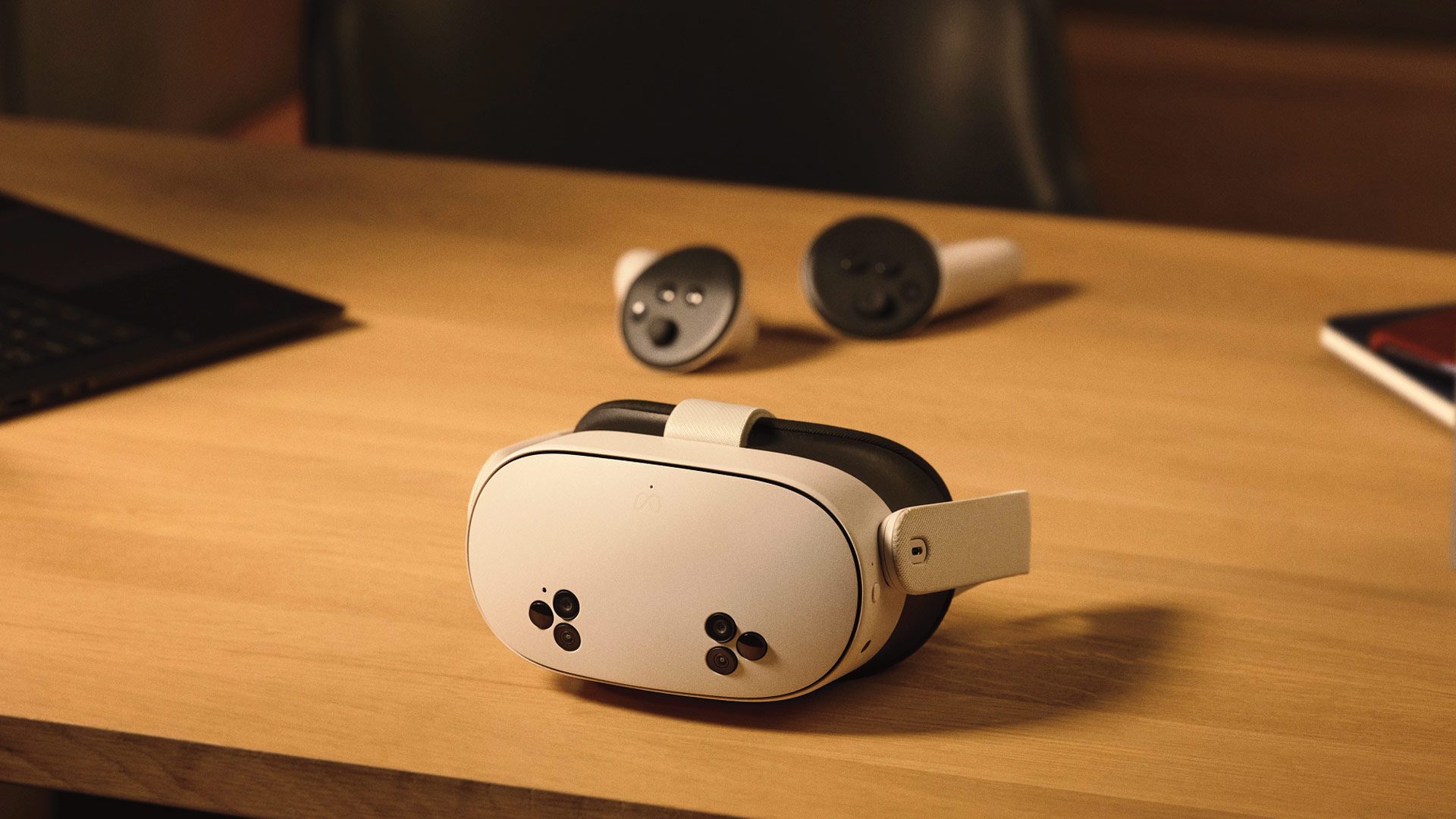
Quest 3S (left), Quest 3 (right) | Images courtesy Meta

“Many of the people who might say I failed them would say so because they loved things that I gave them, and are mad that the gravy train has come to a stop. But I still respect that,” Bosworth says.

But it’s not the first-party studio closures and near full-stop on VR game funding that Bosworth thinks is the failure: it’s customer acquisition.

“I don’t think I failed them because obviously they’re already fans. They love the work. The people that argue that I’ve failed are not yet VR gaming fans, who I think could be—who we hoped would be by now, but who aren’t.”

The failure, in Bosworth’s eyes, is not having created the right product for people who haven’t already adopted VR.

“And I haven’t built the right thing, or the right software to get them into the ecosystem. That is the failure. That is what we’re trying to attack in new and different ways: is to grow the base, to make this thing sustainable.”

SEE ALSO
Meta Reportedly Laying Off 10 Percent of Reality Labs, Shifting Focus from VR & Horizon Worlds

My Take

Essentially, Bosworth’s statement reads me like this: be glad for what I gave you, because you’re not getting any more. You have to realize that the only thing we can do now is try to get more people in… somehow.

But who are those people that Meta hopes to reach? And if they don’t want big, expensive single-player content that pushes the boundaries of standalone gameplay, what do they want? Meta’s strategy is too opaque to say for sure, but here’s my best guess at what’s happening.

For years, Meta funded big, polished single-player titles to prove standalone VR could deliver console-style gaming. That bought goodwill with core enthusiasts, but didn’t materially expand the addressable market, or drive recurring revenue at scale. That’s the only thing Meta is focused on now it seems, as the “gravy train” has effectively stopped.
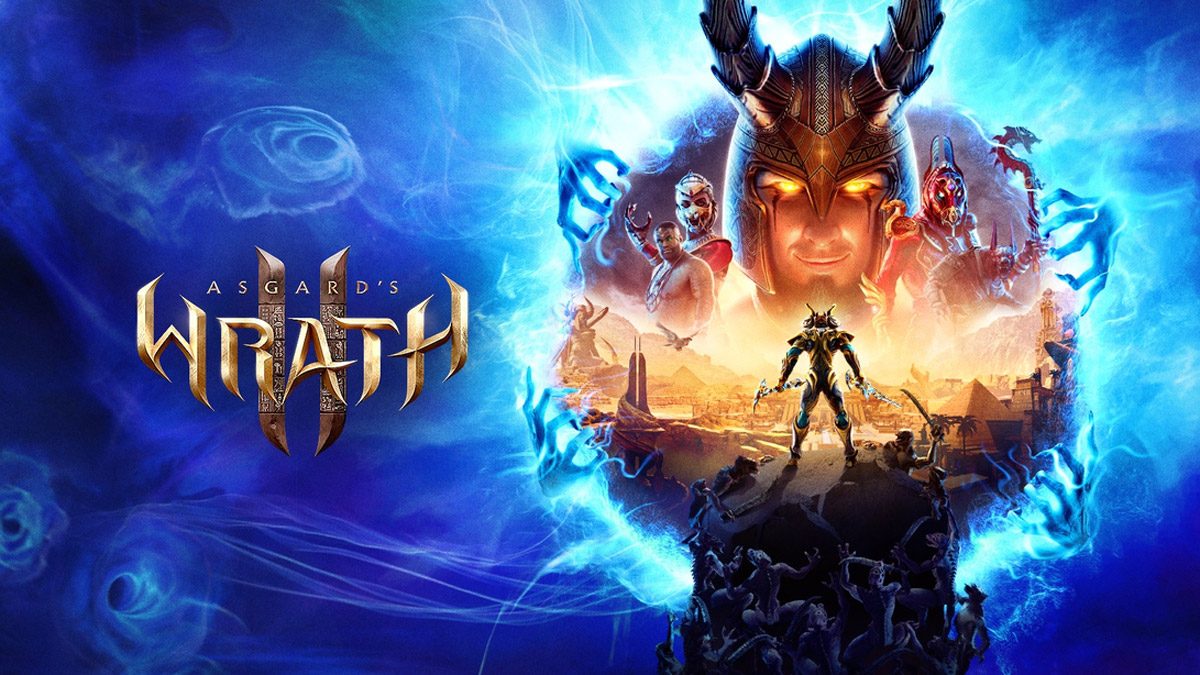
Asgard’s Wrath 2 | Image courtesy Sanzuru Games, Meta

In that context, Bosworth’s “failure” comment makes more sense. It’s not that the existing fans weren’t served—they were. It’s that the strategy didn’t convert enough non-fans into regular, paying users. That, and Meta has always been the ones to ‘show’ other studios how to build VR games—what with best practices and all—but for the past few years it’s been less about best practices and more about being the only company with deep enough pockets to create prestige content for Quest.

But before running off to compare Meta’s pullback to Sony’s vis-à-vis PSVR 2, there are at least two rumored headsets on the horizon: codename ‘Griffin’, expected to arrive sometime in 2027 and possibly succeed Quest 3, and a slim and light, puck-tethered headset codenamed ‘Puffin’ or ‘Phoenix’, also expected in 2027.

That said, kids have been big revenue drivers since the release of Quest 2, which has directly translated to Quest 3S. As it is, Meta announced last year that younger users were helping to push a new emphasis on free-to-play content, which in turn has helped drive in-app purchases. Last week, Reality Labs VP of Content Samantha Ryan revealed in-app purchases increased by 13% year-over-year, which notably didn’t even coincide with a new headset launch. Quest has no real competitor in the West, so Quest 3S is likely going to be around for a few more years so younger players have an easy entry point and continue to drive in-app purchases.

And at the same time, Meta has effectively decoupled Quest from its Horizon Worlds social platform, which was dead weight on Quest. This has essentially left the Quest platform re-focused back on VR gaming, albeit created solely by third-party studios and not Meta itself. So, Quest is back to gaming without the Horizon Worlds faff mixed in, but it won’t have any new first-party sponsored content either.

In all, this feel less like abandonment and more like a tactical retreat. Meta is investing in VR more than anyone, not to mention upcoming AR glasses and possible quick follow-up to Meta Ray-Ban Display. Games will still come, and some may even benefit from Meta funding to some extent, albeit not at the same scale as before. At least as Meta presents it, the long-term vision is still there; it just needs more sustainable spending and a different model to scale.


This article may contain affiliate links. If you click an affiliate link and buy a product we may receive a small commission which helps support the publication. See here for more information.

Well before the first modern XR products hit the market, Scott recognized the potential of the technology and set out to understand and document its growth. He has been professionally reporting on the space for nearly a decade as Editor at Road to VR, authoring more than 4,000 articles on the topic. Scott brings that seasoned insight to his reporting from major industry events across the globe.
  • Quote:‘is it better to have loved and lost than never to have loved at all?'”
    I think he is really wrong here! They took companies from the market, so that no other can buy them or so that said companies couldn't work for Sony etc.

    So the questions should be: is it better to merry a person, just so no other should be with them? And thats highly depressing to say the least!

    No, meta f@cked up with all their metaverse stuff, cumbersome software and now they drop the games division like hot potatoes.

    • Hussain X

      Almost all the companies Meta bought, Meta funded the VR titles in the first place before buying them. So the big VR games, before Meta bought the studios, won't have existed anyway without Meta funding. Sony buying Insomniac games accelerated this buying.

      If anything, Meta took companies from flat gaming market into VR gaming market. Like Gabe took VR gaming file hosting fee of 30% from the VR market into the super yachts market.

      • Death

        Doesn't matter. If they would've released their games on PCVR as well as their own platform they could've pulled in a lot more money. Meta is tripping over dollars to pick up pennies.

  • mellott124

    They got a lot more new users into VR. More than we've ever had before. It just isn't enough for them.

  • Leisure Suit Barry

    VR gaming is on the severe decline, only delusional people like @nl_vr disagree

  • Nothing to see here

    Meta, please pay attention: There is a reason why more people play console games than any other. The controllers work great. Look at the PS5 controller. Compare it to the PS2 controller. Not a lot different, right? Still the same basic shape. Buttons and sticks are in the same positions. A few more bells and whistles but it's pretty much the same. The reason why VR sales are not growing like they should be is that the vast majority of potential users are put off by the weird hand waving user interface you insist upon for all your VR games. Now look at the Switch 2 and compare it to the Wii controllers. Notice how the Switch 2's controls are basically a PS2 controller split to both sides of the screen? Remember how the Wii failed miserably in the end? That's the Quest right now. Please require games to at least support standard PS5 controller compatibility via Bluetooth. Allow the Quest to act as an amazing VR display for PC games. I know you thought that the future was Ready Player One or Sword Art Online in which the user believed they were actually inside the VR world but we are very, very far from full dive technology. Literal hand waving (sometimes bone breaking) is a completely failure just like the Nintendo Virtual Boy was. Go with what actually works in gaming first and expand into more immersive games once you have a large self sustaining user base.

    • Andrey

      Yeah, right – let's take away 50% of what makes VR great and immersive – natural interaction with virtual worlds…
      Maybe you should invest in something like Xreal glasses if the only thing you need is a stereoscopic image?

    • Christian Schildwaechter

      Maybe take a look at some VR games on Steam that only support regular gamepads, but not 6DoF hand controllers. They mostly get ripped to pieces for this in the reviews, regardless of the game's quality. There certainly is a subsection of the VR user base that are mostly looking for a seated gaming experience that just adds looking around and stereoscopy, but that is clearly a minority. And only a few games really pulled off gamepad controls, mostly on PSVR1 like RE7 or Moss, or games with a natural fit like racing or flight simulators.

      And if you look at the long term most popular Quest games, they typically rely heavily on hand controllers. Beat Saber, Gorilla Tag, Blade and Sorcery: Nomad, Golf+ and even Job Simulator as poster child for early VR games are all based on a "weird hand waving user interface", and wouldn't really work without it. You can of course force everything, but playing the hacked-for-flat Half-Life: Alyx with mouse/keyboard/controller takes away much of the experience, so forcing game developers to also support regular gamepads is a rather bad idea.

      It makes more sense the other way around, encouraging flat game developers to incorporate richer 6DoF hand tracking options, as we have seen on a couple of PSVR2 hybrid games. But then the problem is more convincing flat developers to invest anything for the small VR user groups at all, given that this will probably not pay off for them anymore than turning Quest into a great PC VR display would pay of for Meta.

    • Leisure Suit Barry

      All my favourite VR games and playing with a pad. In fact I find most motion controller 'VRAF' games quite gimmicky

      • Death

        Then why play VR at all if you want to use a controller? That just removes what VR is trying to do.

  • My understanding of using the phrase "gravy train" is that someone is getting something for free or at a greatly reduced cost.

    As a VR user since 2015 I find this yet another slap in the face from Meta.

    Can we have Oculus back now please?

    • JakeDunnegan

      I feel like the gravy train was really to the developers. They were getting paid a LOT of money to produce things that did not produce customers or make sales. It's also developers and Meta's job to get new customers, not gamers'.

      I don't think this guy is pointing at gamers, since it's not like the stuff was free, but perhaps in his confused delivery, gamers are getting a bit of splash damage of "blame" b/c Meta subsidized the development and took a loss, but it was by no means free, and again, it's not our job to get customers.

      • Christian Schildwaechter

        The development of Quest and Horizon OS was "free" for users, as Meta sold headset at production costs, eating all other expenses. So the gamers were on the gravy train too, and we will see the impact of that once Meta starts releasing no longer subsidized hardware.

        It is the "job" of the customers to spend enough to keep a platform sustainable, even if companies will often be willing to bankroll the initial phase until enough people have gotten onboard. There are both too few VR users, and they on average don't spend enough money to pay for all the development, so we have gotten tons of stuff maybe not completely free, but at unsustainable low prices.

        Of course you can shift the responsibility for growing the user base to only Meta, Pico or Valve, but then you also have to accept if those cut their losses because it didn't work out. People complain about the Google graveyard of killed projects, but conveniently forget that these were usually shut down due to lacking users engagement.

        • JakeDunnegan

          "The development of Quest and Horizon OS was "free" for users, as Meta sold headset at production costs, eating all other expenses."

          Subsidies by a corporation are not a gravy train. Subsidies from a government? Absolutely. It's taking by force the fruits of labor and giving it to another. But subsidies by gaming company? Are you kidding me? Those are done to win market share and adoption. That is a COST of doing business and most gaming companies that have platforms adopt it. Why? Bigger risk, bigger gain, that's why. Facebook/Meta wants to rule the future – they want to be where Microsoft was in the 80s-2000s and where Apple is now.

          They are not doing it out of the generosity of their hearts. Zuck wants to be Gates or Jobs. That is it. That is why ALL of this VR stuff is happening. What, you think Zuck is the greatest champion of VR b/c he bought Oculus? Don't be so naive.

          "It is the "job" of the customers to spend enough to keep a platform sustainable"

          Good lord. Next think you're going to do is talk to me about the gaming proletariat.

          "you can shift the responsibility for growing the user base to only Meta, Pico or Valve, but then you also have to accept if those cut their losses because it didn't work out. "

          It's not me (or anyone else) shifting responsibility…it IS the companies' responsibility – to their shareholders and employees, if nothing else, to get customers.

          You are extremely knowledgeable about tech – but you have very odd views on the economics side of things.

          • Christian Schildwaechter

            TL;DR: It's all about numbers.

            Governments paid for research on solar power at universities, paid for very expensive satellites using early solar cells, offered tax reductions for companies working on that tech, paid for free power connections to solar farms, gave companies tax brakes for covering their roofs with solar cells and guaranteed a rather high price per kWh for years to provide enough motivation to invest in the tech. This went on for decades, slowly improving tech and lowering prices. And by now no private investor looking to make a profit would consider creating a coal, gas or nuclear power plant without heavy subsidies, because solar has become so much cheaper, with battery storage following a similar trend.

            That's not creating a gravy train or giving people's money away. That is a long term investment that will benefit everyone, and which started long before we even became fully aware of the damage fossil fuels were causing. Meta's investment in XR was also a long term investment, only that mostly Meta shareholders would benefit in the end.

            Long term investments can provide a gravy train for those participating, which can backfire. For example Germany early on pushed solar power a lot, which lead to numerous companies springing up, and lots of private and public solar panel installation, because subsidies, tax breaks and other aids made them profitable. It worked in that it created infrastructure, jobs, knowledge and a large group of skilled workers that made the process more efficient and cheaper, but it removed too much incentive to thrive for lowering the costs. So once China started to also heavily invest, many of these well earning companies could no longer compete. The artificially inflated VR market not being driven by sustainable supply and demand will suffer in similar ways with the large influx of Meta money now stopping. There are basically way too many VR developers working on too large projects for the current size of the market.

            So you could say that these solar companies rode the gravy train, which in the end served its intended purpose of bootstrapping the market to where it is now not only self-sustainable, but self-accelerating. In the same way VR developers and users rode the gravy train on Meta's XR investment, that aimed to create a much larger XR market, with those getting on early benefiting from Meta artificially pumping lots of money into the market to get things going. Unlike solar power, this didn't lead to a large market though, so Meta are now switching to smartglasses instead.

            And you would probably be surprised how many countries pay subsidies to gaming companies. Usually not the big players, but as games have become a big business over the last few decades, with most games traditionally coming from a few places like the US or Japan, a lot of countries started their own booster programs to kickstart and/or support the local game development scene. The UK having a for its size way above average share is due to their government systematically subsidizing local home computers and computer literacy in the early 1980, which still pays off for them in many ways.

            The distinction between good and bad subsidies by their source like enterprises vs governments vs gaming companies is nonsense. There are effective and ineffective subsidies, all strategic, all aiming to push a market or society in a certain direction for some long term goals. Some of them end up waisting a lot of money, like Meta just experienced, but that won't stop them from trying again somewhere else.

            Some subsidies are of course plain stupid and/or just shoving money around, like the SLS production in Huntsville forced onto NASA by some senators, waisting colossal amounts of money. But that's still part of a market, just not a monetary one, because apparently voters keep electing these senators due to the benefits/gravy train it provides, and those somehow manage to offer enough favors to other senators to get this insanity into bills for years.

            So you may have mentally separated all these things, with you being the good customer, and the companies getting a fair deal because they will long term benefit, and therefore all this being their responsibility. But you are just one tiny cog in this large game that got lucky like most VR users. What you do is not sustainable, because there are too few like you doing the same. You may not have the power to change that, but that doesn't mean you are not part of the problem. SLS is one senator away from being dumped, and Quest is one strategic decision at Meta away from being dumped. It's all just numbers.

          • JakeDunnegan

            Not going to reply to the whole thing since I did below – but, regarding subsidies by countries to companies – yes, I know that – I played "The Secret World" for a long time. ;) But, that's b/c the country is hoping to further tech growth in their country and of course, it helps supply jobs as well. Again, the country's own interest in subsidizing it.

            Norway wasn't subsidizing The Secret World so that I could play it. I highly doubt an American needs any money from them!

            In any case, just thought I'd respond to that, but it's not really relevant to this conversation (country sublimation).

            My other comment on that is that…I really liked my "gaming proletariat" line. LOL It was good, dammit! ;)

    • Jonathan Winters III

      Your Quest headset is a HEAVILY subsidized item, so you are part of the gravy train. They won't be subsidizing anymore so prepare to pay close to triple the price for the next Quest.

      • brandon9271

        They assumed they'd make it back on games sales and I've used mine almost exclusively for PCVR.

        • Christian Schildwaechter

          I doubt they ever believed they'd make back the money from games. Given their USD 100B total XR investment and let's say 25M HMDs sold, each user would have had to generate USD 4000 in profit. Even if Quest had become the best selling console ever, beating PS2's 160M, we are still looking at USD 625 per HMD, which isn't realistic.

          The sole way they would ever have made the money back was if they had breached out of the gaming market and into general purpose devices like smartphones, with sales measured in billions instead of millions. And not only making a percentage on game sales, but on all kinds of apps, in-apps purchases, ads and much more. Games were always just a stepping stone, never enough to justify the amount of money they threw at XR.

          So even if nobody had ever used Quest for PCVR, and instead bought all their games on the Horizon Store, this wouldn't really have changed the result. A few million users is peanuts in consumer electronics, you have to get into luxury products like sport cars with huge margins to break even with low buyer numbers.

  • Keng Yuan Chang

    too many steps to put on, too many steps to initiate, too many steps to put down, clunky and constant adjustments required, hot spots, sore spots, sore arms, getting through limited functionalities complicatedly, too much effort

    • Death

      Then VR obviously isn't for you. It is funny that you act like you have to make a day of it just play for a couple hours though.

  • Oxi

    I would think they are just going to buy out the free to play games, but this whole idea is absurd. They were very clear that they were going to burn money on XR and monopolize the industry, that's not a "gravy train." I'm not thanking standard oil for anything. I love that the steam frame is an open platform and can play existing games, if I can't get on the train then I can make my own.

    • mwbrady

      If you knew anything about them, you would thank Standard Oil.

  • Christian Schildwaechter

    TL;DR: Meta didn't lose their future platform bet due to a lack of trying or making too many mistakes, but due to betting on the wrong horse/medium.

    I'm with Bosworth on this one. You can blame Meta for a number of things, like pushing others out of the market, lots of inconsistent strategies, and a lack of necessary focus, but you can't say they didn't try to make VR a success. They were in fact willing to pay a very high price for this for a very long time, long after it had become clear that it wasn't going to be anywhere as easy as they initially hoped. There was no money grabbing involved, only money burning. And part of their pushing and inconsistency and seeming lack of focus was them adjusting and trying to figure out how to still get there.

    So I agree, Meta didn't fail VR fans, even though it tried to force Horizon Worlds down everybody's throat, shut down their PCVR efforts way too early and recently killed several studios and projects. Simply because they also really pushed the technology forward, made VR affordable and paid millions for AAA titles and supporting lots of VR developers, in a hope to attract more users.

    They failed to grow VR beyond its limited user base to where it would either fit their plans or became self sustainable. But so did everybody else. Meta no doubt messed up details, but the overall problem wasn't Horizon Worlds or the controllers or some specific game or the shitty UI or software bugs. These were no doubt screw ups, but the main problem is still that the vast majority of gamers/people don't like/want VR. And a lot of what people suspected were the reasons for this has been fixed, from lower prices to higher resolution displays to much simpler setup and extensive game libraries.

    Someone will no doubt still say that if only the FoV was larger, if only they had released GTA SA, if only they used OLED, if only the battery was at the back/in a puck, if only they included DP-In, this would have finally have made VR interesting for the masses. But given that the tremendous advances VR has seen over the last decade barely twitched the needle on how many gamers pick VR, that seems very unlikely.

    So far VR is not a mass medium, not even close. And there is a decent chance that it will never become one, because people don't like to strap things to their faces. Not even if they are superlight and well balanced and can also play flat games, so Frame won't change this either. Maybe future XR glasses that are almost indistinguishable from sunglasses, but still provide the immersion of today's VR HMDs will be more acceptable. But for one these won't exist for a long time. And it is possible that people still will not want to use them for VR, because they just don't care about high immersion, and don't want to be disconnected from others and their environment.

    I recently rewatched an LTT video quoting an IGN study saying that 93% of Gen Alpha prefer their phone as their primary gaming device, as well as 32% of all Millennials. That caused groaning noises by the presenters deep into PC gaming and at least expecting a controller for a decent gaming experiment. In another video by Pirate Software Thor was shocked to find young kids just don't know what a controller is, and automatically touch the display to control games instead.

    We are talking about 98% of the Steam users willing to put up with mouse/keyboard/controllers still rejecting VR, and even these 98% are now becoming a tiny minority in a large sea of people that do all things on an always connected touch screen they carry with them at all times, immersion be damned. Meta switching Horizon Worlds to mobile first/only and seeing user numbers quadruple in 2025 is a reaction to this development.

    So maybe the discussion should switch from trying to blame Meta for not doing better with growing VR, to how we deal with VR being and staying a niche that will now see a lot less investment in the future. It's not Meta's fault that VR didn't take off, in fact they deserve some gratitude for pushing VR to where it is today, and probably never would have gotten if actual VR revenue had had to pay for the development, similar to how it works in most other areas.

    • Jonathan Winters III

      They deserve full gratitude for end users. What a ride it's been!

    • Gumby

      I agree with everything you say here, but I think we should have some humility about claiming that VR will remain niche forever. We early adopters find the basic technology very compelling, and based on demos I've given to others (a small sample size but diverse), I think a wide range of non-VR users also feel the same thing when they get a try. Something is keeping them out of VR – comfort, social acceptability, lack of value-add to their lives, lack of information – we don't really know. We also don't know what feature or software it would take for VR to go mainstream, but that's not a reason to think there isn't such a feature set or piece of software or combination of these things.
      There is plenty of historical precedent for device categories failing and failing to gain momentum until one day – BANG! They're everywhere. Think about video game consoles in 1983 or the Palm Pilot or the early Honda EVs and hybrids. The ideas were right and would one day take over the world, but something wasn't quite there yet. As to "people don't want to strap anything to their face," well it wasn't that long ago really that people didn't want to walk around with little computers in their pockets – that was strictly hyper-nerd stuff – and now here we are in a world transformed by pocket computers. Social acceptability can and has changed dramatically, pretty darn quick once people see value for their own lives.
      I remain convinced that there is a killer use case for almost all adults for VR devices – that could be sports, movies, concerts, telepresence, gaming, 3D design, exercise, visualizations for drug use, porn, or whatever else. If that's true, then the basic idea is sound and we just need to overcome whatever barriers make VR "not worth it" – surely that can be done with just a few billion more, Boz!

      • Christian Schildwaechter

        TL;DR: VR already got pretty good in the last decade, with progress now getting much slower with diminishing returns, at probably higher prices. It is already "good enough" for great games, yet people still don't care. The primary problem is no longer the tech, the main issue is the type of experience that only a rather small group of enthusiasts really cares about (deeply). This limits the potential reach of VR and thereby the scope of game development.

        It's of course impossible to predict the future, but there are three main reasons why I don't think that VR will have a breakthrough moment like many other technologies:

        – It's already looking back at a rather long development history and recently got a USD 100B boost by Meta that not only solved lots of the remaining technical issues, but also drove down prices to where they are no longer an issue.
        – Tons of people can already recognize Beat Saber or Gorilla Tag, so they at least know it exists with a rough idea of what it does, and many have actually tried VR, but most of them still don't care.
        – Comfort is a fundamental issue, as is isolation from the environment, and these will never fully go away.

        I'm sure that VR will continue to grow and see wider acceptance with technical improvements, and also gain a lot of new use cases that will make it more attractive. Media consumption is already one, with lots of AVP owners saying they prefer the HMD over any large screen TV, at least when watching movies alone. But technically this isn't VR, it is more MR. My doubts are specially about the full immersive experience, while I have very little doubt that AR glasses will become widespread, simply because they can help with tons of things people encounter in their daily life.

        And of course it often takes a lot of time for tech to become mass market viable. Solar cells have been around since the 1950s, first finding use in niches, slowly getting cheaper and better, and now beating every other energy form in LCoE. So they will win by default, but it took more than half a century of research and subsidies and supporting politics to get there. But we actually aren't the early adopters of VR. The first 6DoF room scale VR head mounted display was "Sword of Damocles" from 1968, which is where the term HMD came from. There was a huge rush in the early 90, and afterwards VR saw continued use in universities, industry and military. These were early adopters that bore the typical first mover costs, meaning very high prices, no available content, high maintenance effort and very limited use cases.

        Technically we are sort of in the third wave of VR, enabled by hires mobile phone displays and GPUs with flexible shaders that allowed to use cheap lenses by compensating projection distortions. These were main issues in older HMDs. This wave also benefited from existing ecosystems for 3D games incl. powerful game engines. Oculus didn't start from scratch, they combined a lot of already existing tech. And then Facebook went and put the pedal to the metal, allowing to create VR specific components instead of relying on parts paid for by billions of sold smartphones.

        So I don't buy the "this is early on, the tech is still too flawed, but will improve a lot" anymore. Of course SoCs will get faster, but just like TV manufacturers now have stopped working towards 8K displays, simply because due to the limited human vision there is no demand for these, I doubt that there is much need to go far beyond the currently available 4K microOLEDS even for media or productivity use. VR gaming could get away with much less, and the complaints about PSVR2's 2K displays have pretty much vanished, the main issue is the lack of content.

        And while early EVs suffered from lacks in battery tech and charging infrastructure at very high prices, and PDAs were rather cumbersome (I owned several Palm PDAs and to this day fiercely hate the Graffiti hand writing recognition), VR got pretty decent within the last decade. We are nowhere near a 1977 Atari VCS or 1983 NES development level, even VR standalones are already in the PS2/PS3 area. In 2010 you had to pay about USD 25,000 for an NVIS nVisor 6DoF HMD with 1280*1024/eye at 44° FoV, without the PC. By 2016, the first gen Rift/Vive brought the entry costs for 6DoF VR down to about USD 2500 incl. the PC at a similar resolution, but > 90° FoV. By late 2020 the Quest 2 dropped the bar to USD 300 with 2.7x the pixels of the NVIS for less than 1% of the price, and no longer requiring a PC.

        So we already got pretty far. The Quest 3S is capable of running some pretty great games. Of course they will get faster and lighter, but in no way at the pace we saw up to now, and with diminishing returns. They are already dirt cheap, and similar to mid range phones probably won't get much cheaper, only better, simply because the price where people don't really care about the money is already reached. And those that struggle with USD 300 can get a still very capable used Quest 2 for less than half of that.

        We probably won't see (m)any fundamental improvement from here on. And the things that will get improved like resolution, weight, speed or FoV aren't the ones that keep non-VR users away, those are just on the VR enthusiasts wish list. I've demonstrated VR to countless people, which resulted in a pretty universal WOW effect, followed by an almost as universal lack of follow-up. Very few people later asked if they could try it again, despite being impressed. And due to only trying it for a short time, and me carefully picking what they tried, they (mostly) hadn't suffered from typical problems like eye strain, unpleasant pressure from wearing a HMD for a long time, or any type of motion sickness. So they never got to the point where still existing issues could have turned them away.

        They were impressed, but apparently not enough to care. And this is something pretty much no VR enthusiasts can grasp: that people simply don't care about this highly immersive medium. So they try to find other reasons, be it lack of specs, comfort, missing AAA games or whatever, because surely, at one point everybody must love it. No, they don't. Most of them prefer mobile games on phones. Given that most VR enthusiasts cannot fathom how ultra low fidelity Gorilla Tag could become the most successful Quest game, with tons of teens getting the HMD just to play this with their friends, the "once it is good enough, they will come" hypothesis pretty much went down the drain anyway. It's not the still missing features, it is the experience itself.

        And that's why I think that VR will stay a niche, regardless of progress. Again, VR as in fully virtual environment, not people's daily environment augmented by virtual objects, which will have lots of practical uses. VR will still be great even for regular people for architecture walkthroughs, or some types of training, and see wider use over time. But it may never go mainstream as a medium by itself because most people don't like this kind of experience.

        Which has some dire consequences for those hoping that one day the market will become large enough for studios to release VR AAA games. Because that will never happen if VR titles sell only a fraction of PC or console games. Sony's hybrid strategy was sort of brilliant here, making sure that adding VR increased the development costs of a AAA game only by a little bit, and the results with RE4/RE8 or GT7 on PSVR2 were pretty great. And they apparently still saw so little extra sales from that that Capcom, who already added the needed capabilities to their RE Engine (at least partly paid for by Sony), has no plans to add it to future games, or bring VR to PCs, leaving the latter to modders.

        Maybe we are lucky and VR integration will become very simple like with Unreal Engine, where the game engine provides all the hooks by default, so that something like UEVR can turn most games into VR games. This plus at least some growth might get game developers to finally embrace hybrid games, even if VR stays a niche. Based on the lack of adaption during the last decade, I don't really see other ways towards AAA games in VR, and don't expect people to suddenly change their attitude towards wearable tech.

        So far the level of widely accepted wearable tech is limited to keys, wallet, watch, (sun-)glasses and phone, with the glasses only worn on demand, and the phone as a new addition now often replacing the wallet. Maybe in the future smartglasses will (partly) replace smartphones, which replaced PDAs, MP3 players and cameras before, as people will rather pick an (initially) worse version than having to deal with more gadgets than absolutely necessary. Which VR will never be.

        • Gumby

          Wow, this is really great – thanks for replying to my comment. This kind of discussion always deepens my thinking on XR.

          Firstly, I should clarify – when I say "VR devices" I should maybe really be saying HMDs, and I'm assuming they are VR- AND MR-capable and can be used for both. In fact, as a side hot take, if these devices went mainstream I think MR would be the default operating mode and many use cases would be MR, not VR. I know you are talking about the "fully immersive" experience, and I am not, but I still think we can have a productive discussion. I don't really care if people get HMDs to primarily have immersive experiences or MR experiences – if they get a HMD they are building the addressable market for both.

          I strongly disagree with your assertion that HMDs have gotten "good enough" over that last 10 years. Yes, the devices have gotten lighter, much cheaper, and far richer in content over that period, but that doesn't mean they've arrived at a place that would be attractive to mainstream consumers if only there wasn't something fundamentally wrong with the VR concept. I want to take the important parameters 1 by 1:

          Comfort – a combination of weight, form factor, materials. This is a big fail so far. If HMDs are not comfortable past 30 or 60 minutes for most people, and I've never seen anyone assert that they are, it is not reasonable to say that comfort has been solved. BSB2 has gotten closest here I guess, and is evidence that further near-term progress is possible.

          Display – I agree that top-end 4K displays are amazing and are "good enough." That leads to the next one though…

          Price – Yes there are "cheap enough" headsets and headsets with "good enough" displays but those categories do not intersect. Is there near-term progress coming on the affordability of great displays? I don't know.

          Software – I mean at the OS level – what is it like to actually use the device? Again, intersection. The OS you get with the "cheap enough" headset is buggy and difficult to use. My limited experience with Vision OS was fine.

          Content – yes, Meta sponsored some AAA standalone games. There are some streaming options. Sports? Made for 3D content? Barely there, and a lot of it is on the most expensive HMD, so it might as well not exist.

          So HMDs are NOT "good enough" – what is the HMD available today that is affordable, has great software and content, "good enough" displays, and is comfortable enough for more than an hour of use for the average person? Doesn't exist. Will near-future HMDs improve on these metrics without Meta's over-exuberant spending? We'll see.

          I really like how you expressed your experience with live demos – I think this gets to the heart of the matter. Like you, I've offered a cherry-picked demo to friends and family, and they are IMPRESSED, but how many HMDs have I sold? Just one. Maybe another in the next few months. I have to come away with a different lesson than you, though. They ARE super impressed – especially with MR but also, for some, with immersive VR experiences. The experience (again, especially MR) is great, so why don't they buy?

          I think it comes down to pretty prosaic consumer stuff –
          "What could this do for me?"
          "Is it worth the price?"

          For non-gamers, there isn't really an easy "yes" right now. I can show my friend that loves watching sports video that makes him feel like he's IN the stadium, which is an amazing experience for him and could be worth the price of Q3! ….But the bitrate is bad, the displays aren't quite good enough, and the games he wants to watch aren't available, and nothing is live. He could get good bitrate and clarity, and more content (maybe even live content?), but even this amazing experience is not worth $3500.

          Same for movies.

          Same for telepresence.

          Probably the same for whatever other use case we can think of. The fundamental experience is absolutely compelling for folks trying the demo. But the combination of displays, price, comfort, software, and content is not there.

          • Christian Schildwaechter

            TL;DR: many/most future MR HMDs won't be VR capable, while still delivering a great media experience; "good enough" here just means "not so bad it gets rejected immediately", not "doesn't need further improvements"; XR HMDs combining all the positive features of the currently available ones will probably become available within the next decade, but still won't lure a lot of people.

            While currently VR and MR HMDs are pretty much the same, this will not necessarily stay that way. At the same time that Meta shut down some of their VR activities, Google made XREAL selling mostly birdbath glasses with low FoV their main Android XR partner. XREAL also released ROG branded glasses for Asus, and announced raising another USD 100M in venture capital. The XREAL glasses are great for watching movies, but not suitable for VR at all, and many of them don't even feature 3DoF head tracking. As they are much closer in form factor to the now favored smartglasses, It seems pretty likely that most future MR glasses won't be able to deliver a proper VR experience.

            We got brick-in-front-of-face headsets first due to technical limitations.True AR glasses are way harder to realize, so the first MR HMDs were just VR HMDs with passthrough. When I say they got "good enough", I don't mean that further development wouldn't be needed. I had to modify all of my HMDs due to lack of comfort, and can wear an unmodified Quest 3 only for a few minutes before it gives me headaches. There is still lots of room for improvement.

            What I mean with "good enough" is that they got at least bearable enough to not get immediately rejected. Some of my first VR demos were with Cardboard using a gamepad for free locomotion. I have an iron stomach and could handle these, but I triggered serious motion sickness for some unfortunate people, forcing them to lie down for half an hour afterwards. I quickly switched to less dangerous titles, but this was clearly "not good enough", similar to the resolution in DK1 being so low that it was almost impossible to read any in-game text.

            But these issues have all been fixed with 6DoF tracking, 90Hz refresh, close to 2K resolutions, adjustable IPD, low persistence and latency and more. Which is why I doubt that anybody not already familiar with VR would reject VR because of them, simply because it takes time to even run into the remaining issues. Someone getting motion sick after five minutes will not touch VR again. Someone seeing slightly fuzzy text may notice it, but will probably not be turned away unless s/he intended it for some type of productivity work. It's "good enough" to not be immediately dismissed.

            So if VR is still mostly dismissed despite the ubiquitous WOW effect, there must be another reason. For the longest time I suspected this was mostly comfort, as this is my personal pet peeve, but even that has become much better with 3rd party straps. And lots of Quest users don't seem to be bothered with the weight, with many, esp. those into VR fitness, even preferring the default soft strap for its better and tighter fit.

            My current guess is that most people a uncomfortable with not seeing their environment. This is immediately visible with elder people who are very afraid to fall while trying VR, but also common among younger ones. MR games could solve this, but current MR games are very different experiences than VR games, mostly casual puzzle types. And by now I think that Tim Cook was onto something when he said that people don't like the isolated experience of VR. Many VR users consider the EyeSight display in front of AVP a waste of weight and money, expecting it to be dropped, but I think it is part of the core experience they were aiming for, not isolating the user. And the tech is rather cheap, so dropping it won't save a lot.

            Regarding the "not yet good enough" aspects, I largely agree with you. I really like the AVPs interface, general approach with smooth transition between real and virtual world, and all the effort Apple puts into creating immersive content, now also going for live sports events in ways not possible before. I don't like the price and weight, though the latter now seems to be handled a lot better with the new Dual Kit band that's kind of the best general purpose HMD strap available. I like the price of Quest 3/3S, dislike the weight and absolutely hate the strap. I don't like either Horizon OS or visionOS being locked down, with Meta making users jump through a lot of hoops to use the standard Android sideloading option.

            I kind of like the more "grounded" hardware approach of GXR, allowing for a lot lower price than AVP, but still way to high, while not getting anywhere close to the performance of an M5. I also like that it is more open, but hate that Google locked Android XR to their Google services, so it cannot be used by others like Meta and Pico like the original Android could, which became the default VR OS because of it's openness (and support for mobile SoCs). I was initially disappointed by Steam Frame going for only 2K and another measly Qualcomm SoC, but loved the Linux based OS, and the ability to run everything from flat Windows apps over SteamOS VR games to all things Android, plus anything that runs on a Steam Deck as emulation. So pretty much everything.

            So if (ignoring reality for a second) I have to define a "good (for me)" HMD, it offers an individualized face pad like the BSB that is removable like the audio section on the Frame with a soft, but balanced strap like the current AVP resting partly on the front of the head with a flip-up mechanic like the ShiftAll MeganeX, at M5 or AMD APU performance with the displays of GXR and AVP passthrough quality or better, running an open Linux based OS with an eye plus hand tracking based UI that also offers support for 6DoF controllers and other input devices like pens or self-tracking peripherals. All at the price of a Quest 3 or less. Which will actually become feasible in a few (5-10) years.

            Add a long list of software features I'd like to see, with AAA games not even making that list. But that's for me, who has a lot of ideas what to do with VR, doesn't mind blocking out the real world and in fact considers that a main feature. And I'm willing to bet that even if this wonder HMD was available right now, the majority of people still wouldn't want to use one, simply because they aren't looking for any of the things I want to do with it.

            The most popular demo with non-gamers has always been either Google Earth on PCVR, or Google Streetview apps like Wander on standalones, starting with the Oculus Go. These are no doubt very impressive, but not exactly peak VR use, only very relatable to people. So while I can be lured by rich interactable worlds like HL:A, most will consider anything involving controllers and buttons as too complicated, and not really worth the effort because it simply doesn't add to their normal life.

            There are still billions of people who never play any type of video games despite having the opportunity, and there are so many genres and devices for gaming that a lack of tech or content cannot be the problem. They just don't care about games, just like many will never care about VR. Maybe they will care about immersive live sports streaming, or hires virtual cinema. But given how many people use Netflix mostly with their phones, I wouldn't bet on that either. I expected VR to take the world by storm, because it was obviously great with opportunities available nowhere else. I was very wrong.

        • Gumby

          Also on MR/VR/AR:

          Some might say "AR glasses are the hot thing, and they will eat all MR use cases, making HMDs redundant."

          I am skeptical of that claim because
          1. I think there will be a long time between when HMDs can do MR stuff well (today) and when AR glasses, with much more challenging optical, compute, and battery power restrictions can do the same.
          2. Some MR use cases will be better on opaque optics than transparent, like watching movies/TV shows/sports. Those uses will still be done on transparent optics because of convenience/simplicity, but that won't be as good of an experience.

    • ApocalypseShadow

      I disagree whole fully on what you said and your support for Bosworth.

      Quest is a nice device from its improvements over the years. But let's be clear. They subsidized to kill competition. When there's one choice, that doesn't automatically mean you're the clear choice. They bought developers and franchises license seen as high marks on PSVR like Batman and Iron Man. And yes, gamers aren't at fault for not wanting Horizon Worlds. Those billions they spent was on them. That's not want gamers want. They want games. Kill GTA, that's a non starter. Not make something like a Matrix game? That's their fault. Invested in racing garbage no one wanted with Star Wars. The license is hot. But would have been better as a light saber, MR duel against enemies like Vader or good guys like Obi wan in your own home space. I'd bet that would have sold more than that gentle perspective racer.

      Also, one of the reasons why I don't buy as much is because the damn space is too low. No one likes to have to keep erasing games just to for one new one on their headset. Another blunder on their part. The only way to get more space is too spend another $500 dollars for a new headset. That's ridiculous. Where's the port on the headset to plug in memory to store more games?

      Ask gamers and they will tell him, and you, that it's their fault. Spending money to control a market is easy. But if you don't listen to the community on what they want, then you are destined to fail to gain more consumers. Trying to not be a gaming product when that's what's selling the damn hardware. It's their fault. You can't blame gamers in the slightest on their overspending blunders and lack of listening.

      • Christian Schildwaechter

        I agree that Meta fucked up the consumer VR market by pricing everybody out of the market, and that a lot of their decisions were bad. But they still tried to make VR a success, and pushed it a lot further than it would otherwise have gotten.

        I can draft a scenario where Meta had stayed out of the market, and a more organic growth would have led to a more sustainable market with esp. more PCVR hybrid titles. Which may have led to higher user numbers that eventually generated enough money to pay for things like pancake lenses or microOLED displays, simply because companies saw steady growth. But there is no way to prove that this would actually have happened, consumer VR might also have gone down the drain early on due to still limited hardware and high costs instead.

        And I don't believe that it was any particular decision like not releasing GTA SA, simply because they released a couple of very expensive AAA ports with basically zero impact on the size of the user base. Gorilla Tag probably did more to grow VR than all the Quest AAA titles combined. You are looking at this from the perspective of a VR enthusiast, but as Bosworth points out, those aren't really the problem. The problem are the missing VR users that would be needed to pay for all the development.

        Ask gamers VR enthusiasts and they will tell him, and you, that it's their fault.

        Ask (non-VR) gamers and they will tell you they just don't care about VR. They won't tell Bosworth anything, because they don't know he exists.

        • ApocalypseShadow

          Not releasing GTA, a known system seller, was foolish. It is a huge franchise. San Andreas was a huge fan favorite. GTA 6 is going to sell a lot of PlayStations come the end of the year into the next if the market holds with all the stupid nonsense, forever wars. Event Xbox with its low sales are going to sell a lot of copies of the game. Maybe their problem was possibly trying to port it to Quest 2 as well instead of pushing for Quest 3 sales.

          Another problem was giving the games away with new headsets. Sure. To move headset sales. But that's a huge loss they were willing to make on Batman, Wrath and Dead Pool. Not gamers fault. Still a problem with onboard storage for games. It's not that I don't want Batman. I would just have to erase too many games for it that it's not worth it. PC, phones, tablets and consoles can add more space for content. Quest does not. That's a huge blunder that hurts sales.

          Are you really trying to compare free with priced game sales? REALLY?? Guerilla Tag is a free game. Just like all the free trash on Horizon pushed down our throats. Kids with no money are obviously going to gravitate towards a game like that that's free to play. Not a great comparison chief.

          Again, they spent billions trying to lead gamers where they wanted us to be instead of listening and investing in what gamers would actually want and play. Bosworth is fooling himself with excuses. And you're agreeing with his excuses. No gamer asked for them to spend billions in losses on Horizon. They even had enough money to release those developers instead of shuttering them. They didn't want to do that either and let some other company invest or purchase them. Killing your development teams isn't a good sign of faith or industry leadership.

  • JakeDunnegan

    That "gravy train" comment is a bit confused. Surely Bosworth doesn't think gamers received some type of gravy train, considering those AAA games weren't cheap.

    After listening to it, I can only interpret Bosworth as using a very weird word choice and the question is a bit odd. In the end, the question should be, "How do you respond to VR gamers who are disappointed that so many studios are closing?" (the word "fans" here is just odd – who's a "fan" of VR gaming vs. who's just a VR gamer?)

    The actual answer to the question would be, "Many of the people who might say I failed them would say so because they loved things that I gave them, and are mad that the gravy train subsidized AAA games hasve come to a stop. But I still respect that,” Bosworth says."

    And this is where it gets weird.

    “I don’t think I failed them because obviously they’re already fans. They love the work. The people that argue that I’ve failed are not yet VR gaming fans, who I think could be—who we hoped would be by now, but who aren’t.”

    And, I interpret his response to be a dodge. He says the only disappointed fans are the ones who aren't VR gamers yet. Uh, sure, maybe they are. But if they're disappointed, they likely don't acknowledge it as such. Most NON-VR "fans" likely don't even know the studios were shut down in the first place. (How many billions of people do NOT pay attention to what's going on in the VR universe? It's just a stupid conceit on his part.)

    And yes, VR Gamers probably like or even love a fair number of the AAA games, but you are dodging the question which is – we've bought your hardware, expected to have a line-up of games to BUY (NOT a gravy-train), and despite being "fans" – it sure would be to imagine more are on the way – but there are NOT more on the way, based on how you handled this question.

    And yes, the next phase in VR adoption is to continue to perfect the hardware. Smaller, easier to use, easier to use with people around, just like other gaming systems. Also, make better games, and make them cheaper.

    Compare what's happening across the board in AAA gaming. Ubisoft is on its last legs. Xbox just changed out management. Games like Clair Obscur made for about $.37 beat out all kinds of other games, and yet, the studios keep putting out slop like Concord, Redfall, Skull & Bones, Forspoken, Avowed, The Outer Worlds 2, The Day Before, Suicide Squad, and on and on.

    Having huge studios does not guarantee money or success. VR's biggest game, Beat Saber, was not made by a huge studio. Three dudes in the Czech Republic made it.

    Meta (and other gaming companies) would be smart to remember that.

    • Christian Schildwaechter

      The Quest AAA games were incredibly cheap, because they never made back their development costs. Just because you can buy a console AAA title for USD 60 that distributes these costs over tens of millions of buyers doesn't mean that USD 60 would in any way be enough to pay for Asgard's Wrath 2. Which was one of the few titles sold for more than USD 40, and vanished from the sales Top 20 the second it was no longer bundled for free.

      We don't know the costs of porting RE4, but heard from Ubisoft that sales for the USD 40 Assassin's Creed Nexus (with financial support from Meta) were so disappointing that they stopped further VR projects. If the VR game market was an actual market, AAA titles would have to costs hundreds of dollars per copy, which of course nobody would pay, meaning there would be no AAA VR titles at all without heavy subsidization.

      We/VR fans were just incredibly lucky that the long term strategic goals of a few trillion dollar companies led to one of them providing us with incredibly cheap (compared to their actual costs) hardware and games for a decade. That's in no way how things normally work, and not acknowledging that smells a lot like entitlement.

      • Jonathan Winters III

        Entitlement is the norm nowadays for those under 40, not the exception.

      • Death

        Lol Maybe if you play the shovelware it's cheap, but most games range from 50 to 60 bucks making it no cheaper than gaming anywhere else.

      • JakeDunnegan

        You have a very odd view of capitalism.

        Meta went into VR b/c they saw a chance for profit. They walled off Oculus for YEARS (which I absolutely hated and stopped buying from them b/c of it) again – b/c they saw profit and wanted to emulate Apple's success.

        When they saw that didn't work, the opened up the ability to use any email (instead of a Facebook account) and their app store. They didn't do this out of the generosity of their hearts, the MARKET forced them to do it.

        Look, I'm glad that Facebook decided to invest billions into VR. (I state that up front.) But you seem to act like the corporation is doing you a favor. No, they want your money. Period. That's it. Ever.

        And beyond my hard earned dollars given for a product or service, I do not owe them anything. Not thanks, not joy or even loyalty. If I CHOOSE to give those to them, they need to consider themselves lucky.

        That's not "entitlement" it is transactional, which is what happens when money is exchanged for goods and services.

        In your mention above about subsidized costs of AAA games – not my problem. Meta needs to sell games at the cost the market will bear. They are in this for profit, if they choose to undercut costs or overcharge, they have every right to do both or either or none.

        They also have the right to stop doing it, which they are doing. Maybe they come back around and start producing games again b/c there's money it – or they've stumbled across a product that sells like hotcakes.

        Great! But this idea that consumers (or gamers) owe something to the platform outside of payment is just ridiculous.

        • Christian Schildwaechter

          TL;DR: The relationship between Meta and VR users isn't transactional from Meta's side, at least not in any form resembling a balanced/fair exchange; Quest users are expensive pieces in a decades long bet for platform dominance that Meta now thinks has been lost.

          Believe me, I think that Meta is an evil company that cannot be trusted, and the world would be a lot better without it. And when I say that we should be grateful that they paid a large part of our bills for both hardware and software, I don't think for a second they did this out of the goodness of their heart. Of course this is about both money and market control.

          But the games and game pricing are still mostly inconsequential to them. Their expectation to make money start somewhere beyond gathering 100M active users, with only a small part of them being gamers, and inserting their XR platform into people's daily lives. They didn't get anywhere close to that.

          They may have amassed the 10M active Quest users that Zuckerberg declared the minimum for a platform to become self-sustainable, but that statement was made when people still bought Quest games instead of mostly playing free-to-play titles. Software revenue per sold Quest has gone down instead of up once the market grew beyond VR enthusiasts that were in it for the medium, to more teens looking for a cheap virtual hangout space.

          But all that means that there is no real "transactional exchange" here. Whatever you paid Meta, it didn't come anywhere close to covering the costs. And the sole reason why Meta went with that was to still get to the 100M+, and in the far future rake in billions from even more users like Apple and Google do today.

          We were guinea pigs that got their stuff at unsustainable prices as part of the experiment. They artificially lowered the costs to where they became bearable, which meant close to what people are used to pay on other platforms, in a bet they never expected to pay off during this decade. They sold around 25M headsets, most of them for USD 300, and if instead they had given them all out for free, that would still have cost only 7.5% of their total XR investment. That's how inconsequential the amount of money they got back from users was for this whole endeavor. Quest owners on average buying only a few apps, most of them for around USD 20, with 30% of that going to Meta, is pretty much negligible in this context.

          They appease VR users because getting their limited user group angry certainly won't help, and VR will still be useful at least for testing use cases for future smartglasses and new media offers. And there definitely are a lot of true believers at MRL that really want to see VR succeed. But with 98% of Meta's revenue still coming from Facebook and Instagram ads, this is pretty much due to goodwill, not anything resembling user power or influence. If all the Quest users switch to Steam Frame or Pico in protest, Meta would save money. That's capitalism.

          And if we want any influence on how this market develops, we will have to make it profitable for companies to engage there in one way or another. No, we don't owe them anything, not even loyalty, but they don't owe us anything either. So far they nonetheless have paid most of the bills, and Meta now no longer will. So even if you don't owe them anything, you might consider how to get this into an actual transactional relationship where the other side actually benefits. And not only two decades from now. And not just you buying a game for USD 40 that they subsidized with USD 100 or more per copy.

          Our current position against Meta is extremely weak due to this not being a healthy market. Which is why I say that making demands about Meta game development from that position smell like entitlement. Just saying "it's not my problem" doesn't make it so. All those ideas about exchanging hard earned cash and them better being grateful may apply to a small VR developer trying to sell enough games to stay afloat (now without financial support by Meta). But forget about there having been anything close to a fair exchange with Meta. You got paid for being part of a very expensive experiment by Meta giving you stuff at massively reduced prices. Even if you thought these prices were normal because that is what you were used to from much larger platforms that don't have to play pay-to-win, and are actually profitable.

          • JakeDunnegan

            While I agree with most of your post, at the end you veer into…odd views of capitalism again.

            "You got paid for being part of a very expensive experiment by Meta giving you stuff at massively reduced prices."

            No. I did not. I did not end up with one additional penny in my bank account. I do not live in a barter society, I live in one where goods and services are exchange for currency. Your view on that is just wrong.

            Whether I think the prices paid are "normal" is completely irrelevant. Prices and profit are determined by the market – EXCEPT in a monopoly – or when someone is trying to get a monopoly.

            Facebook, then Meta – gambled and lost. If that means those of us who love and enjoy VR also "lose" b/c they then don't have more of that type of entertainment available – so be it. That's the market.

            It's true for any type of entertainment. If a movie is the next KPop Demon Hunters – GOOD FOR THEM – had it been released in theaters, it would have likely topped $1B in sales. They spent money up front, and then if they get the money back later, the decision was a good one. If they do NOT get the money back, then it was a bad one.

            And that's where we are with VR, in general. The tech isn't quite there yet for mass adoption. Meta hoped it would be and then it would also be their path to becoming the next Apple with their own closed-off development world and a virtual (no pun intended) monopoly.

            Again, I'm glad they tried, I'm not glad they failed, though I AM glad they won't have a monopoly. But to pretend that VR users owe them anything is ridiculous. If anything, we have a right to be angry that we've invested in something and unless they get a decent working/highly adopted equipment, it means our investment will have failed as well.

            In your world view, we should all feel bad (or we owe Sega) because Sega's Dreamcast failed. Same exact story. I had one, they stopped making games, I ended up tossing it AND the games, and have nothing to show for my "subsidized investment".

            In any case, I think we mostly agree, except for this odd feeling of owing a corporation b/c we happened to buy a product they subsidized for their OWN purposes.

  • BananaBreadBoy

    >“It’s really up to the people to decide whether I failed them or not,” Bosworth says. “I suppose it does raise the age-old question: ‘is it better to have loved and lost than never to have loved at all?'”

    lol fuck off Boz. You gave precious little worth "loving".

  • Jonathan Winters III

    Excellent writeup focusing on facts not exaggerated doom-posting.

  • pixxelpusher

    The reason there's no love and no love lost, is 90% of trad gamers have never heard of a single game title on Quest. So why would they buy one? Supporting the newest most popular games holds weight. We know how clicky and showy gamers are through platforms like Twitch wanting bragging rights for playing xxxx new game. Quest doesn't offer that. Can they easily play in VR on Quest Resident Evil Requiem? Arc Raiders? Ghost of Yotei? Metal Gear Solid Delta? Silent Hill F? Battlefield 6?

  • Alex Soler

    “I don’t think I failed them because obviously they’re already fans. They love the work. The people that argue that I’ve failed are not yet VR gaming fans, who I think could be—who we hoped would be by now, but who aren’t.”

    That makes only sense in his head, and that has allways been the problem with Boz and Meta. Once we became clients we did not matter at all for them. And with that mentality you can not possibly build an strong and flourishing ecosystem, or even an stable community.

    Echo Arena was just a symptom of a flawed mentality.

  • Christian Schildwaechter

    Not as long as both insist that all XR software revenue has to go to their own store. It is much more likely that Android XR will become mostly a smartglasses OS, as all the Gemini integration that makes it special is way more fitting for those. We'll have to see where Meta takes Horizon OS, now that they are focussing on smartglasses and Horizon World on phones.

    But for both companies XR HMDs are pretty much sideprojects now, without the aim to turn them into a mass market. So there really isn't any motivation to accept some unpleasant compromise to join forces, the price just isn't worth it.

  • John

    This guy is a government employee restricting speech and abusing the US electoral process. He needs to be arrested and put on trial for his participation in war crimes. The US government can’t use private companies like an oven mit to quell dissent and the expression of discontent towards them.

    Meta and all of its execs WILL see justice for what they’ve done since 2015, and we don’t want class action lawsuits. We want justice for war crimes and abuse of our rights. We want punishment for participation. Andrew and Adam first.

  • brandon9271

    They're trying to sell VR to a generation of couch potatoes who don't want to more their bodies. If this had dropped on the 80s the situation would be completely different. We all would've lost our minds over something like Halflife Alyx but now nobody cares.

  • hubick

    All I ever wanted was virtual tourism. 360 photos/videos, Google Earth, that kinda thing.

    I enjoyed HL Alyx, but gaming wasn't my jam.

    360 YouTube and Google Earth were pretty much abandonware.

    The 360 video viewing software is a stack of third-party apps by small developers with zero support from Meta's millions.

    I had the Quest 2 and Rift S, but switched to HP Reverb for better image quality, but then that got turfed by MS.

    Should I come back? Buy in again? I've been failed, and I'm not convinced.

    • Christian Schildwaechter

      You want Google Maps on Samsung's Galaxy XR, merging Maps/Street View/Google Earth plus lots of actually walkable environments, all using a much more optimized code base and improved geometry/textures compared to the original PC version of Google Earth. youtu_be/1iFkerHQZMk?t=59

      • hubick

        Yeah, I was waiting for it to come out, but it's not in Canada yet. After getting burned by MS jumping ship and abandoning WMR and my Reverb, I have great fear on dumping triple those $$$ on this Google product, for fear it will also be abandon. Also, I absolutely hate AI, so the announcement has me less than hyped, and am not really a fan of Samsung (forcing me to see adverts to switch inputs on my TV/Monitor). I'll buy into their platform if it lets me sideload apps, and if it has full support for open standards like WebXR (the big one for me) and OpenXR. As someone wanting to consume 360 video – my main worry is the lack of hardware AV1 decoding, which I worry prevents it from filling those glorious screens at full resolution.

        • Christian Schildwaechter

          I'm not convinced of the longevity of esp. XR HMD support in Android XR either, as most of the interesting functions they have shown would be better suited for smartglasses, and according to Google "Android XR is an AI-powered operating system coming soon to headsets and glasses". So while I'm happy that they finally released an improved version of Google Earth VR from 2016, I'm not sure that they will now keep working on it.

          The Galaxy XR itself allows sideloading, runs OpenXR APKs, and supports WebXR, though at least initially a number of WebXR tests failed, indicating a not yet complete/debugged implementation. The XR2 Gen 2 used in Quest 3 already added hardware AV1 decoding that the XR2 Gen 1 in Quest 2 still lacked. So the XR2+ Gen 2 in GXR should have at least the same or better AV1 decoders.

          Hardware and software wise the Samsung HMD is pretty good, the big question is how well Android XR will be supported, and/or if other manufacturers will release more affordable versions not limited to a just a few countries, because without these Android XR will never attract enough users to draw developers. And if you don't like AI, you might want to avoid it altogether, given that AI is the first thing mentioned in Google's definition of Android XR. But this would probably limit you to buying a Steam Frame, as Meta, Google, Pico and Apple all emphasize the use of AI on their future headsets.

    • Death

      You wanted VR so that you can do things that don't even require VR? Or at least something as pointless as 360 degree videos and pictures? Gaming is far more interesting than weak 360 videos.

  • HisShadowX

    And really, we have been guinea pigs for what has yet to come. Basically, AR, not VR, is the future. If they can slim down what the Quest does into a glasses format, and we have already seen from Mark Zuckerberg that he is working on it with the Meta Ray-Bans, just imagine having that same sort of AR technology. That would completely revolutionize how we work and how we play. It would redesign work, period.

    Right now, Meta is working on a product that we can only compare to Xerox. For those who do not know, Xerox in the early 1970s had the same technology that we would not see until the late 1980s and 1990s with the Macintosh. They had the mouse. They had email. Everything we know and love now was already being done in the early 1970s. The problem was Xerox, the people who owned the company, the shareholders, and the corporate executives did not know what they had. When they let Steve Jobs in, because they did not see the value of what they had, he essentially took the technology and used it for himself. Xerox could have been on top of the world when it comes to computers. It could have revolutionized the world. We would not be talking about Microsoft or Apple today.

    Microsoft did the same thing in 2016 when it really stopped developing the HoloLens 2. Remember, HoloLens 2 is still light years beyond what even Apple is doing with their AR technology. But again, this is the future. Unfortunately, with the Quest right now, too much money has been pushed into studios that are not making games people want to play. They are making games they can easily churn out. We already know people want to see Skyrim in VR. People want to see Fallout in VR.

  • Tim

    They failed VR when they started their store and acted as gatekeepers for titles to be approved and denied. Many companies like ours stopped making VR content because our game was denied from the store. It was who you knew as to whether you got on. Terrible policy for a company that said they wanted to expand the ecosystem.

  • Death

    Meta's real problem is trying to make exclusives in a niche environment. If the lower cost of the headsets isn't enough to pull in new customers, exclusives sure won't do it either.

  • JB1968

    ”That is what we’re trying to attack in new and different ways: is to grow the base, to make this thing sustainable”

    Yeah, that’s why they made and focus on Smart Glasses now. And that’s why they let review all the footage from the glasses by contracted cheap workers at a Kenya-based company called Sama LOL.(of course you won’t find this news here on this Meta paid website)

    That was their whole purpose of going into the VR segment. They didn’t care about the VR gamers. Just wanted to spread and get control over best spyware device at that time. But he bulky headsets were just a temporary step to put the cameras on all the multimillion crowd of people.