
Meta Confirms Third-party Horizon OS Headsets Are Still Coming – But When?

12

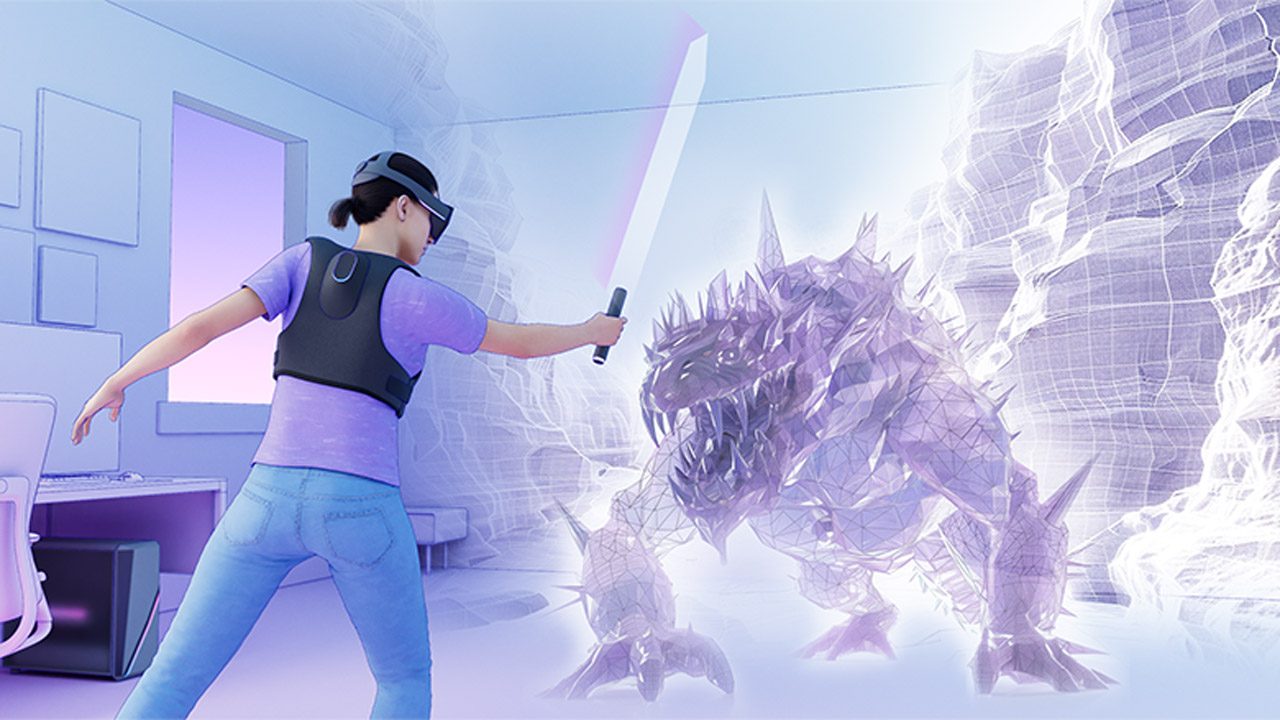
Meta announced in early 2024 it was planning to release Horizon OS beyond Quest in an apparent bid to become the ‘open’ alternative to Apple’s staunchly monolithic Vision OS. While this year’s big Connect reveals are behind us—with no announcements for new XR headsets to speak of—the company confirmed with Road to VR that partner devices are still coming.

Meta announced in April 2024 it was planning to open its operating system to third-parties, initially tapping three main companies to produce standalone mixed reality headsets running Horizon OS: ASUS, Lenovo, and Microsoft’s Xbox.

Admittedly, the Xbox headset doesn’t exactly count. From the get-go, it was expected to be a branding deal only, resulting in the June 2025 release of Quest 3S Xbox Edition—essentially a black variant of Quest 3S with matching Elite Strap, Touch Plus controllers, and Xbox gamepad. Notably, Xbox Cloud Gaming is available on everything from Quest 2 and up, bringing nothing substantively new to the table.
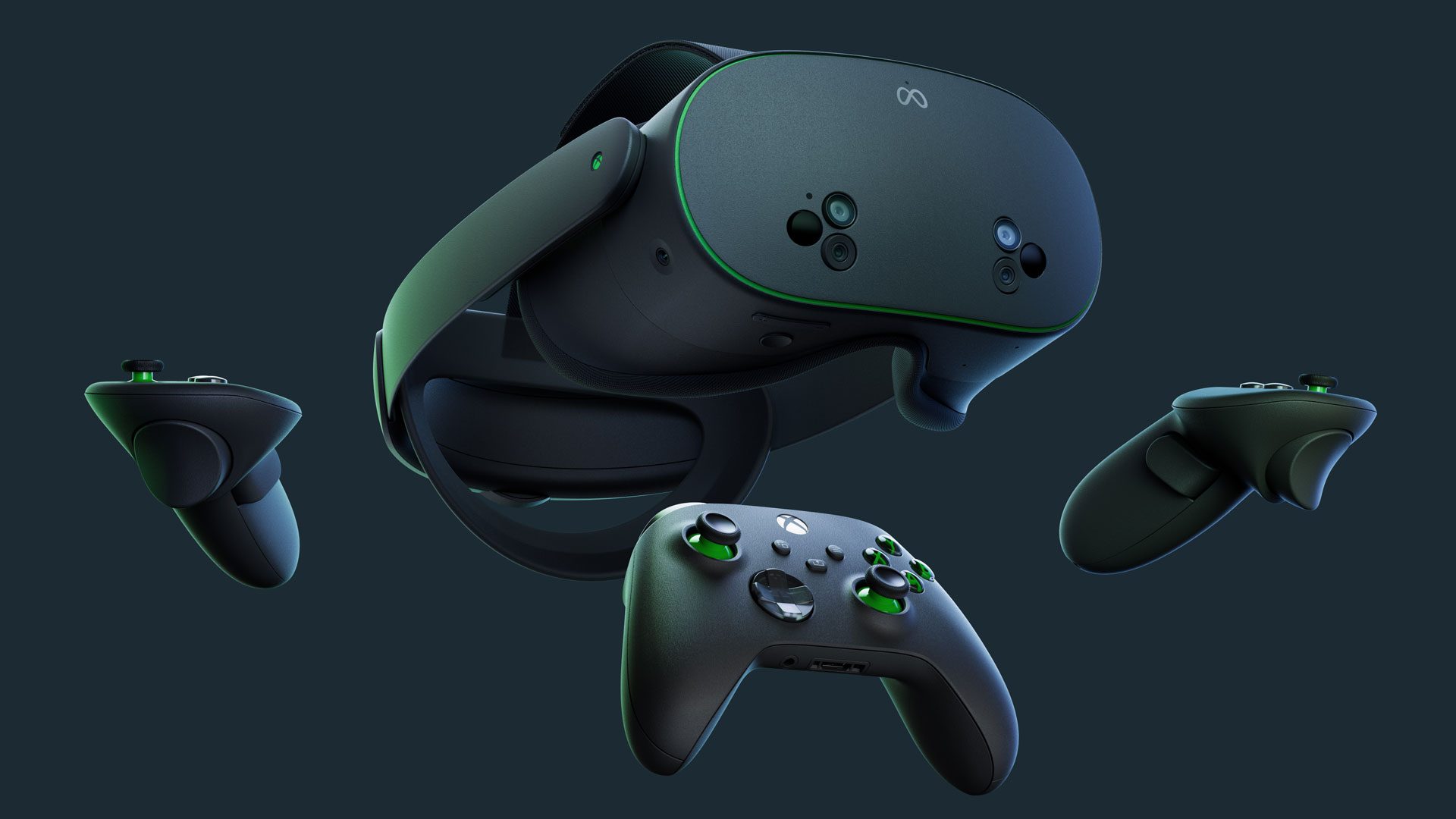
Image courtesy Meta, Microsoft

Both Asus and Lenovo devices are expected to be materially different from Quest 3 though, with Asus looking to leverage its Republic of Gamers brand for a “performance headset” and Lenovo developing “mixed reality devices for productivity, learning, and entertainment,” Meta said at the time.

Now, more than a year and a half since their announcement, those devices have yet to materialize. And neither has the expanded list of partner ODMs teased by Meta CEO Mark Zuckerberg.

At Connect, a Meta spokesperson told us that, despite the lack of on-stage update, the company is still actively working with partners to bring Horizon OS to more devices.

SEE ALSO
Meta Says New 'Horizon Worlds' Engine Update Brings Faster Loading and "well over 100" Concurrent Users

Why The Long(er) Wait?

Although the 2025 Holiday Season presents another big moment for Meta to not only onboard more users with its $300 Quest 3S for a second year now, the company seems to be using its release of partner headsets to essentially bridge the gap between device generations. And that gap could be growing.

In June 2024, The Information reported Quest 4 was slated to arrive sometime in 2026, with a more powerful ‘Pro’ style headset set to arrive in 2027. Updated reports from XR analyst Brad Lynch and data miner ‘Luna’ (via Tom’s Guide) from earlier this summer however suggest that Quest 4 may have been delayed to 2027.

Quest 3S (left), Quest 3 (right) | Images courtesy Meta

On the face of things, the wait doesn’t seem uncharacteristically long; Quest 2 was launched in 2020, Quest 3 was released in 2023, and Quest 3S in 2024, leaving a three-year gap until the next-gen Quest.

Still, Quest 3S isn’t a new device generation per se, as it packs in the same chipset as Quest 3, allowing it to play all of the same virtual and mixed reality games, but makes it cheaper by coopting Quest 2’s Fresnel lenses and single 1,832 × 1,920 per-eye resolution LCD panel.

If those additional reports are true, by the time a Quest 4 arrives the current platform generation will be four years old—not long for a console lifecycle, but still the longest in standalone platform’s history.

And keeping users engaged with new headsets that fundamentally don’t rock the boat in how developers create games for the platform may just be how Meta bridges that gap in the near term. Whatever the case, Asus and Lenovo likely don’t want to compete with the next-gen Quest, making it a good bet we’ll see them sooner rather than later.

This article may contain affiliate links. If you click an affiliate link and buy a product we may receive a small commission which helps support the publication. See here for more information.

Well before the first modern XR products hit the market, Scott recognized the potential of the technology and set out to understand and document its growth. He has been professionally reporting on the space for nearly a decade as Editor at Road to VR, authoring more than 4,000 articles on the topic. Scott brings that seasoned insight to his reporting from major industry events across the globe.
  • It's gotta be hard to sell your OS to headset makers when your entire store has been flooded by shoddy gorilla tag ripoffs. I understand they wanted more people to be able to release on the store faster but the rails were taken off way too far. Also their swap to horizon content rather than quality first-party studios games really hurt the ecosystem. There's plenty for new VR headset buyers to play but it's almost impossible to find the good stuff in the store now, so why would another headset maker want to use that store?

    • Ondrej

      Closed walled garden is even worse, overall, than open floodgates approach. You get absurd situations like many great apps not being able to get into store because devs don't have friends in right places. Or waiting years to get approved.

      Steam rejected some great indie games like Braid, when it had strong curation, and it was the inspiration to change methods.

      Open store can at least get fixed with better algorithms and moderation, while still giving a chance to devs without backing.

    • Shuozhe Nan

      Isnt it the other way around? There are a ton of gorilla tag ripoffs because the kids are playing all of these.. :(

    • Matt

      Even more hard when the UI changes monthly, constant technical issues alienate more users, and the system is rapidly taking on the reputation of having junk/forgettable content (both 1st and 3rd party), and constant fatal.

      I also have a strong feeling as the battery life on these barely repairable headsets tanks, people aren't going to be coming back to buy new disposable headsets to last another 2 years. They will just realize it's not worth it.

      I wouldn't be surprised if 1 or all of these deals fall out over the next few months.

  • Sofian

    Any rumor about the next Qualcomm XR chip?

  • XRC

    Meta have pivoted at full gas towards smart glasses and AI assistant, perhaps their only opportunity to avoid being stream rolled by the Apple and Google juggernauts as users switch from handheld to wearables

    Wouldn't be surprised if these partner headsets are quietly cancelled after a series of hopeful press releases to avoid embarrassment

    • Thats just wrong. It's not a pivot, it's an addition. Meta would explain it like that: We are working on both ends at the metaverse: The full-VR version and the everyday full day use with AR glasses.
      This is not contradictory but different parts of the same thing.

  • Ondrej

    3rd party headsets would need killer feature to have any chance.
    It's doable, but difficult. Usually it means a niche, like FBT support or Display Port.
    Beyond did it with great form factor.

    A Quest clone from Asus with 50$ higher price would be DOA. And that's the most likely scenario.

    • Rayza

      ROG's main selling point would be OLED i imagine

  • Andrey

    I was very disappointed that it – especially rumored ASUS Rog Tarius – wasn't properly announced/revealed at this year's Connect, because this is the VR device I am currently looking forward the most (if we, obviously, won't count Quest 4).

    Both Meta and ASUS just need to do exactly what rumors said – include eye and face tracking, better screens (even QD-LCD will do, though MicroOLED with higher price would be even better) and, optionally, self-tracked controllers – then it will be an instant buy from me if it won't be over 1,500$ (where I will be able to get it). Wider FOV would be a great bonus, but I doubt that it may happen soon even if something as amazing as BOBA 3 was recently presentated.

    There are two big potential problems with all of it:

    1. Even if it will be released in 2026, in just one year Quest 4 with better SoC will be released and this whole situation with Quest Pro will repeat. What I mean, I just want to be able to enjoy new Meta exclusives for Quest 4, but, knowing Meta, I will be forced to additionally buy Quest 4 when it will come out…

    2. Software side aka implementation of HorizonOS – or whatever it will be called in a week – by 3rd party companies. I am very worried that if Meta can't properly handle their own system, someone else – like ASUS or Lenovo – may not be able to do it with even higher chance (mostly because VR/AR headsets never were their speciality except for the whole WMR that was entirely different). Don't want to buy a seriously priced device that eventually will become paperweight or part of it's functions won't work properly/at all.

    Anyway, can't wait to see how ASUS Rog Tarius will look like and what specs it will have!

  • Rayza

    With the ROG version i'm struggling to imagine what could make it worth buying other than OLED, paying maybe £700+ for the same power (devs aren't going to update their games for such a small user base) is a tough sell when Quest 4 may be only a year away. Now if they released an ROG version of Quest 4 at launch with OLED that would be an absolute no brainer…..unless Valve's headset can kickstart PC VR and make it the market leader which would be the ideal scenario. I'm so sick of LCD screens, whoever offers stand alone with OLED next gen – i'm in

  • JanO

    This feels like it's gonna turn just like GTA San Andreas….
    Meta saying they are still working with partners just means no one is really convinced…

    Again, Meta doesn't look like it knows where its going. That's what the "data driven" approach gives you when you have NO vision…

    Think it's time for new leadership. At the very least put someone who cares about VR gaming in charge of the VR ecosystem. You can still do great VR in parallel to your glasses/mind control ambitions.

    Zuck & Boz can stay on the big brother glasshole project.