The Elite: Dangerous Community Q&A, Frontier’s David Braben Answers Your Questions

2
David Braben
David Braben

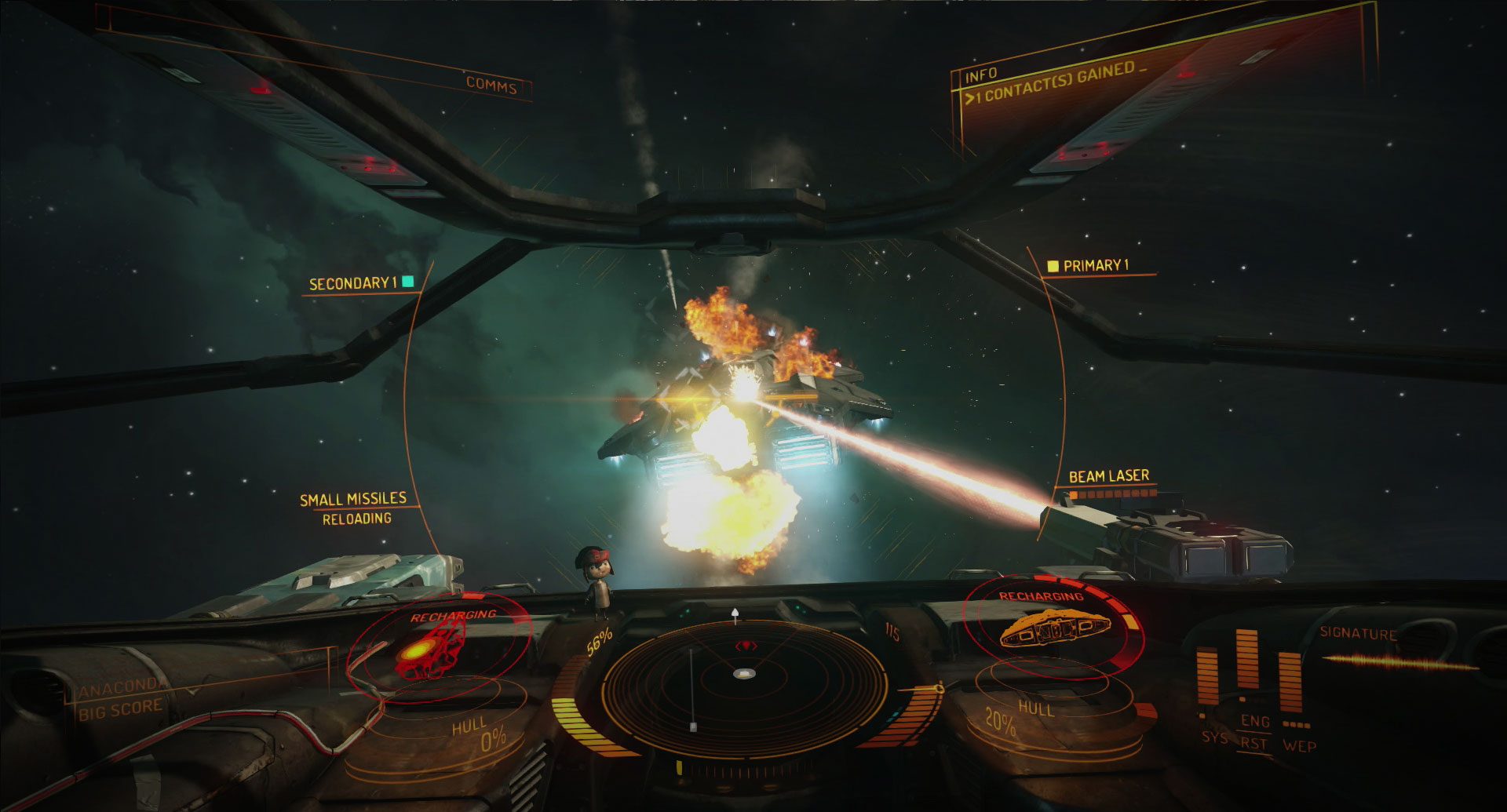
The Elite series is legendary. Father to the modern Space Exploration and Combat genre of games, it hailed a new era of involved gameplay with adult themes and expansive universes to explore. Now, almost 30 years after the release of the BBC-B original, Elite: Dangerous promises not only to bring the series back with a bang, but also to allow you to explore it’s universe through the wonders of virtual reality.

Elite: Dangerous is one of the most promising titles yet to feature support for the Oculus Rift VR Headset and has been warmly received by the community that backed the project during a hugely successful crowd funding project last year. Frontier recently celebrated Elite: Dangerous’ Premium Beta release and you can still become a part of the universe with early access here.

David Braben, one half of the original team behind Elite, is behind the new venture and we asked him if he’d be willing to take your questions on Elite: Dangerous as part of a community Q&A. Gladly, he agreed and we asked you for your questions a couple of weeks ago via subreddit /r/oculus and this very website. The response was excellent and the quality of questions high. A selection of the queries you sent us were sent on to David for his replied, and here below are the responses.

John Horn (RtoVR): You’ve mentioned that planets within the Elite: Dangerous universe may feature wildlife. Will those be hand-designed or might you consider generating them procedurally?

David: We’ve not put a lot of thought into this yet, but certainly some elements should be procedural.

monographix (RtoVR): Do you think that, once people have spent significant time experiencing games like Elite: Dangerous in virtual reality, that it may alter our perception of the real world?

David: Just about any form of storytelling (ie games, films books) alter our perceptions a little. That is (partly) why we watch them. VR simply accentuates the experience, and I think in that sense it probably does accentuate the perception change a little too.

Just about any formof storytelling (ie games, films books) alter our perceptions a little. That is (partly) why we watch them. VR simply accentuates the experience, and I think in that sense it probably does accentuate the perception change a little too.

George (RtoVR): Will the Oculus Rift be listed under “Recommended System Requirements”?

David: We already support various add-ons in the game like VR displays, 3D TVs, Track IR, a wide range of joysticks, foot pedals, control pads etc. Elite: Dangerous is a great game with or without these add-ons, and the experience you get with them is additive, certainly, but not essential. “Recommended System Requirements” for any add-on is perhaps taking it a little far, so no.

EdZ (RtoVR): In the beta of ED available to Kickstarter Premium backers, HUD UI elements are rendered inside the cockpit, causing convergence issues when focussing on targets. Will this be changed to infinite-depth rendering in the future?

David: We’re continually adjusting such things, so yes, they will improve with time.

John Horn (RtoVR): Will the planets in ED be procedurally generated using voxels, allowing terrain deformation and ‘digging’ for secrets?

David: No, that’s not the plan I’m afraid. We have considered surface damage to planets, but there are some serious network issues when syncing a whole planet full of voxels.

soap (RtoVR): Do you see many applications for virtual reality outside of gaming? What might those be?

David: Yes. Many. Medical – especially when allowing a doctor to see inside a patient when doing keyhole surgery, as a way of visualising information from an ultrasound scanner. Firefighters or bomb disposal or rescue or exploration – similar techniques using ROVs are already used, but VR might help improve this further. Military. Architectural. Espionage. Virtual Tourism.

I was interested to see the new Parrot AR Drone using an Oculus Rift to allow you to fly virtually.

Appellono (reddit): You’ve been involved in the Raspberry Pi project and bringing the technology into schools to enhance the teaching of Computer Science. Do you see any place for virtual reality in the classroom? If so, what?

David: It can help students visualise many things, so yes, I think there are many applications, much like my answer to the previous question!

chuan (reddit): Given the unfortunate fate of the shelved ‘The Outsider’ project at Frontier, is is likely that some of the ideas for the project might find their way into ED?

David: Like with all our games, the technology is shared, so many elements have already been re-used in other games, and in Elite: Dangerous too, and perhaps more so, once you can walk about.

chuan (reddit): The original Elite was notable for many things, one of which being the longer simulation play time you could clock up which at the time was brand new. How do you feel VR might further alter player’s engagement with games like Elite?

David: It changes the depth of engagement more so than the duration. Personally I find I cannot play for so long with a VR headset, as I need to take it off after a while. I suspect this is more of an issue with the current generation than with the technology in general.

I didn’t like the way in most games in the early 1980s that the odds were hopeless, and eventually you were ground down in a war of attrition. It felt odd you couldn’t run away – but then the games were not designed to allow that.

chuan (reddit): I think it was David that came up with the original demo of a spinning 3D spacehip which lead to Elite being created. Can you briefly chat the conceptual leaps which lead from demo to full game?

David: I put together a simple 3D game shooting spaceships. It had four spaceships and felt dull and repetitive. I didn’t like the way in most games in the early 1980s that the odds were hopeless, and eventually you were ground down in a war of attrition. It felt odd you couldn’t run away – but then the games were not designed to allow that. You got a smart bomb every 5,000 points and an extra life every 10,000. It also felt odd you couldn’t choose. So these thoughts came together with the idea of ‘spending score’. Brainstorming ways of changing this pattern, Ian and I realised we needed to make the player need to finish a mission – even if it meant running from the fight – hence travel. Score being money was not such a big stretch (especially in Thatcherite Britain!), so trading seemed an obvious choice – though both Ian and I thought it might be a bit dull.

Apellono (reddit): With a reported 400 billion (!) star systems in the game, do these systems actually exist on a hard-drive somewhere, or are they all contained as possibilities within the procedural code? Does a star system actually exist before someone visits it?

David: They exist, in the same way they existed in Elite and Frontier. If you simply consider Procedural Generation as a fancy form of compression, then yes they do exist.

beIIe-and-sebastien (reddit): Do you think gaming technology (specifically virtual reality) has now caught up to allow the realisation of your vision of Elite should be? If so, when did you realise this had become the case?

David: To be honest, I don’t think VR is essential to a game like Elite: Dangerous, but it is brilliantly additive. The technology simply continues to get better, so each year it is possible to fulfil more of the vision, and we will continue to do so through expansions and updates. Nevertheless, VR is very helpful in the immersion, especially the rapid spread of Oculus Rift.
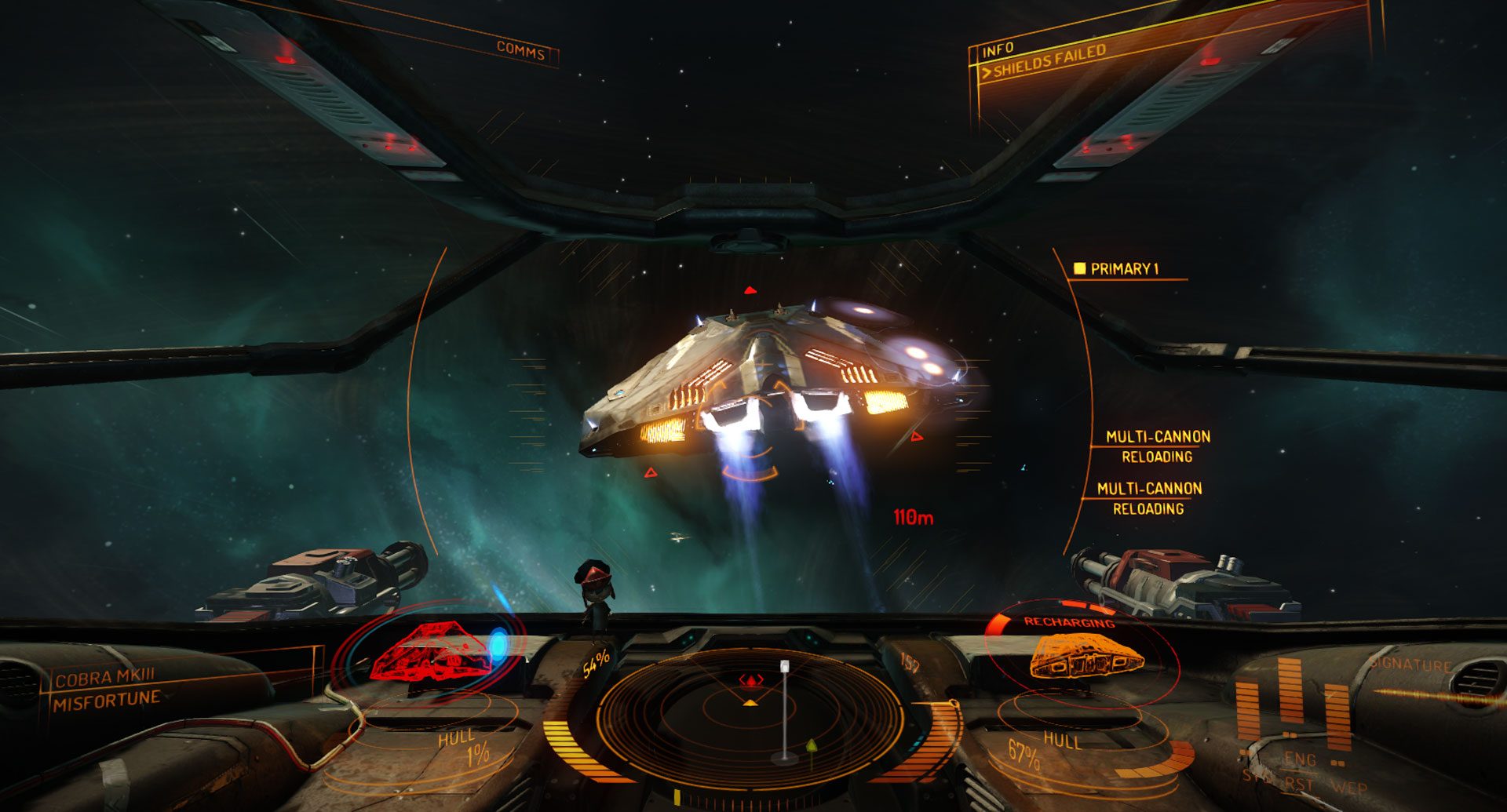
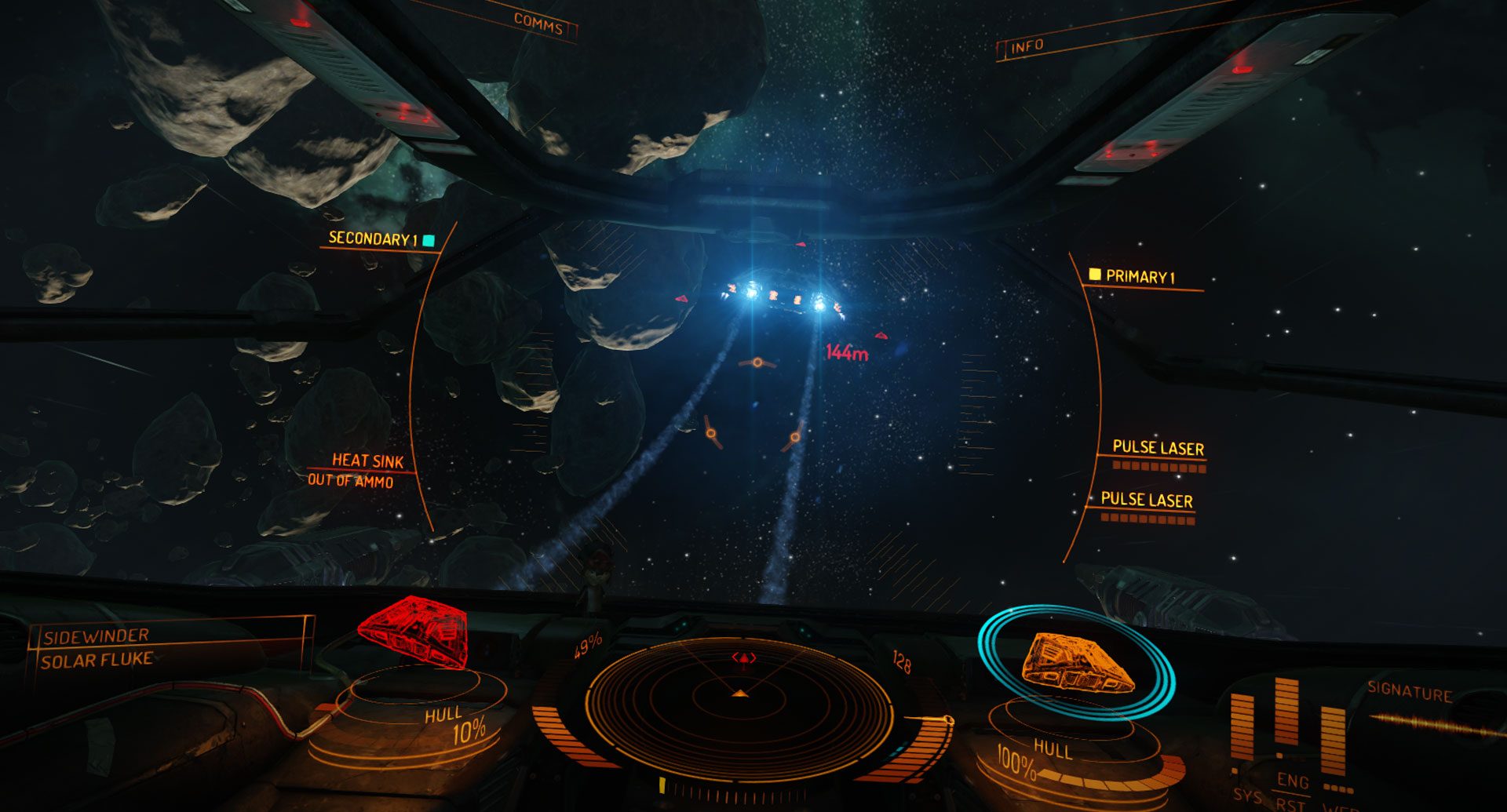
Apellono (reddit): At what stage of development was Oculus/VR support included, and what design decisions got shaped or altered by choosing to support VR?

David: We already had some thought about VR, but it was the Elite: Dangerous backers asking for it – and us wanting it too – and the fact we were already well set up to support it through our own engine – that we added it to Alpha 1 on 15th December 2013 – as a sort of Christmas present to the backers, together with Track IR, 3D TV, and anaglyph stereo.

RtoVR: Do you have plans to include support for the Development Kit 2 and in particular positional tracking once it’s available?

David; Well, I did Tweet an image of myself playing Elite: Dangerous using an Oculus DK2… So yes, Elite: Dangerous already supports positional tracking, and DK2.

Thank you to David Braben for taking the time to answer the questions and thanks to you, the community for providing them. Our apologies if yours didn’t make it in this time.

We hope to catch up with Frontier and David Braben when the Road to VR team hits E3 next week, stay tuned for updates.
Control VR is the Virtual Reality Data Glove You Always Wanted, Kickstarter Now live

11

If you’ve been following virtual reality news and opinion recently, you’ll have noticed a definite switch of focus for those seeking VR nirvana. Whilst there are myriad hard problems surrounding convincing your mind it occupies a virtual space, the visual element, provided by a VR headset display has now approached the point where presence is now possible. So, once you’ve solved the issue of presenting the virtual world to a player, what’s next on the list?

In one word, input. Whilst VR headset development has seen incredible progress since Oculus launched its Kickstarter, arguably a killer solution for reading a player’s actions has yet to reach the zenith. That’s not to say we haven’t seen progress, with companies like Sixense, YEI, Virtuix, Cyberith and Tactical Haptics all offering different ingenious solutions to the same problem and all seeing the light of day in the last 18 months. We’ve come a long way to be sure.

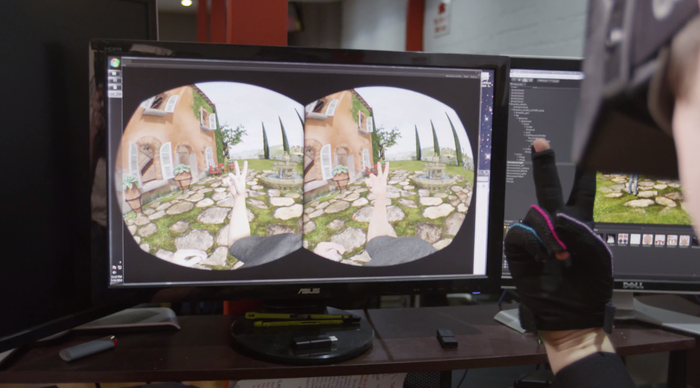
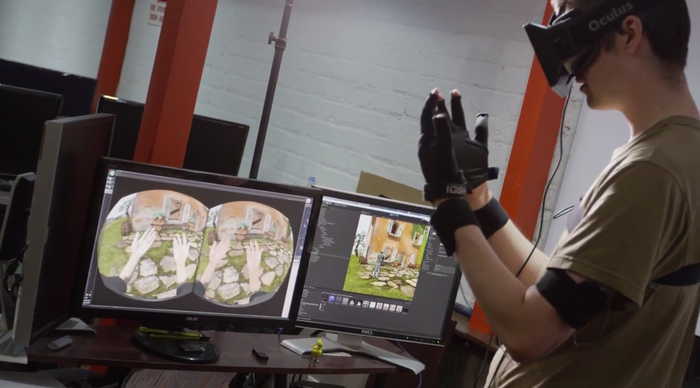
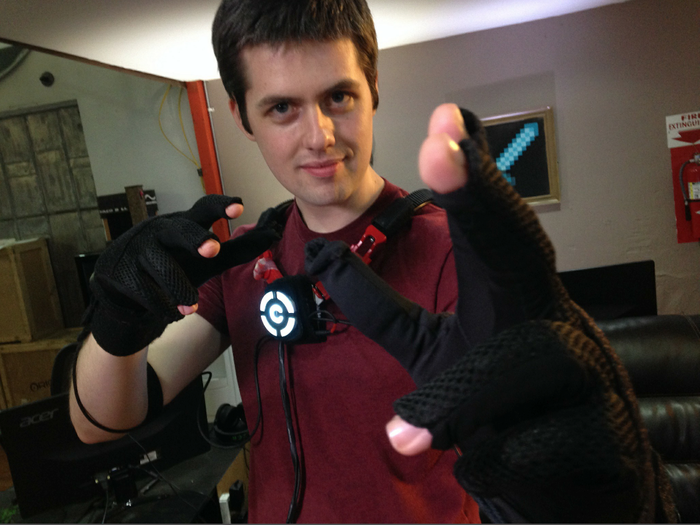
controlvr-gloves1Well now another solution has launched and it bears more resemblance to how you always imagined your VR gear to look. Control VR is a motion / gesture capture system comprising motion sensors and unique (at present in the consumer space at least) data gloves which track your upper body and finger movement at rotational accuracy, Control VR claim, down to the 10th of a degree.

Using IMU sensors the developers claim were developed in conjunction with DARPA (a claim we’ve yet to verify), sensors at your elbow joint and what looks to be an optical based tracker which sits at chest level attached to a small harness. The video shows demo equipment with mounted webcams, we assume to allow tracking of the player’s core.

The result is an incredibly cool looking way to reach into and intimately interact with the virtual world.

Technical details on the Kickstarter website are a little thin on the ground, but we dug a little deeper into Control VR’s origins.

The IGS Glove Becomes Control VR

Some of you may have seen a video circulating a few months ago demonstrating a great new data glove, being marketed squarely at the virtual reality enthusiast. The IGS Glove from a company called Synertial (aka Animazoo) seems to be the data glove component used in the Control VR system. The below video, from the company’s website, demonstrates in more detail the skeletal modelling used to achieve the impressive looking tracking.

..and in an earlier Control VR video, the IGS monicker is clearly seen on the player’s gloves:

What’s more, the listed CEO (Alex Sarnoff) and CTO (Ali Kord) for Control VR are both founders of Synertial / Animazoo. So it seems Control VR is a way for the company to enter the commercial VR market.

Synertial’s website has a slightly more technical description of the glove itself than available on the Kickstarter page:

Synertial’s systems use IMUs (Inertial Measurement Units) which make use of both tri-axial MEMS Gyroscopes and tri-axial MEMS Accelerometers in addition to magneto-resistive magnetometers. The combination of data from all three of these sensors overcomes the issues involved in traditional hand and finger capture.

An impressive array of IMUs, a reflection of how complex tracking the intricacies of the human hand really are. And, if the system is as impressive in person as it is in the extremely promising video demonstrations, we may have just edged even closer to that VR nirvana.

If you’re interested in backing the project, be warned that this cutting-edge tech doesn’t come cheap. The one arm and body tracking solution will set you back $350 and if you want both your hands in the game, the two arm tier is $600. My estimation though is that probably represents pretty good value for money considering the sheer number of sensors in involved here. The company does however point out that its commercial offerings (as detailed on their Kickstarter roadmap) will be much cheaper, and given the rapidly decreasing costs and rising accuracy of emerging IMU technology, we’re inclined to believe them.

Head over to the Kickstarter page here if you’re interested in backing the project. After only a few hours live, the project has already raised nearly $30k of its $250k goal. We’ll keep you in the loop on the campaigns progress.

Are you thinking of backing the project or have you already? Let us know your thoughts on the comments below.

Oculus VR CEO Brendan Iribe Opens the NASDAQ Stock Exchange

0

brendan-iribe-nasdaqThis one flew way under the radar. After the Facebook acquisition, Oculus VR CEO, Brendan Iribe, has been making the rounds in the successful startup track. In April, Iribe joined the opening ceremony of NASDAQ stock exchange as part of the invite-only f.ounders event.

News Bits: Oculus Announces 2nd Self-Published VR Title, Steam Pioneer Joins The Team

3

luckys-taleOculus VR have, since the beginning of the Oculus Rift Kickstarter rollercoaster, stated that without good content, VR wouldn’t achieve launch velocity. They put their money where their mouth was back in February when they announced they’d be co-publishing CCP Games’ made-for-VR space combat game EVE Valkyrie as a flagship title. Now, the company has announced the next title to receive the published-by-oculus seal of approval and it’s called Lucky’s Tale.

The title is apparently an adventure game that’s built from the ground up for virtual reality and the Oculus Rift and is being developed by a company called ‘Playful’. Little else is known about the new game and it’s doubtful we can glean much from Playful’s previous title ‘Words with Friends’, a multi-player scrabble clone – which is apparently extraordinarily popular amongst the social-network fuelled casual gaming arena. Whatever the game turns out to be, it’s great to see Oculus continuing their drive for great, made for VR content to push their Rift platform. It perhaps gives us a glimpse as to where Oculus see their revenue coming from in the long term, given their pledge to try and sell their VR Headset hardware as cheaply as possible.

Paul Bettner, founder of Playful says of the venture “Virtual reality — I mean truly accurate, comfortable virtual reality — is the most important thing to happen to interactive entertainment in decades”. We’re not going to argue with him.

Moar Recruits!

John Holtman, Oculus VR's new Head of Platform
John Holtman, Oculus VR’s new Head of Platform

Frankly, if more than a couple of days passes without more news of Oculus hiring some talented individual, we start to feel restless. So, inevitably, Oculus have announced that they’ve hired the super talented Jason Holtman. Jason is yet another Valve veteran, one who helped pioneer digital game distribution back when DRM was a filthy term amongst PC gamers. Jason helped make Valve’s Steam platform a reality and joins Oculus as their ‘Head of Platform’.

Given Holtman’s CV and the somewhat non specific nature of his new job title, it may well be that he’s joined Oculus to help them build their own digital distribution platform. Oculus states that he’ll be “..building the world’s best developer and player VR ecosystem”. Sounds as if Oculus are positioning themselves for world domination, or at the very least to build an incredible developer publishing portal for gamers to consume VR titles from.

Two Reasons You Will Want to Buy a New Gaming Rig for the Oculus Rift CV1

10
oculus-rift-computer
Photo Credit: Sergey Galyonkin (CC BY-SA 2.0)

Here and there I see threads pop up around the web asking what hardware ought to be bought in preparation for the consumer version of the Oculus Rift (also known as the CV1). If you’re looking to get top virtual reality gaming performance, and the most bang for your buck, you’ll want to pick up a new gaming rig for the Oculus Rift CV1. Here’s why.

VRLA Meetup to Host E3 VR Mixer Next Week in Los Angeles

0

VRLA_E3_MIXERNext week at E3 2014, the VRLA Meetup will be hosting the VR community at a VR Mixer event near the Los Angeles convention center. The doors are open to anyone (21+) interested in VR!

News Bits: New Valve VR Headset, Impressions from the Boston VR Bender

1

eEVVcUD

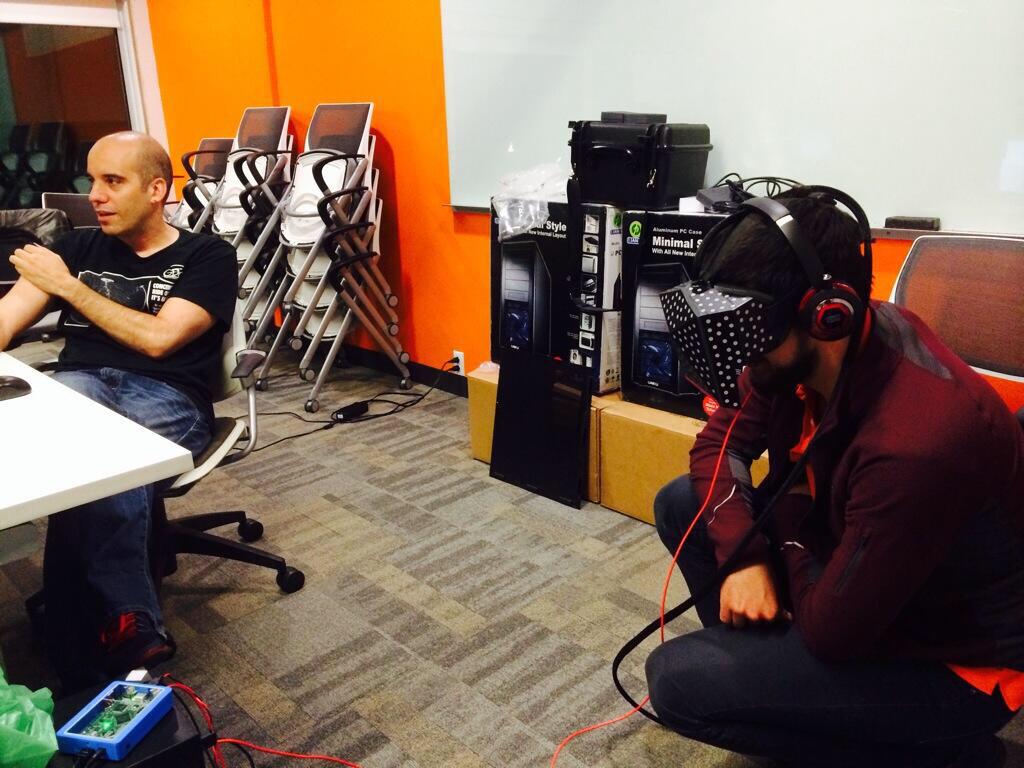
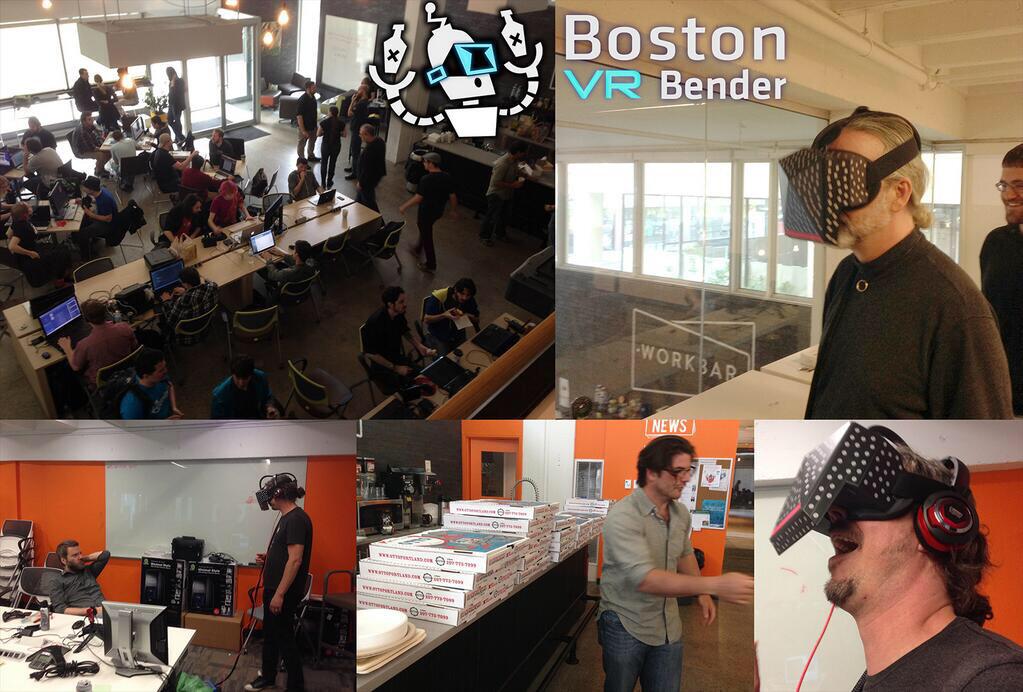
As we reported a couple of days ago, a new version of Valve’s prototype VR Headset was demo’d at the recent VR Bender event in Boston. We noted the changes in tracking technology meaning the units are now seemingly much more portable.

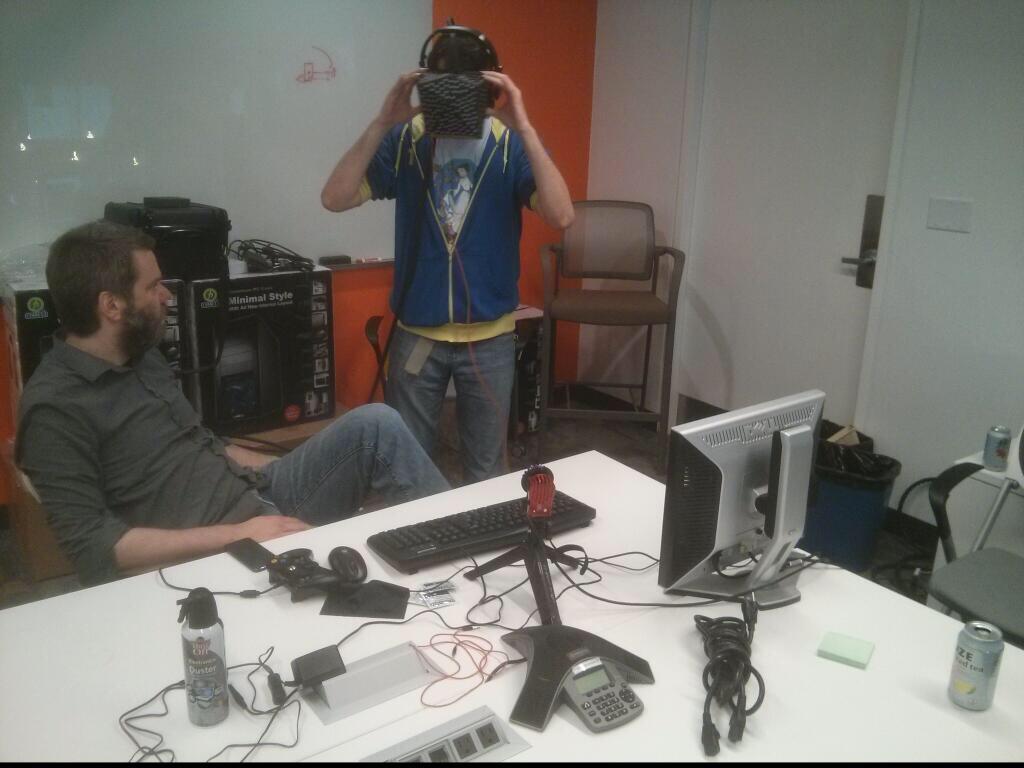
Now, another user has posted their impressions along with another series of photos on the subreddit /r/oculus, this time with more detailed photos and information on the experience.

Reddit user ‘jonomf’ posted his detailed impressions and answers to questions from the Valve team demoing the kit. On the demos themselves, jononf has this to say:

We ran our jam project on the hardware a number of times, and also each got to run through Valve’s official demos. The demos were the same ones they run in “The Room”: a 3D grid of cubes showing webpages, a mirror showing your head as a cube, a tiny office of the 2D Portal people, the room full of pipes, a room with three of the robot playable characters from Portal 2 (one that’s your size, one tiny, one huge), one looking at a complex animated robot, and one where particles are constantly created a couple of feet in front of your face (thousands of serious DX11 compute particles with complex motion). All were very impressive; everyone I talked to agreed that the office full of Portal people was the most interesting: you really felt like a giant, and being able to bend down and hang out among them was very cool.

And in terms of the overall experience and how he felt post demo:

Needless to say, the experience in the HMD is amazing: low persistence, perfect tracking (within the camera of course), very high frame rate (they implored us to keep the jam games running at higher than 95 FPS). I don’t get sim sickness with the DK1 as it is, but nonetheless felt much more comfortable in the Valve units. However, I did consistently have major disorientation after leaving the HMD: I felt a little fuzzy and distant, and once felt like I was going to fall over. I felt something similar the very first time I came out of the DK1, never since, but every time after leaving the Valve units (4 or 5 times).

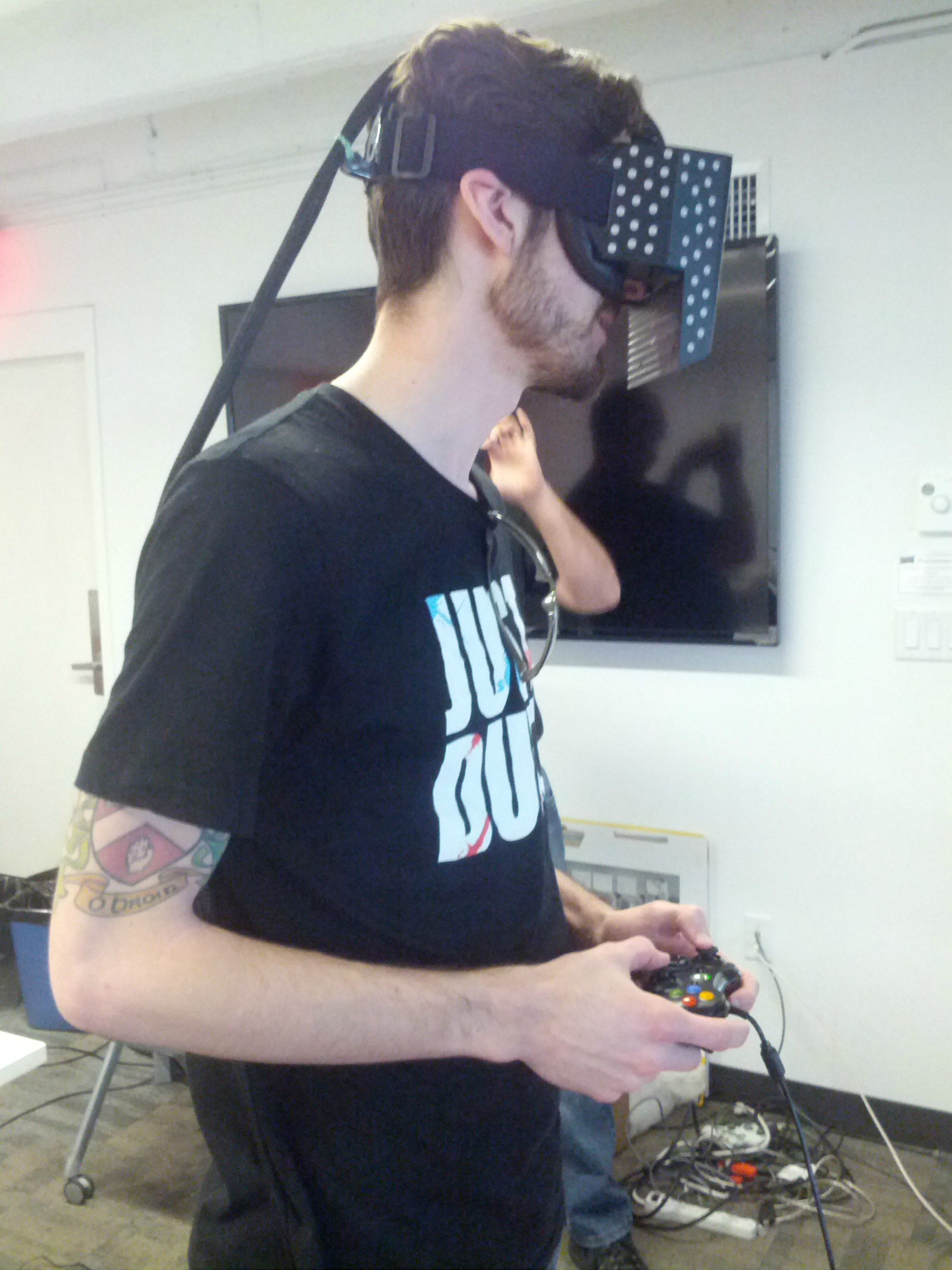
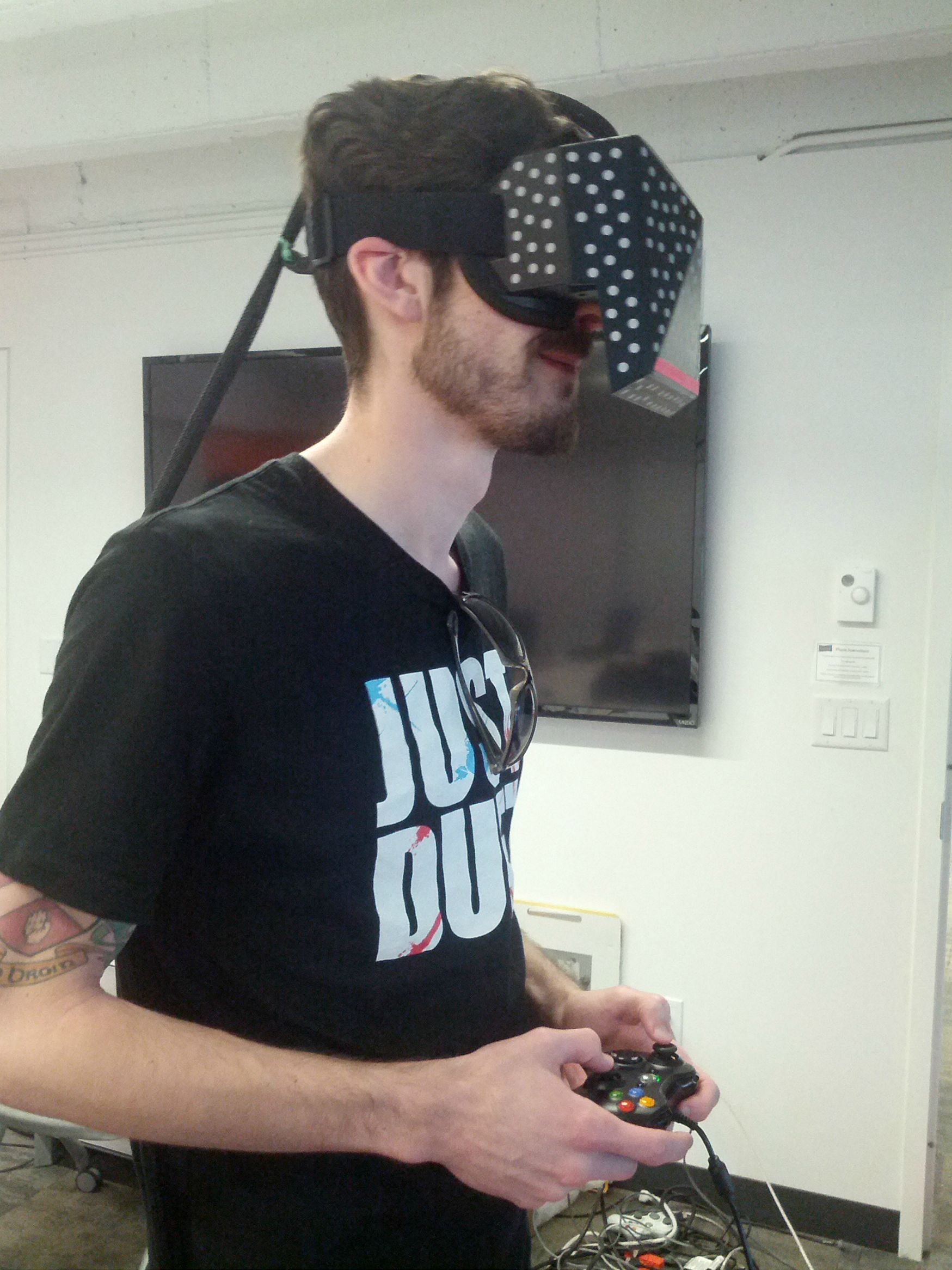
The assumption made up to now (and I include this website in that) is that these prototypes were the next generation of VR Headsets, moving on from the version shown to a limited audience at January’s Steam Dev Days event. However, it seems this is not the case. In fact, these units are working devices used by developers at Valve for convenience, any experiences developed using them still tested in the fiducial marker covered room at Valve HQ.

This is not a change of plans from The Room (as I saw someone speculate in another thread) — the Valve guys said that they each have one of these units on their desks for convenient VR testing, and then they load it up in the Room for primetime.

Technical details on the HMD and supporting software are also provided, seemingly the Valve operatives were extremely relaxed about offering information and images being taken during the demo:

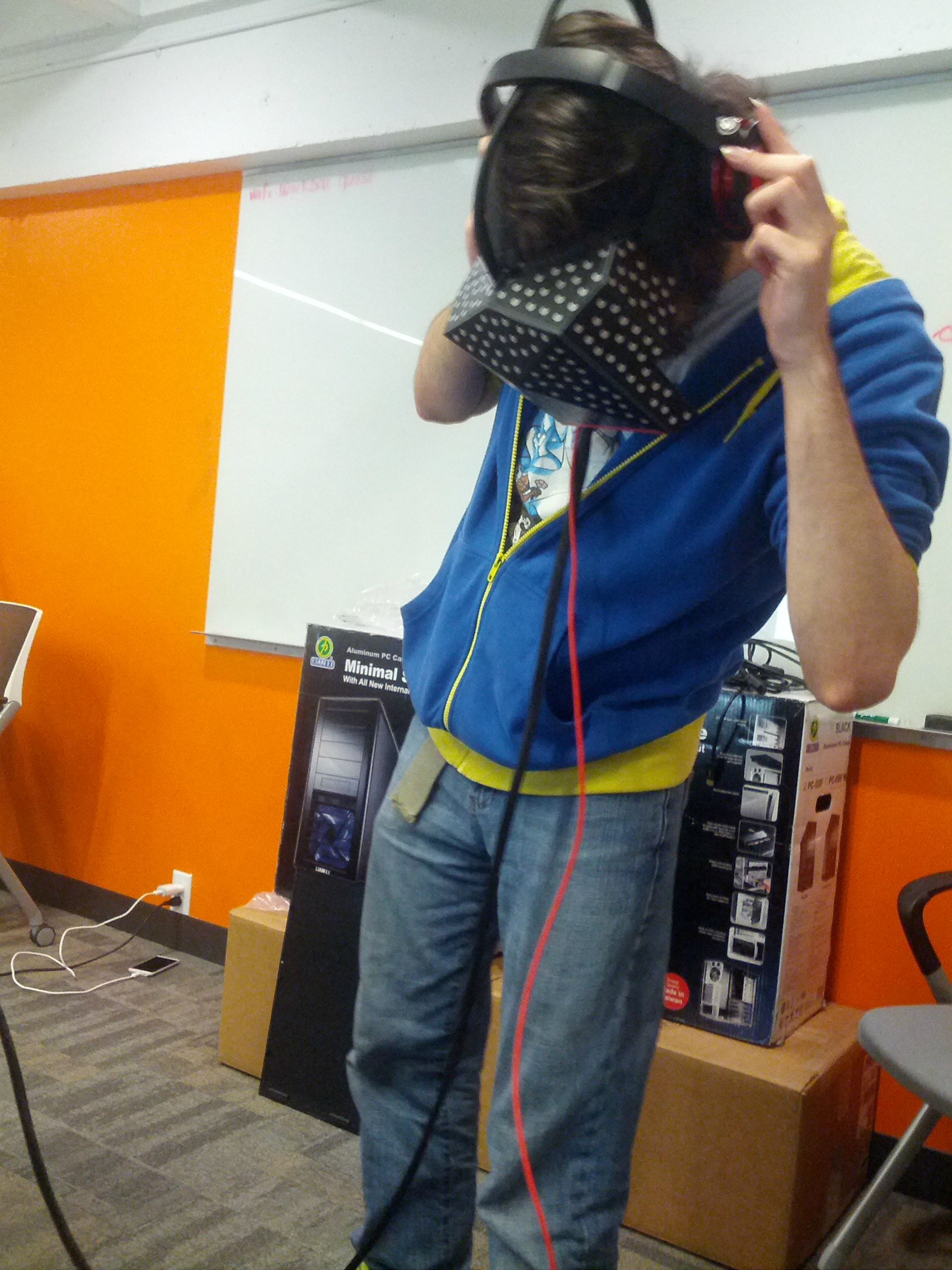
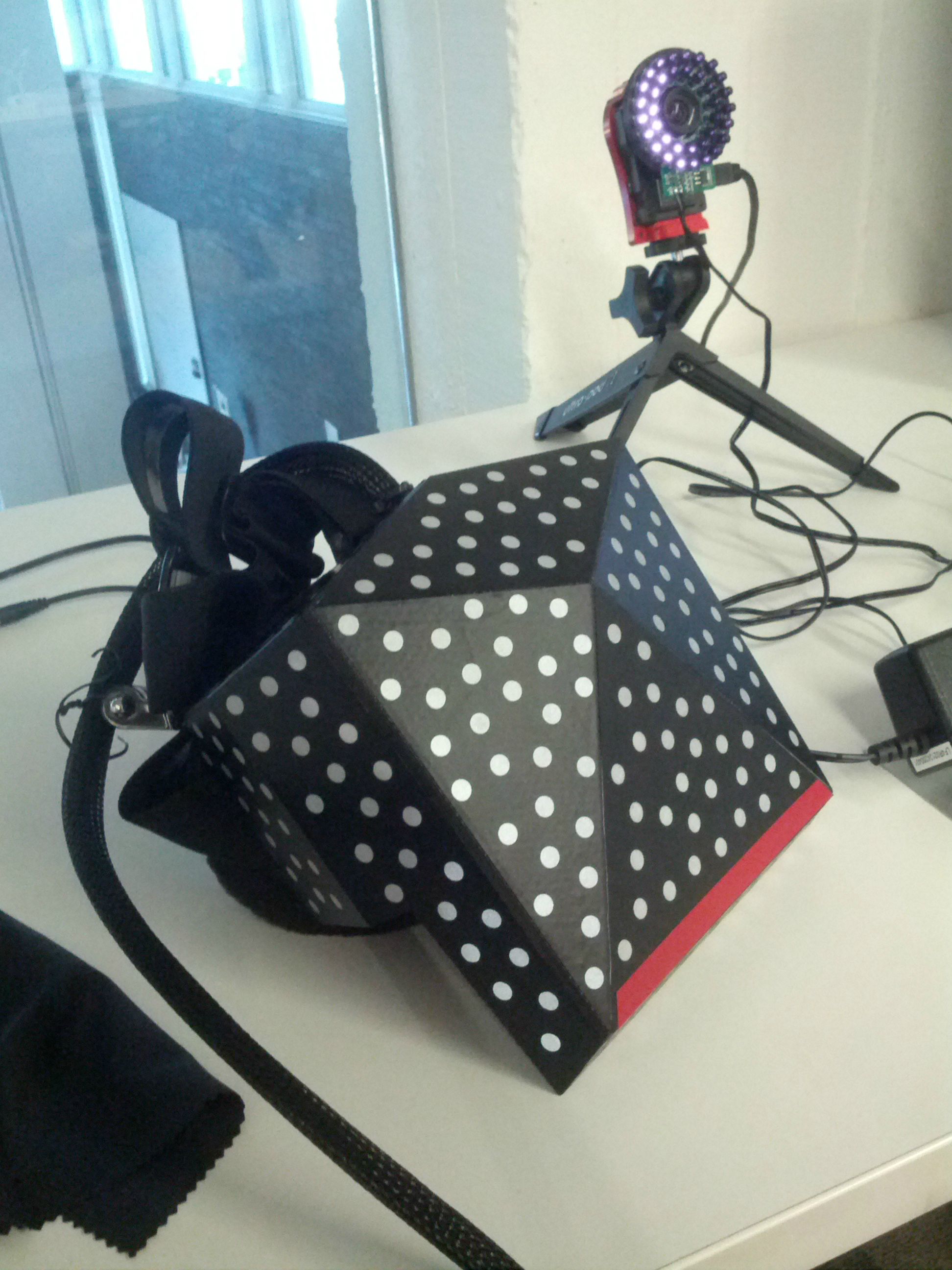
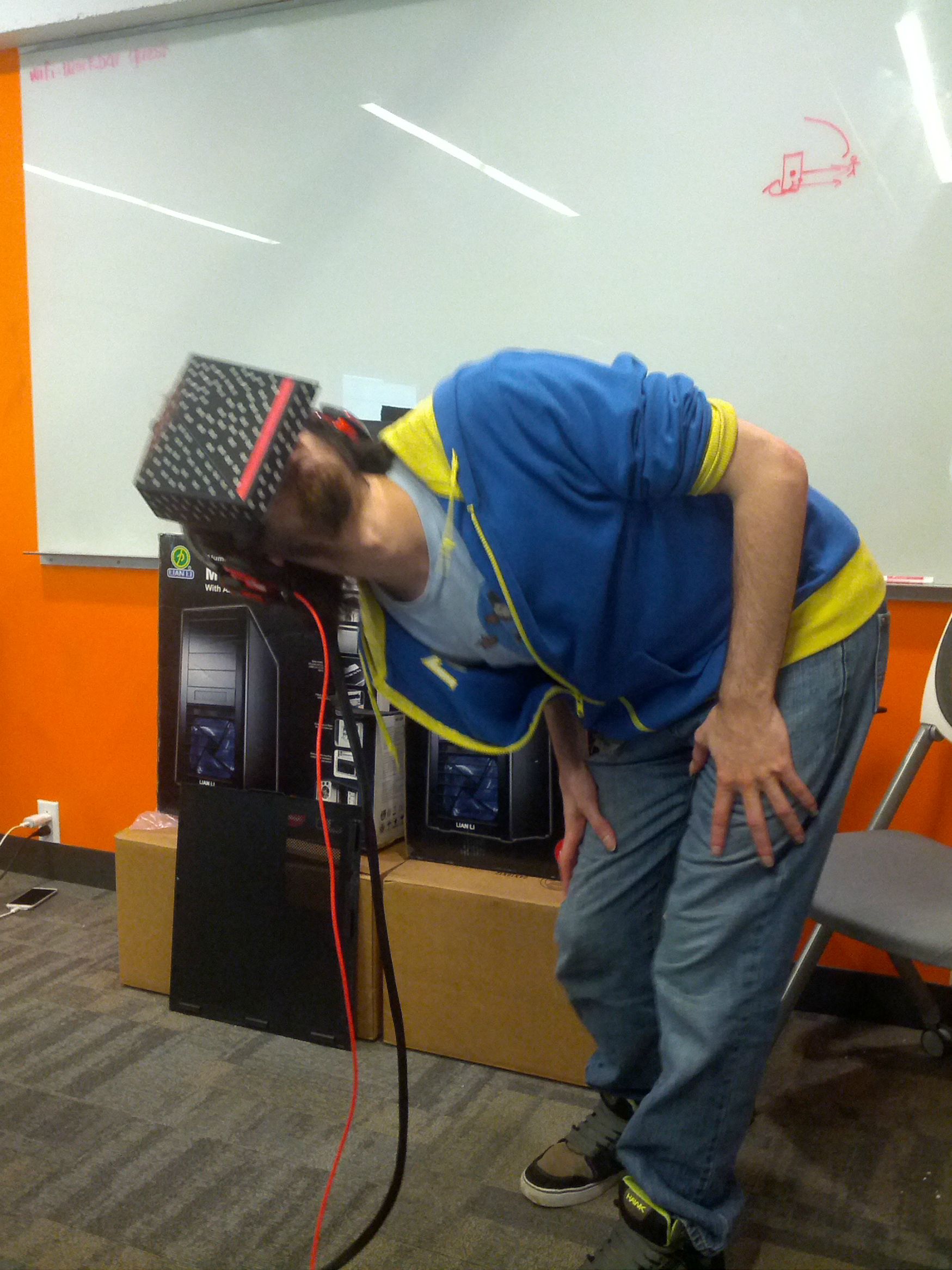
The HMD’s are dual vertical S4 (OLED) screens, running a total of 2160×1280, with white IR-reflective dots on the shell. As you see in the pictures, the bottom ~half of the screen sticks out below the faceplate, so clearly you’re only seeing about half of it

We used a Unity plugin from Valve which is interoperable with DK1, DK2 (apparently), and the Valve hardware. The biggest end-user difference between this plugin and the Oculus Unity plugin that my team experienced is that the Valve plugin creates the stereo camera setup at runtime, so attaching gameobjects to the camera / using its forward vector / etc is slightly less trivial.

No DK2’s, or Oculus folks, to be had — word on the grapevine is that they decided they couldn’t afford the time off, as they’re busting ass getting DK2 to the rest of us. :)

An interesting note there about DK1 / DK2 interoperability alongside the Valve HMD. I do still wonder why it seems Valve are continuing to develop these prototypes (and by the sounds of it software to utilise / support the device) when impression up to now was that Valve’s VR R&D project was just that, Reseach and Development. Valve themselves have repeatedly stated that the device will never see the light of day commercially not to mention that a significant number of key players in the project (key among them Michael Abrash) have no left. What plans to Valve have for software derived from these prototypes?

Perhaps we’ll know more after this years E3 Expo, perhaps never. We’ll of course let you know should we find anything out. Thanks to /u/jononf for posting his detailed impressions and to /r/oculus for hosting them.

News Bits: The Gallery: Six Elements E3 Update, Public Demo, Pics, Videos and More

0

The Gallery from Cloudhead Games, was an early entrant into the crowd funded, virtual reality focussed game pantheon. Cloudhead were adamant that The Gallery: Six Elements would not just promise to slap VR support on a title destined for standard desktop gameplay, this game would be built from the ground up with VR Headset and Motion control support. Clearly Cloudhead don’t believe in doing these things by halves.

E3 is on it’s way (we may have mentioned this once or twice) and Cloudhead have announced information about what we can expect from their attendance this year. First up, a very quick teaser featuring fire world to be featured in the final game (see above).

VR Comfort Mode and New Public Demo

As seen in a report for Road to VR by Cymatic Bruce, Cloudhead have been experimenting with ways to lessen and hopefully eliminate motion sickness for players using VR Headsets. Their methods revolve around lessening the severity of sudden changes in orientation that feel unnatural when you have your head in the game. Watch the below videos for Bruce’s thoughts after he tried their GDC build using what they call ‘VR Comfort’ mode and Cloudhead’s own explanation video on the subject.

The team intend to release a reworked version of the GDC demo to the public very soon. As they point out, as with most things VR related, it’s almost impossible to convey just what things feel like without trying it for yourself.

Finally, a neat graphical summary of the team’s progress – a comparison of your in game avatar model from the original demo versus this year’s new and improved version.

g6e_player

We hope to catch up with the Cloudhead team once again when our team attend E3 2014 in just over a weeks time. Stay tuned!

News Bits: YEI Announces PrioVR Shipping Delay, New Video of Alpha Demos

0

July was going to be ‘the month of VR’, with the expected arrival of several major virtual reality accesories from previously successful Kickstarter campaigns, along with the Oculus Rift DK2. PrioVR, the motion capture suit for VR, is the latest to announce a delay in shipping. A new video shows briefly demos that will ship with PrioVR and serve as a starting point to familiarize developers with integrating the system into their games.

Overview of Positional Tracking Technologies for Virtual Reality

6
positional-tracking-technology-overview-virtual-reality
Photo credit: BagoGames

Positional tracking is very important towards achieving immersion and presence in virtual reality. There are many ways to achieve positional tracking, with pros and cons for each solution. This article presents an overview of positional tracking technologies which could be used for virtual reality.

News Bits: New Valve VR Headset Makes an Appearance at Boston VR Bender

2

rzVz9gv

Prior to Valve’s developer expo Steam Dev Days earlier this year, little was known about the company’s hardware R&D in the VR space. However, the now famous Steam Dev Days demo room which housed Valve’s latest development prototype, was home to some pretty staggering virtual reality experiences according to the developers lucky enough to try it.

It was after this event that the term ‘presence’ really got a foothold amongst the community as a way to describe a virtual reality experience that was accepted by your mind as an alternate reality (within boundaries of course). The unit leveraged 2 x 1080p OLED panels in portrait mode that employed low persistence of vision at a reportedly high (90Hz+) refresh rate to achieve this state of presence. The VR Headset also used an onboard camera to track special QR Codes placed around the walls to provide reportedly excellent positional tracking. In fact, it was Valve who convinced Oculus that low persistence of vision was the answer to the issue of motion blur and stuttering they’d previously attacked by extremely high refresh LCD panels.

Now, a new version of the VR Headset has appeared at a recent Boston VR Bender where Valve demoed the unit to attendees. Subsequently, images of the new headset in use have sprung up on social networking sites that reveal what’s changed.

The unit has ditched the requirement for QR codes and a camera mounted on the HMD itself for a system more analogous to the system first revealed by Oculus VR at CES 2014 with the Crystal Cove prototype (and now employed in the company’s forthcoming Developer Kit 2 aka DK2). The HMD, previously uncovered with internal components on display now sports a new external casing, covered with what look to be trackable spots on all surfaces. In the pictures, a desk mounted camera can be seen that presumably tracks the spots and provides positional tracking information as input to the experience. It’s certainly not pretty but is does mean that the prototype HMD has become portable and no dedicated QR covered demo room is required.

It’s interesting that Valve clearly is continuing with the development of this prototype despite the exit of many of their VR R&D team’s members – chief among them being Michael Abrash who recently joined Oculus VR as Chief Scientist.

Were you at the Boston VR Bender? did you get time with Valve’s VR headset? What was the experience like? Drop your thoughts in the comments below or fire us an email at info@roadtovr.com – we’d love to hear from you.

Thanks to ‘MyNonpornOculusAccnt’ (probably of of my favourite usernames BTW) of the /r/oculus subreddit for the find. You can find more info on the Boston VR Meetup which continues today here.

News Bits: Lunar Flight Creator Releases E3 Trailer for ZVR: Apocalypse, a VR Zombie Shooter for the Oculus Rift

0

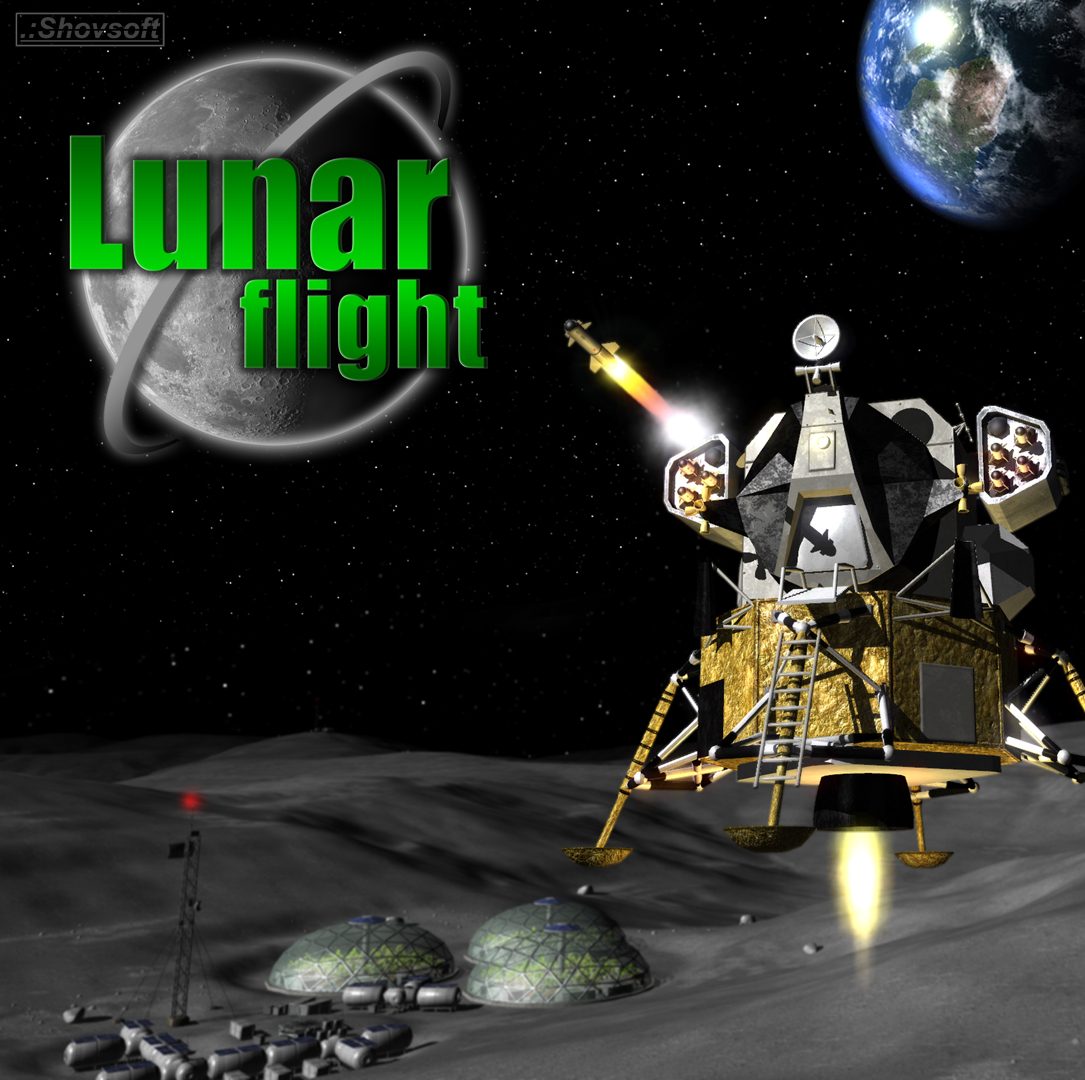
lunar flight oculus rift supportThere are a few titles in the public domain which exemplify what a virtual reality experience should feel like. Lunar flight by developer Shovsoft is one such title. It was released mid 2013 and has been a benchmark for early virtual reality demos ever since. Lunar Flight managed to create an excellent sense of VR presence whilst presenting a challenging, rewarding gameplay experience to boot – something not to be sniffed at this point in VR’s resurgence.

Now, the same developer has switched tracks and are developing a virtual reality, first person zombie shooter. With the developer’s pedigree, ZVR is likely to be highly anticipated and a new trailer, highlighting what we can expect from a new playable demo due to be released during the forthcoming E3 Expo certainly looks intriguing.

The demo looks to have your character marooned inside a crashlanded helicopter with just a pistol and monted machine gun and your fists for protection. Zombies charge towards your position and you have to mow them down before they’re upon you. Since ZVR’s initial reveal, it’s clear that the animation has come along leaps and bounds as has the dismemberment system used to realistically depict zombie destruction at the hands of your weapons. It’s the kind of experience that works very well in VR and we can’t wait to get our hands on it.

At this stage it’s not clear what the scope of the game will be. Will it be a series of static set pieces or will it be a free roaming zombie survival horror, similar to that seen in Survios’ excellent Zombies on the Holodeck? The Road to VR team will endeavour to find out more when they visit E3 in a couple of weeks, we’ll bring you more news as we find it.

Major Virtual Reality Game Announcements Expected at E3 2014 Next Week, Road to VR Will Be on the Scene

0
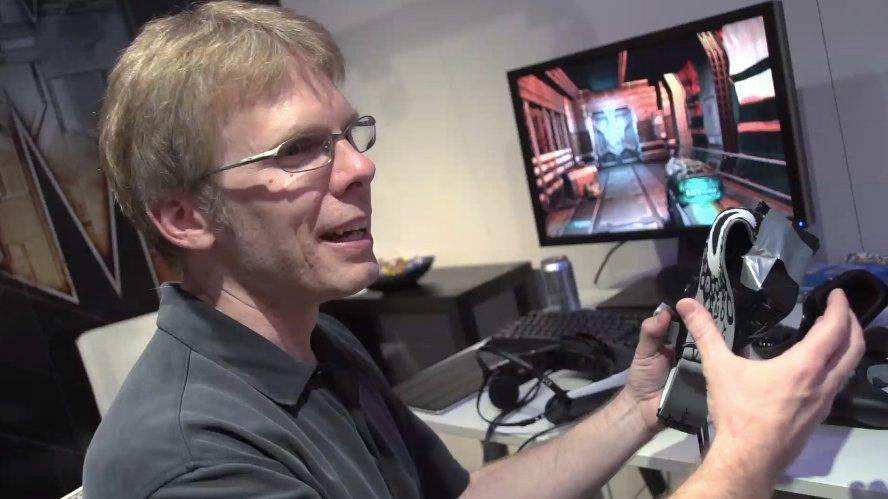
John Carmack at E3 2012, now Oculus VR CTO

Two years ago, a legendary programmer occupied an unassuming booth at the world’s biggest gaming show. It was John Carmack from id Software telling anyone who’d listen that virtual reality was back and that the equally unassuming black box, an early prototype Oculus Rift, was the catalyst. As more and more journalists got wind of the duct tapped demo, news about Carmack’s ‘magic hat’ began to spread very fast indeed. By E3 2012’s close, the Oculus Rift was one of the biggest stories of the show.

Two Years is a Long Time in VR

Two years on, the rise of virtual reality has soared even faster than its supporters could have reasonably hoped. In the 24 months since that E3, a long dormant industry has been awakened, and with it, the desire to harness VR’s unique immersive qualities for games. Games, of course, is what E3 is all about, and this E3 we’re hoping to see big companies wake up to the potential of VR.

Several big games are in the works for the Oculus Rift, amid a sea of indie demos and early-release titles, but we haven’t yet seen direct commitments from the AAA developer tier. Fast approaching the expected launch for the consumer version of the Oculus Rift (also known as the CV1), and post-Facebook acquisition, we’re anticipating announcements from major developers professing support for the Oculus Rift. Some will announce that they’re beginning development, while others will likely be coming out of stealth after developing for virtual reality for some time.

This will be the first E3 since Sony, one of the biggest names in gaming, jumped into the virtual reality arena. Make no mistake, they’ll be pushing their Project Morpheus VR headset as a unique-selling point against Microsoft’s currently VR-less Xbox. With Sony’s array of renowned first-part studios, it’s very likely that we’ll be seeing some major announcements of support for Project Morpheus, if only to say that the developers will be ready for Morpheus when Sony heads to market.

Which leads us to another possibility… that Microsoft will have something to show for their supposed virtual reality R&D. So far we haven’t uncovered any concrete info on what Microsoft might have up its sleeve, but you can bet that they’ll need an equal offering to Sony and Oculus at some point—maybe next week’s E3 will mark the official beginning for Microsoft and Xbox virtual reality.

Executive Editor Ben Lang and resident podcaster Reverend Kyle will be on the ground whilst yours truly will be working full time from the UK to make sure you have a front row seat to the most important virtual reality news to come out of the show.

If you’re working on something VR related and are heading to E3 this year please to get in touch with us at info@roadtovr.com or tweet us @rtovr.

News Bits: Loading Human Kickstarter Passes Goal, Announces Omni Support with 3 Days Left

1

loading_human_5

The darling of virtual reality enthusiasts right now, Untold Games’ Loading Human, is a first person adventure which is attempting to pave the way for compelling human interaction within virtual spaces. Its ambition we spoke about recently, as well as the game’s recent very attractive transition to Unreal Engine 4.

The Kickstarter campaign for the new title actually passed its $30k goal a couple of weeks back, but the team have just announced that, in addition to Oculus Rift, Sixense STEM and Razer Hydra support, backers of the game can also look forward to Virtuix Omni support too. It’s an enviable line up of supported hardware for sure, although I do worry that such a small team might struggle to find time to implement them all with the finesse demonstrated by their current user interfaces. We should find out for sure February 2015 when the early access backer tiers gain access to the game.

Focus on Storytelling

One of the problems with creating a setting for Loading Human is forming a believable universe in which to immerse the player. Countless games have hashed and re-hashed various Sci-Fi tropes over decades of gaming leaving a tough task for those wishing to be truly original in the space.

The Loading Human team are acutely aware of this and released a video to explain their approach to the storytelling challenge.

It’s a UNICs System!

As mentioned, Loading Human is positioning itself as somewhat of a game changer for virtual reality gaming. As we all know, human interaction with these virtual game worlds will be the key to user enjoyment. No matter how good your VR Headset might be at achieving a sense of presence, you still have to get things done in VR and a frustrating interface could be immersion breaking in the extreme.

To this end, Untold Games have released a short video describing their methodology behind their implementation of an ‘invisible’ interface. Using cues provided by the animation applied to your in-game hands, objects held and what you can do with them should be seamlessly and invisibly (i.e. no text required) communicated to the player. UNICS (Untold Natural Interaction & Communication System) is the cheeky monicker they’ve assigned this system, take a look at it in action.

We’ll keep you up to date  on Loading Human’s progress and don’t forget, you still have 3 days left to back the project here.

News Bits: Virtuix Announce Omni Shipping Delay, Teases E3 News

0

virtuix omni mark cuban shark tank investment funding venture

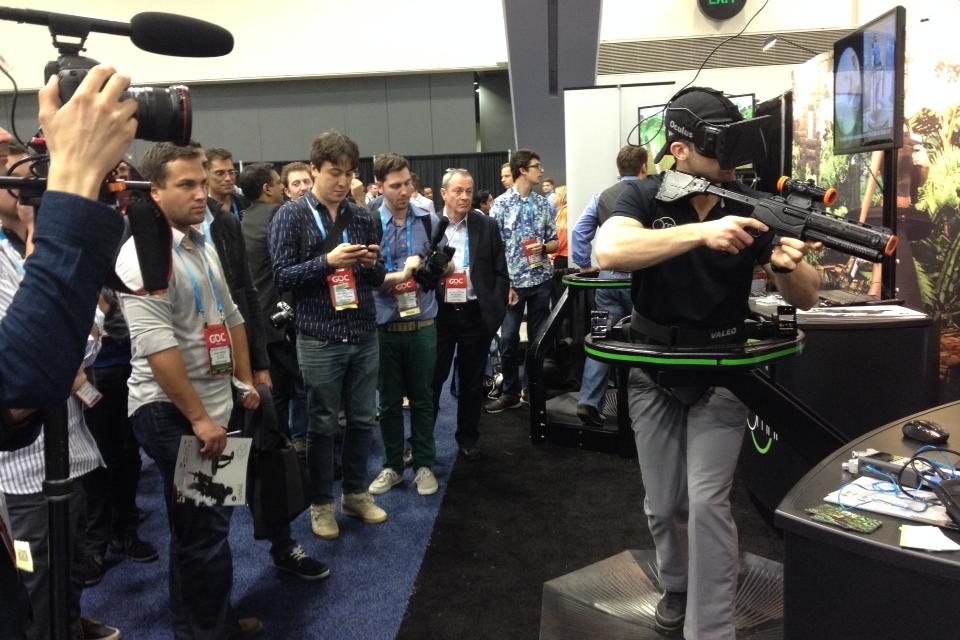
The fantastically successful Virtuix Omni Kickstarter, the omni-directional treadmill, was one of the earlier VR related crowd funding hits. They attracted over 3000 backers and finished with a cool $1.1M, their original goal was just $150k.

Original backers who pledged against an Omni unit were given an estimate of January 2014 until their units began shipping. It was an ambitious target given the complexity of the design and sure enough 11 months after the original Kickstarter completed, backers are still waiting for their units.

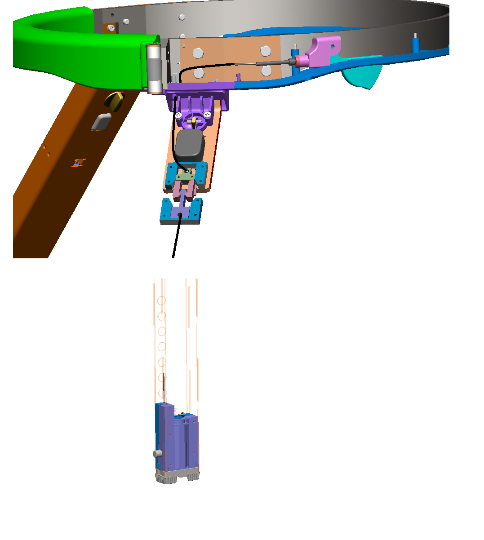
The troublesome height adjustment assembly.

Unfortunately for those backers (and those awaiting the chance to by this at retail), the company recently announced further delays. This time, the team report that the design of the support ring height adjustment mechanism has been found wanting and this has halted tooling for now. The good news is that the design team have made adjustments to address the issue and that design is ready for prime time. However, this pushed a likely ship date for the Omni back to Q3/Q4 2014.

It’s a painful blow for the Virtuix team, but they’re defiant in the face of such adversity, claiming they’d much rather suffer delays than cut corners on their inaugural device and the very first commercial omni-directional treadmill to be used by consumers.

SVVR a Success! Onwards to E3.

Say what you like about Virtuix and its founder Jan Goetgeluk, you could never accuse him and the team of standing idle. Over the last 18 months, Virtuix and its Omni has popped up at just about every major related trade fair and expo there is. So, when the SVVR team announced their intentions to hold the first commercial, consumer focussed virtual reality conference and expo, predictably Vituix signed up. The recent update takes time to praise SVVR Con’s organisers:

First and foremost, congratulations to the SVVR (“Silicon Valley Virtual Reality”) team for organizing a top-notch inaugural SVVR Conference. Every company in our emerging VR space was in attendance. Virtuix was a lead sponsor of the event, and Jan spoke on the panel regarding input and locomotion in VR.

E3 is inbound very soon and Virtuix will be present, this time showing off a new experience designed to showcase the Omni and virtual really. The new demo is called ‘Amsterdam by Night’ and seems to be a simple pitch at virtual tourism.

The Road to VR team will be reporting from the show floor at the 2014 E3 Expo, we’ll try to catch up with the Virtuix team then.

39,929FansLike
13,574FollowersFollow
66,541FollowersFollow
27,800SubscribersSubscribe

Latest Headlines

Features & Reviews