
Samsung’s Long-awaited Vision Pro Competitor Gets Price, Specs & Release Date

42

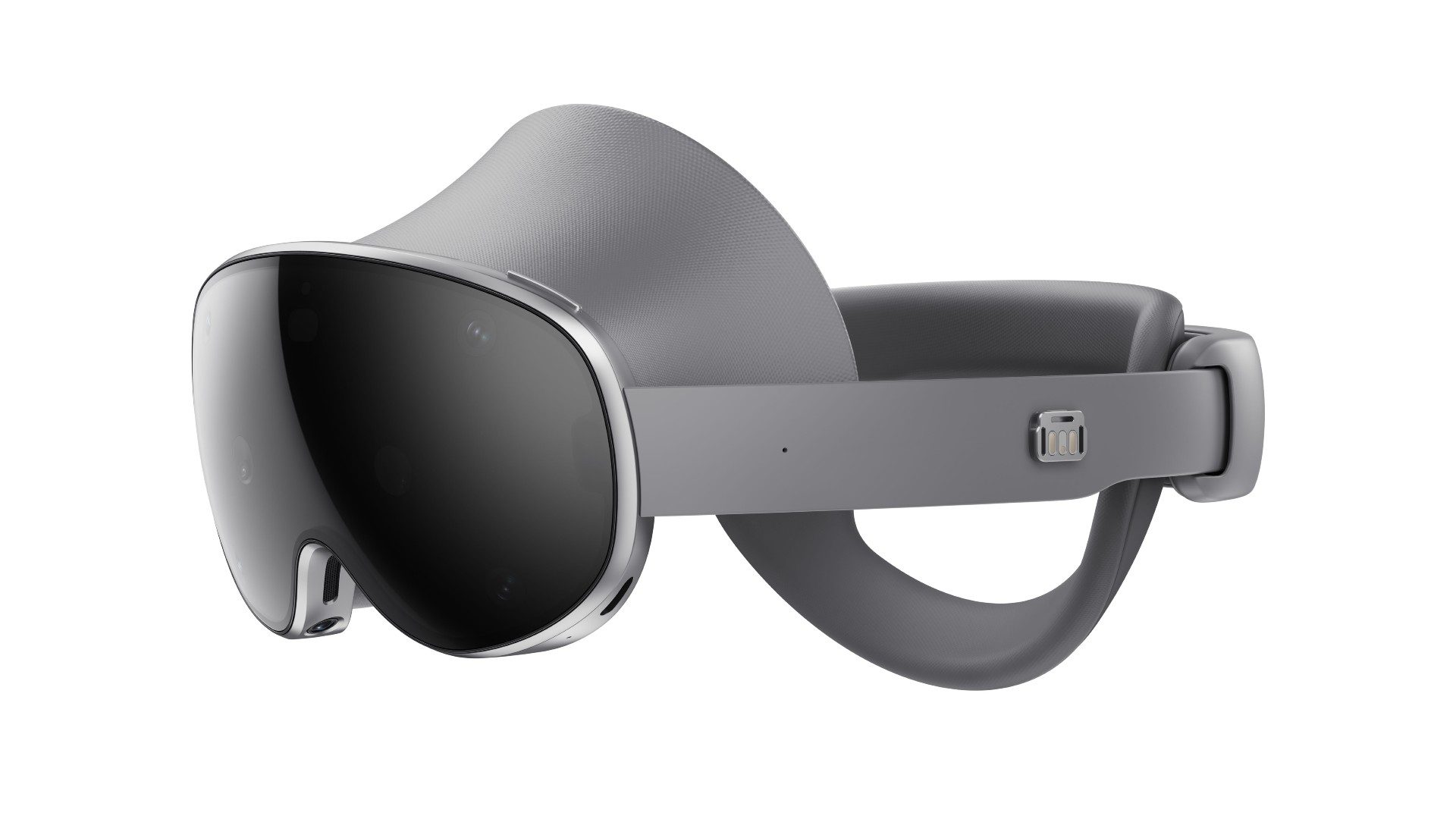
Samsung’s Project Moohan is officially called ‘Galaxy XR’, as the Korean tech giant has today launched its long-awaited competitor to Apple Vision Pro.

The News

Priced at $1,800 and releasing today in the US, Samsung Galaxy XR is the first headset to support Google’s Android XR operating system, which means it has access to standard Android mobile apps in addition to made-for-XR native apps.

Available direct from Samsung and Samsung Experience retail stores, Galaxy XR is coming in a single 256GB version, which includes dual 3,552 x 3,840 Micro-OLED displays clocked at a default 72Hz refresh (max 90Hz), 256GB of storage, 16GB of RAM and Qualcomm Snapdragon XR2+ Gen 2 chipset. See the full spec sheet below.
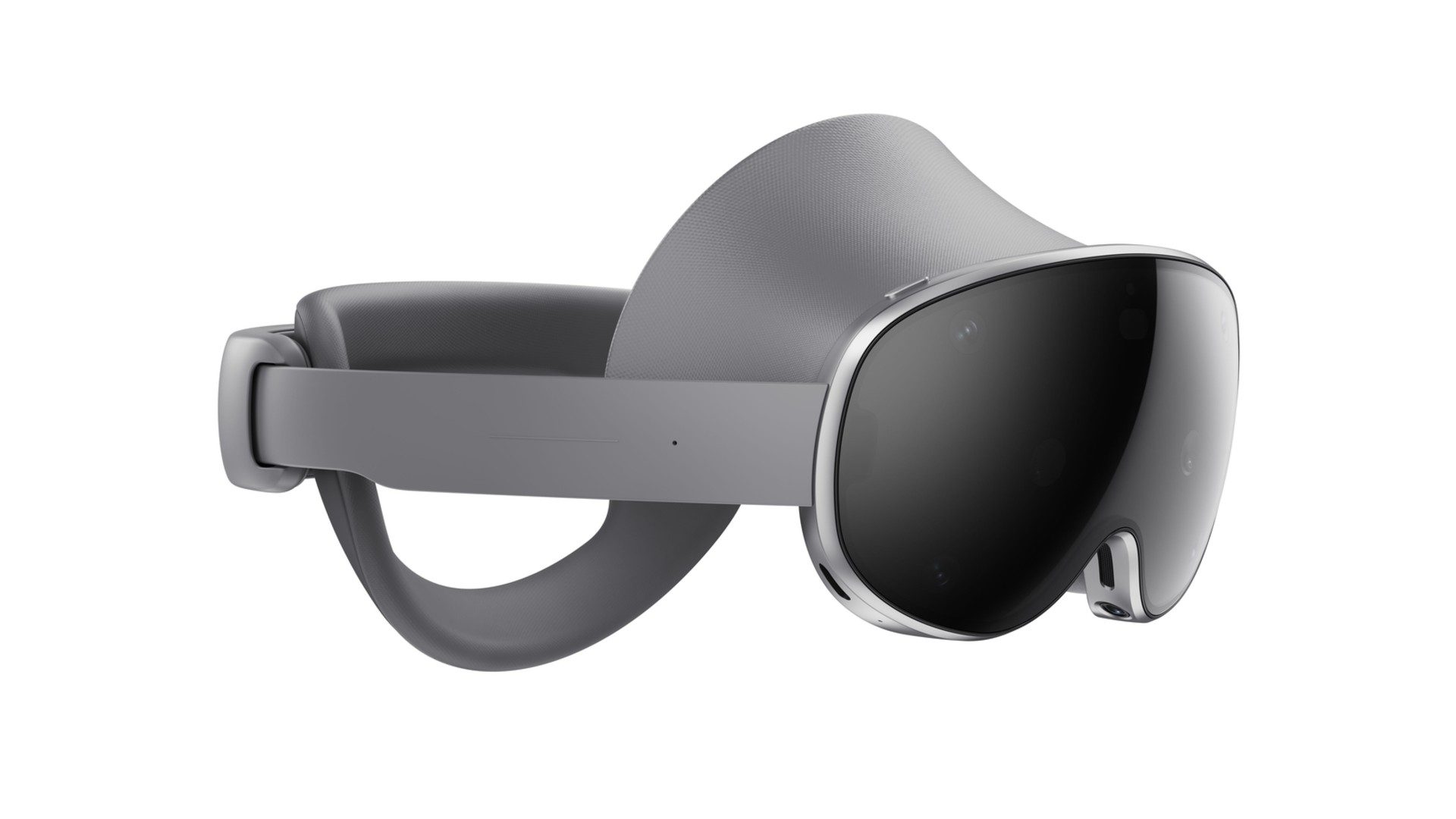
Samsung Galaxy XR | Image courtesy Samsung

Like Vision Pro, Galaxy XR offloads power consumption to a tethered battery pack, which is rated for around two hours of general use, or up to 2.5 hours of 2D video playback via YouTube. It can also be used while charging, Samsung notes.

While Galaxy XR supports both eye and hand tracking, Samsung is also releasing dedicated motion controllers separate from the headset, which are available today from Samsung for $250.
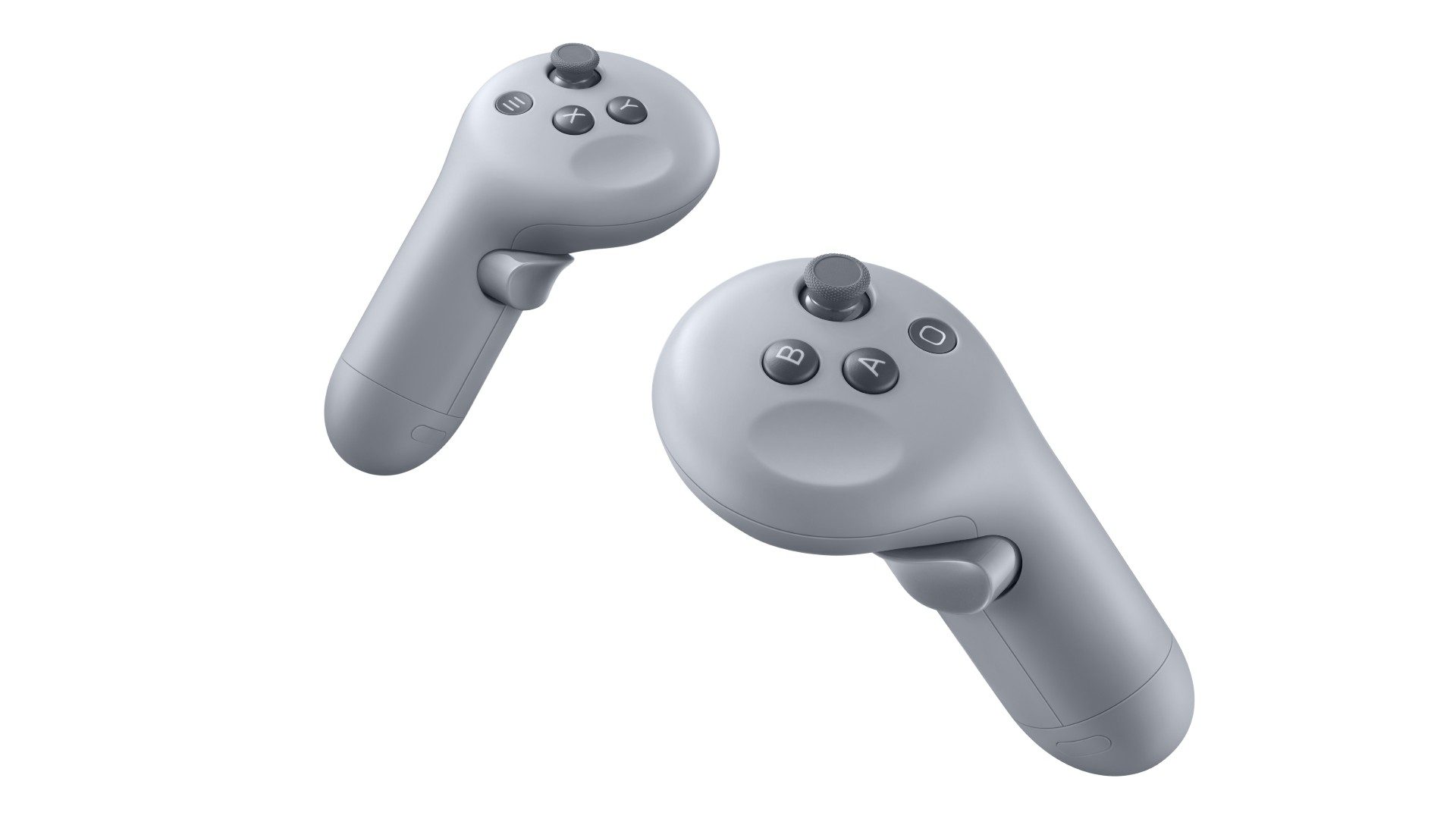
Samsung Galaxy XR Controllers | Image courtesy Samsung

Similar to Meta’s Touch Plus controllers, Galaxy XR’s feature a standard layout, including dual joysticks, grips and triggers, face buttons (X, Y, A, B) and menu buttons.

As for other accessories, Samsung is also offering an official carrying case, priced at $250, which includes a space for the headset and tethered battery pack. Users will also be able to buy prescription lenses separately, which are sold and delivered by EssilorLuxottica’s EyeBuyDirect.com.
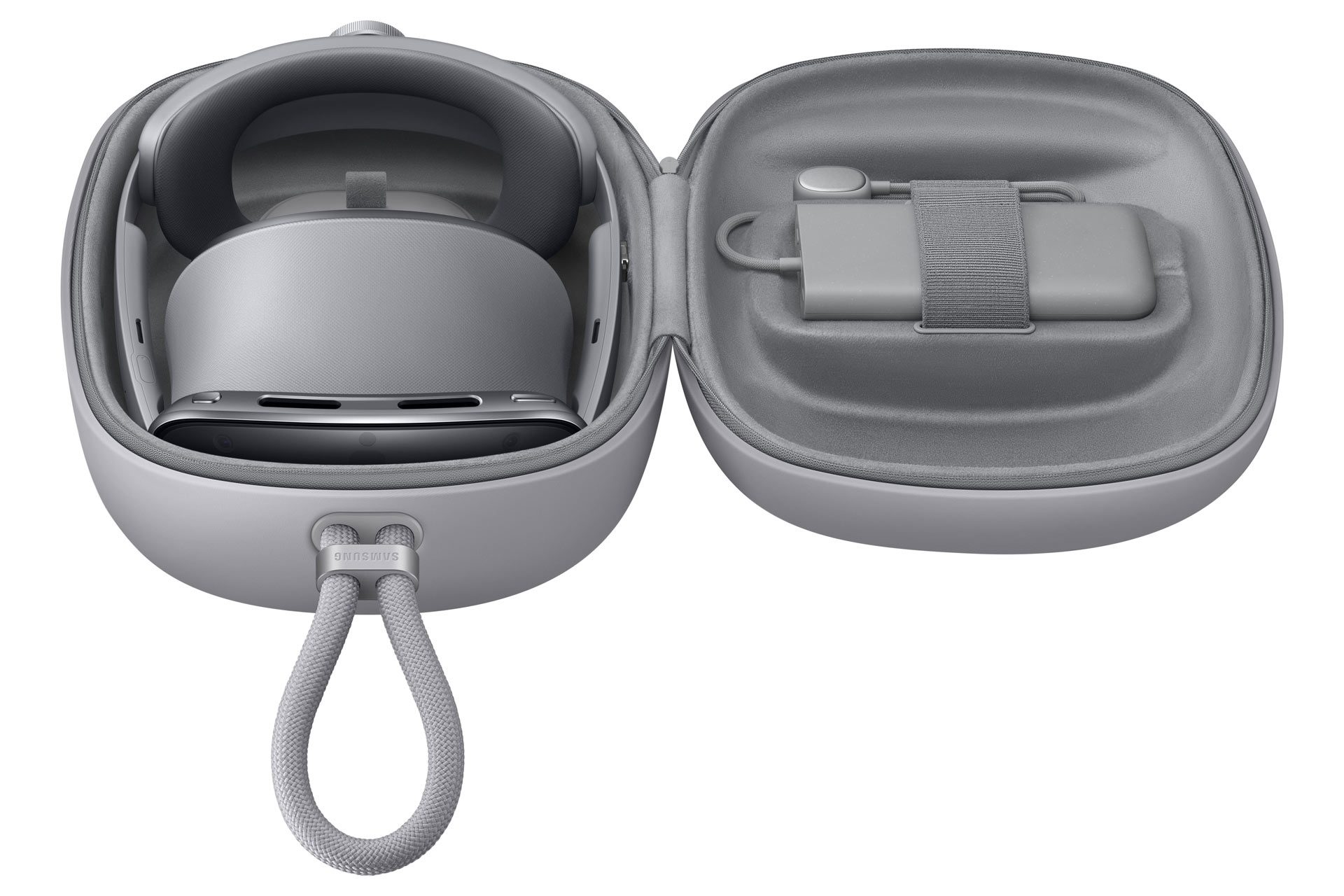
Samsung Galaxy XR Case | Image courtesy Samsung

Samsung mentioned a few supported apps during its presentation, which include games NFL PRO ERA and Vacation Simulator, Adobe’s video editor Project Pulsar, a short 180-degree film called Asteroid, and the meditation app Calm. Android XR is also bringing to Galaxy XR a number of XR-optimized versions of standard apps, including Google Maps, YouTube, Circle to Search, and Google Photos.

One of the biggest features is Android XR included support for Google Gemini, which can be used in a number of ways, like navigating to 3D places in Google Maps, asking for personalized suggestions, browsing and giving context to YouTube videos, and asking questions about objects in your physical environment. Like Vision Pro, Gemini can also “auto-spatialize” videos and photos into 3D by inferring depth in inherently 2D captures.

Samsung notes that customers who purchase Galaxy XR before the end of 2025 will also get “The Explorer Pack’, which includes 12 months of access to Google AI Pro, YouTube Premium, Google Play Pass, and a pack of “specialized XR content,” something the company says is worth more than $1,000.

Samsung Galaxy XR Specs

Category Details
Memory & Storage 16GB RAM
256GB Storage
Display 3,552 x 3,840, 29 million pixels Micro-OLED

  • 6.3-micron pixel pitch
  • 96% DCI-P3

Refresh rates: 60Hz, 72Hz (Default), 90Hz
Field of View 109 degrees horizontal and 100 degrees vertical

Chip Snapdragon XR2+ Gen 2 Platform
Sensors
  • High-resolution Pass-through cameras (2)
  • World-facing tracking cameras (6)
  • Eye-tracking Cameras (4)
  • Inertial Measurement Units (5)
  • Depth sensor (1)
  • Flicker sensor (1)
Optics (Iris) Supports iris recognition: use iris recognition to unlock the device and to enter passwords in certain apps.
Audio and Video
  • Two, 2 Way speaker (Woofer + Tweeter)
  • Six Microphones array: Multiple microphones among the six microphones support beamforming feature depending on the use case

Audio Playback Codec: MP3, AMR-NB/WB, AAC/ AAC+/ eAAC+, Vorbis, FLAC, Opus, Dolby Digital (AC3), Dolby Digital Plus(E-AC3) , Dolby ATMOS(E-AC3 JOC, AC4)
Video Playing Resolution: UHD 8K (7,680 x 4,320) @60fps
Video Playback Codec : H.263, H.264, HEVC, MV-HEVC, MPEG-4, VC-1, VP8, VP9, AV1 – Supports HDR10 and HLG

Battery
  • Up to 2 hours of general use
  • Video up to 2.5 hours
  • Galaxy XR can be used while charging the battery
Connectivity
  • Wi-Fi 7(802.11a/b/g/n/ac/ax/be)
  • BT 5.4 (Up to)
IPD
  • 54~70mm
    • Galaxy XR supports vision correction through separately purchasable optical-inserts
Weight
  • 545g* (w/ forehead cushion) – weight may vary depending on whether light shield is attached or not
    • Separate battery weighs 302g
SEE ALSO
Mixed Reality's Best Laser Tag-style Multiplayer Gets Better Spatial Stability, New Enemies & More

My Take

Samsung is making good on its effort to deliver the Android-flavored rival to Vision Pro at half the price. Still, at $1,800, I imagine it will probably only to appeal to the same crowd: prosumers and enterprise.

Even with optional $250 controllers, gamers hoping for a deep library like Quest will probably be left waiting. While it’s true that porting OpenXR games from Quest to Android XR isn’t supposed to be difficult, some developers might not invest much time in a platform that’s seven times more expensive than Quest 3S.

Apple Vision Pro (M5) | Image courtesy Apple

And while Galaxy XR may be a technically great headset with all of the right bits in place to appeal to some fraction prosumers and enterprise, I think it’s more than just tossing out something mechanically competent and useable to some: to me, it feels like a first step in a game of catch-up.

Samsung and Google made it clear in the press info provided to Road to VR that the focus isn’t just on Galaxy XR, but rather on the multitude of devices yet to follow. The companies are pitching Galaxy XR as an opening salvo in a “new category of AI-native devices, with a broader XR roadmap of multiple form factors, including AI glasses.”

It’s that broader category that companies are salivating over right now, with smart glasses (aka ‘AI glasses’) representing a stepping stone to the all-day AR glasses of the future—which many characterize as the computing paradigm that will one day supplant smartphones. That’s where the money is at, and mixed reality headsets are a great way to start getting user feedback to inform future design.

Whatever the case, I don’t see Galaxy XR supplanting much of anything right now, although the companies could do much worse with their opening bid to reenter the XR space, which both quietly abandoned years ago. Here’s hoping that history doesn’t repeat (or rhyme).


This article may contain affiliate links. If you click an affiliate link and buy a product we may receive a small commission which helps support the publication. See here for more information.

Well before the first modern XR products hit the market, Scott recognized the potential of the technology and set out to understand and document its growth. He has been professionally reporting on the space for nearly a decade as Editor at Road to VR, authoring more than 4,000 articles on the topic. Scott brings that seasoned insight to his reporting from major industry events across the globe.
  • Btw controllers are now 30% off if you buy the headset

    • Christian Schildwaechter

      … if you buy the headset together with the controllers before November and the controllers aren't sold out. Which will apparently no longer be possible in this timeline.

  • XRC

    Not bundling the controllers with the headset was a huge mistake because history shows add-ons rarely sell at sufficient volume to alter the ecosystem in a beneficial way.

    its already a device with limited appeal, restricting the financial potential for porting existing OpenXR Quest/Pico applications which are primarily designed around motion controllers

    • polysix

      It's fine, nobody wants to play quest cartoon shovelware on an 1800 dollar device.

      Standalone VR is crap, the games are embarrassing. It's not big loss and clearly not the market Samsung are aiming for. Imagine wasting 4k micro OLED on stupid mobile chipset games… LMAO talk about imbalance.

      People ACTUALLY into VR gaming will be using PSVR2 on PS5, or something on PCVR. No VR gamer stays with quest standalone trash for long.

      • Nevets

        Do you know, I don't think I've ever seed a single positive comment from you. Everything you say is so unremittingly negative that your comments make me feel depressed after I've read them. Of course it is your right to be negative if that is your viewpoint. But out of interest what do you think is positive about the world of VR and AR at the moment? Is there anything you're looking forward in VR (and I mean anything, a product, a game an article etc) ? What do you like and admire across the industry?

        • Dave Ross

          polysix is not being negative uless you classify telling the truth as being negative. we need more people telling it how it is rather than pandering to the likes of fuckerberg etc. if there is to be any hope for pcvr picking up where it left off before meta dumped on it

          • Christian Schildwaechter

            Archeology is the search for fact, not truth. If it's truth you're interested in, Dr. Tyree's Philosophy class is right down the hall. – Prof. Dr. Henry Walton "Indiana" Jones, Jr. – Indiana Jones and the Last Crusade

            Polysix isn't stating facts, he is stating his interpretation, which is negative.

            Some verifiable facts:

            – standalone HMDs have less powerful GPUs than most PCs used for VR, and therefore run games with simpler graphics (as in less polygons, materials, light sources, not necessarily relating to game design, depth, quality, entertainment and other (more subjective) factors
            – way more people play VR games on standalone HMDs than PCs despite the weaker graphics
            – some time ago almost 1/3rd of the users of the most popular Meta Quest HMD family played a game called Gorilla Tag with graphics that are rather simple even for a mobile GPU
            – Gorilla Tag has become one of the most successful VR games, generating over USD 100M in revenue by early 2024, the only VR games/apps that may have made more are (Meta's) Beatsaber and (Meta's) Supernatural

            Classifications like "embarrassing", "not big loss", "wasting" are very subjective. "Nobody wants to play" or "People ACTUALLY into VR gaming will be using" are contradicted by the numbers we have from verifiable facts, or introduce arbitrary, again subjective criteria ("ACTUALLY" -> whatever matches your subjective criteria).

            You state your agreement with polysix, not referring to any verifiable facts either, only declaring it as true ("TRUE" -> whatever matches your subjective criteria). See Dr. Tyree down the hall. Or consider typing "I think/I believe" instead of "telling the truth".

      • Dave Ross

        this is absolutely true and the fact that many pcvr titles are ported from trash visual quest standalone games has degraded the fidelity of pcvr games generally what about NO DISPLAYPORT so only for people who can't see compression artifacts and are ok with compromised and degraded visuals nevermind the resources used for encoding/decoding that would be better employed to increase visual fidelity. What a waste of those mOLED panels and lenses. or maybe it's aimed at the rich kids and idiots that play standalone games I wish Meganex would incorporate SLAM tracking and Panasonic improve the lenses for Meganex 2 AND ditch the disgraceful no return/refund policy as Play for dream has done recently introducing a 15 day return window, especially as Meganex lenses seem to be a lottery ( like Pimax) with many users stuck with subpar lenses because Meganex refuse to replace saying they are fine when they clearly aren't for the unfortunates who shelled out $ 2000 only to have that experience. ( unless you are a youtube influencer who gets cherry picked headsets ) If Meganex or another reputable company with good QC ( so NOT Pimax ) did that it would be an instant buy for me.

        • Andrew Jakobs

          The latest versions of Virtual Desktop and a decent PC/wifi show that wireless has become almost as good as DP, certainly during gaming when you are focused on the game itself, not on looking for compression artifacts/latency.
          to me anything with a cable (and I even include this headset due to its tethered battery) is a no go. I had the HTC Vive Pro+'wireless'module and even though the module made it a MAJOR improvement over connecting it with a cable to the PC (even with an improved way of using kiwipulleys), the cable to tye battery annoyed me, and when I picked up a Pico 4 , intended just for testing purposes, I never went back, having not to deal with the external battery/cable is such an improvement.

          • Olle

            I just have to say I'm lmao at Andrew's years-long crusade on wired headsets. Never fails to comment without including several lines about their awfulness. Please continue this.

      • Andrew Jakobs

        Oh please stop your bullshit about "people actually into VR gaming". I know a lot of VR gamers that are quite happy with the standalone games on the Quest 3/Pico 4(Ultra), including me. Because you are an utter snob when it comes to graphics doesn't mean everybody is.
        It's exactly the advantage of these standalone headsets that you can also use them for PCVR, wirelessly (which f course requires a very beefy and expensive PC to actually improve the graphics a lot over standalone).
        Just to throw something back at you: people ACTUALLY into VR gaming don't want any headset with a cable…..

      • dave ross

        standalone games for the most part are for kids and idiots of which there are many it is very unfortunate that the graphics of many pcvr games are severely downgraded for the rest of us
        ( e.g metro awakening) because of fuckerberg targeting that demographic nevermind the other late stage capitalist nefarious practices of meta

        • Christian Schildwaechter

          And only small children read comics or watch cartoons. No adult would ever get caught watching a superhero movie. For intelligent adults it's either BBC nature documentaries narrated by David Attenborough, or long Werner Herzog arthouse films. Anything with popping colors is obviously brainrot. And only pussies play their WW1 simulators in VR without a haptic vest dishing out severe electric shocks whenever they are hit by a bullet. This is the only possible truth, and it is completely impossible that anybody actually has any other valid opinion, because the illuminati have infiltrated all of VR land.

    • Nevets

      Sadly I suspect you are probably right

      • XRC

        Controllers in the box mean every user has same hardware capabilities whether the controllers are regularly used or not.

        This gives devs a known hardware target when developing gaming or enterprise applications for the platform.

        • Christian Schildwaechter

          As this the very first AndroidXR device, Google will have had a lot of influence on what Samsung actually ships, as this sets a precedent. So the only way they didn't make 6DoF controllers something developers can count on users to have, is because Google explicitly doesn't want controllers to become the or at least a default input option.

          Meta tried to dominate the VR/XR market by quickly growing with VR games. But despite trying for a decade and spending billions on research, hardware development, paying studios for AAA ports and foregoing earnings by selling at cost, all they got was about 10M monthly active users, most of which still abandon the platform after a few months. Tiny numbers compared to console and PC gamers, negligible compared to mobile phone gamers.

          In contrast about 2.5B users visit Google's Play store each month, and more are using Android devices on a daily basis. So if they are looking at Meta's example for their second entry into the XR market, it is mostly about what not to do. Do not focus on games. Do not make controllers the default input. Do not lock yourself into a hard to escape entertainment corner. And even Meta is learning from Quest what won't work. Their apparently much more popular smartglasses so far don't even run 3rd party apps, rely solely on voice and hands for input, only now getting displays with tiny FoV.

          • Zod Zod

            Problem there is Google is the king of abandoned projects if they don't instantly make a kajillion dollars. When this doesn't sell due to its prohibitively high price Google will move along to its next project of the week.

            Pixel customers have been complaining for years that their phones are underpowered and overpriced, but you only hear crickets from Google.

          • Dragon Marble

            In contrast about 2.5B users visit Google's Play store each month

            We should really stop making that kind of comparisons. We already know VR is not taking off like that any time soon. You don't have to reach 2.5B to be mainstream. If you compare to other mainstream devices, such as Steam Deck, you will start to feel much more optimistic about VR.

            I agree with you that the future of XR is much more than gaming. However, today's VR is very much all about gaming. Even Apple caved in and added PSVR2 controller support — and I do not consider the Vision Pro a gaming device at all. Not including controllers in the package is a dumb move from Samsung/Google. According to UploadVR the controllers are already sold out.

          • Christian Schildwaechter

            We aren't talking about VR here. We are talking about an AndroidXR driven HMD that is basically AI driven smartglasses in disguise, providing the services that Google expects all smartglasses to offer a few years down the road, once the technology allows to squeeze all that into a small frame.

            And while VR will not go mainstream, smartglasses probably will, with many seeing them at least partly replace smartphones some day. And then we are talking about 2.5B monthly visits to the Google Play store again. This is the only reason why Google and Apple and Meta and Samsung and many more are now. And one reason why interfaces requiring controllers are a no-go, because smartglasses will have to work without blocking your hands.

    • SkinnyElephant

      If they are selling it at a loss, I understand why they do not wish to offer accessories. How much would this thing cost? Probably a lot considering flagman Qualcomm CPU, best microled displays available and more.
      I recently bought TV glasses, rayneo. While it only cost 250 bucks (and no tax) I immediately paid 40 more for smartphone and PC connector.

      Everything that does not include needed accessories is like a hidden fee. And 250 bucks is not a small fee.

      • Arno van Wingerde

        What this causes is a situation where some, but not all users have controllers. So, what’s a developer to do?
        1: ignore controllers, port games to hand interactions at huge effort.
        2: Develop for controllers and loose x% of your customers straight away, reducing the already small potential market even further….
        3: Develop for both at double the effort, and it is a major effort to supplant controller actions with hand movements.

        This kneecaps the software market for the device before it is even on the market.

        • Christian Schildwaechter

          Developers will ignore the controllers and focus on hand interaction, just like they did on phones with touch controls. There will be some games that also support controllers, similar to ports of console AAA titles like RE8 or Death Stranding to iPhone, as these were designed for controllers, making touch only controls the worse option that most users will still use due to not owning controllers. Very few games will require controllers, and all of these will be ports from other (VR) platform.

          Samsung knows this, so not bundling controllers isn't anymore a "mistake" than Apple no only not bundling them, but not even supporting them for the first 18 months. This is a very intentional positioning message, in case the USD 1800 price tag didn't make it clear enough that this headset is not intended for gaming. Sure, you can play games on it, but esp. Google doesn't care about the VR gaming market, they want to become a platform leader in future head worn devices regular people wear all day, interacting with their AI agents via voice, hand and eye tracking doing things where controllers would only be in the way. Controller use will be discouraged except for a few special use cases, as controllers limit mass market acceptance.

          VR enthusiasts look at these devices from a perspective of what they want for themselves. But Google and Samsung both left the VR market when it was mostly about gaming, and they are only now coming back when a non-gaming XR market starts to develop. Just like on phones, Google will gladly sell you games. But the main reason for them to develop Android and give it out for free has always been to capture billions of mobile users going online, ideally with a Google browser, and sell their eye balls to advertisers, which is how they became a trillion dollar company. Their goals for the upcoming generations of head mounted Gemini AI assistants will be similar.

          • XRC

            I agree with your analysis except for one aspect; they went to the trouble of designing and tooling up proprietary 6DoF motion controllers which are already integrated with Android XR

            (unlike Apple who have finally offered an option for AVP, albeit a third party).

            beyond gaming, motion controllers can be very useful for enterprise giving high quality input and haptic feedback for training applications. The price point certainly targets this sector.

            Google made a good sales pitch to enterprise customer during the launch, I'd expect them to start cannibalising HTC enterprise sales

            it seems that limited quantities were available at launch as the controllers are now sold out, with some not able to enjoy the 30% equipment discount offer

          • Christian Schildwaechter

            That's why I mentioned "a few special use cases". Controllers have their place and can be much better for specific tasks, but are very clumsy compared to what our hands can do. Apple offers their own pressure sentivite pen with tilt detection and limited 6DoF tracking (relative to the iPad surface) for improved input in esp. drawing apps, and now supports Logitech's 6DoF pen on AVP for design applications.

            I'm pretty sure that Google/Samsung wanted 6DoF controller support for similar uses, local gaming and PCVR streaming from day one, as the initial lack controller support was widely criticized on AVP. Ports from the Android based Horizon OS to AndroidXR should also be easy, so a controller option allows a lot more apps to be quicky ported from Quest. But the question of also supporting controllers is quite different from allowing them to become the default.

            I doubt that the production costs for Samsung's 6DoF controllers would be significantly higher than the controllers Meta bundles with the USD 299 Quest 3S, at least when produced at similar scale.So at USD 1800 they could easily have bundled them. But then devs would have taken the easy route and just continued to release games requiring controllers for both Horizon OS and AndroidXR. In the early iPhone days, mobile game developer coming from Nintendo DS tried to get away with simulated joystick controls on the screen, and only over time came up with alternative schemes using taps and swipes, partly because the simulated buttons lost the main benefit of their physical counterparts, precision.

            Even Apple acknowledges that controllers can be much better, and allowed using them in iOS 7, but only after touchscreen controls were well established. AndroidXR will support 6DoF controllers for special uses and initial compatibility with existing XR software, but longterm I'd expect them to be more like HOTAS that sim fans buy for a very specific purpose, with the vast majority of app and games used with eye and hand tracking.

        • flynnstigator

          You forgot the most important option.
          4: Don’t bother porting games to the Samsung Android XR.
          ;)

    • xyzs

      The reason they don't bundle it, is kinda the same reason Apple remove the jack plug from iphone while stil providing an lightning port to jack adapter: To force users giving up on a habit they don't see as helping (mass adoption is not compliant with having to hold controllers all the time)

    • Totally agree

  • eadVrim

    Quest 3 costs $500 (controllers included),

    • Andrew Jakobs

      Quest 3s costs $300, so what's your point!

      • Christian Schildwaechter

        Amazon recently sold the Quest 3S 128GB incl. controllers for USD 249, the same prices as the Samsung controllers cost alone, in a package called "Gorilla Tag Cardboard Hero Bundle", also including Gorilla Tag exclusive items and ingame currency. I can only assume that the name was picked to piss off as many VR enthusiasts as possible at the same time.

      • eadVrim

        Good point!

      • Rupert Jung

        Quest 3s was a step back. But Quest 3 provides incredible value, especially compared with the Vision Pro (and also the Samsung Rip – …, ehm, "competitor".

        • Andrew Jakobs

          Stop saying its a AVP ripoff when AVP itself looks a lot like previous released/shown headsets. Don't act like the AVP design is original.

          • Christian Schildwaechter

            AVP focuses on an eye tracking paired with minimalistic hand gestures driven UI for productivity apps that allows to smoothly continue existing apps and integration into existing communication services, adding very high quality media provided by Apple TV with 4K 3D movies and immersive video available nowhere else. Nobody had done this before, and most of it still doesn't work on the Galaxy XR, let alone a Quest or Pico. That they are using similar hardware to other HMDs (or even smartphones and laptops) is simply due to this being a requirement for something worn on your head.

          • Andrew Jakobs

            But it was already available in some form. As always, Apple just put a better shine on it.

          • Christian Schildwaechter

            That "already available in some form" argument will only get you so far until you have to admit that something actually added something new.

            https://uploads.disquscdn.com/images/ad2aa991695a0d51a2b26fe020943ee71307784c7e529e534b0daa76679b6c6e.jpg

          • Andrew Jakobs

            The crown is about the only real new thing I hadn't seen before.

          • Christian Schildwaechter

            2024-01-05 www_roadtovr_com/qualcomm-snapdragon-xr2-plus-gen-2-mr-reference-headset-samsung/

            Andrew Jacobs

            Sorry, but it is Apple who copies from everybody, the only 'original' idea with the AVP is the crowndial, the rest has been done/shown before by others like Meta.

            Christian Schildwaechter

            The WOW AVP triggered even in VR veterans was due to its extremely intuitive use through eye tracking combined with hand gestures, plus seamless integration into Apple's ecosystem and apps. None of that is about hardware, which is becoming commoditized anyway, with mostly variants of Qualcomm's reference design.

            […]

            Samsung isn't going to copy the expensive AVP hardware, instead stick close to Qualcomm's reference to reduce costs. But what Samsung and everybody else will copy is Apple's XR user interface, that some Unity developers had reimplemented on Quest Pro just days after the AVP presentation. The crown dial is nice usability feature, but identifying it as the only "original" idea completely misses that (AVP) hardware is just a means to an end. It is all about UI/UX.

  • The CAT

    Been using Computers since 1981

    Over 10 yrs of PC VR

    I'm not interested in this.. Will stick with my Quest 3 for now..

    i am wondering how valve's will be though

  • Zod Zod

    Samsung so desperately wants to be Apple they're even copying their failures. I fully expect this to fail and Samsung will incorrectly think it's because there's no money in VR.

    No hardware platform has ever been successful without robust software support. It's not like Samsung is known for great software, and Google is the king of releasing a product just to abandon it seconds later. So who is Samsung expecting to develop for this? If they're expecting to lean on PCVR there's already a ton of high end headsets out there, and being "wireless" isn't going to stay wireless long when it only has a 2hr battery life.

    Even worse Samsung doesn't have Apple's cult like following. Charging $2k and calling it "professional" to warrant that high price is a massive mistake IMO.

    I'm all for the big players to get back into VR since WMR fizzled out, but the whole point of wanting the big boys in the game is to bring the economies of scale to bring prices down, not to sell me a slightly faster and sharper Q3 for 4x the price with no software support.

    The whole thing just seems like a solution looking for a problem. And an overpriced solution at that.

    • Christian Schildwaechter

      … and Samsung will incorrectly think it's because there's no money in VR.

      The fallacy in your argument is thinking that Galaxy XR is a (gaming) VR headset. It is not, even if the hardwares is capable of running VR apps or serving as a PCVR streaming target.

      AVP's use by total hours is probably mostly watching movies, then acting as a virtual display for a Mac, followed at a large distance by everything else from running iPad apps to watching photos, speaking to others in FaceTime and occasionally playing a game, but mostly in MR mode. A few people that have managed to set it up with Index controllers, or bought the self-tracking Surreal Touch controllers used for PCVR streaming, a number that will increase now that PSVR2 Sense controllers are officially supported. But I'd expect AVP to be more often used as an actual paper weight than as a VR HMD.

      The Galaxy XR seems even less about doing things in a virtual world. They cover most of the same basic functionalities as the AVP, with Google apps/services instead. But while Apple emphasized the integration into their existing ecosystem with iPhones, iPads and Macs, Google is leaning heavily on integration with their Gemini AI, having it interpret things recorded by the cameras. In a way Galaxy XR is even less of a VR HMD than AVP, and more a wearable AI assistant doing today what they hope smartglasses will be able to do in a couple of years.

      The robust software support both are counting on are the hundreds of thousands of (flat) iOS and Android apps that billions of smartphone users interact with every day. Both allow a somewhat smooth transition from using them on a phone to using them on their XR HMD. They'll take the Job Simulator, Demeo or Synth Rider ports from VR platforms, and will gladly sell your one of their expensive HMDs for use as a hires PCVR streaming HMD, or one of their future, probably lighter and cheaper versions. But don't think for a second that VR is anywhere close to the Top 10 of things they expect or want people to do with these HMDs. Their (content) priorities will be mapped accordingly.

  • Rupert Jung

    At 999 EUR with controllers this would be interesting for many enthusiasts. But at double the price without controller I expect sales close to zero.