
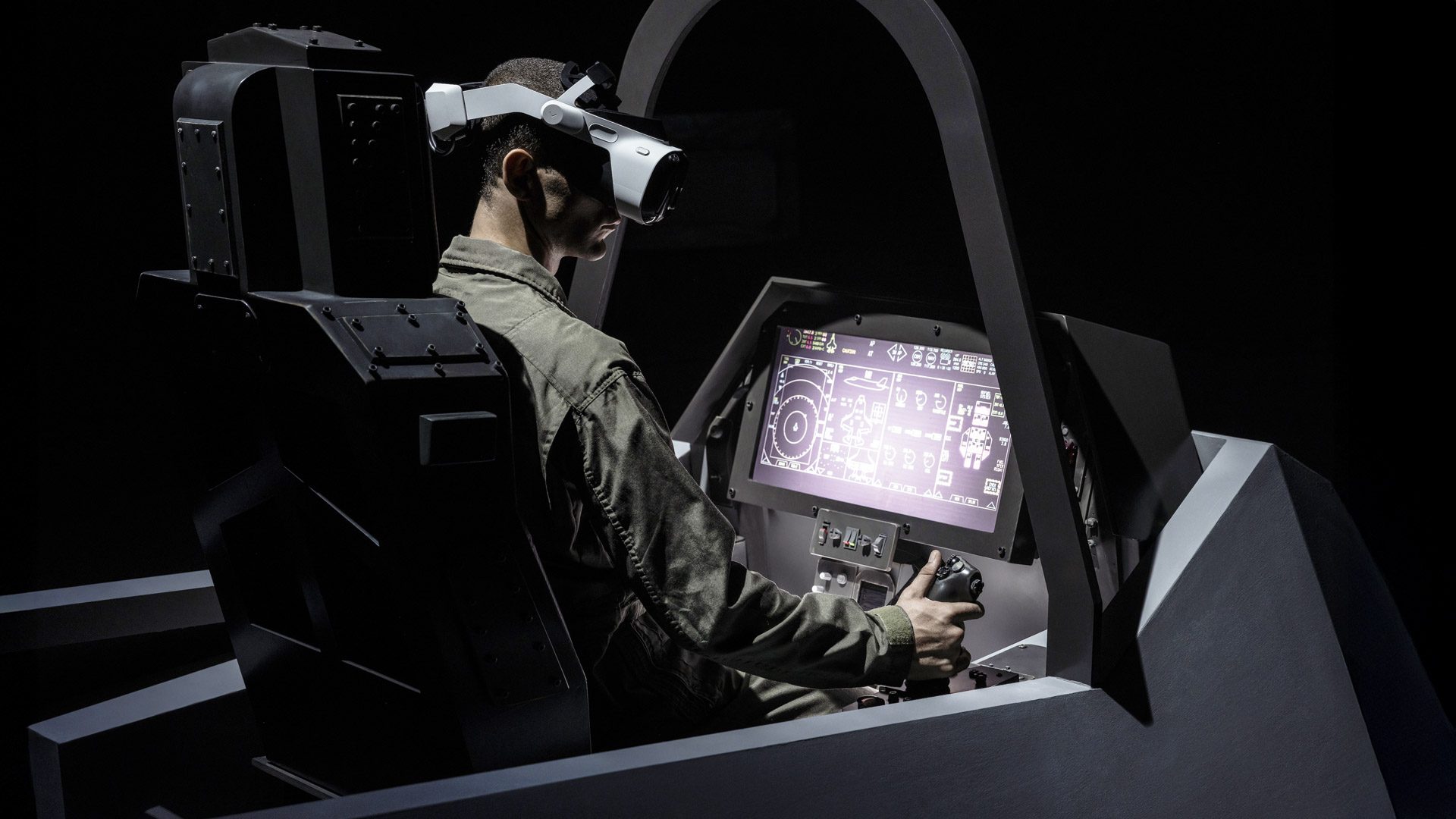
Varjo Secures $5.8M Investment to Accelerate Military-Grade XR Hardware

2

Varjo, the Finland-based maker of high-end XR headsets, announced it’s secured a €5 million (~$5.8 million) minority investment from THEON, the Greece-based manufacturer of military imaging systems.

Structured as a convertible loan, the €5 million investment also includes the option to secure an additional €5 million under the same terms, the companies say in a joint press release. Additionally, as a result of the strategic partnership, Varjo and Theon have agreed to collaborate closely on multiple product and business initiatives.

Founded in 1997, Theon develops and manufactures customizable night vision, thermal imaging systems and Electro-Optical ISR systems for military and security applications in Europe.

Varjo says the investment will strengthen the company’s capabilities to deliver “military-grade realism through next-generation immersive technologies.”
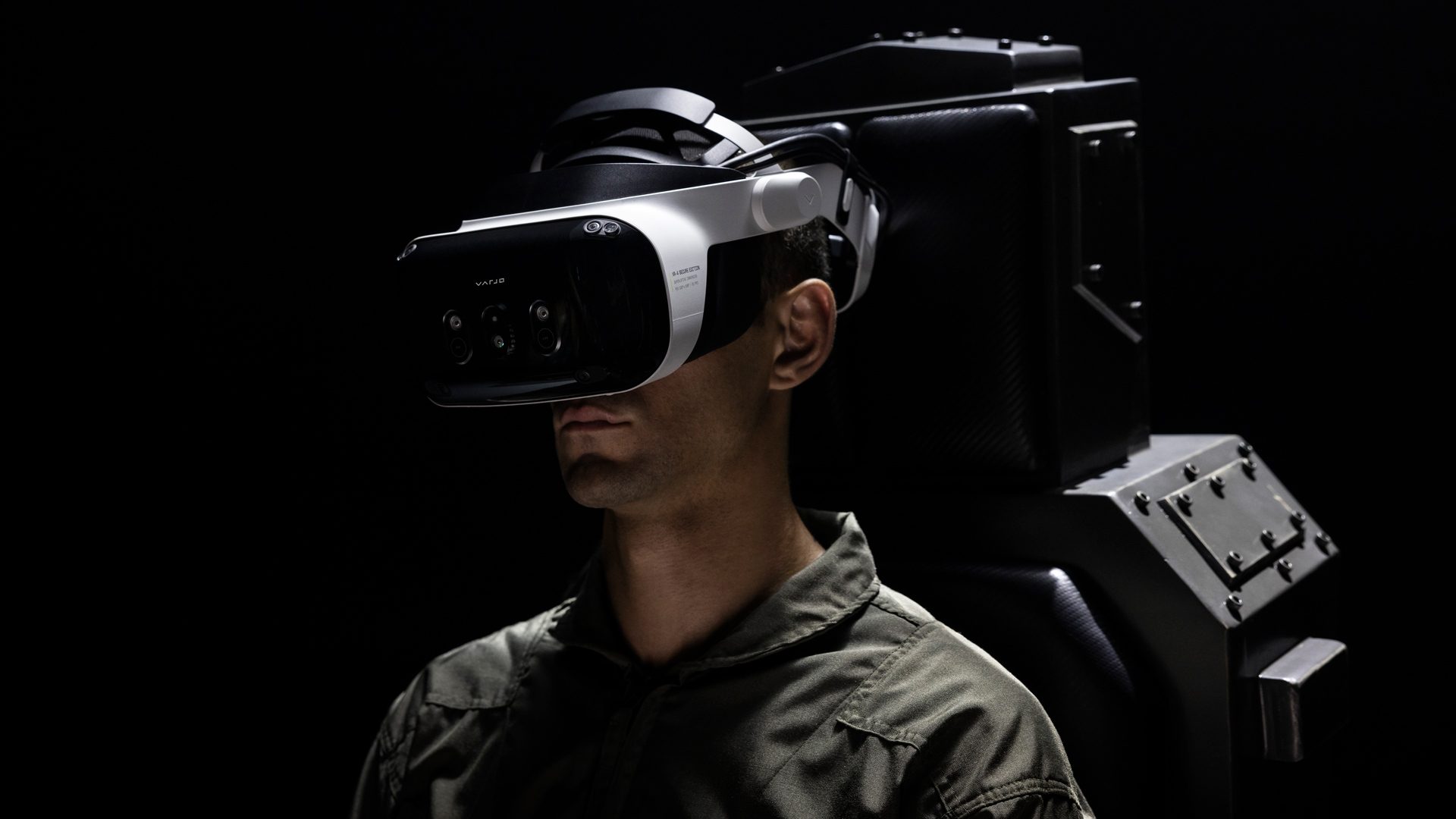
Varjo XR-4 | Image courtesy Varjo

“We are proud to welcome THEON as a strategic investor in Varjo,” said Timo Toikkanen, CEO of Varjo. “Since our inception, we have been creating the most advanced VR/XR military systems globally. THEON’s extensive experience and leadership in the defense sector make them an ideal partner as we expand our impact in mission-critical training and simulation, enabling unprecedented levels of realism, readiness, and operational effectiveness.”

Theon CEO Christian Hadjiminas says the investment “deepens our reach into the European innovation ecosystem and gives THEON access to unique capabilities in visual display systems and projecting technology. Together, we are pushing the frontier of digital defense technology.”

SEE ALSO
Virtualware Seals €5M Deal to Support Virtual Vocational Training in Spain

Theon’s investment in Varjo comes as part of its broader ‘THEON NEXT’ initiative, which is taking the company beyond imaging, as Theon seeks to expand into digital and AR-driven soldier systems.

Through Theon Next, the company has also invested $15 million in US/UK-based XR display manufacturer Kopin, signed a multi-year supply agreement with US-based XR display manufacturer eMagin, and announced a strategic partnership with ALEREON, the US-based creator of ultra-wide-band wireless technology.

This follows news last month that Varjo is pulling support for its older XR headsets starting next year, and putting its main focus on its XR-4 Series headsets, effectively marking a return to enterprise-first offerings following the release of its first and only consumer-focused headset, Varjo Aero.

Released in late 2023, the XR-4 Series includes the standard XR‑4 ($5,990), XR‑4 Focal Edition ($9,990), and its military-compliant XR‑4 Secure Edition, which comes in three variants (~$18,00 – $32,000).

This article may contain affiliate links. If you click an affiliate link and buy a product we may receive a small commission which helps support the publication. See here for more information.

Well before the first modern XR products hit the market, Scott recognized the potential of the technology and set out to understand and document its growth. He has been professionally reporting on the space for nearly a decade as Editor at Road to VR, authoring more than 4,000 articles on the topic. Scott brings that seasoned insight to his reporting from major industry events across the globe.
  • Christian Schildwaechter

    TL;DR: there has always been and still is a rather big connection between VR and the military, much more than in other technological areas. VR so far is split into cost focused consumer VR, service focused professional VR and specs focused enterprise/military VR, with use case focused productivity VR creeping in as another sector. [This (again) got way too long and ended up sort of a lament about the (so far inevitable) separation of VR into zones with limited overlap, when we really need more competition for VR to progress. You'll probably benefit more from going outside and touching grass than from of reading it.]

    I'm not a big fan of military use and a lot of tech getting kickstarted by budgets that basically scream "wasting money". There are definitely other ways to get things going on a smaller scale by focusing on urgent use cases that justify higher prices for still rough products for businesses or prosumers, achieving similar results at a fraction of the cost, just taking a longer time.

    But military applications are largely what triggered the development of 3D hardware in the 1970's/80's, laying the foundation for the modern GPUs VR needs. And military use cases kept VR alive after the initial wave in the early 90's, up to consumer VR getting literally kickstarted with the Oculus Rift DK1. Which itself owed a lot to those earlier devices often developed for the military, with Palmer Luckey pilling up what many say is the largest collection of (broken) professional HMD he then disassembled, inspiring the DK1 design.

    The Oculus software was also impacted by Luckey working at Mark Bolas' Mixed Reality Lab at USC, which released a USD 5 Cardboard-like VR viewer two years before Google, and worked on the VR based E2C2/Blueshark visualization system for the Navy a decade before Luckey tried something similar with Anduril.

    So there has always been a rather close connection between VR and the military, and even if nowadays MRL development is paid for by Facebook and Instagram ads instead of defense budgets, a lot of cutting edge stuff with no direct use for a future consumer market still is, impacting consumer VR. Apple is rumored to have been either the or a main customer for Varjo's XR-3 that launched at USD 12K (cheaper in reality), which optically merged a hires microdisplay at the center with a lowres LCD for the periphery. This allowed the development of AVP and its UI, now relying on a 3.5K microOLED display, before these displays were technically possible. But it is a pretty safe bet that the XR-3 were first used for cockpit simulations.

    Varjo first dropping their USD 2K high end consumer Aero HMD, and now basically leaving the small/mid size business market, going enterprise and even more military, was probably inevitable. They built excellent HMDs, pushing what is technically feasible at very high prices. Their main sales point is superior resolution, either achieved with elaborate display tech, or in the current XR-4 with lenses using varying magnification that allow for 51 PPD at the center and a 120°×105° FoV at the same time.

    But we now have commercially available 4K microOLEDs that aren't cheap, but way cheaper than Varjo's custom displays. So while a couple of years ago you simply had to buy Varjo if you for example wanted to simulate physical interfaces like a car dashboard or a CNC machine user interface with lots of small text and buttons, microOLEDs are now good enough for a lot of productivity use and professional development, with diminishing returns from higher resolutions. So Varjo now switched to things like autofocusing passthrough and software for security sensitive applications at extremely high prices to still offer a benefit, though for only a very small group of customers.

    Meta obviously owns consumer VR with cheap HMDs, but is stuck there with games, lacking access to 2D productivity apps, tanking with the Quest Pro. They'll try escaping the gaming niche again with Loma, very likely pitched against AVP/Project Moohan, and we'll have to see if this works, or if smartglasses are their only way out.

    HTC mostly owns the professional market, largely by being good enough, not excessively expensive, and offering reliable services. And more importantly due to Meta utterly fucking up in that segment, constantly dropping their business offers, not providing required device management tools and never passing any security audit that for many companies is a pre-condition to even consider allowing the devices on their networks.

    Going directly against Meta who can afford to lose USD10B+ on XR each year for more than a decade is pretty much suicide for all but a handful of companies, and Meta's business strategy only makes sense for Meta. Booting HTC out of the professional market isn't trivial, as reliability is a huge factor, much more important than technical specs, favoring the established player. This leaves only a few niches, with Varjo going for the spec driven super high end market, where cutting edge tech is worth prices that most businesses cannot afford. The only other at least somewhat large niches are probably sim/high end gaming, covered by companies like Bigscreen or Pimax, and the emerging productivity and media HMDs that Apple, Samsung, Play for Dream or Vivo Vision are going for. It's up for debate if the latter with mostly 2D windows floating in mid air and some 3D gadgets are really what most would consider VR, or rather just fancy 3D displays.

    I've been waiting for VR to become available since the first commercial attempts in the 90s. In my mind it was not mostly about games, but "virtual reality" more in the sense of a walkable everything-simulation that may include teaching physics, or excel sheets, or virtual travel, or locating your real world keys. So I'd really like Varjo's high PPD to properly simulate interfaces in VR that aren't limited to the dexterity of toddlers or the manual precision of someone wearing boxing gloves. And I'd like the reliability of HTC, not forcing updates onto me while I'm trying to actually achieve something, or having being involved in so many data abuse scandals that using their HMDs for anything sensitive should be ruled, out even without everything now also being used for AI training. And I'd really like to benefit from the economies of scale that only a company like Meta selling millions of HMDs.

    So it's somewhat depressing that instead of the different companies all sort of getting closer together and offering competing solutions, we see a fortification of the existing separation. VR has benefitted a lot from getting way more money than it ever made, first through military sponsoring, then from Meta trying to break the Apple/Google mobile duopoly, then from Apple/Google trying to keep their duopoly, with other players like ByteDance throwing TikTok billions into the ring to beat Meta, all burning huge piles of money.

    But this also prevented a healthy market based on competition to develop, instead it is still largely all about big players subsidizing it, and picking separate niches to avoid losing even more money by directly competing. Which is ultimately bad for consumers that now basically have to pick one of several separate ecosystems locking them in, instead of picking parts from different vendors to create the setup that benefits them most, as we do in many other areas. So yay for Varjo pushing the technological edge further, yay for Varjo for finding a niche to survive, but boo for the very unhealthy XR market that keeps moving towards more separate, closed systems, which is not where we want to end up.

    • XRC

      Pimax have cleverly targeted Varjo gaming customers by offering the same display panels at much more affordable prices

      As an example, the Crystal Super uses the same 3840 x 3840 Boe panels as the XR-4 but at £1352 instead of €5999, better motion controllers and Dmas extra aural speakers with lighthouse faceplate due in Q3.

      Discussing this recently with a dev, there is good business to be had from the affluent enthusiast segment whether simmers or gamers – "enthusiasts will enthuse"

      The RTX 5090 sitting in my desktop, paired with high end PCVR headset, provide an unrivalled experience worth the frankly ridiculous price