
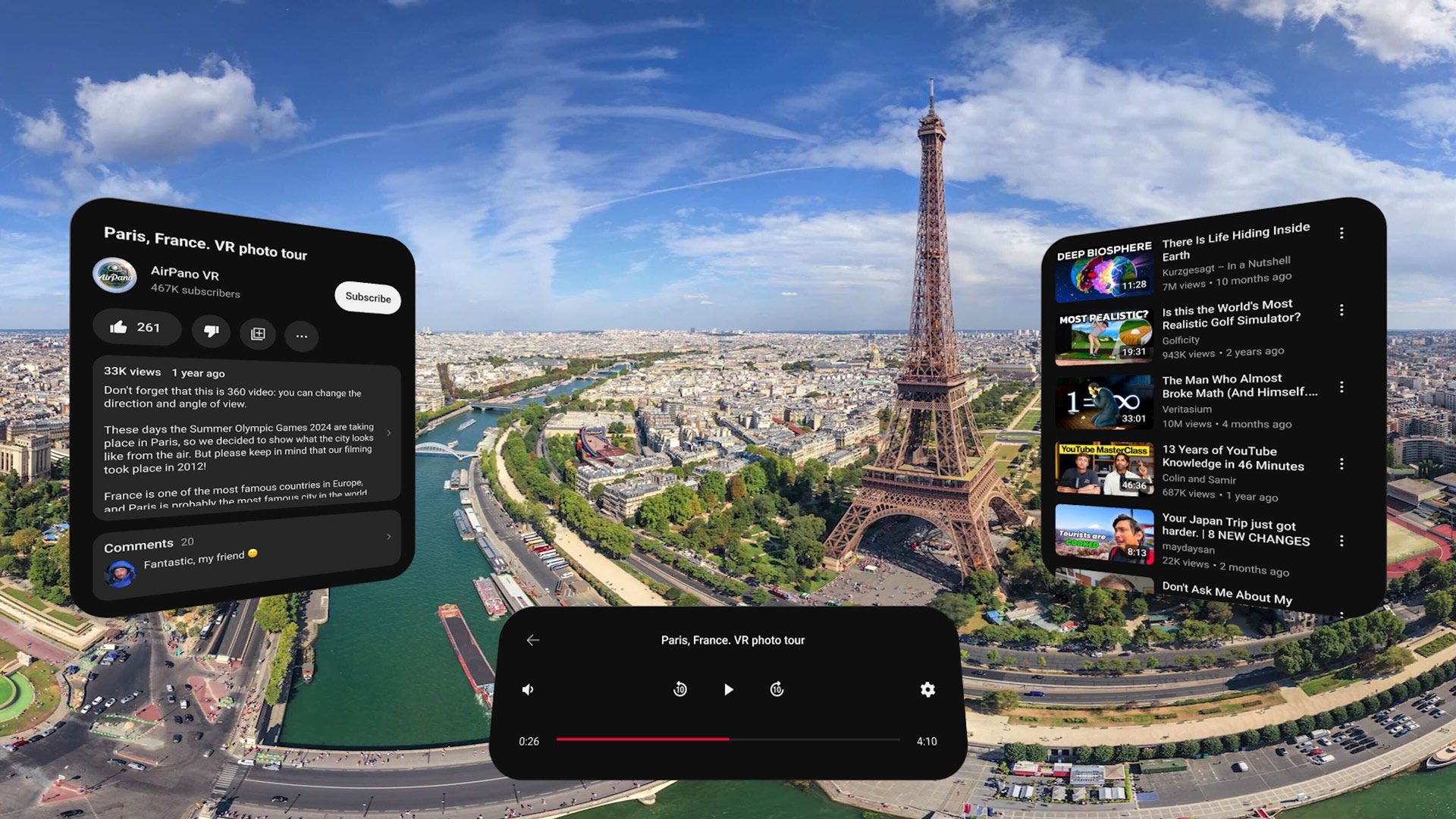
Vision Pro users have been waiting over two years for a native YouTube app. Now, it’s finally here—thankfully also including support for immersive videos.
The News
Google first announced that a YouTube app was “on the road map” shortly after Vision Pro’s February 2024 launch, although it never gave a specific release window, leaving users searching for alternatives beyond simply opening YouTube in Safari, which notably didn’t include native support for spatial video.
The official YouTube app, which is now available on the App Store, now gives Vision Pro users access to every YouTube video and Short, which includes access to all of the regular YouTube features, such as subscriptions, playlists, and watch history.
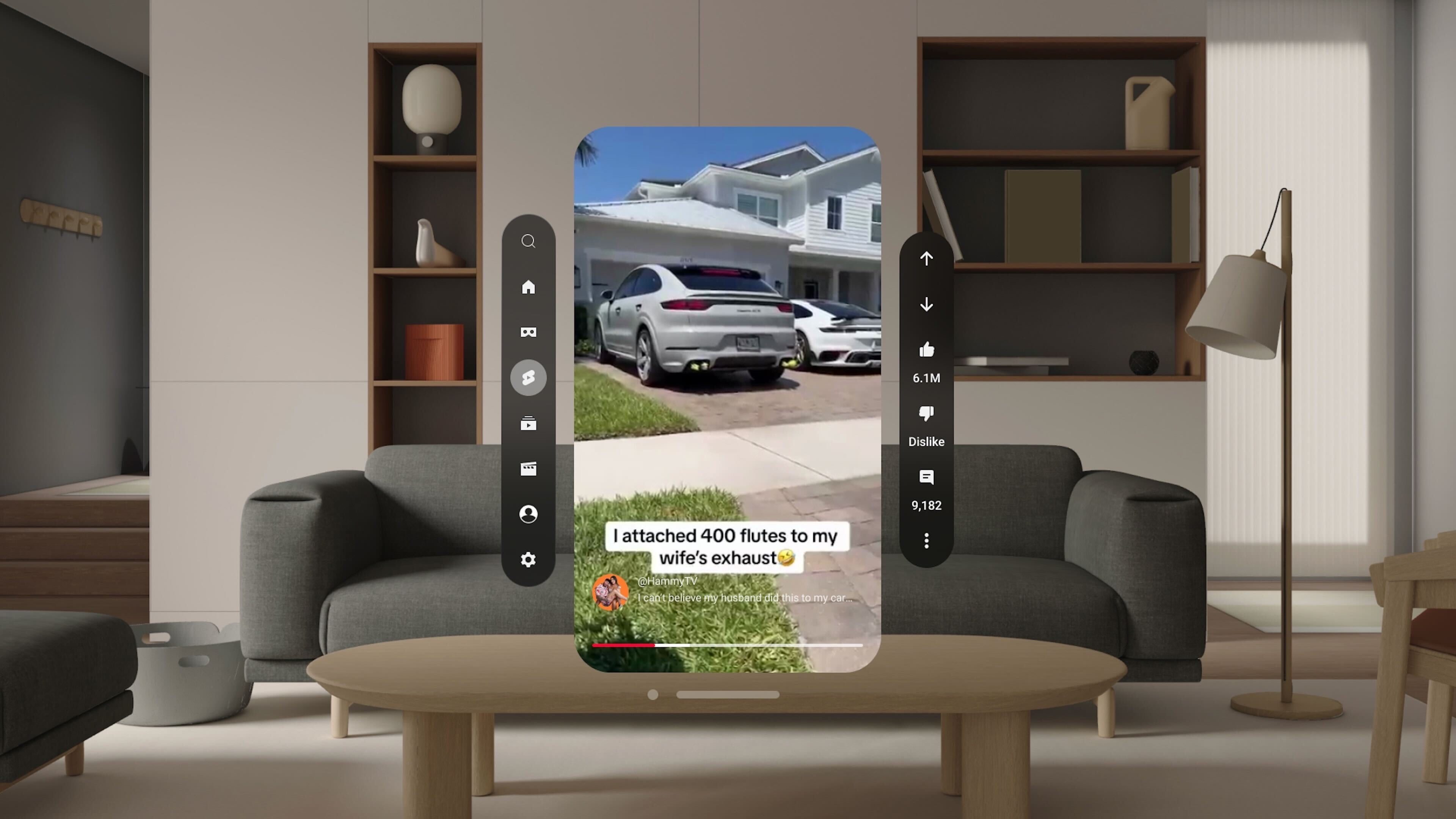
What’s more, the official YouTube app also comes with support for viewing spatial videos, which including all 3D, VR180, and 360 videos on the platform. Vision Pro users can find them by navigating to the app’s dedicated ‘Spatial’ tab.
Additionally, Google maintains YouTube for Vision Pro also includes video playback up to 8K for the M5 version, which was released last October.
My Take
There’s no official explanation out there (yet), although there are probably a few reasons why YouTube didn’t come to Vision Pro up until now.
The most obvious to me: Apple’s $3,500 XR headset likely presented a limited return on investment for Google, which may or may not have been influenced by the companies’ historical platform rivalry. Notably, there is still no Gmail, Chrome, Docs, Drive, Photos, Maps—no Google-owned app on Vision Pro except YouTube right now.
That said, YouTube did make a spatial version of its app for Android XR, which was released with Samsung Galaxy XR last October. The relative timing makes me think the release on Vision Pro was more of a knock-on effect of having already built than leadership at YouTube specifically determining that now would finally be profitable, as I don’t suspect the M5 hardware refresh has significantly driven additional consumer interest.
Whatever the case, YouTube has now found itself on the hook for maintaining the app across three distinct XR platforms: Android XR, visionOS and Horizon OS.