
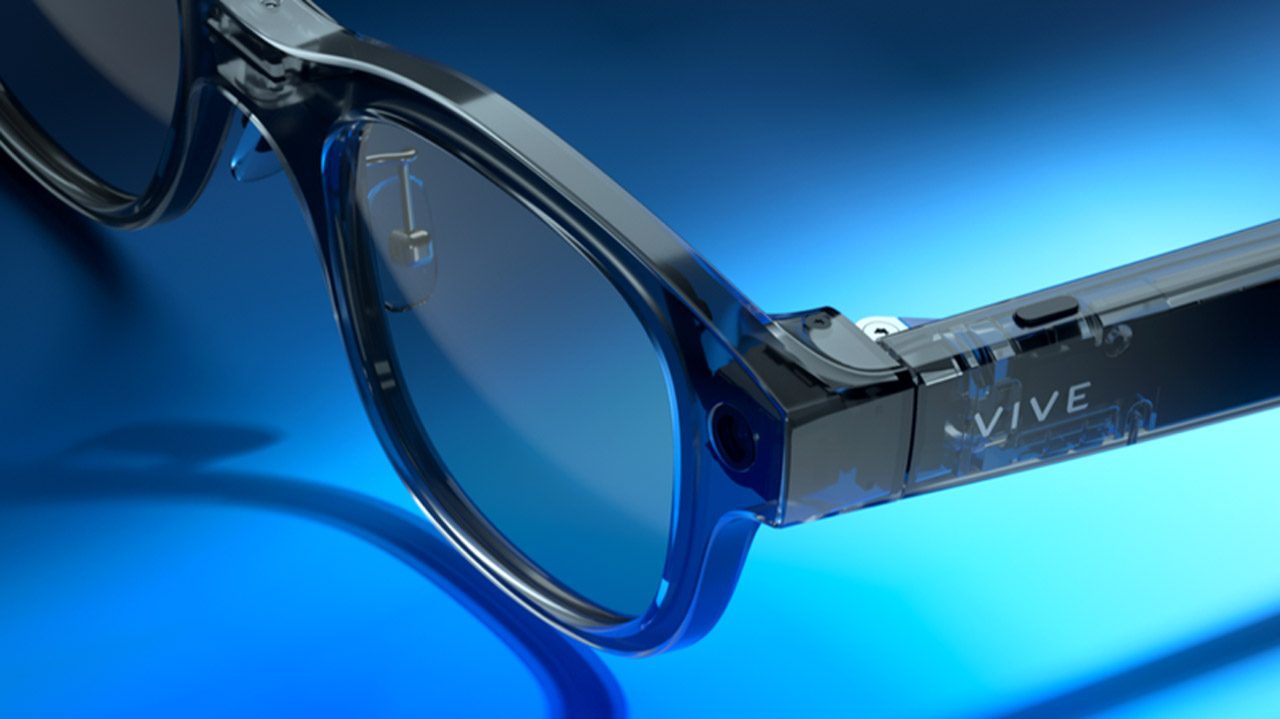
HTC Enters the Smartglasses Race with VIVE Eagle

16

HTC is joining Meta and others in the rapidly heating smartglasses space with its newest product, the VIVE Eagle. Like other smartglasses, the Eagle lacks any kind of display, being positioned instead as a vehicle for AI voice assistance and media capture.

Smartglasses have been around in one form or another for more than a decade. But the rise of AI assistants based on large language models has caused a resurgence of interest in the category. Today’s smartglasses represent the form-factor that the XR industry is ultimately seeking for the ultimate XR glasses, but they lack the powerful immersive features of bulkier headsets. On the other hand, today’s XR headsets have many of the immersive features and advanced sensing capabilities that the industry wants for the ultimate XR glasses, but they lack the compact and comfortable form-factor of proper glasses.

Practically speaking, smartglasses show the industry burning the candle on both ends: working from a small form-factor and figuring out how to add more capabilities, whihle also working from a larger form-factor with more features and figuring out how to shrink the size. In the end, it looks certain that smartglasses and XR headsets will converge somewhere along the way as the ideal balance of form-factor and capabilities is found.

So it’s not surprising to see HTC—one of the most recognizable players in the XR space—jump on the smartglasses train with the recently announced Vive Eagle.

Unlike Meta—which has so far kept its smartglasses separate from its Quest & Horizon brands—HTC is making its smartglasses part of its Vive brand, which has traditionally been reserved for its immersive headsets.

Weighing in at just 49 grams, Vive Eagle has a familiar set of capabilities compared to smartglasses like the Meta Ray-Bans: a helpful AI chatbot and a camera for capturing photos & video; there’s even the same little button for activating the camera, and an LED light to show observers when the camera is in use.

The camera is said to be 12MP (3,024 × 4,032) and capable of taking HDR photos. Videos are captured at 3MP (1,512 × 2,016) at 30 FPS. The glasses include 32GB of storage which HTC says can store some 3,000 photos or 50 videos up to three minutes each.

HTC is calling the chatbot that underpins the headset “Vive AI,” which it says can handle “everyday commands like taking a photo, playing music, or launching an app completely offline.” The company says Vive Eagle’s intelligence can be extended with the likes of OpenAI’s ChatGPT or Google’s Gemini for more complex queries, with “anonymized requests” to maintain privacy.

HTC also says Vive Eagle offers “real-time translation of text from over 13 languages,” including photo-based translation, as well as “voice control for phone apps, scheduling events, playing music, and more.” While both iOS and Android are said to be supported, it’s likely that Android users will see some extra functionality thanks to the more open nature of the OS.

SEE ALSO
Snap Releases Spectacles OS 2.0 Ahead of 2026 Launch of Consumer AR Glasses

As for battery life, HTC says Vive Eagle can play music for up to 4.5 hours. It doesn’t sound like the included case will double as a charger (a nice convenience for the Meta Ray-Bans), but at least the Eagle can be juiced up quickly in a pinch, with a claimed 0–50% charge in just 10 minutes via the included magnetic charger.
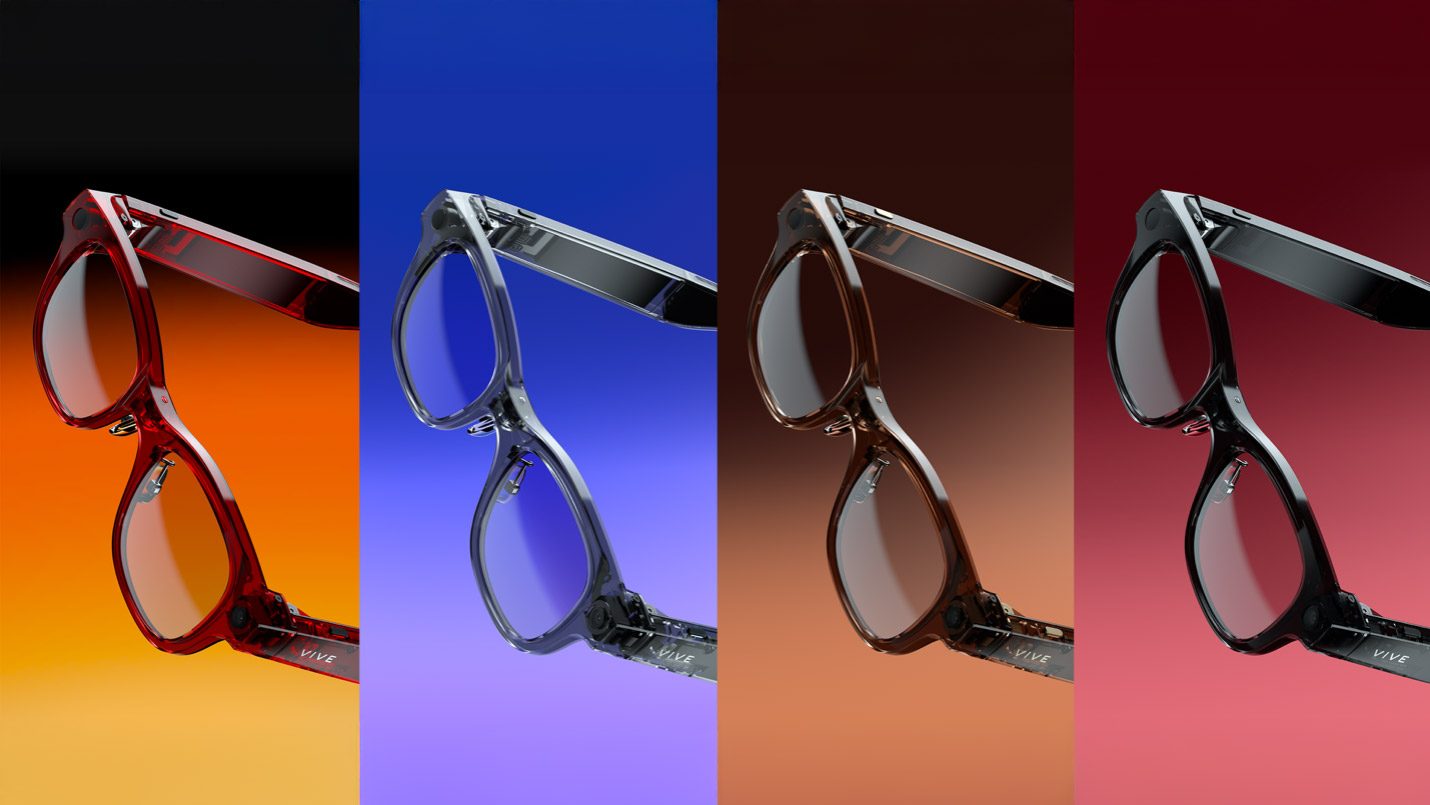
Image courtesy HTC

The Eagle will be equipped with ZEISS UV400 lenses, which provide UV protection without significant tinting (making them usable both indoors and out). Prescription lenses will also be offered for those needing vision correction.

Eagle will be “available in Taiwan first” on September 1st, says HTC. While this implies it will come to other countries in the future, no firm release date for other regions has been shared. The Taiwan version is priced at NT$15,600 ($520)
This article may contain affiliate links. If you click an affiliate link and buy a product we may receive a small commission which helps support the publication. See here for more information.

Ben is the world's most senior professional analyst solely dedicated to the XR industry, having founded Road to VR in 2011—a year before the Oculus Kickstarter sparked a resurgence that led to the modern XR landscape. He has authored more than 3,000 articles chronicling the evolution of the XR industry over more than a decade. With that unique perspective, Ben has been consistently recognized as one of the most influential voices in XR, giving keynotes and joining panel and podcast discussions at key industry events. He is a self-described "journalist and analyst, not evangelist."
  • polysix

    YAWN!

  • Nevets

    If it doesn't have a display it might as well not exist. That's my motto at any rate.

  • Christian Schildwaechter

    TL;DR: We don't know if the buyers of Meta's Ray-Ban smartglasses buy them mostly for Meta's AI assistant or for the Ray-Ban fashion statement, so HTC selling smartglasses under their VIVE XR brand is a nice test bed for what people actually do with/want from these devices.

    HTC once was a smartphone giant, which would have given it a lot of branding power to enter the consumer smartglasses. They are still selling Android phones, but sold their high end smartphone department to Google in 2017, and their revenue has gone downhill ever since. Technically the Eagle glasses are a Vive product, with Vive mostly leaving the consumer market and focusing on more profitable business/professional XR sector.

    So my first thought was that they'd have a much tougher road ahead recruiting consumers based on their current users base, but I actually don't know whether Meta's consumer targeted Quest line helped with growing their smartglasses user base at all. Or if there is even an overlap. Meta's decade(s) long, multi-billion dollar XR venture was largely based on the idea that being first to the market would give them a competitive advantage over Apple and Google by building a large user, developer and software base that would keep people in their ecosystem. But does this even matter now, when instead of simple see-through AR glasses as we expected, display-less smartglasses mostly driven by AI voice agents are the devices showing most of the growth in the XR market?

    Basically nothing from VR translates to those except maybe hand tracking and generic experience in creating mobile, head worn devices. So maybe even HTC or a completely unknown brand has a solid chance to gain serious marketshare here. So far the AI assistants all have very limited capabilities, with none offering a serious advantage, and other than answering simple questions, the main use cases for smartglasses seems to be taking photos and videos. It's largely Google Glass again, only avoiding the glassholes label, and with more capable tech allowing at least some added use cases thanks to data center driven LLMs only occasionally answering utter nonsense.

    This could be an interesting test though how much of the Meta smartglasses success is actually driven by Ray-Ban. By now Meta has paid literally billions to buy parts of EssilorLuxottica, the owners of Ray-Ban and Oakley, and sells the smartglasses mostly in Ray-Ban stores. So HTC, which at least in Taiwan should still hold some power as a tech brand, but not a fashion accessory, could provide some insight into whether people actually buy smartglasses and also use them as shades, or if people actually buy expensive, branded shades from known luxury brands and just take the smart part as an add-on they finally don't really need or use.

    Outside of VR games and media consumption, you cannot do a lot with a Quest, leading to many of them ending up on shelves, but Ray-Ban branded Meta smartglasses are still Ray-Bans even after the battery has run out. I personally tried a lot of voice assistants and found some limited use in their AI features, but all in all their attempts of guessing what I want mostly stand in the way of me getting what I actually want, so I usually disable them very quickly.

    I also don't care about the "take a picture/video" feature, and won't bother with smartglasses unless they feature at least small displays, so I lack the personal experience to have an idea how all the people apparently buying Meta's smartglasses actually use them. I'd really like to see some stats about the actual use of the smart features. And if HTC now starts selling them without a fashion brand label attached to motivate people to fork over hundreds of monetary units, that would hint that there is some real use for the buyers.

    • XRC

      Probably the smartest deal Mr Zuckerberg has done in years?

      partnering with Essilor Luxoticca puts a cool looking product straight into prime retail locations at substantial scale leveraging Ray Ban and Oakley brands.

      not subscribed to any Meta marketing, but Oakley certainly emailed me yesterday about the new HSTN smart glasses and invited me to try them at the Oakley store in covent garden London

      Would be very interesting to see detail of the revenue sharing as Essilor assembling glasses using Meta sourced hardware modules and software stack

      Meta's AI isn't particularly useful (at the moment) compared to the genuine value provided by a hands free social media capture device, suspect this is a prime driver for many buyers

      • Christian Schildwaechter

        If the primary driver is indeed taking pictures/videos, it is only a matter of time before we'll see lots of fake Ray-Ban and Oakley smartglasses. Luxury fashion items have always been preferred targets of product piracy due to their high margins compared to the actual production costs.

        I'd suspect that Meta is again providing the tech basically at cost to grow the market, and the hardware should be much cheaper than for example a Quest 3S. The smartglasses contain one 12MP camera, two speakers, five microphones, a tiny Qualcomm Wear 4100 SoC for smartwatches and wearables with 32GB flash, a support chip for on-device voice commands, and two small batteries. SoC cost roughly aligns with chip area on the same process node, and the Wear 4100 has about 25% of the area of a Snapdragon 8 SoC.

        Wellsenn, who also did teardowns/BOMs of Quest 2/3, estimated the total cost for the Ray-Ban smartglasses incl. charging case, assembly and packaging to be around USD 155. Roughly USD 100 are for the mainboard and SoC, but they are stating that it uses a (much more expensive) Snapdragon, while a teardown I found on YouTube clearly shows a much smaller/cheaper Wear 4100 instead. Not sure which is true, or whether these were different models. The sensors, audio and power components add up to only about USD 20, the actual glasses parts to USD 17.

        Even if the USD 155 production costs are correct, almost 50% of the USD 300 retail price is margin, with most of it very likely going to EssilorLuxottica. If the USD 17 is roughly the production price for non-smart Ray-Bans too, the 50% would actually be a low margin for them. But this also means that someone else could create pure photo glasses for less than USD 100 by dropping most of the AI features, reducing them to a simple "take picture". It probably won't be long until Temu get's flooded with cheap Ray-Ban copies capable of taking pictures and recording short TikTok videos.

        • XRC

          Here in the UK I'm seeing retail price (including 20% vat) £399-£499 for the Oakley HSTN smart glasses depending on lens choice.

          having worked for several retailers with Oakley accounts the margin was generous enabling substantial staff discounts on glasses

  • Andrew Jakobs

    Yet another HTC Vive product that misses its mark.. Do they even think of surveying customers?

  • STL

    No display, so where is the „VR“ in these glasses?

  • JakeDunnegan

    Until there are (optional/turn on/turn off) displays or overlays in the glasses, I have zero interest in them and I wear glasses on a daily basis. And talking to my glasses is the last thing in the world I want to do with them.

  • psuedonymous

    Whilst I know several people in person who use Quest (and other VR and XR devices with a display), in addition to the millions online, I have never heard of anyone – online or offline – actually using one of these displayless AI glasses.

    With them being sold under a sunglasses brand name in a sunglasses shop at a comparable price to sunglasses of that same brand, I would not be surprised in the slightest if the majority of sales are from people buying and wearing them as sunglasses, with them never being powered on beyond the factory charge at time of purchase. And a good chance that unless a salesperson caught them first, they were purchased just as a pair of chunky sunglasses with no idea they were ever 'smartglasses'

  • Foreign Devil

    I'm looking at getting a camera for my bicycle commute in case I get hit or near hit by a car. These recording glasses are not much more expensive than a good cycle camera and will move with my head. . . also can replace the sunglasses I usually wear. But I need continuous recording for 45 minutes. . . and water resistance.

  • Stephen Bard

    Rollme has similar new smart glasses for $80.

    • Christian Schildwaechter

      That's almost low enough for me to buy them just to try them, despite knowing that I don't have any use for them.

  • Sky Castle

    After buying 2 Vive VR headsets, I'm done with this company. Everything they do is so inferior to what's on the market, both in hardware and software.

  • fcpw

    A simple test for these products should be- does it demonstrably improve on what your phone could do with a similar app. If it doesn't – don't bother.

  • Slick Shewz

    Until there is a display, all these "smart" glasses are utterly useless.