Vivo Vision is Coming to China with Hopes of Undercutting Apple Vision Pro in Price & Weight

11

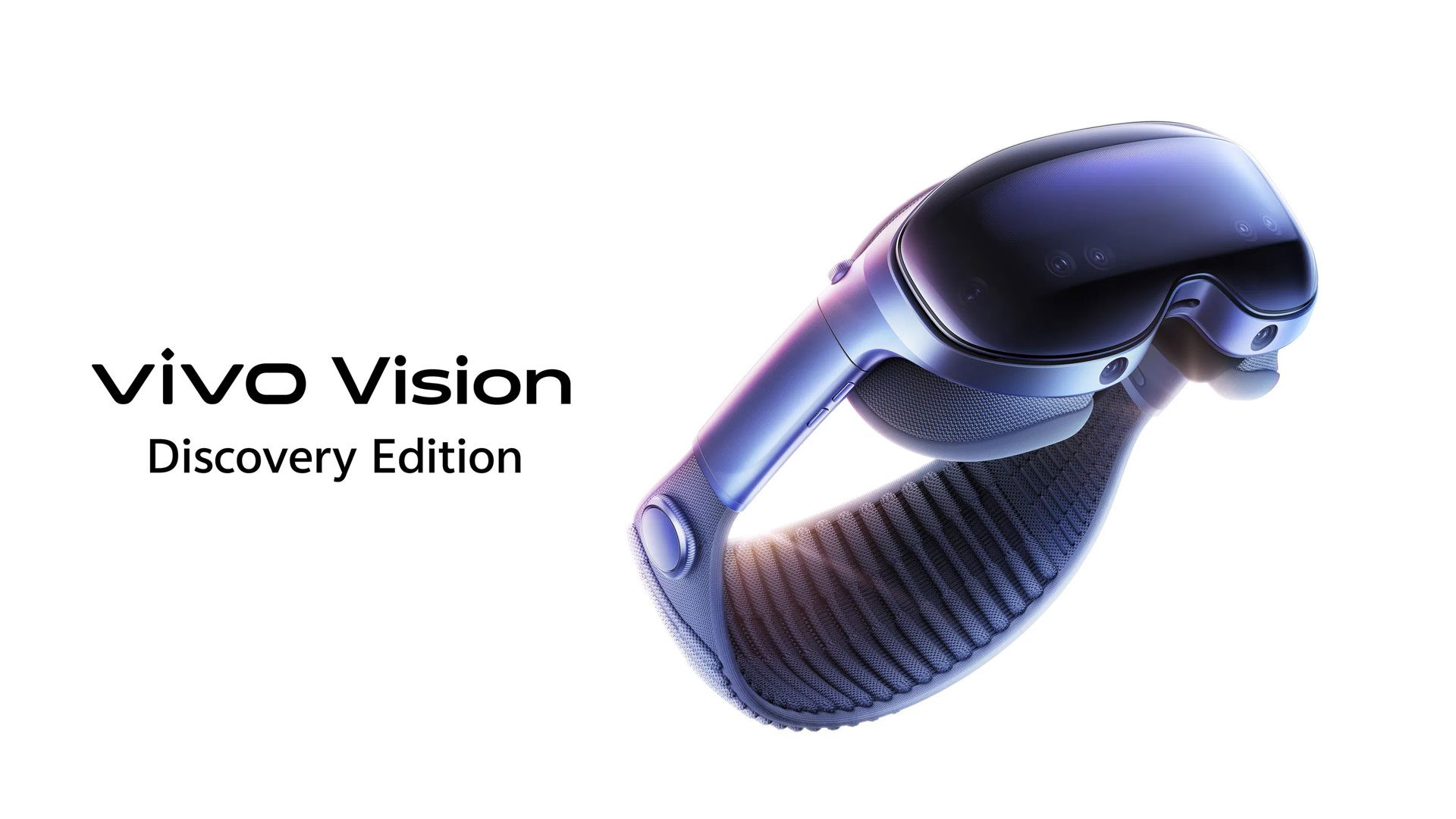
Chinese smartphone creator Vivo announced its ‘Vision’ XR headset back in March, and now the company has officially unveiled the device’s spec sheet in addition to beginning live demos in China. In short, it’s lighter and cheaper than Apple Vision Pro by a fair margin whilst taking more than few design cues in the process.

At the company’s product launch event in Dongguan, China, Vision revealed more about Vision, which is being offered first in a ‘Discovery Edition’.

While the headset isn’t currently available for purchase yet, it has begun demoing across China, including major cities such as Beijing, Shanghai, Shenzhen, and Guangzhou, the company says in a press statement.

It’s uncertain at this time whether Vivo ever intends to bring it out of China, which could be a hard sell; Vivo Vison not only includes the ‘Vision’ from Vision Pro, but also is taking more than a few design cues directly from Apple.
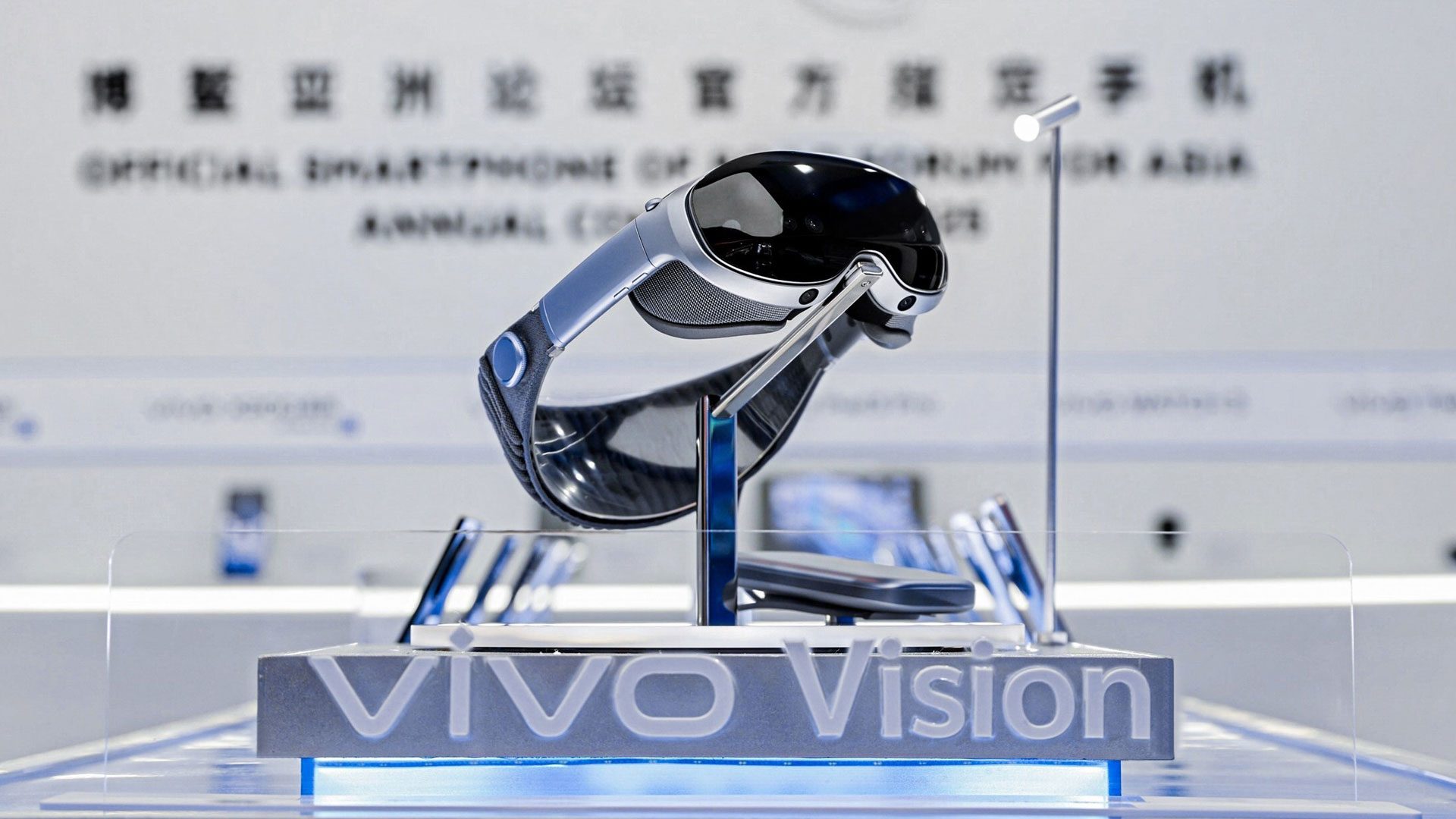
Image courtesy Vivo

That said, pricing is slightly less uncertain, although not confirmed at this time. Gizmochina reports Vivo executives have hinted at a ¥10,000 price tag (~$1,400), which is a far cry from Vision Pro’s $3,500 price.

Compared to Vision Pro, which weighs around 600g, Vivo Vision is remarkably lighter at just 398g too, which Vivo notes is also “26% smaller than the industry average, improving overall comfort.”

SEE ALSO
Varjo Secures $5.8M Investment to Accelerate Military-Grade XR Hardware

Like Vison Pro, Vivo is putting heavy emphasis on hand-tracked interactions, which the company says includes “move-and-pinch” gestures, supported by 1.5° high-precision eye-tracking, 26 degrees of freedom fingertip recognition, and a 175° vertical tracking range.

The dual micro-OLED displays are also said to deliver “8K binocular resolution,” 94% DCI-P3 color coverage, and DeltaE<2 color accuracy, with brightness and chromaticity calibration minimizing visual discomfort; vivo compares the visuals to professional cinema monitors.
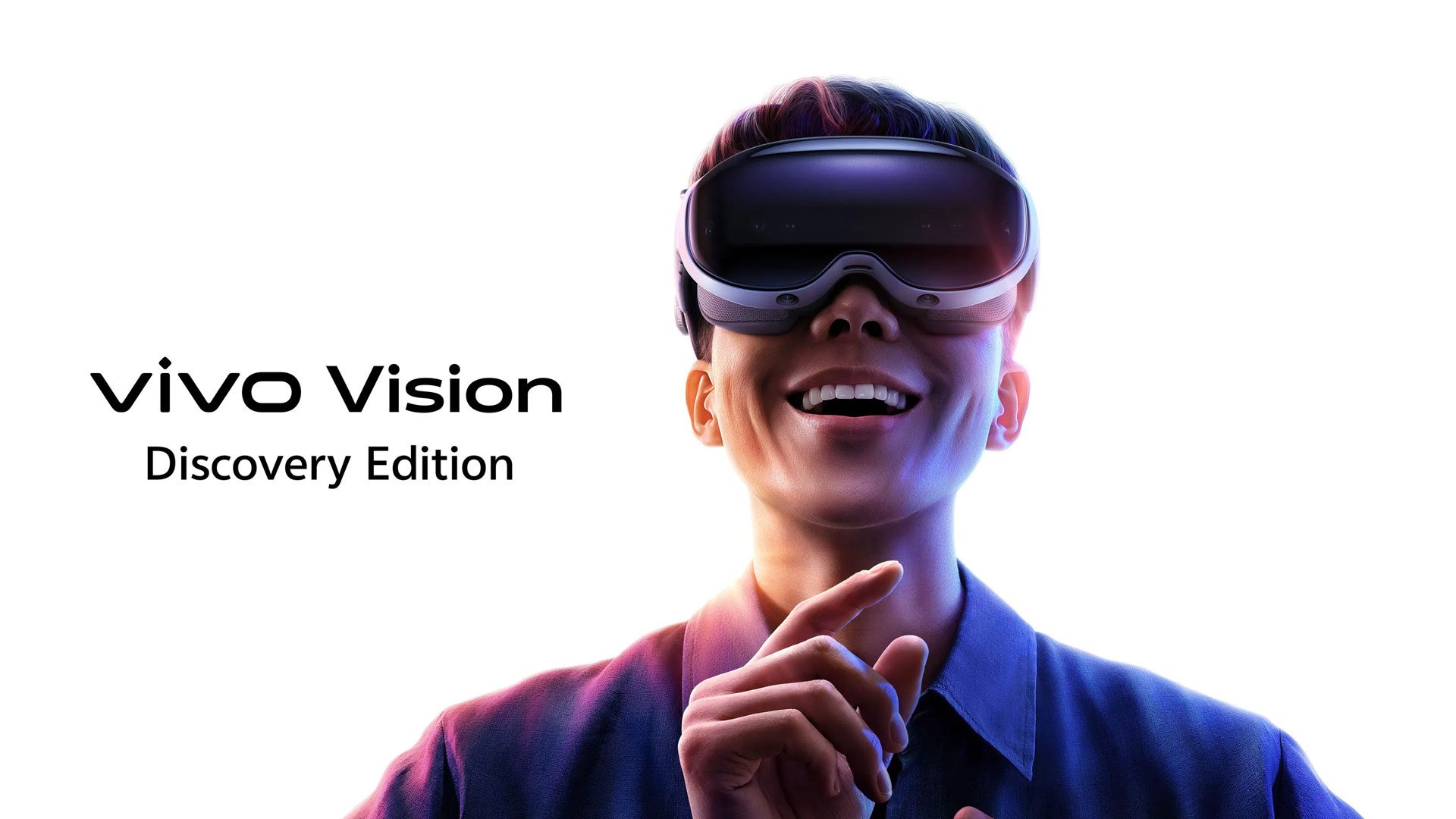
Image courtesy vivo

The headset will be offered with four sizes of light seals, and eight foam padding options to ensure an optimal fit, the company says.

As for chipset, Vivo Vision is running a Qualcomm Snapdragon XR2+ Gen 2, which is around a 2.5x GPU and 8x AI performance over the previous generation.

And you won’t find Android XR under the hood either, which feels like a bit of a missed opportunity. Vivo has created its own custom operating system for Vision, called ‘OriginOS Vision’.

You can catch a long-form matchup between Vision Pro and Vivo Vision, courtesy of Vincent Zhong. Non-Mandarin speakers can turn on auto-generated subtitles by clicking the ‘CC’ button near the bottom right of the frame.

Here’s the spec sheet provided by Vivo:

vivo Vision Discovery Edition Specs

  • Weight: 398 g
  • Height: 83 mm
  • Thickness: 40 mm
  • Size: 26% smaller than industry average
  • Light seal options: 4
  • Foam padding options: 8
  • Operating system: OriginOS Vision
  • Eye-tracking precision: 1.5°
  • Fingertip gesture recognition: 26 degrees of freedom
  • Vertical tracking range: 175°
  • Panel type: Dual Micro-OLED
  • Resolution: 8K binocular
  • Color coverage: 94% DCI-P3
  • Color accuracy: DeltaE < 2
  • Binocular brightness difference: ≤ 2 nits
  • Binocular chromaticity difference: ΔE < 2
  • Chipset: Qualcomm Snapdragon XR2+ Gen 2
  • GPU performance: 2.5x over previous generation
  • AI performance: 8x over previous generation
  • Panoramic video viewing
  • Sports/e-sports broadcasts: Multi-angle and split-screen
  • Virtual theater screen: 120 ft equivalent
This article may contain affiliate links. If you click an affiliate link and buy a product we may receive a small commission which helps support the publication. See here for more information.

Well before the first modern XR products hit the market, Scott recognized the potential of the technology and set out to understand and document its growth. He has been professionally reporting on the space for nearly a decade as Editor at Road to VR, authoring more than 4,000 articles on the topic. Scott brings that seasoned insight to his reporting from major industry events across the globe.
  • Arno van Wingerde

    Looks like an improvement in terms of hardware and price, but the achilleshiel is likely to be software and the lack of apps.

    • Dale Kirkley

      Agreed, could be a killer media consumption device if they can get all the main apps, but the lack of android will hamstring it considerably.

      • Steve

        They say there OS is an Android fork, but cannot find any info on it yet. It may be easier to port Android apps to this than the full AI crock the keepers of Android are trying to shove down everyone's throat!

        • Christian Schildwaechter

          Android apps don't need to be ported to or even adapted for Android XR, they run by default, with Android XR offering ways to translate hand movement to the touch input the apps expect, very similar to how iOS apps run on AVP. visionOS provides developers with a very smooth part to add XR functionality to existing apps without breaking compatibility to iPhones, as will AndroidXR. So both will have quite an advantage for transitioning phone users to XR compared to any Android based XR OS that requires devs to actively port and then maintain a separate XR version.

          Android apps technically don't need to be ported to OriginOS Vision or Horizon OS either, they basically just run. But without some heavy interface modification, using them in XR is somewhere between cumbersome and unbearable. Meta now offers the Spatial SDK to help developers bring flat Android apps to Quest, but they lacks the large phone user base that would pay for most of the app development. In contrast visionOS/AndroidX only require a little bit of extra work to also support XR, with the phone app still being the driving part.

          How the lack of Google AI will impact non Android XR HMDs remains to be seen. Samsung's Project Moohan hands-on was mostly a demonstration of the Google services deeply integrated with Google's Gemini AI, showing how they expect people to use Android XR HMDs. To replicate this would be a much larger effort than getting flat Android apps to run in XR ever could be. So if the users actually like the Android XR approach, this pretty much condemns all XR HMD using a home-brewed Android version to the role of a glorified media player and flat app launcher with subpar interface, not offering anything close to the experience of an Android XR HMD.

  • Christian Schildwaechter

    As for chipset, Vivo Vision is running a Qualcomm Snapdragon XR2+ Gen 21, which is around a 2.5x GPU and 8x AI performance over the previous generation.

    That's probably supposed to be an XR2+ Gen 2, the same SoC as used in Samsung's Project Moohan. And while the performance increase numbers are technically correct, "previous generation" here is referring to the XR2+ Gen 1 that was used in the Quest Pro. When compared to the XR2 Gen 2 in Quest 3, the XR2+ Gen 2 offers only about 20% more CPU and 15% more GPU performance.

    And you won’t find Android XR under the hood either, which feels like a bit of a missed opportunity. Vivo has created its own custom operating system for Vision, called ‘OriginOS Vision’.

    It is a missed opportunity, but there is currently nothing Vivo could do about that. Android itself is available as an open source version called AOSP with no strings attached and not including any Google services. This is the version Horizon OS, PICO OS and OriginOS Vision are based on. But AndroidXR is an extension to Android that is not available as open source, instead it is bound to the Google Play Services that are also required for PlayStore access and using pretty much all Google apps. The Play Services license among other things forces the manufacturer to install Google's PlayStore, with all the software revenue going to Google. Which is why we won't see AndroidXR compatibility on Quest.

    There is another hurdle for the China based Vivo Vision, as the Google Play Services aren't even available in China. So even if Vivo was willing to give all the software revenue to Google, it still wouldn't work. For the same reason many Android phone manufacturers offer different versions for China and the rest of the world, with China getting local app stores and replacement services, while the rest of the world gets the official Google services installed. But that is only possible because AOSP is allowed to run with replacement services, which AndroidXR isn't.

    I'm not sure how this will be resolved. Google will want Chinese XR manufacturers to use Android XR instead of coming up with their own alternative that longterm might threaten Google's OS dominance. They could do something similar to what Meta did with the Oculus Go that also required Facebook services not available in China. Instead of offering the Go themselves there, they partnered with Xiaomi (who also produced the Go) and gave them a license to offer compatible services in China, thereby working around the service availability issue.

    As long as no such service/license solution exists for Android XR in China, neither Vivo nor any other Chinese XR HMD manufacturers could (legally) release an Android XR HMDs to the local market. Which gives Samsung based in South Korea a competitive advantage, as they not only can use Android XR, but also automatically get access to the Play Store, with a lot of the new functionality in Android XR designed to make regular flat Play Store Android apps usable in XR. Something Chinese HMD manufacturers using local Android stores will find very hard to replicate.

  • "Qualcomm Snapdragon XR2+ Gen 21", wow, this headset is 19 generations ahead all the others on the market! :P

  • sfmike

    China shows it can be done, again.

    • Christian Schildwaechter

      Be careful here. So far they have shown that they can/are willing to sell hardware a lot cheaper than Apple or Samsung. But keep in mind that based on teardowns, the estimated build cost of the M2 AVP was only USD 1400-1800, so more than half of the price is just Apple's margin.

      And these costs included USD 700 for a pair of very bright Sony microOLED displays, making up 38%-50% of the total costs. The Vivo Vision will very likely use either cheaper 4K microOLEDs from BOE, or newer, also cheaper versions from Sony, and runs on a much weaker SoC. It is actually possible that the build cost for the Vivo Vision would be pretty close to those of AVP, if AVP also switched to newer/cheaper displays, as Apple's supply line cost efficiency is legendary. And they have a number of technical options to drop the build cost significantly in an upcoming consumer Apple Vision Air. The problem is just that Apple will never sell you one for anywhere close to production costs.

      So what Vivo has shown so far is mostly that they are willing to sell hardware with much lower margins than Apple, and being capable to create a UI that successfully copies the low hanging fruits from visionOS. Not exactly a surprise for a company mostly selling budget and mid-range Android phones. They lack the proper integration of flat phone apps, all the high quality content from AppleTV+ that makes AVP such a compelling media device, all the communication services like Apple's smooth integration of FaceTime with their very decent Persona avatars, and much more, currently even voice recognition.

      The 24min review video mostly focuses on media use, doesn't show flat app integration at all, and only a few MR apps that are mostly tech demos, while talking a lot about what will hopefully be developed for the Vivo Vision in the future. Just the price sticker being lower means neither that you'll get a comparable experience at a better value proposition, nor that they actually managed to do the same for less money.

  • VRDeveloper

    I find it funny how you Americans react when China launches something cheaper and of higher quality. Americans, understand one thing… pay close attention to what I’m about to say: China is not the same country it was 15 years ago. It is no longer the place that only makes inferior and cheaper products. Nowadays, they are surpassing others in both quality and price at the same time, and this is happening across several industries — from games to electric cars that are cheaper yet have a finish on par with or even superior to Western cars like BMW.
    This is a reality you need to understand. And yes, their margins are low, but it’s strategic.

    China is extremely meritocratic, this is not a normal product, this is comercial war.. only the best companies survive there nowadays. Meanwhile, you are asleep, not realizing that China is running circles around you. While you keep fighting over left and right politics, they are taking over everything.
    This product is just another strong example of that. If you don’t open your eyes, in 15 years we might not even be using the dollar as the world’s main currency anymore. Wake up, guys.

    • dan sports

      Noone is ignorant about the long time chinese feeling inferior and now as resented it is wanting to be recognized. But the modern tech revolution has come from the west , china has been the fabric of the west and obviously has been in a privileged place to copy western inventions andshould be grateful. I am not american but i know from where the ideas come from where the inventions are created and where are sent to be produced. Of course china social control is not what the rest of the world want and its time to not produce anything more there and not share the inventions there to be copied, If china is so great why are all of them in our country? Come back to china and enjoy your great mother country.
      More countries can be the world fabric to enrich more countries , we made china rich , its time to enrich other countries.

      Btw if china is able of inventing something interesting i am open to test it but only copying as pico headsets is not very innovative , the same as chinese cars, chinese smartphones, chinese ai, etc etc…

  • Jlm70

    I had the opportunity to be invited at the Vision launch in Dongguan, on August 21st. A great event, Apple-like. Probably the biggest tech event in China 2025. The device is excellent, and we had the honor to be among their major partners (V-Nova Studios), with our ImmersiX volumetric movie app (6DoF V-Nova PresenZ format). In comparison to other similar devices, as Scott and Ben perfectly wrote, it's 1/3 the price and -40% the weight… and OpenXR compatible from day one.

    The display is terrific, on par with the AVP, but the price point is still… a bit over the normal use case for a gamer, so to be a mass product.
    This is why I believe that our 6DoF volumetric movie use case (the only way to experience an immersive movie without the nausea caused by 3DoF "spatial" 180 and 360 videos) is the best case to present the device to a new market of movie (and music, and knowledge) lovers. A new form of entertainment + gaming + productivity: the only recipe to make these devices skyrocket. And they will!
    The future of film making WILL BE 3D, but CANNOT BE 3DoF. Full stop.
    A real transformation of the movie industry needs an authenthic, 6DoF "life-like" way of stepping into a movie and "living within", with full parallax and total smoothness. No cybersickness, that brakes the magic.

    I really hope our format will be quickly endorsed by all major Studios (we are already working with lots of them) to offer you all a new cinematic experience! Vivo has been super visionary to understand the power of immersiX, immediately contact us and bring us onboard in less than two months. Chapeau to their efficiency!

    https://uploads.disquscdn.com/images/183b72cca4baf354211a3970ff6a0dcd5674f57088183890fa8c507345656dbd.jpg https://uploads.disquscdn.com/images/feab0886cdf7467f43c0265bde7bce9e38bd20685a648c41941b82c495e13cd6.jpg https://uploads.disquscdn.com/images/ed1d16ebd47ddeef0fe62d7c85562b6506025237c60118d427d49786e705cd4c.jpg