
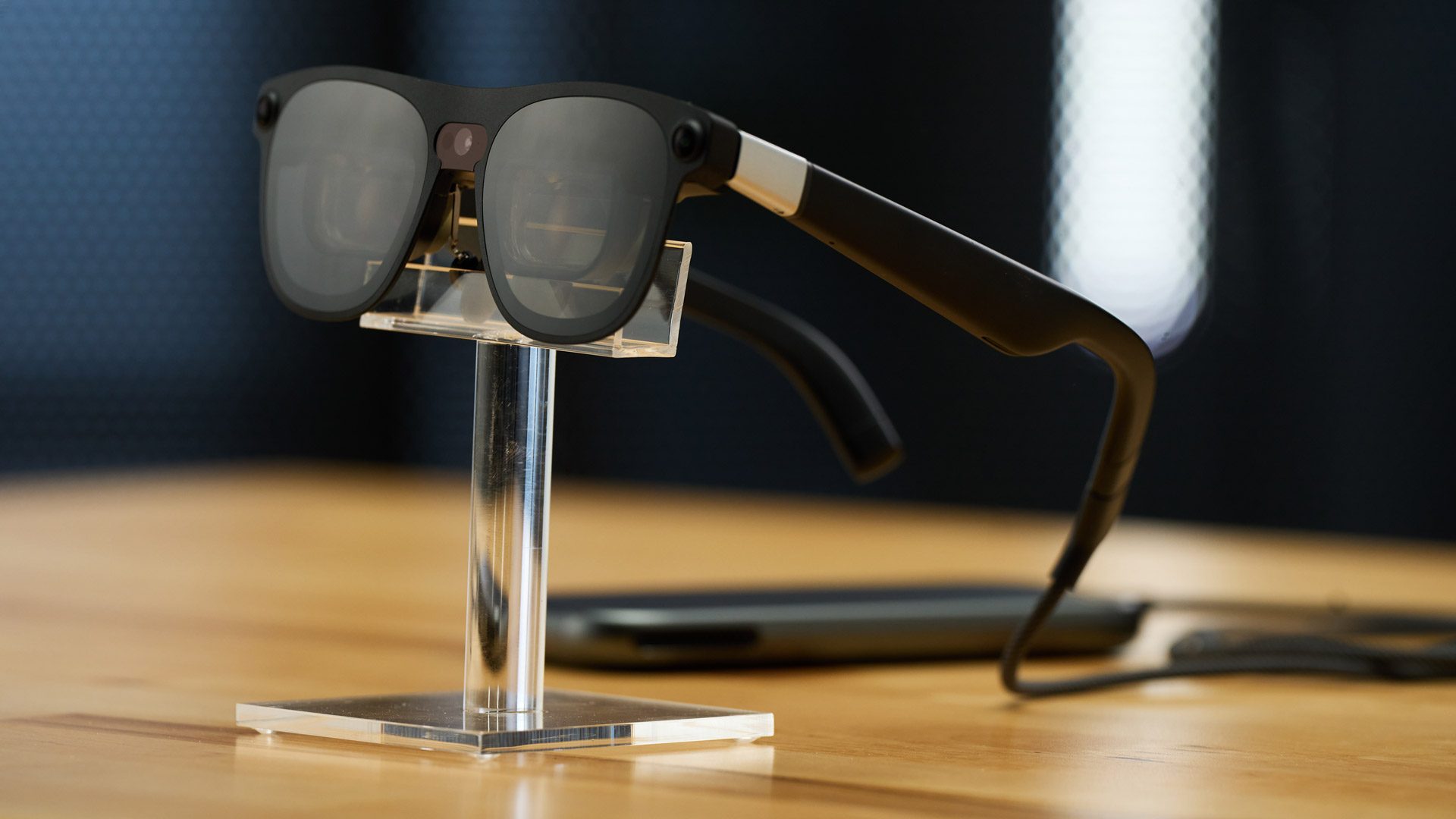
Set to launch in 2026, XREAL Aura is the first pair of see-through AR glasses to run Android XR. Here are the impressions from my first hands-on.
During a recent meeting with Google, the company shared with me a range of updates relating to Android XR, including the first look at XREAL Aura. Unfortunately I wasn’t allowed to take any photos or videos during the demo.
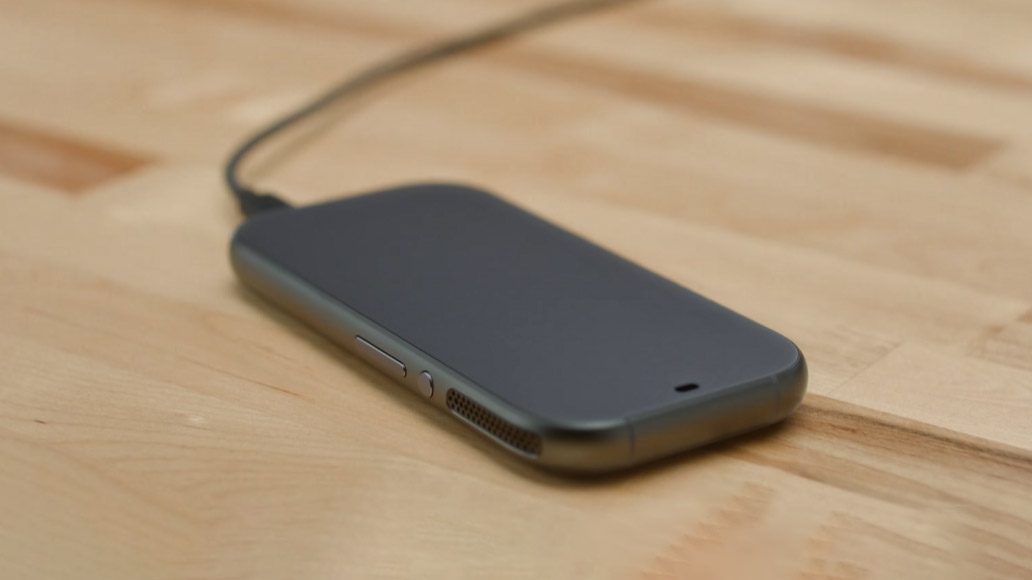
XREAL Aura will be the first pair of see-through glasses running the full-blown immersive version of Android XR. Considering the immersion they offer, the glasses are impressively compact. Much of this is thanks to offloading weight, battery, and compute onto a tethered puck which can slip into your pocket. Interestingly, the puck looks like the size and shape of a typical smartphone, but instead, the entire screen area is a giant trackpad which can be used for mouse-like input (in addition to hand-tracking).
Compared to prior models of XREAL glasses with bird-bath style optics, the optics in the XREAL Aura are a bit more compact, allowing you to bring your eyes closer to the lens. XREAL is finally getting close to AR glasses which actually look like glasses without the lenses being so far from your eyes that it looks goofy. They’re still look a little funky because of the distance, but we’re getting there.
Putting on the glasses, I was presented with the same Android XR experience I’m used to from Galaxy XR, except this time the background I was seeing was the real world (albeit, a fairly dim version of the real world due to the light loss through the lenses). Unfortunately, Aura doesn’t include eye-tracking, which means I couldn’t use my preferred look+pinch method of input (which is supported on Galaxy XR); I had to use the default laser-pointer input style which feels more cumbersome.
The quoted 70-degree field-of-view (I assume diagonal, but they didn’t specify) felt usable, but seems like the bare minimum field-of-view needed to get real value out of an immersive operating system like Android XR. If Google hasn’t already specified that any immersive Android XR device needs at least this wide of an FoV, they absolutely should.
I was impressed with the sharpness and brightness of the Aura’s display. It looked pretty good for virtual screen usage (ie: viewing websites, videos, photos, etc). But I also saw obvious pupil swim (which looks like warping as you move your head around). This will be more noticeable in fully immersive experiences or multi-tasking where there’s lots of head movement. For some people, pupil swim is just a visual annoyance, but for others it can be dizzying over time. It’s unclear if this can be improved before launch, especially without any on-board eye-tracking hardware.
One particularly cool feature of Aura is the electronically-controlled dimming lenses. A button on the stem of the glasses allows you to dim the real world from 0% to nearly 100%, blocking out almost all light.
This isn’t the first pair of AR glasses to include electronic lens dimming, but the way it’s integrated into Android XR is a clever value-add. If you launch a fully immersive application (like a VR game), the software can automatically switch the dimming to 100% so the virtual content doesn’t conflict with your real-world background. Or, in applications that would like to dim the user’s background (like a media app), it can set the dimming to 50%. With a passthrough headset like Galaxy XR, this dimming would normally be done digitally, but with the Aura glasses it’s done physically. And Google says developers don’t need to worry about the distinction; if their app asks Android XR to dim the background, it’ll automatically do so through whatever means are available to the device.
Of course, Aura is a ‘glasses-style’ device, so even when dimming is set to 100%, you’ll still see lots of the real-world in your peripheral vision. But still, having the feature makes fully immersive applications usable in a way they wouldn’t on a see-through AR device.
Considering its capabilities, Aura looks strikingly close to a normal enough pair of sunglasses that you might not get a double take by people passing by, though anyone talking to you face-to-face would surely know there is something strange going on behind the lenses.
Even with dimming set to 0%, the real world is still made fairly dim; like wearing sunglasses inside. Whether by design (to account for not enough display brightness) or happenstance (as a result of light loss from the optics), it still feels like you’re wearing sunglasses inside, which limits some of the indoor use-cases you might want to do with a pair of AR glasses. For instance, I’d like to have AR glasses which work as a cooking companion in the kitchen so I can reference recipes while preparing food. But like a regular pair of sunglasses, Aura dims the world too much that I wouldn’t want to use them in the kitchen.
I look forward to trying the finished version. In my brief hands-on, I came away feeling like Aura is the first clear look at the eventual convergence of AR and VR headsets. It feels like a full-fledged Android XR headset but in a much more compact package that will be way more portable and less conspicuous. I could actually see myself using Aura on a plane or in a coffee shop without feeling like everyone would be staring at me.
Indeed, Google is thinking the same. Alongside my look at Aura, the company also announced that it’s rolling out a first-party PC Connect application for Android XR to make it easy to stream your Windows desktop to the glasses for productivity, media, or gaming.
There’s still some key things we don’t know about Aura. The company hasn’t revealed a full set of specifications yet, and we don’t know if there will be any controller support (which would mean incompatibility with many immersive VR games). We also don’t have a price or specific release date, but XREAL has confirmed that Aura will launch in 2026.