
New Reference Design From Key Manufacturer Shows What to Expect From MR Headsets in 2026

3

A Chinese company which mass produces many of the best known headsets in the industry has shared a new compact MR headset reference design which sets expectations for 2026.

Goertek is a little-known but massively important player in the XR industry. The company is a key enabler in the production of XR headsets as it provides reference designs which function as blueprints for consumer companies to build headsets, and handles mass production for some of the best known headsets in the industry.

At CES 2026, Goertek revealed its latest MR headset reference design. Reference designs like this act as a blueprint for any company that wants to put their own spin on the device and take it to market. Rather than a prototype—which might use novel materials or techniques that aren’t yet mass producible—reference designs like this represent a fully functional set of ready-to-manufacture components with tangible costs and delivery dates.

There isn’t a lot of info available on the reference design yet, except what has been officially stated by Goertek:

An Ultra-Lightweight MR Reference Design showcases system-level optimizations, reducing the weight of a 4K MR headset to approximately 100 grams. It delivers retinal-level clarity (38 PPD) within a 100-degree field of view, with Video See-Through (VST) and 6DoF [tracking].

We’ve reached out to Goertek for details, but in the meantime many questions remain.

Considering the incredible 100g weight of the headset, it seems almost certain that this reference design does not include on-board compute or battery. For comparison, Quest 3, even with a soft strap, weighs in at 515g.
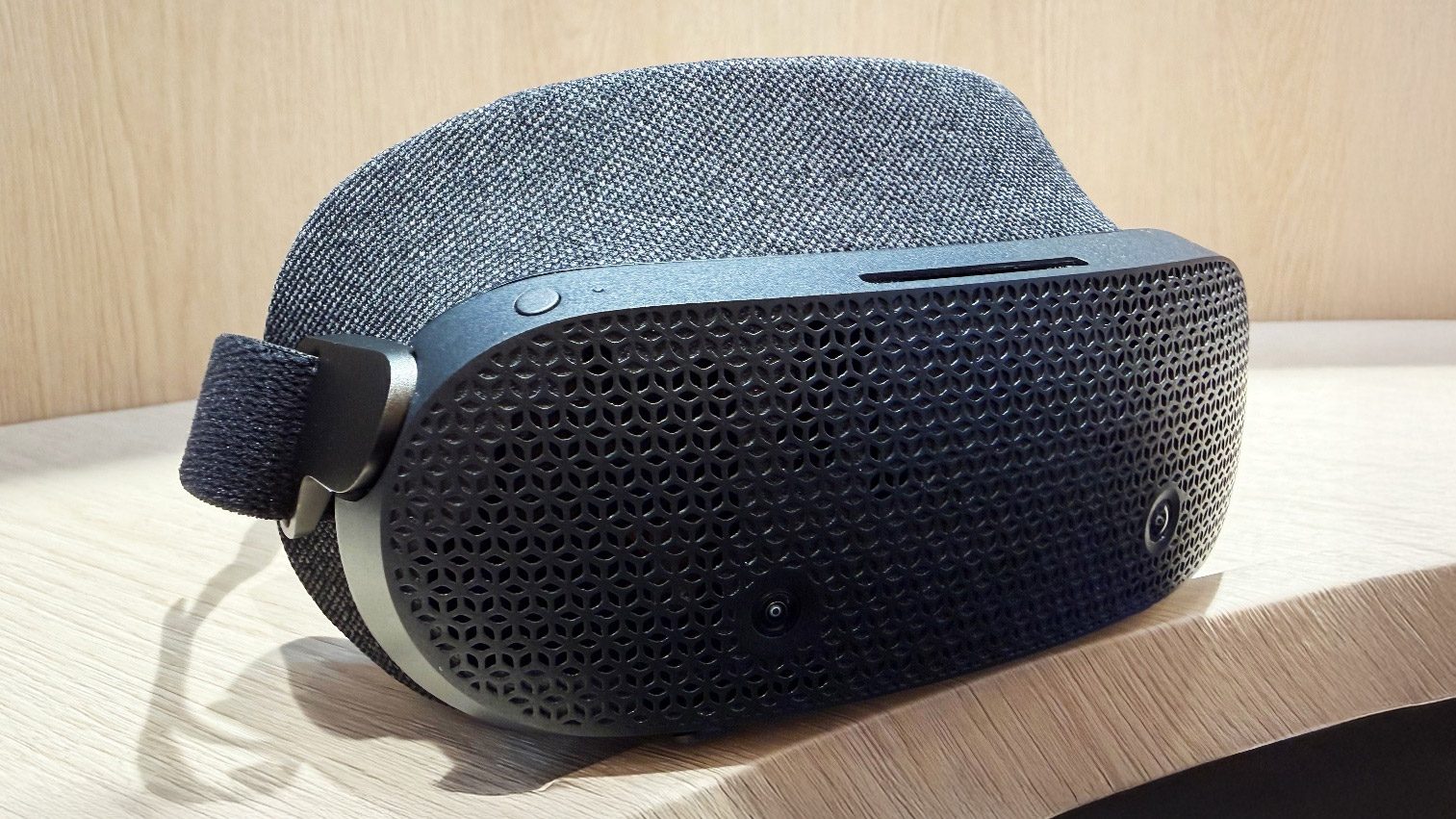
Image courtesy CNFOL

That means the headset would need to rely on a tethered compute/battery pack, or some other host device, to function. This would follow the trend of headsets like Vision Pro and Galaxy XR which both offload the battery weight to a tethered battery.

SEE ALSO
Cambridge & Meta Study Raises the Bar for 'Retinal Resolution' in XR

Adding to the confusion, Goertek calling the headset an “MR reference design” would generally be understood to mean a standalone device, but in the one photo we’ve been able to find of the device in use so far (courtesy CNFOL), it appears to be part of the company’s “PCVR Software Suite” display station, and looks to be tethered directly to the PC in front of the user.
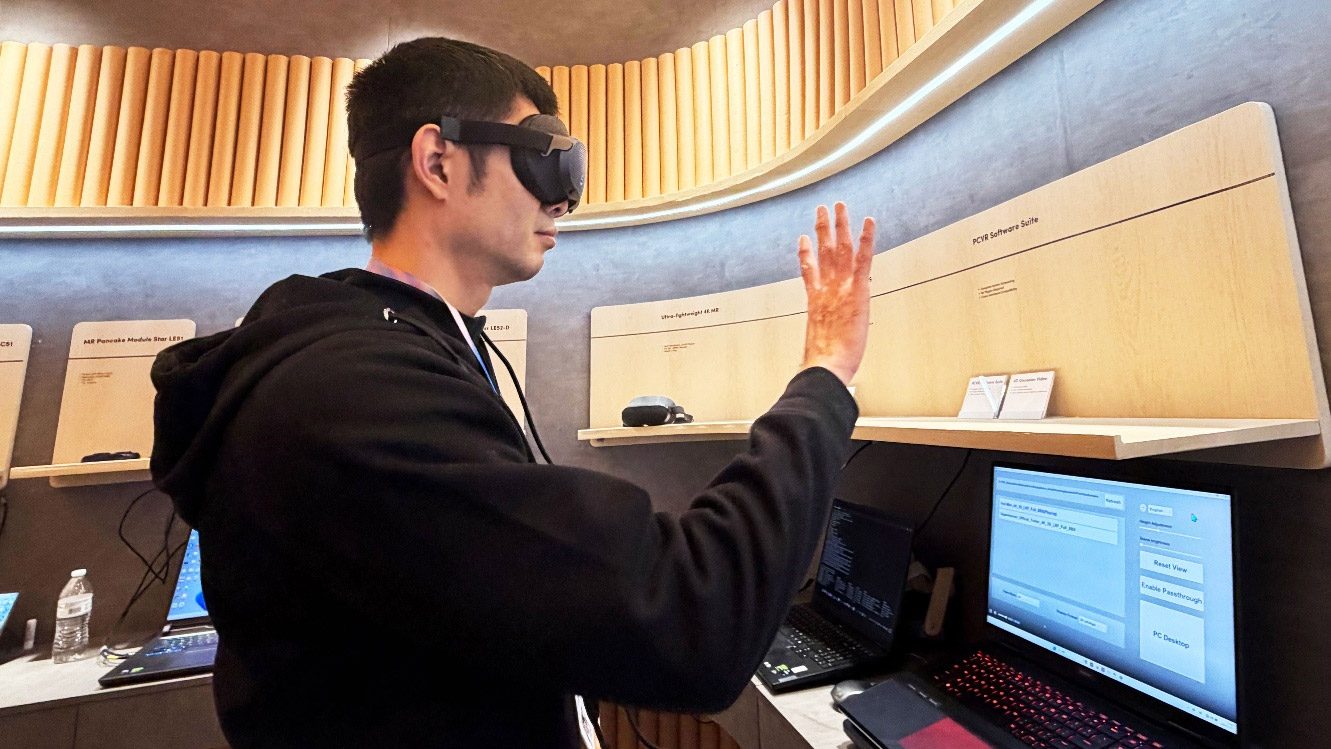
Image courtesy CNFOL

In any case, the reference design shows us what kind of resolution and field-of-view can be expected from headsets in 2026 with this compact form-factor, even if the design doesn’t have its own compute/battery.
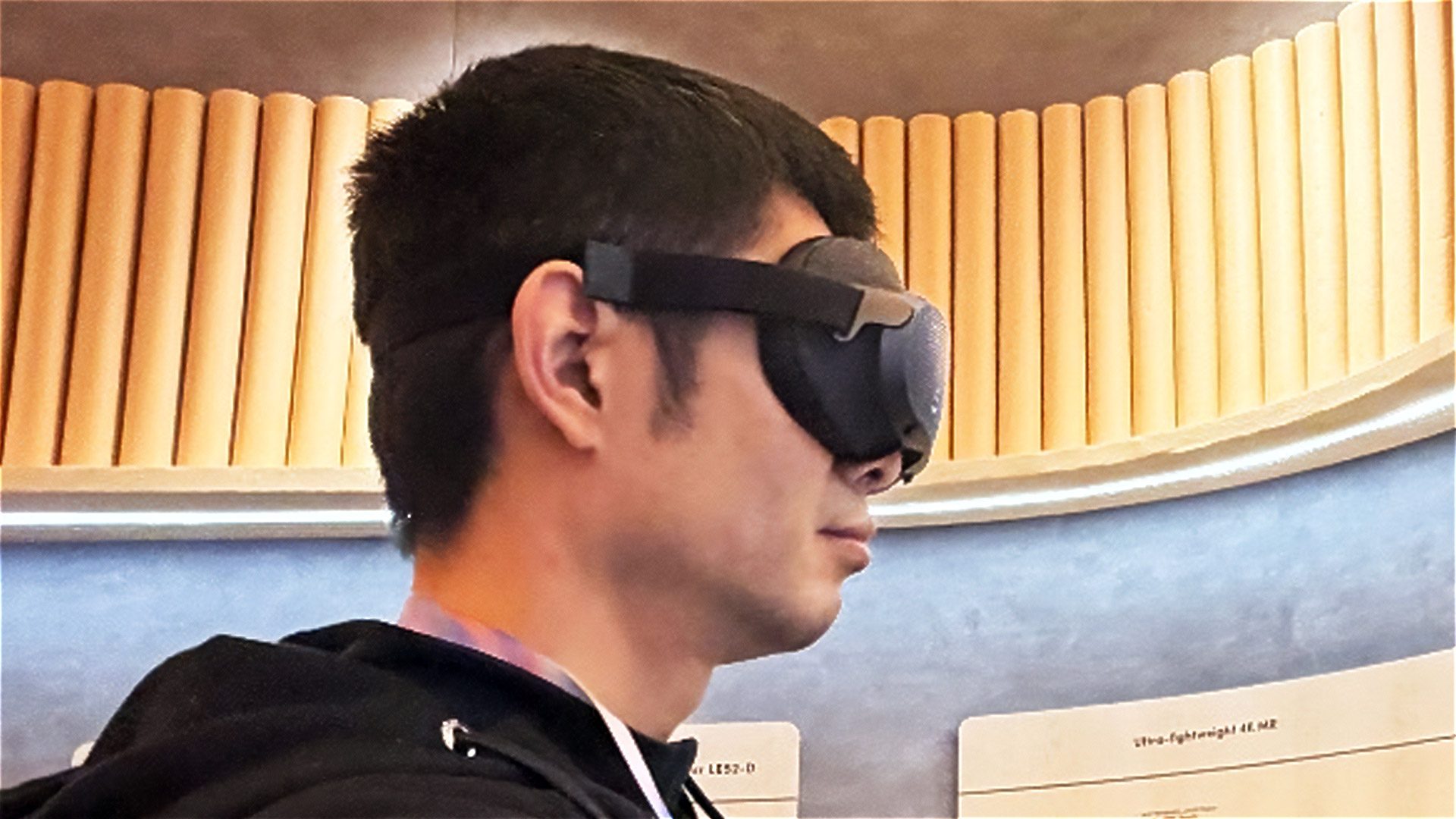
Image courtesy CNFOL

Likely the reference design is meant to show the form-factor while leaving it up to customer companies to decide if they would bring it to market as a standalone or tethered headset.
This article may contain affiliate links. If you click an affiliate link and buy a product we may receive a small commission which helps support the publication. See here for more information.

Ben is the world's most senior professional analyst solely dedicated to the XR industry, having founded Road to VR in 2011—a year before the Oculus Kickstarter sparked a resurgence that led to the modern XR landscape. He has authored more than 3,000 articles chronicling the evolution of the XR industry over more than a decade. With that unique perspective, Ben has been consistently recognized as one of the most influential voices in XR, giving keynotes and joining panel and podcast discussions at key industry events. He is a self-described "journalist and analyst, not evangelist."
  • fcpw

    fabulous- headsets cannot be too light.

  • Christian Schildwaechter

    TL;DR: There is need for an open source alternative to Google's Android XR spatial features for Goertek's and Qualcomm's current XR HMD boutique shop business model to continue working.

    I'm not sure if Goertek already released their own reference designs in the past, as up to now they always partnered with Qualcomm to produce their reference HMDs. These were usually packed with tech and rather expensive, more a showcase of what is currently possible, not necessarily feasible at a reasonable price. And most released HMDs were clearly based on these Qualcomm/Goertek reference HMDs, but often with less sensors/cheaper displays to reduce cost.

    What would be very interesting to see is what software stack this new reference HMD was running. In the past Qualcomm/Goertek offered a complete OEM solution with not only all the hardware components plus production and even handling shipping to consumers, but also a ready-made OpenXR stack on top of their own XR OS based on the open source version of Android. This allowed small vendors like Play for Dream to release their own standalones even without the development budgets of Meta.

    But Google now went and locked Android XR behind their Google Play services, forcing vendors to use the Play store and shoving all software revenues to Google. And Play services aren't available in China in the first place. In the past that wasn't that much of an issue, as for games the OpenXR stack combined with Unity support for generic Android and VR was mostly enough to allow easy porting from other platforms like Quest. But with MR and productivity apps, you need deeper intergration for running flat apps etc., and there is no open standard comparable OpenXR to do this.

    These features are essential for use beyond VR, which is why Google put them on a closed license, cutting off all the HMD manufacturers that relied on the open source Android version so far. But these spatial integration tools make up only a small part of Android XR sitting on top of regular Android as an extension. Most of the features they showed on Samsung's Galaxy XR were about intergration with Google apps and Gemini.

    So a third party could come up with their own, open integration layer to counter the closed versions from Apple, Google and Meta (with their Spatial SDK for Quest), leaving out all the Google AI integration parts. And the third party most interested in this would be Qualcomm/Goertek, as this would allow them to continue being the one stop solition for anybody wanting to release a new HMD anywhere without being bound to Google.

    AFAIK Goertek will also produce the Steam Frame, which will run SteamOS, and can run regular Android apps via Waydroid. Valve has shown little interest in MR so far, so they won't offer their own APIs for flat app integration, but other vendors wanting to release HMDs based on SteamOS might be very interested in that option to add a unique selling point and better compete with Android XR/Horizon OS HMDs, so Qualcomm/Goertek offering their own free Spatial SDK could make it standard across both (the open source) Android and SteamOS.

  • Looks like they've got the headset down to about as small as it needs to be. Now they just need to get everything else up to spec and we're golden.