
Google’s XR Studio Releases ‘Job Simulator’ Style MR Experience Exclusive to Android XR

3

Owlchemy Labs, the Google-owned XR studio, released a new mixed reality title exclusively for Android XR which expands the Job Simulator universe.

The News

Owlchemy Labs, the studio behind VR games Job Simulator (2016) and Vacation Simulator (2019), released both games on Android XR’s first officially supported headset, Samsung Galaxy XR.

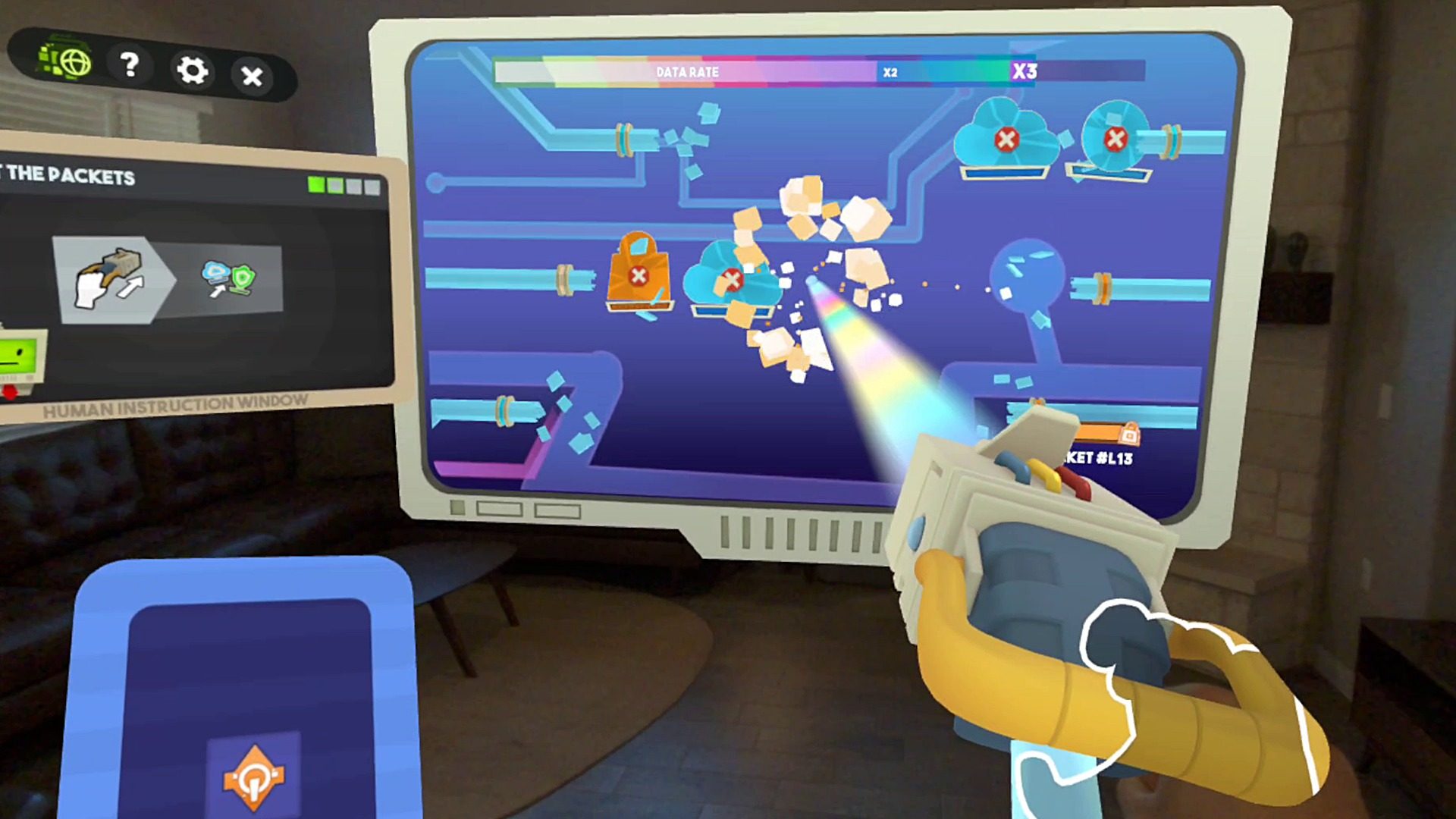
Alongside it comes a free mixed reality experience, called Inside[JOB], which the studio says in a blogpost offers up the “same blend of chaos, humor, and hands-on interaction that helped define modern VR, as well as a first look at our next evolution in spatial experiences.”

As an Android XR platform exclusive, Inside Job isn’t a full title as such, but rather what Owlchemy calls an “interactive XR playground,” which puts the series robotic protagonist ‘JobBot’ in the spotlight as he discovers your reality.

In Inside Job, users tweak system settings, fish for data, and repair PCs in VR, blending passthrough MR with full VR segments set in the Job Simulator universe. The studio says Inside Job isn’t a sequel as such, but rather “a chance to experiment with our latest hand-tracking tech while solving a series of lighthearted repairs.”

The game launched alongside Samsung Galaxy XR this week, priced at $1,800, which is currently the only Android XR headset on the market. You can find Inside Job for free over on the Playstore here.

SEE ALSO
Horizon OS Update Brings Rebuilt Home, Windows 11 Link & Closer 'Horizon Worlds' Integration

My Take

I think it’s pretty clear that Galaxy XR’s high price tag basically excludes it from being a viable outlet for large-format, system-selling exclusives, which is why gamers probably shouldn’t wring their hands and yell into the heavens with full-on FOMO just yet. Basically, it’s a Vision Pro, but cheaper, and with access to Android apps and maybe a few Quest ports. That’s very cool for XR obsessed people like you and me, and also companies looking to build enterprise apps, but not many others right now.

The real question on my mind is “what’s really next for Owlchemy Labs?” I suspect the answer to that question won’t materialize so quickly. As a reminder, Owlchemy Labs has developed some of the best-selling games in the medium, so they’re probably hoping to jump in at the right moment—but it’s difficult to intuit when that might be.
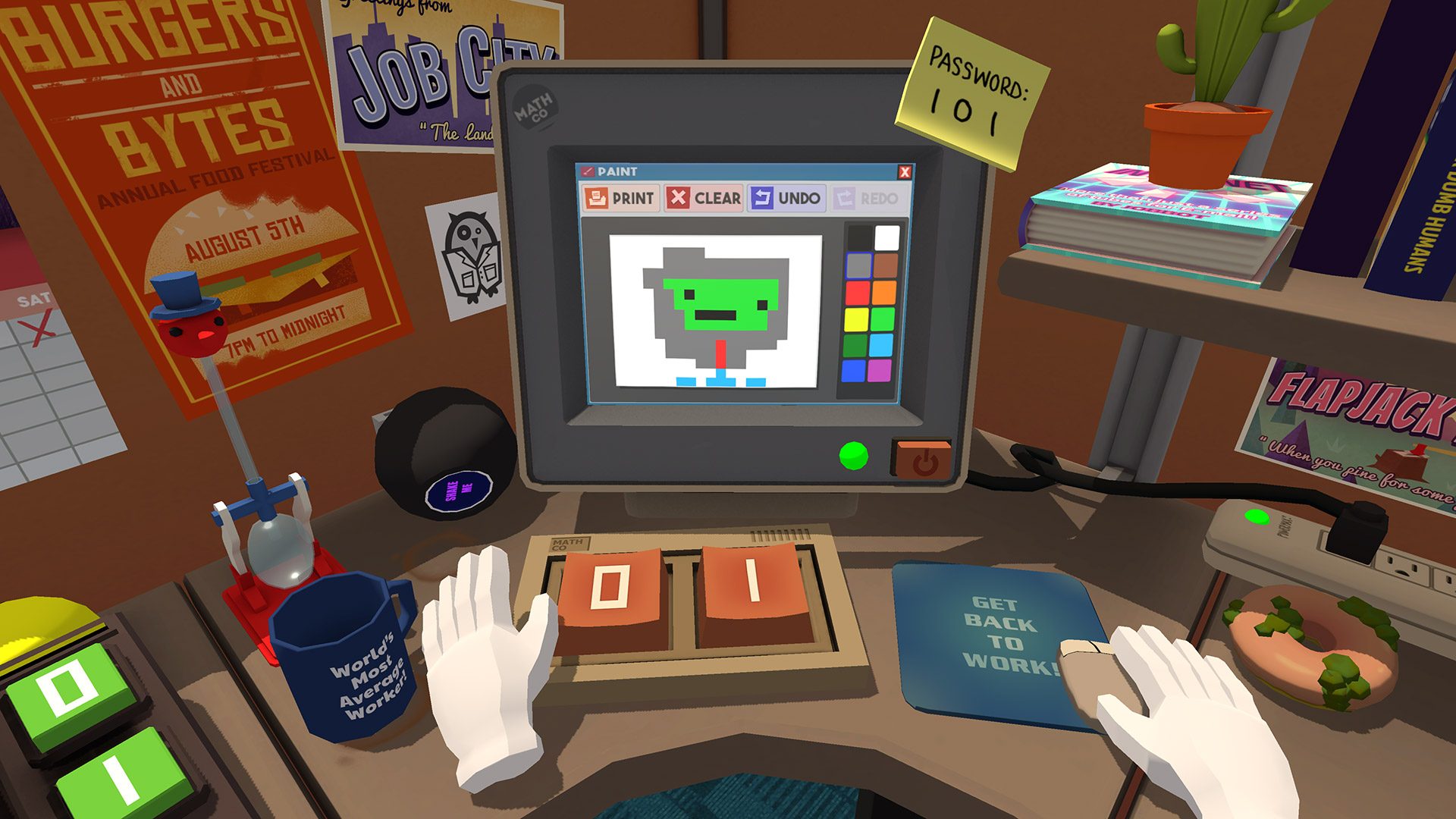
Image courtesy Owlchemy Labs

Olwchemy Labs says in a recent blogpost that porting their games to Android XR has allowed them to “experiment with new layers of immersion through native support for hand, eye, and face tracking.” I can bet other established XR studios are interested in mobilizing those hardware features too, if only in service of deepening user immersion, but I’m skeptical of whether will be enough.

I’ll admit it: the next XR headset wave may well come when consumers can eventually choose between a cheap and cheerful Android XR headset, a next-gen Quest, and possibly even Valve’s rumored Steam Frame (aka ‘Deckard’). But I have a hard time believing face and eye-tracking alone will be additive enough to the glut of consumers. Yes, future headsets will probably have higher resolutions, more processing power, and hopefully be lighter and more comfortable than they are now. But at risk of belaboring the point, all of it needs to hit a real consumer price point to move the needle.

Notably, there are a few consumer headsets on the market with face and eye-tracking currently: VIVE XR Elite, Pico 4 Pro, and Apple Vision Pro, the latter of which just launched its M5 hardware refresh for $3,500. None of those have garnered the incumbent consumer support to make them de facto competitors to Meta’s Quest 3/3S platform though. As an aside, Quest 3 is essentially a Quest Pro without face and eye-tracking—or the $1,500 price tag—which was eventually reduced to $1,000 to flush stock before it was discontinued earlier this year. Meta learned that lesson early on, it seems.

Assuming the studio wants to continue pushing the boundaries of immersive design at scale like it did with Job Simulator in 2016, I’d imagine they’re doing what most developers are at this point: i.e. using these prosumer headsets as ad hoc developer kits in preparation for the next big consumer headset generation yet to come. When that will be, I just can’t say.

This article may contain affiliate links. If you click an affiliate link and buy a product we may receive a small commission which helps support the publication. See here for more information.

Well before the first modern XR products hit the market, Scott recognized the potential of the technology and set out to understand and document its growth. He has been professionally reporting on the space for nearly a decade as Editor at Road to VR, authoring more than 4,000 articles on the topic. Scott brings that seasoned insight to his reporting from major industry events across the globe.
  • Duane Aakre

    I hope the guys at Owlchemy Labs have made some improvements in their hand-tracking interactions for the new Galaxy XR game.

    When they added hand-tracking to Job Simulator, I gave it a try on my Quest 3. During the short-order cook job, there is a spot where you have to pick up a can of soup and move it from one counter to another. Without any tactile feedback, I could not maintain the exact distance between my thumb and index finger while turning. Every time, my fingers would move slightly apart and the software said, 'Oh, you want to release the can', and the can would drop to the floor. Versus just holding down the grip button on the controller to hold the soup can. Okay, this particular instance could have been solved with a minor adjustment of the tolerances on their part, but it just highlights limitation on hand-tracking when you are trying to grip something that is not there in the real world versus using a controller.

  • XRC

    Already 1000 downloads on play store, not a bad start!

  • Christian Schildwaechter

    Owlchemy released a teaser during Gamescom 2022 that didn't show any gameplay, but focused on the social interaction between the three women playing it from different locations using hand tracking. The women were wearing Quest 2 as the main standalone HMD available back then, but what was shown would have been technically impossible on a Quest 2 or even Quest 3, both lacking down-facing cameras for hand tracking close to the face, as shown in teaser. Plus things like playing outside in bright sunlight and a couple of other interactions that won't work on a Meta HMD either.

    I was pretty sure that this would be a teaser for an unannounced AVP game. Owlchemy had worked with several VR platform owners for launch titles with an excellent reputation for games featuring interaction with objects, so it wasn't out of the question that Apple would have contacted them for their "this is a social experience, not isolating VR" AVP, and that Google might have allowed it. Plus the trailer looked very Apple style.

    youtu_be/ZjVhOEKSEjM

    But whatever the teaser was teasing never materialized, despite Owlchemy's CEO hyping up hand tracking use in games:

    Hand tracking has provided an unprecedented level of communication between players. Bundle this new technology with players experiencing our quirky worlds with friends and you have all the ingredients for a magical VR experience.

    Their COO then added

    The first time we saw and used our own hands in VR we realized this is the future of the platform. Hand tracking lowers the barrier of entry into VR, making games more accessible and intuitive to more people. Playing games is much more fun when you’re using your actual body as the controller. Ever since we launched Job Simulator, VR players have been requesting a multiplayer game from Owlchemy. Our next project lets friends enjoy the classic Owlchemy experience together, with hand tracking opening the door to a whole new world of VR interactions.

    They have released Dimensional Double Shift since that also offered the promised multi-player, but this was more focused on jumping on the free to play wagon driving Quest's user growth with a very young audience, not the hand tracking adult shared experience the teaser showed. So maybe "what’s really next for Owlchemy Labs?” is finally releasing what they teased back in 2022, now that there is a Google driven HMD that could actually deliver this type of experience.