
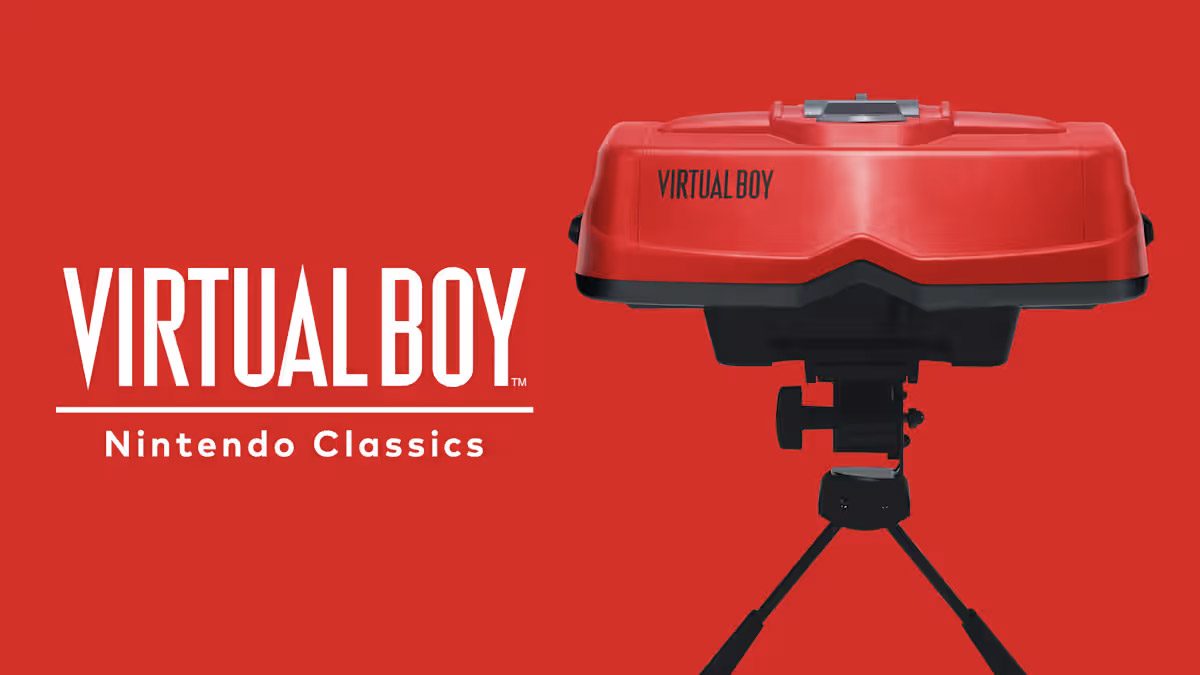
Nintendo is Reviving its Infamously Failed Virtual Boy with a Switch-compatible Accessory

39

Feel free to double-check the calendar… yes, it is in fact September 12th and not April 1st. Nintendo, always managing to surprise in one way or another, is reviving its infamously failed 3D gaming console, the Virtual Boy.

First released in 1995, the Virtual Boy was portrayed as a type of “virtual reality” experience, but considering its small field-of-view, lack of motion tracking, and single-color (red) display, it was functionally just a 3D display on a stand. Still, the console has been culturally associated with “virtual reality” ever since—and it’s not exactly a positive association.

Ambitious as it was, Virtual Boy was an infamous failure of a game console, owing largely to its minimal game catalog, single-color display, and reports of motion sickness while playing. It was discontinued less than a year after its launch. Even so, the console was not without its fans.

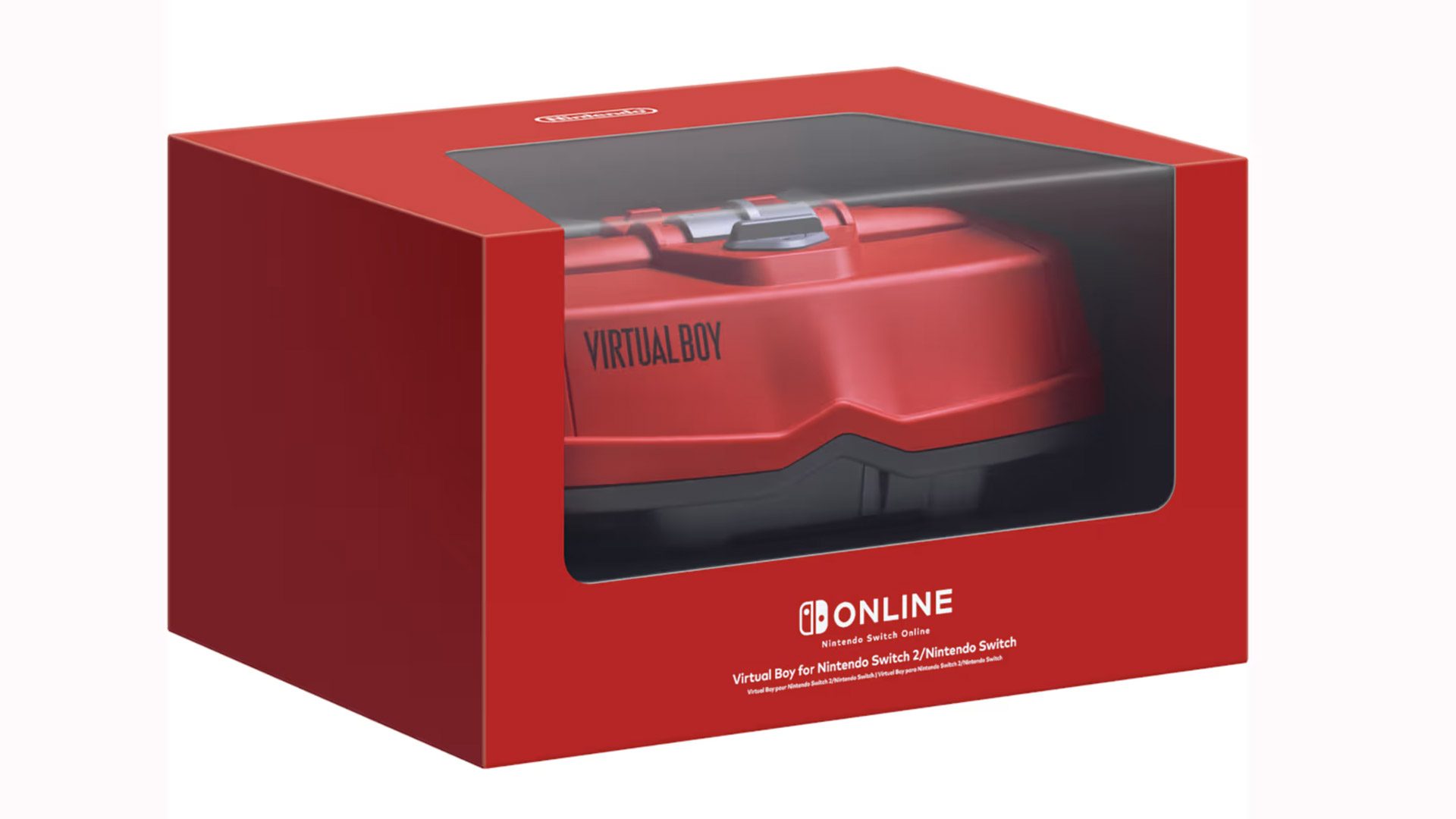
Now, for some reason, Nintendo announced it’s reviving the Virtual Boy with a new $100 replica accessory that uses the Switch or Switch 2 (but not the Switch Lite) as the brains and display for the device. And this isn’t just a facade; Nintendo is re-releasing original Virtual Boy games (first released 30 years ago) to be played on the device.

The company says it will launch first with Mario’s Tennis, Teleroboxer, and Galactic Pinball, with 14 games in total to be released over time. That may not sound like many, but it’s more than 50% of the entire Virtual Boy game catalog.

It’s unclear at this point if the games are simply being emulated or if they have been retouched or remastered. In any case, we hope they’ll be at least updated to render at the native Switch or Switch 2 resolutions, rather than the tiny 0.086MP (384 × 224) per-eye resolution of the original Virtual Boy.
SEE ALSO
Valve: Steam Frame Doesn't Support Stereoscopic Rendering of Flat Games but the Feature is "on our list"
Image courtesy Nintendo

It’s also unclear if the new Virtual Boy accessory will allow users to play a handful of existing Nintendo games with an optional ‘VR mode’, like Zelda Breath of the Wild and Super Mario Odyssey, which were updated alongside the Nintendo Labo VR Kit back in 2019.

And speaking of infamous VR products, Nintendo is going a step further to make these retro games accessible: the company is also releasing a “Virtual Boy Cardboard Model,” which certainly brings back some memories. Priced at $25, it’s definitely more accessible, but it looks like the accessory is played by holding the entire Switch or Switch 2 console up to your face with the controllers attached… not the most comfortable thing for more than a few minutes.
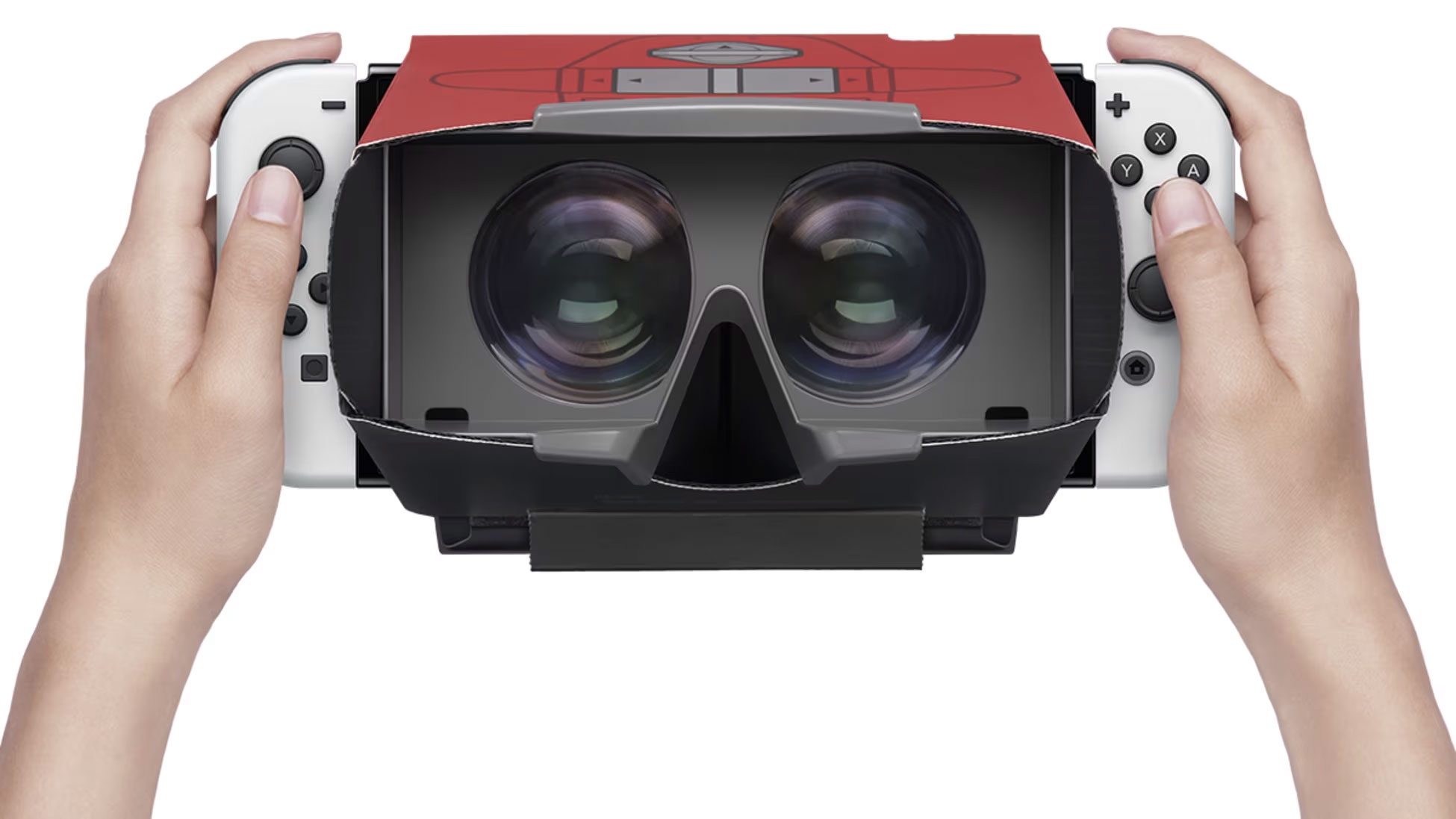
Image courtesy Nintendo

Both the replica of the Virtual Boy and the Virtual Boy Cardboard Model will be available starting February 17th, 2026, directly from Nintendo.

Weird as the move may seem, it’s honestly pretty cool to see a company revive and revere a piece of its history, even if it wasn’t a particularly successful one. In an era where companies can shut down servers or revoke ‘ownership’ of games from paying customers, Nintendo is bringing back games that were essentially inaccessible.

This article may contain affiliate links. If you click an affiliate link and buy a product we may receive a small commission which helps support the publication. See here for more information.

Ben is the world's most senior professional analyst solely dedicated to the XR industry, having founded Road to VR in 2011—a year before the Oculus Kickstarter sparked a resurgence that led to the modern XR landscape. He has authored more than 3,000 articles chronicling the evolution of the XR industry over more than a decade. With that unique perspective, Ben has been consistently recognized as one of the most influential voices in XR, giving keynotes and joining panel and podcast discussions at key industry events. He is a self-described "journalist and analyst, not evangelist."
  • ApocalypseShadow

    Why???

    Unless these games get updated to the present and be pleasing without causing eye bleed, and putting out something to really sell this properly, this is like muddying the drinkable, VR water.

    • VR5

      I think there is a certain preservation aspect to it, being able to experience the VB close to how it was when it launched. Like going to the museum. Nintendo actually has one of those too.

      What's curious is the timing. Same month as Resident Evil Requiem. Hopefully that will get its VR mode announced soon (at TGS, or the rumored Sony State of Play?).

      Maybe this is Nintendo's way of reminding people that they researched VR very early. Even if what they released wasn't VR and not a good product in general.

      • ApocalypseShadow

        That's the only positive aspect. I thought of that when it comes to game preservation. But for comfort it's a terrible idea being rereleased. Not good on the eyes, not good on holding an object to you face or looking into the viewer on a table or desk. I was there when it released as a military friend opened up a store while I was stationed in Texas while in the service. It was a terrible product. Still is.

        Nintendo could do more. They are just cheapening out as always for high profits in using plastic and cardboard. Easy entry like what Google did. But low quality.

        • Christian Schildwaechter

          The VR experience Google Cardboard offered was lightyears ahead of the Virtual Boy. And with todays much faster phones using much better gyroscopes and accelerometers, and SoCs capable of doing SLAM tracking on the onboard cameras for 6DoF room and simple hand tracking, a current generation of smartphone based VR viewers would be a lot more viable for bringing VR to the masses than it was a decade ago.

      • Christian Schildwaechter

        There are already a number of Virtual Boy emulators, incl. VirtualBoyGo for Quest, available on Sidequest. Someone used it to play through all 24 Virtual Boy games, and then ranked them in tiers. youtu_be/wZBnIhAt6WA

        S+
        Mario's Tennis [typical mario tennis game, actually has solid GBA/GBC level gameplay]
        Virtual Boy Wario Land [full wario platformer, 14 levels, more fleshed out than most games (if not the most fleshed out)]
        Red Alarm [starfox NES clone (wireframe, but gameplay feels good)]

        A
        Waterworld [movie tie-in, shoot ppl from a catamaran]
        Jack Bros [bomberman-esque top down shooter/dungeon crawler?]
        Teleroboxer [boxing with VR robots, kinda like arms or punchout but with robots that are controlled thru VR hmds]
        Vertical Force [2D spaceship bullet hell shoot em up]

        B
        Mario Clash [mario bros clone (the one with the pipes and koopas in the single level) with added depth of 2nd background]
        Virtual Bowling [bowling game (better gameplay imo than the other bowling game)]
        SD Gundam Dimension War [2d grid tactics game (kinda like advance war/fire emblem)]

        C
        Bound High! [Unreleased – found, bounce on balls, simple minigame]
        Virtual League Baseball [baseball game]
        Nester's Funky Bowling [bowling game]

        D
        Golf [golf game]
        Virtual Lab [slight different take on tetris (first jiggle physics on anime waifu in VR ever?)]
        3D Tetris [tetris but in xyz axis (think a big cube that you can orient blocks falling in 3D and not just 2D)]
        Panic Bomber [tetris/candycrush/bobblebobble clone]

        E
        Virtual Fishing [JP, fishing game]
        Galactic Pinball [pinball game]
        Space Invaders Virtual Collection [space invaders]

        F
        V-Tetris [basic no gimmick tetris]
        Space Squash [3d pong, gameplay really poor]
        Innsmouth no Yakata [JP, horror FPS? attrocious aiming]
        Dragon Hopper [Unreleased n/a]
        NikoChan Battle [Unreleased – found]
        3D FPS [should have stayed unfound lol]
        Zero Racers [n/a]

        • VR5

          And those are all better than what this peripheral will provide. Problem is, those games are collector's items and very expensive nowadays. And you'd have to dump them yourself if you want to be 100% on the legal side.

          • Christian Schildwaechter

            To be honest, I'm not that concerned with the legal side when it comes to Nintendo. They have been shooting down pretty much any game preservation effort or fan made content forever, now try to boot Palworld out of the market by patenting ancient and fundamental game mechanics like summoning a character and letting it fight with others.

            I in general object to software being patented, which isn't even legally possible in the EU (patents are only given for implementations, not ideas or algorithms, which is why open source projects like VLC are hosted in the EU), while the US patent office granted tons of overly wide patents on things like "digital money" to patent trolls. I understand the concept and need for patents, with their 20 year duration being way too long for anything involving electronics. And the US extending copyright beyond 70 years after the death of the author just in time to protect Disney's greed was plain disgusting.

            I now in general avoid all things Nintendo due to their particular behavior, and have basically zero issues with someone not going out of their way and paying USD 100 for a plastic cardboard case and USD 300 for a Nintendo console only to then be required to subscribe to Nintendo Classic to experience some historic VR games for a console that Nintendo themselves took of the market three decades ago. If you still have the original Virtual Boy and can dump the binaries yourself, congratulations! Otherwise Google, emulation sites, BitTorrent and SideloadVR are your friends. Screw Nintendo.

          • VR5

            I agree with you on patents (which are really an entirely different thing though) but for copyright, no one is forcing you to buy a product if you think it’s overpriced. Doesn’t mean it’s fair to steal it.

          • Christian Schildwaechter

            TL;DR: It's not about money, it's about consumer choice vs. companies trying to exert control way beyond what patents or copyright, that are intended to foster creation, legally allow them to.

            What you suggest is what I do, I chose not to use Nintendo products. I don't steal them, I ignore them.

            But the issue here isn't price at all, the issue is giving the user choice. I 100% agree with Gabe Newell that piracy is a service problem, and I have a 2.5K+ titles Steam library to proof that the I am more than willing to pay for games, most of which I will never play. Which I am completely fine with, I consider these purchases as supporting developers for their good work, and paying Valve for their community service, because they offer gamers a lot of choice.

            On Steam you can buy AAA titles for USD 60 on launch day. Or wait for a few months for them to become slightly reduced. Or a year or two, when they often see permanent price drops. Or wait for sales that a couple of years down the line bring the price down by 75% or more. You can buy ten years old titles if all you have is an ancient laptop with a miserable iGPU that was handed down to you. They'll gladly sell you Half-Life from 1998, regularly discounted by 90%, and occasionally for free, and it still get's regular updates. And the most played Steam games like Dota2 or TF2 are free, with Steam paying for the online service costs.

            Steam uses some mild DRM, but this is mostly up to the developers that can also offer games DRM-free. I bought a couple of games on Steam just to copy the game files and use them on the Oculus Go/Quest with Team Beef ports. GOG goes even further, offering games DRM free by default, and they optimize ancient games so they work well with emulators, DOSbox etc. You can do whatever you want with them. This is good service, giving their customers a lot of choice.

            Nintendo is the opposite. They could sell ROM images of old console titles, and I would be more than happy to pay them for that. But that's not what you get. You get Nintendo's lawyers going after console emulators and threatening small YouTubers that dare to mention that emulation is an option and showing it, even though running emulated games is legally fine if you own the original and extracted the ROM files.

            Nintendo knows this, which is why they don't go after larger channels that could afford to take them to court. A few years ago Nintendo pounded on Steam Deck channels like The Phawx for showing completely legal use of emulators. But when media heavyweight Linus Tech Tips challenged them with a Steam Deck emulation video, clearly stating they would take Nintendo to court, they balked, because they don't even want this to be tested in court. They want to continue to just bully people that cannot afford to fight Nintendo's army of lawyers.

            And that is where personally choosing not to buy or use Nintendo titles simply doesn't cut it, and why I say I'm fine with others playing Virtual Boy games on Quest in an emulator with ROMs sourced from illegal sources, simply because Nintendo refuses to sell them. The emulator on Quest will provide a much better experience than a Switch in a plastic case, and if Virtual Boy ROMs were available from Steam or GOG or Nintendo themselves, you could have done that for years. And I would probably have bought all of them, started maybe 10% of them once for a few minutes, similar to what I do with other Steam games, and would have been happy, simply because I was given the choice to pick.

            But what Nintendo wants me to do is buy their console, which will also run an emulator, a very expensive plastic peripheral that will provide an inferior experience, and then subscribe to Nintendo Switch Online to even play the Virtual Boy games. Once you cancel that subscription, you USD 99.99 Switch plastic cardboard box becomes useless. And Nintendo has been caught in the past using open source emulators they themselves tried to get banned.

            Copyright has it's purpose, as do patents. Patents are a time limited monopoly on something to reward development, but they require offering fair licenses. This is a condition for being granted a patent. You cannot simply lock things away from others, and companies regularly go to court over the conditions. There are a number of legal measures in place to (in theory) avoid patent abuse and stop patent holders from blackmailing others. Similar measures like fair use exist in copyright for similar reasons, but Nintendo really tries to overextend their legal reach pretty much everywhere.

            We have seen in other areas like music or movies that content owners use their money to limit choice, so they can effectively force consumers to accept their behavior, even if it is legally very questionable. And even if I personally avoid pirating things (as long as I can find ANY way to legally buy something) and would rather not play Nintendo games than have to accept their behavior, pretty much the only thing that has gotten large companies to improve their services instead of blackmailing their customers has been content piracy that usually goes up once service quality goes down. Even though companies like Valve with Steam or even content owner friendly Apple with iTunes have proven that people are more than willing to pay for content if you only give them the choice to use it how they actually want, instead of making them jump through unnecessary hoops that make the pirated versions more usable than the paid ones.

          • VR5

            That’s good that you don’t pirate. Something I didn’t reply to in your previous post but which I now don’t want to leave uncontested: Nintendo doesn’t oppose preservation, they preserve all their own games, for their own purpose and also in their museum for people to try. Nintendo Classics also preserves the original games and form factors and makes that available as a product. Preservation doesn’t mean that people will or should have access to something (especially not for free).

            Emulators and ROM sites aren’t about preservation but about accessibility, ROM sites to the point of violating copyrights. Emulators and ROMs preserve accessiblity once the old hardware dies, that is in a way preservation. And if you dump your own games, and it’s from old unencrypted systems, it’s also perfectly legal.

            But the cultural heritage of Nintendo games is already preserved without that. So in Nintendo’s platforms at least, ROM sites do nothing for preservation. Some other software makers have lost original ROMs though so in those cases external storages do actually become necessary in order to preserve those games.

          • Christian Schildwaechter

            Preservation doesn't mean that people will or should have access to something

            Let's just say that I very much disagree here, as this is exactly the type of technicality that Nintendo uses to twist things like copyright towards the interpretation that is most useful for them.

            Game preservation does not mean that Nintendo keeps a copy somewhere in a bunker for future anthropologists. Just like freedom of press does not mean that one person is allowed to publish one article once a year on a blackboard in the middle of the desert. Game preservation means that games that were already published remain accessible to gamers even if the hardware and ecosystems change. Media becomes a part of our life, and it is not acceptable that any 3rd party gets to decide to remove some part of your past (that you already paid for) by blocking ways for you to use it, or intentionally making it hard.

            I know that is what they try with license agreements that turn a purchase effectively into a rental, but at least there are now some regulatory movements trying to shift the balance back to more user rights. And I'm pretty sure that if Nintendo ever had the balls to allow this to go to court, they'd learn that copying old games to experience technology from years ago will be considered fair use if they themselves failed to offer a legal alternative for 30 years.

            And ROMs are indeed required for a number of things, be it running on proper rebuilds of the original hardware, like the FPGA consoles that we now have, emulating even the smallest hardware quirks, or for running it in better emulators than Nintendo is willing to offer/allow. The need for every Virtual Boy owner to extract the ROM from old cartridges themselves, when owning a legal copy should suffice to use the exact same ROM from another source, is basically just harassment.

            I might have given Nintendo a few points regarding game preservation with this re-release of the Virtual Boy, but not if they first require an expensive hardware dongle in form of a plastic cardboard box, and then lock its use behind a software subscription, currently for just three titles. ROMs are required, because Nintendo abuses copyright with technicalities to justify miserable service at high prices, while actively avoiding ever being legally challenged for their abuse, because they know that what they are doing is abuse. Without ROMs, Nintendo might just lock the games away for another 30 years, or do or charge whatever they want again in the future for what you already paid for. And there are game companies showing that you can make money without being an absolute dick.

          • VR5

            And I'm pretty sure that if Nintendo ever had the balls to allow this to go to court, they'd learn that copying old games to experience technology from years ago will be considered fair use if they themselves failed to offer a legal alternative for 30 years.

            You should take them to court then. What do you mean, allow this to go to court? You don't need their permission if you want to sue.

            Quality of your walls of text has taken a dive. I get the impression you're an LLM and some Musk has messed with your training data.

          • Christian Schildwaechter

            No, I cannot take Nintendo to court for their claims that using emulators is illegal. What happens is that Nintendo threatens content creators or emulator developers that they will sue them for enabling/promoting illegal behavior, meaning using emulators. But they do this only with people who don't have the financial resources to fight back, and instead take down their content/software just based on the threat.

            As mentioned Linus Tech Tips (and some others) basically asked Nintendo to do the same to them, as they could afford to go against Nintendo, and have a court rule whether emulator use is in fact illegal, as Nintendo always claims. And consequently Nintendo never asked Linus Tech Tips to take down their "Switch emulator on Steam Deck" videos, even though they had done this with a large number of smaller channels.

            The issue is that it is the claims Nintendo makes when asking content to be taken down that are false. So to have this go to court, Nintendo first has to make those claims when asking some party to remove content, and only that party can then ask the court to throw out Nintendo's claims. So Nintendo can choose whom to (potentially) fight in court, and they only threaten those that will give into their demands without going to court. Hence the "Nintendo doesn't have the balls to allow this to go to court".

          • VR5

            Nintendo has repeatedly taken people to court, and usually wins. There are defendants who are now indebted for life.

            Nintendo has also been taken to court, and often won. They don’t shy away from actual litigation.

            Also, you’re grossly mixing up vastly different things. Emulators in general aren’t illegal. But corporate espionage and circumvention of copy protection is. So if an emulator is not entirely reverse engineered, it might be illegal. Newer systems using encryption for their games makes practially all emulation of modern systems illegal, because they don’t work without those encryption keys. Those are relevant points why practically all Switch emulators have been shut down.

            Don’t mistake your layman’s understanding for facts. “As you understand it”, it is like what you wrote. Problem is, you’re neither a lawyer nor very well informed even as a layman. Maybe allow for the possibility that your believes are not fact?

            Which is what I meant by your training data being bad. You only consider what suits your believes, not the whole picture. You’re also lacking the expertise to make actually qualified assessments.

        • Jistuce

          I'm sorry, Waterworld is an A tier? That's generally regarded as the worst game on the system, and I sure didn't find much joy from it in the 90s.

          • Christian Schildwaechter

            There is some disagreement with his ranking. Of the three titles that will now become available first, he placed "Mario's Tennis" in S+, "Teleroboxer" in A, but "Galactic Pinball" only in E, which raised some objections. Apparently his ratings were more based on effective use of "VR" than on gameplay, and he only tried each title once for a few minutes. And based on just a few seconds of video, "Waterworld" indeed looks the visually most impressive, with multiple ships seen from a rotating camera like in an actual 3D scene, looking the most "VR" of all the titles. All the budget probably went into that one effect, with the rest of the game done in one afternoon.

            I nonetheless found the ranking and video helpful, as I missed out on the Virtual Boy in the 90s. And there isn't a lot of "in-VR" video content available for a console lacking video output and taken off the market a decade before YouTube even launched. So my opinion was largely formed by "worst VR experience imaginable" prejudices, and I was astonished to find that there are
            a) a lot of fans of the Virtual Boy,
            b) that the content looked much better than I expected, though this was probably due to me seeing it played in a modern hires emulator, and
            c) that apparently there were S+, A and B tier games, while I pretty much mostly expected D-F.

            https://uploads.disquscdn.com/images/1eac010ce8c3e4afd2e3c63c0f87184a4adde91e3e074cbf02899246426d1de6.jpg

          • Jistuce

            Oh! Yeah, from that perspective Waterworld IS probably the most immediately-impressive game, but it is shallow as a teacup. (Demo units typically had the wireframe shooter Red Alarm or Wario Land, so there's what Nintendo America thought was impressive. I feel like very early I saw some with Vertical Force.)

            The library is fairly solid, for the same reason it's very small. Nintendo kept the system a secret from most developers until very near launch, approaching a small number of developers to offer them dev kits, and with it folding in six months in Japan and a year in America… few developers finished a game in time that weren't already on the ground floor.

            The Virtual Boy memes are very unfair to the actual platform. There are a lot of people who haven't used one but have inherited strong opinions from other people who haven't used it.
            It was looked on dismissively at the time as simply "the red GameBoy", then later "the red GameBoy that gives you headaches and melts your eyes" as the proto-memes took shape.

            A modern emulator won't really help the sharpness, incidentally(though it will help the 50Hz flicker that was a genuine problem with the original hardware). The original VB displays were already razor-sharp(you're essentially looking directly at an LED grid, without even a lens in between). And with the graphics being bitmapped instead of polygons, there's not a lot of room for reaching into the system's heart and upgrading the internal resolution. You're seeing more or less what a real user would see.

          • Christian Schildwaechter

            I think some of the backlash came from Nintendo implying that the Virtual Boy was a VR console, which it clearly wasn't. It was more of a stereoscopic console similar to the Nintendo 3DS with an auto-stereoscopic screen. I don't think they ever claimed it to be VR, but the name and form factor no doubt was intended to make that connection.

            When the Virtual Boy released in 1995, people already had an idea what virtual reality was, as there had been a short media hype that started in the late 80s. And a lot of people had even tried for example the Amiga 3000 based Virtuality 1000 arcade console, released in 1990 with a per eye resolution of 372×250 in color, or its 1994 PC based successor Virtuality 2000 with a whopping 800×600.

            So when people compared what they knew about other VR devices, even if those weren't sold to consumers directly, to what the Virtual Boy offered, the "worst VR headset" was pretty much guaranteed. The Virtual Boy also didn't look that good when compared to the SNES that already featured simple 3D graphics with beefed up cartridges like the 1993 Star Fox, and much worse when compared to the Nintendo 64 presented not even six months after the Virtual Boy released. So the "red GameBoy that gives you headaches and melts your eyes" judgement was pretty much inevitable too.

            The Virtual Boy was probably very interesting with decent games for what it was, with an interesting "single row LED plus oscillating mirror display", but what it was probably wasn't all that clear to most users. It was certainly not as convenient as Nintendo's living room consoles, it traded colorful graphics for a stereoscopic effect, and wasn't really VR either. A little bit like VR today, what it offered was interesting mostly for a small group of people that appreciated the new technology and added immersion, and were willing to deal with the inconvenience. Not sure if it would have helped if Nintendo had made it clearer what the Virtual Boy was exactly, as even today with way more advanced VR HMDs, 98% of all (Steam) gamers still don't care. And with 770K units, the Virtual Boy sold more than the Oculus Rift CV1 or HTC Vive.

          • Jistuce

            The Virtual Boy actually DID begin as a “real VR” device. The accelerometer-based tracking was laggy and made people motion-sick, and then a change in japanese consumer protection law left Nintendo terrified of kids getting injured when they walked blindly into a stairwell, so it changed from a head-mounted and motion-tracked headset to a tabletop device. But they’d already bought the custom silicon and tooling for the controller, so they said it had to remain underpowered and battery-operated even though it was no longer a portable device.
            The poor thing was a victim of circumstance from start to finish, and it deserved better.

          • Christian Schildwaechter

            I wasn't aware of that. It adds another "What if …" question to the VR history. What if Facebook hadn't bought Oculus VR in 2014? What if Oculus had released a high end Rift 2 instead of focusing on mobile HMDs only? What if Google had pushed phone based VR further with Daydream instead of abandoning it by 2018? What if Nintendo had actually released a 3DoF VR HMD in 1995, even if it was extremely primitive?

            Would Sega have dug up the canceled Sega VR prototype for the Mega Drive they showed at CES 1993 and improved it for the 1998 Dreamcast, just to one-up Nintendo? Would Atari have gone through with their deal with Virtuality to release one of their arcade VR HMDs as an Atari Jaguar peripheral? Would John Carmack have adapted the original 1993 Doom to be playable with a consumer VR HMD, just like he did with Doom 3 to demonstrate Palmer Luckey's Oculus DK1 prototype, held together by duct tape, to journalists during the 2012 E3 exhibition show?

            Would we have had consumer VR one or two decades earlier, and all the issues we still have today with high weight, low FoV, low resolutions, short runtimes and lacking content would have been resolved years ago? Who knows.
            https://uploads.disquscdn.com/images/48fce314d686c9f7a429717322f4a6c785669a67a0db0f30c722c7cd06b48ce1.jpg

          • Jistuce

            Oh yeah. Fair or not, the Virtual Boy wound up poisoning the well for VR. It was years before anyone wanted to publicly evel say “virtual reality” again.

            But I think there were legitimate reasons Sega’s and Atari’s peripherals never came out. Limited available power, sluggish LCDs, and crude tracking options would have made them poor experiences once the novelty wore off. Same reason that pre-Rift PC headsets were rare and poorly-supported.

          • Christian Schildwaechter

            Given that even today's Quest 3/3S hasn't moved the masses, while Meta's Ray-Ban's sell more than expected, one could argue that modern hardware requiring a brick to your face still isn't ready and won't become it until we finally get to glasses sizes. So anything available 30 years ago would have been nowhere near acceptable performance not only for 98% of the gamers as in 2025, but 99,99…..%.

            But your comment about the Virtual Boy being planned as a VR HMD sent me down (another) vintage VR hardware rabbit hole that made me wish they had tried nonetheless. And the Sega VR was finally stopped not for technical reasons, but again by lawyers, with somewhat questionable claims that a mismatch in IPD lens settings could cause permanent eye damage within 30min, leading to endless lawsuits. Something modern HMDs have clearly disproven.

            The displays were of course crap. Just like Oculus started with phone displays, most 90's HMDs used two LCDs taken from pocket TVs that topped out at 360*240@30Hz. The bigger issue were lenses that didn't allow for more than 40° FoV horizontal without horrible distortions, something only resolved on the Rift DK1 by using modern GPU shader to pre-distort the image to make it appear correct in the HMD. But given the low FoV, a 40°H FoV 360*240 display has the same PPD as a 90°H 900*600 display, which is pretty close to the 640*800 per eye resolution of the 2013 90°H DK1, only reduced to tunnel vision.

            Sega actually released the VR-1 theme park attraction by 1994, with the MVD/Mega Visor Display that upped the resolution to 756*244 at 60°H, roughly the resolution of a PAL TV signal half-frame. Again developed with Virtuality like the Atari JaguarVR. VR-1 ran on much faster (USD 15K) Sega Arcade hardware, but Virtuality's own 1000CS/SD VR consoles ran on an Amiga 3000 with the 3D graphics rendered on extra DSP cards. The Sega Saturn featured two main processors, each featuring a DSP for 3D acceleration, and there were apparently more VR HMD prototypes for both Saturn and Dreamcast.

            A lot of people loved the ultra-low polygon games on the Virtuality 1000CS like Dactyl Nightmare below, running a measly 20FPS. And I was very impressed by Google Cardboard running on a 2011 Samsung Galaxy Nexus with a lower resolution than DK1, frame rates rarely exceeding 45FPS and dropping below 10FPS in some apps. Given that mobile GPU lags behind desktop GPU performance by roughly a decade, similar apps would have been possible on a 2001 gaming PC with a Virtuality HMD at slightly lower resolution and much lower FoV.

            Cardboard proved that my VR stomach is made out of steel, but it already could use IMUs with gyroscopes, while Sega's prototypes used only linear accelerometers to replace expensive magnetic trackers. The same was tried on Cardboard for cheap phones lacking gyros, making it a lot worse. And the 3DoF tracking on DK1 was only better due to custom firmware John Carmack wrote for its ARM processor driven IMU that probably had more processing power than the whole Sega Mega Drive/Genesis.

            But if someone had offered me something like a Sega VR or MVD around the time of the Virtual Boy release, I would have gladly taken it, even if the resolution wouldn't be improved until the first HDTV broadcasts would trigger higher pixel counts a decade later. And given how much I enjoyed the DK1 and my DIY Cardboard HMDs, I'm sure I would have loved it. Nonetheless I understand why Nintendo and Sega lawyers, with a mass audience and kids with anxious parents in mind, thought these devices had to die a quick and permanent death.

            https://uploads.disquscdn.com/images/c02af20e317b67755e3edfc724c79738a6abbfafb4e71969b352883d3cc28559.jpg

    • Christian Schildwaechter

      The "Why???" is an interesting question. It's probably not about money, as this is an extreme niche item for VR or Nintendo retro fans that will not see a lot of sales or actual use. It could be about game preservation, but given Nintendo's extremely hostile attitude towards any emulators trying to preserve old Nintendo games they don't even offer on Nintendo Classics, I somewhat doubt that. This might be a promotional gag preceding Nintendo's entry into the XR space with a more proper device, for example XR glasses as external Switch displays similar to those from Xreal, but who knows.

      Given that this is basically just a plastic cardboard box with a stand, it is somewhat surprising that it will be only become available five months from now on 2026-02-17. That's four days after Valentine's day, so maybe this is intended to comfort those that were alone or got dumped that day, by reminding them that their life could be way worse, for example if the only VR HMD they could get was a Virtual Boy.

    • Jistuce

      Because the Virtual Boy is awesome! [disputed – discuss]
      The eyestrain will be lessened, because we aren't using the vibrating mirror display modules. There's no flicker on an LCD. Also, the contrast will be lower.
      Eye strain on an actual Virtual Boy was greatly reduced by not cranking the brightness to the max… and also by adjusting the IPD knob like you're supposed to but no one did.

      The games won't be updated, because that's dumb. The whole point of Nintendo Switch Online Expansion Pass is rereleasing old games as a subscription service.

      There's an outside possibility some of the complete-but-unreleased games could show up on this. Bound High, Dragon Hopper, and Zero Racers finally making it to the public would be friggin' amazing.

    • Andrew Jakobs

      Why? Because it's Nintendo, they keep reselling old crap over and over, and people will still buy it.

  • I think it's pretty cool. I don't know how many of these they will sell, but as a VR enthusiast I love this revival

  • VR5

    It’s also unclear if the new Virtual Boy accessory will allow users to play a handful of existing Nintendo games with an optional ‘VR mode’, like Zelda Breath of the Wild and Super Mario Odyssey, which were updated alongside the Nintendo Labo VR Kit back in 2019.

    It would actually be a good chance to reintroduce the Labo VR games for Switch and release some Switch 2 Editions for those. The cardboard variant at least looks like it would support the same FOV as Labo VR. 3rd parties could also make some better slot-in headsets. But the Switch 2 is even larger and heavier than the old Switch, not a good solution really.

    Maybe if some 3rd party solution has a soft enough facial interface you could play BotW lying down in bed.

    • Ivan A.

      Don't those Labo and official VR Mode games require you to physically rotate the headset/your view? If so, the Virtual Boy on the stand won't work for those as it doesn't allow for rotation, so you would need to use the cardboard version. I believe the cardboard version doesn't have a strap, requiring you to keep holding it. How would you then be able to play those VR mode games with only one hand available?

      • VR5

        The idea is to have the joy-cons attached to the console and hold it on both sides. Quite uncomfortable.

        You're right about the VB being fixed in place and that's exactly the reason why it isn't VR (also no polygonal 3D which could actually update different view angles in real time). So at most, the cardboard variant would actually enable VR.

        Another thing is the lenses. The expensive VB shell has rectangular windows on the lenses which indicates it might be the same low FOV as the original VB, which wouldn't support Labo VR FOV. The cardboard version has round lenses which probably work with the Labo VR distorted renders.

        So the cheaper version is actually the preferrable one if you want to do Labo VR as well (on Switch 2, which so far doesn't have a headset).

  • 3 classic game at launch…..Makes no sense to not have all 14 at launch.

    • Andrew Jakobs

      Yep, and that's not even the complete library, as there were also some japanese games which never were sold in the west.

      • Jistuce

        There's also a handful of complete, but unreleased games. I am really hoping to see Dragon Hopper, Bound High, and Zero Racers escape the vault.

  • Christian Schildwaechter

    The Virtual Boy sold for USD 179.99 in 1995, which would be about USD 380 today. The new Virtual Boy accessory will sell for USD 99.99, but you need at least a Nintendo Switch 1 they still list at USD 299.99, and sell slightly cheaper refurbished at USD 259.99, as the accessory is not compatible with the Switch Lite.

    So like with most Nintendo titles that never drop in price, your entry fee for playing Virtual Boy games in 2025 is pretty much the same as it was 30 years ago, USD 380 ± USD 20 (adjusted for inflation). But you'll be missing out on the original controller featuring two digital D-pads that cannot be replicated 1:1 by the analog Joy-Con sticks.
    https://uploads.disquscdn.com/images/80ec86ef4f275f73eed4feab15d7cfa43b3da86d54ab5c4c8967a50264429e85.jpg

    • NotMikeD

      While I appreciate the fun math experiment here, you don't realistically think there are people out there who would be interested to purchase all of this modern hardware just to check out games from a failed past console do you? I view this as a fun nostalgic add-on for the approximately 1 jillion Switch owning Nintendo fans out there. I'm always a big fan of video game preservation, and this is one of the best examples of that I've seen from Nintendo in a while.

    • Jistuce

      Virtual Boy was cheap as hell in 1996, when they were on clearance for thirty bucks. Just sayin', original MSRP wasn't what most people paid.

  • Peter vasseur

    It’s not the virtual boy, that was a joke and not virtual at all. It should been names the red monochrome pixelated 3d table top machine.

    • Jistuce

      You're right, the Virtual Boy isn't virtual, but selling an Actual Boy is legally problematic.

  • ZarathustraDK

    They want to kill VR again? Is VR the Dracula to Nintendo's Van Helsing or something?

    Seems like quite a missed opportunity to go all out and add a strap to, at least, open up some opportunities for 3dof-gaming. Instead, they took at the carbonized corpse of a lemon that was Virtual Boy and thought "hmm… let's squeeze that more and make that a diamond".

    • Jistuce

      Add a head strap? But they already did Labo VR.

      Never mind, Labo VR didn't have a head strap either. WTF, Nintendo?