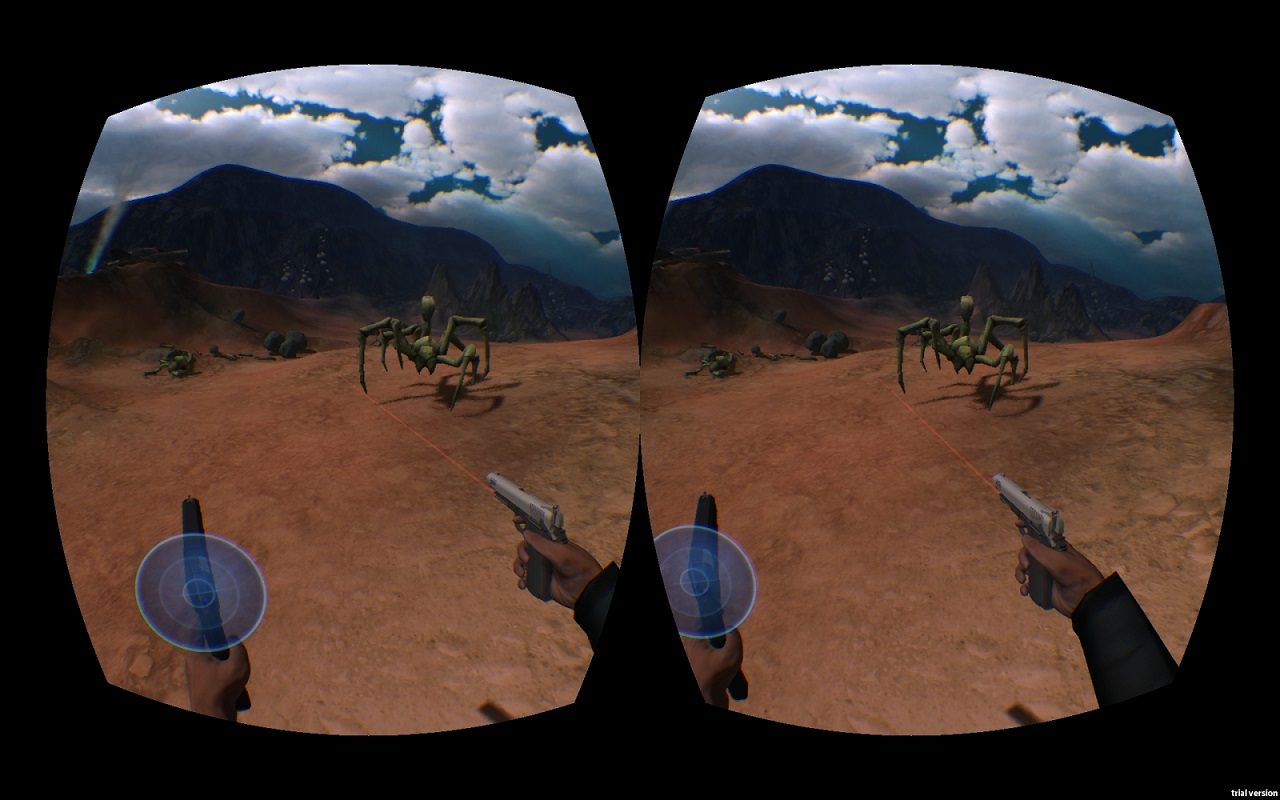
The Razer Hydra motion gaming controller has become the defacto virtual reality input device for many developers working with the Oculus Rift. Razer has extended their 50% off sale to the end of May, giving you a few more weeks to nab the controller for a great price.
VRcade looks like the next logical step for immersive video gaming: With full body & weapon tracking, haptic feedback, a large motion capture arena and realistic graphics, the system offers everything needed to get closer to the virtual reality most of us know only from movies. Road to VR takes a look at VRcade and the exciting future of virtual reality gaming.
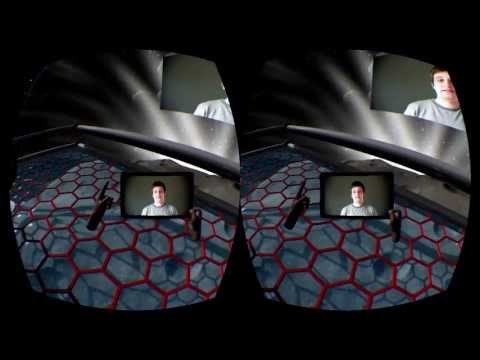
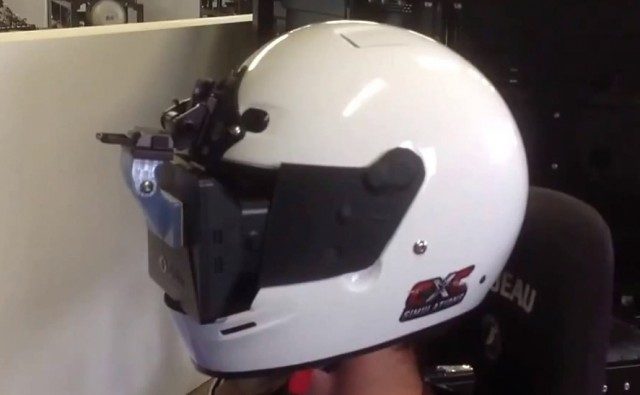
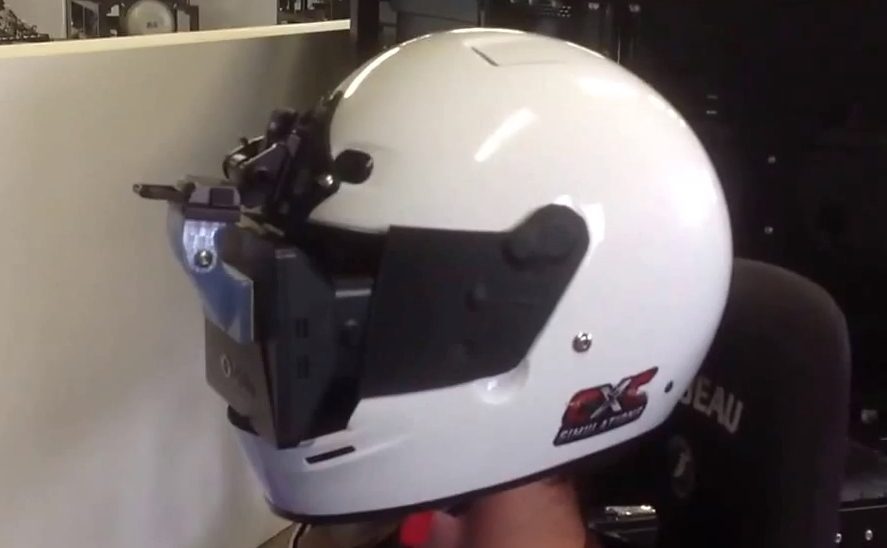
It’s one of the more obvious mods for the Oculus Rift, but also potentially the most useful. Strapping a camera to the Rift let’s you see the outside world, which could be used for much more than just finding your way to WASD.
We’ve been watching Ibex, a virtual reality desktop environmental for Oculus Rift, closely over the last few months. The latest beta features full head tracking, video playback, and is now available for Windows and Mac.
Hey there VR fans. A bit of meta-news today. I’d like to welcome Dominic Eskofier to the Road to VR team. Dominic joins in as a news contributor. He’s well versed in the world of online journalism, works in the games industry, and shares our enthusiasm for virtual reality! Eagle-eyed readers out there will have already noticed that he’s authored a number of articles:
Hi, I’m Dominic and it is my pleasure to greet all readers of Road to VR from behind the news desk!
Not too long ago, I was a simple user myself and it still feels a little unreal to be writing for the site that I regard so highly in all things VR. But here I am and I will try my best and use my skills to make the site even better! So, what’s to say about me? I’m 28, live in Germany and when I’m not writing for Road to VR, I use my spare time for rock climbing, web surfing, beach volleyball, moderating subreddits like /r/oculus and just chilling with friends.
Another chunk of my time goes into video games. Me and my two brothers owned computers and consoles from a very early age on (Anyone remember the Sony MSX?), so I’ve always regarded video games as the medium of our generation. I think that video games are only in their infancy and that technologies like the Oculus Rift or the upcoming new consoles will propel our medium forward in the near future. I’m very lucky to be able to use my passion for video games at my workplace, since I’m a Product Manager in the games industry right now.
After studying Electrical Engineering, I decided to pursue my passion and started my career in 2008 as an intern at one of Germany’s largest gaming websites. After my bosses liked my work, I was offered an editor job, both writing for print magazines and managing content on community-focused websites. As Product Manager, I don’t spill out sentences in such a regular basis now, so being able to write for Road to VR is both an honor and a good outlet for my writing-itch.
So, why am I interested in virtual reality? To be honest, I completely missed the 90’s VR craze and maybe it was better that way. My first entry into a virtual space was via the Oculus Rift. After reading so much about it in the MTBS3D forums and seeing John Carmack demo the Rift at E3, I was offered the chance to try Palmer Luckey’s mysterious duct-taped device myself, at Gamescom 2012. I still vividly remember the feeling after my 20 minutes in a spacestation on Mars: despite my slight nausea, it was one of the most profound gaming experiences I ever had – the implications of the technology are just huge.
I couldn’t get the experience out of my head, daydreamed about VR Arcades and virtual wing suit flying and all the other possibilities. I soaked up every piece of information available about the Rift, cared about the growth of the Oculus subreddit and now, here I am at Road to VR, writing for one of the major outlets about virtual reality. As I said, it still feels unreal – but I sincerely hope all of our readers will like my upcoming articles. I had the chance to play around extensively with an Oculus Rift Dev Kit, so more information directly from the source will be coming soon – stay tuned!
Palmer Luckey, creator of the Rift and founder of Oculus VR Inc, stopped by reddit the other day to give an update on Oculus Rift shipping. According to Luckey, the company is on track to deliver all Kickstarter orders before the end of May.
Luckey wrote that, “we’re on track to deliver all the Kickstarter orders before the end of May.” The Kickstarter, which ran during August, 2012, raised 2.4 million dollars — 974% of its stated goal. 7,408 Oculus Rift VR headsets were ordered through the Kickstarter.
Oculus VR Inc opened pre-orders for the Oculus Rift on their website at the end of September, 2012. Around 10,000 total units are estimated to have been ordered through the Kickstarter and online pre-ordering before the Rift started to ship at the end of March, 2013.
“We’ll start fulfilling website pre-orders in late May / early June,” wrote Luckey. “It’s impossible to give exact dates/numbers when we’re dealing with so many moving parts, but if you ordered in 2012, we expect you’ll have your kit in June.”
With the VR headset popping up all over the web and in mainstream media, pre-orders continue to flow in through the site. “Our order rate keeps going up, we had a lot more orders last month than previous months,” Luckey wrote. If you are ordering today, Oculus says you should expect your developer kit to ship in August.
Based on the available info, we recently put together this estimated Oculus Rift shipping schedule:
Unit #
Shipment Date
3,700 – 4950
May 1- 7
4951 – 6201
May 8 – 14
6202 – 7452
May 15 – 21
7453 – 8703
May 22 – 28
8704 – 9954
May 29 – June 4
9955 – 11205
June 5 – 11
11206 – 12456
June 12 – 18
After 10,000 orders, the company changed their order number schema — if your order number is over 20,000, subtract 10,000 from it to find your unit number.
You can check on your Oculus Rift shipment status here.
A couple of days ago, Oculus announced that Half-Life 2 now has official support for the Oculus Rift, albeit in an early beta form. Compared with unofficial mods and hacks, the experience (once working correctly) is incredibly compelling and impressive. However, getting the game working optimally is currently a minor challenge, for those of you unwilling to pour time into config tweaking we run through the basics.
Hi everyone! Cymatic Bruce here with yet another gameplay exploration. This time, we look into some third person experiences in VR, and try to make some tentative conclusions about what works and what does not.
Oculus have just announced via their Developer forums, that they’ve ‘shipped’ support for Half Life 2 in beta form at least. The update can be obtained via Steam, and you need to follow the below instructions in order to activate the new VR support:
To get it, open the properties for HL2 in Steam, set your command line to “-vr”, and opt-in to the SteamPipe beta. This should ship to everybody in a few weeks.
This is an early beta for VR support, as such the list of known issues are as follows:
The zoom UI shows up in a quad in the middle of the screen instead of on the edges of the screen.
The HUD is dim and hard to read.
It’s exciting to see official support for AAA titles (albeit older ones) starting to appear, certainly having an excuse to re-play this particlar classic, this time in VR is most welcome to this gamer.
Here’s some footage of the official implementation in action, thanks to YouTube user Tejnop:
In an interview with Engadget’s Billy Steele, Cliff Bleszinski (aka Cliffy B) seems to confirm that Bethesda’s hugely successful RPG ‘The Elder Scrolls V: Skyrim’ is indeed receiving official Oculus Rift support.
The fact of the matter is they’re porting Team Fortress, they’re porting Skyrim and they’re finding it kind of works.
We don’t yet know if Bethesda themselves are carrying out the VR retrofitting or indeed how long it might take to surface, but it’s heartening to know it is at least on its way. This does also seem to tie in with leaked images from a ‘closed door’ presentation exposed in a PC Per article in April, containing a slide with, amongst others, the Skyrim logo.
Bleszinski is candid too on his involvement with Oculus at a financial level:
Full disclosure that I am an investor in the Oculus Rift. So I have an agenda, but I wouldn’t have put my money in it if I didn’t believe in it.
There’s no doubt that the enormously popular RPG would be viewed as a Kill App for the Virtual Reality HMD, but Cliff tempers that view with his opinion on how development of the best titles to take advantage of the Rift should be approached:
But the best experiences for that product will be made for it. It’s the one that excites me the most because I believe in the vision of VR. I think it could be really amazing once you start getting haptic feedback gloves and things like that.
We’re happy to see the Rift on the front of one of the world’s biggest gaming magazines. Congratulations to Oculus VR Inc!
There were some nice insights into Oculus VR’s journey; from Brendan Iribe [CEO Oculus:
When we launched the kickstarter, I got hundreds of emails from these top-tier developers saying “we want to step inside of our game” … ” and literally these are developers of some of the biggest IPs in the world. They were emailing saying “we want to do this, and we want to be part of this from the beginning”
And a small nugget of info on forthcoming hardware revisions:
Latency and field of view will be improved in forthcoming dev kits, the resolution will be improved in the consumer model and positional tracking may be supported further down the line. Looking even further ahead, Luckey talks about the possibility of a wireless headset and motions controllers. But even now, the Rift delights just about everyone who uses it.
“On the cover is a story we first covered way back in issue 3 – the rise of virtual reality. After twenty years of VR misfires, Oculus VR’s creator Palmer Luckey explains why Rift changes everything and how it opens the door to a world of new design challenges,” writes the Edge blog.
Have you ever dreamt of flying? Kelly Weaver certainly has. He’s the developer behind a new sandbox flying ‘experience’ using the immersive power of the Oculus Rift and the motion precision of the Razer Hydra to make that dream an interactive VR experience. Kelly takes time out to talk to us and let’s us take a spin in an impressive early build.
An update on something I’ve been eagerly looking forward to — Oculus Rift Minecraft support. While the game’s creators have hinted at official support, one modder is taking things into his own hands and has released an early mod.
Disunion is an experimental Oculus Rift game which puts the player through a first-person execution via the infamous Guillotine.
The game was created by Erkki Trummal, André Berlemont, and Morten Brunbjerg in two days as part of the Exile Game Jam in Denmark which ran from May 1st – 5th.
In the video above (mind a few NSFW words), several people get to experience their own simulated execution by Guillotine thanks to Disunion. The reactions seem pretty intense — especially with an unexpected whack on the neck from a ‘friend’.
While I haven’t yet been able to step into the Guillotine myself (I never thought I’d write that sentence!), I have a strong feeling that realistic audio will be key to a visceral reaction. A proper binaural recording could make the experience sound incredibly realistic and frightening.
I’ve spent the past few weeks inside virtual reality doing things I have never dreamed I’d get a chance to do in real life. I’ve been in space. I’ve driven all sorts of interesting vehicles. I suppose it was only a short amount of time before a team wanted to show us how it would feel to die. You don’t fail at a task before losing your head, being killed is the entire point of the game. This was an interesting experiment, and I’m glad I was given a chance to try it, but it’s nothing I want to go through again.
Perhaps this could become part of a high-school lesson on the famous beheading of Marie Antoinette — I doubt students would soon forget it!
While We’re at It… Some Interesting Guillotine Facts
While a popular myth purports the Joseph-Ignace Guillotin, co-creator of the device, was killed by his own invention, Guillotin was actually opposed to the death penalty and died of natural causes in Paris at the ripe age of 75. An unrelated man bearing his family name, J.M.V. Guillotin, was executed via Guillotine, possibly contributing to the myth.
Though the evidence about life after beheading is inconclusive, a doctor by the name Beaurieux penned an illuminating account of his experimentation with the head of a condemned prisoner on 28 June, 1905:
Here, then, is what I was able to note immediately after the decapitation: the eyelids and lips of the guillotined man worked in irregularly rhythmic contractions for about five or six seconds. This phenomenon has been remarked by all those finding themselves in the same conditions as myself for observing what happens after the severing of the neck …
I waited for several seconds. The spasmodic movements ceased. […] It was then that I called in a strong, sharp voice: “Languille!” I saw the eyelids slowly lift up, without any spasmodic contractions – I insist advisedly on this peculiarity – but with an even movement, quite distinct and normal, such as happens in everyday life, with people awakened or torn from their thoughts.
Next Languille’s eyes very definitely fixed themselves on mine and the pupils focused themselves. I was not, then, dealing with the sort of vague dull look without any expression, that can be observed any day in dying people to whom one speaks: I was dealing with undeniably living eyes which were looking at me. After several seconds, the eyelids closed again […].
It was at that point that I called out again and, once more, without any spasm, slowly, the eyelids lifted and undeniably living eyes fixed themselves on mine with perhaps even more penetration than the first time. Then there was a further closing of the eyelids, but now less complete. I attempted the effect of a third call; there was no further movement – and the eyes took on the glazed look which they have in the dead.
The latest game out of Project Holodeck is Zombies on the Holodeck, a noir-styled zombie game for the Oculus Rift and Razer Hydra. In addition to an exclusive trailer, we’ve links to the alpha so that you can try it yourself!
Project Holodeck is system in the works by a team of students at the University of Southern California. The Holodeck itself is a portable multiplayer virtual reality environment with, full body tracking, which makes use of the Oculus Rift and Razer Hydra.
The Holodeck team created the game to work with a myriad input devices. It can be played on the full Project Holodeck setup, with just the Oculus Rift and Razer Hydra, with the Hydra alone, or even with a mouse and keyboard.
Note: you must have Microsoft .NET 3.5 or above installed (installed included in download)
Be sure to check the included readme for controls, troubleshooting, etc.
Today’s release marks an early prototype version of the game. Project Holodeck’s Producer, James Iliff, tells me that, with enough interest from the community, they’re considering taking the game to Kickstarter to raise funding for a fully polished version of the game — something we’d love to see.
Inside Zombies on the Holodeck
Paul has put together some hands-on gameplay footage of the game using the Rift and the Hydra (see below):
This is what he had to say on his experience:
Zombies on the Holodeck is the first game I’ve played which attempts to implement realistic physicality into its gunplay. The requirement to pick up, aim and reload with actions analogous to real-life heightens the tension you feel when faced with armies of marauding undead. It also magnifies the satisfaction of taking them down, giving real weight to the action.
The Project Holodeck team continue to blaze a trail in this new world of VR gaming. Conceptualising the mechanics required to make VR games ‘work’ is no easy feat but what they’re coming up with will doubtless be built upon and refined by them and others as VR gaming develops. Early days then, but ZOTH is already looking extremely promising.
Inside the game world you find yourself on the streets 1920s-themed Chicago, apparently at the epicenter of the zombie outbreak. Never ending waves of brain-hungry undead will come for you. It’s your job to survive.
Holstered on your left and right legs are two pistols. On your left shoulder there’s also a clip which you can grab and put into your pistol to reload. On the right shoulder you’ll also find a flashlight to light up the darker areas of the map. All must be reached for and grabbed with the Hydra’s trigger. Bumpers on either hand are used to shoot weapons.
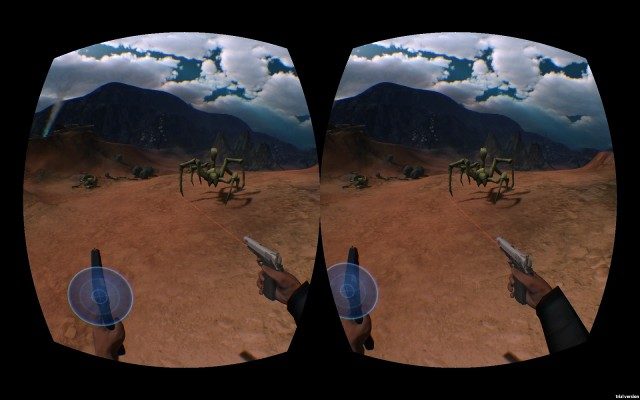
I’ve been waiting patiently for someone to to make an Oculus Rift + Razer Hydra game where you can cock a shotgun — it’s finally here — and it’s every bit as fun as I hoped it would be!
In addition to the shotgun there’s also a Thompson, and a sniper rifle which you actually have to hold up to your face to look through the scope.
Cymatic Bruce on Zombies on the Holodeck
We dropped Cymatic Bruce into Zombies so see what he thought about the experience:
Zombies on the Holodeck was intense. I didn’t expect it to be so – I had read about it beforehand, and thought that the old-timey music and film tropes would make it kind of hokey. That was not the case at all.
I plopped into the world and checked out the huge 30’s style movie title as it zoomed toward my face. I picked up the Razer Hydra and took a look at my hands, which seemed a bit cartoony but cool. Then things got real. The foreboding music, combined with the lack of color and the occasional lighting flashes, set a spookier scene that I anticipated. I walked around, looking for a place to go, and then I heard it. The grunt and mumble of a zombie.
I whipped my head around and there he was – a spiky haired, shuffling monstrosity. I ran into a building and up some stairs, finding a room with a sniper rifle. I grabbed it with one hand, but was unable to get my other hand on it in my panic. By that time, the zombie and a few of his friends had caught up. So I did what anyone would do: I attempted to beat them senseless with the sniper rifle! That’s when I knocked my cereal bowl and several other items to the floor in real life.
Zombies on the Holodeck sets out to place the player in a radically different version of reality, and I would say that its executes this well. I am finding through my VR experiences that a consistent universe, no matter how stylized, is more important than photo-realism. ZOTH is a wonderful example that supports this idea!
I shared a similar experience of panic. While exploring the level I wasn’t paying attention to the zombies creeping up around me. As I turned around I found myself with my back to a dead-end and a horde of zombies in front of me. I frantically reached for my clip to reload my pistol — but it was too late. Experiences like that simply can’t be had when all you need to do to reload is ‘Press X’.