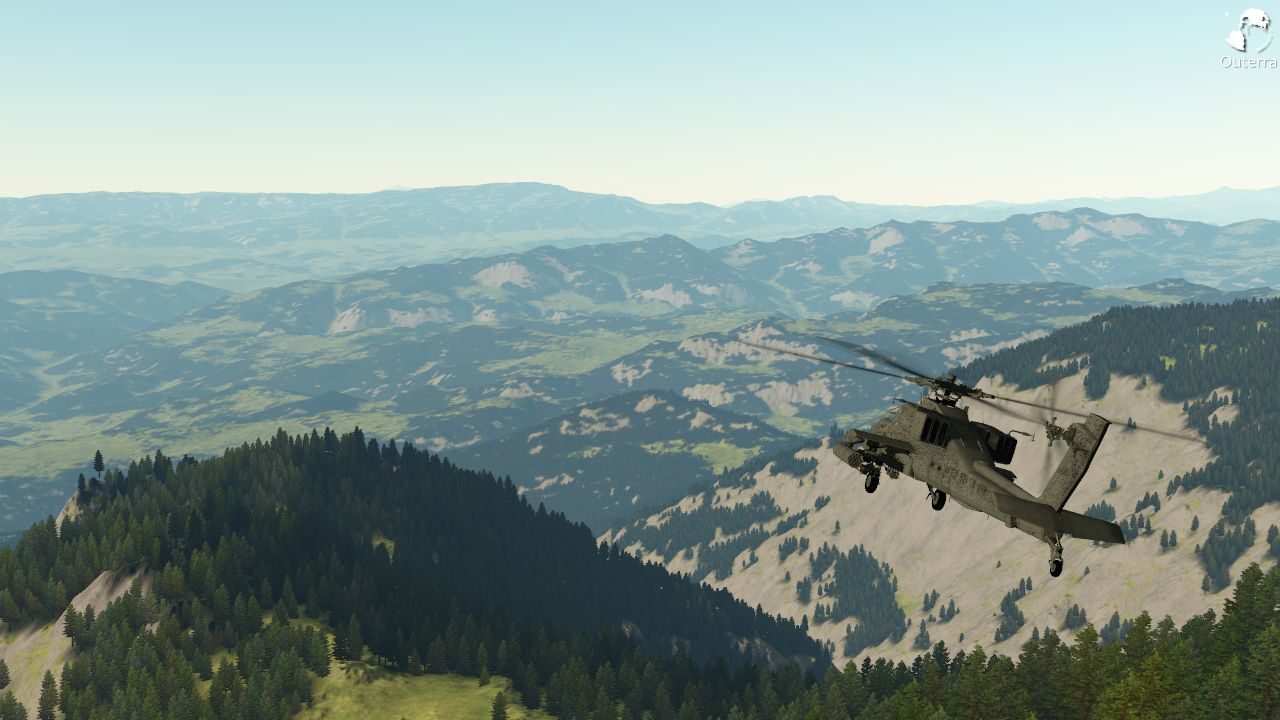
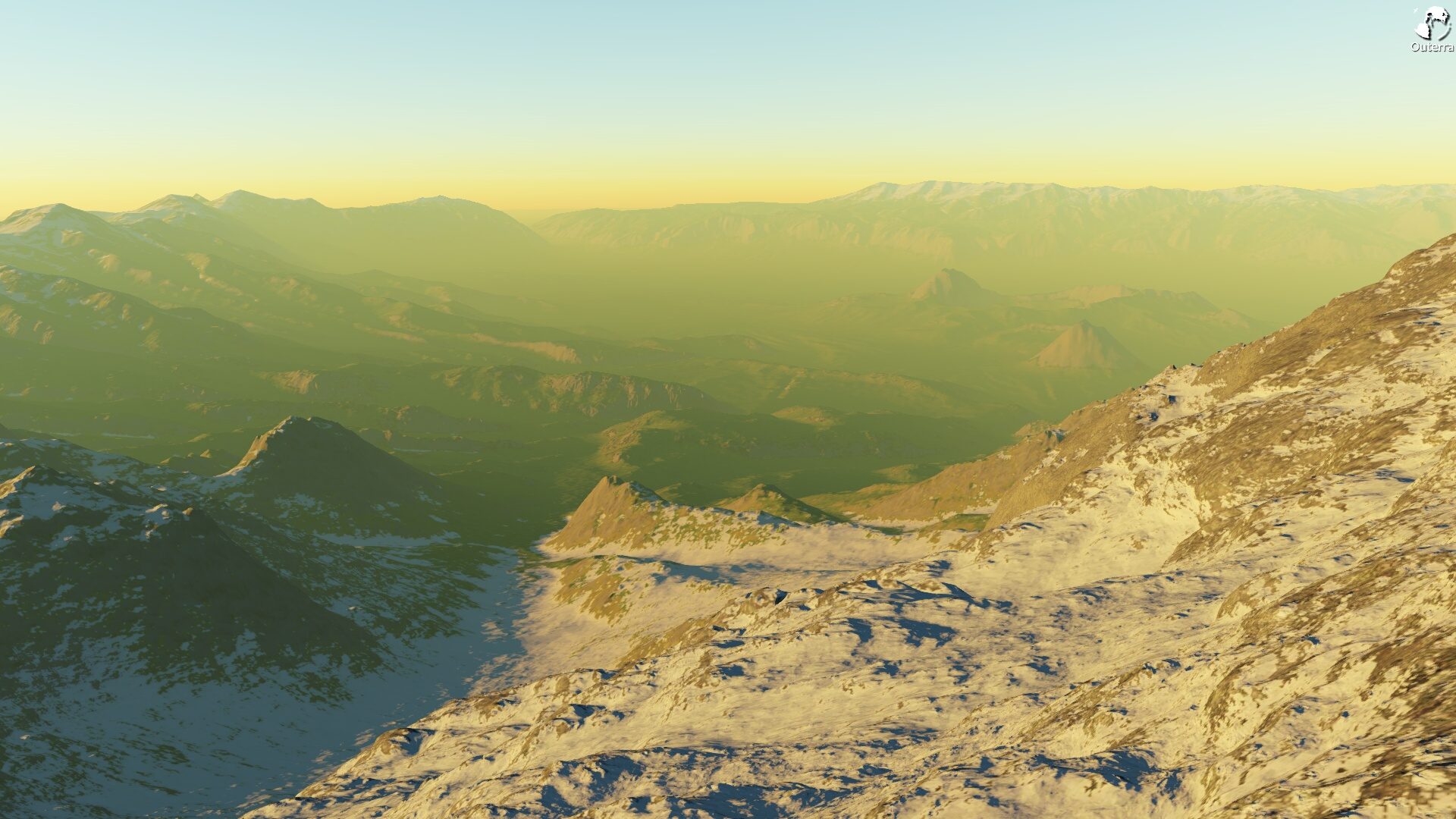
Soon you could be roaming your own virtual reality Earth. Outerra is an in-development ‘world rendering engine’ which is literally capable of rendering a geographically detailed world — your own personal planet. The engine uses an impressive combination of real-world data and procedural terrain generation to create detail all the way from the perspective of an orbiting satellite, down to the blades of grass at your feet. The developers of Outerra ordered an Oculus Rift developer kit early-on and plan to support the HMD.
Outerra is a unique 3D rendering engine, a world rendering engine capable to seamlessly render whole planets from space down to the surface. It can use arbitrary/varying resolution of elevation data that it further dynamically refines using fractal algorithms. The fractals try to mimic natural processes, generating fine, believable terrain with high resolution. The world is also being dynamically textured and populated with vegetation using predefined land type material sets and the computed terrain attributes.
The engine’s scale is truly amazing. We’re talking about a 1:1 virtual reality Earth — like Google Earth on steroids. The engine is capable of rendering even larger planets if the developers are so inclined. Here’s Outerra in action:
Combining Outerra and the Oculus Rift would literally give you your own immersive virtual reality Earth around which to frolic. Lonely? Yes. Awesome? Also yes.
We’re happy to learn that the Outerra developers have purchased an Oculus Rift developer kit and are investigating integration. It’s likely that they’re waiting on their dev kit like the rest of us, but that hasn’t stopped them from doing some preliminary work.
Just a few days after the Oculus Rift Kickstarter launched back in August, one of the lead developers began testing anaglyphic stereoscopic 3D in Outerra, noting that “side-by-side [3D] will come as well in order to support Oculus Rift.”
Currently the virtual reality world supports a manually adjusted field of view, as well as three different types of distortion — a necessary component of rendering games for the Oculus Rift. With these systems are already built into the game, it could be a quick matter to integrate Oculus Rift support.
Now before I hype you up, let me make it clear. Outerra is still in alpha. Yes there’s already a demo where you can roam the Earth. Yes you can drive a truck (and fly a plane if you purchase the alpha). Yes you can fly from space right down to a cozy shoreline. But at this point there’s no real gameplay. However, the developers are continuously developing the engine and regularly deploying updates. The concept for the game based on the Outerra engine sounds pretty cool too:
Anteworld is a world-building game on a massive true-to-life scale of our planet. Returning aboard an interstellar colonizer ship built in the Golden Age of Mankind, players arrive on the planet earth to discover civilization and humanity vanished. They will have to rebuild the civilization – exploring, fighting, and competing for resources while searching for clues to the disappearance of humanity.
Things might not have to be lonely on the desolate planet for long. The developers say that multiplayer is in the works, which means you could find yourself among the first pioneers in history to colonize a virtual reality Earth.
I’ll be watching Outerra closely; I’ve got a feeling that the next few patches for the game will be quite pertinent to the Rift.
Valve Software’s hugely popular, free-to-play online FPS, Team Fortress 2 (TF2) is to get Oculus Rift support! Oculus Rift users will also be gifted a unique in-game hat. A news release provided by an anonymous source details Valve’s first foray into the world of virtual reality. We take a look at the details and briefly recap the company’s journey to official Oculus Rift supporter.
In a recent update to Kickstarter backers, Oculus VR Inc. has announced that the much anticipated Doom 3: BFG, the game that John Carmack used to help catapult the Oculus Rift’s fame, will not ship alongside the Oculus Rift Kickstarter rewards as originally intended. The company has offered a few options as compensation, including a full refund should you desire. Along with that unfortunate news comes an indication that Oculus Rift developer kits will begin shipping in the very near future.
An Unfortunate Announcement
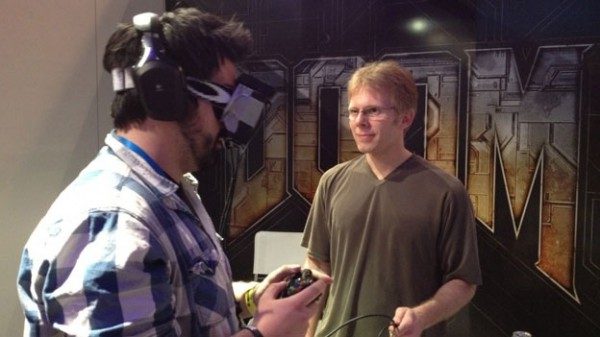
Back in August 2012, when the Oculus Rift Kickstarter began, Oculus offered multiple tiers for backers willing to part with their own money in order to support the fledgling VR HMD project. All the reward tiers that included an actual Oculus Rift Developer Kit (the HMD itself) also included a copy of the then yet-to-be-released Doom 3: BFG. The title had been used by John Carmack himself in the now famous ‘Magic Hat’ demos given at E3 back in 2012 and was for a time the new HMD’s ‘killer app’. Doom 3: BFG launched in October 2012 without Oculus Rift support. It was expected that an update would be issued when the Rift launched to add virtual reality support.
When we launched the Kickstarter campaign, we said we’d bundle a copy of DOOM 3 BFG Edition with each development kit as an extra “Thank you.” Unfortunately, we’ve been informed that DOOM 3 BFG Edition will not support the Rift development kit by the time we begin shipping.
No further details as to why the game was so very suddenly unavailable, nor if/when it would be ready for the Rift.
Perhaps the BFG team were unhappy with the implementation and felt it wasn’t ready for even developer consumption? Perhaps the sheer number of Doom 3 copies required to fulfill the Kickstarter rewards became too much for publisher Bethesda to fulfill (although why now)? Perhaps the commercial promise of owning the IP to the most famous Oculus Rift enabled title was too tempting to resist? Frankly, we may not know for some time, if ever.
To Oculus’ great credit (and we suspect substantial financial debit) they’ve given Kickstarter backers three options to compensate for this unexpected turn of events:
– $20 Steam Wallet credit, perfect for buying your next game on Steam (including DOOM 3 BFG Edition without Rift developer kit support if you still want it).
– $25 Oculus Store credit, which can be applied to future purchases at the Oculus Store including Oculus Latency Testers, new Oculus t-shirts, and more Rift development kits.
– A full refund for your pledge. If you’re unhappy with the options above, we completely understand. Email us at support@oculusvr.com, and we’ll be happy to discuss your specific order or refund your pledge in full.
Again, the advise to early Kickstarter backers that you choose your alternative reward as soon as possible as every indication is that Oculus are due to begin processing these orders imminently.
Dev Kits Likely to Ship Imminently
On the bright side however, the update email also urges early Kickstarter backers to ensure their shipping address details are up to date and complete:
Assuming you’re in the first batch of development kits to ship out, the next 24 hours are your absolute last chance to update your shipping address.
Please visit https://oculusvr.com/sales/ one last time to make sure everything’s up to date! Once we begin processing your rewards, your shipping address will be locked.
There is speculation as to exactly how many units this ‘first batch’ comprises. Current best guesses (based on previous Kickstarter updates) is around 5000 Oculus HMDs. Thanks to some fairly painstaking stats gathering by the community, order numbers do indeed seem to be relative to when the pledge was made. Establishing whether your order number guarantees you a unit from the first batch is, at best, an educated guess. The latest Oculus Rift shipping schedule is as follows:
Kickstarter orders for unassambled dev kits (limited run of 100 units): Unkown
First batch of Kickstarter orders (5,000 units): Mid-March
Remaining batch of Kickstarter orders (2,500 units): Mid-April
Direct pre-order through official website: Late April
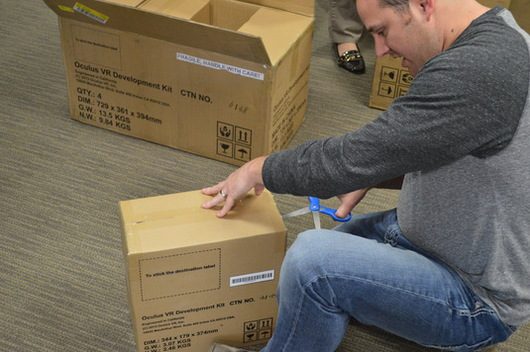
Brantlew of Oculus opens one of the very first Oculus units, direct from the factory in China
Either way, it now seems certain that Oculus’s promise to have dev kits in at least some developer’s hands by the time GDC 2013 rolls around will be fulfilled. The Oculus has hinted that GDC will see new developer showcases for the Rift. We know Valve intend to discuss VR development this year, specifically regarding Team Fortress 2, as to who else has existing announcements up their sleeves, we’ll have to wait and see.
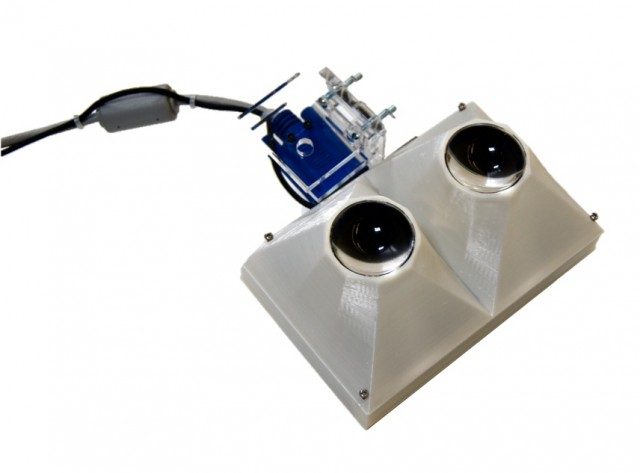
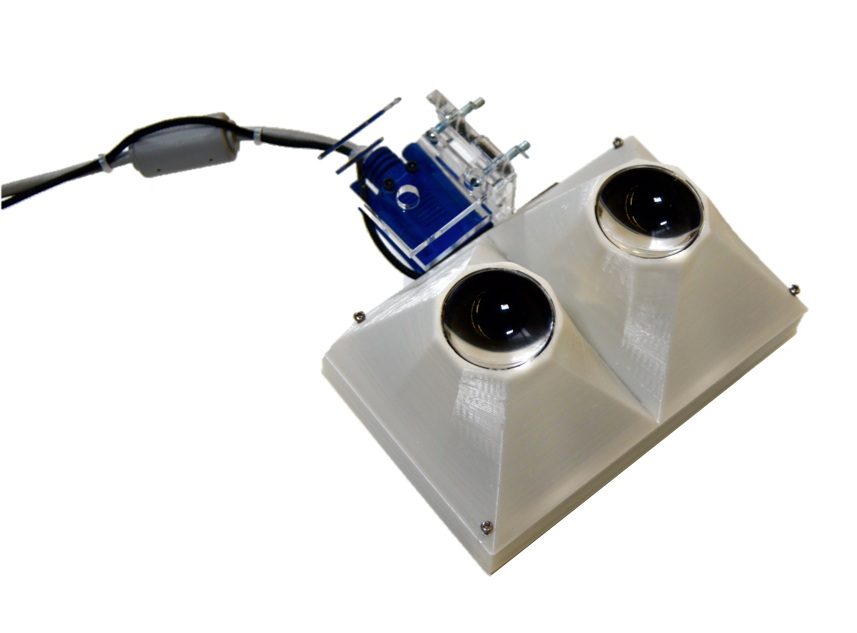
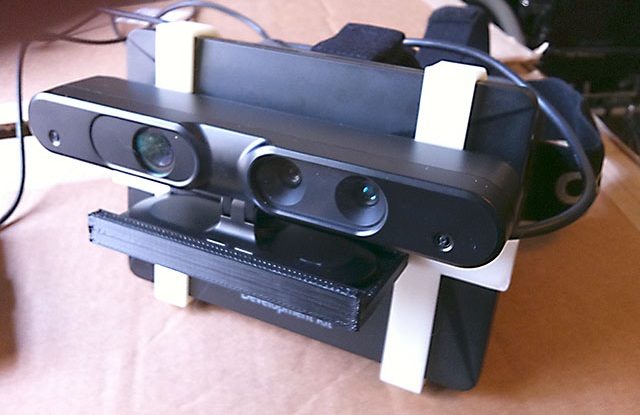
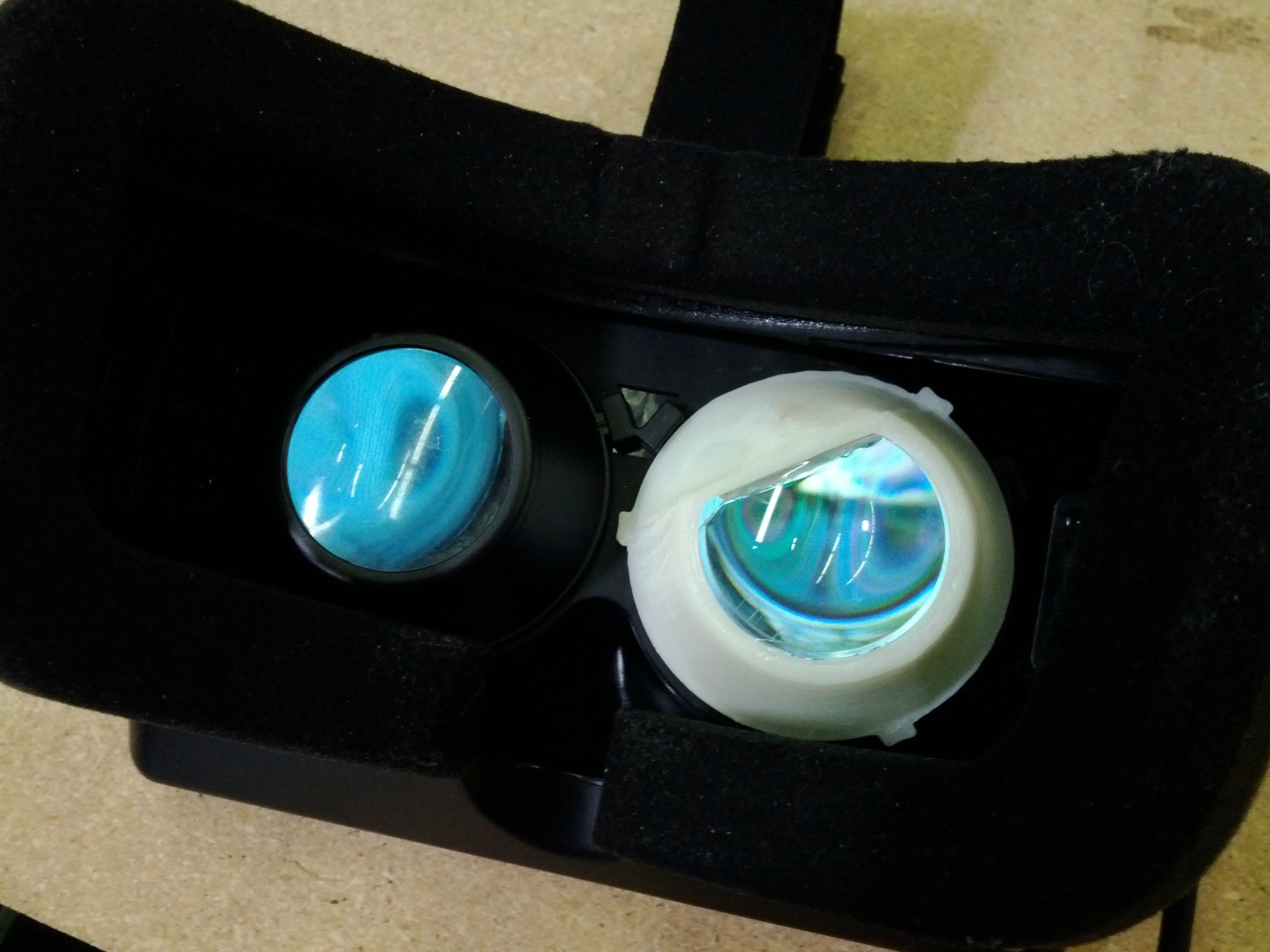
The University of Southern California’s ‘MxR’ Lab today launched an ‘open source’ DIY virtual reality website. The lab is making freely available many of their innovative virtual reality hardware and software projects. Users can download schematics to 3D print virtual reality hardware and follow the provided guides to put together head mounted displays and more. The lab is also making available several hardware modifications for the Oculus Rift which can be 3D printed, including a forward-facing stereo camera mount and an eyecup modification to allow users to get closer to the display.
The goal of the DIY VR site is to further the development of virtual reality by getting hardware and software freely into the hands of anyone that wants to build with it.
Build Your Own DIY VR Headset with 3D Printing
One of the projects available is the Socket HMD, a 90-degree field of view head mounted display which the Oculus Rift is largely based on. A housing for the Socket HMD, which has been employed by Project Holodeck, can be 3D printed with plans from the site. Instructions from the site tell you which additional components to purchase, and how to put the HMD together.
Oculus Rift Mods
Three interesting modifications for the Oculus Rift developer kit are also available:
The first of which is a mount that attaches to the front of the Rift. The mount makes it easy to attach stereo cameras, like the Microsoft Kinect, which can be used for optical tracking, spatial mapping, and more.
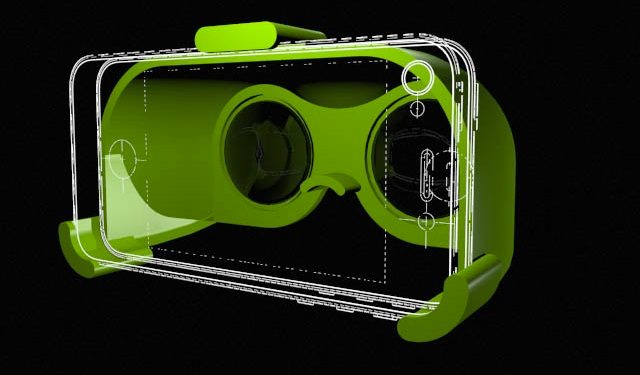
The lab is also making available its VR2GO low-cost immersive viewer. This is a 3D printed HMD case in which you mount your smartphone, to utilize its display and motion sensors, to turn it into a low cost head mounted display. Currently VR2GO schematics are available for the iPhone 4/4S, iPhone 5, and iPod Touch (5th generation), though anyone is welcome to modify the existing design to fit other smartphones.
MxR Unit Package for Virtual Reality Development and FAAST
If the above wasn’t enough, the good folks at the MxR Lab are even offering up a custom Unity package full of scripts, scenes, and more to assist in virtual reality software development, especially for iOS and Android devices. With it you can quickly create stereoscopic 3D scenes, enable distortion, access smartphone sensor data, and more, all without having to write you own code from the ground up.
FAAST is middleware to facilitate integration of full-body control with games and VR applications using either OpenNI or the Microsoft Kinect for Windows skeleton tracking software. FAAST includes a custom VRPN server to stream up to four user skeletons over a network, allowing VR applications to read the skeletal joints as trackers using any VRPN client. Additionally, the toolkit can also emulate keyboard input triggered by body posture and specific gestures. This allows the user add custom body-based control mechanisms to existing off-the-shelf games that do not provide official support for depth sensors.
You can see a prototype game based on FAAST in action here:
MxR’s Open Source Initiative
Mark Bolas
David Nelson
Mark Bolas and David Nelson of the USC’s MxR Lab are two of the folks behind this excellent DIY VR resource, which they are calling the “Open Source Initiative”
Bolas is the director of the MxR Lab as well as an Associate Professor at USC. Prior to MxR, he founded Fakespace Labs which made the famous Wide5 head mounted display (an impressive but cost-prohibitive unit). He spends much of his time at the lab developing hardware and software to enable immersive virtual reality experiences. Previously we’ve seen him using perceptual illusions to create infinite virtual spaces. Bolas was also featured in the Oculus Rift Kickstarter video (a homage to the origins of the Rift in the MxR Lab, and Bolas’ involvement in project) noting that “the Rift is taking years of virtual reality research and putting it into a package that everyone can use.”
“We went open, because it was the only way to truly disrupt the HMD marketplace. We believe it has just gotten started and can not wait for people to take all these designs we have on our site to see what they will do with them,” Bolas said about the open source initiative.
David Nelson is the Special Project Manager of the MxR Lab and has a background in narrative and documentary film production. He keeps projects on track and helps manage the lab.
Bolas and Nelson are attending the IEEE VR conference this week in Orlando, Florida and have a 3D printer on hand to print hardware for attendees and showcase the newly open sourced projects.
In addition to pushing to get these projects into the hands of the public, both have made significant contributions to the projects that you’ll find on the site. Go check it out!
The first Oculus Rift developer kits are but a few weeks away from landing in the hands of eager developers. Oculus continues to build excitement for the release; this week they were at the annual SXSW and held a virtual reality panel with developers Cliff Bleszinski (formerly, Epic Games), Chris Roberts (Star Citizen), and Paul Bettner (Words With Friends). Oculus VP of Product, Nate Mitchells narrated the panel.
The Oculus Rift is an upcoming head mounted display (HMD / VR headset) for virtual reality gaming. In August 2012, a Kickstarter campaign pulled in an impressive $2.4 million in support for the developer kit. The company is hard at work building up the Oculus Rift SDK and no doubt working on the Oculus Rift 2.0 consumer version due out hopefully in 2013. The first batch of Oculus Rift developer kits are expected to reach developers by the end of this month.
Thanks to Rod Furlan, we’ve got a great DIY Oculus Rift guide to share with you. Inside you’ll find a parts list and all of the steps necessary to build your own Oculus Rift head mounted display / VR headset.
Rod is an investor, artificial intelligence researcher, quantitative analyst, and Singularity University alumni. You can learn more about him at his blog, Bit Cortex.
The Oculus Rift is a low-cost, high-performance virtual reality headset that is well positioned to usher VR into the mainstream. It is by all measures a remarkable product with an ambitious agenda – which is to change the way we relate to the games we play by completely immersing us into the game world.
If you have never used a head-mounted display (HMD) / VR headset you are in for an experience you will not easily forget. Basically, the Rift presents you with a very large screen that covers most of your field of view while blocking all light coming from the real world. The Rift is also equipped with a high-performance tracker that measures your head movements to update what you see accordingly – for example if you turn your head to the left, the image updates to show what is to your left in the virtual world. In essence the experience of wearing the Rift is similar to having your head surrounded by a spherical screen.
What most people don’t know is that the Oculus Rift started as a do-it-yourself project by Palmer Luckey, a single talented individual with a vision for a future where virtual reality is both accessible and pervasive. His remarkable journey is a great example of what happens when passion meets determination towards realizing an idea whose time has come. After a wildly successful Kickstarter campaign, the developer version of the Oculus Rift is on track for an initial delivery this month!
If you missed the Kickstarter, you can still order the Oculus Rift development kit here.
Or if you are like me and would like to carry on the DIY virtual reality torch, you can follow the instructions on this guide to build your own VR headset inspired by the Oculus Rift.
The goal isn’t to compete with the Oculus Rift in any way. The Rift developer kit is very fairly priced and you will not save any money by building your own. This DIY HMD is also unlikely to be directly compatible with the official Rift so if you want something that “just works”, you should opt for the official model instead.
Speaking frankly, the Oculus Rift is the best thing to happen to VR in decades and the short-term future of VR is somewhat coupled with the future of the Rift. If the Oculus Rift succeeds, we may soon live in a world where VR is pervasive. If they fail, this short renaissance may end up being yet another false start for mainstream VR.
If you don’t want this to happen we must do whatever we can to support the Rift. Here are a few things you can do:
Develop great applications for the Rift, you can start now, there is no need to wait for the official SDK.
Evangelize: write a blog post on why you are excited about the Rift, tell all your friends about it, contact your favorite game developers about adding Rift support, etc.
If you can afford it, you can also buy a Rift developer kit for a game developer that isn’t already onboard. Game developers love free stuff!
So why should you build your own HMD?
You love VR and you want immersive reality replacement right now!
You are a curious person that loves to build things and wants to learn more about VR.
You want to become the next VR entrepreneur extraordinaire and building your own HMD sounds like a great way to learn the basics.
You never built anything and want an easy project to start with.
You want to contribute to the emerging DIY VR community. Matching the Rift’s specifications is just the beginning, there are already several other projects based on designs that outspec the Rift.
1. Getting Started with the DIY Oculus Rift
No prior experience with electronics or VR hardware is required to build your own Rift-inspired HMD following the instructions you will find in this guide.
If you are an experienced maker, you could complete this project in as little as two hours. If this is going to be your first attempt at building something, this is best seen as a fun weekend project.
Tools
[list type=”plus”]
Computer, preferably running Windows Vista or 7 and equipped with at least a low-end GPU and a HDMI video output
X-Acto knife (make sure it is sharp)
Steel ruler with a cork bottom (so it will not slide)
Printer
Black duct tape, painter’s tape, dual-sided foam tape and electrician’s tape
The pictures in this guide use a NT68674.5X board, but the exact model isn’t that important.
Make sure it comes with a power supply and a datasheet documenting all input/outputs.
(1x) LVDS cable to connect the display to the controller board
VERY IMPORTANT: buy the LCD screen and the controller board from the same seller and make sure to ask the seller to send you this cable pre-assembled. LVDS cables can be very hard to build if you don’t have plenty of soldering experience.
(2x) 2″ 5x pocket loupe magnifier with Aspheric Lens
The Google Glass interface has been detailed on video at the annual SXSW event for the first time. The company also showed off early native and third-party Google Glass apps including Gmail, Evernote, New York Times, and more.
SXSW Interactive (South by South West) is festival that’s been held yearly in Austin, Texas since 2007. It is a well known showcase for interactive technology, startups, and social media.
Google held developer presentation yesterday to detail the Google Glass interface and third-party apps in public for the first time. I’ve tracked down some footage of the demo which you can see below.
Google Glass is an exciting forthcoming wearable display produced by the company’s semi-secret ‘Google X’ lab. Units first became available for pre-order to attendees of the Google IO 2012 conference for $1500. Recently Google ran the #ifihadglass contest where they asked what people would do if they had Glass. That contest is now closed and winners will be picked soon. The Google Glass consumer release date is expect to be toward the end of 2013.
The duration and angle of the available videos makes me think that Google didn’t officially sanction any video recording.
Google Glass Interface Demo
Timothy Jordan
Timothy Jordan, who is a Senior Developer Advocate at Google, gave the presentation using a development version of Google Glass which was hacked to allow video output. He says that the Google Glass interface output that you see is much more smooth on Glass itself. Jordan showed off some basic Google Glass features like taking photos, dictating an email, translating text through Google, and navigating the interface by swiping the side of the unit.
Google Glass appears to arrange much of its content chronologically. If you took a picture 10 minutes ago, you swipe back on the ‘timeline’ to find the photo’s ‘timeline card’, rather than looking through a photos app. Once you find it you can bring up a number of card options like share, delete, or send to a third-party app. Jordan showed how you can send a photo to an Evernote app call Skitch which sends the photo through Google to the Skitch app on your tablet, allowing you to then annotate the photo on the tablet.
Some timeline cards can be organized into ‘bundles’ which are stacks of cards that you can dig into. Jordan showed the weather card as an example. Tapping into the bundle allows the user to see a three day forecast. Swiping down returns to the timeline.
According to CNET, Google also showed off The New York Times, Evernote, Skitch, and Path apps on Google Glass.
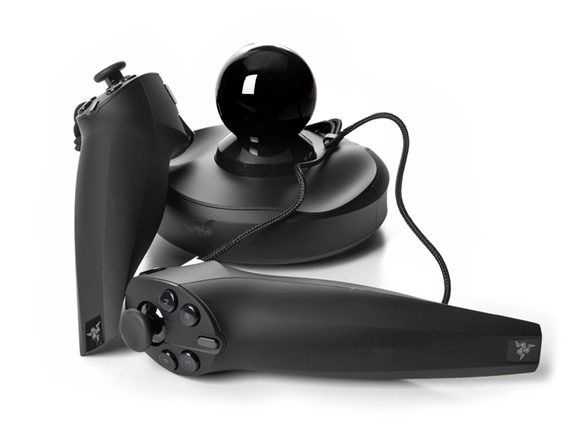
While virtual reality control schemes are still being explored, many developers have turned to the Razer Hydra as an effective input for use with the Oculus Rift. The Hydra uses magnetic tracking to determine the absolute position and orientation of two Wiimote-like controllers held in the player’s hand. The controllers also have joysticks and buttons which make for a highly flexible virtual reality input system. Today-only you can buy the Razer Hydra for $40 from my favorite deal-a-day site, Woot.com.
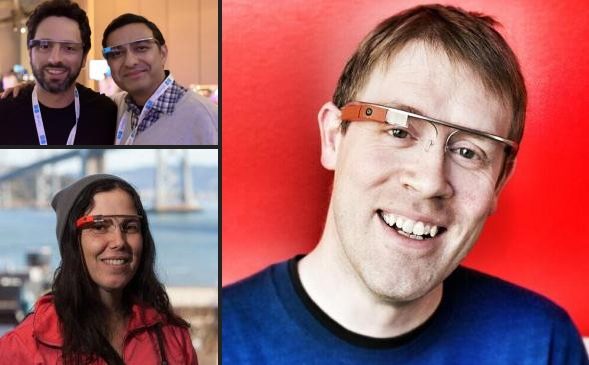
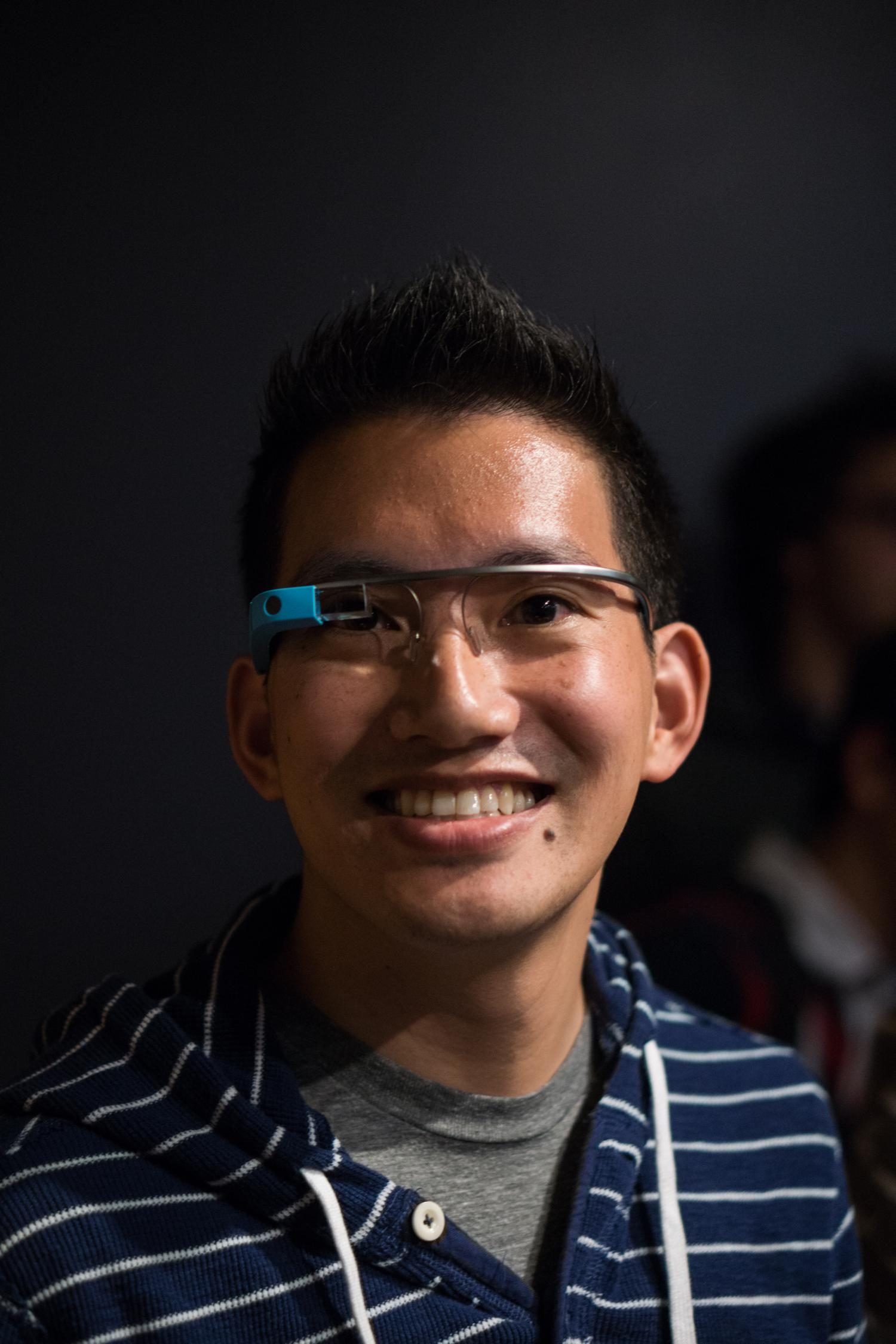
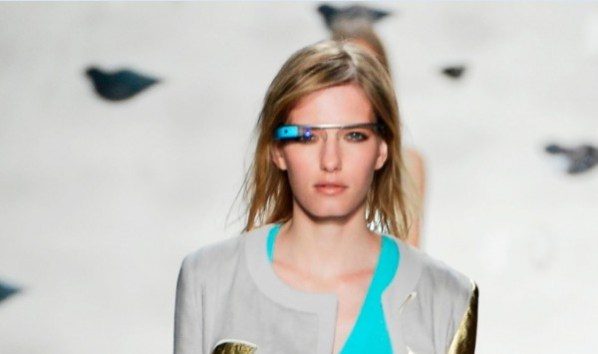
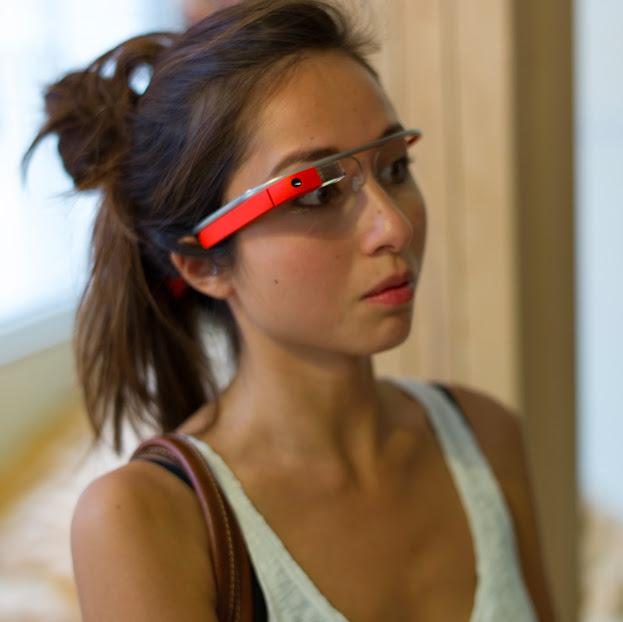
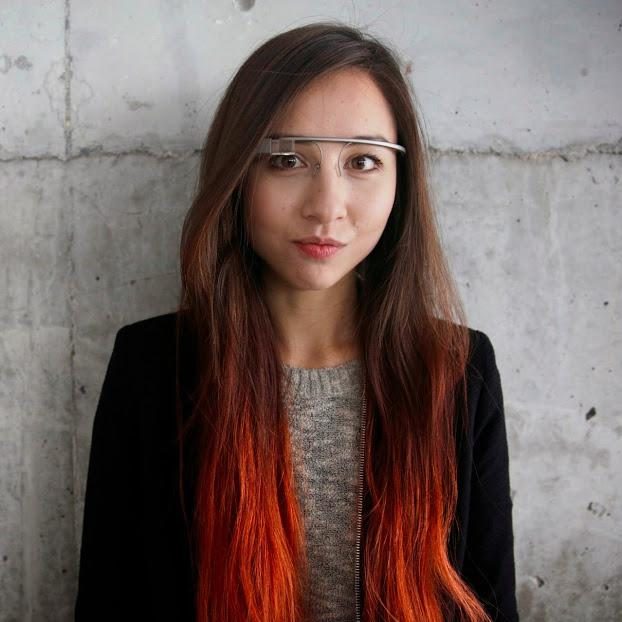
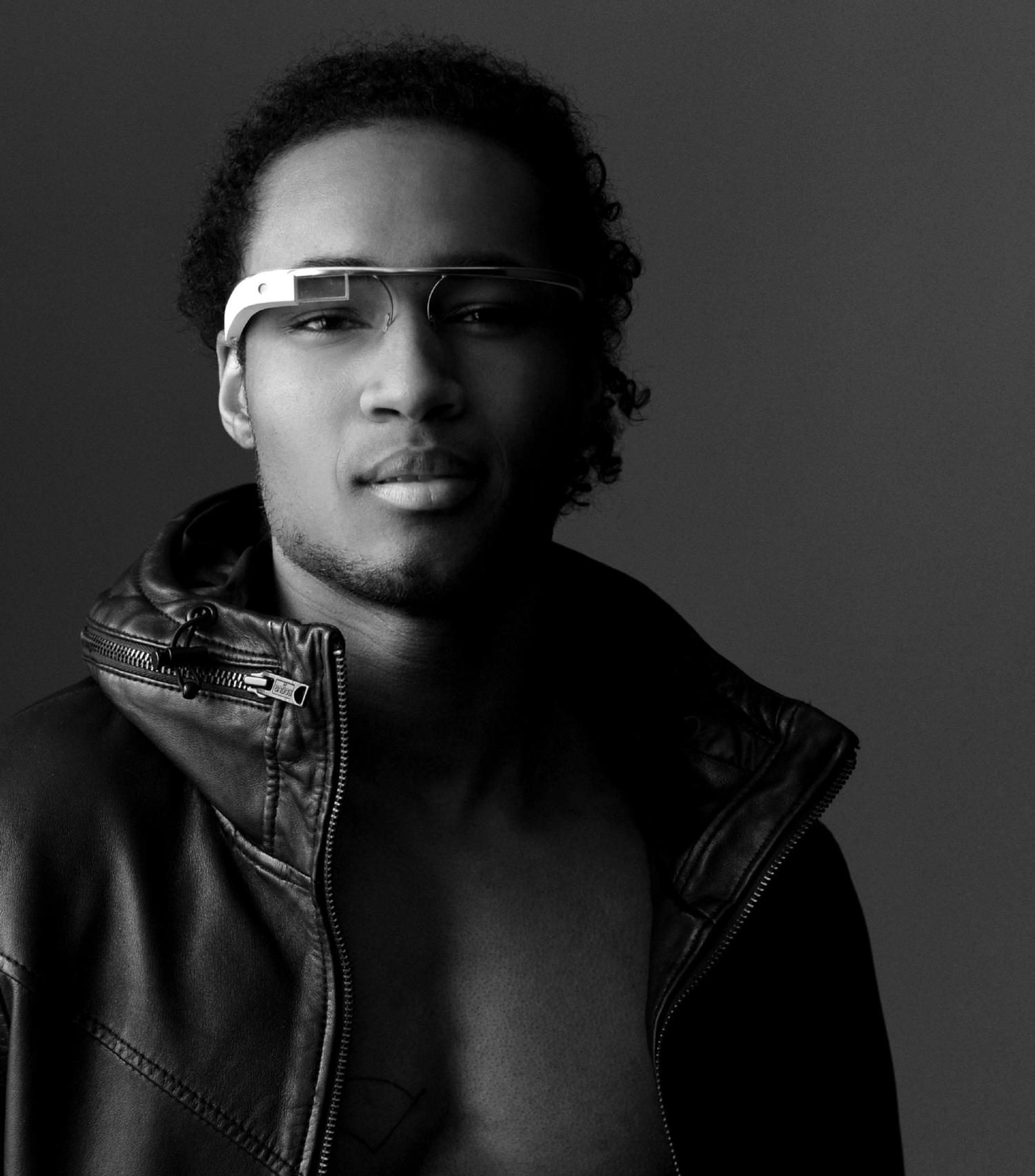
Can’t get enough Google Glass? After combing the depths of the web, I bring you a Google Glass gallery of 100 unique pictures for your enjoyment. Ok maybe it’s not every Glass photo, but definitely all of the good ones! I painstakingly sourced every photo (where possible), roll over the photo to see the source link. Click then click again on the next page to get high resolution versions of each photo (some are higher than others).
Have a photo to add or want a picture removed? Send me link at ben at roadtovr.com!
Google Glass is an exciting forthcoming wearable display produced by the company’s semi-secret ‘Google X’ lab. Units first became available for pre-order to attendees of the Google IO 2012 conference for $1500. Recently Google ran the #ifihadglass contest where they asked what people would do if they had Glass. That contest is now closed and winners will be picked soon. The Google Glass release date is expect to be toward the end of 2013.
Funny stuff aside, there’s a lot to be discussed about what it will mean to have such quick access to information. A few generations after Glass we’ll likely have instant access to Wikipedia which will extend our knowledge beyond our own brains… but that sounds like a topic for another day!
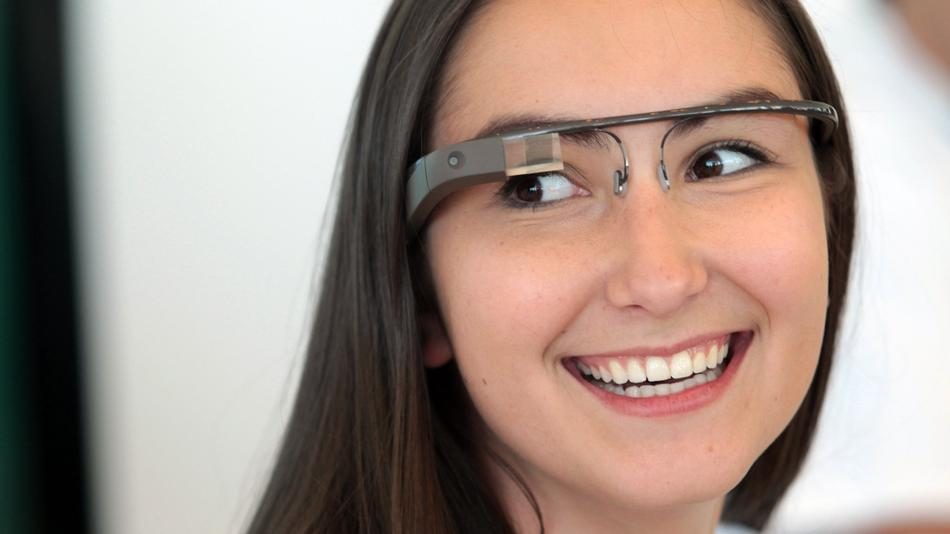
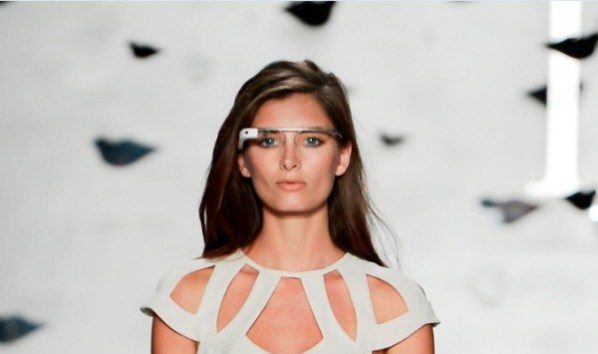
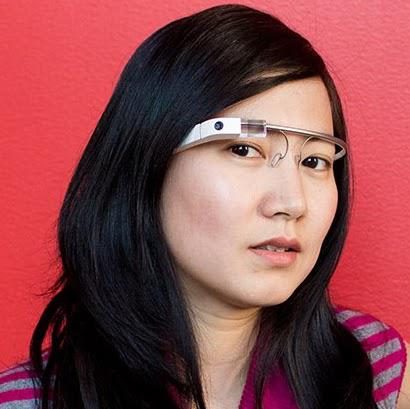
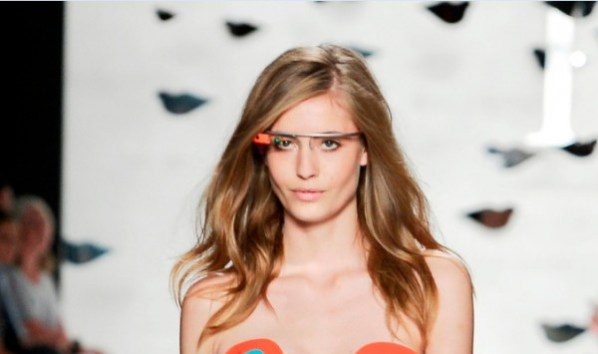
In the mean time, how do you think girls will use Google Glass?
Battlefield 3 could be getting Oculus Rift support along with future titles from EA-owned developer DICE. According to a recent internship posting, EA and DICE are looking for someone to “investigate and implement support for Occulus Rift SDK in the Frostbite Engine” which powers many of the company’s games, including Battlefield 3. MTBS3D spoke with Frostbite Creative Director Frank Vitz who says he’s “really eager to see how the Oculus Rift works with Frostbite.”
Palmer Luckey and Nikolay Tolmachev testing sensor algorithms
Oculus employee and VR enthusiast Brant Lewis (aka Brantlew) opens his Kickstarter Dev Kit
Oculus Rift developer kits will soon be leaving the Chinese factory and making their way into the hands of eager developers. What’s happened since our last news bits update? Oculus says that shipping is going according to schedule. They’ve also confirmed that pilot run units were recently send out to top developers. Oculus has made it into the New York Times, and famed developer Chris Roberts swung by Oculus HQ.
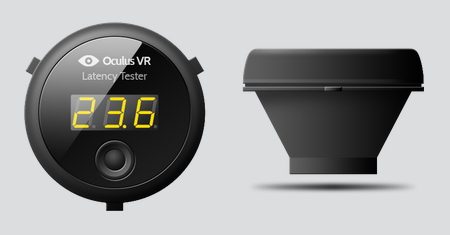
Oculus VR Inc announced the Oculus Latency Tester in the company’s latest update. The device, which Oculus has been working on in the background, will allow developers to rapidly iterate during development of their virtual reality games and software by making latency testing quick and easy. The company, which expects the unit to sell for less than $100, is now taking ‘reservations’ for the Oculus Latency Tester which is sort of like a pre pre-order — it’ll secure your place in line once the pre-orders start.
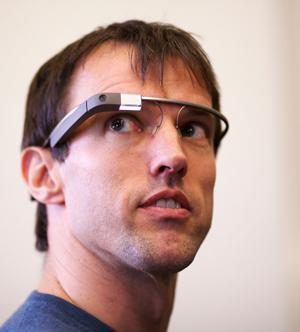
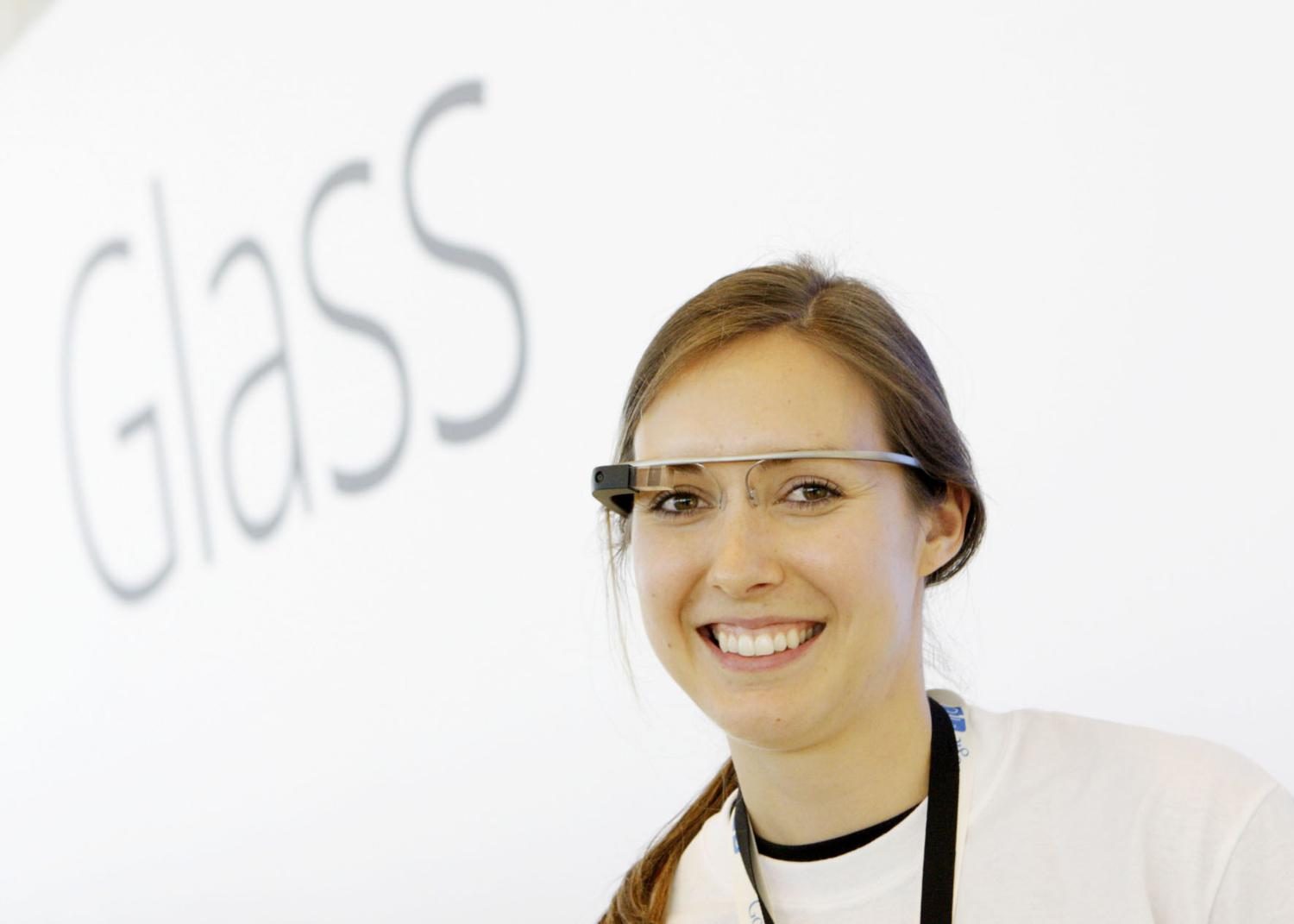
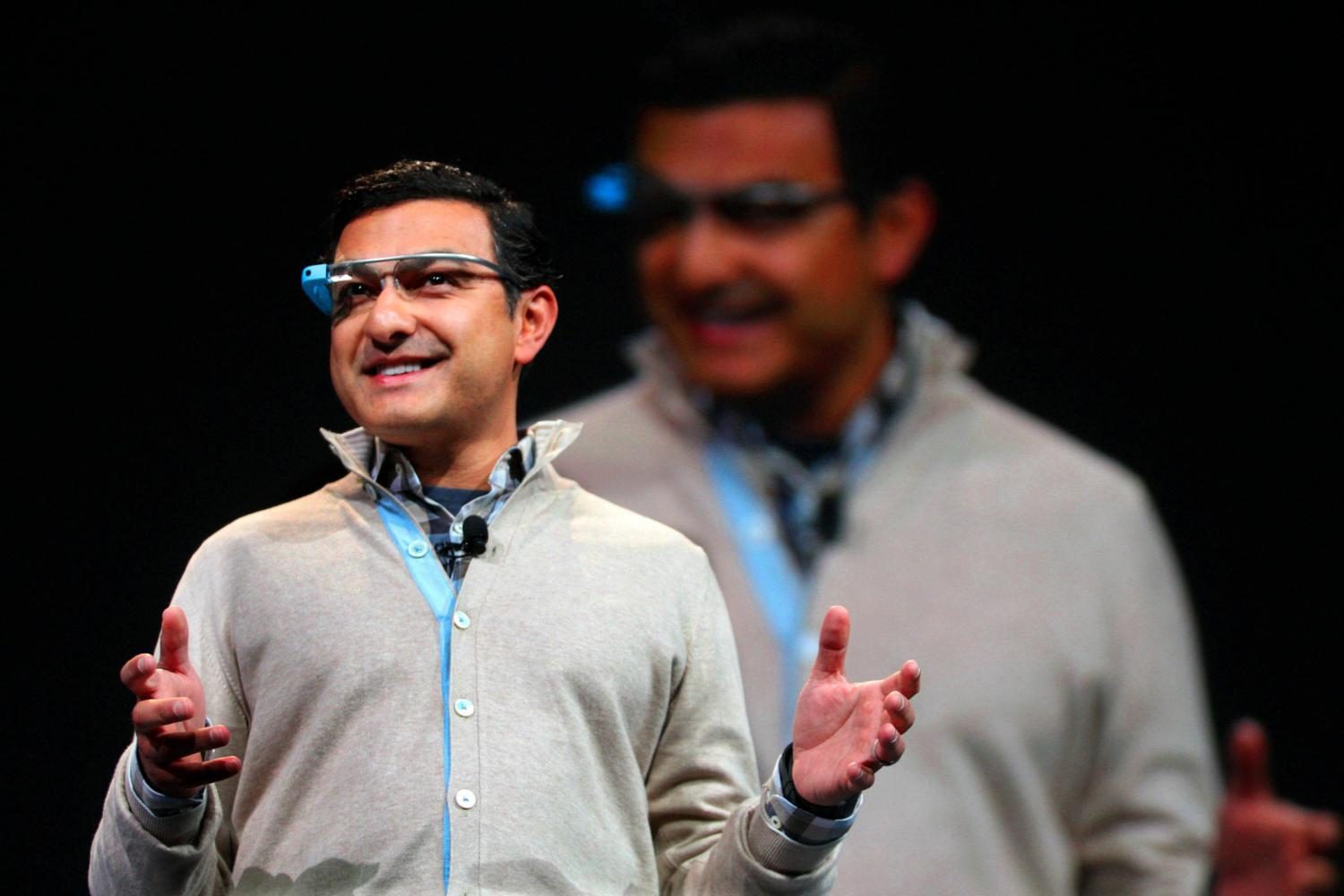
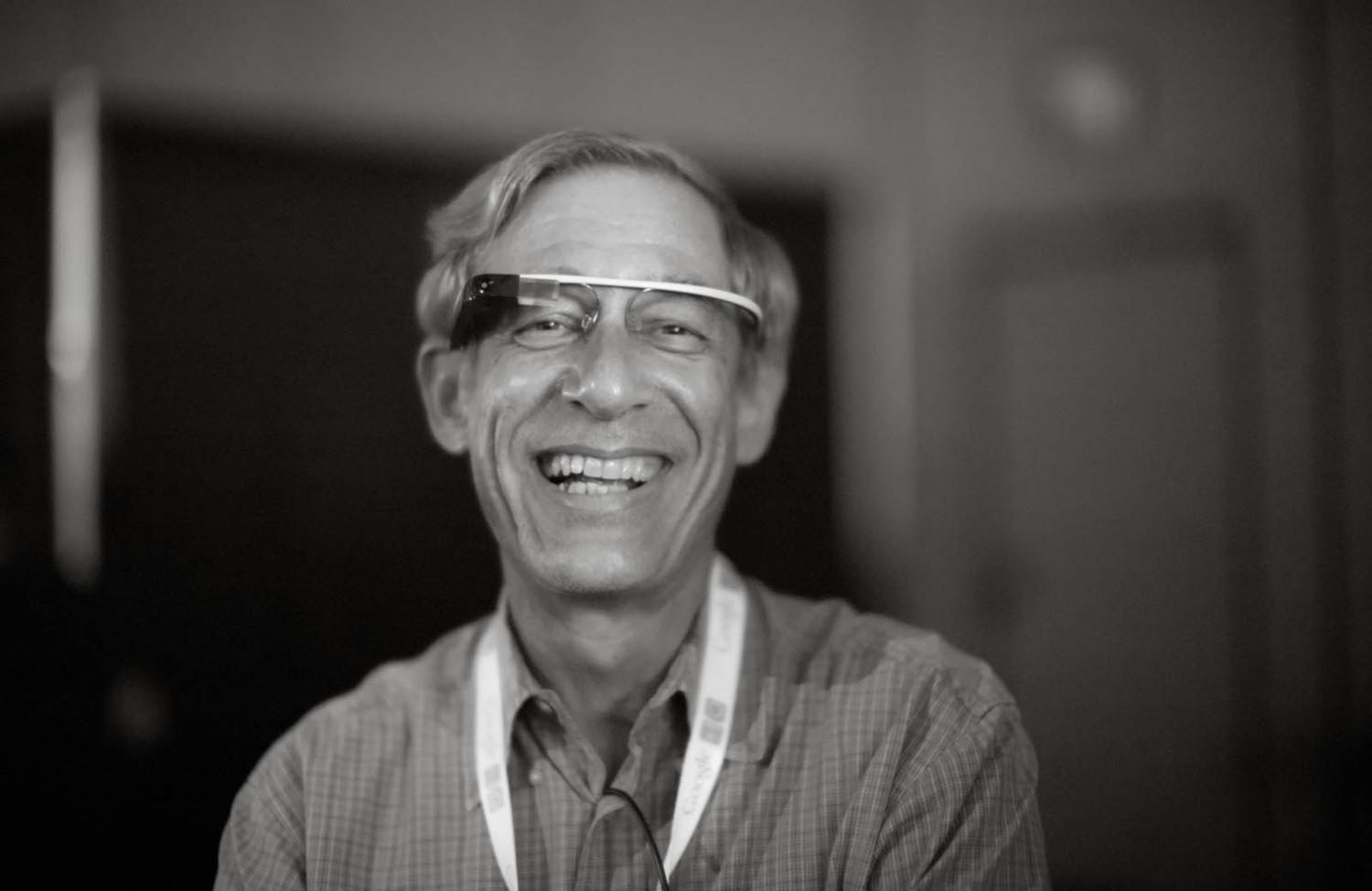
Google Glass could be the first product to take augmented reality into the mainstream. The forthcoming minimal head mounted display promises to make our interaction with technology more seamless and natural. There are many who will welcome it. There are many who will hate it. Regardless of which side you’re on, we’re synthesizing everything we’ve learned after months of following every bit of Google Glass news.
Despite a recent deluge of Google Glass news, the company has been extremely quiet regarding Glass specs. There are still big gaps in our knowledge of the device. However, there have been hints to glean along the way for those paying attention.
First I’ll start by painting the clearest technical picture of Google Glass specs from the available information:
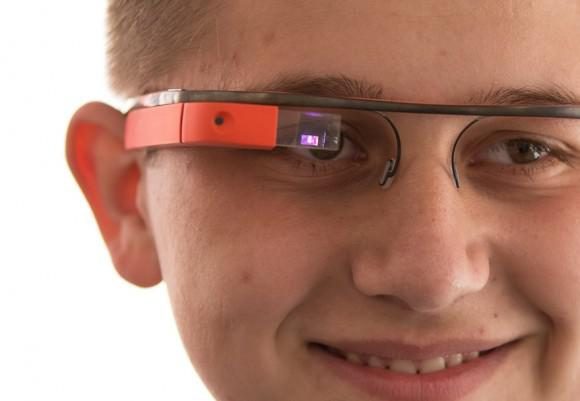
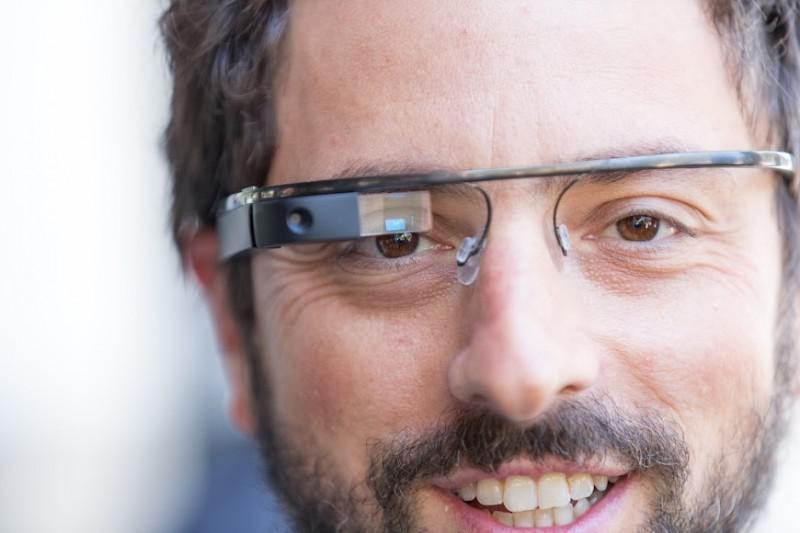
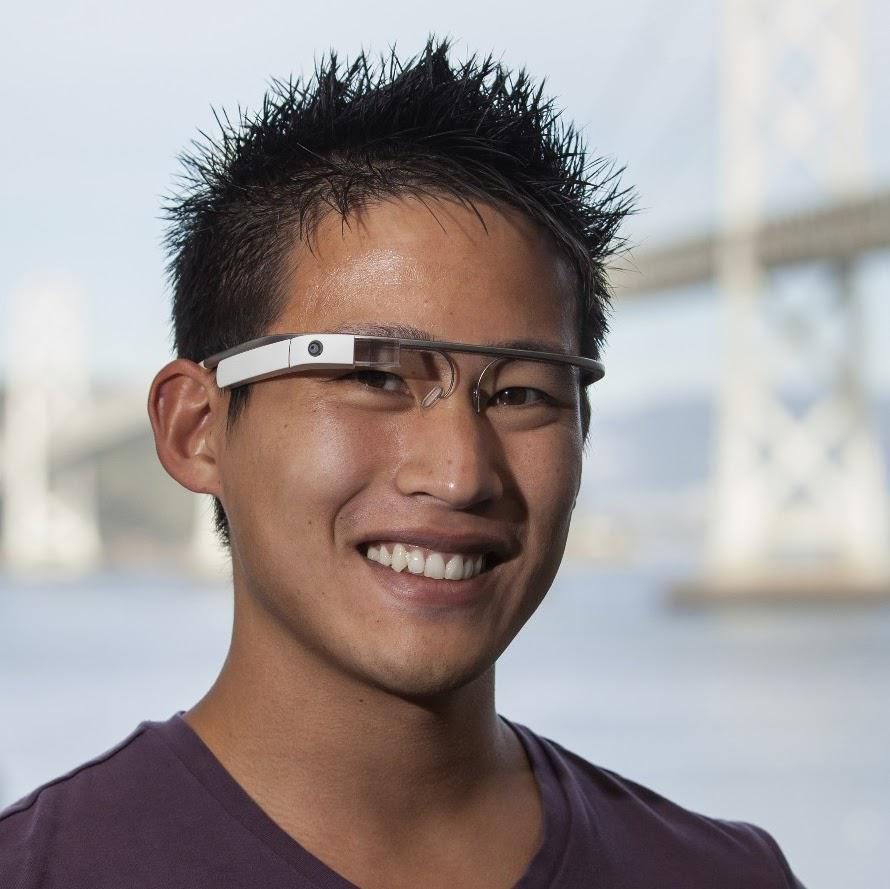
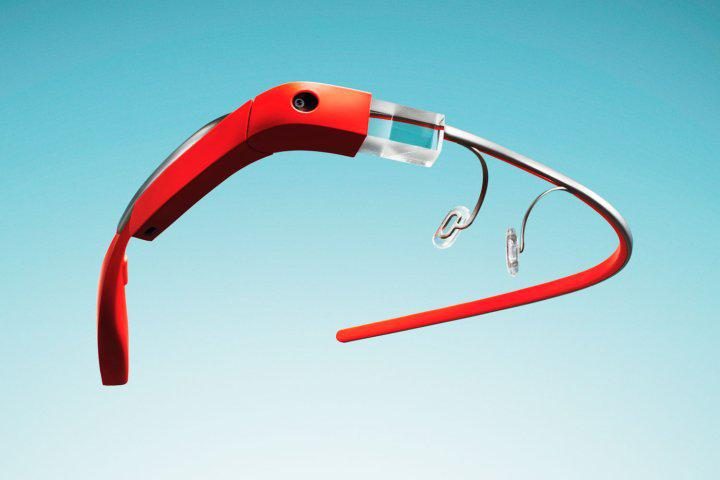
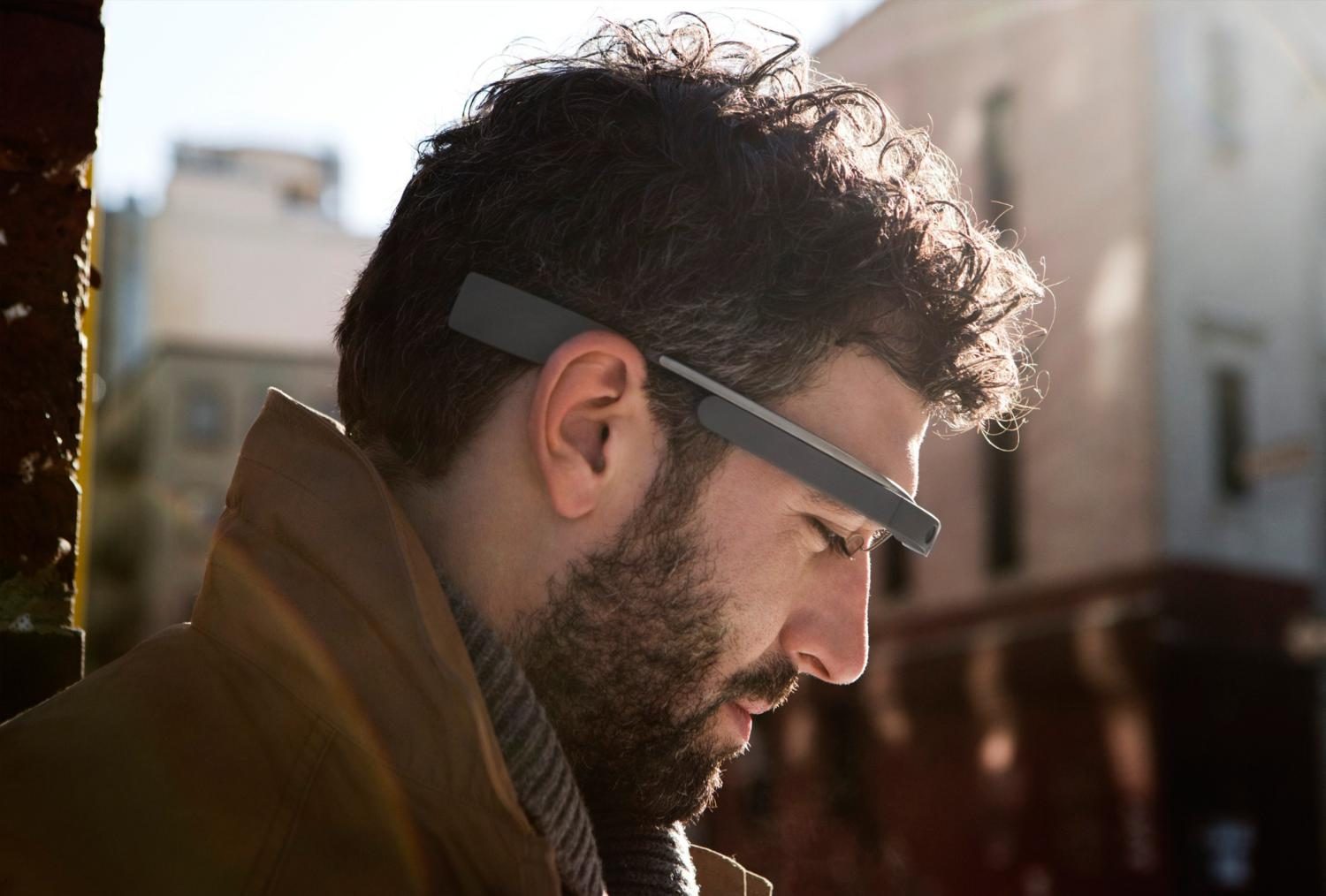
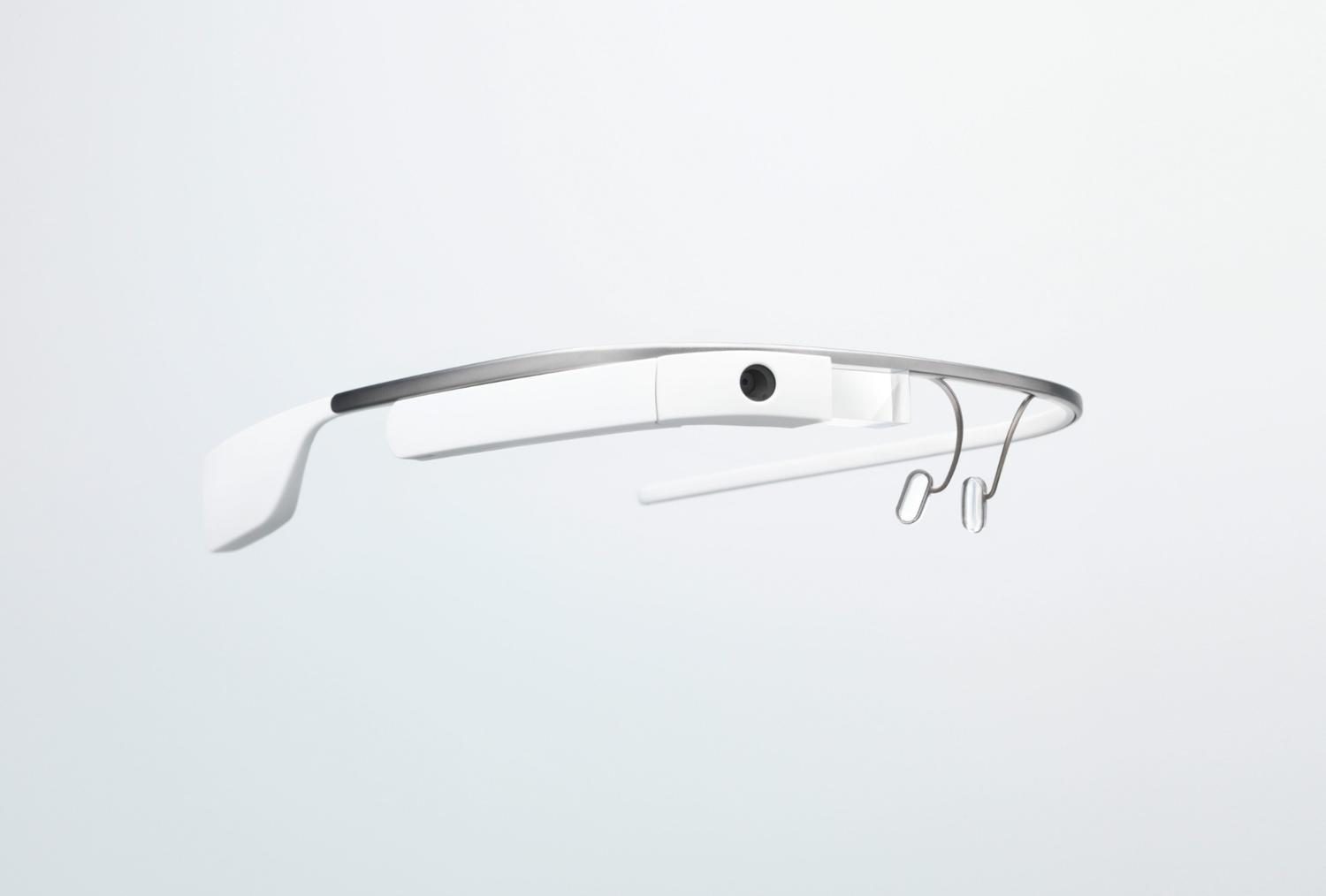
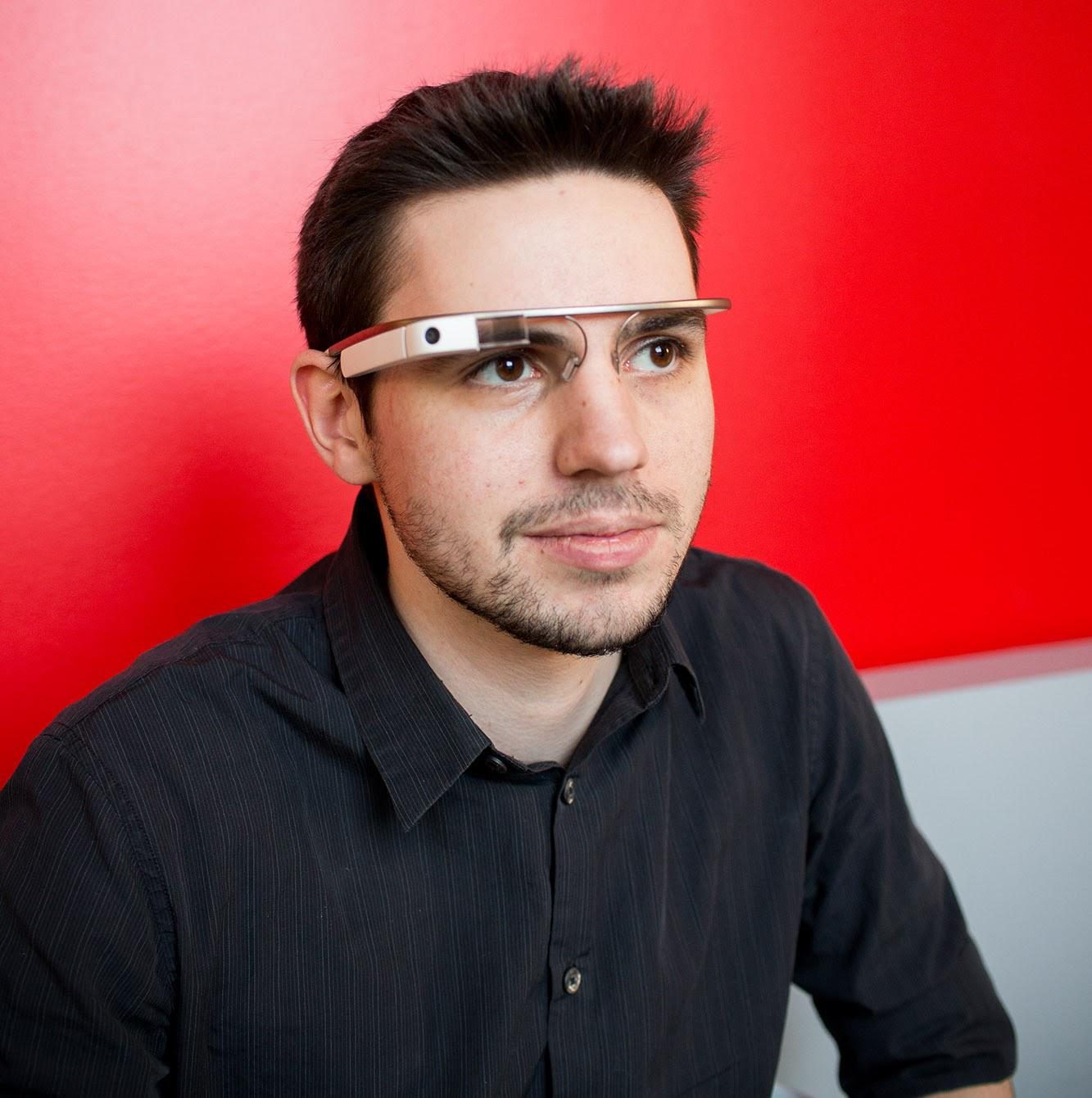
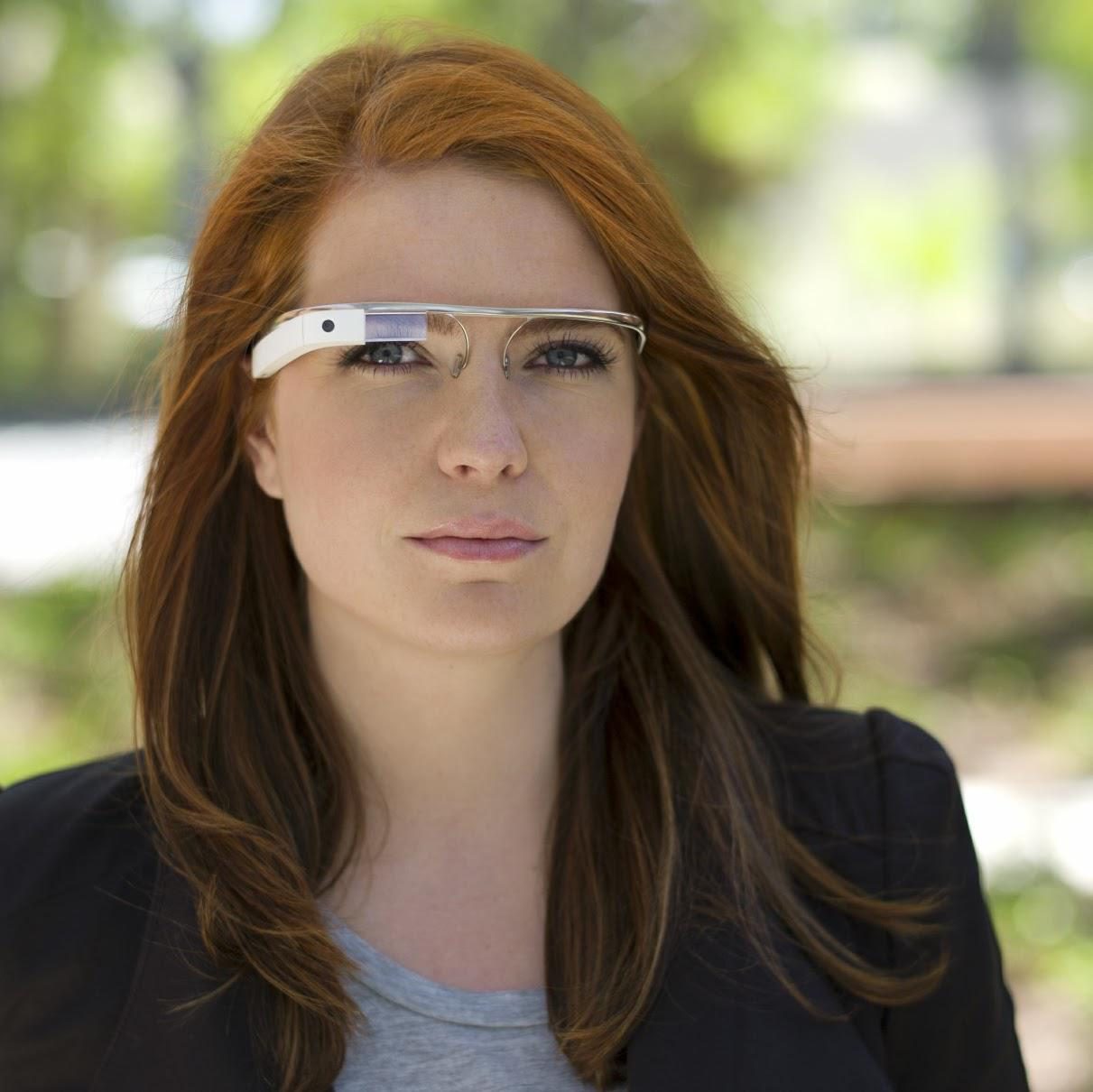
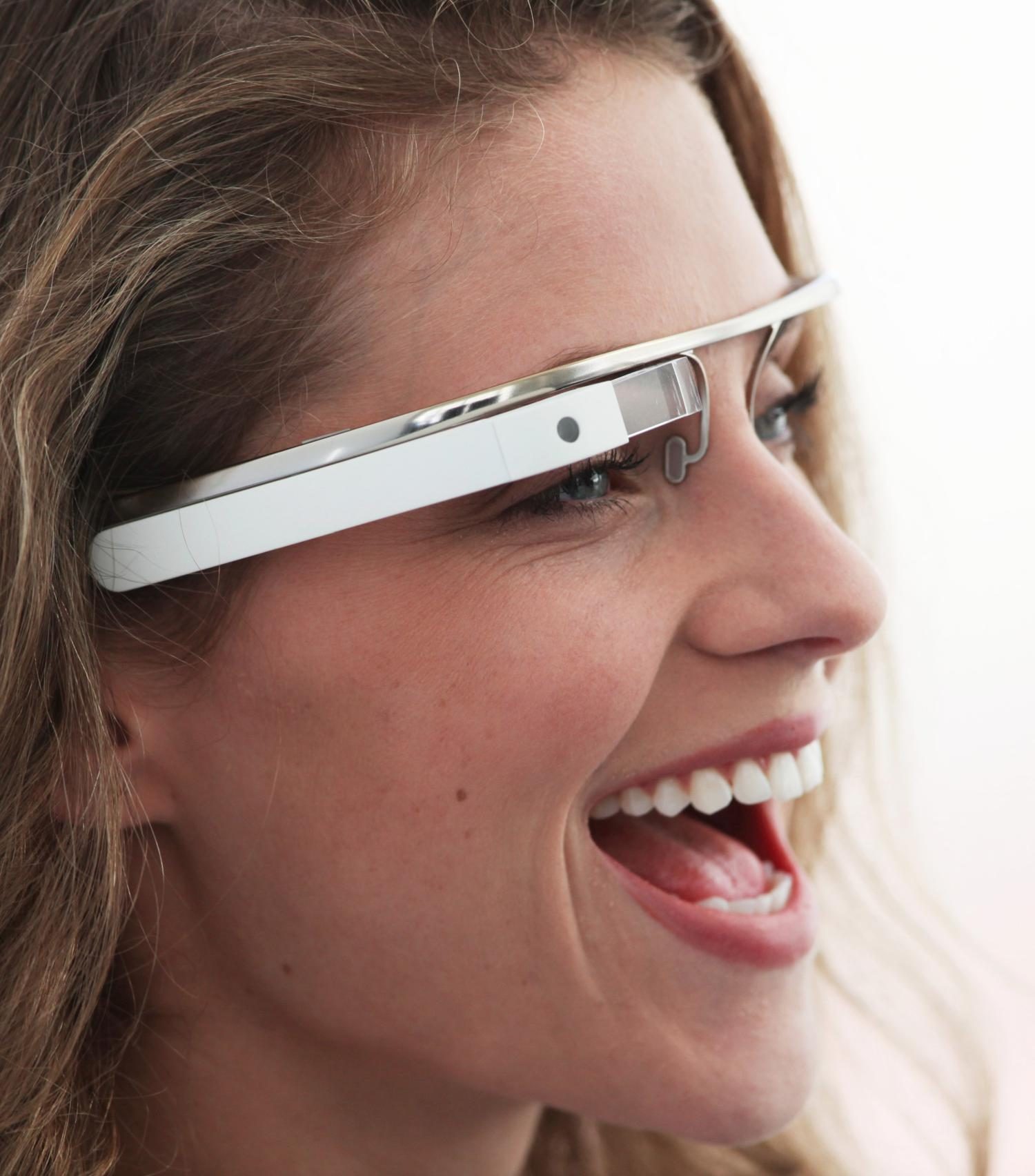
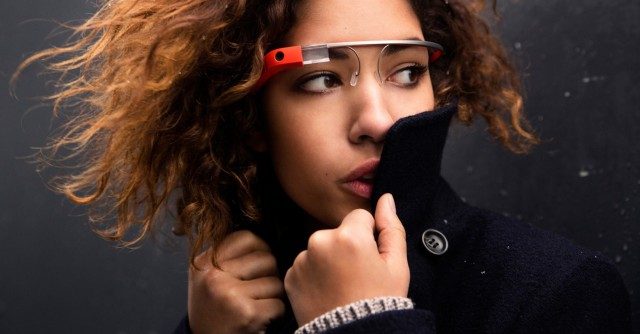
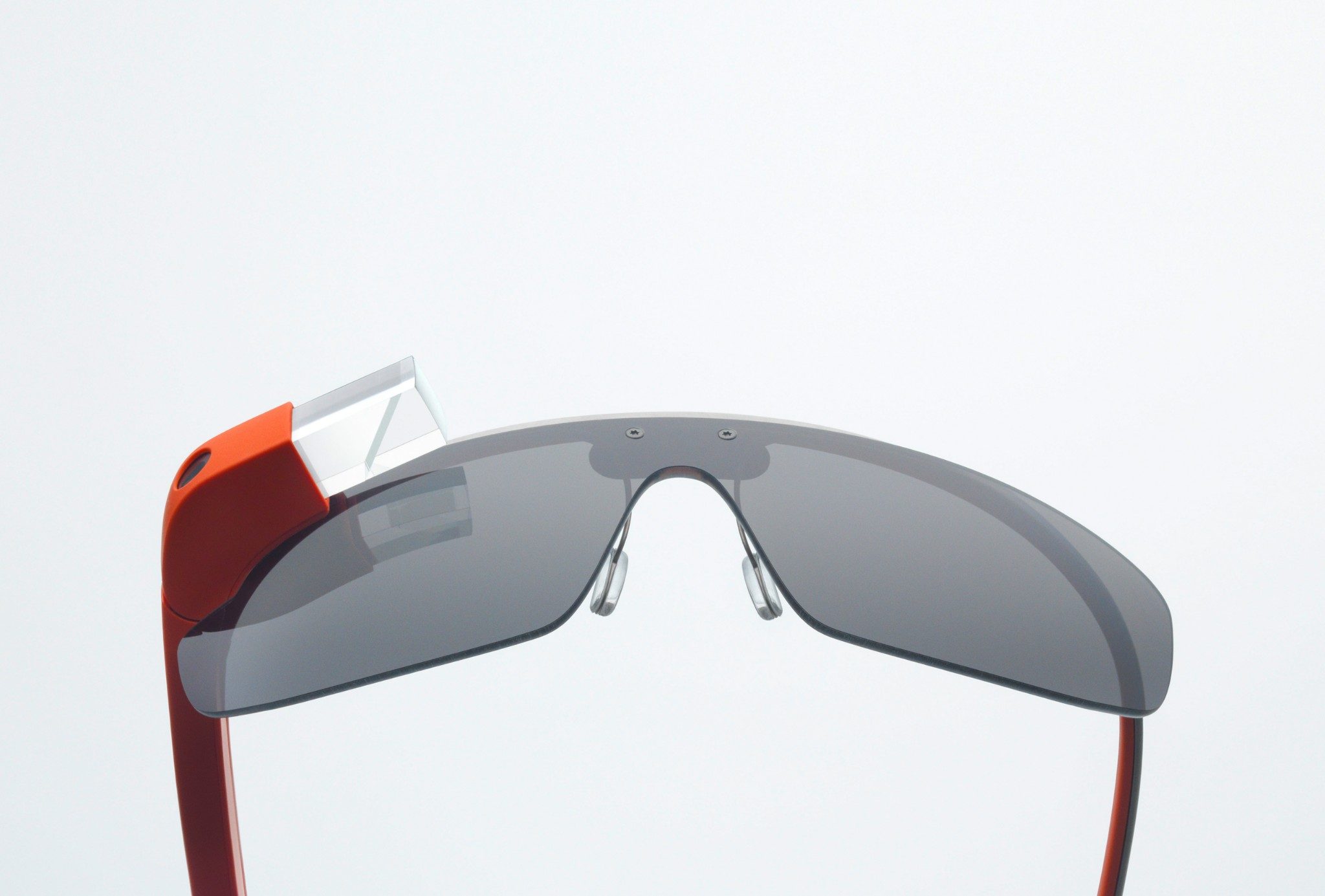
Appears to use a temple-mounted projection in combination with a prism/waveguide. Field of view is likely no higher than 15 degrees. Display appears in the top right of your vision as a transparent color image (1).
Likely an ARM processor such as those available in modern smartphones. 1GB of RAM is my best guess based on space restrictions.
Battery Life:Unspecified battery
Unless Google has struck some major battery breakthrough, expect 2-4 hours of continuous display usage, less if recording video, using WiFi, or taking photos (2).
Connectivity:WiFi, Bluetooth, and GPS on-board, but no 3G or 4G for cellular data (1)
Glass can tether to iPhone, Android, and other devices for data.
Controls: Touchpad on the side, a physical button, and voice commands (1)
“Ok Glass…” is used to start command phrases. Touchpad must be tapped to start Glass listening for command phrases and can also be tapped to make selections. Gestures on the touchpad allow you to swipe left or right to slide through lists or down to go back. Tilting your head up slowly will also prompt Google Glass to start listening for voice commands (13).
Sensors: Gyroscope, magnetometer, and accelerometer (13)(3)
One unidentified sensor rests on the inside of the projection arm, near the eye (10). An anonymous source tells us that it is neither a camera for eye-tracking or a proximity sensor to detect when glass is worn. However, SlashGear says they have a source “close to the Glass project” that says it is indeed an infrared eye-tracking camera (13). We’re still lacking corroboration on that front though.
Ports: MicroUSB seems to be the only port on Google Glass(4)
Makes us wonder how Glass will charge, maybe it’ll use inductive charging? If a MicroUSB port is present it could have support for MHL which would provide HDMI output.
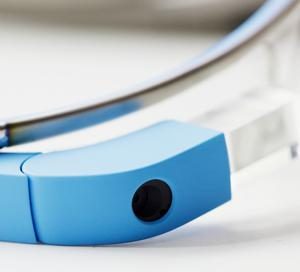
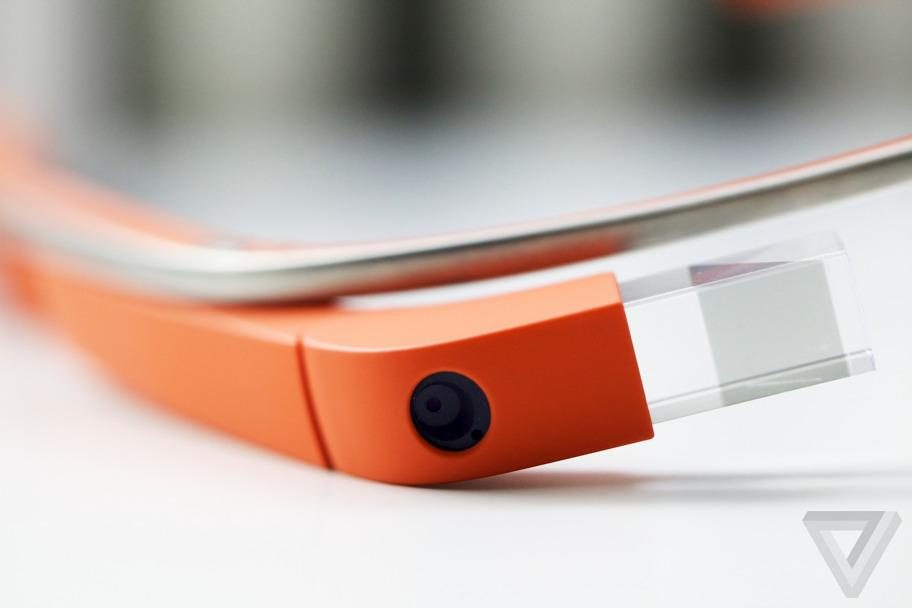
Camera: 3.1MP CMOS camera, focal length 2.8 mm, f/2.4 aperture (5), front-facing microphone appears to be just beneath the camera (11).
Technically capable of 1080p video but we’ve only ever seen 720p video from Google Glass, likely due to hardware restrictions (6).
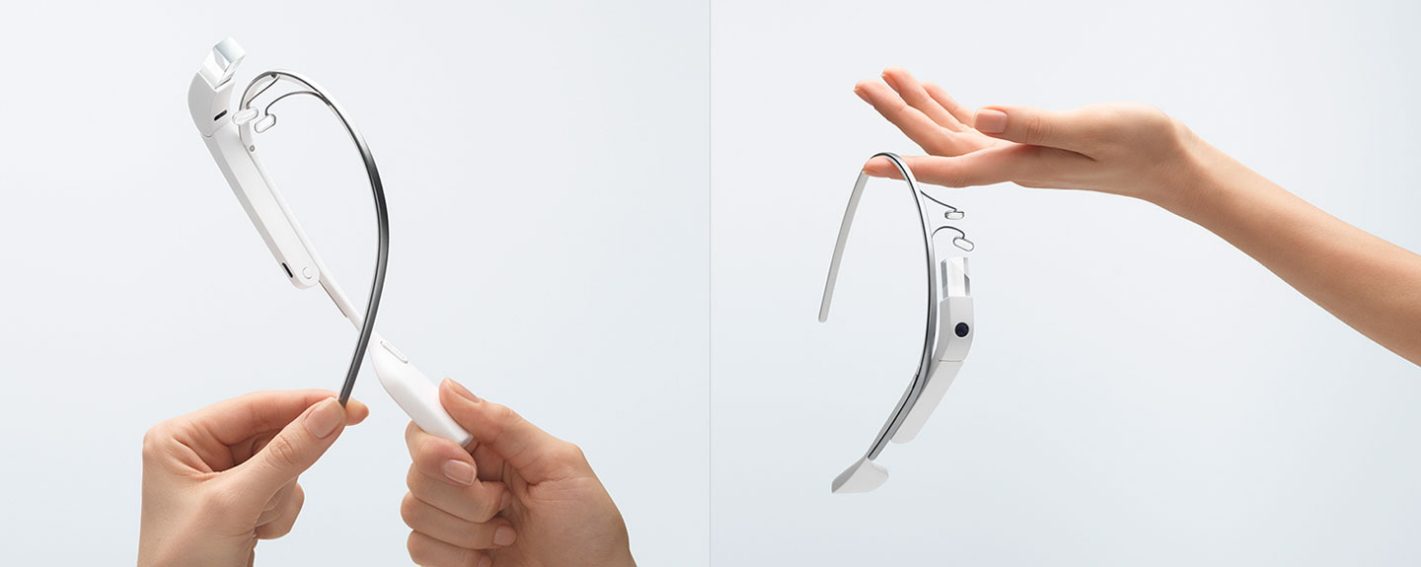
Weight: ~36 grams (7)
Google Glass Frames, Lenses, and Colors
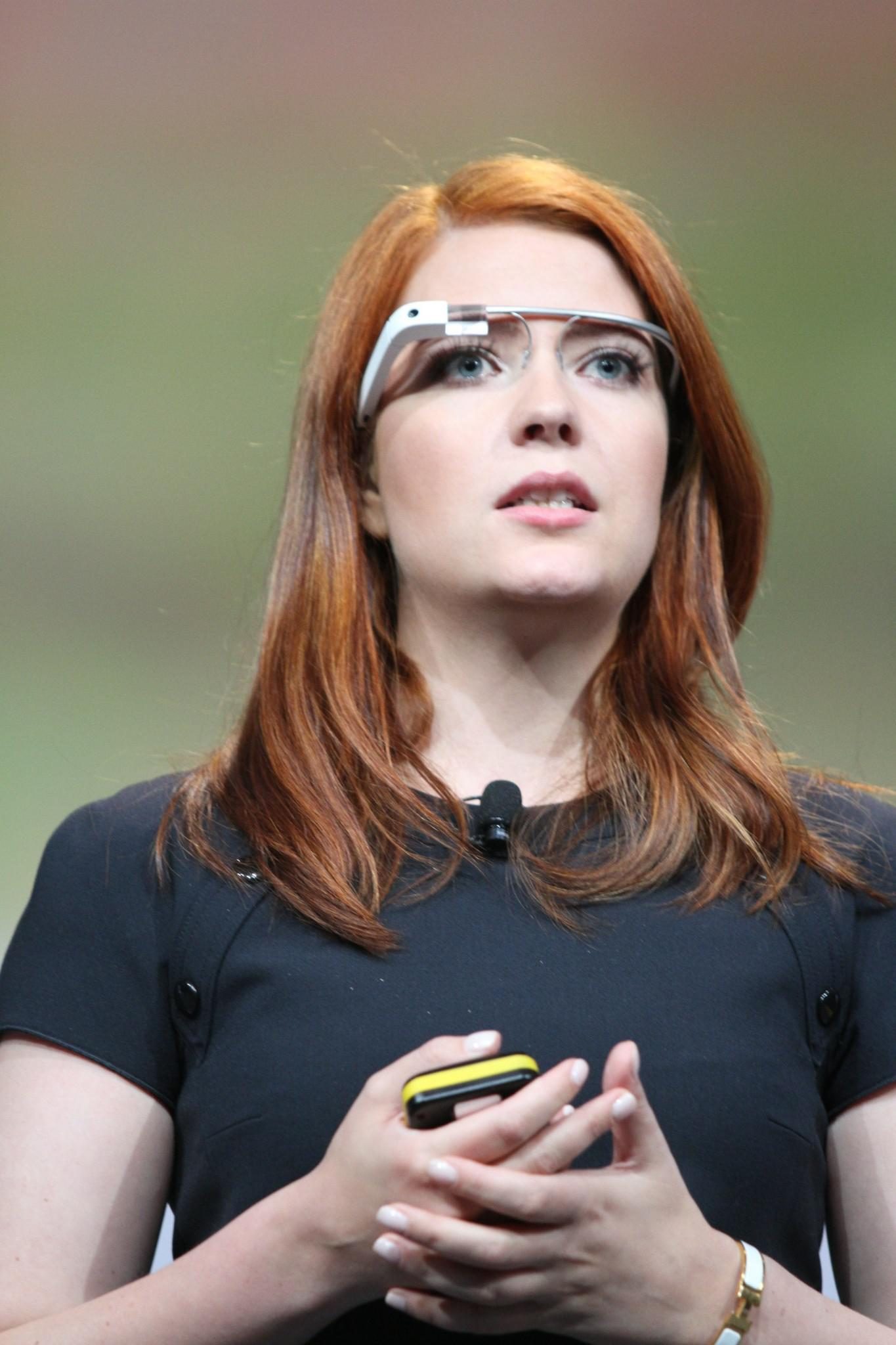
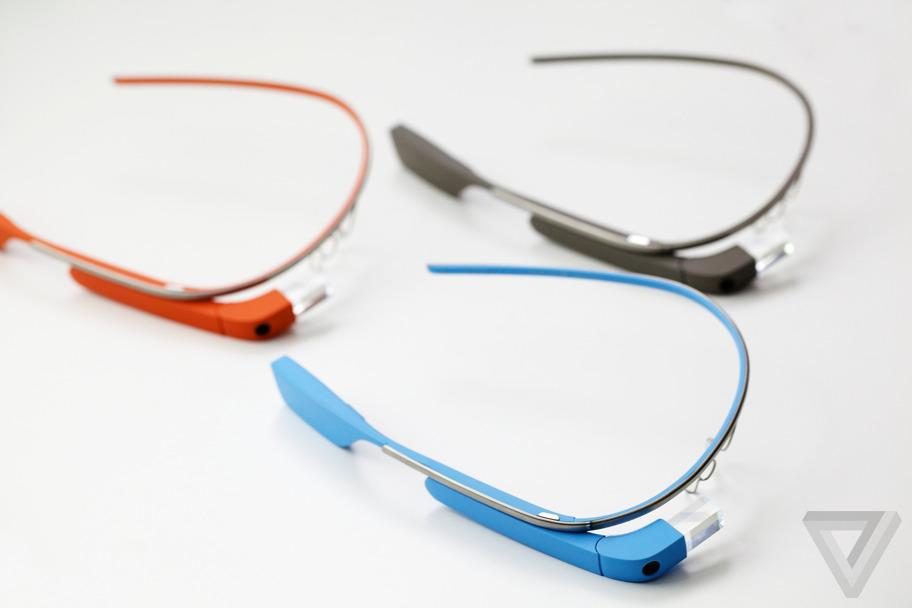
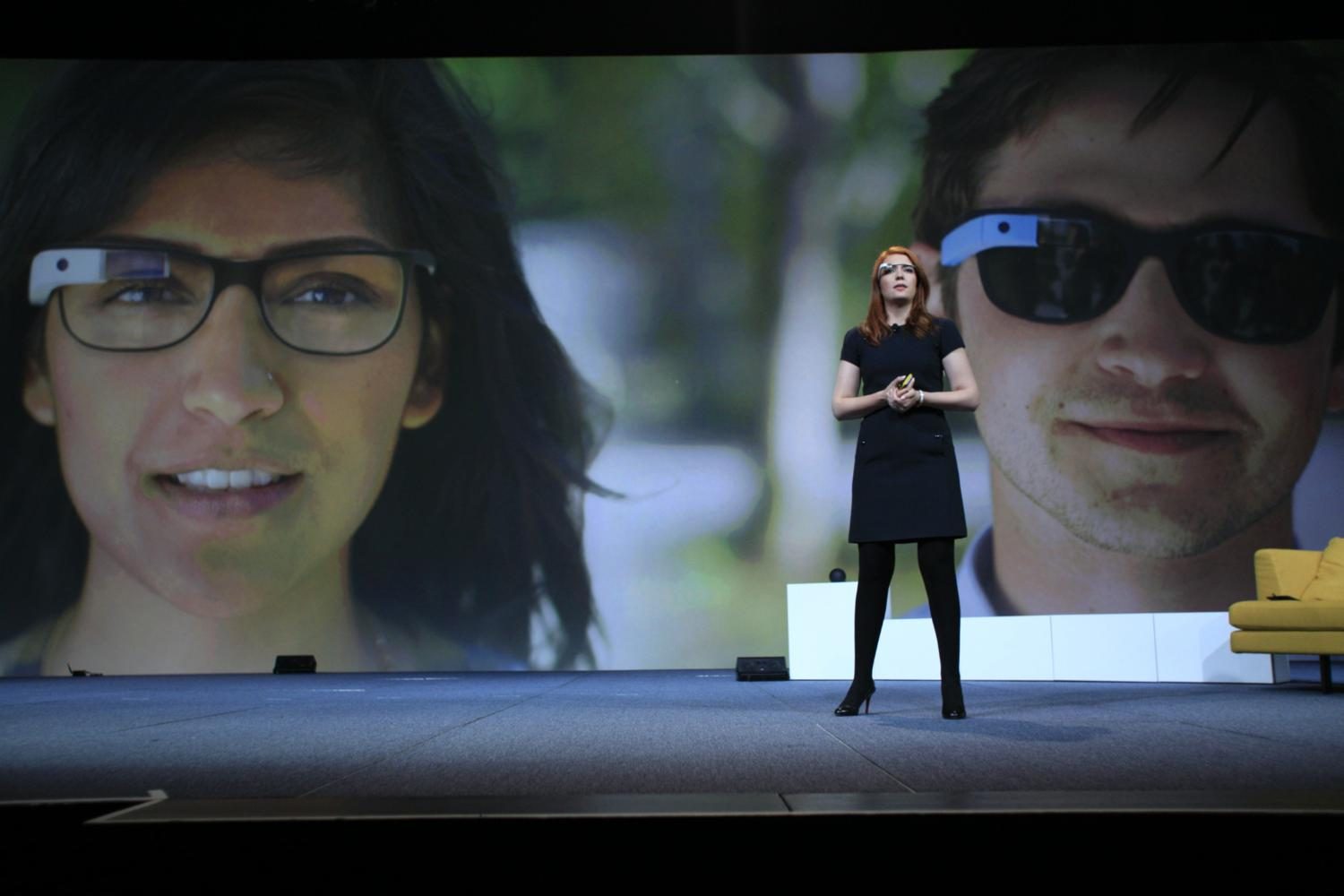
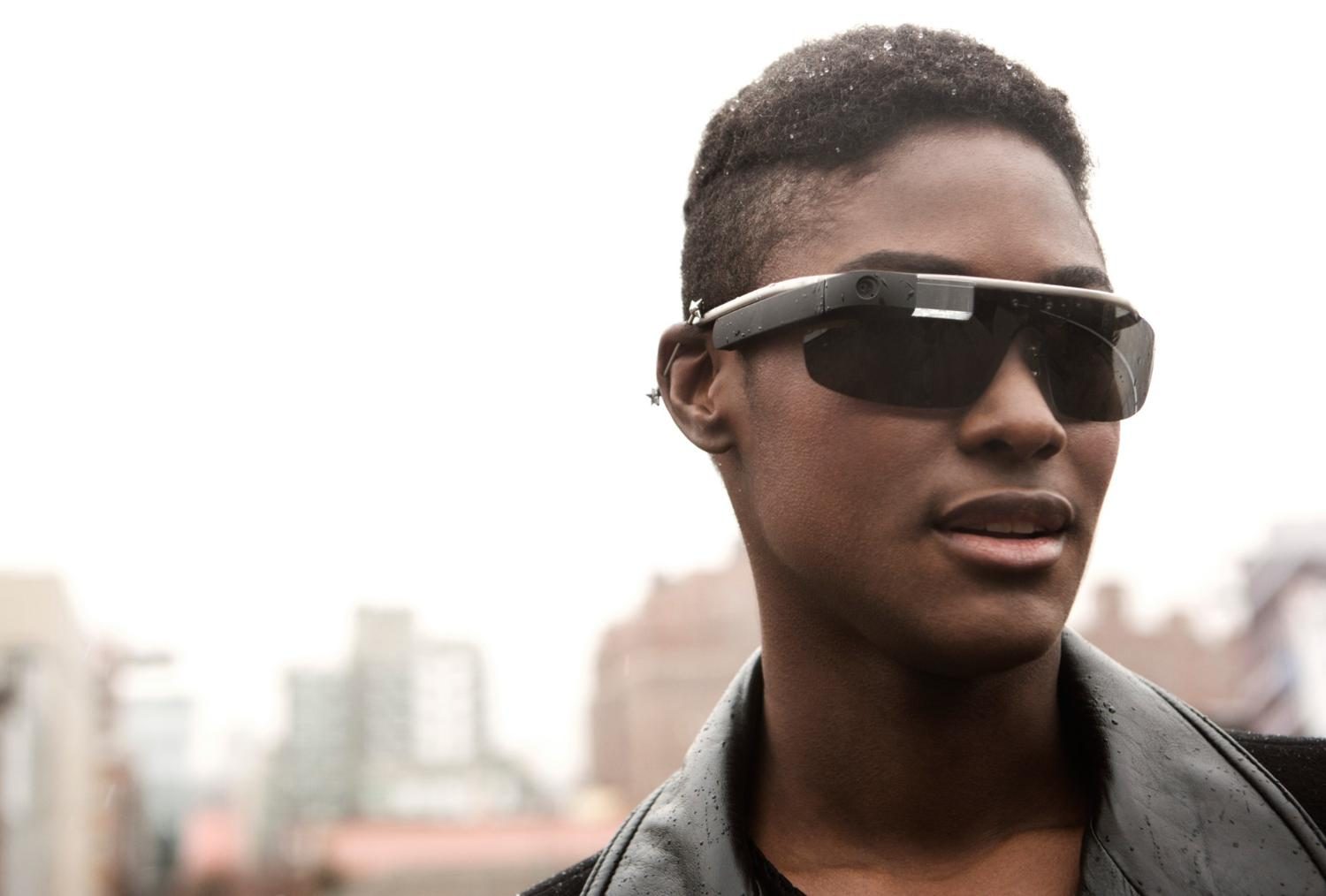
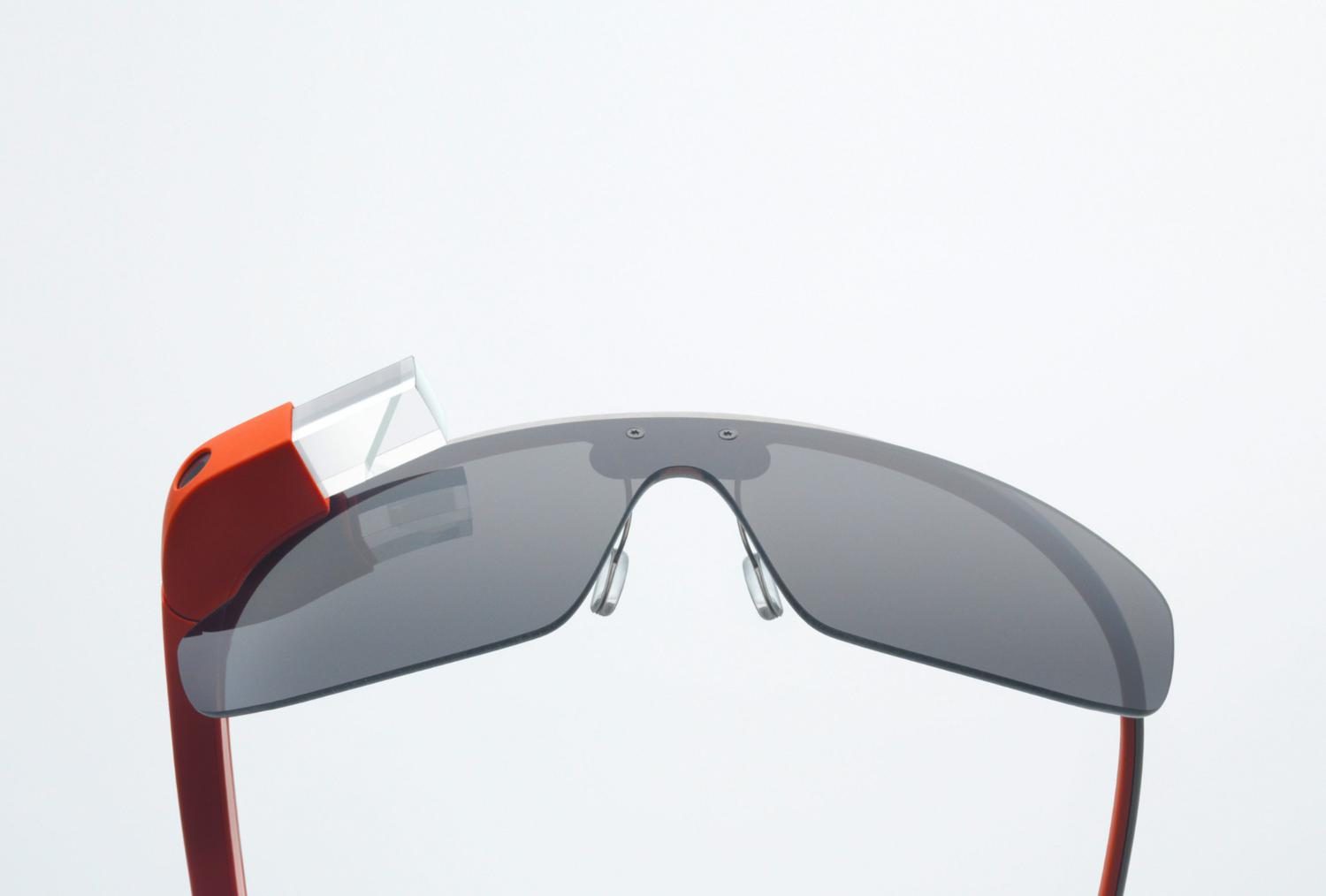
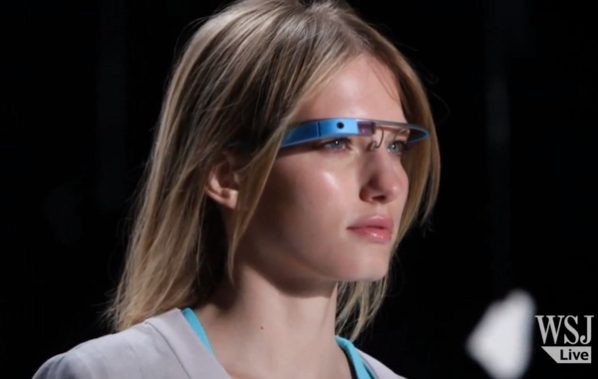
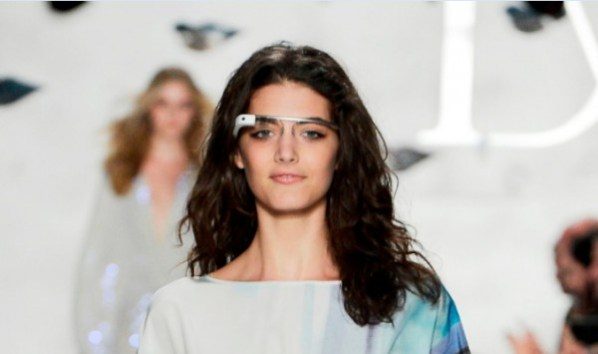
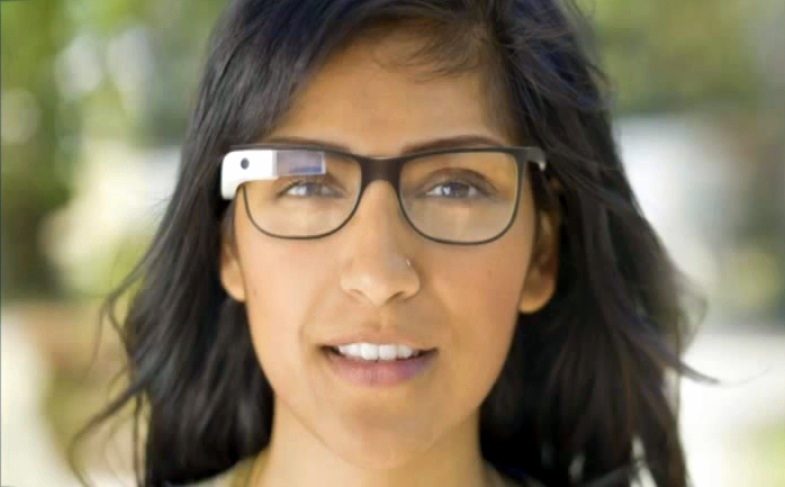
Google has shown a number of frame and lens styles for Google Glass.
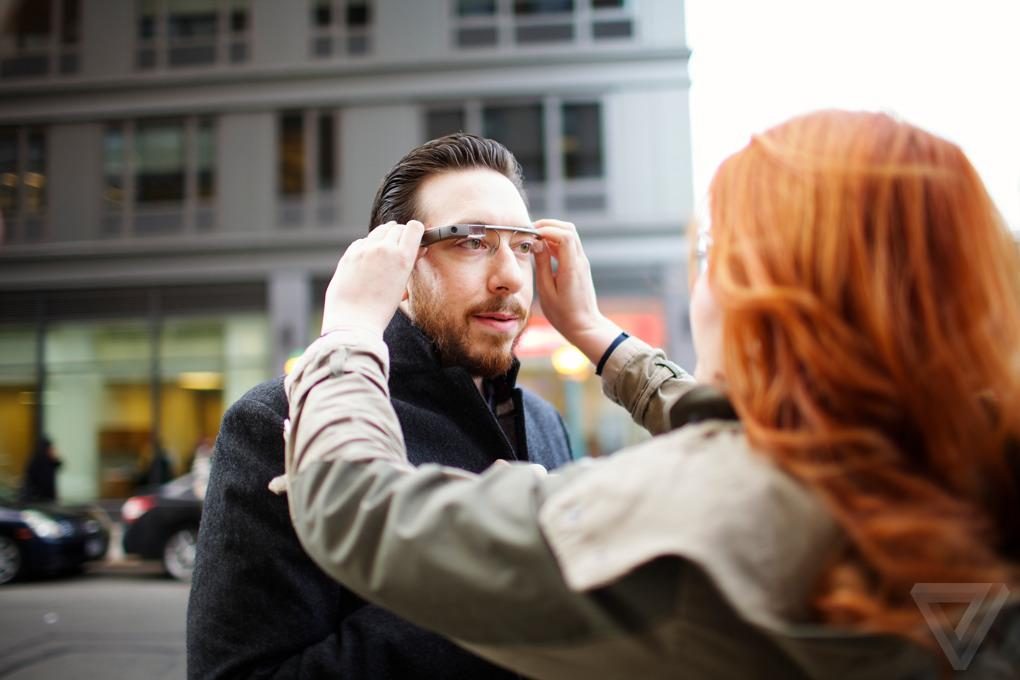
Google says that the latest version of Glass has a screw that allows you to remove the frame and swap it out for a new one (1). At the moment they won’t say if they’re naming any partners that will be making frames, but the New York Times says that the company is in negotiations with Warby Parker on Google Glass frames (12).
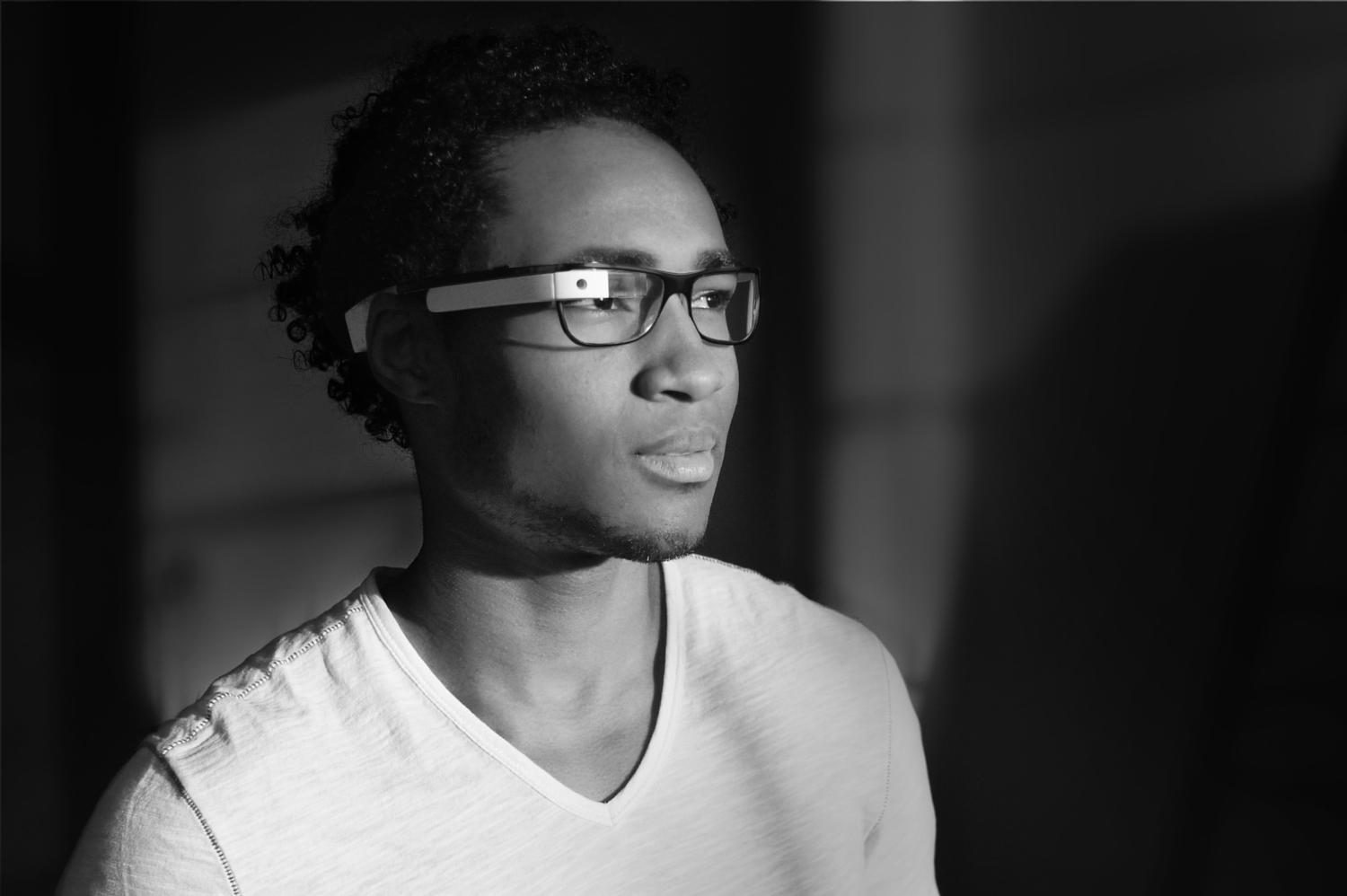
Previously we’ve seen a prescription lens Google Glass prototype with traditional frames at Google IO 2012:
Colors:
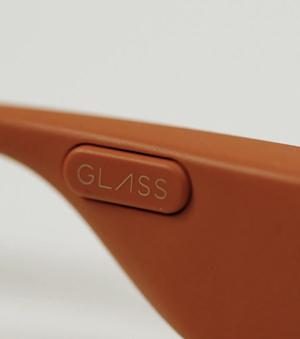
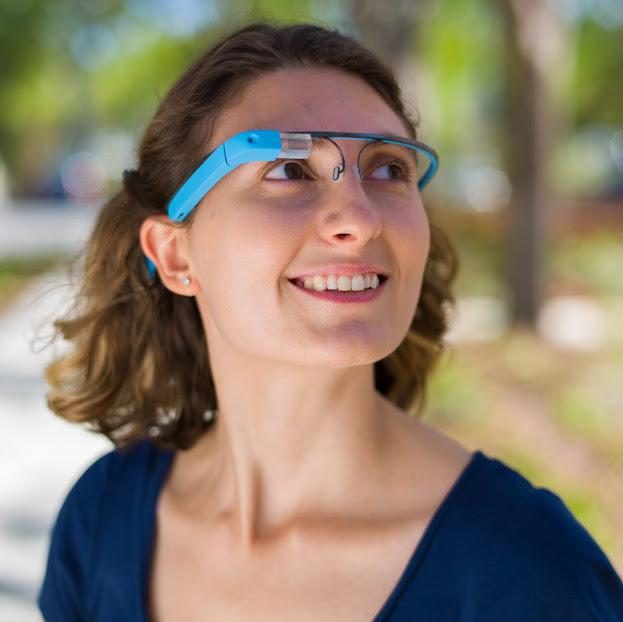
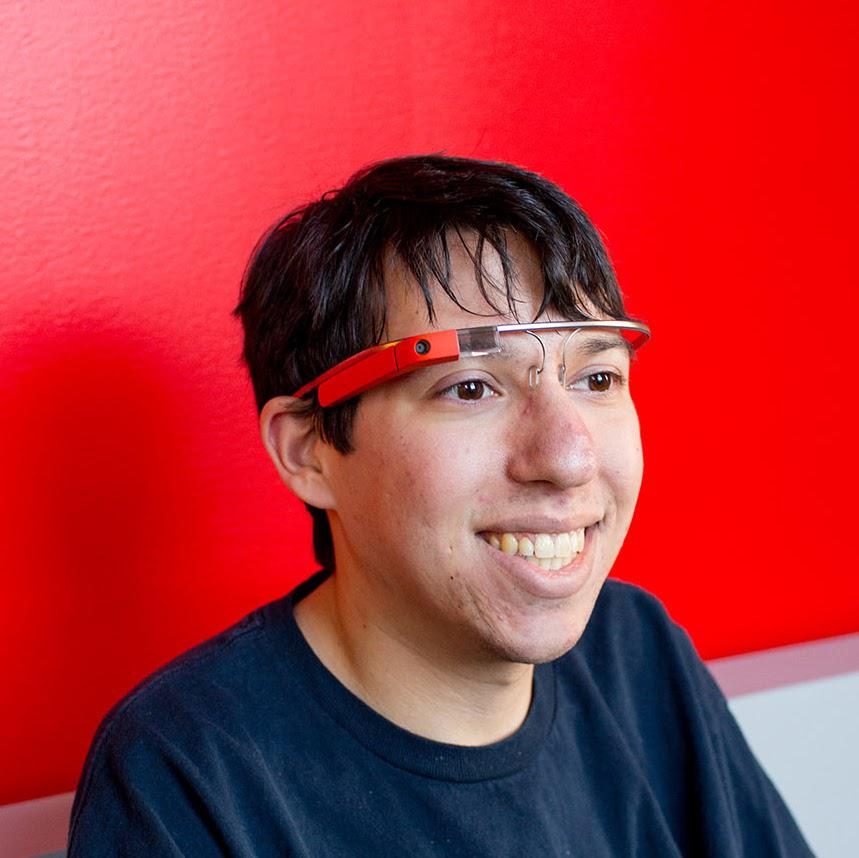
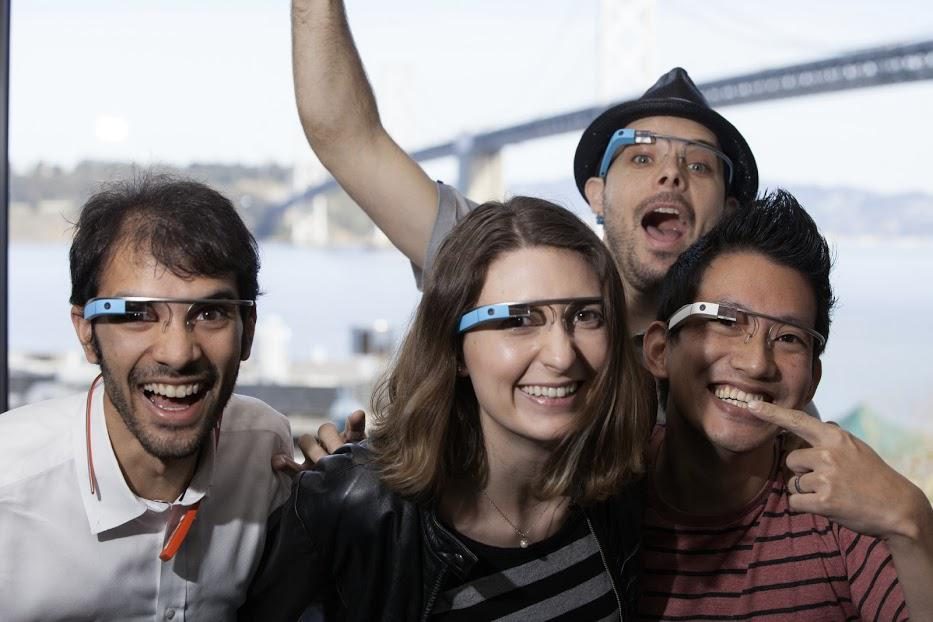
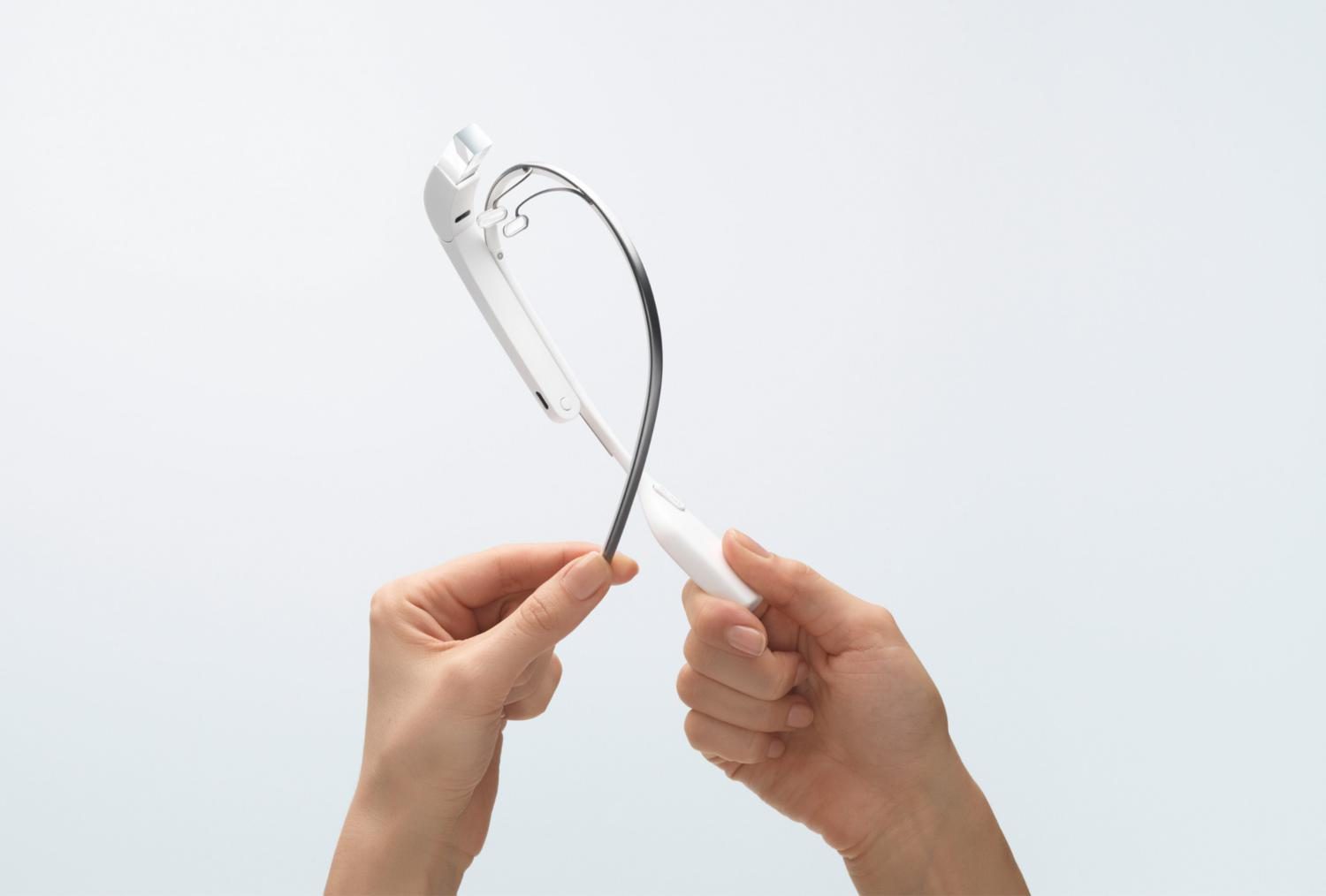
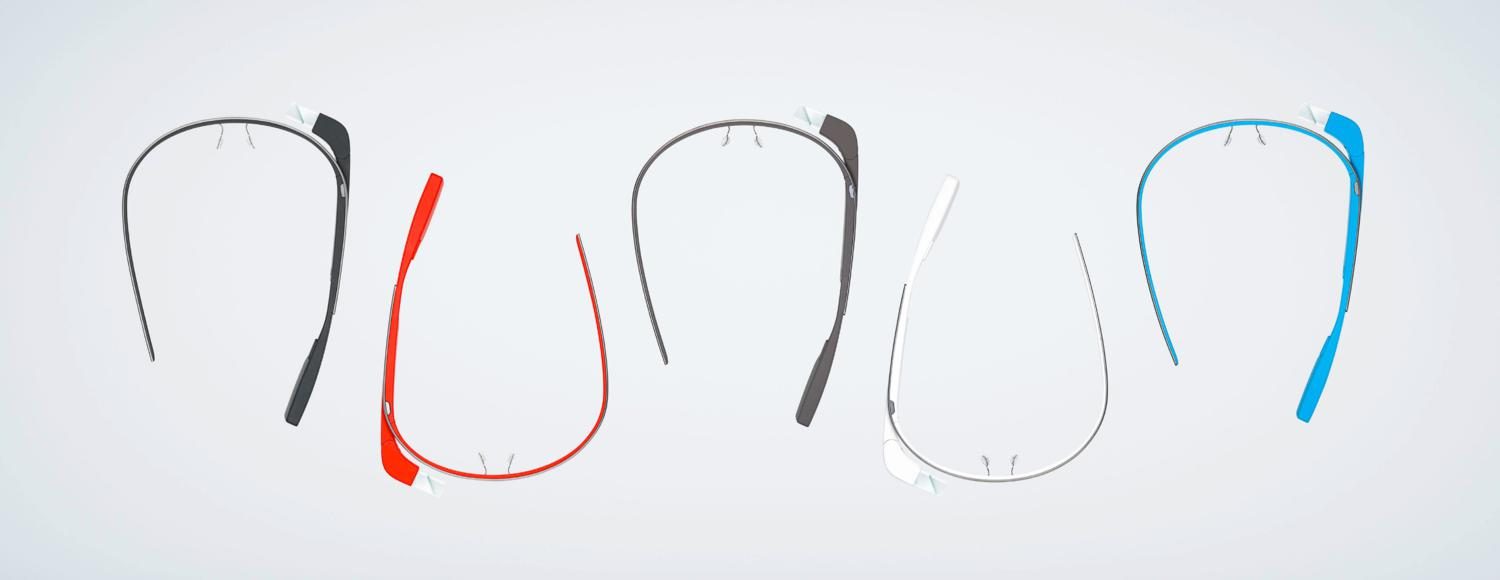
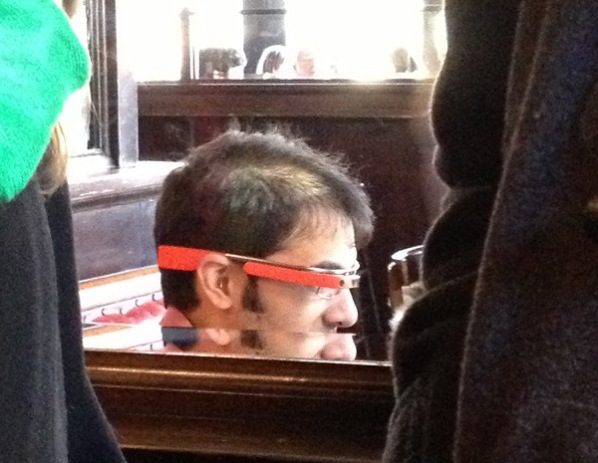
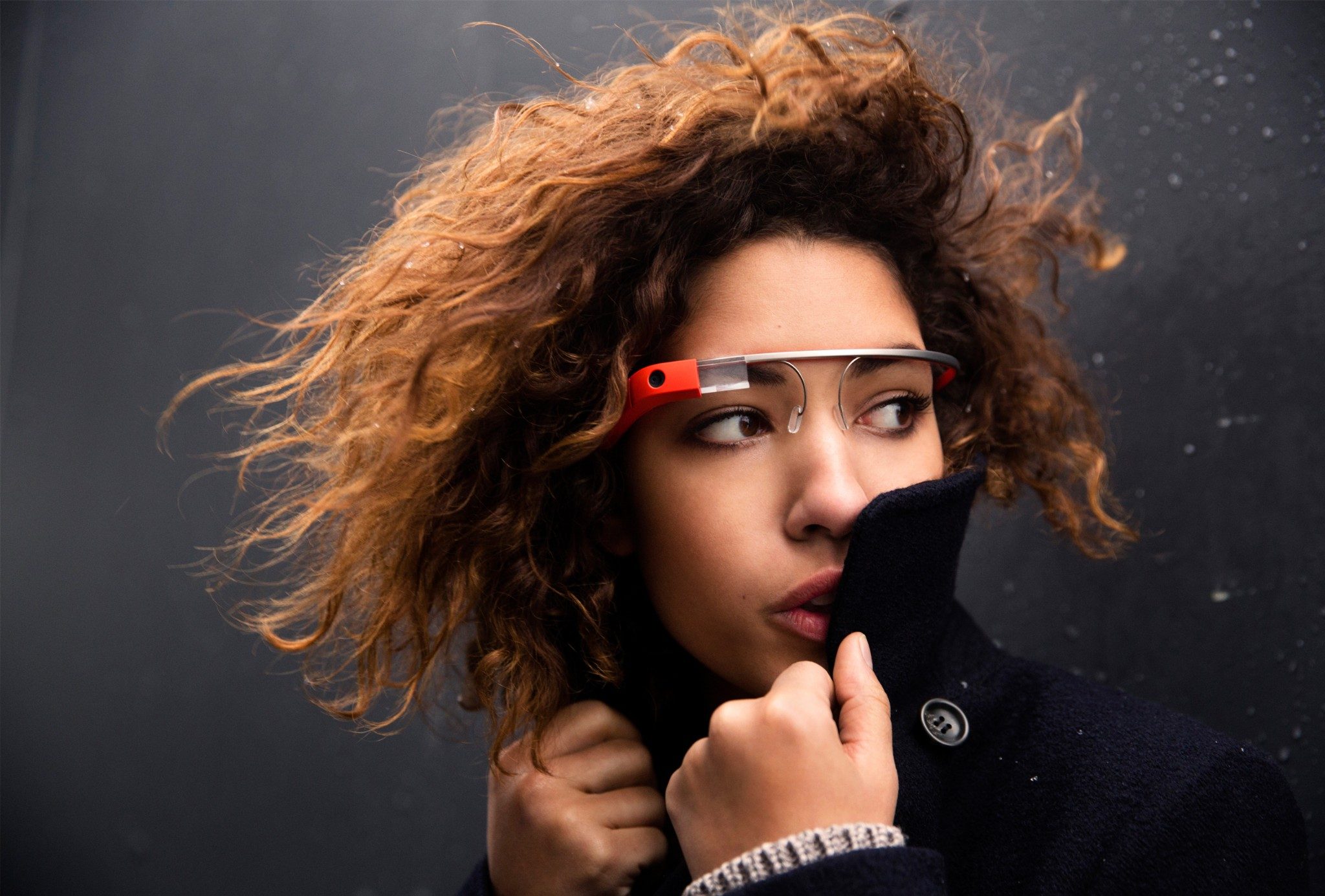
As for the Glass unit itself, Google has showed off a variety of colors including Charcoal (black), Tangerine (orange), Shale (grey), Cotton (white), and Sky (blue) (10):
Waterproof Google Glass?
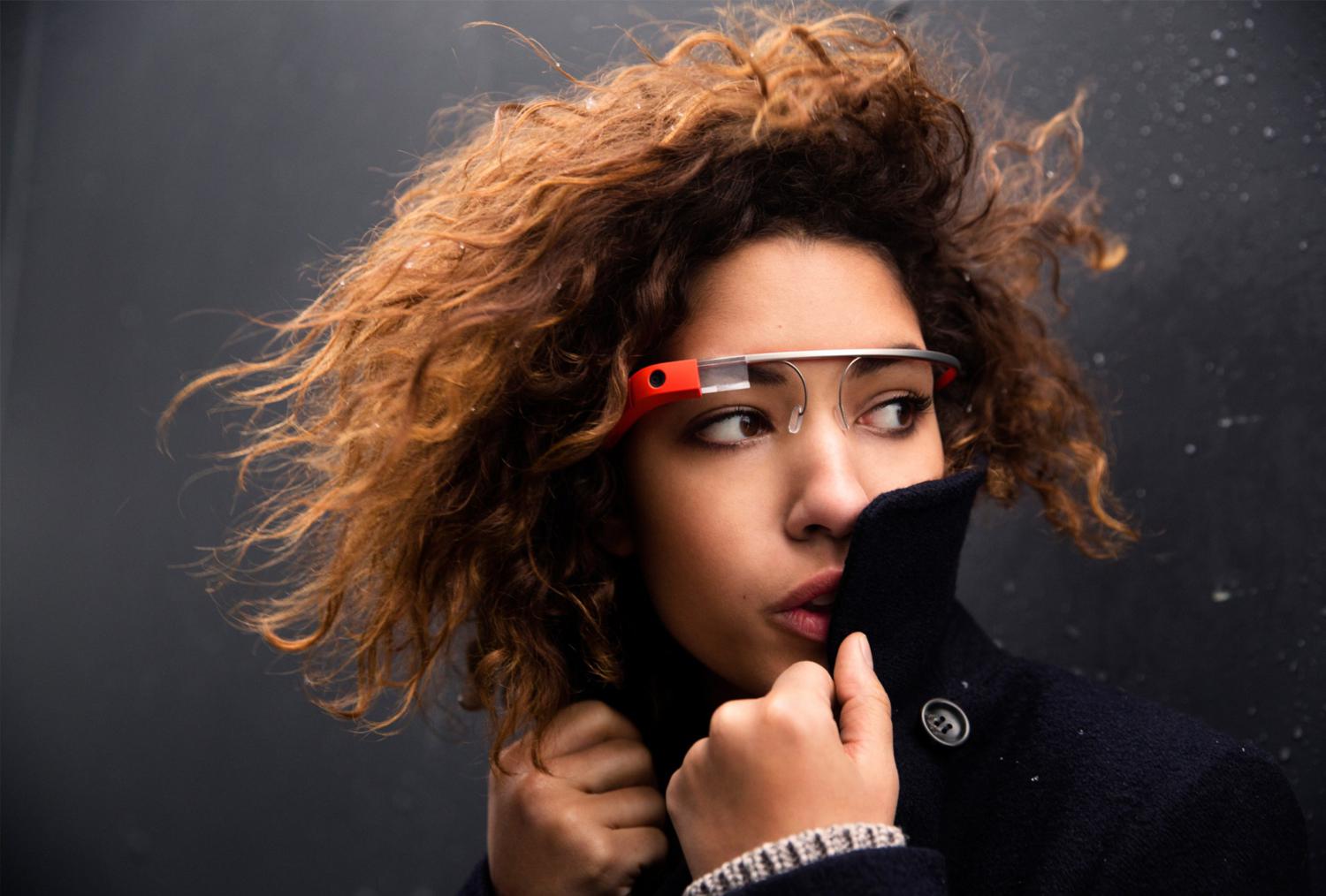
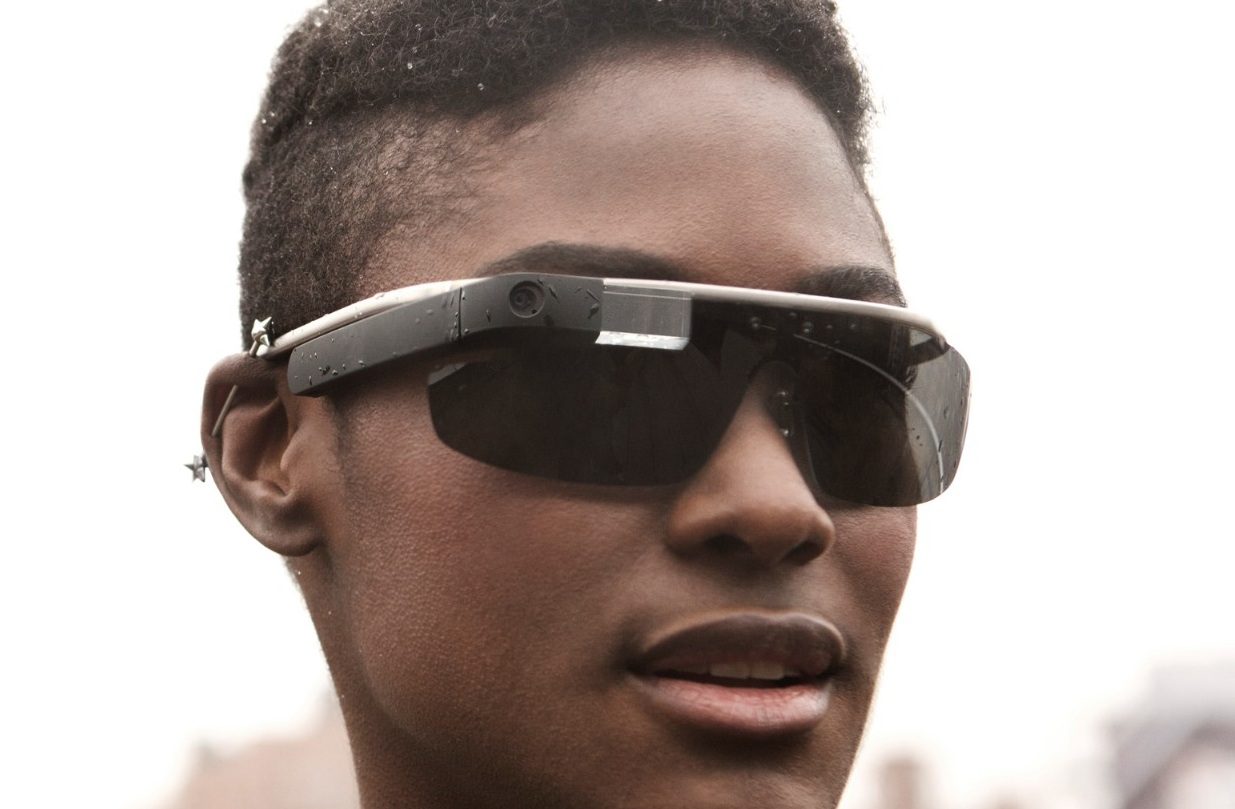
One picture we dug up shows someone using Google Glass covered in water droplets… will the unit be water resistant?
Google Glass Features
What can Google Glass do? The most recent video, ‘How it Feels Through Glass’, gives us a glimpse of what Google Glass features we can expect. The company says that the entire video was filmed using the Google glasses. Though the overlay that you see is added in post-production, it is true to what Google Glass can do and how it works, according to Joshua Topolsky’s time using Glass (1):
Elsewhere we have heard and seen what Glass can do; here’s a list:
Take pictures
Send photos
Record video
Make phone calls
Show the time
Show weather
Flight status notifications (possibly a subset of Google Now functionality)
Arrival and destination airports
Airline
Flight number
Departure time
On time/delay status
Terminal
Gate
Search Google
Images
Translation
Search results that appear to come from Google’s Knowledge Graph, which includes tons of useful info like real time sports scores, unit conversions, bios on people, info snippets on objects, forthcoming holidays, etc.
Stream video via Google Plus Hangout
Dictate text
Notifications
Send SMS
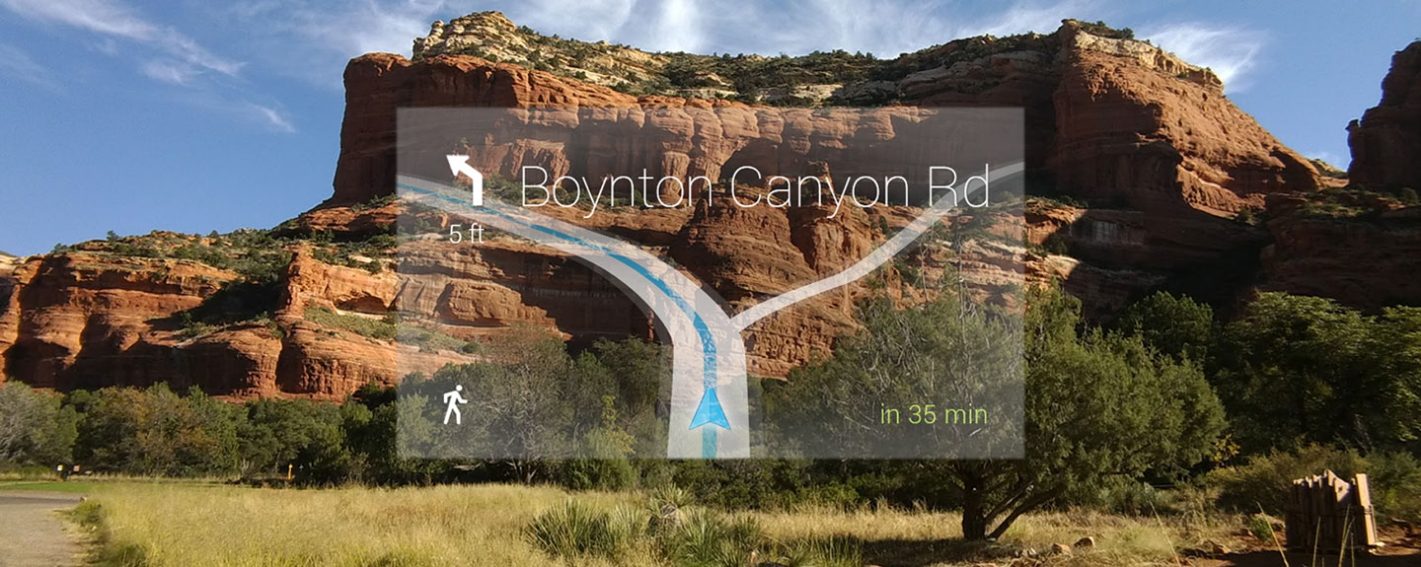
Get directions vis Google Maps
Driving
Biking
Walking
Google Glass Interface / Google Glass OS
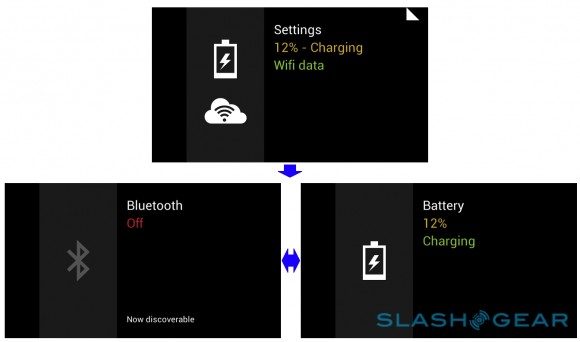
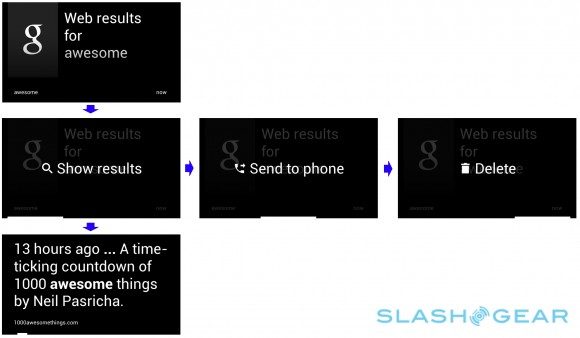
SlashGear has a source “close to the Glass project” which has shared what appear to be official images from the Google Glass interface (13):
In a sense, Glass has most in common with Google Now. Like that service on Android phones, Glass can pull in content from all manner of places, formatted into individual cards. Content from third-party developers will be small chunks of HTML, for instance, with Google’s servers supporting the various services that Glass users can take advantage of.
Some of the cards refer to local services or hardware, and a dog-ear folded corner indicates there are sub-cards you can navigate through. The most obvious use of this is in the Settings menu, which starts off with an indication of battery status and connectivity type, then allows you to dig down into menus to pair with, and forget, WiFi networks, toggle Bluetooth on or off, see battery percentage and charge status, view free storage capacity and firmware status (as well as reset the headset to factory settings), and mange the angle-controlled wake-up system.
In effect, each card is an application. So, if you ask Glass to perform a Google search – using the same server-based voice recognition service as offered on Android phones – you get a side-scrolling gallery of results cards which can be navigated by side swiping on the touchpad. It’s also possible to send one of those results to your phone, for navigating on a larger display.
Google Glass Price
The first opportunity that the public had to pre-order Google Glass was a Google I/O 2012. U.S. based attendees were able to pre-order the ‘Explorer Edition’ of Glass for $1500 (8).
In the last week, Google announced the #ifihadglass campaign where people could submit short responses to the hashtag in order to have the opportunity to pre-order Google Glass, which would also cost $1500.
The Google Glass price will be “less than $1500” when it launches, according to The Verge (14).
But of course we knew that… Google Glass product director Steve Lee says that they expect millions of people to use Glass (1); that won’t happen if they want $1500 for each pair of Google glasses.
So from here we have only speculation. My best guess is that you will be able to buy Google Glass for $500 when it first launches, but I’m really hoping that Google can trim that figure down to $200 for widespread availability.
$500 is going to be a hard sell as a mere addon for a smartphone — after all you’ll need one to tether a data connection to use most Google Glass features. $200 would of course still be expensive, but not much more than some would expect to pay for a nice pair of sunglasses.
There’s no official word on how many pre-orders were placed at Google I/O 2012 or how many people will be accepted into the Explorer program through the #ifihadglass campaign. Around 6000 people attended Google I/O 2012 and pre-orders were restricted to U.S. attendees only. My best guess for total Google Glass pre-orders from I/O 2012 is around 2000 units.
Google Glass Release Date
Expect to hear more about Google Glass at IO 2013
The company says that they expect the Google Glass release date to be before the end of 2013. That leaves up to 10 months for the team to continue to refine Glass before launch.
While Google IO 2013 would be a great place to launch, I don’t think the company will be ready to let people buy Google Glass as IO 2013 is only three months away. You should expect to hear more about Google Glass at IO 2013 though — maybe that’s when they’ll launch the Explorer Edition of Glass?
The holiday season is a better guess for the Google Glass release date; it gives them more time to work on the unit and is a popular time for smartphone sales and accessories like glasses!
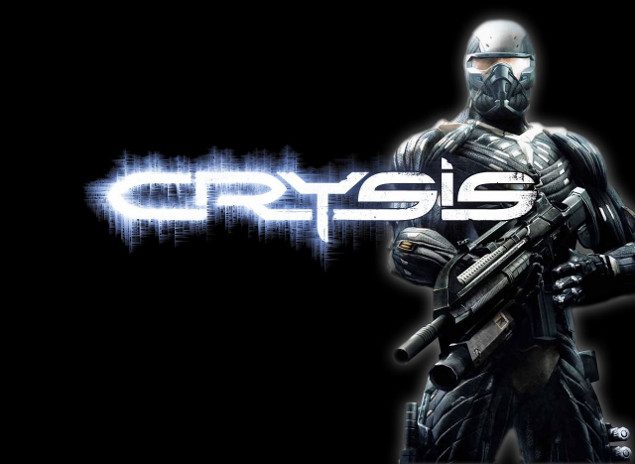
Oculus Rift developer and community VR enthusiast Nathan Andrews has managed to port his Half Life 2 Oculus Rift for Crysis and has released a video showing how this classic PC shooter might work in tandem with the Rift.