Valve Announces Steam Machine and New Steam Controller, Designed with Steam Frame Headset in Mind

4

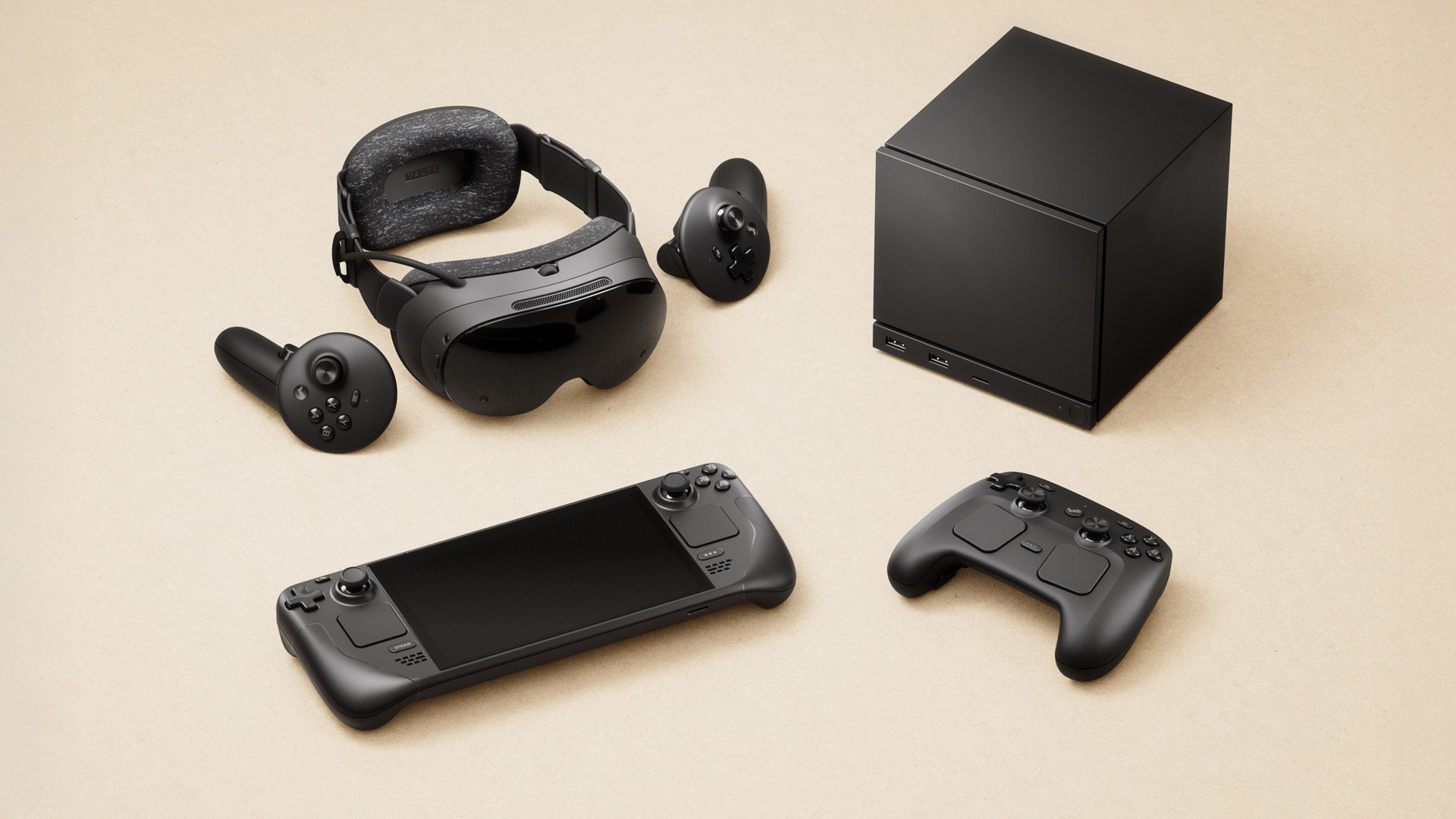
Valve today unveiled Steam Frame alongside two other new bits of hardware: the SteamOS-running Steam Machine and a new Steam Controller—both of which aim to work seamlessly with Valve’s latest and greatest VR headset.

Note: Like Steam Frame, both the new Steam Machine and Steam Controller don’t have confirmed prices or release dates yet, which Valve says we’ll learn about in “early 2026.”

Steam Machine

Valve says Steam Machine makes a great streaming companion for Steam Frame, the company’s newly unveiled VR headset which can wirelessly stream games from PCs with the included Wi-Fi 6E dongle—in addition to playing flatscreen and PC VR games natively via its onboard Snapdragon Series 8 Gen 3 SoC.

Valve is set to offer two models of Steam Machine: a 512GB model and 2TB model, which will ship in a bundle with Steam Controller, but will also be available standalone.
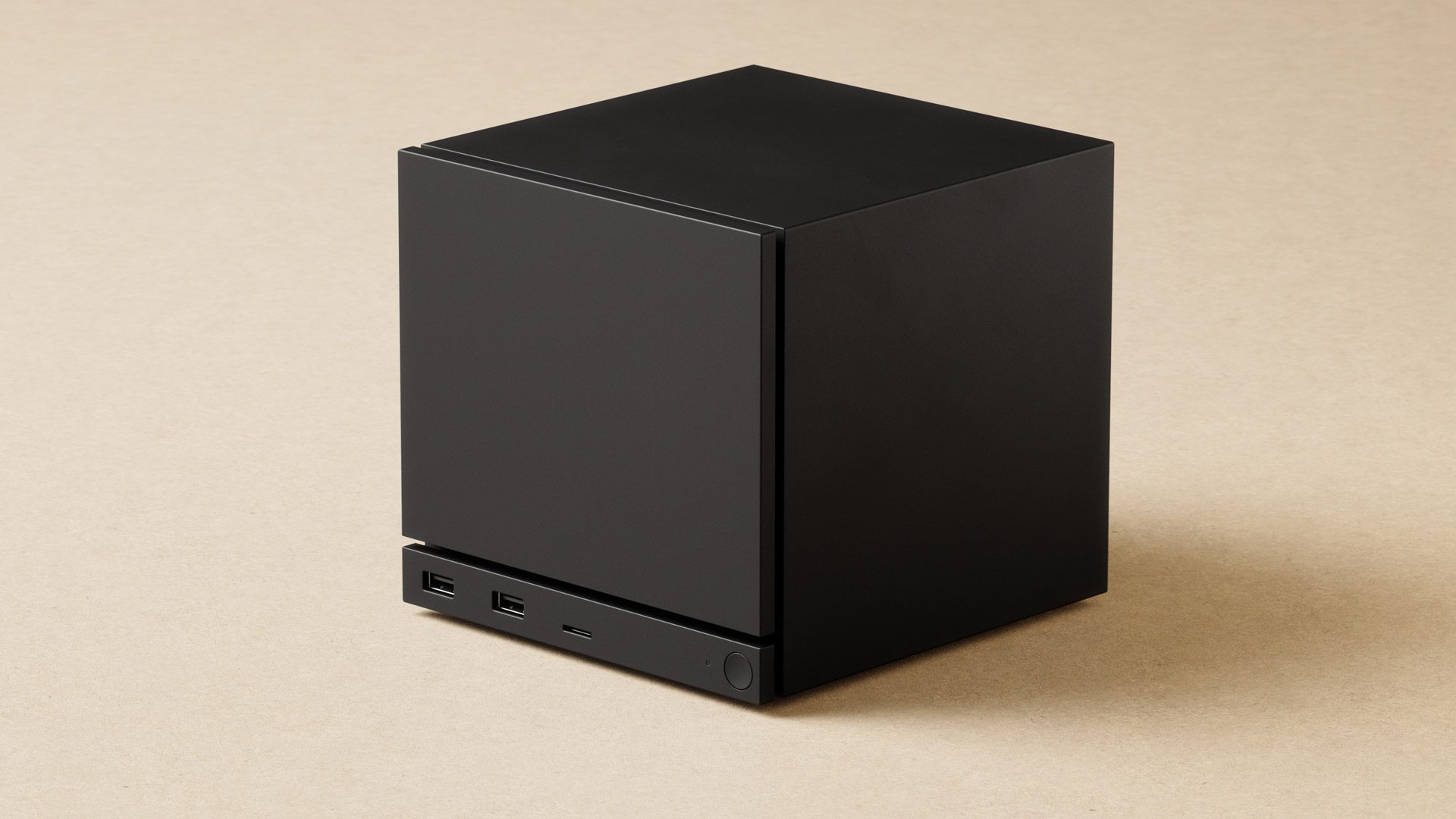
Image courtesy Valve

It’s difficult to tell the size by the images, but it’s actually impressively compact: only about 6 inches tall (152 mm – 148 mm without feet), 6.5 inches deep (162.4 mm) and a little over 6 inches wide (156 mm), weighting in a little over 5.5 lbs (2.6 kg).

Here’s a quick rundown of Steam Machine:

Specs

  • CPU: AMD 6-core Zen 4 X86
  • GPU: Semi-Custom AMD RDNA3 28CU
    • Supports 4K gaming at 60 FPS with FSR
    • Ray tracing supported
    • Over 6x more powerful than Steam Deck
  • 16GB DDR5 + 8GB GDDR6 VRAM
  • 512 GB & 2 TB SSD models
    • micro SD card slot for extended storage/portable catalog
  • Internal power supply, AC power 110-240V
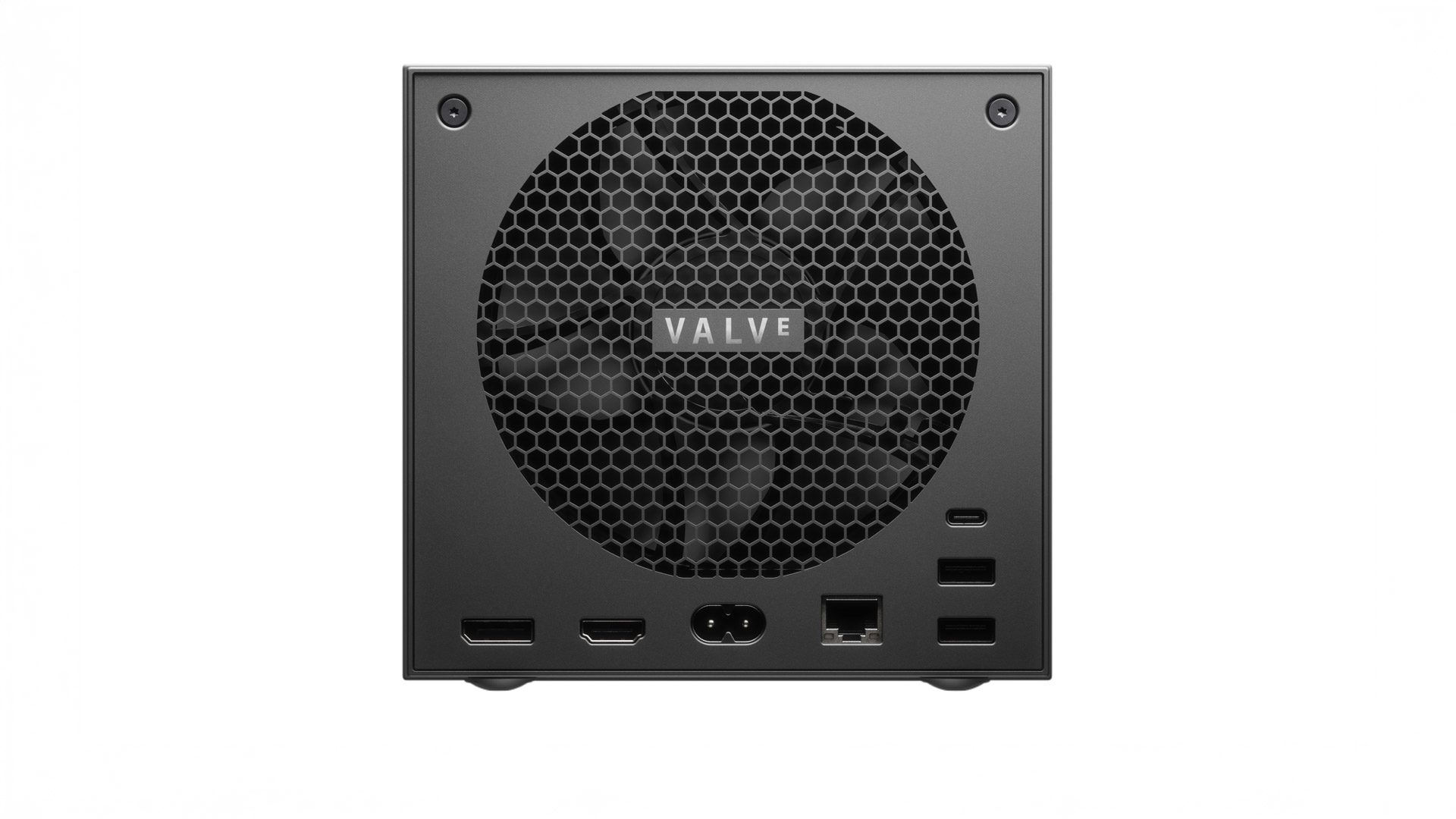
Image courtesy Valve

I/O

  • DisplayPort 1.4, HDMI 2.0
    • CEC support
  • Ethernet 1 Gbps
  • USB-C 10 Gbps, 3.2 Gen 2
  • 4x Type USB-A ports
    • 2x USB 3 in the front
    • 2x USB 2 in the rear
  • 2×2 Wi-Fi 6E, dedicated BT antenna
  • Integrated Steam Controller 2.4GHz radio
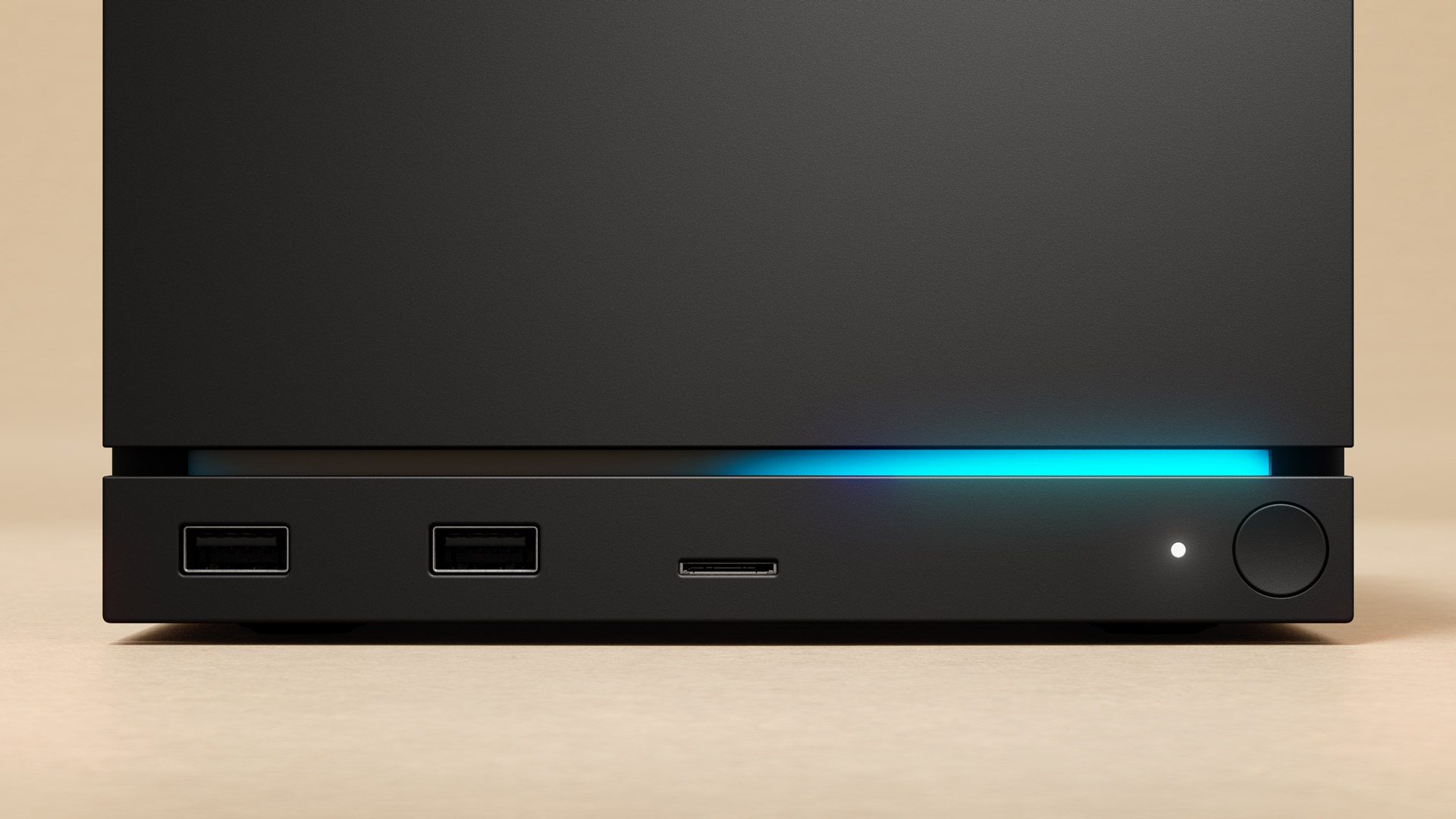
Image courtesy Valve

Other features

  • Works with other controllers, accessories, and PC peripherals
  • Wake with Steam Controller
  • Runs SteamOS
    • Familiar, gaming first user experience
    • Fast suspend / resume
    • Steam cloud saves, and all the other Steam features you’d expect
  • Customizable LED bar
    • Personalize with colors and animation
    • Reflect system status (e.g. downloads, booting, updating)

Steam Controller

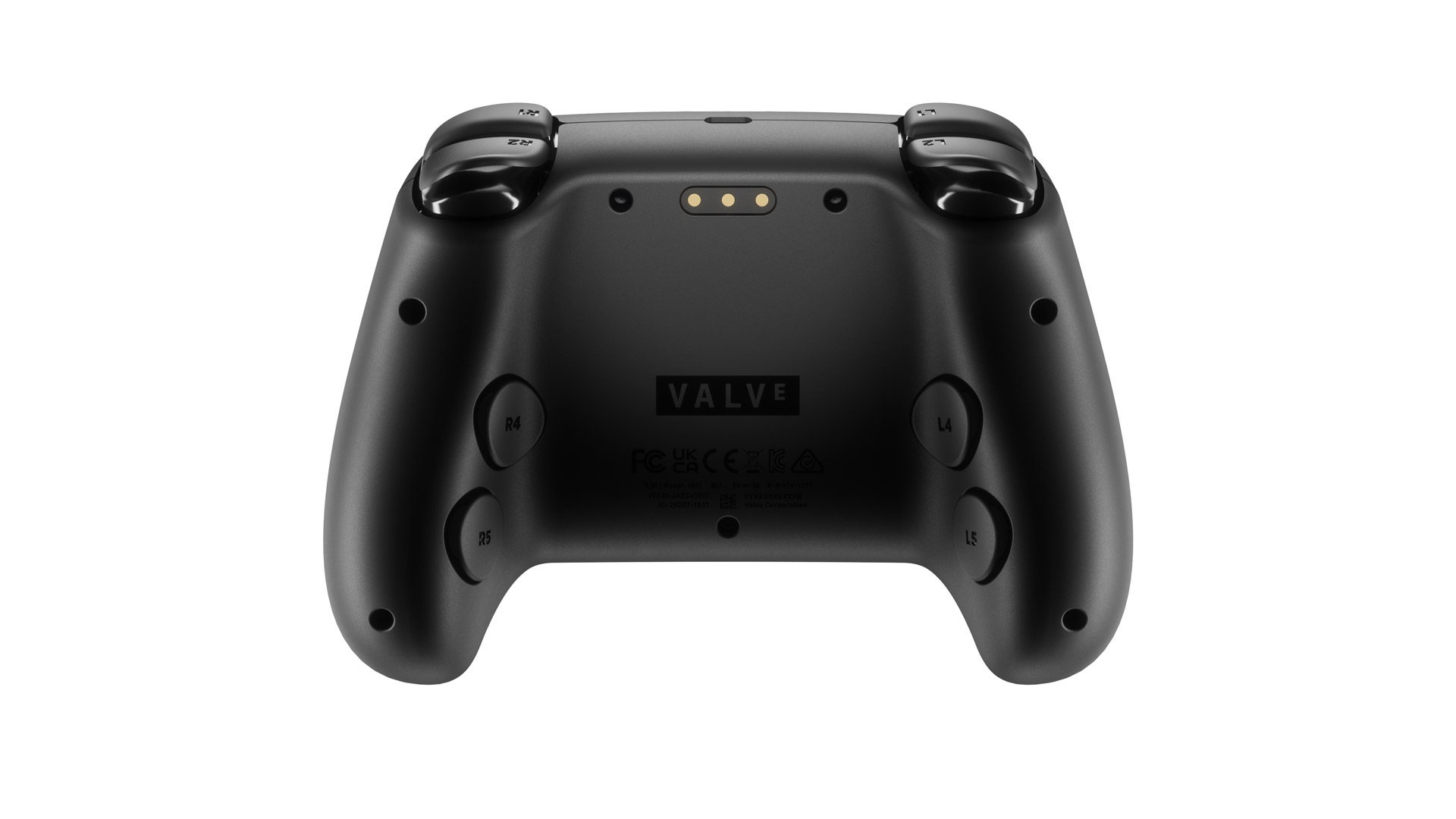
Valve’s new Steam Controller is more than just a gamepad featuring full input parity with Steam Deck: it also has built-in IR LEDs so it can be tracked by Steam Frame.

While that probably doesn’t make it especially useful for playing VR games, users who want to use Frame like a Deck (but with a huge virtual screen) will be able to see the controller model in the virtual space so they can reference the buttons and get the extra features of Steam Controller. That’s handy, especially when you’re getting to grips with a new(ish) button layout.
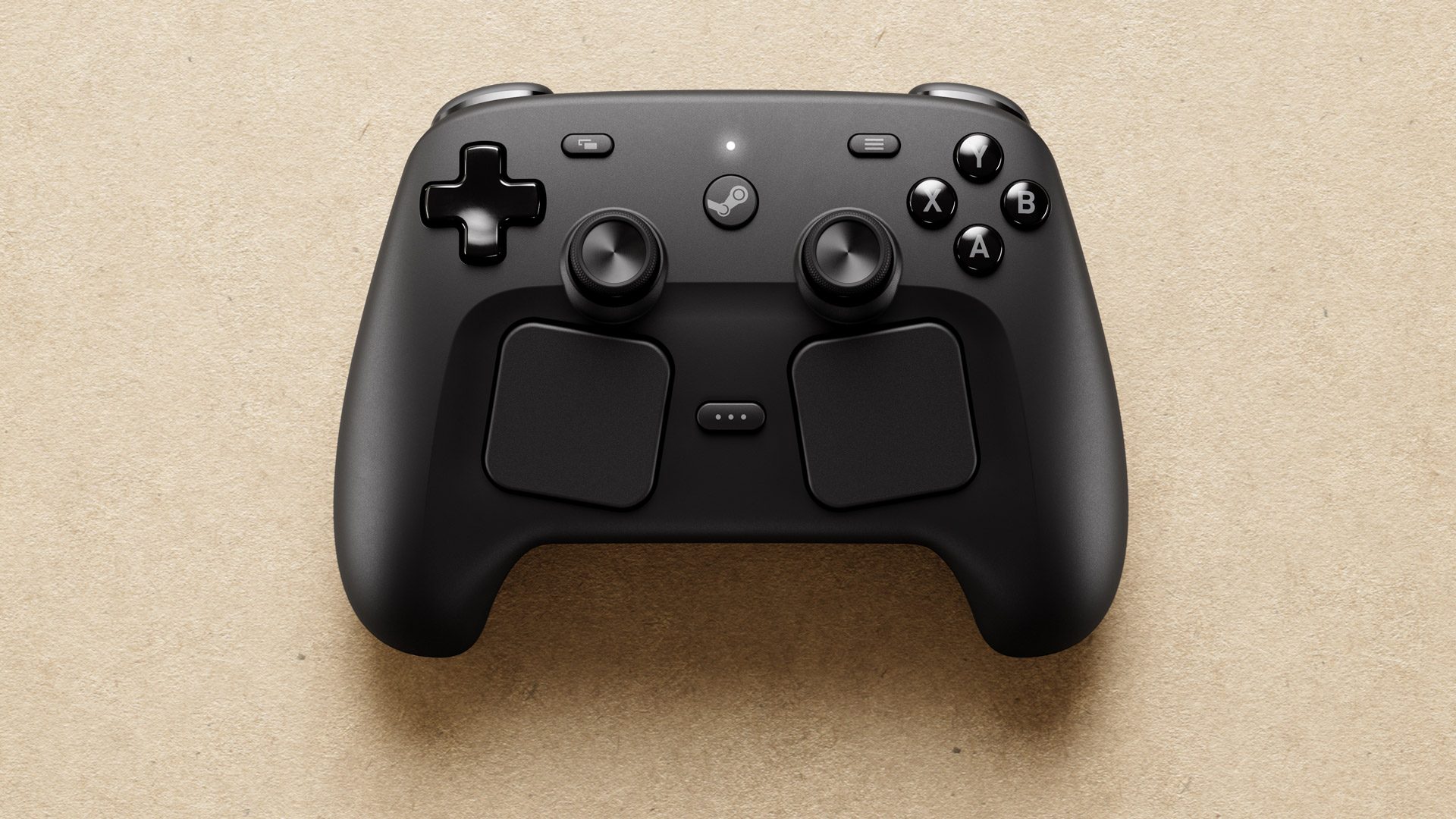
Image courtesy Valve

The gamepad is also rated to work with any device that runs Steam, allowing you to connect up to four Steam Controllers to a single device using a low-latency connection puck, which uses a proprietary wireless connection that Valve says is more stable than Bluetooth.

Here’s a quick rundown of Steam Controller:

Works with any device that runs Steam

  • Windows / Mac / Linux PCs
  • PC handhelds
  • iOS / Android (with Steam Link)
  • Steam Deck
  • Steam Machine
  • Steam Frame
Image courtesy Valve

Three ways to connect

  • Steam Controller Puck
    • Pre-paired, plug and play
    • Proprietary wireless connection
    • Low-latency (~8ms full end-to-end)
      • 4ms polling rate
      • measured at 5m
    • More stable than Bluetooth
    • Up to 4 Steam Controllers per Puck
  • Bluetooth
  • USB tethered play

Li-ion rechargeable battery

  • 35hr+ play time
  • Charge with Steam Controller Puck or USB

Features

  • Magnetic thumbsticks (TMR): improved responsiveness and reliability
  • Capacitive touch
  • Grip sense: quick way to activate/deactivate gyro.
  • Assignable input
  • HD haptics: More advanced and powerful motors for high definition rumble
Image courtesy Valve

Full input list

  • ABXY, D-pad
  • L/R triggers, L/R bumpers
  • Magnetic thumbsticks (TMR)
  • View / Menu / Steam / QAM buttons
  • 4x assignable grip buttons
  • 2x trackpads with haptic feedback
    • Pressure sensitivity for configurable click strength
  • 6-axis IMU
  • Capacitive grip sense

More Steam Frame Announcement Coverage

Valve Unveils Steam Frame VR headset to Make Your Entire Steam Library Portable: Valve shows off Steam Frame, the standalone headset that can stream and natively play your entire Steam library—with only a few caveats right now.

Hands-on: Steam Frame Reveals Valve’s Modern Vision for VR and Growing Hardware Ambitions: We go hands-on with Valve’s latest and greatest VR headset yet.

Steam Frame’s Price Hasn’t Been Locked in, But Valve Expects it to be ‘cheaper than Index’: No price or release date yet, but Valve implies Steam Frame will be cheaper than $1,000 for the full Index kit.

Valve Says No New First-party VR Game is in Development: Valve launched Half-Life: Alyx (2020) a few months after releasing Index, but no such luck for first-party content on Steam Frame.

Valve is Open to Bringing SteamOS to Third-party VR Headsets: Steam Frame is the first VR headset to run SteamOS, but it may not be the last.

Valve Plans to Offer Steam Frame Dev Kits to VR Developers: Steam Frame isn’t here yet; Valve says it needs more time with developers first so they can optimize their PC VR games.

Steam Frame vs. Quest 3 Specs: Better Streaming, Power & Hackability: Quest 3 can do a lot, but can it go toe-to-toe with Steam Frame?

Steam Frame vs. Valve Index Specs: Wireless VR Gameplay That’s Generations Ahead : Valve Index used to be the go-to PC VR headset, but the times have changed.

This article may contain affiliate links. If you click an affiliate link and buy a product we may receive a small commission which helps support the publication. See here for more information.

Well before the first modern XR products hit the market, Scott recognized the potential of the technology and set out to understand and document its growth. He has been professionally reporting on the space for nearly a decade as Editor at Road to VR, authoring more than 4,000 articles on the topic. Scott brings that seasoned insight to his reporting from major industry events across the globe.
  • xyzs

    Cool ecosystem, but I hope they will update their hardware better than what they did so far, because being stuck with your headset until it's so obsolete you have to change ecosystem before they release a v2 is no acceptable!!!

  • Christian Schildwaechter

    I've recently stopped bringing my MacBook during travel and instead packed a Mac Mini with the Quest 3 as a large virtual display. Which is still very much an experimental setup, involving HDMI grabbers and lots of cables, with too low resolution compared to even a 1080p screen. Nowhere near the comfort of pairing a USD 3.5K AVP, but enough of a hint of things to come for me to keep trying.

    I had very much hoped for a more powerful and most of all higher resolution Steam Frame running SteamOS that would have even allow me to drop the (tiny) desktop machine. The Frame is fast enough to run most productivity apps I care about, and these are usually also available in a native Linux ARM version. So ignoring standalone VR gaming, it would still fit my needs except for the low resolution. And would be an improvement over my experimental setup

    I'd probably still bring the Mac Mini that only weights 730g. The Steam Machine is about one inch wider and deeper, and three times as high as the Mini. But what really kills it as a portable solution that could have compensated for a Frame lacking compute power is the 2600g weight, 3.5 times as heavy as the Mac.

    It will provide a lot more GPU power, so Steam Frame plus Machine may end up the by far smallest and lightest combo for luggable PCVR gaming. I don't know how large the market is for this, when you can get a Quest 3 much cheaper, and most people are more worried about getting more performance out of their PCVR rig than making it more portable. No doubt a technical elegant solution, but lacking the convenience of a console, the upgradability of a PC, and the use beyond gaming for regular users of a Windows machine. These look like very niche products, even if Valve sells them at cost. And I might be better served with waiting for a 2027 Apple Vision Air at half the weight and price of the current AVP.

    • Arno van Wingerde

      Well… for productivity an vision air is a very strong concept, but VR gaming? even if there were only Vion Air and Steam frames, I would likely go for the Steam frames due to the atrocious AVP gaming library. I would rather wait for Play4dreams or somebody like it to provide an „OLED Valve Frame“… how hard can it be now?

      • Christian Schildwaechter

        My interest is mostly productivity, with gaming/PCVR streaming a nice add-on, which is why a Vision Air would be an option. Even with the lower resolution, the Steam Frame will be a way better option for VR gaming. I was hoping it would be great for productivity too, with the main killer now being the 2160p resolution.

        And it may still be the better option even for me, simply because Apple seriously restricts what you can run on AVP, allowing only visionOS and and iPad apps from their store. Not sure if anyone has created a virtual ARM Mac on a non-Apple machine yet, but if I wanted I could run an emulated x86 virtual machine using QEMU to run Intel Mac apps on Frame, in addition to Linux and Windows apps. So technically Frame would allow me to completely replace my Mac Mini, while a Vision Pro/Air wouldn't.

        And of course it would let me play my now almost 2.5K titles large Steam Library. I started buying games for VR during the DK1/2 days, my first was probably Euro Truck Simulator 2, which got Oculus Rift support in 2014. I'm still disappointed with the Frame specs, though I now assume that I seriously overestimated how fast the prices for microOLEDs would fall to allow Valve using them. But even with a non-microOLED 2K display and SD8 x86 emulation, the number VR supported games in my library that might run on Frame would still be in the hundreds due to a lot of them being older/targeting much weaker hardware.

        The Apple Vision Pro/Air really is a "it just works" iPad for your face, offering a very smooth experience for a high price, as long as you are happy with what Apple offers/allows. Which will be great for a lot of people once they reduce weight and price. The Steam Frame really is a Steam Deck for your face, allowing you to tweak, configure and run everything you want, also serving as a decent streaming HMD and faster-than-Quest 3 standalone HMD for older or ported VR games. Macs have been my main machines for 20 years, but my affiliation with Linux goes even further, back to 1993 Slackware Linux 0.9, so I have interest in and use for both, which gaming a nice extra.

        Maybe someone will release a (micro)OLED Valve Frame based on the open SteamOS, but I wouldn't count on that anytime soon, as Valve still hasn't released the SteamOS 3 source, almost four years after the Steam Deck launched. And it would take considerably more effort to develop such an HMD compared to just taking Qualcomm's XR2 reference platform with Qualcomm's Android based XR OS plus Open XR stack and slightly adapt it, like the current Play for Dream does. I'd guess that by the time alternative (and not exactly cheap) SteamOS HMDs appear, the Apple Vision Air will have been out for a while.