
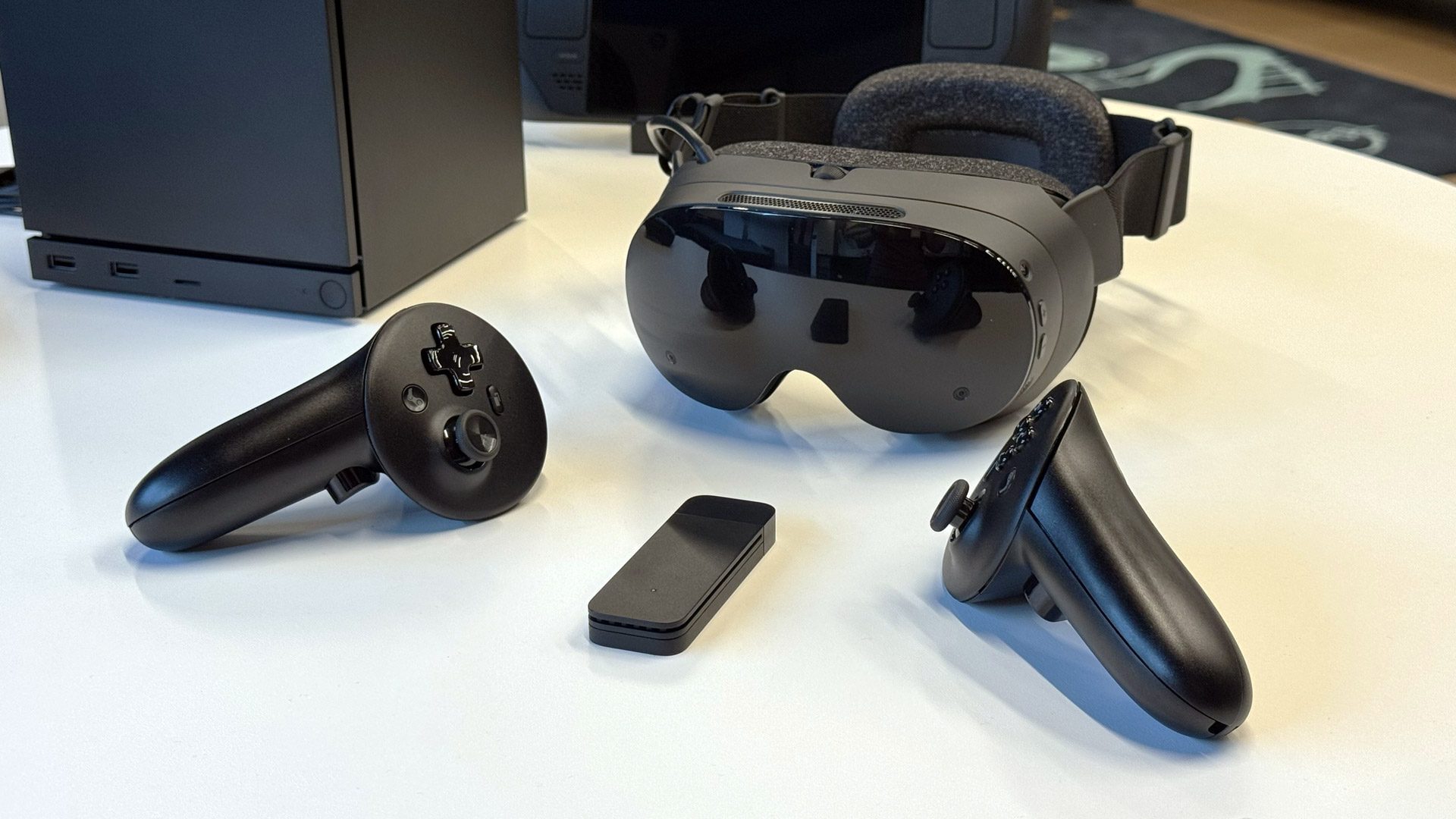
Valve has finally revealed Steam Frame, the company’s second VR headset. Though it’s quite a departure from Index—the company’s first headset released some six years ago—Valve says Frame is an “evolution” of Index. Indeed, Frame represents a modernized VR vision from the company that closely tracks advancements made in the XR industry more broadly, but with a flavor all its own. I got an early look at Steam Frame and a chance to talk directly to the people at Valve who built it.
Steam Frame is an ambitious new headset that aims to be a portal to a user’s entire Steam library (flat or VR), while also catering to an audience of hardcore PC VR users.
There’s quite a bit going on with Steam Frame. You may want to familiarize yourself with the complete specs here before reading on.
Steam Frame is a completely standalone headset running SteamOS, and designed to be able to run most of a user’s Steam library directly on the headset itself. Indeed, this means Valve has created a new compatibility layer to allow many PC (x86) games to run on the headset’s ARM processor without any modifications by the developer. Similar to Valve’s handheld gaming PC, Deck, whether or not those games will run well on the headset is still another question. High-end PC VR games, for instance, may install and run natively on the headset without any changes by the developer, but getting them to run well enough to actually play performantly will likely require developer optimizations that may necessitate that many PC VR games be crunched down to something more akin to Quest 3-level graphics.
But Valve says Steam Frame is designed to provide the best experience when it’s paired with a capable gaming PC that can stream Steam content (again, VR or flat) to the headset, rather than rendering directly on the headset device itself.
Valve seems to have a very high bar for what it wants from the PC streaming experience. To make it as good as possible, Frame includes a dedicated Wi-Fi 6E streaming dongle which plugs into a host computer to allow for a direct streaming link between the headset and the PC. This has a number of advantages compared to the usual method of PC VR streaming, which sends traffic from the computer to a router and then to the headset.
Frame itself has a Wi-Fi 7 radio with two transmitters and two receivers. Valve says this dual antenna setup allows for simultaneous use of 5GHz and 6GHz channels, allowing one to handle the dedicated streaming connection to the Frame streaming dongle, and the other to let the headset talk to the regular router for standard internet connectivity.
Valve has also created a new foveated streaming technology which uses Frame’s eye-tracking to optimize the streamed image to have the highest quality at the very center of your view. This is similar to foveated rendering, but with the advantage that it applies to all streamed Steam content without needing a specific implementation by developers. And for PC VR content which already supports foveated rendering, the foveated streaming tech works just as well on top of it.
Any performant gaming PC can stream Steam content to Frame, but Valve also says that its newly announced Steam Machine ‘console’ PC will make a great companion for Frame.
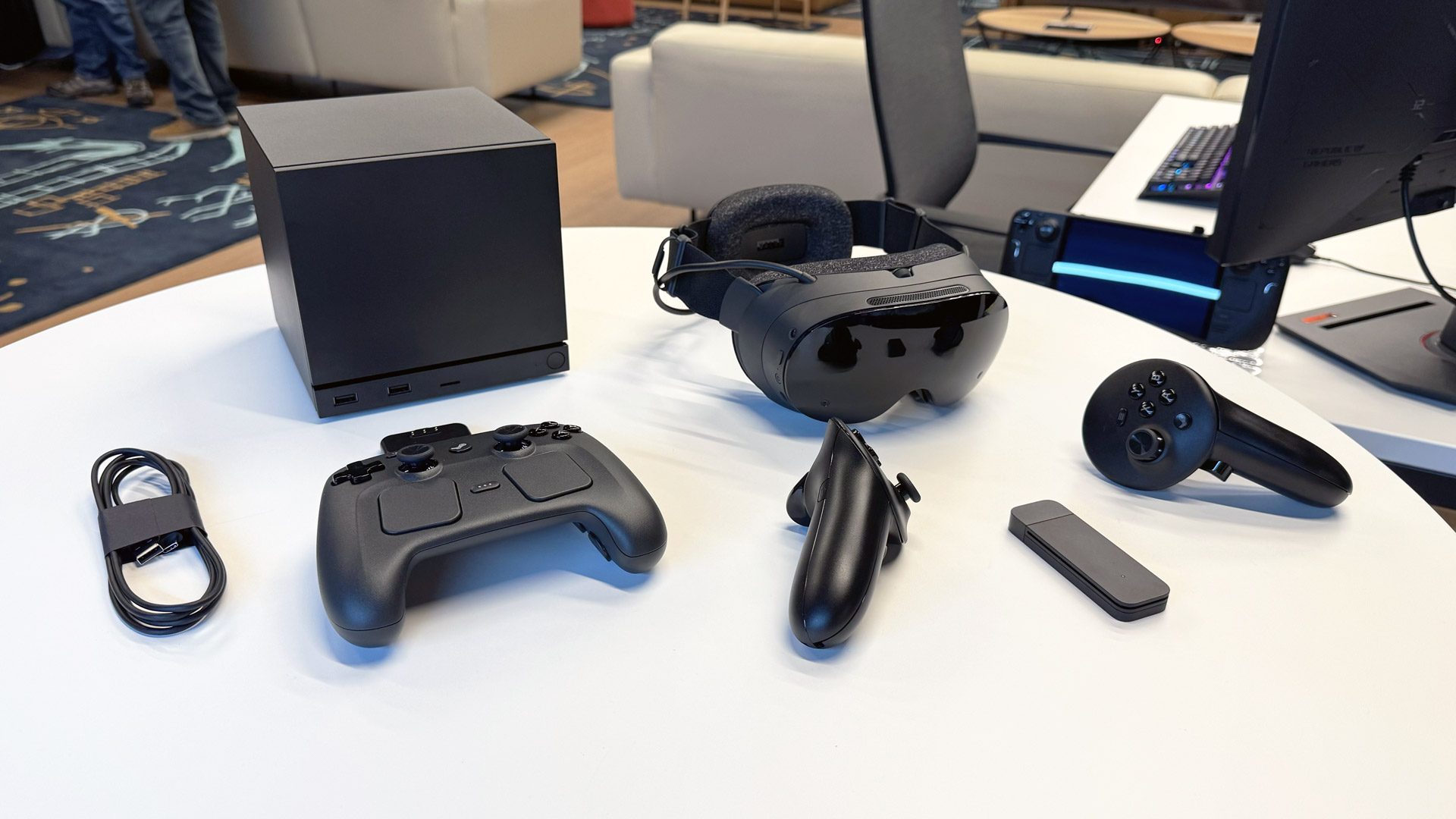
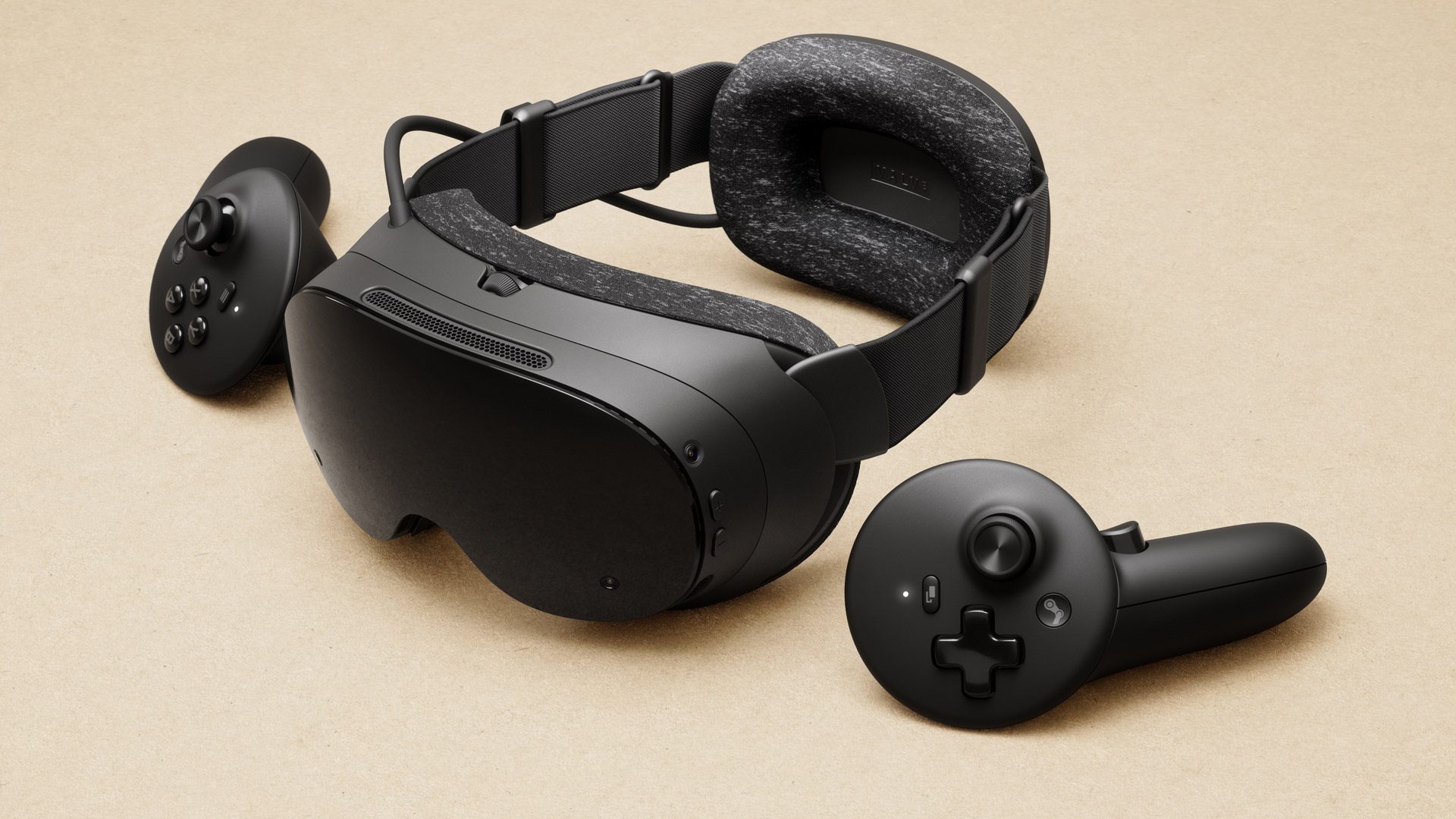
Steam Frame is also designed to be modular and expandable. Valve showed me how a few clips can be undone around the facepad to remove the so-called ‘core module’, which is really the heart of the headset, including the processor, memory, displays, and pancake lenses.
When I first got a look at the core module itself, I was struck by how compact it looks all by itself. It looks a bit more compact than the equivalent ‘cores’ of Quest 3 and Vision Pro, but it’s also significantly lighter, weighing in at 190g compared to Quest 3 at 395g and Vision Pro at 478g.
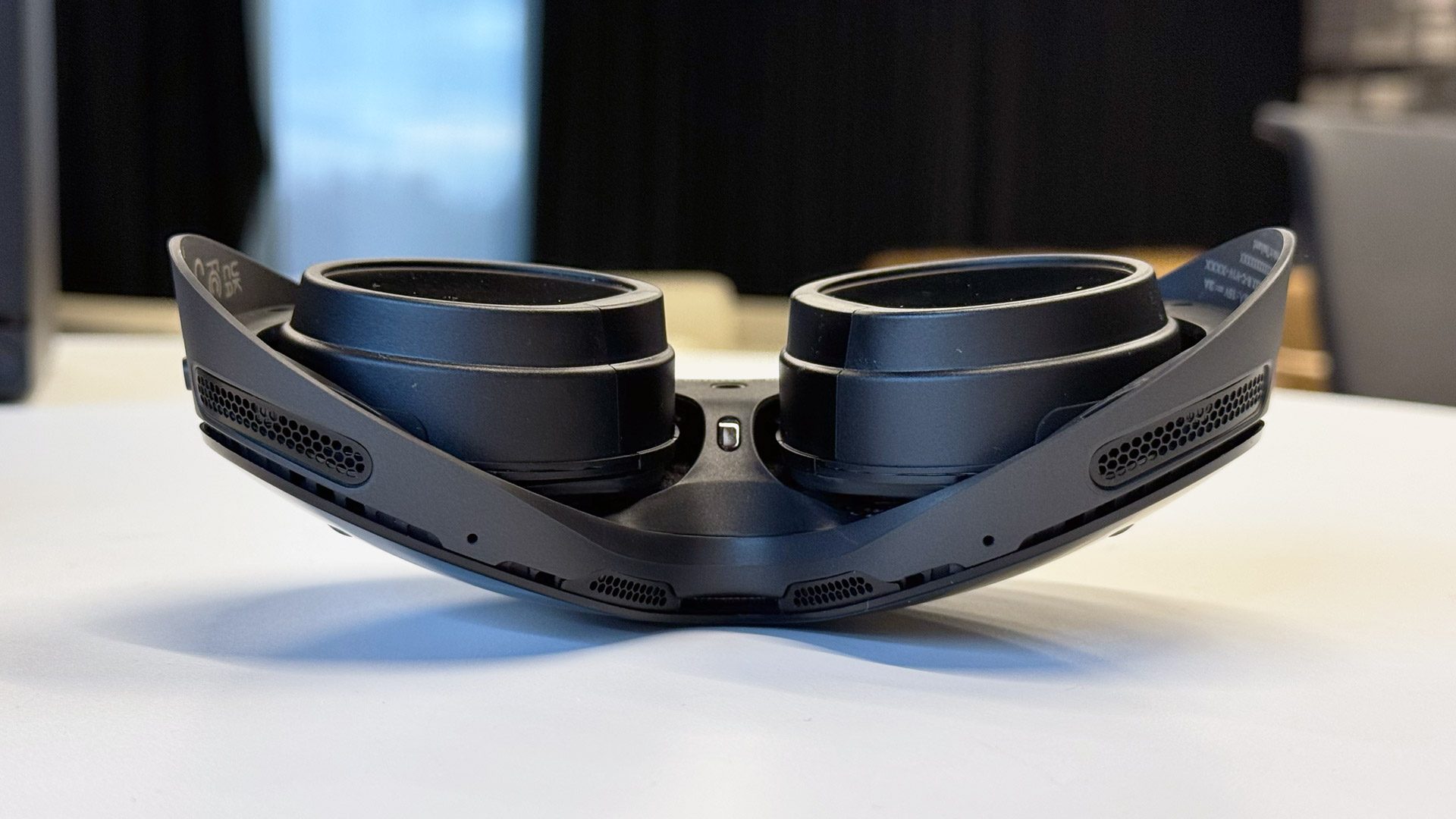
Of course this isn’t exactly a ‘fair’ comparison, because both Quest 3 and Vision Pro cores include speakers and, in the case of Quest 3, a battery, which Frame does not. But that’s kind of the point. By not permanently attaching things like the facepad, speakers, strap, and battery to the core module, Valve has ensured that modders and accessory makers will be able to heavily customize the headset.
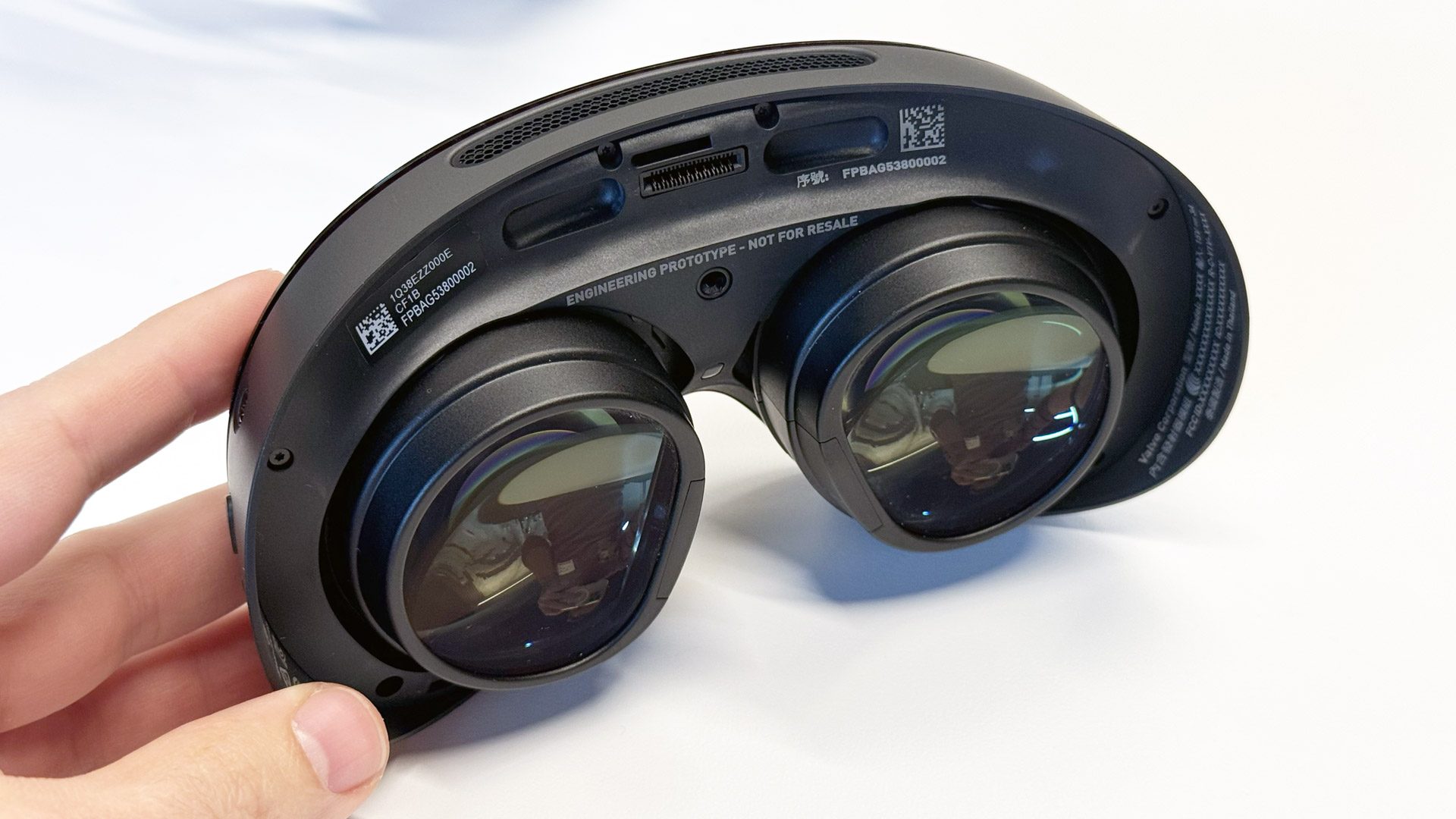
The entire Frame headset (speakers, battery, strap, and facepad included) is also very lightweight at just 435g, compared to Quest 3 at 515g, and Vision Pro (M2) at 625g.
Visuals
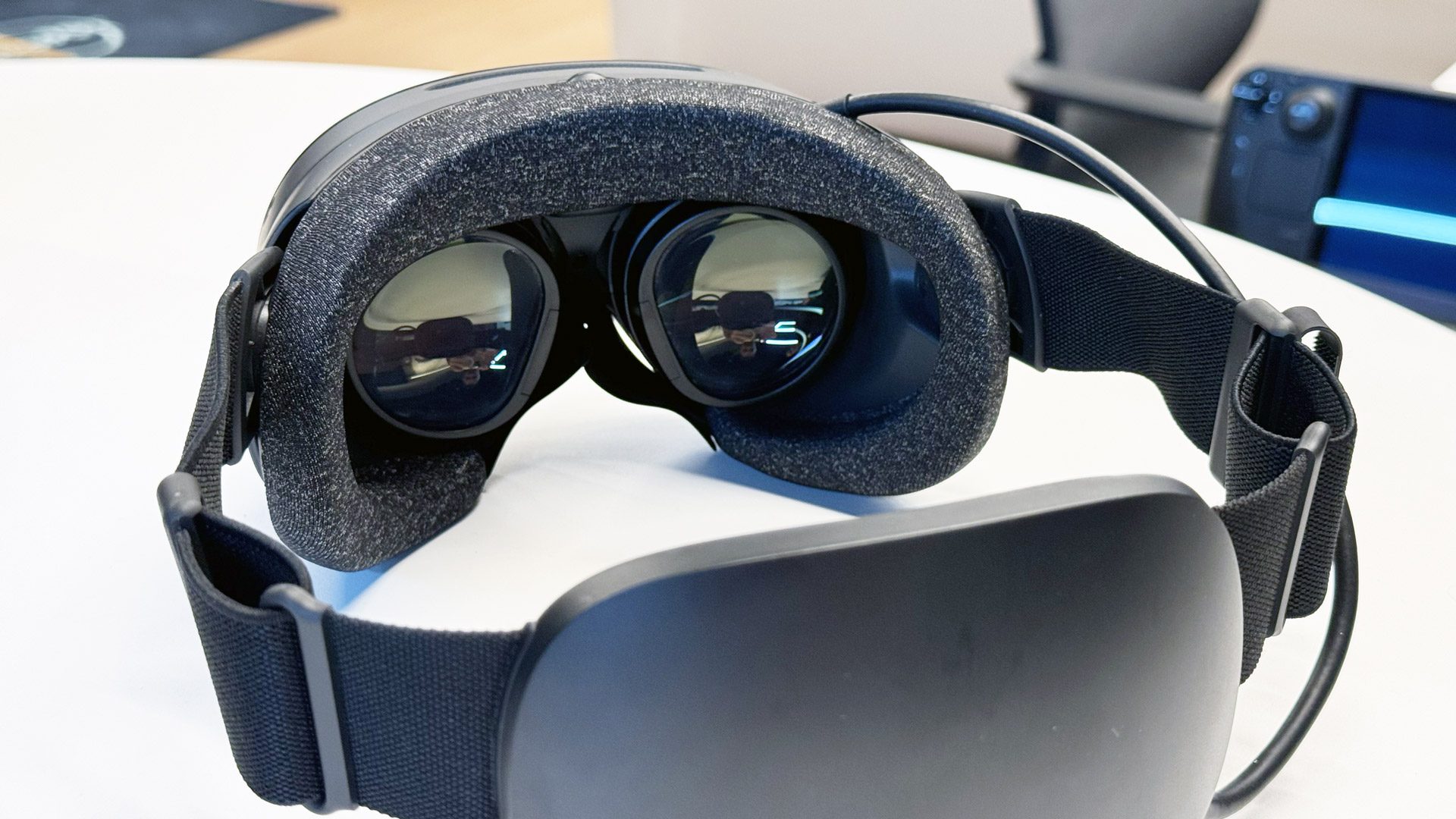
When I put on Steam Frame for the first time I was looking at Half-Life: Alyx streamed from a PC in the same room from Frame’s dedicated streaming dongle.
Considering the Frame’s 4.6MP (2,160 × 2,160) per-eye resolution, I was expecting an image that looked similar to Quest 3’s display, which is 4.5MP (2,064 × 2,208). But I was surprised that the first thing I noticed was a somewhat visible screen-door effect (SDE), which is caused by the unlit space between pixels.
Considering I haven’t (yet) been able to test Frame side-by-side with Quest 3, there’s two explanations for the somewhat apparent SDE. Either I’m completely spoiled by the high resolution displays of headsets like Vision Pro and Galaxy XR, or (more likely) Frame’s LCD has a lower fill-factor than Quest 3’s LCD, even though they have a very similar number of pixels and field-of-view.
Thankfully, most other aspects of the image looked great. In my short time with the headset, it seemed like Frame’s custom pancake optics have similar performance to those of Quest 3, which have lead the industry for quite some time. Similar to Quest 3, the ‘sweet spot’ (area of maximum clarity) appeared to be very wide, spanning nearly edge-to-edge. I also didn’t notice any obvious chromatic aberration (separation of colors), ghosting, or motion blur. Granted, I didn’t get to hand-pick the content I was looking at, so I still want to spend more time looking through the headset to be sure of all of these early observations.
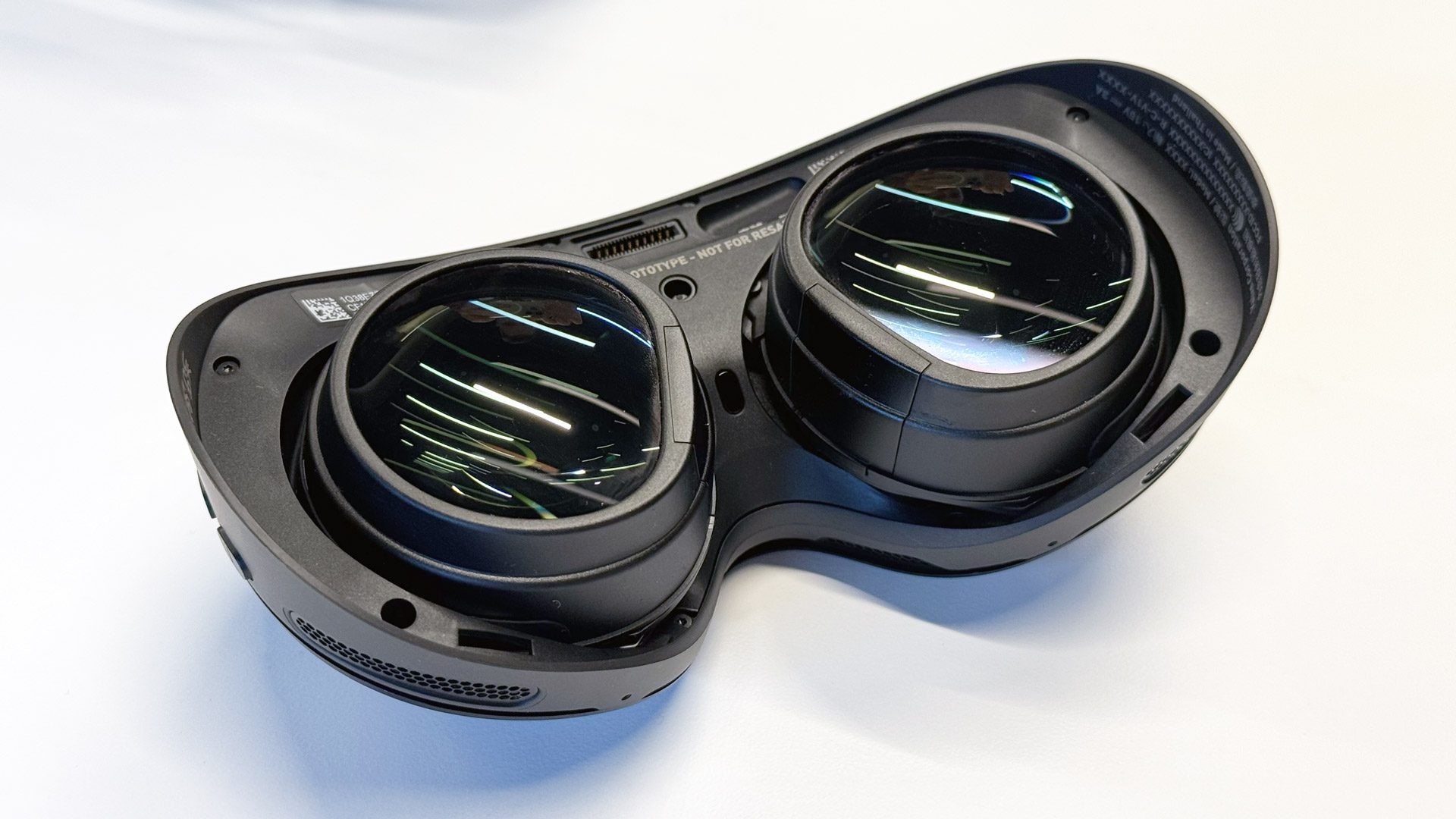
I didn’t have enough time with the headset to get a feel for how the field-of-view compared to similar devices. Valve says the field-of-view is “up to 110°” along all axes, though the company stressed that there’s not a widely agreed upon method for measuring field-of-view in a VR headset (accounting for things like eye-relief and face shape), so they stressed that this number may not be directly comparable to field-of-view figures from other headset makers. Granted, the company told me that Frame’s field-of-view is ‘a bit less’ than that of Index.
As for the foveated streaming, I can’t say I saw any compression artifacts or stuttering, nor could I tell that foveation was happening at all during normal gameplay. The Half-Life: Alyx world I saw looked exactly like I would have expected from the same headset tethered directly to the computer. And yet, I had the freedom to move around and rotate in space as much as I wanted without worrying about tangling up a cord.
Aside from foveated streaming tech, it feels like Valve is only scraping the surface with eye-tracking. As far as I know, they aren’t doing anything with eye-tracking except foveated streaming. There was no mention of eye-tracked visual corrections, automatic IPD measurement, or eye-based interface interaction. This could (and I hope, will) be added in the future to make Frame better still.
Passthrough, unfortunately, was a bit of a let down for me. While every other modern headset has moved to color passthrough with slowly improving resolution, the 1.3MP (1,280 × 1,024) black & white (infrared) passthrough cameras on Frame feel like a step back to the Quest 2 era.
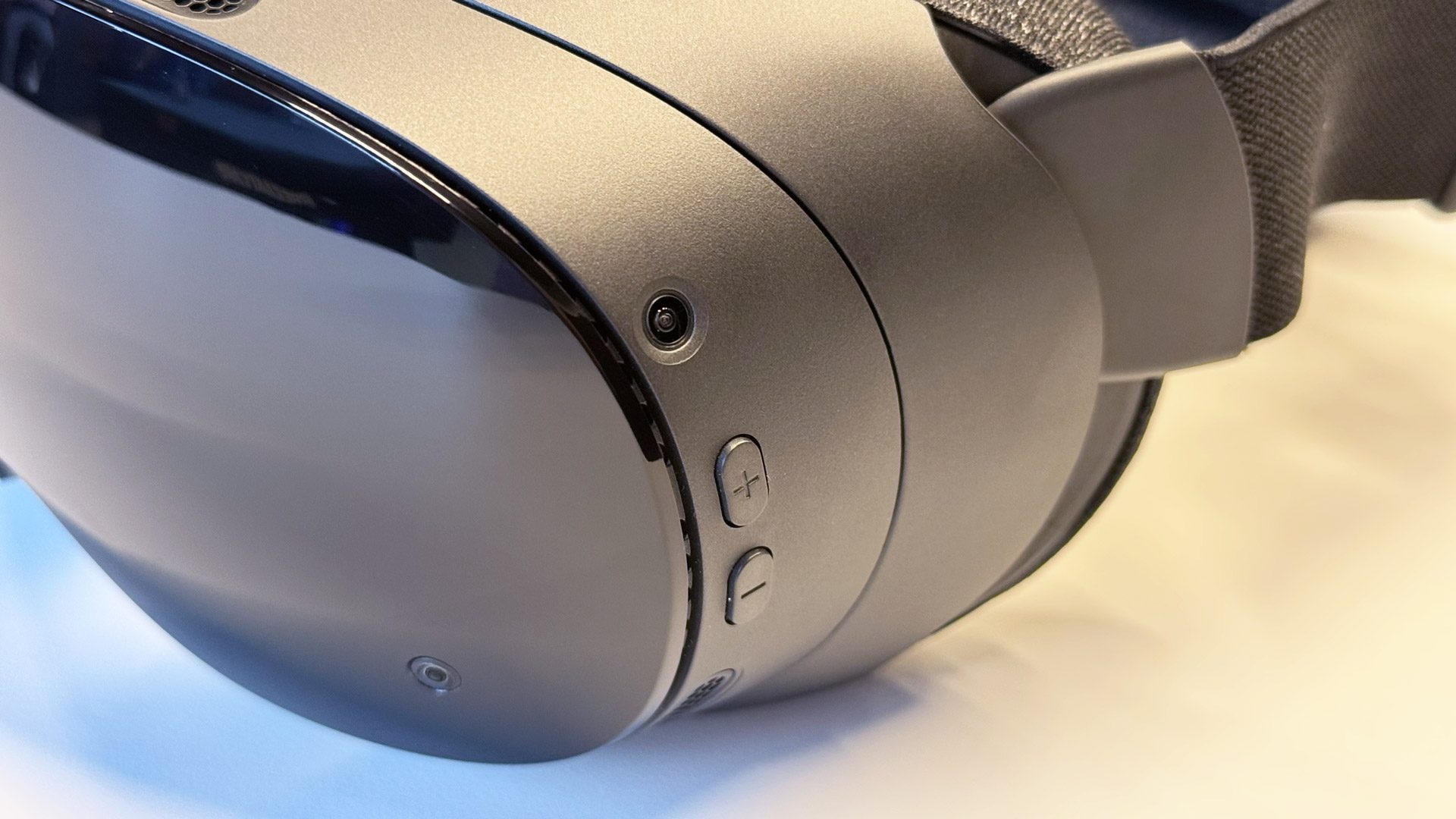
It’s understandable that Valve didn’t prioritize high-quality passthrough (because they seemingly aren’t very interested in using the headset for mixed reality). Still, if Valve envisions Frame as a great way to chill out and play flat games on a big virtual screen, a high-quality passthrough view showing the room around me in the background is an easy preference over an arbitrary virtual environment.
While it doesn’t seem that Valve thought the tradeoffs of additional cost, weight, and power consumption were worth it for high-quality passthrough cameras, they at least anticipated that this might matter more to others. That seems to be one major reason why they added a hidden expansion port under the nose bridge of the headset which they say can support a dual 2.5Gbps camera interface via a PCIe Gen 4 connection.
Valve itself isn’t committing to building an add-on color passthrough accessory, but it seems they’re hoping someone else will take on that challenge.
Ergonomics & Audio
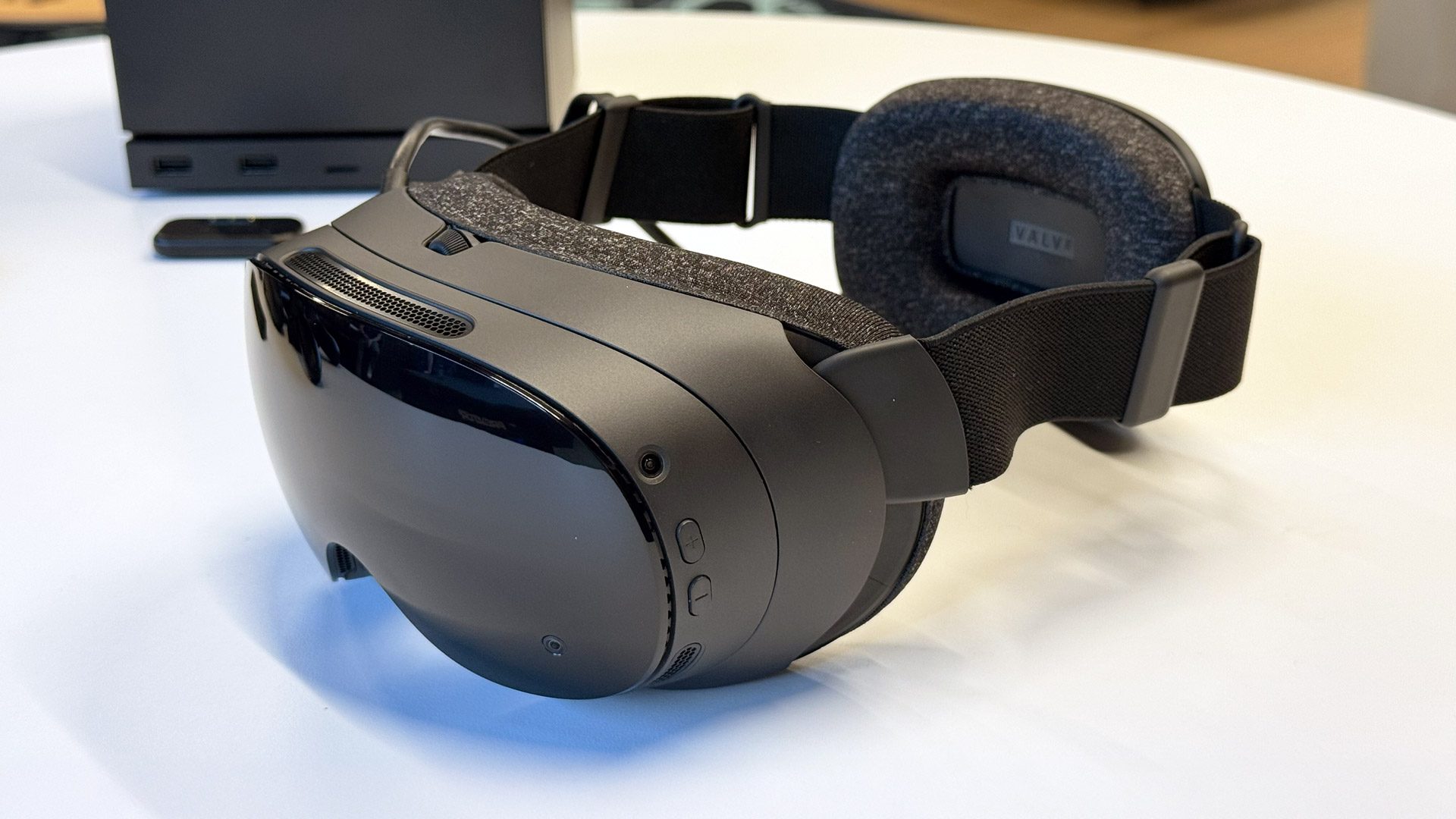
Steam Frame might weigh in at an impressive 435g. That sounds great on paper, but as Apple found recently when it added weight to its latest Vision Pro headset to make it more comfortable, lighter isn’t universally better when it comes to VR headsets.
On one hand, Frame smartly distributes its weight around the head by mounting the battery on the back of the strap. And while this would normally be a smart idea for counterbalancing the front portion of the headset… Frame has a soft strap and no top strap, which means the rear battery weight can’t actually do anything to counterbalance the front of the headset.
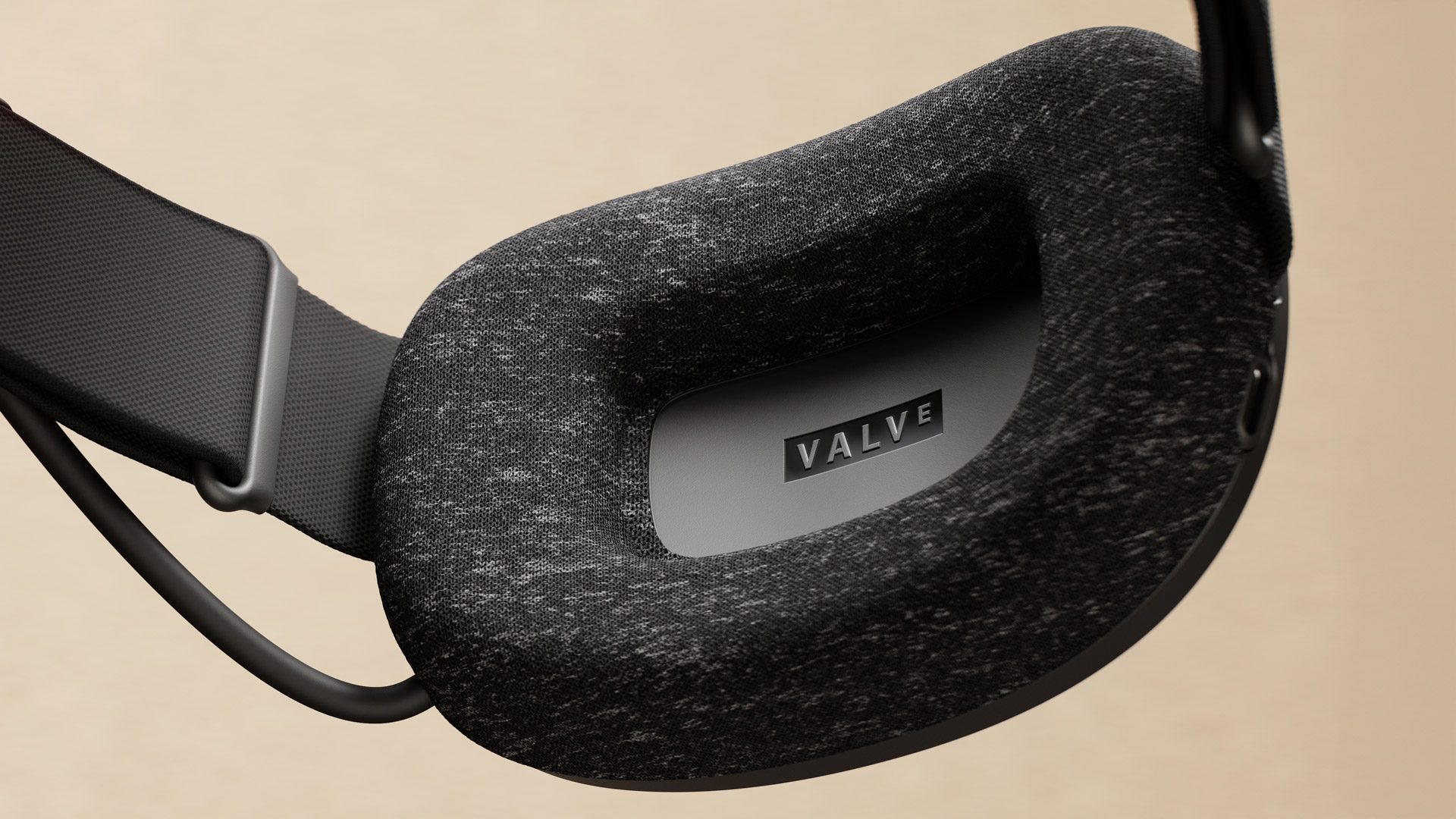
I’ve literally never come across a VR headset to date that’s more comfortable with a soft strap than a rigid strap. Nor have I found one that doesn’t get notably more comfortable when a top strap is added.
Considering Index had both a rigid strap and a top strap, it’s surprising to see Valve take this tactic with Frame. It feels like they wanted to get the on-paper weight down as low as possible, even if it meant a less comfortable headset overall.
And there’s another bothersome issue with Frame’s use of a soft strap (and lack of top strap). To tighten the headstrap, you need to use both hands to pull the strap on each side. But clearly this means you don’t have a third hand available to hold the lenses in the ideal spot while you tighten the strap. That means that putting on the headset usually involves looking toward the floor so the rear part of the strap can keep the headset… well, on your head while you’re tightening the thing. It’s an awkward dance that could have been avoided by using a ratcheting dial so the strap could be more easily tightened with one hand.
Clearly my critique wasn’t unanticipated by the company either; Valve is already planning to sell an optional ‘comfort kit’ which includes a top strap and ‘knuckles-style’ straps for the controllers. Though it will still lack some of the benefits of a rigid strap (and tightening dial), the top strap means the battery can properly function as a counterbalance by distributing the forces over the top of your head, and it’ll give the headset something to balance on while you tighten the straps.
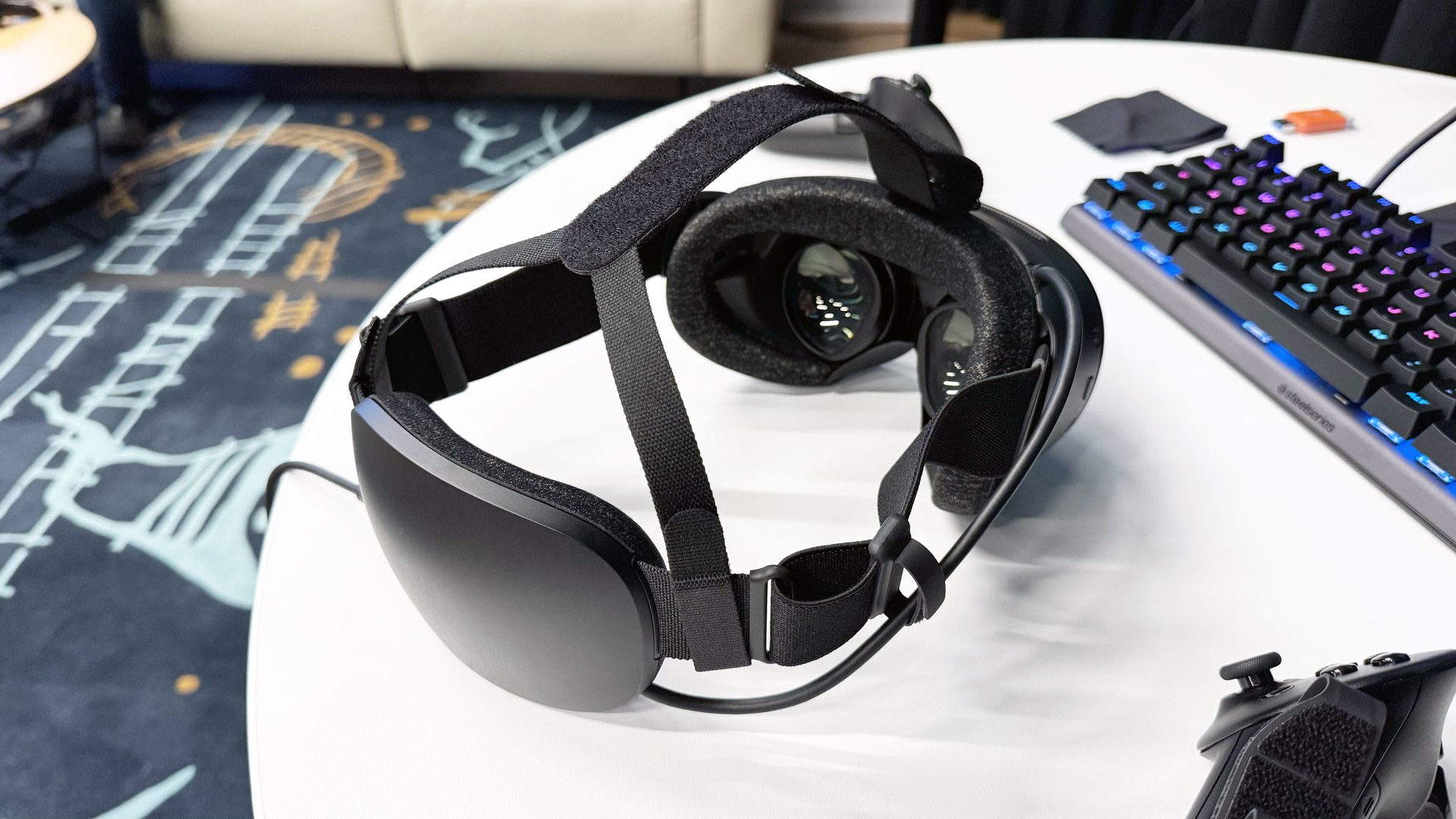
Even though I haven’t had that much time with Frame at this point, I already know for certain that I’m going to prefer the top strap.
But hey, ergonomics are hard because of the wide range of head shapes, hair styles, and personal preferences. So it’s a good thing that Valve built the headset to be so modular. I’m expecting to see a wide range of third-party straps that can connect directly to the core module and make Frame feel like a completely different headset.
When it comes to audio, I can’t say I had enough time in the headset to confidently say much about it at this point, other than saying there was nothing that was obviously problematic or radically better than I would have expected.
Valve set a very high bar for audio with Index’s legendary off-ear speakers. While I don’t expect Frame’s speakers to be quite as good (considering how much more compact they are, and built into the headstrap), I know that the same acoustics engineer that worked on Index also worked on Frame’s audio. So we can be certain they were very familiar with the bar set by Index.
Controllers
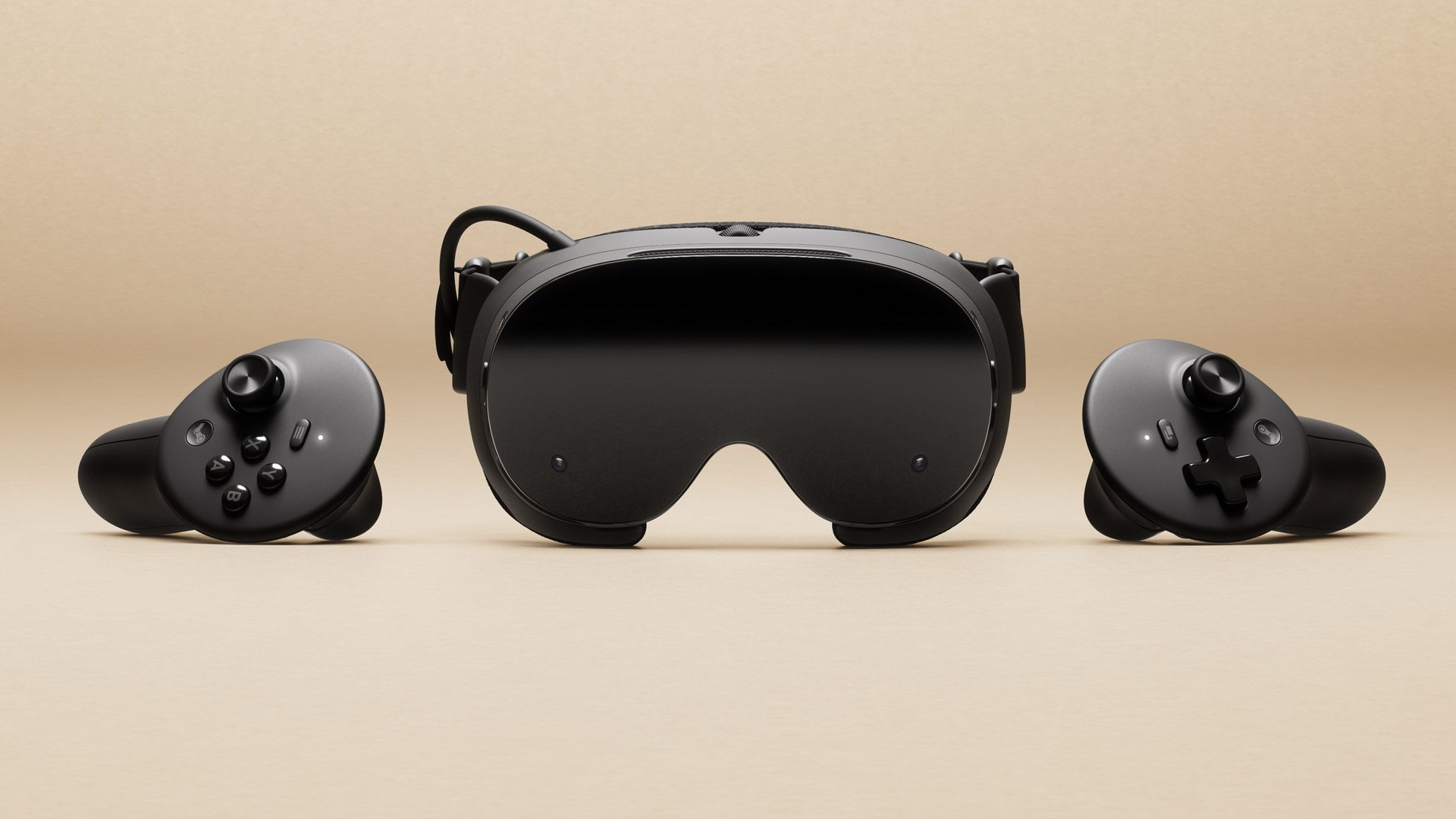
Frame’s controllers clearly take a lot of inspiration from Quest’s Touch controllers. But Valve has made some interesting tweaks to allow them to function like a modern gamepad so users can play VR games or flat games with the same controllers.
While most VR controllers put two face buttons on each controller, Frame’s controllers move all the major face buttons (A, B, X, Y) to the right controller, while the left controllers gains a D-pad. In addition to grab-triggers and index finger triggers, Frame’s controllers also add a ‘bumper’ button above each index finger trigger. All of these decisions mean the Frame controllers largely mirror a standard gamepad, making for seamless compatibility with flat games.
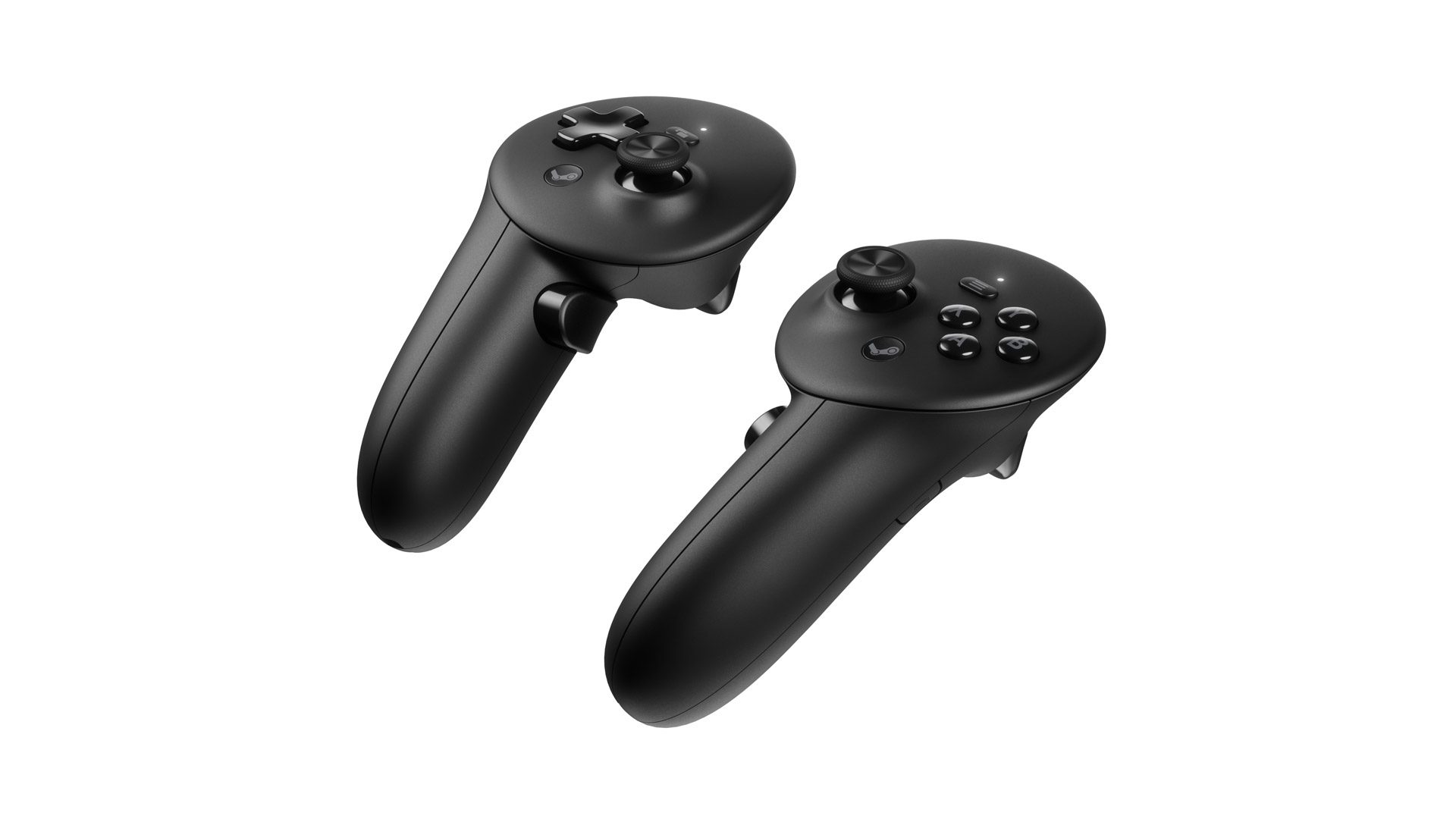
And, like Valve’s new Steam Controller, the Frame controllers use ‘next-gen’ magnetic TMR thumbsticks, which the company says gives a smaller dead-zone and is more resistant to drifting issues that can happen to thumbsticks over time.
Valve didn’t forget about what made the Index controllers unique; the handles of the Frame controllers (and all of the buttons, sticks, triggers, and D-pad) include capacitive sensing so the controller can detect where your fingers are while using the controller. And the company is selling the aforementioned (optional) ‘comfort kit’ for Frame which includes knuckles-style straps to hold the Frame controllers in place, even while opening your hand.
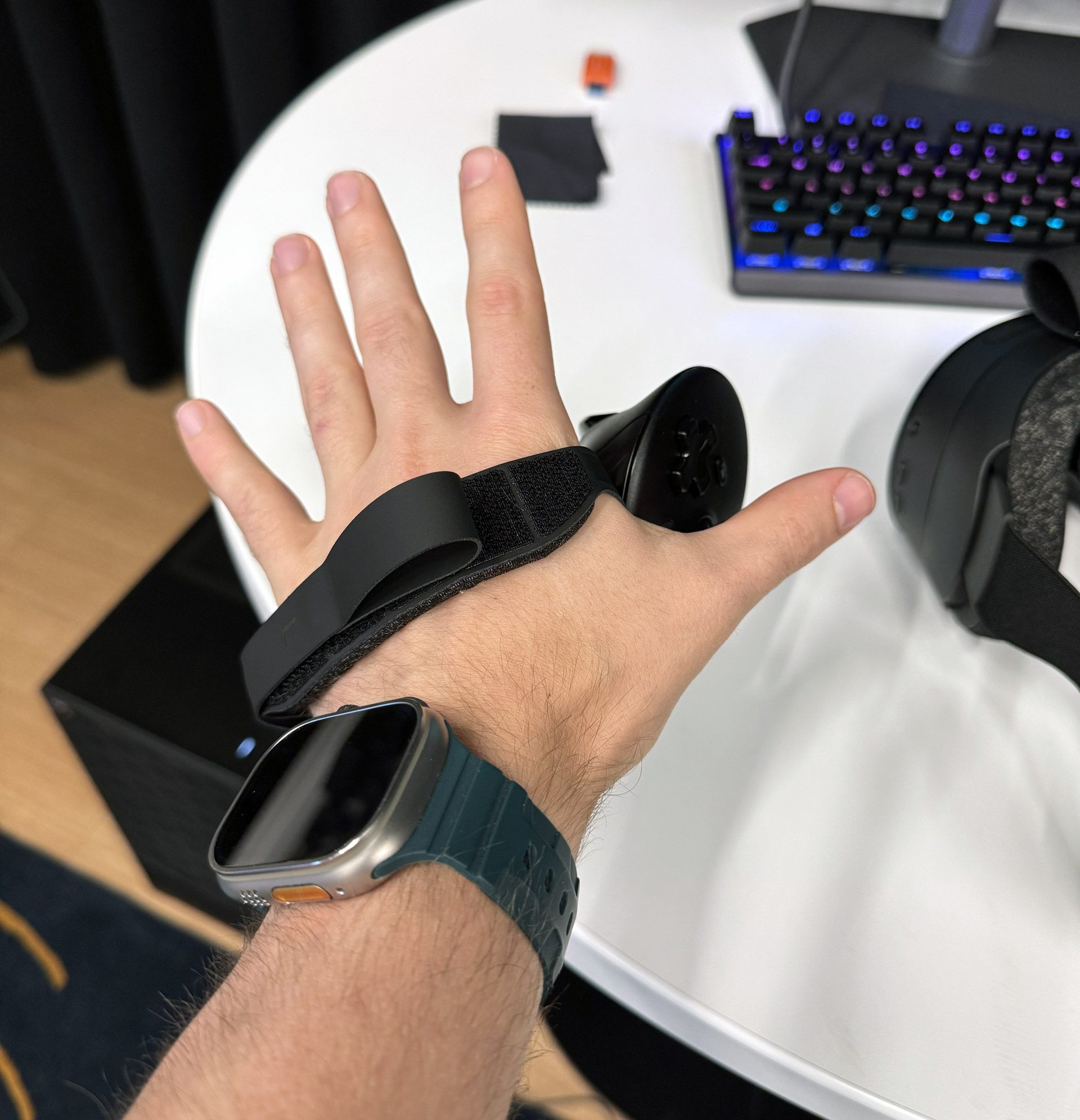
Too be fair though, the capacitive sensing features of the Index controllers went largely unutilized, and there’s little reason to think that will change this time around.
Software & Experience
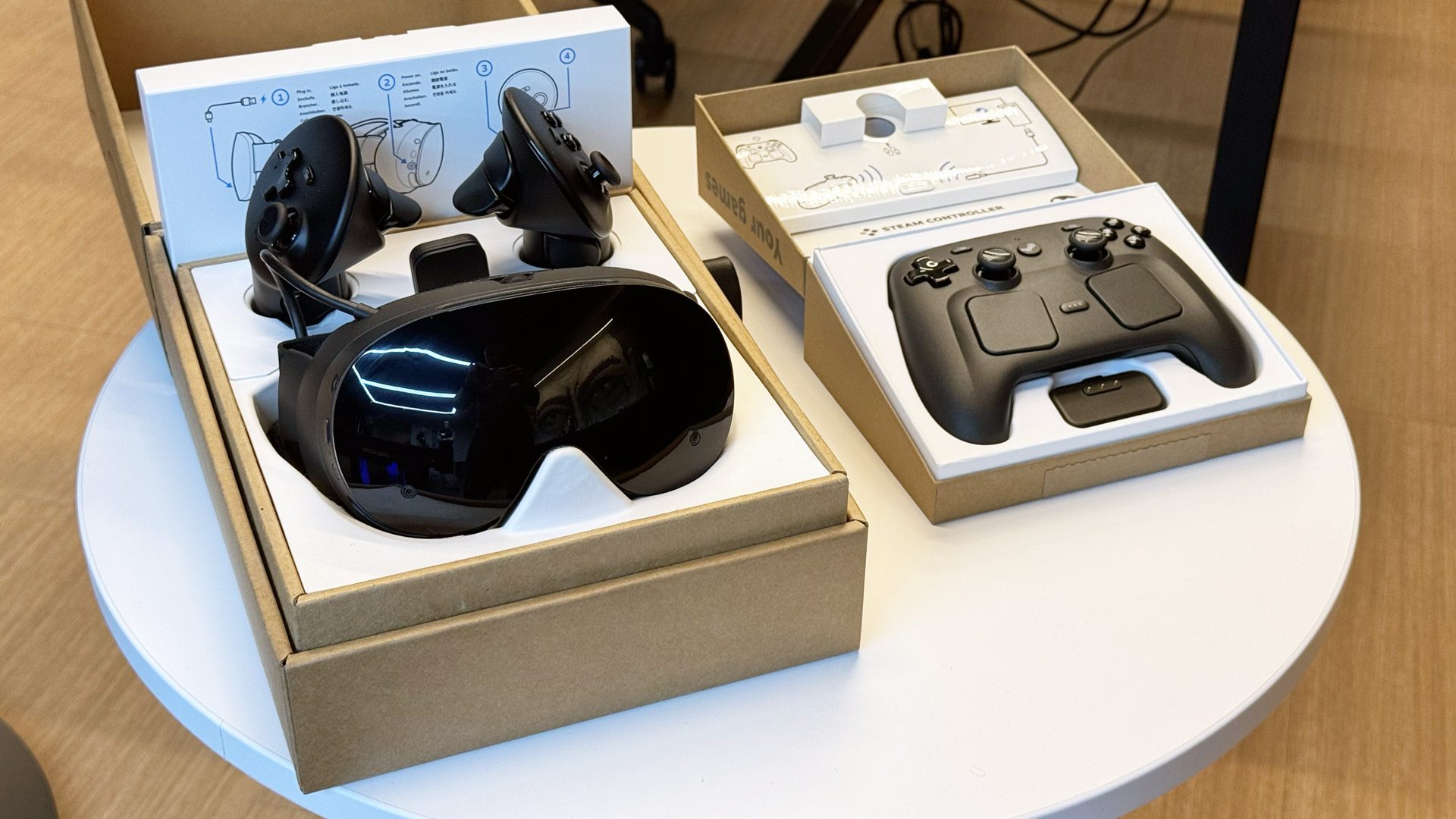
Valve says Frame is running a full-featured version of SteamOS with functionally all the same capabilities that you’d expect from Steam Deck (including the ability to drop back to a Linux desktop for complete control over the device). Frame will be available with two UFS memory variants: 256GB and 1TB. It also includes a microSD slot for expanding storage further (up to an additional 2TB).
SteamOS puts your Steam library front and center. It’s similar to the experience you’d get from Big Picture mode or SteamOS on Steam Deck, but on Frame it doesn’t discriminate between VR and non-VR games.
SteamOS on Frame also makes it easy to ‘play your way’. You can choose to install your games locally and run them directly on the headset, or choose to stream them from a connected gaming PC where they’re already installed. For games that make use of Steam Cloud, you’ll also heave seamless syncing of game saves and progress between devices, whether you’re streaming a game to Frame, playing directly on Frame, or picking up on another device like Deck.
Valve says it isn’t going to limit people from trying to run any technically compatible Steam game on Frame directly, though the company isn’t promising everything will necessarily run well. It sounds like the company plans to have a similar ‘badging’ system for Frame as they do for Deck, likely offering the same badges of ‘Verified’, ‘Playable’, ‘Unsupported’, or ‘Unknown’ to help people know what will run well on the headset itself.
When it comes to VR content, Valve says its goal is for most PC VR content to be able to run natively on Frame out of the box. But the company says it ‘still has some work to do’ on this front, and it plans to gather feedback from a dev kit program and make further compatibility and performance improvements between now and launch.
Valve’s underlying thesis for Frame seems to be enabling users to access their entire Steam library (VR or flat), while also allowing them to tap into the power of their gaming PC for high quality rendering or to take their games on the go by playing them natively on the headset.
It’s an appealing idea, but I can’t quite shake the fact that a Quest 3 (or similar) headset with Steam Link can already stream both PC VR and flat Steam content from a host PC. Sure, it would be an added convenience to have the Frame controllers so you don’t need to pick up a gamepad when streaming a flat game to Quest 3; but that seems to be a convenience rather than a major advantage. And sure, Quest 3 can’t play any Steam content while standalone, but that’s why it has its own huge library of standalone VR content… the only thing missing from Quest 3 when in standalone mode then is flat Steam games, but who among us is dying to put on a VR headset to play flat games?
Maybe it will become more apparent once I have more time to spend with Frame. But, as of now, I’m not quite seeing the key value proposition over something like Quest 3.
There’s two key things Valve could do to make me want to reach for a VR headset when playing flat games: 3D rendering for flat content and ‘socially present’ gaming.
The first would mean somehow adding stereoscopic rendering to most flat games so they would appear 3D inside the headset (though this would be no easy task). And the second would be something like letting me sit on a virtual couch next to my Steam friends so we can play and watch each other’s game streams side-by-side (as if we were playing on a couch next to each other). Unfortunately Frame isn’t doing either of these things at present.
There’s no doubt that Frame has a very interesting modular design. And maybe its direct-connection dongle with foveated streaming will turn out to be more reliable and visually superior compared to streaming to a standalone headset with Steam Link and a regular router setup. But is that enough to offset the advantages of other options on the market?
Truly, I think it’s too early to see how the strategy for Frame will pan out in the long run. But I look forward to testing Valve’s thesis once I can see how Frame fits into my life as an average gamer who already spends plenty of time on Steam.
More Steam Frame Announcement Coverage
Valve Unveils Steam Frame VR headset to Make Your Entire Steam Library Portable: Valve shows off Steam Frame, the standalone headset that can stream and natively play your entire Steam library—with only a few caveats right now.
Steam Frame’s Price Hasn’t Been Locked in, But Valve Expects it to be ‘cheaper than Index’: No price or release date yet, but Valve implies Steam Frame will be cheaper than $1,000 for the full Index kit.
Valve Says No New First-party VR Game is in Development: Valve launched Half-Life: Alyx (2020) a few months after releasing Index, but no such luck for first-party content on Steam Frame.
Valve is Open to Bringing SteamOS to Third-party VR Headsets: Steam Frame is the first VR headset to run SteamOS, but it may not be the last.
Valve Plans to Offer Steam Frame Dev Kits to VR Developers: Steam Frame isn’t here yet; Valve says it needs more time with developers first so they can optimize their PC VR games.
Valve Announces SteamOS Console and New Steam Controller, Designed with Steam Frame Headset in Mind: Find out why Valve’s new SteamOS-running Console and controller will work seamlessly with Steam Frame.
Steam Frame vs. Quest 3 Specs: Better Streaming, Power & Hackability: Quest 3 can do a lot, but can it go toe-to-toe with Steam Frame?
Steam Frame vs. Valve Index Specs: Wireless VR Gameplay That’s Generations Ahead : Valve Index used to be the go-to PC VR headset, but the times have changed.