
XREAL Rolls out Automatic Real-time 3D Conversion Feature for Its AR Glasses

10

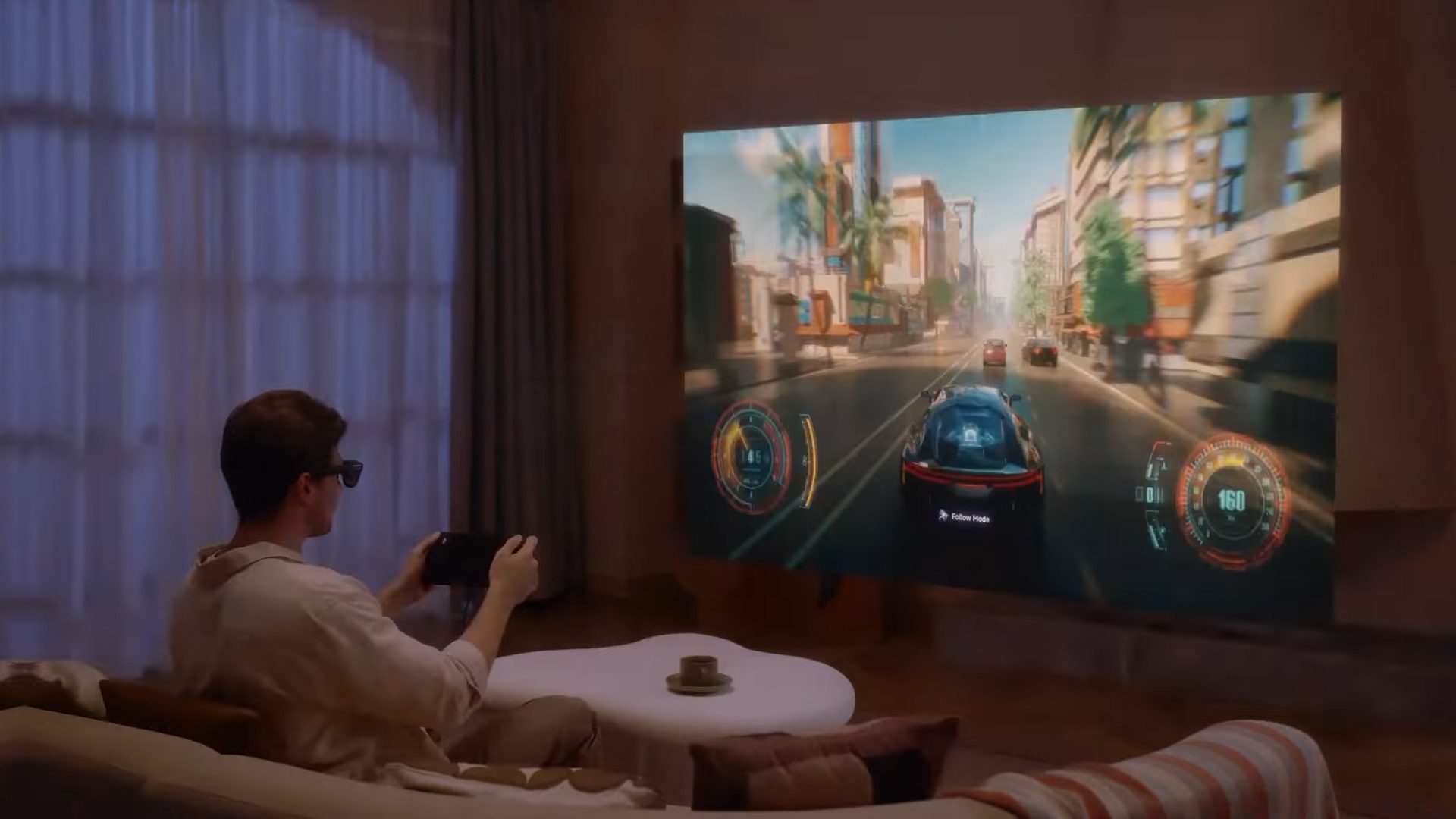
XREAL has rolled out a real-time 3D conversion feature to its flagship AR glasses, which the company says converts any 2D content to 3D.

Xreal initially launched its ‘Real 3D’ software on Xreal 1S AR glasses earlier this month, however now the company has rolled out an update to Xreal One and One Pro that brings optional real-time 3D conversion to 2D content.

The company says Real 3D doesn’t require special video files, apps, DRM-protected content, or external software. All of the conversion is done in real-time on device via the company’s X1 spatial computing chipset built into the One series glasses.
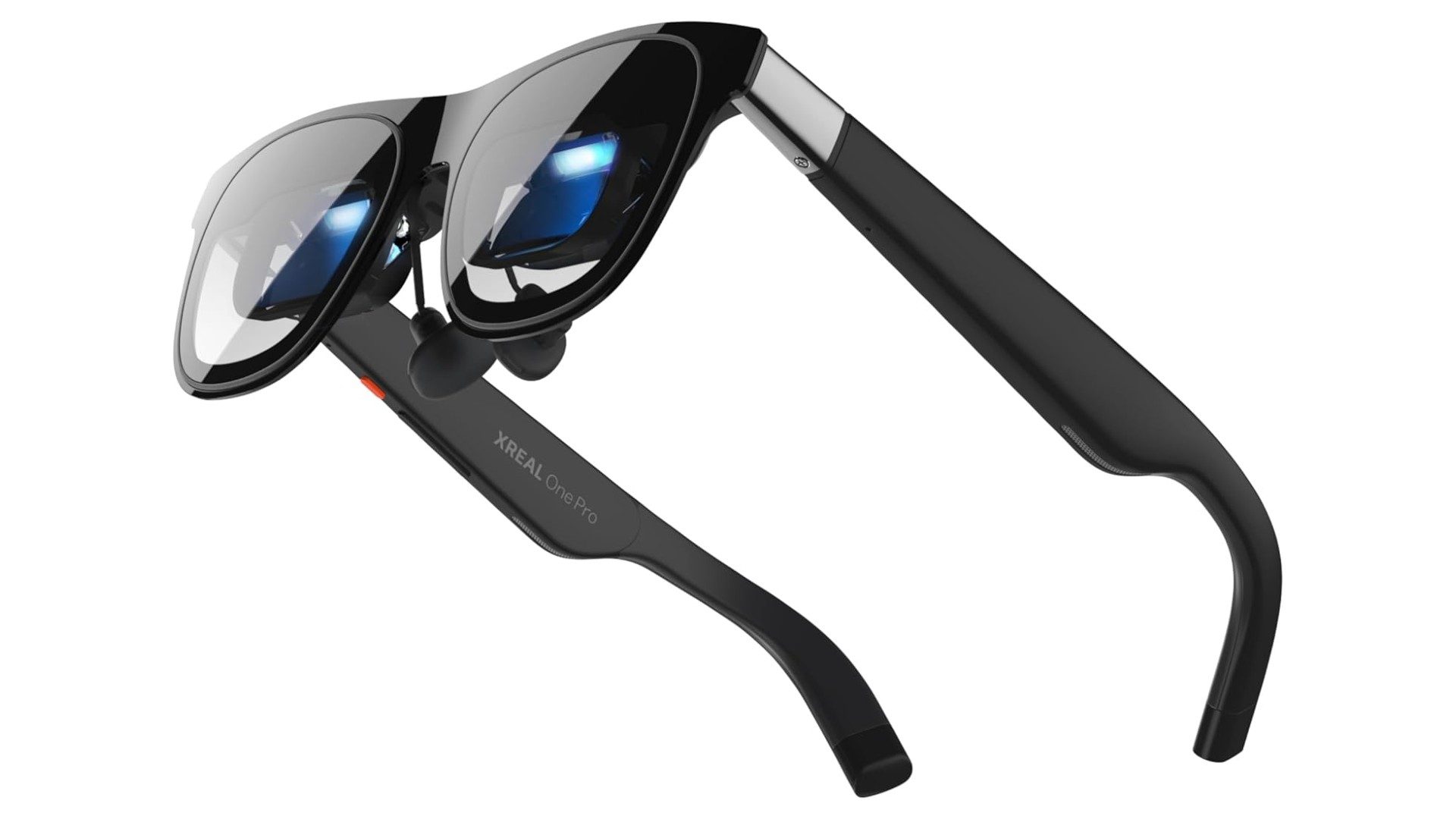
XREAL One Pro | Image courtesy XREAL

“Because it doesn’t depend on proprietary players or formats, Real 3D works across connected desktops, consoles, phones, and other devices,” the company says, noting that content includes movies, streaming videos, locally stored media, and games.

Xreal tells Road to VR it does this by using the X1 chip’s NPU (neural processing unit) to perform depth estimation inference on every incoming frame and to generate the corresponding left- and right-eye views with depth relationships.

The company says it’s still investigating Real 3D’s latency. Notably, the company says that when compared to other display modes, its real-time 3D conversion results in “slightly higher power consumption,” something Xreal says is around 300mW.

SEE ALSO
Google's Leading AR Glasses Partner XREAL Raises $100M

Additionally, Xreal tells Road to VR that its Real 3D technology is entirely developed in-house.

“We trained a highly compact model that balances performance and power consumption specifically for integrating into the X1 chip. While real-time 3D conversion is relatively straightforward on high-end GPUs, we have not found any comparable solutions in the industry that can operate effectively on low-power platforms like X1.”

The Beijing-based AR glasses maker sells a fairly wide range of AR glasses, all of which  target traditional content consumption, such as flatscreen games, TV and film running on its own Android-based operating system.

Alongside the announcement it had secured a $100 million financing round, Xreal also recently became Google’s lead AR partner following a multi-year extension of an agreement initially initially started in late 2024.

As a result, Xreal aims to bring Google’s Android XR operating system to its AR glasses over the next few years, which is slated to kick off with Xreal’s Project Aura when it launches at some point this year. In the meantime, you can check out our recent hands-on with Project Aura here.

This article may contain affiliate links. If you click an affiliate link and buy a product we may receive a small commission which helps support the publication. See here for more information.

Well before the first modern XR products hit the market, Scott recognized the potential of the technology and set out to understand and document its growth. He has been professionally reporting on the space for nearly a decade as Editor at Road to VR, authoring more than 4,000 articles on the topic. Scott brings that seasoned insight to his reporting from major industry events across the globe.
  • JanO

    Hey CDPR this can play CP2077 in a way you did not intend… Quick, send them a DMCA takedown, LoL…

    • namekuseijin

      AAA gatekeeping flatland game studios are such bozos. So sad to see all these "3D" games flattened out on 2D screens for decades now…

  • Andrew Jakobs

    And again showing an image that will never be anything close to reality, at least not for a few versions until they find a way to really block the background so it won't be seethrough.

    • kraeuterbutter

      what do you mean ?
      the dimming works realtivly good.. when you are inside and room is dark – perfect

      and if that is not enough: you can put shades on the glasses

      or what do you mean wiht "backgorund wont be seethrough" ?

      • Andrew Jakobs

        It's an image projected onto a transparent screen, so it'll be seethrough.. only way is to put a real lightblocker behind it.

        • kraeuterbutter

          no..
          the screen behind it can be dimmed electrochromatic
          that works really good..
          even when looking directly into the sun, the sun seems to be full-moon

          or in other words:
          dimmed with the 100% setting contrast and colors are way better outside, than ANY screen on Tablet oder Notebook I have ever seen

          inside my livingroom: blacks are as good or better with it than with my 1800Euro Television (non-oled)

          so not sure, if you own one of the glasses or why you say that

        • kraeuterbutter

          EDIT: it also has a auto-dimming-features:
          you can anker your screen for example above the screen of your real television, where your wife is watching a "Girls-movie"
          when you look aside, the dimming turns immediatly off..
          when you look back to the virtual ankered screen dimming is immediatly activated

          so i can put the window above the screen of the real television without seeing anything of it

        • kraeuterbutter

          sorry, that i answer once again:
          its said to block around 95% of light with the cromatic dimming..
          combined with the around 600-700nits of light TO your eyes,
          blacks are much blacker and contrast is greater than for example the Pico4, Quest3, Quest2 or Index

          at least for most of all usage-scenarios

  • kraeuterbutter

    they say in the articel, it is "straight forward" on a powerful GPU…

    are there programms, that can do than in realtime on my gaming rig, so i can stream it into one of my VR-Glasses ?

  • kraeuterbutter

    tested the 3D Feature on the X1-Chip of my Xreal One:
    does not come close to real 3D-movies..
    quality is not that good as i hoped it to be..

    so for me i will still watch movies in 2D with that googles, also iam a 3D-fan
    but it does not look good