
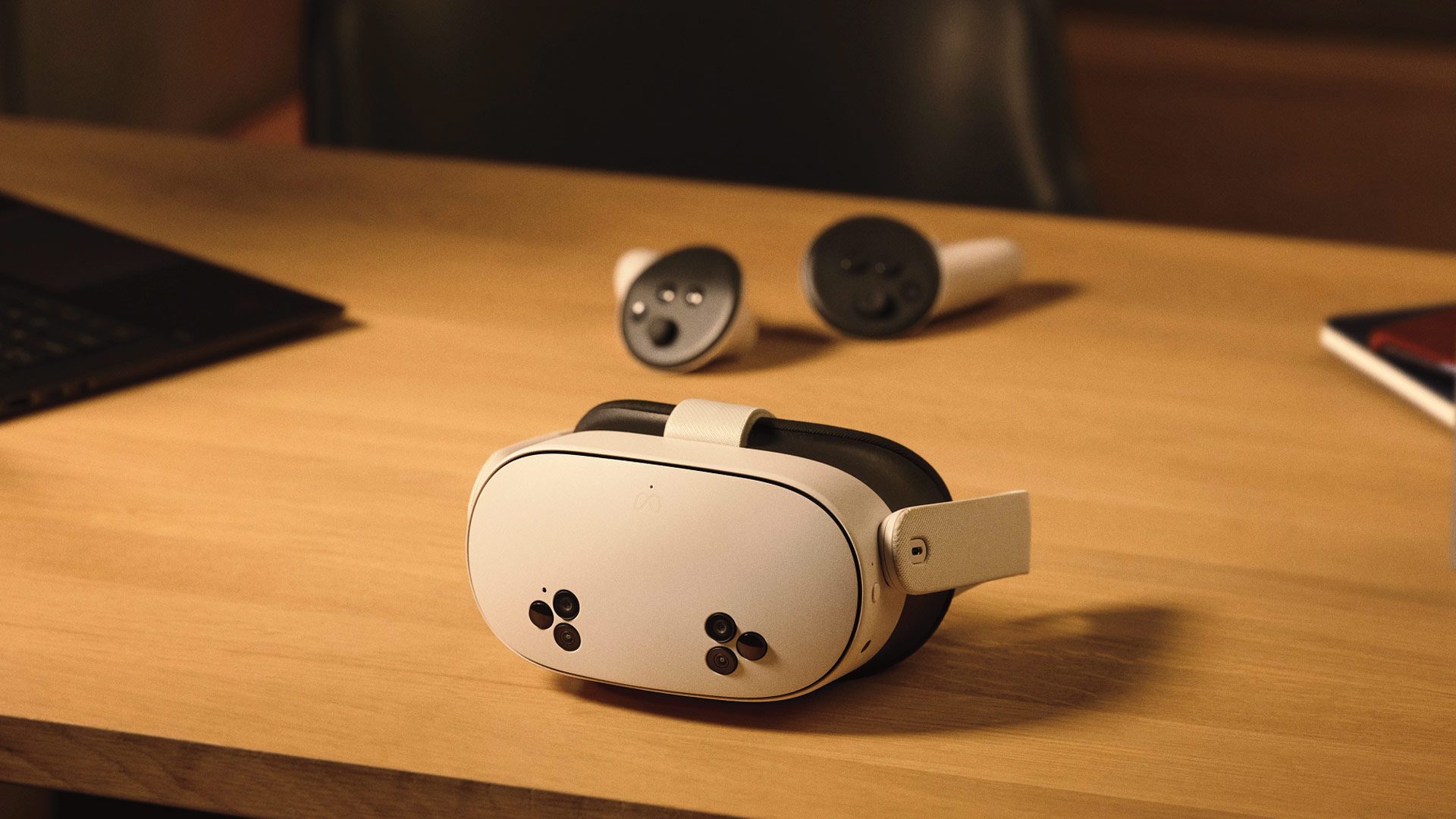
Meta Reportedly Laying Off 10 Percent of Reality Labs, Shifting Focus from VR & Horizon Worlds

32

Meta is slated to layoff around 10 percent of staff at its Reality Labs XR division, a New York Times report maintains, as the company appears to be shifting focus to AI and smart glasses.

The News

According to three people with knowledge of internal discussions, cuts could come as early as today, and could affect more than 10 percent of the 15,000-person XR division.

Layoffs are said to affect those working on VR headsets and “a V.R.-based social network,” the report maintains, suggesting cuts to staff developing Horizon Worlds.

This follows a recent report that Meta CTO Andrew Bosworth called an in-person all-hands meeting for Wednesday, January 14th, which is said to be the division’s “most important” of the year.
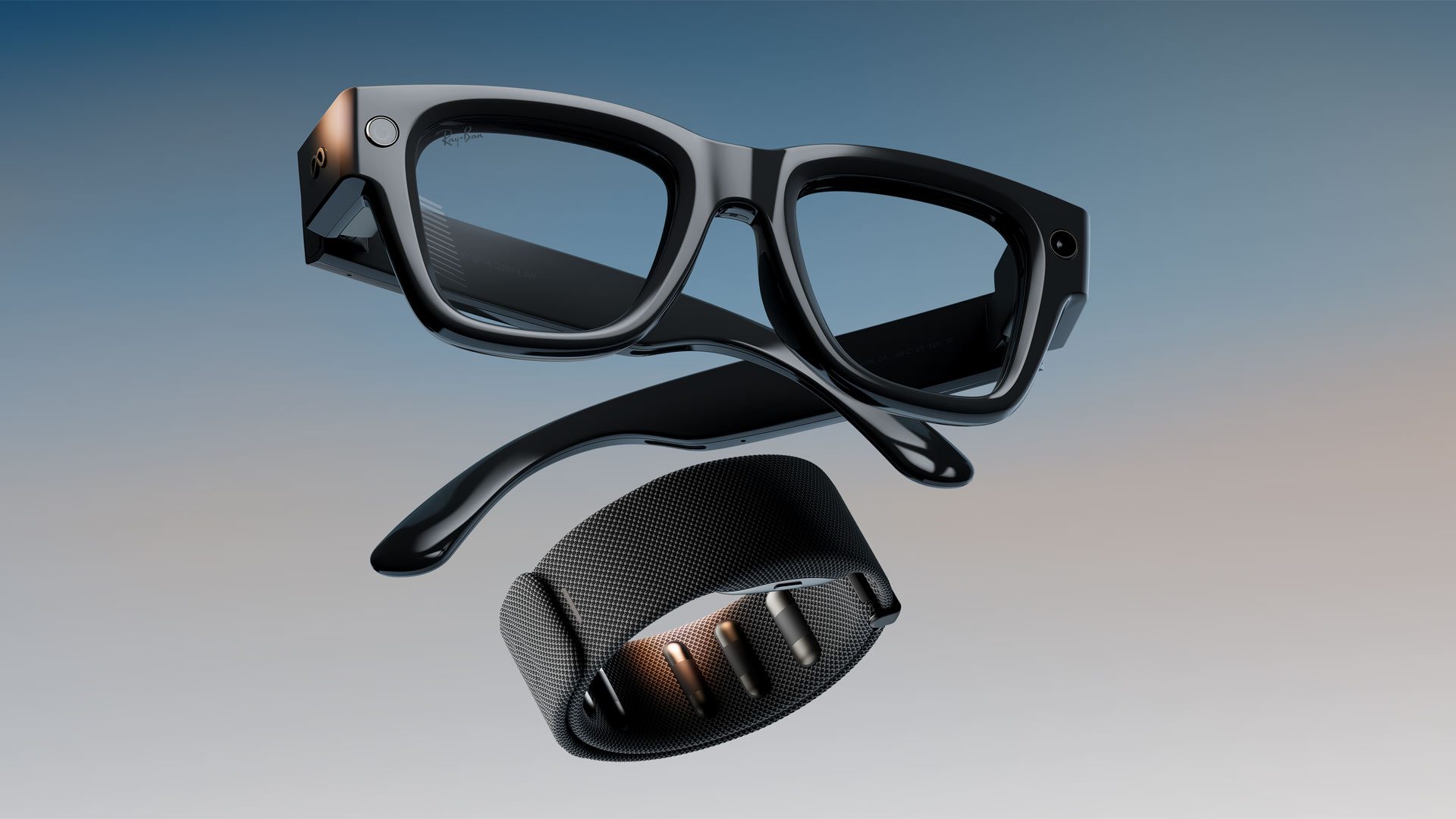
Meta Ray-Ban Display Glasses & Neural Band | Image courtesy Meta

In addition to ramping up development on its next-gen AI, the report maintains Meta plans to reallocate some of the money from VR products to its wearables division, responsible for Ray-Ban Meta smart glasses and Meta Ray-Ban Display glasses.

This comes as Meta has markedly reduced spending on VR over the past two years; the company has pulled back from funding eye-catching Quest exclusives in addition to reducing staff across its various XR studios, including its Oculus Studios publishing arm and the team behind VR workout app Supernatural.

Additionally, the company shuttered game studios Ready at Dawn (Lone Echo, Echo Arena) in 2024 and Downpour Interactive (Onward) in 2025.

SEE ALSO
Meta to Open Second Permanent Store in Preparation for Next Wave of Smart Glasses

My Take

An all-hands meeting scheduled for Wednesday by Reality Labs chief and company CTO Andrew Bosworth can really only mean a few things: info on how the company is restructuring, and probably a good helping of morale boosting platitudes on how Meta isn’t really abandoning anything, just making things more efficient and serving the greater goal of connecting people through technology. I hope to learn more soon from resultant leaks, blog posts, etc.

And if Boz doesn’t say this, I will: Meta’s VR and more recent metaverse ambitions haven’t ever turned a meaningful profit after having cost the company multi-billion dollar figures in quarterly operational budgets over the better part of a decade. And the company’s smart glasses have. Investors can’t stomach that forever.

Ray-Ban Meta (Gen 2) | Image courtesy Meta

Comparatively speaking, smart glasses represent a massive return on investment for Meta. Unlike with VR headsets, the company doesn’t need to seed studios with developer tools, organize big conventions to teach third-parties how to create content, buy studios, fund exclusive content. Meta’s smart glasses don’t even have an app store yet—everything is first-party, and it probably won’t for a while.

In fact, even before the mere mention of an app store, Ray-Ban creator EssilorLuxottica is ramping up production capacity to 10 million annual units by the end of 2026—dwarfing the already 2 million units sold since Ray-Ban Meta’s initial release in 2023.

Granted, the lack of an app store is temporary for its smart glasses; its forthcoming AR glasses will most certainly need one when it arrive as early as next year. But in the meantime, Meta has become a class leader in smart glasses, making it seem almost unconscionable to investors to throw so much gas on VR when smart and AR glasses are nearly set to spontaneously combust.


This article may contain affiliate links. If you click an affiliate link and buy a product we may receive a small commission which helps support the publication. See here for more information.

Well before the first modern XR products hit the market, Scott recognized the potential of the technology and set out to understand and document its growth. He has been professionally reporting on the space for nearly a decade as Editor at Road to VR, authoring more than 4,000 articles on the topic. Scott brings that seasoned insight to his reporting from major industry events across the globe.
  • Dragon Marble

    If you are an investor, don't be too quick to celebrate. While Meta still faces no real competition in VR, its current lead in AR is fragile. When Google's AR glasses come, they'll crush the Ray-Bans.

    While VR has always been about building a completely new world, AR currently is all about integrating existing ecosystems. Meta doesn't have an existing ecosystem. That's why the Ray-Ban glasses do not have an app store.

    • XRC

      Apple has just signed a deal with Alphabet to use Gemini as foundation for Apple AI going forward. From bbc news:

      "By outsourcing the foundational layer of its AI to Google, Apple is effectively admitting that its internal efforts couldn't compete with Google's Gemini in terms of capability and scale in the short term," IDC analyst Francisco Jeronimo said."

      • Christian Schildwaechter

        TL;DR: Apple licensing Gemini is less about Gemini being the best and more about integration into Apple AI and services in a way compliant with their ideas about privacy, and not the first time Apple has done something like that.

        That's mostly strategic. Apple has current deals with OpenAI and considered working with Anthropic. The order of places on the LLM leaderboard regularly changes with releases of new models, there is no company that has distanced itself so far to maintain a permanent lead. And which is currently considered best also depends a lot on use case.

        Apple's Siri personal assistant has been trailing in "undestanding" for years, and their 2024 promise to massively improve it hasn't really been fulfilled. You can run Apple AI on current Macs and iPhones, completely locally for privacy reasons unless you ask for improved results from ChatGPT. And even these are run from a private cloud. The deal with Google is probably less about picking the currently best LLM and more about again being able to run Apple AI based on Gemini locally or in a private cloud.

        The deal is rumored to be Apple paying Google about USD 1B/year for Gemini, not a lot considering that Google is paying Apple about USD 20B/year to be the default search engine on iPhones. The background is no doubt Apple wanting to enter smartglasses lacking the more powerful input and output options of iPhones, so the voice assistant has to be a lot better for smartglasses to match Apple's "it just works" aspirations.

        Apple buying/licensing outside tech isn't exactly new. They cooperated with their back then archenemy IBM first to create Talingent OS as a successor to classic MacOS, which like their internal Copland OS was later abandoned, and they finally bough Steve Jobs' new company NeXT to turn its NeXTSTEP/OPENSTEP OS into todays MacOS(X). They again partnered with IBM for PowerPC, then switched to new archenemy Intel's processors and finally licensed the ARM architecture as the base of their own Apple Silicon.

        Apple's main selling point is always the user experience, so if Google's Gemini can help improving the user experience on Apple smartglasses, that's what they'll use. It will help Apple and Google, but isn't necessarily a sign that Gemini devices will prove to be the best. Samsung's GXR is mostly about Gemini plus Google services, Apple will no doubt integrate Gemini with their own services, but you could probably swap Gemini for GPT, Claude, DeepSeek, Qwen or Meta's Llama without users noticing a difference.

    • Oxi

      Investors just want them to stop wasting money on XR and focus on their deals with the president.

  • NL_VR

    i dont mind they cutting down on Horizon crap.

    • Max-Dmg

      Yeah, it's utter sh*te.

    • namekuseijin

      unfortunately, they shut down 3 of their big game studios… I don't understand how Camouflaj is still standing…

      • Octogod

        They did rather large layoffs when Batman went live. By the time the 'VR game of the Year Awards" came around, the winners of those hasn't been at the studio for many months. Long-form narrative content from them is dead.

        My guess though is that they're building the engine for Worlds, working on content for Horizon Worlds, or making future bit-sized wearable content.

      • NL_VR

        shit happens. Hopefully Camouflaj still allowed to work on that rumoured Batman sequel

  • Hussain X

    AI, AR, VR all will be very important in the future. As AI gets better, it will replace a lot of jobs. A lot of people will be on universal basic income. They can only afford so much to go on holidays, etc. The alternative much cheaper way to escape more often whilst having no jobs to go to, would be through VR. AR will be needed so we can be more productive (jack of trades) doing things ourselves to save the little money we get from basic universal income to use on other things. Things like cooking ourselves instead of ready meals/takeaways, doing our own plumbing, house renovation, making, fixing, repairing things, etc, or even run a one man business (that is of no interest to big corporations) with the help of AI agents (virtual & physical) working as your assistants i.e. you're hiring AI instead of human employees taking us back to begining of this comment where I said AI will take jobs.

    So VR isn't going anywhere but will become more important in future as a means of escape, especially for today's younger ones (who seem more ready to adopt VR), who will become adults with no jobs (entry level graduate jobs already in decline).

    • Wes Osborne

      That's a horrible outlook for humanity, hopefully something else occurs. But honestly who knows.. wouldn't surprise me if pigs actually grew wings at this point.

    • JakeDunnegan

      You're talking decades away, and that's just for the US. Other countries will lag behind that. You have to have enough manufacturing capacity so that the robots will be building additional robots.

      By then, we will likely be multi-planetary, so the "basic universal income" will be there for the plebs. For anyone who wants to continue to create, innovate and do more with their life, there will be plenty of opportunity to do so.

      Back to the AR/VR discussion – that's an interesting concept though, one wonders why we aren't there now. I mean, there are already Youtube videos for just about anything. Slapping them into a set of AR glasses – not sure how much more helpful that will be. Potentially, it may improve success by some percentage rate, as you can overlay tools in your hand and such.

      • Christian Schildwaechter

        "My kitchen sink water thing/faucet just broke, I have these tools here that I don't even know the names of and some kind of tape. How can I fix this?"

        At one point AR glasses will be able to help you with this, because they can offer a solution for your particular problem with the available resources, similar to someone with a lot of experience in DIY and coming up with hacks using whatever they find lying around. YouTube tutorials and books are great if a) they describe roughly the issue you are trying to solve, b) only require tools you already have or can easily acquire and c) you have enough skills to apply whatever is shown and were versed enough to even search for the right video.

        People may own a pipe wrench, but have no idea what it is called or what it is for. AI will (hopefully) be able to bridge that fundamental knowledge gap, and AR overlays showing where to place the bucket and where to grab with the pipe wrench will help those lacking practical experience.

        The need for basic subject expertise and jargon to even start looking for a solution has always been there, as have attempts to solve this. There is a famous 1982 MIT Media Lab project using hand tracking and voice input for a layman's UI. It was appropriately called "Put-that-there" and only required the user to point at an icon (on a large projected screen) with their hand, give a voice command and then point at the target, and didn't require either precise commands nor exact gestures nor the user properly naming things. 44 years ago this was quite a feat that never got far beyond a tech demo, but that is what we are aiming for with future AI driven smartglasses that are able to recognize objects in real world applications.

  • Christian Schildwaechter

    I'm surprised MRL is back at 15K employees, as a couple of years ago it kind of peaked at 10K to then be reduced to 8K. This isn't exactly the first round of layoffs at Meta, the company with currently 78K employees fired 11K in 2022 as a "correction for overoptimistic hiring", then another 10K in 2023 during Zuckerberg's "year of efficiency", and on a number of other occasions. They also keep hiring thousands of people, otherwise they wouldn't be able to keep up such a massive turnaround. My best guess for MRL almost doubling in size again is that they merged all their AI research into MRL too, there is no way they still have 15K people working mostly on XR.

    Comparatively speaking, smart glasses represent a massive return on investment for Meta. Unlike with VR headsets, the company doesn’t need to seed studios with developer tools, organize big conventions to teach third-parties how to create content, buy studios, fund exclusive content.

    But they also have no revenue stream other than devices sold, which like the Quest are sold at cost, and the glasses heavily rely on AI running in Meta data centers, which is quite expensive. A couple of years ago Microsoft said that a Bing search answered by ChatGPT consumes about 50000x the amount of energy as a regular Bing search, and though this has probably somewhat improved by now, AI services are very expensive to set up and run, with barely any viable business model in sight.

    For more than a decade now Amazon has been losing about USD 10B each year on Alexa devices consuming massive amount of resources in their AWS cloud for language processing. And they actually had a business model, making people buy more stuff on Amazon by making it easier with cheap smart devices like their Echo series. The problem is just that people use these digital assistants for all sort of things, but rarely to buy stuff at Amazon.

    Meta has even less of a business model, with smartglasses they are again betting on growing fast to dominate the market and then somehow recoup the costs in the future. And while Quest may never may back the initial investment of hardware development and subsidized games, the headsets will at least not create a lot of additional cost for Meta after they are sold, while smartglasses will keep consuming expensive data center resources every time they are used.

    • Herbert Werters

      Yes, very good points. I would speculate that this new field will fail just as badly. Because these AI glasses will not be widely accepted. I would bet my last shirt on it. Especially not by Facebook, aka Meta.

  • Craig Southern

    Great news. The worst thing about meta quest is them god awful worlds bloatware that are mandatory installs on your quest. The day they go will be a joyous day for all

    • Christian Schildwaechter

      That's probably the least likely outcome from this. They have been shifting Horizon Worlds more towards mobile phones for some time to better compete with Epic's Fortnite as the most successful "metaverse" implementation. Their current refocusing ("operate as a leaner, flatter organization with a more focused road map to maximize long-term sustainability" – Andrew Bosworth) will mostly mean slower VR development with longer device lifecycle and less investment into pure VR/XR software, shifting their still ongoing attempts to grow a new platform/metaverse to both phones and smartglasses.

      There is little doubt Horizon Worlds will endure, though with more and more content only available on phones, and long term aiming to integrate with future, more capable smartglasses. So if anything, they will try to push Horizon Worlds even harder on Quest, which is no longer what they hope will get them to their new platform, while no longer spending huge amounts of money on trying to quickly grow VR.

      • Zack71

        In the future there will be only one device, that we will use as smartphone and as VR/AR glasses: so Meta is doing the right thing.

        • Christian Schildwaechter

          TL;DR: Only if smartglasses work out a lot better for them than VR, and neither Google nor Apple with billions of active mobile users they can transition and large app and service ecosystems boot them out of the market.

          In the future the sun will burn through all its hydrogen, expand into a red giant, swallow the inner planets incl. earth, then blast away its outer layers, forming a nebula with only a small white dwarf about the size of earth remaining. Even though this doom is inevitable, paying your bills and brushing your teeth today is still a good idea, because this will start in roughly 5 billion years and take another 2-3 billion to complete.

          In the future there will be devices doing the job of smartphones, smartglasses, VR/AR HMDs and other gadgets, but it won't be in five years. Given how far actual AR is lagging behind the predictions from a decade ago, it probably won't be in ten years either. Meta already burned more than USD 70B at MRL, and more than USD 100B overall on XR. They can only afford this incredible expensive bet on future tech because ~98% of their revenue comes from ads on Facebook and Instagram. There is no guarantee that either these social networks or ads in general will be still anywhere as relevant in a decade.

          Meta is currently throwing more billions at AI, which they expect to largely replace the search that currently brings in most of the ad revenue, which may or may not work. So whether Meta is doing the right thing is very much up for debate. And given that Meta got barely anything to show for their decade long XR investment, non-VR enthusiasts will see the money Meta already spent on XR as a clear sign of "doing the wrong thing". Assuming we are now at ~10M active Quest users, Meta invested roughly USD 10K into XR for each of them. We are/were lucky they did, but so far it doesn't sound like a good investment.

    • Max-Dmg

      Exactly.

    • Oxi

      "Meta Closes Twisted Pixel, Armature & Sanzaru Games

      Meta has shut down Twisted Pixel Games (Deadpool VR), Sanzaru Games (Asgard's Wrath), and Armature Studio (Resident Evil 4 VR), UploadVR can confirm. "

      • JakeDunnegan

        Oof. That's more impacting (at least upon gaming on VR) than Horizons going away.

  • namekuseijin

    2026 barely started and VR is already dying

  • Max-Dmg

    Horizon worlds is absolutely sh*t and bloatware. The meta VR store is a mess as well as everyones libraries.
    The Meta software still looks like it was designed by a student. It probably was.

  • BananaBreadBoy

    Fuck. Guess that puts future Quest headsets in limbo. Are we even getting Phoenix?

  • BananaBreadBoy

    Fuck. Guess that puts future Quest headsets in limbo. Are we even getting Phoenix?

    At least Horizon Worlds might finally be put on the backburner.

    • Octogod

      The new Quest won't launch. They'll say the success of their new glasses are the focus.

      Horizon Worlds has always existed for one reason: children. The lowering of the accepted age for Horizon was to lure in kids who received VR devices as hand me downs. They built their own cross device game engine for this reason. They can bring in millions of kids into an ecosystem before they turn off the lights.

      Meta wants a Roblox competitor, where instead of funding multi-million dollar studios, people make their own games for free and give them the majority of the profits. An added bonus with this model is they don't have to pay licensing fees, as they technically aren't violating, the creator is. That is why you can see so many open IP violations.

      So sadly, I think Horizon Worlds will be the only damn thing to survive this mess.

  • Nothing to see here

    Meta now has all the technology they need for success. They have chosen to pursue Horizon Worlds which never made any sense to anyone but Mark Zuckerberg. Yet the Quest 3 is an amazing headset that a lot of people, myself included, use nearly every day. Meta now has super easy to use tools to convert physical objects into 3D. The Quest can now scan the real world anywhere to create a very real looking 3D environment you can even walk around in. They have a lot of other tools as well for creating things that are not Horizon Worlds. Horizon Worlds failed because the last thing most people want is to be crammed into some limited space with a bunch of strangers wearing weird looking avatars and judging whatever you showed up in and then trying to talk to you. Yuck factor to 11. Hey, come and see a live 3D concert (with a lot of furries you don't know and it's not even in 3D).

  • Oxi

    Who was stupid enough to think facebook was going to carry this industry to success, figure out this medium, and create a metaverse? The whole industry jumped on this train only for it to go over a cliff.

  • JakeDunnegan

    IMHO, getting smart glasses to a point where they would effectively replace current VR sets would be a huge thing in the VR world. We aren't particularly close, but if it gets ALL the big tech companies working on it, it's a good thing.

    But current "smart" glasses which are voice activated? As the kids used to say, that's hot garbage.

  • I'm so sad for all the people laid off

  • ZarathustraDK

    Probably they've seen the writing on the wall and realized they're not going to compete with SteamOS in the long run. They've got THE gaming company offering an open source alternative that can play all the same games as their own product + ARM-based stuff + x86-stuff + embracing standard game-controller input for flatscreen-games… which means they'll need to embrace the same capabilities (which'd make Quest into a pcvr-supporting headset, helping Valve), or get out of the way; otherwise all they have is a technically impressive HMD that can run APK's, with an OS-fork that tries to compete with the core developer that they originally based off of (Google/Android XR), not a good prospect.