
VITURE Calls XREAL Lawsuit “patent-troll-style” in Escalating AR Glasses IP Battle

1

AR glasses maker XREAL is taking its competitor VITURE to court over a patent dispute, claiming that it’s selling and/or importing units into the US that infringe on its intellectual property. Viture claims however that Xreal is using the suit as a weapon to unfairly compete in the market rather than as a legitimate defense of innovation.

Xreal announced last week it was bringing a lawsuit against its direct competitor Viture, both of which have operating roots in China.

Xreal claims that Viture unlawfully makes, sells, and imports AR glasses that infringe its US patent, which covers a specific birdbath-style optical system. Notably, birdbath-style optics a generally cheaper and more easily produced than waveguides, like those seen in Meta’s 2024 Orion AR prototype.

VITURE Luma | Image courtesy VITURE

In a recent Reddit post, Viture has publicly disavowed Xreal’s narrative, arguing that Xreal is essentially acting as a patent troll.

“We deeply respect intellectual property,” Viture says. “IP exists to protect genuine innovation and to move an industry forward, not to be weaponized to create fear, confusion, or artificial barriers. Unfortunately, what we are seeing today does not reflect that principle.”

SEE ALSO
Apple Design Lead Heads to Meta, Hopefully to Fix Longstanding Quest UX Issues

Continuing: “From our perspective, this bears striking resemblance to a patent-troll-style action that targeted XREAL last year, and now mirrors the same tactics being used against us.”

Technically, Viture argues that Xreal’s patent in question (US 11,988,839 B2) covers birdbath optical technology that is long-established and largely covered by expired prior art.

Viture claims that similar patents have already been rejected in China, that its products do not infringe, and that Xreal’s patent adds only minor, appearance-level changes rather than true optical innovation. Furthermore, Viture characterizes the patent as low-value and easily invalidated.
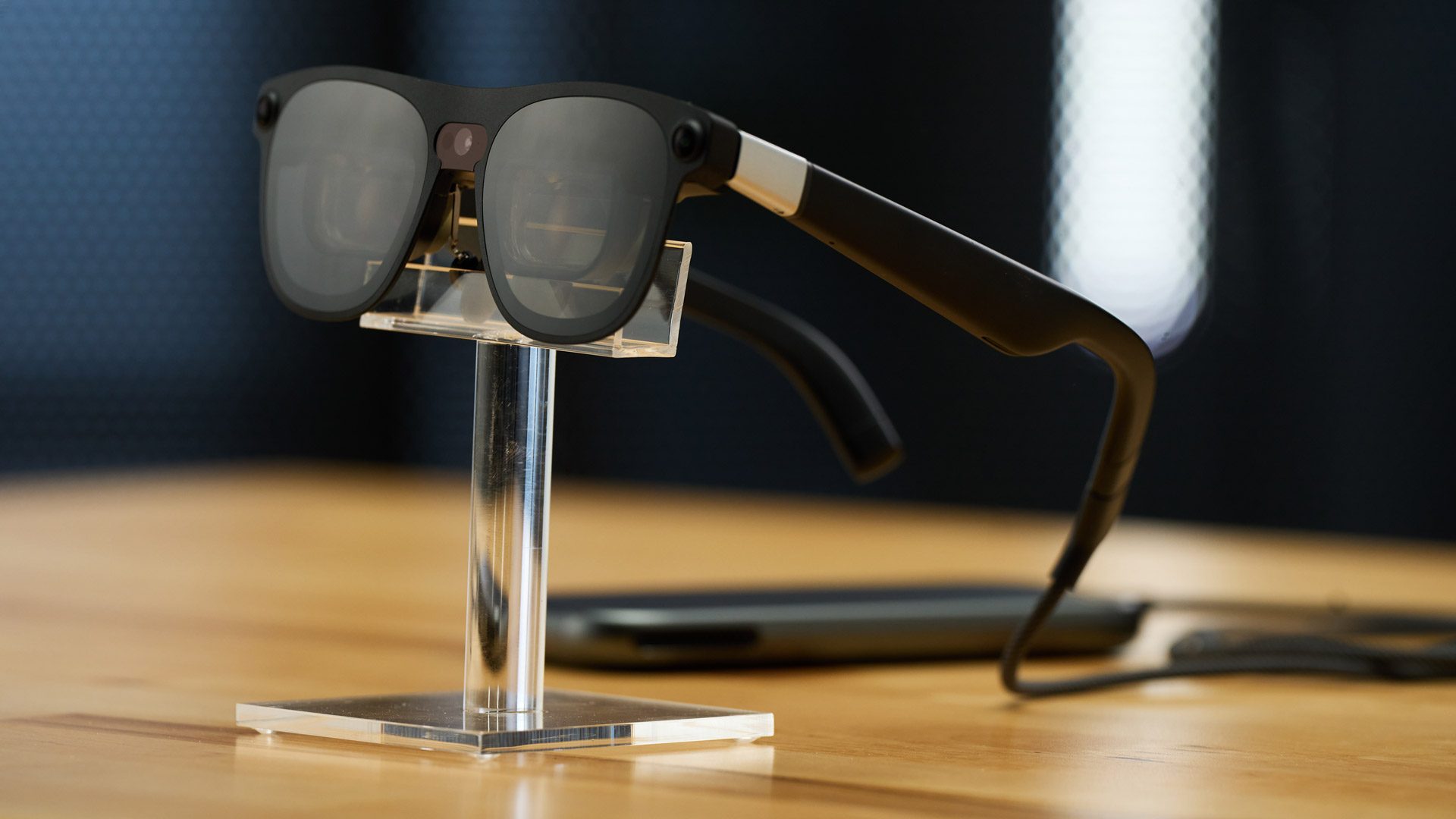
XREAL Aura | Image courtesy Google

A major point of contention is what Viture calls “deliberate misinformation,” specifically Xreal’s claims that its products are “banned across nine European countries.”

Viture maintains this as false: only the Viture Pro in Germany was affected by a preliminary injunction (as outlined by Android Authority), the product was already sold out, and all other products remain legally sold across Europe.

The company has appealed the injunction and filed a formal challenge to the patent’s validity, and says it has initiated legal action over what it calls “the deliberate circulation of false claims.”

Granted, it may be some time before we hear more about this case, as it’s just been filed in the Eastern District of Texas, and is still in early procedural stages. There is not public trial date at the time of this writing.


You can read Viture’s full response here on Reddit.

This article may contain affiliate links. If you click an affiliate link and buy a product we may receive a small commission which helps support the publication. See here for more information.

Well before the first modern XR products hit the market, Scott recognized the potential of the technology and set out to understand and document its growth. He has been professionally reporting on the space for nearly a decade as Editor at Road to VR, authoring more than 4,000 articles on the topic. Scott brings that seasoned insight to his reporting from major industry events across the globe.
  • Christian Schildwaechter

    TL;DR: Patents are a good idea with progressively worse execution, now often hampering competition instead of promoting it.

    The US patent office a few decades ago being given a new mission statement, starting to be run as profit centers, trying to make money from approving lots of patents for a fee, is a big problem, esp. since they allow abstract concepts to be patented. This threw back consumer 3D printing by two decades, with cheap 3D printers only becoming available after very broad, fundamental patents ran out.

    It has been a problem in VR, with Immersion Corp. holding haptics patents and suing everybody from Meta to Valve daring to put anything that rumbles into a controller, and still receiving huge yearly payments from Sony, Microsoft and Nintendo. Valve ended up fire-selling their 2015 Steam Controller for USD 5 after they had to agree to a settlement that game Immersion a significant part of the revenue generated by each Steam Controller sold afterwards, depriving them of their money by selling it ridiculously cheap, asking mainly for shipping costs.

    In a similar way adding eye tracking to HMDs is quite a problem due to Tobii and a few other companies (like SMI, bought by Apple in 2017) sitting on a war chest of patents accumulated over two decades. They no doubt did a lot of research, but many of the patents are overly broad and should never have been granted in that form. And I'm very curious to see how Valve solved eye tracking on Frame without running into huge patent issues.

    The idea of patents is to provide incentives to develop new tech by giving a time limited monopoly to license them to others, allowing to recoup development costs, all in the interest of fostering competition. In reality they often stifle competition by giving one party a big lever to blackmail the market, usually due to some patent clerks not really familiar with the subject letting things pass that should have been rejected. This lawsuit coming just days after Xreal announced they raised another USD 100M in investments makes me believe that Viture probably has a point here without even looking at the patents themselves. Simply because a typical strategy of patent trolls with lots of money is to draw out the court cases for years to run smaller companies out of money and force them to settle with very unfavorable terms. Only large companies have the resources to fight back and occasionally get overly broad patents to be thrown out retroactively by the patent office. But with Xreal having just entered a strategic partnership with Google for Android XR, there is little hope that this particular large company might throw its weight in to support smaller XR HMD manufacturers.