

Quest Reached Record Number of Users in 2025, Pushing 100 VR Apps Over $1M in Gross Revenue

10

Meta’s Director of Games Chris Pruett revealed that Quest usage hit an all-time high in 2025, which helped over 100 games to generate more than $1 million in gross revenue last year.

Pruett announced in his ‘State of VR’ talk at Game Developers Conference (GDC) that not only has Quest usage grown year-over-year, but that Horizon Store developer revenue was also up “very slightly compared to 2024.”

“Similar to the overall games industry (Circana estimates 1% industry growth⁠), the gross revenue generated by the Meta Horizon Store was up very slightly year over year,” Pruett says in a blogpost recapping the talk.

“While this might sound like a humdrum outcome, it’s important to note that 2025 did not (unlike the year we’re comparing it to) benefit from a hardware launch. As you might imagine, hardware launches tend to spike Store revenue, and holding steady in a no-launch year is a strong signal that ongoing Store investments are paying off.”
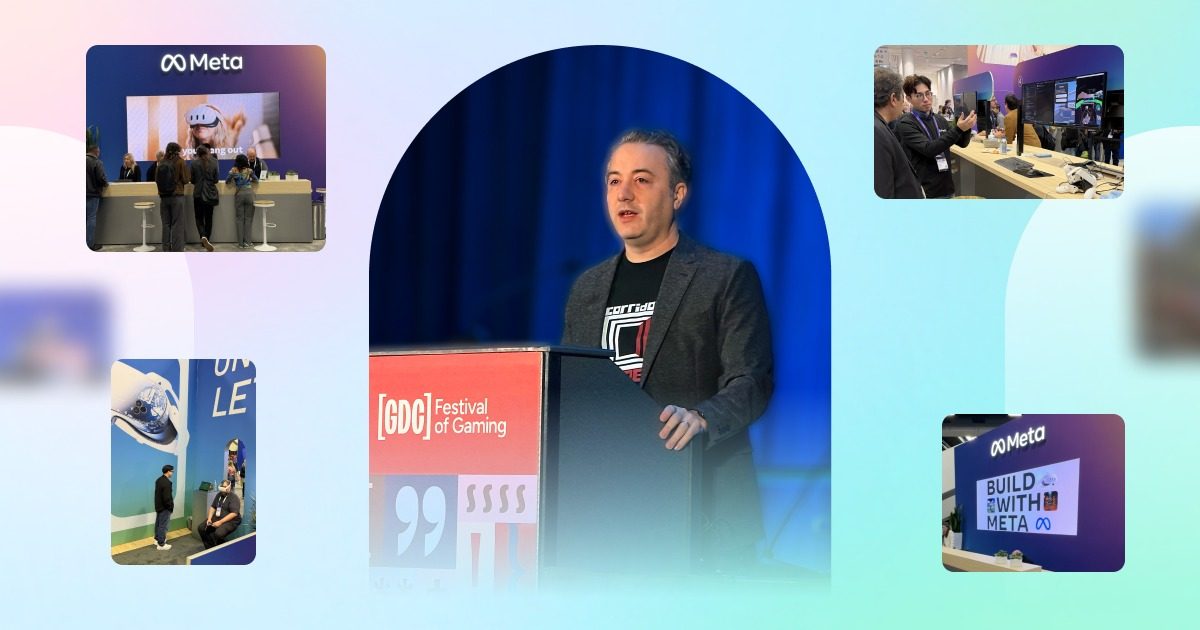
Chris Pruett | Image courtesy Meta

Pruett also revealed that premium app sales are still the largest revenue driver, although in app purchases (IAP) grew “significantly in 2025, by over 10%.”

“The trend points to further diversification of monetization techniques on the platform, and better aggregation of success across titles,” Pruett says. “While most IAP revenue went to a small handful of titles in 2024, it was distributed more broadly in 2025. The number of IAP apps that reached $500k or more in revenue was up 20%.”

SEE ALSO
Meta Reportedly Laying Off 10 Percent of Reality Labs, Shifting Focus from VR & Horizon Worlds

As for gross revenue—which is notably before Quest’s 30% platform fee—Pruett says over 100 titles generated more than $1 million in 2025. While he didn’t offer a breakdown of which monetization models were most successful, Pruett did reveal that subscription revenue represented “a relatively small part of the overall ecosystem and is mostly not associated with video games.”

Some of of those games include UG⁠, a free-to-play early access title popular with teens, HARD BULLET⁠, a physics-based sandbox shooter ($20), and The Thrill of the Fight 2⁠, a realistic boxing simulator ($20).

While the company has since shutdown multiple first-party studios in addition to laying off 10% of its Reality Labs XR division at the start of the year, Pruett says its Oculus Publishing arm will have “more [games] shipping this year” following over 140 games shipped last year.


This article may contain affiliate links. If you click an affiliate link and buy a product we may receive a small commission which helps support the publication. See here for more information.

Well before the first modern XR products hit the market, Scott recognized the potential of the technology and set out to understand and document its growth. He has been professionally reporting on the space for nearly a decade as Editor at Road to VR, authoring more than 4,000 articles on the topic. Scott brings that seasoned insight to his reporting from major industry events across the globe.
  • ApocalypseShadow

    That's great…. But the real question is if these companies are profiting. Are they making enough to create more content, more games and more sequels.

    You can generate revenue. But if it doesn't cover operating costs, prevent layoffs and closures, then what's the point of announcing revenue? You can add all the revenue you like, even combine them. But what the profit? Can you tell us the profit?

    • JakeDunnegan

      Each developer's profit is going to be different, based on resources used, price of product, etc.

      • Christian Schildwaechter

        A big problem with Meta's aggregate numbers is that they hide that there are a few developers raking in tons of cash, while the vast majority makes very little. In early 2022 Meta broke it down somewhat for games that made at least USD 1M, shortly after announcing USD 1B of total revenue on the Quest store. The top earning game was Beat Saber with more than USD 100M, the second with more than USD 60M most likely Meta's Supernatural.

        This resulted in the top 124 games (those with more than 1M revenue) generating about 85% of all revenue, with the remaining 221 (at that time) only making 15%, less than the top two apps combined. With Meta owning these and also taking 30% from other developers, more than 40% of the USD 1B revenue reported went directly to Meta.

        After the merge with App Lab there are now more than 1000 Quest games available, the vast majority of which will never make their development costs back, with a very large portion of the total revenue going to a few top sellers and free-to-play titles.

        • Jonathan Winters III

          100 devs grossing over $1mil is not hiding that fact tho. That a LOT. As far as the shovelware on Meta store, who cares if they never make dev costs back if they're crap content and frankly don't deserve to.

          • Christian Schildwaechter

            USD 1M would be great for a single developer, but isn't all that much in terms of modern game development. This is revenue, 30% of which would go to Meta, so effectively only USD 700K for the studio. Assuming an average two years to create a game, and a rather low USD 50K per head per year for salaries, rent, tooling etc., this is enough to allow a team of seven people to break even with a VR game. And these were numbers from the early days when Meta allowed only rather polished titles on the Quest Store that usually required a larger team of programmers, artists and producers.

          • Christian Schildwaechter
  • Herbert Werters

    Read between the lines. Take a look at what Christian Schildwaechter wrote.

    • NL_VR

      Yes what about it? VR is much smaller than than many seem to think.
      if there are 1000 developers on Quest i bet there isnt even 100 that can make a really good games.
      Make a good game and the people will come. Better with a few good games than 1000 shovelware.
      organically growth means just that its growing naturally by people getting interested in good games and other usage of VR devices.
      And not by boosted numbers like corona or the imagination that VR is bigger than it is by pumping money into "AAA" projects that never would make profit.

      • Herbert Werters

        Yes, by definition it is organic growth, but from an economic standpoint, it remains to be seen whether it can achieve “true” self-sustaining growth without subsidies.

        We don’t yet know whether this will truly become meaningful organic growth. Meta has recently and is currently eliminating all unnatural elements. Let’s wait and see what happens once Meta’s subsidies are gone.

        • NL_VR

          Meta isnt the only choice and i think that will show more and more as time pass.