
Meta CTO: Metaverse Efforts Led to a “lack of focus” on Quest “at expense of user experience”

22

Meta CTO Andrew Bosworth offered the first bit of insight into the company’s recent Reality Labs shakeup, publicly acknowledging that Meta’s metaverse efforts suffered from a “lack of focus” that ultimately hurt the user experience on Quest.

Speaking at Axios House in Davos, Switzerland alongside the World Economic Forum last week, Bosworth discussed several issues that led Meta to refocus its metaverse and VR strategy—something that also included layoffs affecting 10 percent of its Reality Labs XR team.

Meta is refocusing its approach, and doubling down on AI and smart glasses while narrowing and reorganizing its VR and metaverse efforts. Bosworth, who is also head of Reality Labs, frames the pivot as a three-point problem: poor communication around the metaverse vision, high development costs, and an over-integration of Horizon Worlds with Meta’s VR strategy.
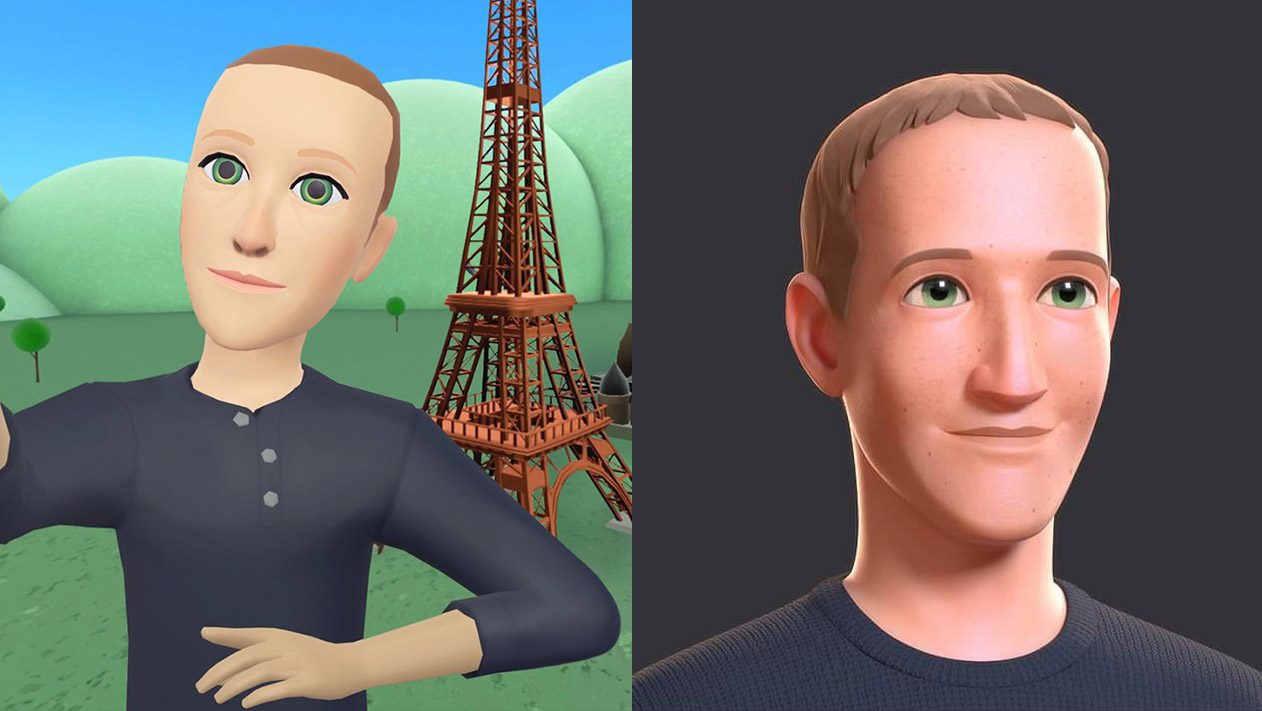
Horizon World teases (2022) | Based on images courtesy Mark Zuckerberg

Horizon Worlds wasn’t the company’s first social VR platform, although it did represent the first real concerted effort to bring to Quest users a ‘default’ shared VR space when it was initially released in 2021. Bosworth notes that Meta’s metaverse ambitions were to build a “rich version” of the mental “transportation” people already experience when socializing through smartphones.

“We still plan on doing that,” Bosworth told Axios’ Ina Fried, referring to Horizon Worlds. “But it’s like any investment. You’re going to look at how you do over the course of years and you’re going to reinvest in some areas and trim your losses in others. For us, we’re seeing tremendous growth of the our metaverse on mobile.”

Image courtesy Meta

While the launch across Android and iOS mobile devices in 2023 pushed Horizon Worlds reach beyond Quest for the first time, it eventually led to higher costs and a more difficult development process.

“Having to build everything twice—once for mobile and once for VR—is a tremendous tax on the team. You’d rather grow a giant audience and then work from a position of strength.”

A second issue was Meta’s decision to tightly bind Horizon Worlds to the Quest platform—something Bosworth admits wasn’t for everyone.

“When you put the headset on, you’re immediately in this kind of co-present accessible space. That is a real challenging piece of work to land from a standpoint of there’s lots of people who put this headset on for lots of different reasons. You want to support all those different use cases, [but] the lack of focus comes at an expense of user experience and a great expense in terms of development cost.”

SEE ALSO
Distance Technologies Reveals Military AR Goggles for Battlefield Awareness

Bosworth says that while the company now has “two much more focused bets,” those essentially come down to supporting third-party VR content and Horizon Worlds on mobile.

“To do this, of course, it’s tragic anytime your plans change and there’s a human cost; we found a bunch of roles that we just didn’t need anymore,” Bosworth said, referring to layoffs. “So, we did end up downsizing the effort on the metaverse specifically. Though on net, Reality Labs isn’t downsizing. We’re taking basically taking all of those [positions] and taking the investment on wearables, which is growing so rapidly for us.”

This follows the closure of three first-party VR studios, representing a concerted pullback from developing and funding content for the Quest platform.

Notably, Reality Labs’ operating costs have consistently exceeded $4 billion per quarter since late 2021. Q4 is the XR division’s most performant in terms of revenue, however Reality Labs typically only generates a max of around $1 billion, with Q1-Q3 bringing in significantly less. We’re sure to learn more about Q4 2025 when the company reports its after market close on Wednesday, January 28th.

You can watch the full interview below. Thanks go to Reddit user ‘gogodboss’ for pointing us to the news.

This article may contain affiliate links. If you click an affiliate link and buy a product we may receive a small commission which helps support the publication. See here for more information.

Well before the first modern XR products hit the market, Scott recognized the potential of the technology and set out to understand and document its growth. He has been professionally reporting on the space for nearly a decade as Editor at Road to VR, authoring more than 4,000 articles on the topic. Scott brings that seasoned insight to his reporting from major industry events across the globe.
  • sfmike

    Horizon Worlds has never been as effective or interesting as VRChat or Second Life. Ill-conceived from the beginning and always more concerned about PC representations of female body types and pushing girl power than anything else.

  • STL

    It's pretty obvious that nobody wants to spend a lot of time with a VR headset on unless it's really, really worth it. For me, it's worth it with Skyrim VR and Enderal VR, with Fallout VR and Half-Life: Alyx – otherwise not. All those native Quest 3 games – forget it!

    • Arno van Wingerde

      Ah, it is hard to find good standalone games, but they do exist. Asgard’s Wrath is much better than you would expect from a standalone game, Red Matter looks gorgeous. But in general, agreed!

  • Oxi

    He says this like both he and zuck weren't all in on this mess. He was happy to push it for attention and to move up at the company, in a rational world he would be let go and replaced with someone who pointed out what a terrible idea it was at the time.

  • Christian Schildwaechter

    Before you say "finally that crap will be gone from Quest", keep in mind that that crap will take a lot of money, developers and resources with it. They'll continue trying to make Horizon Worlds a Fortnite competitor, they'll just (mostly) drop the VR part. Bosworth saying there are now two more focused bets, Horizon Worlds on mobile and supporting 3rd party developers on Quest pretty clearly hints that their activities on/for Quest will be significantly reduced.

    What's missing is a statement what they want to achieve with Quest from here on. In the past this was always creating a large user base and a first step into the metaverse, but these two are now taken over by smartglasses and Horizon Worlds on phones. They don't really make money from VR hardware or their 30% cut on the Horizon Store, so currently the only long term goal I can think of is testing features for future smartglasses.

    All of Bosworth comments on future developments were about other platforms than VR, with only the "supporting 3rd party developers" remaining, which sounds more like "keeping it alive for the time being". The leaked Aul/Cairns memo from 2025-12 spoke about ""the category's natural growth rate" and Meta still being committed to VR, just taking it slower, which is probably what they actually plan. But I kind of felt better when they were still chasing large user numbers with Horizon Worlds on Quest, because this meant they actually had a reason to invest into it. Meta doesn't care about becoming a slowly growing gaming platform that one day in the future may become profitable, so what will drive them to keep working on VR now?

    • Rush

      We're expecting their "ultimate" competitor to Galaxy XR and Vision Pro for media and productivity next year (based on Horizon OS and its apps). VR is more than gaming for Meta.

      • Christian Schildwaechter

        What apps are there exactly on Horizon OS that aren’t games and might be used to compete with the Android and iOS apps pretty much running peoples lives?

        I do not doubt that they want to compete with these media and productivity focused HMDs, but these plans were drawn before the recent massive shake-off. And the new focus directions Bosworth described for the XR branch of MRL were Horizon Worlds on phones and supporting 3rd party developers on Quest. It is unlikely that he just forgot to mention media consumption and productivity as the third thing they will be going for.

        And as much as I’d like to see them throwing their weight behind productivity XR, they pretty much lack all the content required for that, all Quest has is games.

        • kraeuterbutter

          ‘Apps running people’s lives’ sounds much more like AI glasses to me — lightweight, transparent glasses you can wear all day, feeding you information as needed (smaller FOV, see-through optics, lower contrast, clearly information-focused).

          A Quest 3 is something you put on because you want to do something immersive — play games, or perhaps use it as a large virtual monitor replacement.

          You don’t put on a Quest 3 to check or create calendar entries, do online banking, use Google Maps, or write WhatsApp messages.

          I’m therefore not convinced that the benefit of having my smartphone apps inside a headset is currently that significant.

          A VR headset is something you put up with — the weight, the act of putting it on, the limited battery life — specifically because you want immersion.

          That level of immersion simply isn’t necessary for ‘apps running people’s lives’.
          That’s much more the domain of future lightweight AR glasses.

          • Arno van Wingerde

            True, but those glasses are pretty limited at the moment. A Quest3 can serve as a protype for AR glasses that come in the market 5-10 years from now, with much better AR view than any glasses out today.

          • Christian Schildwaechter

            Longterm I'd fully agree that this would make much more/only sense for smart/AR/whatever glasses. By "apps running people's lives" I'm mostly referring to how much time people now spend on smartphones each day, which is 3.5h-4h in the EU, about an hour more in the US, with teens spending more than 6h.

            So whatever wants to be used for anything but gaming, where you deliberately disconnect from the regular world, has to allow people to still connect in the way they already do. This is trivial for GXR or AVP that allow running the same apps inside the HMD, but a big problem for Meta. One simple workaround would be casting the phones screen to the HMD, but both Google and Apple switched to proprietary protocols, and to use for example Google Cast, you have to also use Google Play services, forcefully shoving all software revenue to Google just like using the Play store would.

            Again, that doesn't matter all that much for a gaming focused Quest, but @disqus_4mIdP7lv0u:disqus suggested that after Bosworth statements about their strategic move further away from VR gaming, Meta may now shift their focus to productivity with the Phoenix HMD expected for 2027, which (hopefully) could be worn for longer sessions useful for productivity use due to removing most of the weight from the head. This software issue that has been looming over Meta's head for a long time, and was certainly a main driver to massively invest into VR/XR early on, in hope of attracting enough users and developers to get at least the most important productivity apps ported to Horizon OS too.

        • Rush

          On the Store, there are 7000 games and almost 3000 non-gaming apps&media: mainly fitness/wellness/sports, a lot of media players, virtual workplace + remote control tools (for PC&mobile), art tools (painting / 3d), learning/education apps (+unique MR-based learning), travel apps, and even Godot for gamedev.

          It is not straightforward, but you can also sideload Android apps since Horizon OS is based on Android. Though apps requiring Google services won't work.

    • ZeePee

      He said that they still plan on building out the metaverse.

      The ultimate version of that, the way people will experience that in the future, is obviously going to be VR and AR, and that's what they're still heavily investing in.

      So I think their ambitions are the same, but they are cutting their losses for the time being in the areas where it hasnt yet worked.

      With the shift of focus on supporting third party developers, it seems that what they want to do is not *push* VR in the way they have, which has failed.

      It doesn't mean they're giving up on VR, it just means that their strategy hasn't worked and its not time for the metaverse in VR yet.

      It sounds to me like they will continue working on VR and bringing out new headsets, and let the VR side of things grow more organically instead of pushing their metaverse ambitions on it too early at this point and using first party titles to get people in there (which failed).

      That means they may well continue with the Quest line, but it will be fully focused on third party content. And its likely not going to be this hyper subsidised thing.

      At the very least, its likely that they will go ahead with the ultra lightweight galaxy XR/ vision pro type headset (puffin/phoenix).

      It makes perfect sense that they're not literally abandoning VR. They're not going to do that at this point, and its clearly still part of their vision.

      What we're likely seeing is simply a crucially needed change of strategy to something far more organic and healthy, something they always should have done from the start.

      This is a very good thing for the VR industry. Meta were killing it, not helping it. Now it can flourish and grow in a healthy and organic way.

      • Christian Schildwaechter

        TL;DR: It boils down to whether VR already has the necessary momentum to pay for enough game development to still attract new users even at higher HMD prices.

        I agree that Meta are still aiming for a new mass market platform that will eventually become "the metaverse". But instead of starting with rich featured HMDs capable of rendering virtual worlds, their focus shifted to still very primitive smartglasses that will gain more features over time, and running the virtual worlds on the phones people already have.

        The question is what would motivate them to continue to pump money into XR HMDs, because even if they reduce their losses, they are still not going to make any money from it. If they increase the prices of HMDs to the point where they actually cover the costs incl. development, unit sales will fall dramatically. The USD 300 Quest 3S outsells Quest 3 by about 4:1, with large numbers moved each Christmas. If the Quest entry level rises to USD 500, we'll see active user numbers fall, because a lot of people still drop out after a few months and have to be replace by new users. And with falling user numbers, game developers will find it even harder to make a living, causing more of them to drop out of VR, leading to less games being developed and even less headset sales.

        The problem is that Quest never grew to be self-sustainable, so Meta "cutting their losses" can have far reaching consequences. And it is not at all sure that organic growth will be fast enough to at least compensate the regular churn due to still low retention rates. As argued above, Meta is playing catch up regarding XR productivity, and an unsubsidized lightweight Phoenix will be much more expensive than even Quest 3, so the sales numbers will be very low compared to their previous standalones (except Quest Pro).

        I actually agree that they will continue to release HMDs for a long time, but I suspect mostly as a testing ground for (far) future smartglasses. XR HMDs will stay a niche, but become lighter/better and continue to be released for a long time, because features like Apple's Immersive video simply won't work on smartglasses for another decade. So XR HMDs provide the only way to develop these types of experiences. Google's Gemini integration into AndroidXR makes very little sense on an XR HMD mostly worn inside, but they needed the power and capabilities of GXR to even implement this today, to see how people will interact with it.

        And Meta will not simply give up on their ~10M active Quest user base they paid a lot of money for, and try to leverage their gaming library. But given that Valve's Frame can run pretty much all Android OpenXR APKs out of the box and supports Meta-specific OpenXR extensions, allowing game devs to rerelease Quest games on Steam with pretty much zero effort, not even Meta's huge VR library may be enough to longterm bind users.

        So even though they are still going for the metaverse, and they are still going to release XR HMDs, and they still support 3rd party game developers on Quest, and they still haven't given up on VR, that ship may sink simply because any platform needs a certain amount of active, buying users to keep software development alive, and it is in no way clear if VR is already at that point where "the category's natural growth rate" will be enough. I personally believe it will for a number of reasons, and that we will actually see new contenders and more use cases, not just as glorified smartglasses prototypes. But Meta seemingly not really having a clear goal for what to do with VR now worries me a lot.

  • pixxelpusher

    Horizon Worlds is the worst of VR. Time to dump it and focus on better hardware and support for 3rd party game developers. All Meta needs to do is supply the infrastructure, and let the VR community build the rest.

  • XRC

    "We had access to too much money, too much equipment, and little by little, we went insane,"

  • Tech

    Bosworth should have been first to be fired, long time ago.

  • Rupert Jung

    I really liked Meta OS 2-3 years ago. Now it is laggy, buggy and full of ugly avatars.

    • JanO

      This is simply not true. For all they have been doing wrong, strategy and positioning-wise, they have been very good with providing constant updates. Yes there have been a few regressions and misdirections from time to time, but the current experience has never been better.

      Now I honestly don't know who to thank for the latest performance increases (is it Qualcom's graphic driver or Meta's updates? Nobody covers this. WHY?) but the fact is that ALL games are now running better than ever.

      Don't let the hate cloud your judgement.

  • George Cretu

    The fact that "enterprise" isn't referenced once in his response tells me that they're far from acknowledging the full picture.

    I really think the only reason why the CTO hasn't been fired yet is his masterful ability to spin words around to make the metaverse division not look like a massively disorganized team.

    I really wish we'd see more leadership accountability to these failures.

    • JanO

      The ONLY reason Bosworth is there is because he's a close friend of Zuck.

      The way things have gone since he took over are a clear indication of how good of a choice he was for the role, LoL…I

      Worst part is that he is still in charge, but still clueless.
      I miss Carmack.

  • G’Zilla

    Just make and keep making great, small, light gaming headsets until they are so refined that you can then, transition to something else. Right now, it's all about games still. I skipped Quest 3 hoping to get Quest 4, man dont let me down now,.

  • Joe momma

    Bozo