
Global Virtual Reality Industry to Reach $7.2 Billion in Revenues in 2017

In a new Virtual Reality Industry Report, Greenlight Insights forecasts modest VR industry growth in the short term, growing into a major global content marketplace by 2021.
In a new Virtual Reality Industry Report, Greenlight Insights forecasts modest VR industry growth in the short term, growing into a major global content marketplace by 2021.
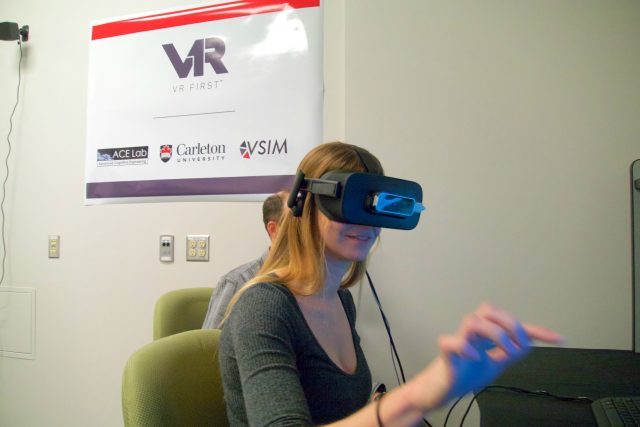
VR First, the global initiative to seed academic institutions with VR/AR hardware and software, today announced that it’s nearly doubling the number of its VR labs in universities and science parks across the globe by the end of 2017. With currently 26 labs operating in the United States, Europe, Asia and Oceania, VR First is bringing the number to 40 labs by the end of year.
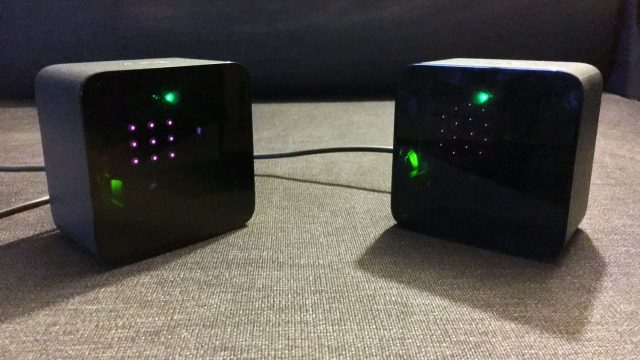
Although HTC has hardly even hinted at a Vive 2, the company is continuing to make subtle improvements to their first headset that’s been selling in stores since April 2016. In addition to a 15% reduction in weight, the latest headsets are shipping with tweaked SteamVR Tracking (AKA Lighthouse) Base Stations and redesigned packaging.
A short video (heading this article) of two people wildly hitting a giant ball with foam swords (captured by Super Ventures) is an amusing showcase of PhaseSpace’s motion tracking technology. Planet Whack is a whac-a-mole-inspired game, where two players participate in the same VR space trying to hit cartoon worms emerging from a sphere, with the giant beach ball providing haptic feedback.
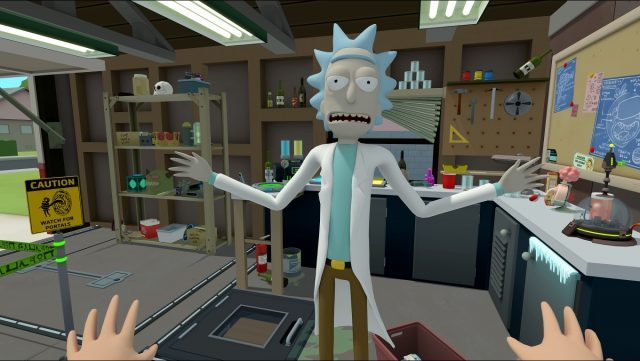
Rick and Morty are finally making their way to VR in Rick and Morty: Virtual Rick-ality. Coming to HTC Vive and Oculus Rift headsets on Steam and Oculus Home, you can take part in the dimension-hopping adventure starting Thursday, April 20th for for $29.99.
Canadian technology company Globacore have created an AR homage to video game classic Lemmings (1991), now for Microsoft HoloLens. HoloLems, which is free on the Microsoft Store, uses HoloLens’ spatial mapping technology to generate an obstacle course from the player’s real environment.
The Spiraloid Workshop Company (headed by Bay Raitt, former Valve employee, and known as the creator of the facial animation system for the character Gollum in Lord of the Rings) has created the VR comic Nanite Fulcrum, which the company calls a ‘3D Holographic Novel’ that is part comic, part mini game, and designed for Oculus Rift and Touch.
Elite Dangerous, the interstellar space trading, fighting, and exploration simulator, has been teasing support for co-piloted ships for some time. Today the Commanders 2.3 update launches with the Multi-Crew feature, allowing up to four friends to fly together in VR.
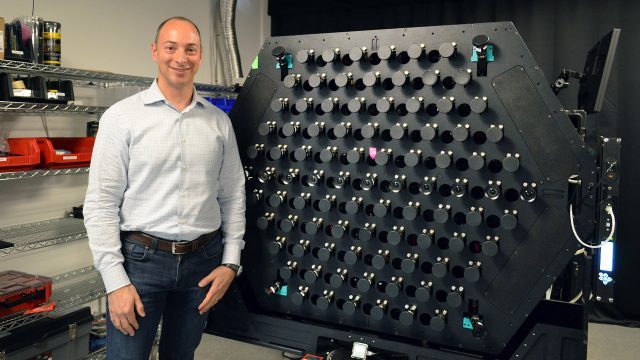
In the last few years, Lytro has made a major pivot away from consumer-facing digital camera products now to high-end production cameras and tools, with a major part of the company’s focus on the ‘Immerge’ light-field camera for VR. In February, Lytro announced it had raised another $60 million to continue developing the tech. I recently stopped by the company’s offices to see the latest version of the camera and the major improvements in capture quality that come with it.
Using HTC’s Vive Trackers, Tornuffalo—named after a combination of ‘tornado’ and ‘buffalo’—has been given a ‘Full-Body Action’ mode, an early example of full body tracking in a VR gameplay scenario. This simple action game involves dodging flying debris (which occasionally includes buffalos) heading towards your body, while trying to smash crystals for points.
 Shooting a bow and arrow in VR is a satisfying game mechanic. It uses both hands in a 6-DoF interaction that couldn’t work with a traditional game controller. VR Unicorns’ new game #Archery takes this bow and arrow shooting mechanic to the logical extreme in a quirky fashion that’s similar to their game #SelfieTennis. Now available on early access, I had a chance to talk with #Archery developers Jakob Johansson and Max Nilsson at GDC where they talked about their game jamming and rapid prototyping process that’s motivated driven by novelty and getting bored easily.
 April 4th was the one-year anniversary of the HTC Vive, and HTC released the subscription service for Viveport for $7/month to try out five new VR applications per month. I had a chance to catch up with Viveport president Rikard Steiber at GDC to talk about the genre differences between Viveport and Steam, future support of VR headsets beyond the Vive, their support for delivering content to China, as well as some of their arcade licensing options.
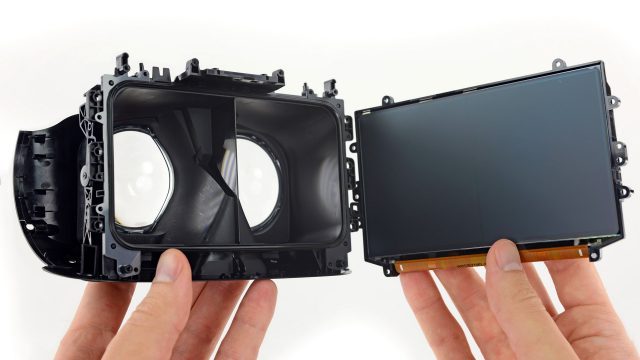
While most of us are used to dealing with resolution figures that describe pixel count (ie: a 1920×1080 monitor), pixel density stated as pixels per degree is a much more useful figure, especially when dealing with AR and VR headsets. Achieving ‘Retinal resolution’ is the ultimate goal for headsets, where at a certain pixel density, even people with perfect vision can’t discern any additional detail. This article explores those concepts, and takes a look at how far today’s headsets are from retinal resolution.
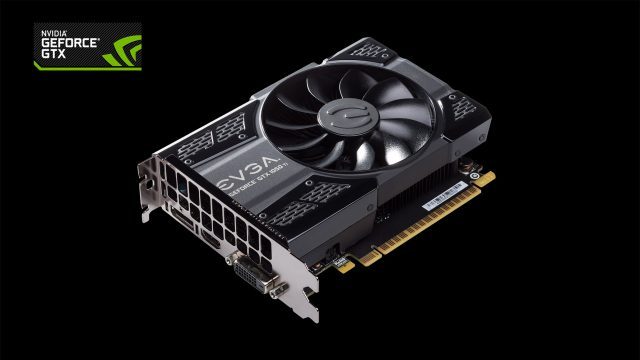
Following the launch of the more powerful GTX 1060, 1070, and 1080, NVIDIA revealed the latest in their low-end GeForce GPUs, the GTX 1050 and 1050 Ti in October 2016. While not the first in line for a premium VR experience, the more powerful 1050 Ti now officially meets the Oculus Minimum Specification.