‘rEvolve’ Vive Flip-Up Head-Mount is Nearing Six Times its Kickstarter Goal

9

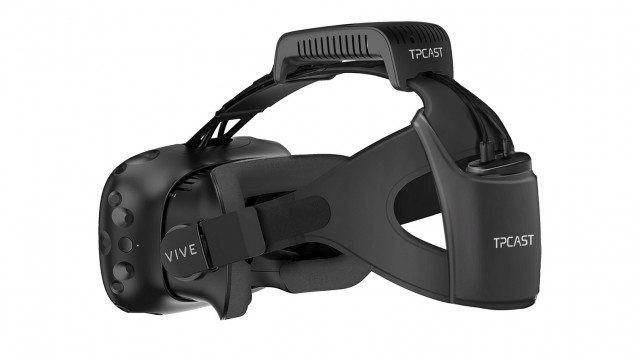
The third-party head-mount for the HTC Vive from SynergyWiz quickly reached its crowdfunding goal on Kickstarter, and is now approaching 6x the required amount. The rEvolve is designed to improve comfort and adds a visor-flip function.

PlayStation VR Finally Gets More Stock Next Week Along With New Bundle

9

If you’ve had any interested in buying PlayStation VR in the last several months, you’ve almost certainly found that actually finding the headset in stock can be quite the challenge. After what seemed to be significant shortages following the holiday season, the company is announcing that more stock and a new bundle is on the way this month.

‘Racket: Nx’ Early Access Review

1

Details

 Developer: One Hamsa, Waves Audio
Publisher: Keshet International Gaming

Available On: SteamVR (HTC Vive)
Reviewed on: HTC Vive
Release Date: January 31, 2017

Note: This game is in Early Access which means the developers have deemed it incomplete and likely to see changes over time. This review is an assessment of the game’s current state, and will not receive a numerical score.

At its core Racket: Nx is a game about a racket, a ball, and a futuristic dome. Players will come to love all three: the thwack of a good hit; the sweeps and whooshes of a ball whizzing overhead; the pop and fizz of particles as a target is hit sweetly right in the centre. Here comes the ball again… line yourself up and take the next shot. It succeeds in making you feel like an heroic player as you unleash fierce volleys and subtle dinks.

We have written about Racket: Nx a couple of times before. Now, launched today into Early Access on Steam, (ahead of an anticipated late 2017 full release) we have a chance to revisit the latest version, this time with the much anticipated multiplayer support enabled.

Gameplay

I’ll cut right to the chase: the multiplayer is a blast. Fast, fun, satisfying and guaranteed to bring out the competitive streak in anybody. The avatars are really expressive—I’m going to go with ‘Alien Lizard Robot with Sound Activated Brain’ as the best descriptor here—so you can see the effect of play on your opponent as they lunge for a fast moving ball or pull off an impossible seeming back hand while the integrated chat makes sure you’ll hear every grunt and curse as play progresses. And there will be cursing, believe me.

Unfortunately, due to a last minute issue, it looks like Racket: Nx will launch with a small bug that sometimes hangs the game when you opt for a rematch. Exiting back to Steam and restarting the game gets it working again. It’s the only blight on an otherwise very impressive Early Access debut, and hopefully can be resolved soon.

facket nx review (2)In the multiplayer mode the arena moves through a set number of waves and, at the end of the final wave, the player with the highest score takes the win. Each wave features a different set of target types all around the players and offers a unique challenge. Every point you score takes a point away from your opponent, and vice versa, so there’s a lovely tug-of-war aspect at play here after you both start with 50 points. You will take it in turns to strike the ball, whose excellent and very satisfying physics haven’t lost anything in the months of tweaking since the demo.

Each time the ball hits the wall surrounding the arena it will change colour, alternating between your colour and your opponent’s, and will then return towards the appropriate player with the angle and speed determined by the previous shot. In this way you can make life difficult for the opposition simply by applying excessive power to a shot or ensuring the ball will return from an unfavourable angle. If they miss their shot the ball will pass them by, hit the wall, and then it will be your turn again and they just lost a chance to put points on the board.

facket nx review (7)In essence when you strike the ball its trajectory feels real, controllable, and believable. When the ball is returning, however, it’s more game-like as it homes in on the next player and you really feel like you’re inside a futuristic sport arena playing hyper-Squash.

There is a welcome element of gamesmanship and far deeper tactical play than I was expecting, in terms of shot selection and thinking a few hits ahead and taking advantage of a slip (literal or figurative) from your opponent. Added to this, the game features power-ups: cells that require multiple hits to break down with the player that lands that final shot reaping a bonus, warp cells that suck the ball in and spit it out randomly through another warp point, hit streaks, moving targets, and the ability to angle your shot just so and see it slide across multiple cells thus raking in the points; and later on there are negative cells that drain your score….

At time’s it’s breathless entertainment, and a good rally will have you laughing at the sheer thrill of it all. It feels very pure, very old school, and very polished. For a game in the vanguard of the initial VR wave—embracing the most modern gaming tech—in the hands, it whisks you back to playgrounds and simpler times.

After spending an hour in the new multiplayer mode with developer One Hamsa’s Community Director Carsten Boserup (and despite being heavily beaten by Carsten in every game we played) I had a great time. As the matches ebbed and flowed I did occasionally find a flurry of good form that felt very rewarding.

One Hamsa describe this as a VR Sport game, and they want player skill and ability to be front and centre. It’s easy to see how, with regular play, I could evolve and improve as a player to the point where I would be far more competitive, as with any “real” sport.

Despite an hour of energetic but friendly competition, the game didn’t leave me exhausted. Obviously a lot will depend on your individual build, level of fitness, style of play and what you want out of the game. Those simply looking for a fun sports game can just play it in a more relaxed way. Those looking for a moderate workout, or as a way to burn some calories, can play it more energetically.

No matter how you game, you will want to make sure your play area is sufficiently spacious and clear. I’m quite tall, with a long reach, and was conscious at all times that a sudden lunge or desperate swing could end in disaster. Equally, it’s all too easy to potentially get caught up in the trailing cables if you’re not careful. By now most VR gamers are accustomed to this but newer players will want to take extra care.

facket nx review (8)
The ‘Alien Lizard Robot with Sound Activated Brain’ avatars actually fit fairly well within the feel of the game.

On the single player side there is a Solo mode featuring five challenges, each of which has a different and escalating combination of waves to master. This is a great mode in its own right, and very difficult to beat, but also acts as a primer for the multiplayer. The enemy here is the clock, as you fight against time to clear each wave, making just a little more progress each time.

When playing solo you can squeeze the trigger to change the ball’s trajectory by attracting it to the racket like a magnet, and the risk here is that the ball can shatter your racket if you don’t release the trigger in time, costing vital seconds as it regenerates. The reward is that you can potentially set up some crucial shots that keep you in the game.

There’s also an Arcade mode offering infinite play against the clock, but the Custom mode (whereby you can build and share your own set of waves) is currently unavailable, clearly intended for a later version.

facket nx review (1)Racket: Nx is available via Steam for the HTC Vive initially, though the developer has confirmed to Road to VR that they plan to add Rift and Touch support later this year. Though there isn’t yet “official” support, apparently people have been able to play it on the Rift through SteamVR, but I’d advise waiting a while to see the extent to which it’s playable in this way (as the game is built for 360 tracking, which not everyone with Touch has). As we move through the three planned quarterly Early Access updates (with tweaks and hotfixes as necessary in between) One Hamsa’s feature and post-Vive plans should become clearer.

It’s in those plans that the potential of Early Access could be maximised. While the developers have their own vision of where they want to take the game in the coming months, they are very much looking to the community to help shape their priorities and suggest new avenues that the game might explore. Modding is potentially on the table if there’s enough interest, and—given its Unity underpinnings and presence on the Steam platform—I’m certain there would be no shortage of people keen to experiment.

SEE ALSO
Physicality & Spectatorship in 'Project Arena' Could Blur the Line Between E-sport and Actual Sport

It’s a shame we have to wait until the end of the year for the finished article then, but there’s already enough here to warrant your consideration if you enjoyed the demo (available for free on the game’s Steam page), and the promise of more to come.

At $20—a price that will likely rise throughout the year as features are added—it falls into what we might consider the lower middle tier of VR pricing. Some people might baulk at the value proposition, and on the face of it there are cheaper VR experiences, but in a dollar-per-hour analysis there is a lot of potential play to be had in the game and the production values are above the norm.

Most of you will know from trying the demo whether this floats your boat, and whether it’s worth twenty bucks to you or not. If it is, I hope to see you in the multiplayer. I’ll be the tall British guy with the insane power shot who is slowly improving, match after match.

Immersion

facket nx review (5)The whole package is presented neatly with a front end that smoothly moves between modes, builds up the 360 arena around you at the start of each match and explodes it away at the end. The sense of presence is excellent and the sound is clear and precise, which lends an air of believability to the notion that you’re bounding a futuristic ball off of futuristic walls using a futuristic racket.

It’s not Discs of Tron (1983), but it is very much like being in the Tron universe. Everything seems very real and solid, from the game world to the simple act of hitting the ball.

Comfort

facket nx review (3)The fact that you are always located in the same position whether selecting options or playing the game means that comfort is excellent throughout. You are always in control in how you move in your play area and where you look; the only discomfort might come from the act of exercise itself, as it’s all too possible to wind up for a really big hit and overstretch yourself if you’re not careful.

You’ll want to make sure your play space is on the upper end of recommendations. Don’t play this if your ceiling is low or there are walls close to the edge of your play area unless you can be very disciplined in your movement.

The whole experience is so comfortable that spending a lot of time in the game is very pleasant—at least until the warmer weather arrives, at which point you’d better have air-conditioning or things are going to get very sweaty very quickly.


exemplar-2We partnered with AVA Direct to create the Exemplar 2 Ultimate, our high-end VR hardware reference point against which we perform our tests and reviews. Exemplar 2 is designed to push virtual reality experiences above and beyond what’s possible with systems built to lesser recommended VR specifications.


Summary

In Racket: Nx the HTC Vive can claim another worthy roomscale experience. It feels like a real sport, and when you’re in there everything else just fades into the background as you find yourself in the zone trying to beat your previous performances or the opponent standing opposite you. Time will tell how much One Hamsa can evolve and broaden the experience throughout its Early Access run, but what we have here is a very impressive beginning. Even if you’re not quite ready to jump in now, this is one to watch.

Note: This game is in Early Access which means the developers have deemed it incomplete and likely to see changes over time. This review is an assessment of the game’s current state, and will not receive a numerical score.

Oculus Touch Insides Revealed in Detailed Teardown

6
Photo courtesy iFixit (BY-NC-SA)

iFixit continue their relentless quest to pull apart every electronic gadget they can get their hands on, including a detailed teardown of the Oculus Touch controllers (which slipped by us on the run up to the Winter holiday season).

Oculus Further Details Ideal Hardware and Sensor Configurations for Roomscale VR with Touch

76
Photo by Road to VR

The Oculus Team have published a detailed guide on Roomscale VR setup. This four-part series expands on the Experimental Roomscale Guide published before the launch of the Touch controllers, discussing sensors, bandwidth, host controllers and extra equipment.

United Nations’ Creative Director on VR as the Ultimate Empathy Machine

1

gabo-aroraGabo Arora founded the United Nations VR, and has directed some of the more well-known VR empathy experiences starting with Clouds Over Sidra in December 2014 in collaboration with Chris Milk’s VR production house Within. Milk first showed Clouds Over Sidra during Sundance 2015, and featured it prominently in his VR as the Ultimate Empathy Machine TED talk in March 2015, which popularized VR’s unique abilities for cultivating empathy.

I had a chance to catch up with Arora at Oculus’ VR for Good premiere party at Sundance where we talked about producing Clouds Over Sidra, his new Lightshed production company, and the importance of storytelling in creating VR empathy experiences.

‘Sword Art Online’ Experience Coming to FOVE VR Headset

6

Sword Art Online (SAO), the VR-centric manga and anime series, will soon be gracing the eyeballs of Fove 0 owners in a new VR experience featuring the series’ female protagonist, Asuna. The SAO experience was created to welcome new users and teach them how to use Fove 0, the first commercially available VR headset with integrated eye-tracking.

Vive Tracker Capabilities Detailed in Developer Documentation

15

Ahead of the Vive Tracker’s consumer launch later this year, HTC plans to send 1,000 units to developers to kickstart an ecosystem of accessories and content which can make use of the device. New developer documentation details the ins and outs of the Tracker.

‘SUPERHYPERCUBE’ Teases Vive Support, But Developer Protest Could Keep it From Rift

57
Image courtesy KOKOROMI

SUPERHYPERCUBE, a spatial reasoning puzzle game for PSVR looks to be soon headed to the Vive through SteamVR. And while SteamVR normally supports the Rift, a developer protest could exclude the headset.

Watch: Crytek’s ‘Codename: Sky Harbor’ VR Experience is a Bombastic, Visual Treat

13

Launched as part of Basemark’s VRScore benchmarking software, the Crytek developed VR tech demo Codename: Sky Harbor, is one of the most visually impressive examples of VR cinema around.

2016’s Record Breaking VR/AR Venture Funding Totals $1.8 Billion

4
Oculus Rift at CES 2017 | Photo courtesy Intel

With 2015 breaking previous records, industry observers entered 2016 wondering if VR/AR funding would be able to keep pace.

First Look: Basemark’s ‘VRScore’ Benchmark Arrives With a Unique Solution for Accurate Testing

4

Basemark has officially launched its virtual reality performance benchmark, VRScore and the package comes complete with an ingenious, low-cost hardware assisted solution to help ensure results are accurate.

$4 Billion ZeniMax v. Oculus Verdict Could Come as Early as Today, Here’s What You Need to Know

54
Mark Zuckerberg | Photo courtesy Dallas News

This week the eyes of the virtual reality industry are on a federal court in Dallas, Texas where ZeniMax (and child company id Software) and Facebook (and child company Oculus) have been engaged in legal battle over a dispute which could cost Facebook $4 billion. ZeniMax alleges that a former employee used VR code that it owned after being hired by Oculus, and further that Facebook should have known that the code was ZeniMax property. With jury deliberations now starting, a verdict could come as soon as today. Here’s what you need to know about the case.


brian-Sommer-HeadshotGuest Article by Brian Sommer, IME Law

Brian is an interactive media and entertainment attorney at IME Law, where he focuses his practice on the intersection of traditional entertainment and immersive media. He also serves as Co-Chair of the VRARA Licensing Committee. You can follow Brian on Twitter @arvrlaw, and @IME_Law.


Update (2/1/17, 2:45PM): The verdict in the case has been reached, awarding $500 million to ZeniMax. Details here.

For 13 days, attorneys in the Dallas federal court have been selling the jury very different stories. “One of the biggest technology heists ever” is how ZeniMax attorney Tony Sammi described to jurors Facebook’s acquisition of Oculus in opening statements. In Thursday’s closing arguments, Oculus attorney Beth Wilkinson told jurors ZeniMax and Id Software are “jealous, they’re angry and they’re embarrassed” over the success of Oculus and the acquisition by Facebook.

At first blush, this lawsuit appears to be a complicated mess involving two plaintiffs, five defendants, nine causes of action, over 900 court filings (many sealed from the public) and a demand for more than $4 billion in damages. Without having access to many of the critical motions filed in the case (due in part to the Court’s order sealing such filings), it is not possible to assess in exacting detail certain critical arguments made by each side. But, from arguments, publicly-available filings and reports that have been made available to the public, it appears that the essence of the lawsuit can be distilled down to this: this is a dispute about who owns the intellectual property (“IP”) that was vital in creating the Oculus Rift.

SEE ALSO
Experts Share 6 Legal Considerations to Know Before Jumping into the VR/AR Industry

Will the jury agree with ZeniMax that its proprietary computer code was a foundational component of Oculus’ success, or will the jury side with the defense’s argument that Oculus code was developed independently and based upon publicly known code and different solutions?

Starting today, jurors begin sorting through hundreds of facts and applying them to the issues contained in the jury instructions, weighing the credibility of witness testimony and evidence presented. Here are three key issues that could drive jury deliberations:

1. Did Palmer Luckey and Oculus Misappropriate IP That Zenimax Disclosed Through a Nondisclosure Agreement?

palmer luckey oculus rift price facebook
Palmer Luckey, Founder of Oculus

Defendant John Carmack is heralded as one of the most recognized and accomplished video game programmers and virtual reality engineers in the industry today. He co-founded Id Software (plaintiff), which was later acquired by ZeniMax (plaintiff). In April 2012, while employed as Id Software’s Technical Director, Carmack discovered through an Internet forum that Palmer Luckey (defendant)—who would go on to become the founder of Oculus—had developed a prototype virtual reality headset called the “Rift.” Carmack contacted Luckey, and Luckey sent Carmack a very early Rift prototype. Carmack is alleged to have immediately started to evaluate, analyze and modify the Rift prototype using research, software code and tools owned by id Software.

Carmack and Luckey’s friendship quickly turned business-like by May 2012 when Luckey in his personal capacity signed a nondisclosure agreement (“NDA”) with Id Software’s parent company ZeniMax, according to information from the case.

Companies use NDAs to ensure ideas or trade secrets disclosed to another party remain confidential. NDAs usually prohibit the recipient of confidential information from using or disclosing any information that they receive under the NDA, except for agreed purposes. Since an NDA is a contract, all of the legal principles surrounding contract law (e.g., elements needed to form a contract, defenses, etc.) are used to analyze an alleged breach of an NDA.

In June 2012, Luckey formed Oculus on the heels of successful demonstrations by Carmack (employed at the time by ZeniMax) and Luckey at the E3 Convention. ZeniMax alleges that through early 2013, and while bound by the NDA, Carmack and other Id Software employees collaborated with Oculus and Luckey to debug and refine the Rift.

SEE ALSO
Oculus Founder Issues Statement After Developer Backlash to Polarizing Politics

ZeniMax alleges Luckey breached the NDA by taking ZeniMax-owned proprietary information and then using it without permission and disclosing it to Facebook. Oculus and Luckey contend the NDA is unenforceable for a number of reasons, including because the NDA was signed by Luckey in his personal capacity before Oculus was founded, a key material term was never defined, and for other legally nuanced reasons. In response, plaintiffs assert that Oculus is bound by the NDA because Oculus is a mere continuation of Luckey’s prior work. The jury’s outcome may hinge on the many factual findings related to the NDA.

Continue Reading on Page 2 >>

Resident Evil 7 is Being Played in VR by Almost 10% of Registered Players

70
Image courtesy Capcom

Capcom’s latest entrant to its popular Resident Evil franchise is currently being played in VR by almost 10% of its players, according to global statistics from the developer.

NASA & Caltech Leaders Aim to Revolutionise Big Data Visualization with VR

7

Virtualitics is new company started by NASA JPL and Caltech alum. offering a new platform to leverage the immersive properties of virtual reality in order to better aid human comprehension and use of ‘Big Data’.

39,929FansLike
13,574FollowersFollow
66,541FollowersFollow
27,800SubscribersSubscribe

Latest Headlines

Features & Reviews