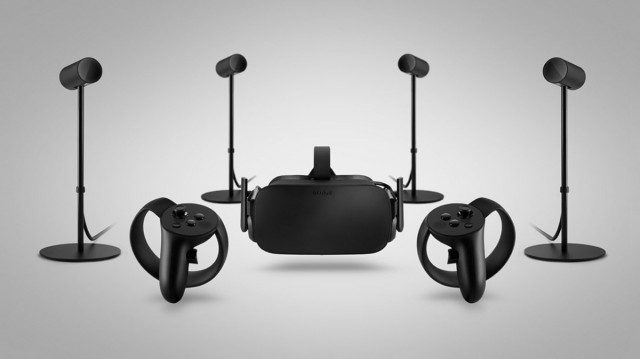
Oculus have released update 1.11 for the Rift VR headset and Touch motion controllers that bring promised enhancements for the system’s “experimental 360” degree roomscale support with multi-sensor setups and fixes for the guardian boundary system.
Insomniac Games’ Oculus Rift and Touch exclusive magic dueller just got a sizeable update which bringing welcome elements such as a new Chicago arena, misdirection oriented Dark Tag artifact and a brand new guardian by the name of Bridge Wraith.
A popular horror title on Gear VR, the latest instalment of the Affected franchise will be coming to Oculus Rift with Touch motion controller support in February, according to developers Fallen Planet.
After launching the consumer HTC Vive in early 2016, the company began offering a $1,200 ‘Business Edition’ version of the headset which is essentially the same system but with dedicated support, an enhanced warranty, and bulk buying options. Going forward, however, the consumer and Business Edition systems will become increasingly differentiated products.
Last year, Baobab Studios’ Eric Darnell was skeptical about adding interactivity to virtual reality stories because he felt like there was a tradeoff between empathy and interactivity. But after watching people experience their first VR short Invasion!, he saw that people were much more engaged with the story and wanted to get more involved. He came to that realization that it is possible to combine empathy and interactivity in the form of compassion acts, and so he started to construct Baobab’s next VR experience Asteroids! around the idea of allowing the user to participate in an act of compassion. I had a chance to catch up with Darnell at Sundance where we talked about his latest thoughts about storytelling in VR, and explored his insights from their first explorations of what he calls “emotional branching.”
LISTEN TO THE VOICES OF VR PODCAST
Darnell says that one of the key ingredients of a story is “character being revealed by the choices that they make under pressure.” Rather than make you the central protagonist as a video game might, in Asteroids! you’re more of a sidekick who can choose whether or not to help out the main characters. This allows an authored story to be told though the main characters that are ultimately independent of your actions, but your “local agency” choices still flavor your experience in the sense that there are different “emotional branches” of the story for how the main protagonists react to you based upon your decisions.
Unpacking the nuances of these emotional branches showed me that Asteroids! was doing some of the most interesting explorations of interactive narrative at Sundance this year, and I would’ve completely missed them had I not had this conversation with him. We explore some of the more subtle nuances of the story, and so I’d recommend holding off on this interview if you don’t want to get too many spoilers (it should be released sometime in the first half of 2017). But Darnell is a master storyteller, and he’s got a lot of really fascinating thoughts about how stories might work in VR that are worth sharing out to the storytellers in the wider VR community.
They’re also doing some interesting experiments of adding in body language mirroring behaviors into the other sidekick characters that are based upon social science research in order to create subtle cues of connecting to the characters and story. There is another dog-like robot the experience that is in the same sidekick class as you where you can play fetch with it and interact with in subtle ways.
Storytelling is a time-based art form that has a physical impact of releasing chemicals in our bodies including cortisol at moments of dramatic tension, oxytocin with character interactions, and dopamine at the resolution of that dramatic tension. Given these chemical reactions, Darnell believes that the classic three-act structure of a story is something that is encoded within our DNA. Storytelling is something that has helped humans evolve, and it’s part of what makes us human. He cites Kenneth Burke saying that “stories are equipment for living.” Stories help us learn about the world by watching other people making choices under pressure.
There’s still a long ways to go before we achieve the Holy Grail of completely plausible interactive stories that provide full global agency while preserving the integrity of a good dramatic arc. It’s likely that artificial intelligence will eventually have a much larger role in accomplishing this, but Asteroids! is making some small and important steps with Darnell’s sidekick insights and “emotional branching” concept. It was one of the more significant interactive narrative experiments at Sundance this year, and showed that it’s possible to combine empathy and interactivity to make a compassionate story.
Double Fine, the studio behind cult classic Psychonauts (2005), last year announced a PSVR exclusive, Psychonauts in the Rhombus of Ruin, a direct continuation of the original story. Now the company has set the game’s release date and released a new 360 trailer.
In 1953 Tenzing Norgay and Edmund Hillary were the first to successfully summit Everest, the world’s tallest mountain at 29,029 feet. Now, VR content house CGO Studios is teaming up with descendants of those first summiteers to recreate the momentous trek to be experienced in a historically accurate real-time VR experience.
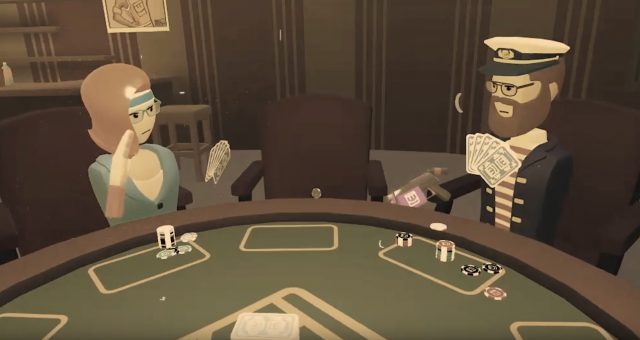
Seattle-based VR studio Against Gravity has today announced they have received $5M in seed funding to continue to build Rec Room, the studio’s social VR platform.
Steve Jobs once said to a gathering of senior advisers that when it came to the first iPhone, “we’re going to patent it all,” (New York Times reports). While Apple has certainly changed in the years since Job’s passing, the company has undoubtedly continued to aggressively pursue patents, sometimes racking up hundreds of filings in a single month with inventions spanning everything from touch-sensitive smartwatch bands to 3D environmental mapping. This week however, the company was granted two patents that establish basic hardware and software solutions not only pointing towards a prospective Apple AR device, but marking out some fundamental territory in the process.
Nintendo is looking to add VR functionality to their upcoming home-and-portable console, the Switch. Nintendo president Tatsumi Kimishima recently stated that it could be added once they solve some VR-specific issues.
Following the news of a $500 million plaintiff award in the ZeniMax v. Oculus lawsuit, a detailed breakdown of the verdict reveals the jury’s specific findings, and who is responsible to pay for the damages.
New footage from upcoming racing simulator Project CARS 2 for PC, PS4 and Xbox One has surfaced on YouTube. Slightly Mad Studios’ new game is expected to launch later this year with support for virtual reality like its predecessor, and hopes to address the criticisms of the 2015 original.
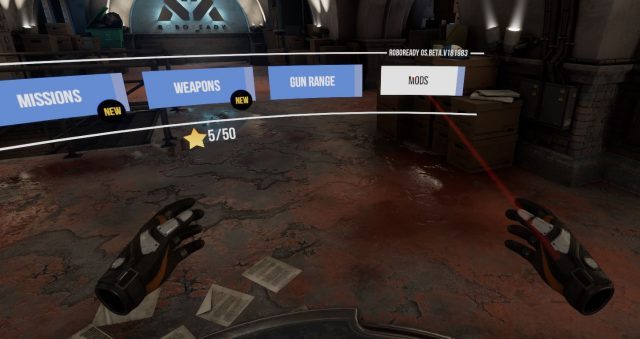
This latest video developer diary from Epic gives a very brief, but insightful overview of how Oculus Touch and Rift tech demo Bullet Train became fully fledged release Robo Recall, and what the developers learned along the way.
While it wasn’t the $4 billion slam dunk ZeniMax was hoping for, a Dallas, TX jury today awarded $500 million to ZeniMax after finding that Oculus founder Palmer Luckey had breached nondisclosure agreements. However, Oculus was not found to have misappropriated trade secrets, a key claim made by ZeniMax in the case.
There are a number of immersive storytelling innovations Sundance 2017 in a number of experiences including Dear Angelica, Zero Day VR, Miyubi, and Life of Us, but Mindshow VR’s collaborative storytelling platform was the most significant long-term contribution to the future of storytelling in VR. I first saw Mindshow at it’s public launch at VRLA, and it’s still a really compelling experience to record myself playing multiple characters within a virtual space. It starts to leverage some of virtual reality’s unique affordances when it comes to adding a more spatial and embodied dimension to collaboratively telling stories.
I had a chance to catch up with Visionary VR’s CEO Gil Baron and Chief Creative Officer Jonnie Ross where we talk about how Mindshow is unlocking collaborative creative expression that allows you to explore a shared imagination space within their platform. We talk about character embodiment, and the magic of watching recordings of yourself within VR, how they’re working towards enabling more multiplayer and real-time improv interactions, and they announced at Sundance that they’re launching Mindshow as a closed alpha.