
Rokid Glasses Kickstarter Tops $500K Amid Growing Demand for Smart Glasses with Displays

3

Chinese AR startup Rokid launched a Kickstarter campaign yesterday for Rokid Glasses, a new version of the company’s smart glasses with green monochrome displays which previously launched in China. Now, after 24 hours, the project has already garnered over $500,000, marking an undeniable demand for smart glasses that go beyond the audio-only experience of Ray-Ban Meta and Oakley Meta HSTN glasses.

Starting at the base tier of $479, representing a 20% discount of its $599 MSRP, Rokid Glasses boast a bevy of familiar features, including AI voice queries (via ChatGPT), music listening, calls, and photo and video capture.

Rokid Glasses’ biggest feature though is undoubtedly its integrated dual waveguides, which output a monochrome green heads-up display for things like turn-by-turn directions, teleprompter, and real-time text and voice translation with 89 languages (five offline via Rokid’s own LLM).
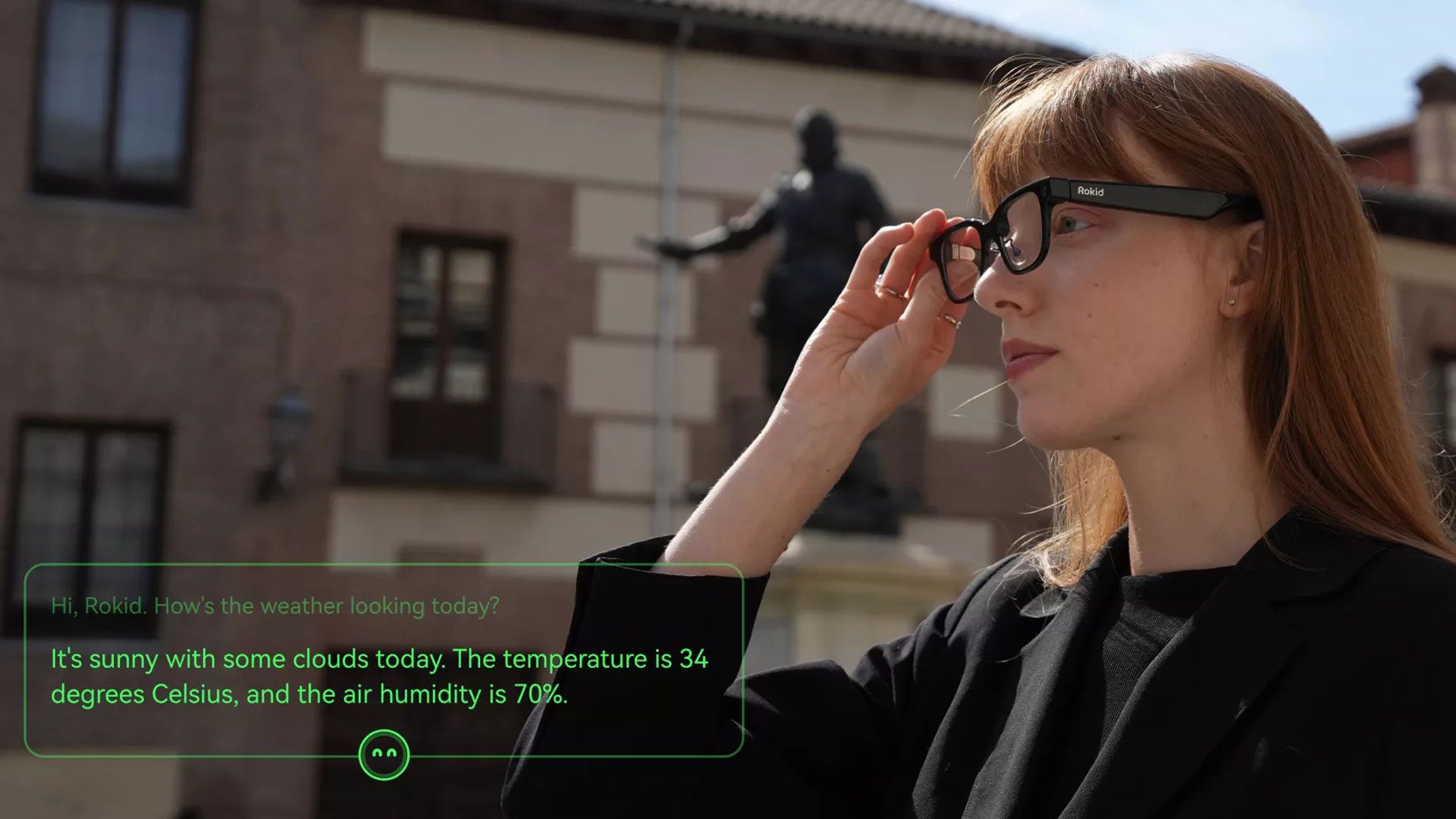
Image courtesy Rokid

Notably, there are a few smart glasses coming to market promising ostensibly similar heads-up displays. Google is promising future availability in its slate of forthcoming Android XR smart glasses. Meta is also rumored to release a display version of its smart glasses, likely also built in partnership with EssilorLuxottica like Ray-Ban Meta and Oakley Meta. Reports also point to Apple developing smart glasses, although rumors haven’t specified whether these also include display(s).

But Rokid is one of the first big names in the XR space looking to serve consumers with its display-clad smart glasses. And the results so far suggest we’re going to see multi-million dollars flood into its Kickstarter campaign, which is slated to continue until October 10th.

Billed as the “world’s lightest full-function AI & AR glasses” (they aren’t actually augmented reality, more on why here), the device is built around Qualcomm’s Snapdragon AR1 and NXP’s RT600 processors, featuring dual micro-LED displays delivering 1500 nits of brightness.
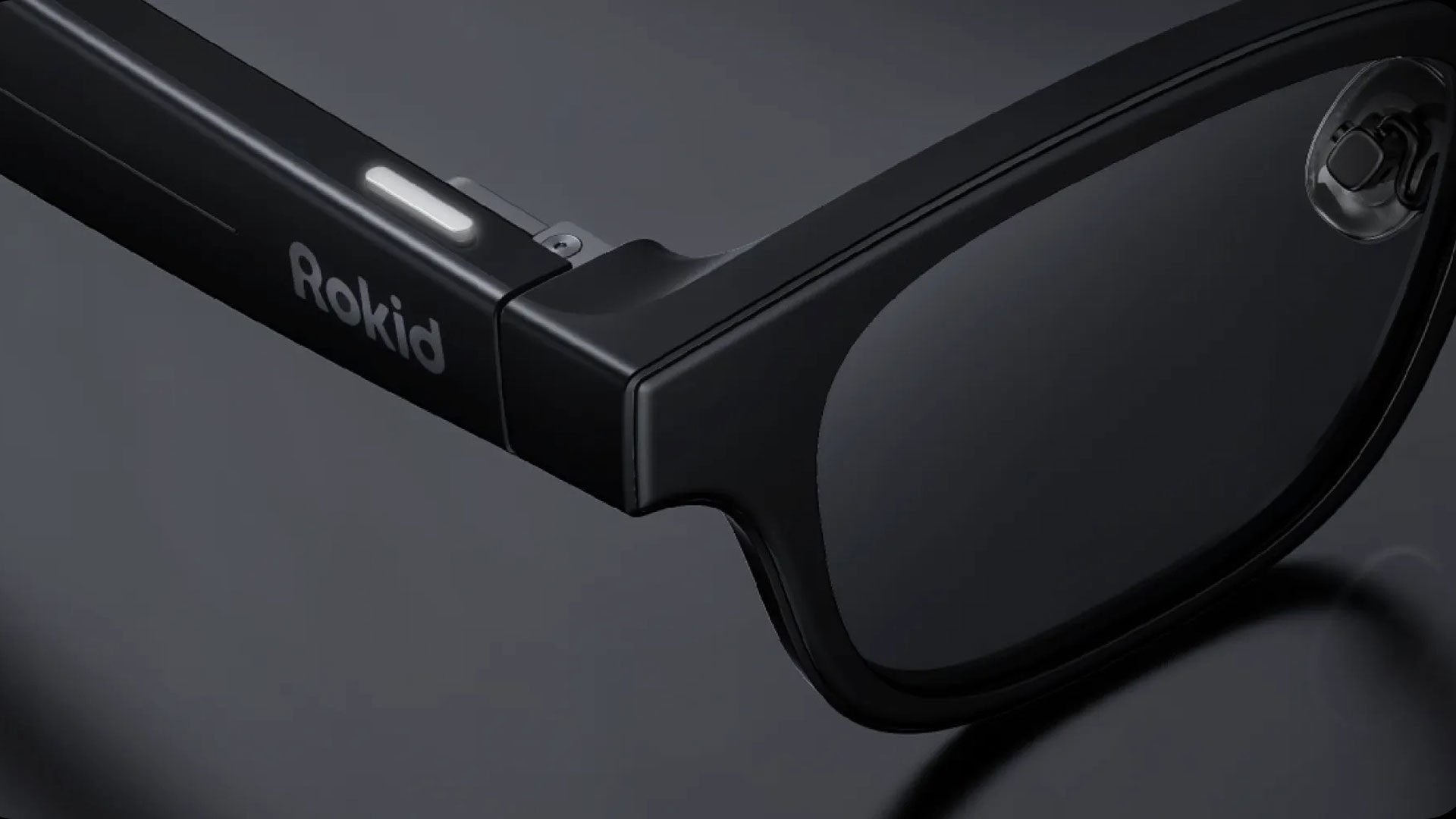
Image courtesy Rokid

Sporting a single 12MP Sony IMX681 camera sensor, which captures a 109° field of view via its f/2.25 aperture, promising low-light HDR and digital video stabilization.

Through both voice prompts (“Hey Rokid!”) and pressing the right-mounted shutter button, users can shoot photos in multiple formats—3:4 at 1,200p, 9:16 at 900p, and 4:3 at 680p—and video in 3:4 at 1,800 × 2,400, 9:16 at 1,350 × 2,400, and 4:3 at 2,400 × 1,800. Yes, it also has internal and external capture lights, which indicates when a user is recording.

Integrated audio comes via near-ear AAC speakers, also featuring a four mic array that boasts integrated noise reduction for wind noise.

SEE ALSO
Samsung’s Answer to Vision Pro Reportedly Landing First in Korea This October for Around $2,000

As for battery life, Rokid Glasses feature a 210 mAh internal battery, which the company says will offer 8–10 hours of mixed use, 5–6 hours of music, 2 hours of always-on display, and 45 minutes of “intensive recording.” A 3,000 mAh charging case is available in some tiers, or as a stretch goal provided the campaign reaches $1 million.

What’s more, the 49 gram smart glasses also feature a magnetic clip-on frame design for prescription lenses, which Rokid is supplying in its $519 backer tier.
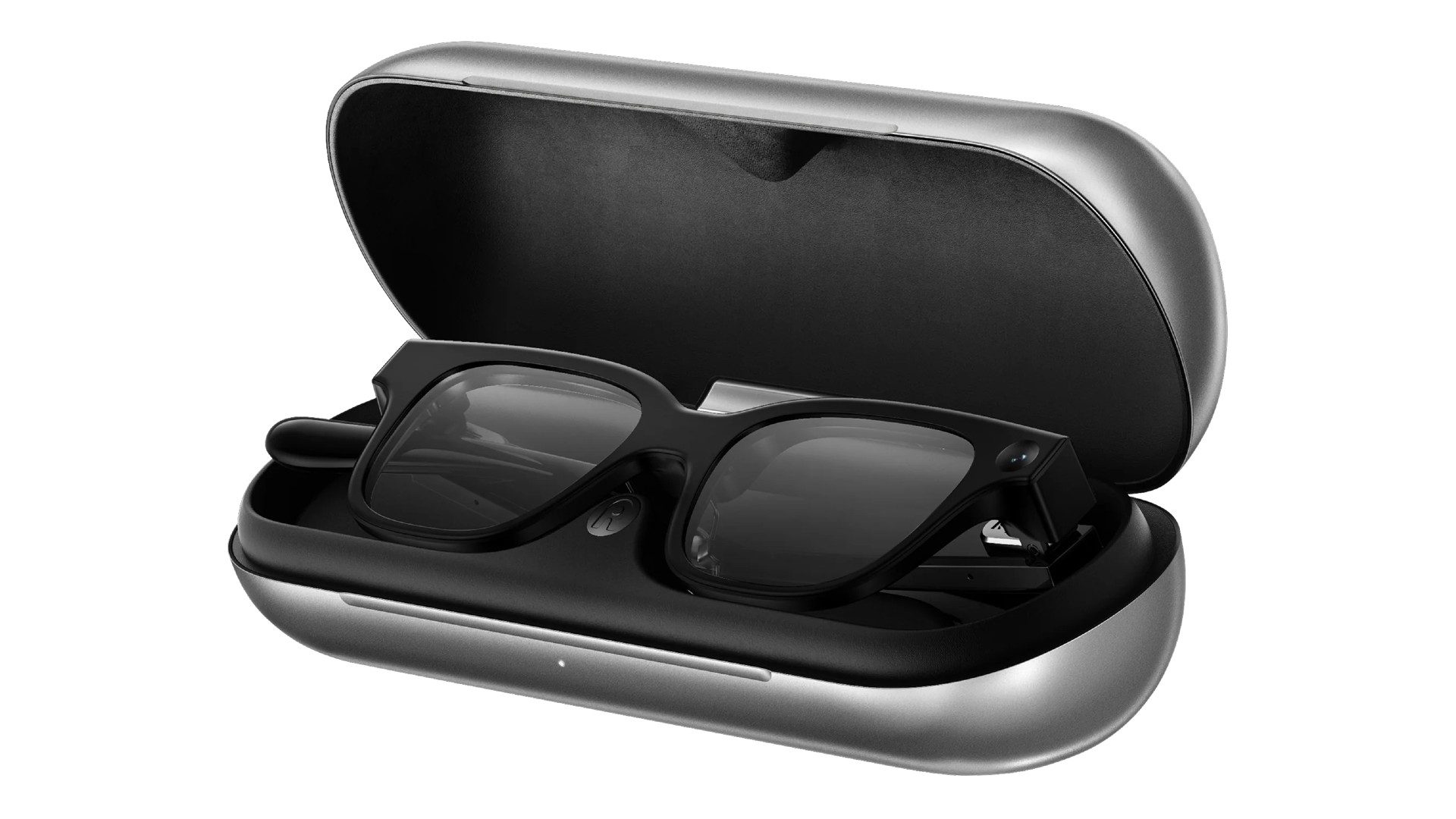
Image courtesy Rokid

We haven’t gone hands-on yet, although Tyriel Wood previewed an early unit (seen below) that suggests Rokid Glasses are indeed the real deal. As it is, Rokid is an established name in AR, having delivered multiple devices over the years following its founding in 2014.

Notably, shipping for Rokid Glasses is estimated for November 2025, which could leave some space before year’s end for other creators to announce their own competitors in the space.

Events to watch out for include is a rumored follow-up to Samsung Unpacked (reportedly on September 29th) and Meta Connect (September 17th). Its uncertain when Google and its eyewear partners hope to unveil the first slate of Android XR glasses, coming from Warby Parker, South Korea’s Gentle Monster, and ostensibly Google themselves.

In the meantime, you can learn more about Rokid Glasses over on the Kickstarter campaign, which goes until October 10th.

This article may contain affiliate links. If you click an affiliate link and buy a product we may receive a small commission which helps support the publication. See here for more information.

Well before the first modern XR products hit the market, Scott recognized the potential of the technology and set out to understand and document its growth. He has been professionally reporting on the space for nearly a decade as Editor at Road to VR, authoring more than 4,000 articles on the topic. Scott brings that seasoned insight to his reporting from major industry events across the globe.
  • Arno van Wingerde

    Maybe one day, this will be something "everybody" has. For me, it is competing with smart phones, watches, earplugs etc. with the disadvantage that it changes your look – much more so than a watch or phone, but OK people wear sunglasses as well. A phone is way more powerful and better in almost every way: music camera etc.

    Just for navigation, I can see a strong benefit. Having the smart thingy see what you see is another, but you can point your phone at something as well, and you can get your phone out to navigate. Having American or Chinese tech giants seeing everything I see is a new level of creepiness, particularly with the current (and permanent?) US government…

    • Christian Schildwaechter

      TL;DR: right now they only complement smartphones, but for certain widespread uses smartglasses with displays will become extremely useful even in their current limited form. Replacing all smartphone features will take a lot more time, but that's not even necessary to convince esp. people that have to wear glasses anyway.

      Most smartglasses require connecting to a smartphone, as the onboard SoC with limited battery isn't really capable of doing complex things by itself, so it delegates many things to the phone. So smartglasses are mostly smartphone accessories that allow to use (parts of) the phone handsfree, and without forcing you to look down at a small phone or watch display. The latter is very distracting, which is why most countries have banned any hands-on phone use in cars.

      Right now smartglasses aren't really competing with smartphones, instead they complement them. Available projectors show a single eye, single color 640*400 pixel image, not usable for showing regular apps. But over time these will improve to the point where people will do more tasks that currently require taking their phone out of their pockets on their smartglasses instead, and eventually we'll get smartglasses that can do everything a smartphone can do except for haptic input.

      Whether a glasses form factor is deemed acceptable will mostly depend on whether a person already wears glasses. Just from your "changes your look" statement I'd guess that you aren't wearing glasses, but roughly half the earth's population has to, at least occasionally, and therefore won't be deterred by smartglasses as long as the weight is low enough.

      I'd expect smartglasses with displays to within a few years become a "must have" for people traveling to countries where none of the languages they speak will help with communication, and/or they can't even read the script/alphabet used there. In theory you could already do this with the live translation feature available in today's smartphones, but it will be much more convenient to still look the person you are talking to into the eyes and just see a translation of what they are saying floating in front of their face, or all street signs and info posters with an instant overlay you can understand.

      And millions will be sold to otherwise technology dismissing elderly people just for the transcription feature that helps a ton with their declining hearing abilities, allowing them to re-enter the conversation, as pretty much all hearing aids suck for those with more than just mild hearing loss. Combine the "people wearing glasses", "people traveling" and "people with bad hearing", and you get a pretty large potential user group even for the still primitive first generation smartglasses with small text displays.

    • Andrew Jakobs

      But if you are walking, or driving, having direction directly transparently in your view is so much better as having to watch it on a phone. I love the hud on my windshield of my Nissan qashqai 2021, wouldn't want to have a car without it. But also think about you walking around a city in a country you don't know the language and having signs automatically translated, hell in future even actually replaced.
      and you also seem to forget, many people already wear regular glasses, so having them smart with AR displays is just excellent fir them.