
Rokid Glasses Raise Over $1M in First Week, Proving Strong Demand for Display-clad Smart Glasses

6

Rokid, the China and US-based AR startup, launched a Kickstarter campaign last week for Rokid Glasses, frontrunning the competition with a pair of smart glasses housing green monochrome displays. Now, the crowdfunding campaign has surpasses $1 million, doubling the amount it garnered within its first 24 hours.

If Rokid Glases’ recent performance on Kickstarter is anything to go by, there’s going to be an unmistakable demand for smart glasses that offer more than an ‘audio-only’ experience, like you get with Ray-Ban Meta and the recently launched Oakley Meta HSTN glasses. Google is planning them, and Meta is rumored to have their own in the works.

Now, less than a week since its launch on Kickstarter, the display-clad smart glasses have topped $8.7 million Hong Kong dollars (~$1.2 million USD). And there’s still 38 days to go in the campaign, leaving plenty of room to run until close on October 10th.

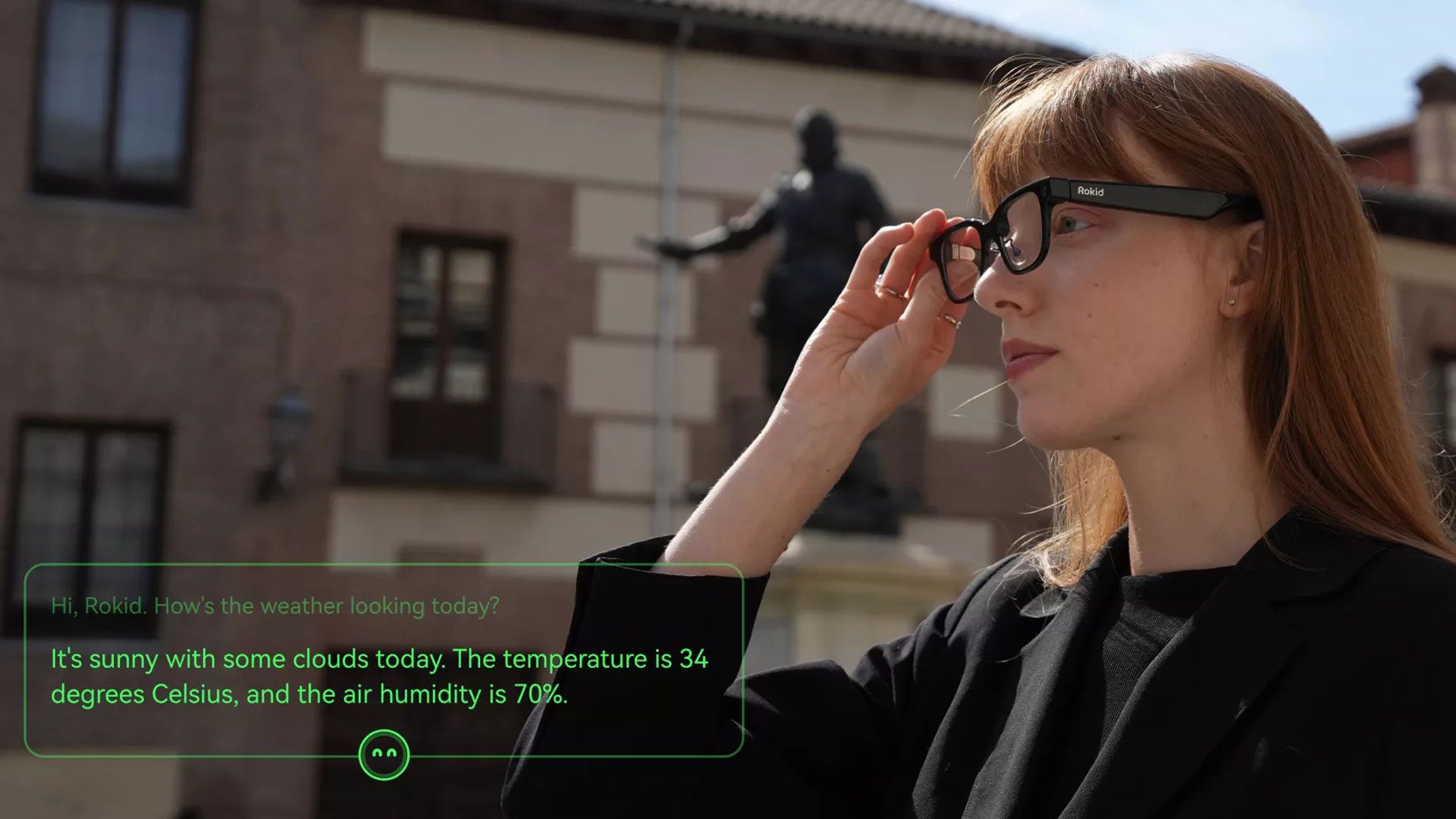
Rokid Glasses | Image courtesy Rokid

You can catch all of the specs and features here, although here’s the short of it: Rokid Glasses run a Qualcomm Snapdragon AR1 and NXP’s RT600, which drive its dual green micro-LED displays, which Rokid says can deliver 1500 nits of brightness—all at 49g and a formfactor that’s impressively normal.

Onboard is a single 12MP camera sensor, which features a 109° field of view, low-light HDR and digital video stabilization. Multiple formats will be available, letting you shoot up to 1200p photos and 2,400 × 1,800 video.

SEE ALSO
U.S. Army Reportedly Taps Anduril & Rivet to Compete in Revamped XR Headset Military Contract

Relying on both ChatGPT and an internal LLM for queries and live text and voice translation, the glasses also promise things like turn-by-turn directions, music playback and voice calls through dual AAC speakers. Again, that’s abridged version. You can learn more about battery, photo and video quality, and early hands-ons here.
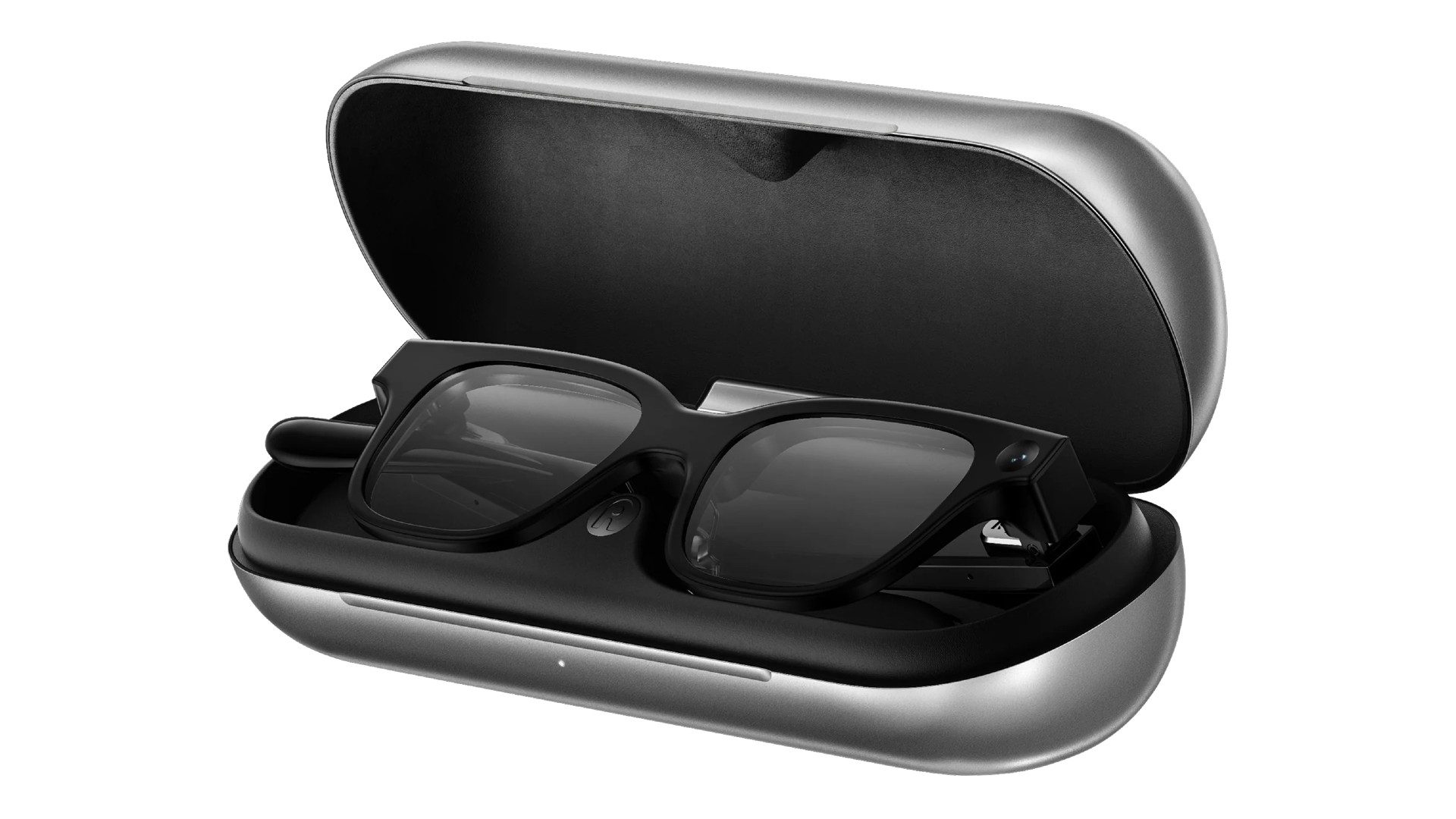
Image courtesy Rokid

And now that the campaign has surpassed $1 million, all backers will also get a free Charging Case, valued at $99. The lowest funding tier ($479) is already gone still available, which comes with the Charging Case for free.

In the meantime, we’ll be following the Rokid Glasses Kickstarter as it makes headway until its October 10th close.
This article may contain affiliate links. If you click an affiliate link and buy a product we may receive a small commission which helps support the publication. See here for more information.

Well before the first modern XR products hit the market, Scott recognized the potential of the technology and set out to understand and document its growth. He has been professionally reporting on the space for nearly a decade as Editor at Road to VR, authoring more than 4,000 articles on the topic. Scott brings that seasoned insight to his reporting from major industry events across the globe.
  • STL

    It’s not the hardware! It’s the software! Even Realities G1 has an excellent hardware, but the software really sucks. So why would I invest in a different set of hardware? Makes no sense, the software can be bad as well!

    • Arno van Wingerde

      … and very likely will be! I am always amazed why people pay good money without a clue, beyond some hardware specs, what they may finally end up getting!

    • Christian Schildwaechter

      A big difference is that Rokid is offering an SDK, so developers can create their own apps. This will possibly be limited to apps running on a smartphone and only using the Glasses as displays, as the glasses themselves have very low compute, storage and battery limits. But this way the software experience isn't limited to whatever Rokid provides, while the Even Realities G1 are basically like an Android phone that comes with five default apps and cannot install any other. I'm currently not in the market for any smartglasses, but by integrating displays, a camera (the G1 is lacking) and the option to create custom apps for whatever strange use case I can come up with, Rokid is ticking a lot of the check boxes that might win me over.

      • STL

        Thanks for the insight. The camera and speakers make glasses heavier and bulkier. For me, that’s a huge advantage of the G1. I was hoping for something like a permanent Google Translate. Well, not really!

        • Christian Schildwaechter

          I really like the look and form factor of the G1, with thin arms and putting compute/battery into small compartments at the end of the arms. And currently it would be very difficult to squeeze a additional camera into that, or speakers worth of the name into the very thin arms. The weight isn't that much lower though, with the G1 at ~43g vs the Rokid Glasses at (announced) 49g.

          I still don't know what smartglasses owners actually use them for, with some hints that it's mostly taking pictures and videos due to the otherwise still limited function. Even Realities sort of created a more specialized device that already works great as a wearable teleprompter, according to reviews does a decent job at transcribing speech, and actually provides live translation for about 20 languages (requiring an online connection), which in Linus Tech Tips' test worked properly at least for French and Chinese.

          I was actually surprised how capable they already are when I first learned about their existence in January from one of your comments here , but they are limited to a few tasks (they do well), even more restricted than most other smartglasses.

  • The Arkitekt

    A whole $1 million! And that "proves" demand… is there any credibility left in content creators today?