
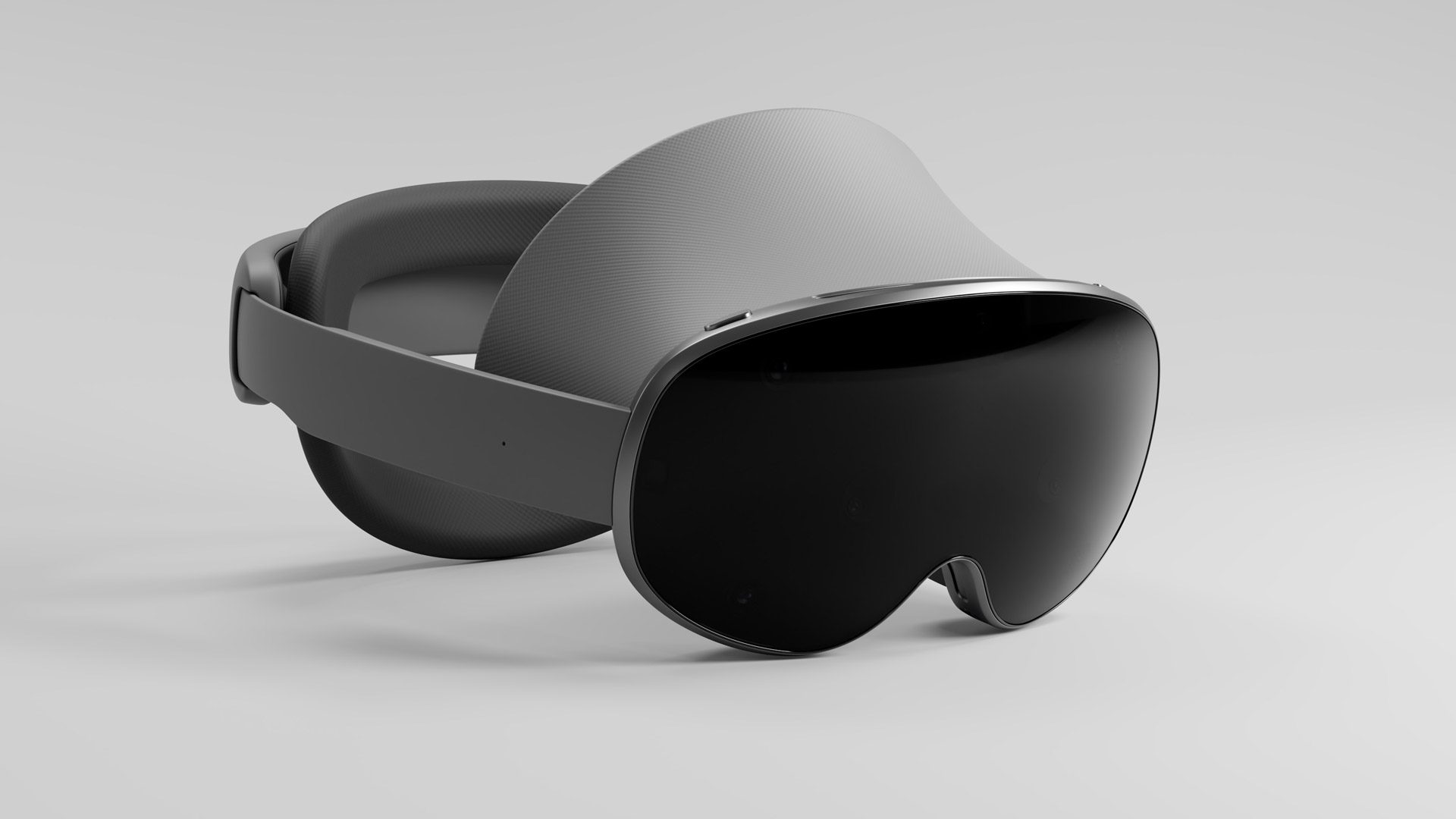
Samsung’s Answer to Vision Pro Reportedly Landing First in Korea This October for Around $2,000

22

Samsung’s upcoming mixed reality headset Project Moohan has largely been out of the spotlight since its unveiling late last year. According to South Korean outlet Newsworks (Korean), the headset’s launch could be right around the corner.

Citing industry sources, Project Moohan is reportedly set to be featured at Samsung’s upcoming Unpacked event, which is expected to take place in South Korea on September 29th.

The report maintains the headset is set to launch soon thereafter, coming first to South Korea on October 13th, and later to global markets. There’s no word on when or how the alleged global rollout will work.

The device is expected to be priced somewhere between ₩2.5 and ₩4 million South Korean won, or around $1,800 and $2,900 USD, Newsworks maintains.

While markedly cheaper than Apple Vision Pro, which still sells for its early 2024 launch price of $3,500, that still puts Moohan pretty squarely on the prosumer end of the spectrum.
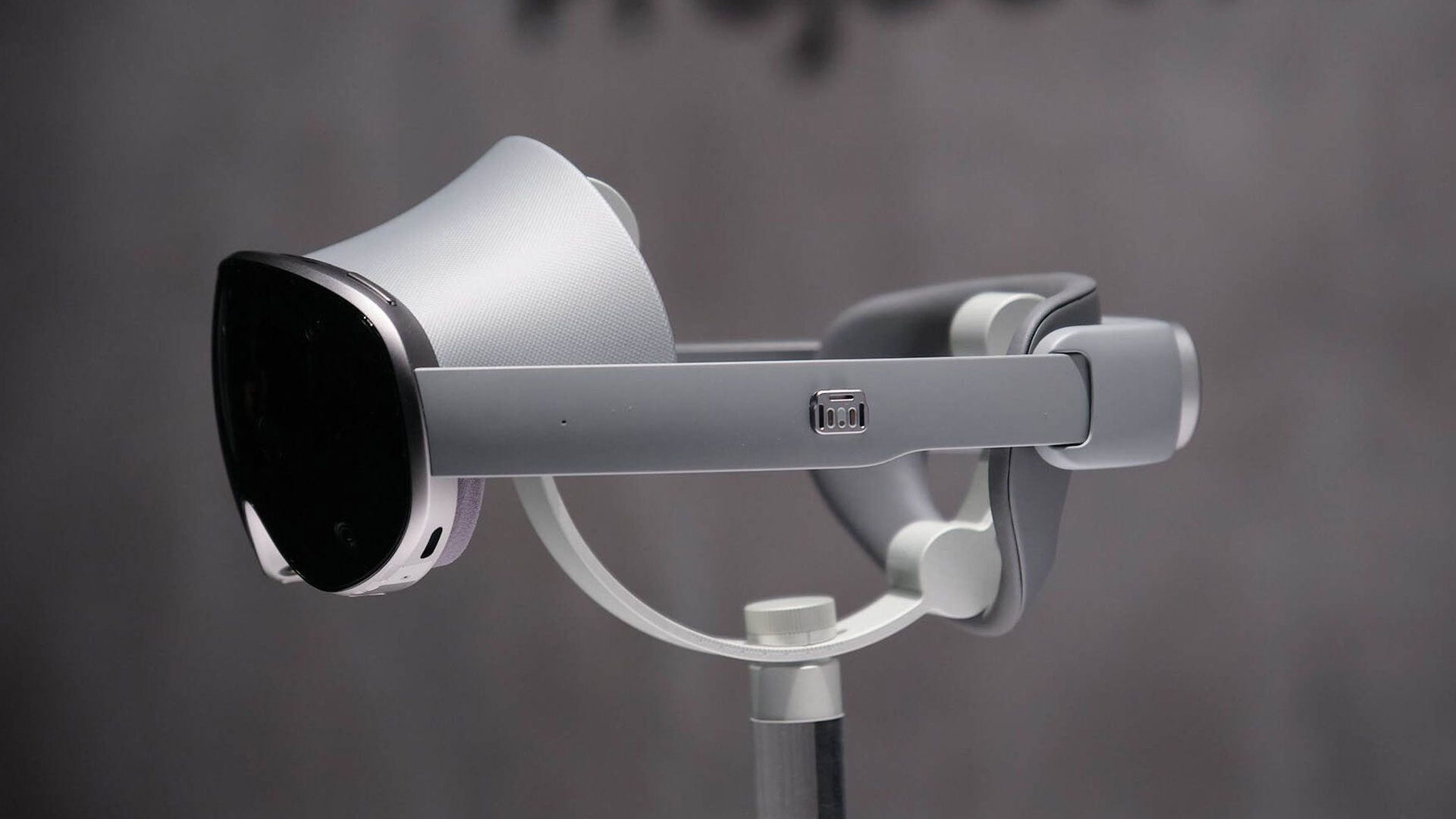
Samsung Project Moohan | Image courtesy The Verge

Ostensibly looking to serve up competition to Vision Pro, Project Moohan is set to be the first mixed reality headset to run Google’s Android XR operating system.

According to its current spec sheet, the headset sports a Qualcomm Snapdragon XR2 + Gen 2, Sony-sourced micro‑OLED panels (no resolution specs yet), pancake lenses, automatic interpupillary distance (IPD) adjustment, and support for eye and hand-tracking. It’s also set to support VR motion controllers of some sortalthough we haven’t seen them yet.

Make sure to check out our hands-on with Project Moohan from December 2024 to learn more, including notes on comfort, display clarity, and our experience with Android XR—which really looks a lot like Horizon OS combined with VisionOS.

Newsworks reports that Samsung is only expecting to ship “around 100,000 units” of the device this year—significantly less than Apple’s alleged 2024 targets for Vision Pro, which third-party analyst Ming-Chi Kuo reported last year ranged between 400–450k units. Granted, Samsung doesn’t have a lot of runway left until year’s end, so there’s no telling what it hopes to achieve with Moohan.

Still, industry sources expect Samsung’s XR headset to act as more of stepping stone to its wider smart glasses ambitions, Newsworks says.

SEE ALSO
Former Magic Leap Engineers Launch No-code AR Creation Platform, Aiming to Be 'Canva of AR'

Notably, Samsung has yet to announce its own smart glasses amidst a flurry of companies looking to enter the space, including Google’s Android XR smart glasses launching in partnership with America’s Warby Parker and South Korea’s Gentle Monster.

Following the recent launch of Oakley Meta HSTN, Meta is also reportedly expected to release a new pair of smart glasses, this time including a built-in display and wrist-worn controller, according to a recent report.

Chinese tech giant Xiaomi also recently launched its own smart glasses, which go toe-to-toe with Ray-Ban Meta, although appear to be exclusive to Mainland China.

Meanwhile, HTC unveiled its ‘VIVE Eagle’ smart glasses, which is shipping first in the company’s native Taiwan at NT$15,600 ($520 USD).

This article may contain affiliate links. If you click an affiliate link and buy a product we may receive a small commission which helps support the publication. See here for more information.

Well before the first modern XR products hit the market, Scott recognized the potential of the technology and set out to understand and document its growth. He has been professionally reporting on the space for nearly a decade as Editor at Road to VR, authoring more than 4,000 articles on the topic. Scott brings that seasoned insight to his reporting from major industry events across the globe.
  • Rudl Za Vedno

    It saddens me deeply, but it seems like VR is in a rough spot right now. Every major player in the market is shifting focus toward AR, and if AR doesn’t succeed, the entire XR space—VR, MR, and AR—could suffer a major setback. That could make VR unaffordable for the average consumer once again.

    Just look at the current headset prices: Apple’s Vision Pro at $3,500, Samsung's set to cost between $1,800 and $2,900, the Bigscreen Beyond 2 around $1,800 once you factor in all the required accessories. Meta doesn’t seem eager to release a Quest 4 anytime soon, and there’s no indication Sony is working on a PSVR3.

    Dark days may be ahead for us VR enthusiasts—especially those of us without deep pockets :(

    • eadVrim

      In all cases, there will always a PCVR headset, and at an affordable price. since most simmers are played also in virtual reality.

      • Andrew Jakobs

        What do you call affordable? Q3/Pico 4 ultra are affordable, Play for dreams isn't, and the Pimax crystal headsets aren't either.

        • eadVrim

          Q3/Pico/PSVR2…
          Pico cloned Q3, and Samsung now clones the AVP,
          Asian companies should have some innovation in VR/AR until to be competitive.
          If Pico was Oled even in frensel lenses it gonna be a top deal.

          • Andrew Jakobs

            Uhh, pico didn't clone the Q3, Pico 4 had pancake lenses before Quest. Out of the box the Pico 4 is more comfortable as the Quest headsets.

    • Andrew Jakobs

      It just shows that the hardware components itself aren't really cheap.
      Sony now has it's business headset.

    • ApocalypseShadow

      The reality is that VR was always a test bed for mixed reality and AR for Facebook. They know that getting to the next paradigm before Apple, Google and Amazon is of high importance. Right now Apple and Google pretty much control certain markets. Making the next "cellphone" for everyday use has huge ramifications for the next 50 years. Yeah. Gaming is secondary. But it always was. Computers are used for way more things than just videogames. So too will these new hardware devices. Gaming will still be secondary.

      Quest, as cool as it is, is no different than game testers for videogames to them. Or, like Microsoft. Microsoft never really cared about gaming. Just the control of having consumers on subscriptions and using their cloud azure servers. Gaming was just a jump off point to try and get there.

      Sony made a cool headset that's ready for next Gen already for GAMES as that's what butters Sony's bread. Playstation. It's why the headset doesn't really do anything else like Quest does. Haptics, HDR, high resolution screens, eye tracking, etc are all waiting to be used on PS6. They can still do a refresh or wireless. But all the headset needs is console power to run it. And PS6 will most likely be very powerful.

      All the other players are just copies of what Facebook or Apple are doing. But I'll say this, Samsung's headset could cut its own share of the market pie. Just like their phones and tablets do. If Android apps without side loading is a thing, that's a killer app. If it uses all Samsung's apps and AI, that's more icing on the cake. If it can be used as a phone besides video chatting in AR or VR, it will do what a lot of these other headsets can't do. It's why Facebook is trying to improve their OS because it's way behind Google which is Samsung's partner. It's also why Facebook are trying to make partner headsets to flood the market. If most headsets are theirs, it would be an advantage.

      But VR and AR aren't going anywhere. It's too useful to build things, educate, simulate, advertise, etc. It's why Sony built that other headset. For 3D creation. Yeah, it's not for games. But wasn't intended to be.

      Every known product has had a rocky start. It's just hard to see the end game because you're sitting at the starting line wondering who's going to win the race. Someone will win though. Or multiple companies. Relax and enjoy the ride. I've been around since pong and pinball machines. That's decades of seeing gaming grow to what it is. VR will get there eventually. With AI creating worlds you couldn't even dream about.

  • Stephen Bard

    People participating in demos of Moohan reported that it had a Field of View narrower than AVP, which is unacceptable at a price above $1800.

  • eadVrim

    A clone of AVP in everything even in price, hopefully there is Meta that make affordable unique MR devices.

  • Adrian Meredith

    Considering it's basically using the same chip as quest 3. This is dead in the water

    • Andrew Jakobs

      It's a newer version as the one in the Q3, but still not a real highend Qualcomm SoC.

      • Christian Schildwaechter

        Samsung's best chance is probably better cooling. Meta is heavily underclocking the CPU part in Quest 3 to be able to run the GPU faster without throttling, leading to a 150% increase in GPU performance compared to Quest 2 in graphics heavy apps like games, but at the same time only 17% more CPU performance. The Pico 4 squeezes a lot more performance out of the XR2 Gen 1 just by adding better cooling that allowed running the SoC close(r) to what it is technically capable of, and the Pico 4 Ultra probably does the same with the XR2 Gen 2.

        As Project Moohan will feature 4K displays, this extra CPU performance is quite important. The much faster M2 in AVP can only drive its 3.5K displays thanks to ETFR, and ETFR on mobile HMDs has so far been limited by its high CPU requirements. So by combining the 20% extra CPU the XR2+ Gen 2 offers mostly through chip process optimization, better cooling allowing it to run at full speed, and using CPU heavy ETFR, Moohan could punch a lot harder than a Quest 3 despite the same gen SoC.

        These advantages will be most beneficial in non-gaming apps that require high resolutions, but not necessarily the high GPU power that hires PCVR HMDs rely on. Given that there initially will be basically no AndroidXR VR games anyway, and that people using it for PCVR streaming will still benefit, esp. if like on the Quest Pro the eye tracking data can be passed to the PC to apply ETFR there, this could make Moohan quite attractive for a lot of people that aren't scared of by the price.

  • I think most people wanting a high-end headset already bought the Vision Pro, so the market for this first Android XR device is actually smaller than the one of AVP

    • Christian Schildwaechter

      Google/Samsung are positioning XR HMDs with AndroidXR somewhat differently than Apple. AVP is so far mostly a media headset that works best with hires content from AppleTV+ and elements of the Apple ecosystem like Facetime and iPad apps. A blatant copy of that wouldn't work, because neither Google nor Samsung are big players in either streaming nor messaging, and they know this.

      So the Project Moohan hands-on was heavily leaning on Google Gemini integration with Google services like Maps, and AI and ubiquitous services outside of their own ecosystem are Apple's weakness. I'd expect Samsung/Samsung to pound on Google Mail, Calendar, Docs, Maps, YouTube and all the other Google services that lots of people basically depend on, turning Moohan mostly into a smartphone in hyperdrive mode that can also show high quality video or stream PCVR. They are aiming at much lower sales numbers than Apple, but are seemingly addressing a somewhat different market segment. From what they have shown so far, they are positioning AndroidXR closer to smartglasses, emphasizing the AI voice assistant and data center driven object recognition.

      • Arno van Wingerde

        So… you are supposed to wear that VR headset for smartglasses??? That sound like an epic design flaw: a bit akin to using the same brush for you teeth and toilet…
        To me it looks more like a tethered VR set, akin to PSVR2.

        • Christian Schildwaechter

          TL;DR: Not used in the same places as smartglasses, just used in a similar voice driven dialog interface like smartglasses, targeting heavy users of productivity apps, making it kind of an HMD version of Samsung's DeX that doesn't require an extra keyboard, mouse and monitor.

          I doubt that Samsung expects users to wear Moohan outside. The idea is more that smartglasses are mostly controlled with voice commands, creating sort of a dialog with responses generated by (data center driven) AI. In contrast Apple relies mostly on eye tracking with minimal gestures for native apps, or expect you to connect a mouse and keyboard for productivity/virtual Mac screens. And Meta still does everything with controllers and matching menu structures. This leads to a different experience with these different types of XR HMDs.

          I'm not sure that the way they are positioning Project Moohan is the best regarding what potential buyers want from a high end HMD. It is probably more driven by what Google considers its strengths. Even if they though that their best option would be selling it as a device somewhere between AVP and Quest, featuring a very high resolution for media and productivity with Play store apps, while at the same time being optimized for gaming with controllers, a default option for PCVR streaming and the possibility to play Android games, they basically lack the content to offer it as such a device. Their HMD might be technically better than Quest and cheaper than AVP, but would have no VR games and no hires video streaming service other than YouTube, which offers movie rentals, but not in 8K/3D/high bitrate etc.

          So I think that the design process was at least partly driven by first looking at what Google services people use a lot on Android/iOS and browsers, and then build the targeted use cases on that. I of course don't know, I just guess, similar to how I'm pretty sure that the Valve Deckard will feature an AMD x86 APU, regardless of any rumors. Simply because Valve's strength is the enormous Steam library with almost 100K flat and VR game titles.

          Pretty much every handheld console from the last 20 years featured an ARM SoC, be it Nintendo's 3DS or Switch 1/2, Sony's PS Vita, PSP or PS Portal, plus lots of tons of Android based emulation devices. So some people expected the rumored Valve gaming handheld to do the same, but it simply wouldn't have made sense for Valve, and Steam Deck got an x86 APU. The same way almost all HMDs (except Hololens 1 and Magic Leap 2) use ARM chips, so a lot of people assume that Valve must do the same, but this again would leave Deckard as just another HMD without content.

          Utilizing the exiting Steam library is an absolute must for Valve, so the design of the HMD must enable running it. Utilizing Google services is a must for Android XR, so the design must heavily emphasize these. Not because this is necessarily the best way to use an HMD, but because only this allows Google to leverage the 2.5B Android users that visit the Play store each month. VR games won't do that, nor would movies.

          I'm pretty sure that Samsung/Google doesn't expect people to wear Project Moohan outside in a similar way as people might wear the Meta Ray-Ban's. For their first round of XR HMD's I'd expect the target group to somewhat overlap with Samsung DeX. It has been around since 2017 and allows turning Samsung high end phones into a desktop-like experience by connecting keyboard, mouse and an external monitor, that will be mostly used in an office or home environment. DeX runs the Android versions of Microsoft 365, and so could Moohan. But it could of course also work with Google Docs/Sheets/Slides etc., storing in Google Drive, communicate with Google Mail, schedule with Google Calendar, have images taken on the HMD stored in Google Photos, show videos with YouTube. And have all this integrated with Google Gemini, both helping with creating content and actually controlling the device plus apps, which could make all these services even usable without a keyboard and mouse or touch screen, given you a truly mobile productivity HMD based on a smartphone like AI driven voice interface plus some eye/hand tracking, that as a side effect can also run flat Android apps, play movies at high resolutions or serve as a streaming target for gamers. Which is something neither Apple nor Meta currently can offer in that form.

  • Nevets

    When will these thick sheeple manufacturers cotton on that people don't like sweaty faceclamps, and that even a moderate incursion into the mainstream is not going to happen until the form factor is improved. Even within the current technical limitations, the physical design can be done better. I predict this will bomb. I'd love to be wrong.

    • Andrew Jakobs

      How will you create a VR headset that blocks all light without such a 'faceclamp'?

      • Nevets

        Weight reduction by trialling different materials, use of counterweights, pucks etc. I’m not expecting magic but given that many of us are rigging up our own solutions it is clear that more can be done, even with the constraints of current tech.

        • Christian Schildwaechter

          I don't think the problem is that HMD manufacturers aren't aware that "sweaty faceclamps" are a subpar solution, or that they couldn't come up with improvements. It's more that there are other design goals that make that type of design the most feasible compromise.

          Of course standalone VR still requires a lot of hardware that has to be held firmly on the head, so you'll end up with some type of clamp for anything involving head movement. Even the minimalist 100g Bigscreen Beyond still requires a strap, but low weight and individually shaped facepad make it barely noticeable.

          Everybody else is dealing with at least three times the weight. Meta's main audience is price sensitive, not allowing for complex solution with better weight distribution. The Quest Pro was actually one of the best approaches to get rid of the clamping with the balanced halo strap and placing parts of the weight on the forehead, and it could be worn with or without the facepad. So a form factor doing what you are looking for already existed, but unfortunately the Pro flopped.

          Everybody was surprised that Apple out of all XR companies messed up the ergonomics, but they were apparently extremely fixated on AVP as a media device esp. for movies, so holding the very heavy HMD with only a very soft strap that allows lying down/leaning back against the headrest in a plane was non-negotiable. Even if this offered much worse weight support/pressure distribution than a halo strap could. And they were probably right about that. Many owners of the Oculus Go, with 90% of the usage time spent watching movies/video according to Meta, found the Quest 1 unusable partly due to the ~100g extra weight, but most of all due the hard strap making watching movies while lying in bad very uncomfortable compared to the flimsy, but soft strap on the Go.

          A lot of people accuse Samsung of copying AVP with Project Moohan. But while the Vivo Vision is in fact a blatant copy, Moohan looks a lot more like the Quest Pro with it's halo strap and facial interface placing the weight mostly on the forehead. Which would be a wise design choice, given that the Quest Pro is considered one of the most comfortable HMD, and the AVP most certainly isn't. Samsung very likely took that lesson from the reactions to AVP, and there is a solid chance that Samsung will also make it possible to use Moohan without any facial interface. As Andrew mentioned, this is bad for immersion in VR, so it probably won't be the default configuration, but for many users this would be a lot more comfortable in MR use.

          So maybe your wish of being wrong will come true and Moohan won't bomb because it actually doesn't force the users to wear it as a sweaty faceclamp, and instead can be used as a MR display freely floating in front of the face without touching it, though probably causing a sweaty forehead instead.
          https://uploads.disquscdn.com/images/634e463564b72aa491eba591cc4ca025b6e157b91f60a22d6c98863cd9ae5e58.jpg

          • Andrew Jakobs

            Haha, everybody seems to forget Pico which has a very comfortable headstrap out of the box, even with their previous headsets.

          • Christian Schildwaechter

            Even though I'm also guilty of regularly forgetting about the Pico headsets, in this case they clearly fall into the "sweaty faceclamp" category. The strap may be comfortable, much better balanced and overall lightyears ahead of Meta's default straps, but it still relies on holding the HMD by pressing it against your face, which pretty inevitably leads to sweating and discomfort at least for some. The only HMDs avoiding this are those that use a top-of-the-head halo from which the HMD basically hangs down, like the PSVR1/2 or Quest Pro.