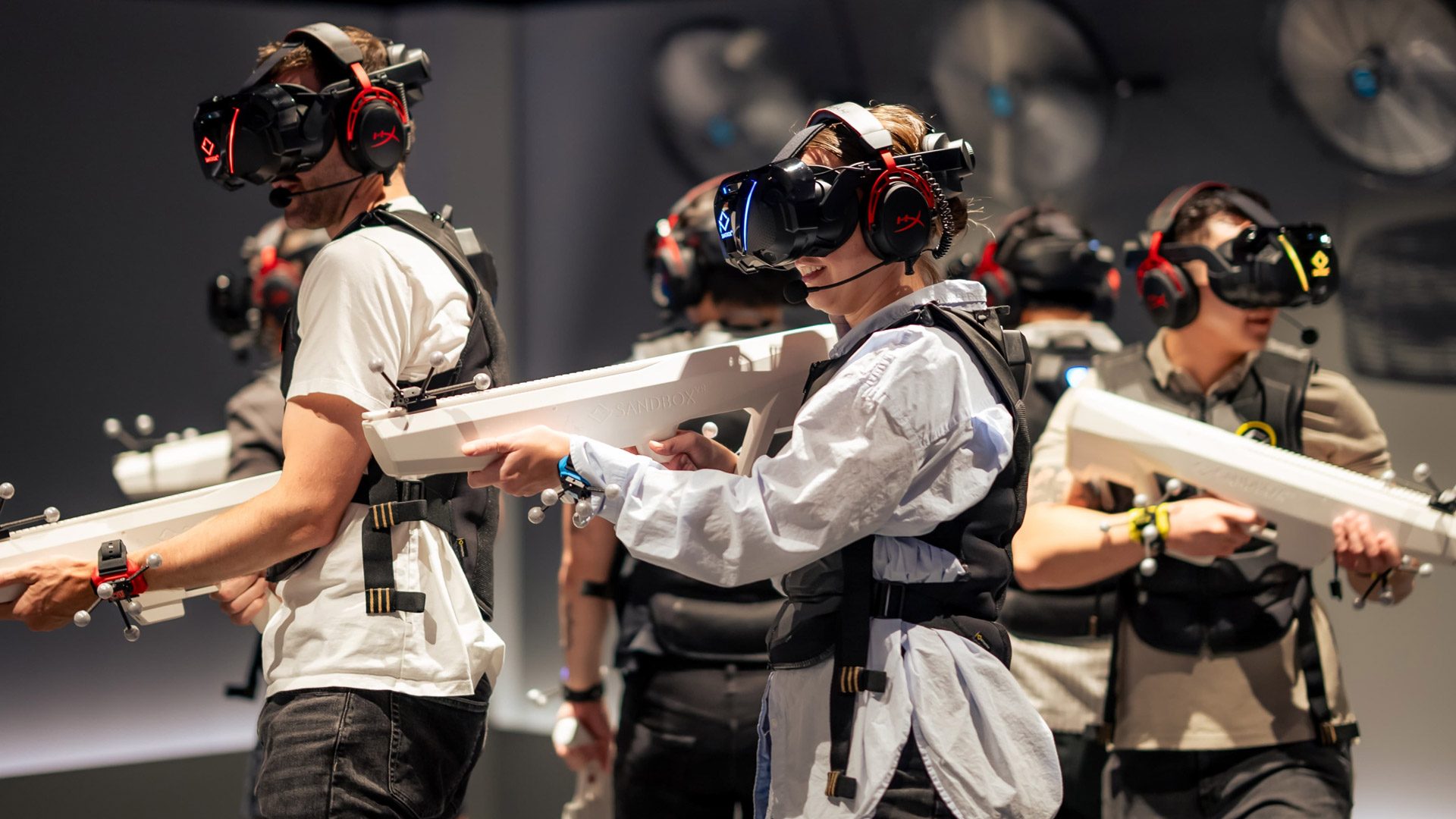
Sandbox VR is a longstanding VR attraction chain featuring unique VR experiences for up to six players in a large, shared playspace. I recently got a chance to check out one of Sandbox VR’s newest locations and try two of its latest experiences—Squid Game Virtuals and Deadwood Phobia.
Sandbox VR is one of the original VR attraction companies. After nearly going out of business during the Covid-19 lockdowns, the company has rebounded, now operating nearly 60 locations worldwide and recently surpassed $200 million in lifetime revenue.
Driving its success is a focus on high-quality first-party content, like Deadwood (which has turned into a trilogy of Sandbox VR experiences), and deals with recognizable IP from Netflix (like Squid Game Virtuals, Rebel Moon the Descent, and an upcoming Stranger Things experience).
I recently visited one of Sandbox VR’s newest locations in Philadelphia, PA, and I brought three ‘non-VR’ friends along to see what they thought.
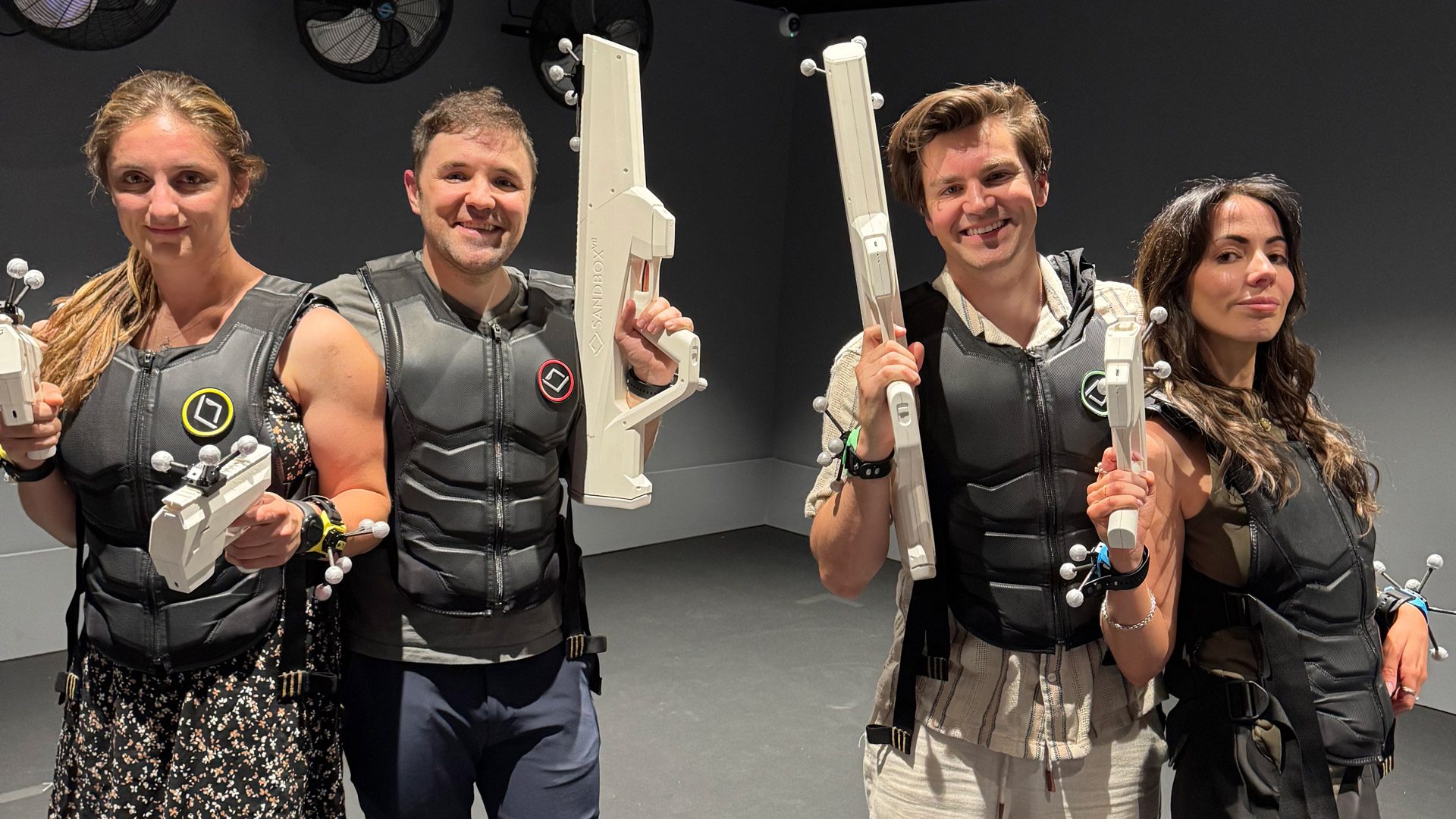
The four of us played two of Sandbox VR’s newest experiences: Squid Game Virtuals followed by Deadwood Phobia.
VR expert or newbie, one underlying theme emerged for all four of us: gameplay involving interactions between the real players was the most fun and memorable part of it all.
Would You Like to Play a Game?
Like the TV series it’s based on, Squid Game Virtuals exclusively pits the real players against each other across a variety of mini-games.
For instance in one game there was a giant bomb hanging from a rope in the middle of the platform, with the four of us positioned at each corner. The goal was to slap the bomb away (and toward the other players) instead of having it blow up in your face. It felt like a deadly game of hot-potato mixed with tetherball. Seeing my friends duck, dodge, and slap the ball back and forth was surprisingly entertaining, and reinforced that we were all in there together, sharing this otherworldly experience.
Another one of the mini-games had four platforms, each with a different symbol on it. Every round, one or more of the platforms was swing down, dropping anyone unlucky enough to be standing on it. But before that happens there are coins you can collect that will reveal hints about which platforms will drop and which will be safe.
Since not everyone could grab all the coins, the full knowledge about which platforms were safe and which were not was spread between us. But since we were competing with one another, there was an unspoken aspect of trying to trick the other players into thinking you were on a safe spot and then perhaps jump away at the last minute to make them fall (or to fake a move to another platform so they jumped first, only to plummet into the void!).
This ‘shared knowledge’ scenario turned out to be really fun, especially because it all culminated in one or more of us getting dropped to our deaths each round. Although, as a VR expert, I have a few critiques about the underlying Sandbox VR technical experience in this moment we were all fully lost in the world of Squid Game and furiously trying to discern if we were on the right platform while we waited to find out which of us was doomed.
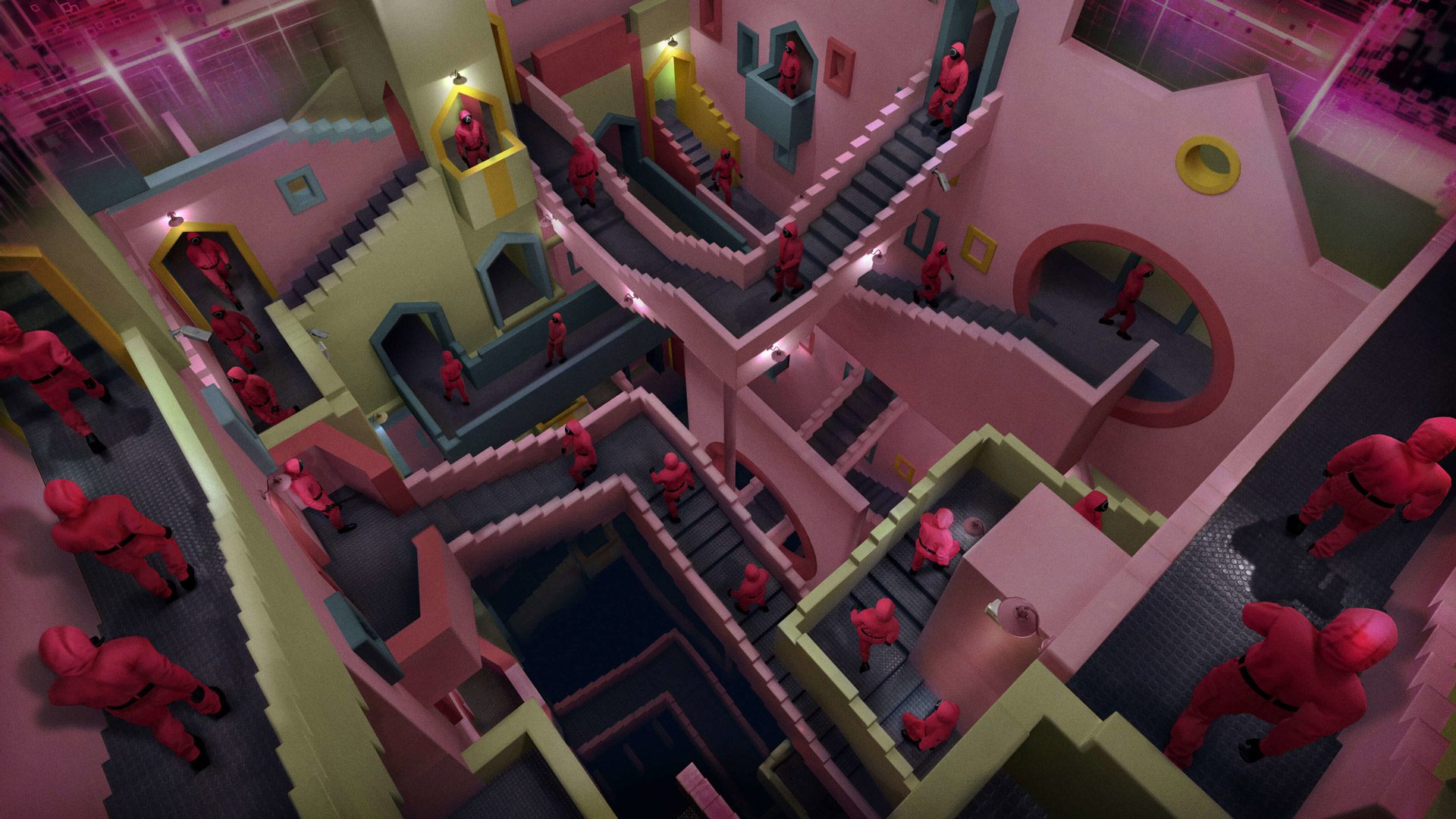
One especially memorable moment came in the final round when two of us thought that platform A was safe, and two of us thought that platform D was safe. With the group split 50/50, we were anxiously staring at each other as we awaited the countdown, not knowing who would be left standing. I instinctively put my arm around the friend next to me, knowing that if it was our time, we would face the end together.
3… 2… 1… the platform across from us dropped and we watched two of our friends scream as they plummeted into the darkness below. It was an exhilarating climax and hilarious too, leaving the four of us laughing together as we transitioned to the next mini-game. That moment felt like something out of a movie, but it was purely organic, thanks to game design built around social interaction rather than just pointing and shooting.
Shoot’em Up, Down, and All-around
While Squid Game Virtuals used only our hands and bodies for gameplay, Deadwood Phobia saw us equipped with VR gun controllers.
This action-horror experience has impressive graphics and it’s clear that a lot of time went into the look and direction of it. From a gameplay standpoint, the vast majority of Deadwood Phobia involved trying to stop hordes of zombies from overrunning us. And while there were interesting variations in enemies and environments that spiced things up a bit, for the most part the four of us were all looking out at the world around us, instead of directly interacting with one another (save for occasionally calling out high priority targets or trying to cover one another).
Through much of the Deadwood Phobia experience we were back-to-back in static playspaces, but I especially enjoyed a segment where we rode a moving platform with obstacles—like spinning blades—that forced us to dodge carefully. Since there was limited space on the platform, we all had to be somewhat aware of each other in order to dodge the obstacles without crashing into one another.
With zombies flying at you from every direction for the majority of the experience, the gameplay felt very intense. The shooting felt satisfying but there was a lot of it. My index finger literally got tired from pulling the trigger so often (speaking as someone who probably has more finger stamina than most, considering that I type for a living), and I heard the same complaint from companions who also had semi-automatic weapons like mine.
For a runtime of only about 20 minutes, I have to say that I’m impressed that it felt like we had gone through a whole adventure, with several scenes and a narrative arc, by the end of the experience.
After the Headsets Come Off
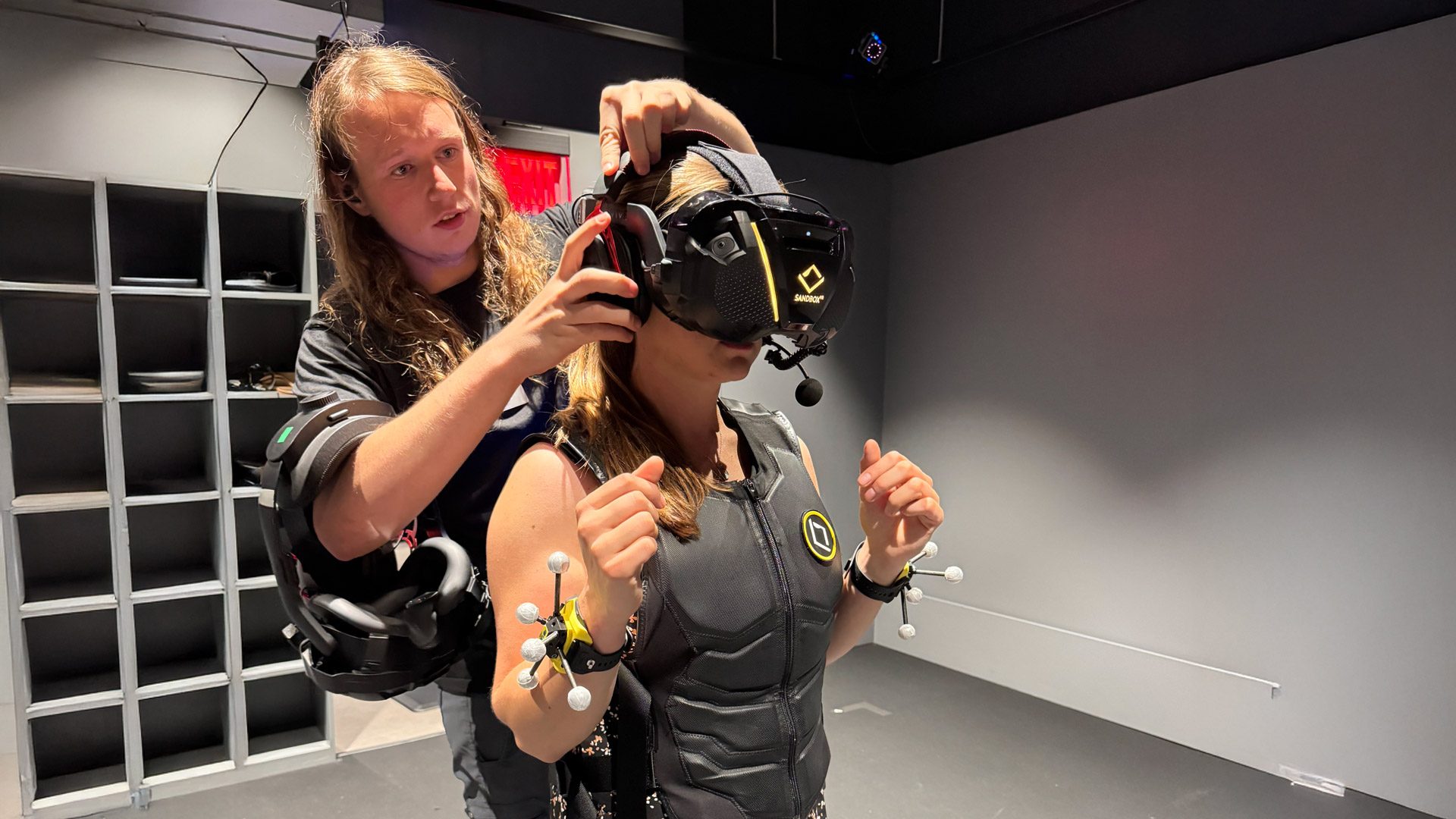
Squid Game Virtuals wasn’t as intense as Deadwood Phobia. It wasn’t as graphically rich. It didn’t even use the tracked gun controllers. But all four of us agreed at the end that Squid Game Virtuals was our favorite of the two experiences.
That’s not to say that Deadwood Phobia wasn’t fun. As a VR experience I was impressed at its visual quality, structure, and presentation. But we all agreed it would have benefited from more moments of direct player-to-player interaction.
Adding a few moments of downtime where players must communicate—solving a puzzle, opening a complex mechanism, or tackling other cooperative tasks beyond just shooting at the same target—would improve pacing and create more of the organic social interactions that made Squid Game Virtuals so memorable.
In the end, the nice part is that you can pick and choose which kind of experience you want, because a single Sandbox VR room can be used for a large number of experiences (at the location I went to there were nine different titles to choose from).
After reflecting on the experience with my three ‘non-VR’ friends, we all agreed that we’d love to go to Sandbox VR again, and we’d be especially interested in trying more experiences that emphasize player-to-player interactivity—something closer to an escape room than a simple shooter.
Disclosure: Sandbox VR invited us to visit the Philadelphia location and covered the cost of admission for the session. It was a standard booking as far as the attendants at the location could see, so we got to the ‘retail’ experience without any extra fluff.