
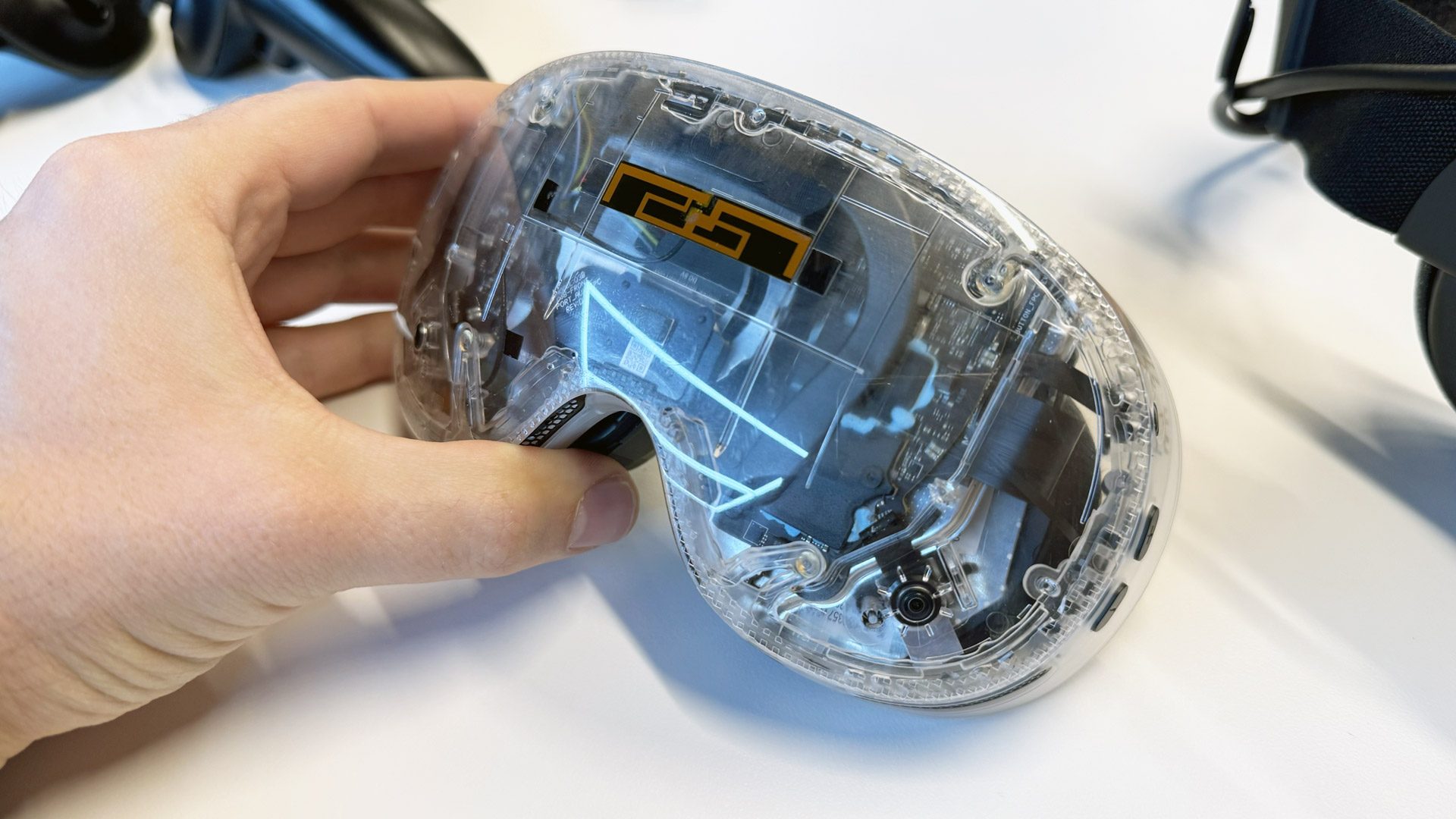
Valve Says Steam Frame Development Started Even Before Index Was Released

55

In March 2019, Valve surprised the VR industry with the tease of ‘Index’, its first self-made VR headset. Index would go on to launch later in May 2019 and be seen as the enthusiasts’ choice in PC VR headsets for many years to come. Unbeknownst to the world, by the time Index was released, the company had already been working on aspects of what would become its second VR headset, Steam Frame. But Frame’s development wouldn’t conclude for another six years.

During a visit to Valve’s headquarters, engineers who worked on both Index and Frame told me that development of some of Frame’s core aspects began at least as far back as 2019, even before Index was revealed to the world.

“We actually started this in the middle of [developing] Index. Yeah, so Index shipped in [early 2019]. Yeah, we were we were already starting to work on the very beginnings of [Frame] a little before that.”
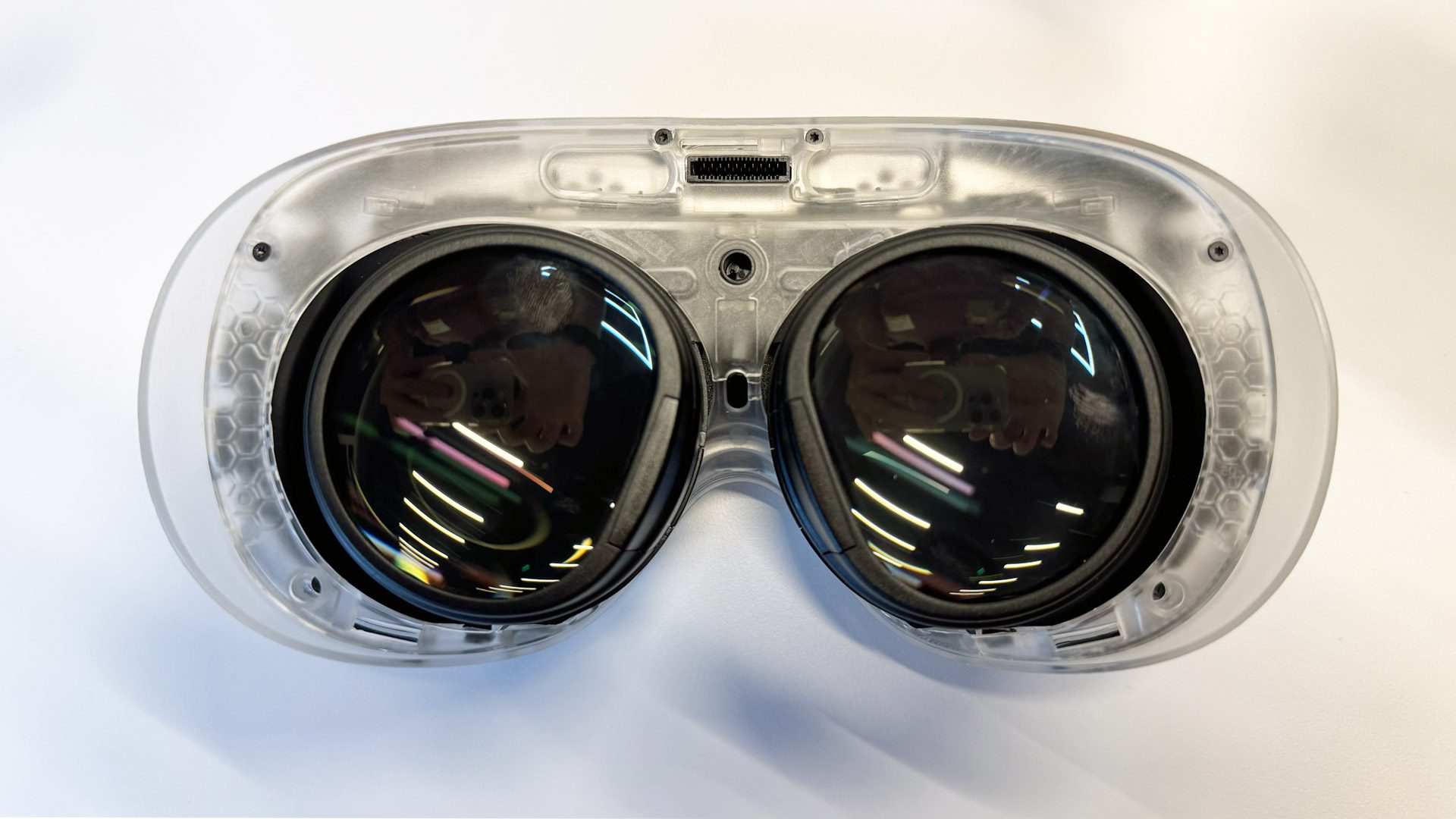
Photo by Road to VR

Specifically, the team recalls that the headset’s pancake optics were already in development before Index shipped.

The optics were all designed here [at Valve]. We started it, like I said, right around about the middle of [building Index], and then after we shipped Index we focused really hard on [the new optics]. […]

I think the challenge [with great optics] has always been about how can we do it in a way that’s affordable and not heavy with glass elements and all that stuff.

So it was a really hard, and I think we’ve definitely benefited from the industry wanting to make pancake optics work because there was a lot of work that needed to go into making these manufacturable.

To really understand how it would take another six years before Frame’s announcement, it’s important to understand how work at Valve differs from other companies. While many companies create goals to release specific products on specific timelines, Valve has a much more iterative, ‘release it when it’s done’ mentality. During my visit, a member of the Frame development team explained:

[An] interesting thing about our development process and timeline is we try to work on hardware [at Valve] the same way that we work on software.

We have game teams that have learned how to use play testing really well and how to iterate really well and how to form cross-disciplinary teams that are really productive at just finding the things that are really fun and valuable.

So a lot of the processes [that led to Frame] started before we even shipped Index; we didn’t have an end goal in mind. We’re just like, ‘we think this [idea] is gonna be good. Let’s test it.’ […]

And we just kind of kept going and testing it with people, play-testing our ideas, trying different things and different combinations until […] at some point we’re like, ‘okay, this is doing everything we think that it needs to do. This will make our customers happy. This is a great companion to Steam.’ […]

And only when we reach that point—when we’re confident that we’ve tested our goals and our assumptions—that we’re like, ‘okay, let’s get on the shipping timeline.’

We really only wanna ship something when it’s ready.

If you’ve ever heard someone mention ‘Valve Time’, this is it in a nutshell.

SEE ALSO
VR Design Unpacked: This 2019 Game Still Sets the Bar for Open World VR

In speaking to the Frame team, I got the sense that most of them were serious VR users themselves, and the features and design of Frame were driven heavily by what they themselves—not some abstract ‘addressable audience’—wanted in a headset. They wanted the headset to be able to play their entire Steam library, they wanted it to be portable and comfortable, and they wanted it to be moddable.
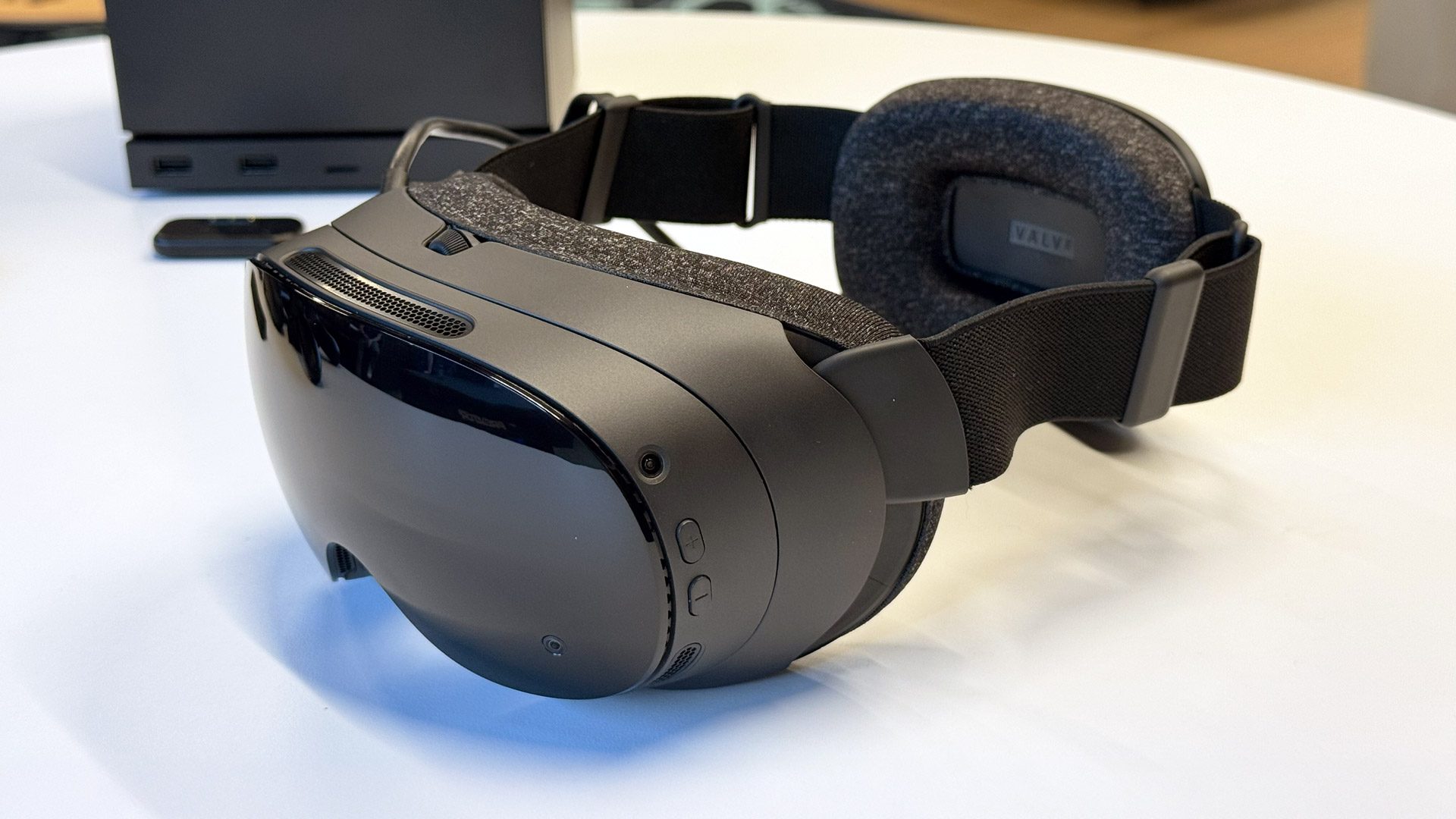
Photo by Road to VR

I asked if their goal with Steam Frame was to make a standalone headset from the outset. A member of the team told me they were more focused on the user experience they wanted, which ultimately led them to the standalone form-factor to reduce the friction of setup.

I don’t think we necessarily said, ‘let’s make a standalone device.’ I think it really came down to, we all just wanted to play the things we wanted to play wherever we wanted to play.

And whether that’s streaming or whether that’s running stuff locally, it was really about the experience we were after and like what made this something [we] wanted to use. […]

We’re really excited about what [the power of a full PC] provides, but we also want to not have to set up things [like tracking beacons] and we want to be able to pause [our games] and walk away [to easily resume them later].

Now Frame is finally out in the open. Will it be worth the wait? We’ll find out once it ships in early 2026.

This article may contain affiliate links. If you click an affiliate link and buy a product we may receive a small commission which helps support the publication. See here for more information.

Ben is the world's most senior professional analyst solely dedicated to the XR industry, having founded Road to VR in 2011—a year before the Oculus Kickstarter sparked a resurgence that led to the modern XR landscape. He has authored more than 3,000 articles chronicling the evolution of the XR industry over more than a decade. With that unique perspective, Ben has been consistently recognized as one of the most influential voices in XR, giving keynotes and joining panel and podcast discussions at key industry events. He is a self-described "journalist and analyst, not evangelist."
  • Joer’ct Drew (Aiodensghost)

    Considering how many people want out from under Meta (myself included), this will DEFINITELY be worth the wait, even if its not a visual upgrade.

  • xyzs

    That would explain the LCD…

    • kakek

      There's other reason for the LCD.
      Oled doesn't work well with pancake lenses.
      micro oled automatically push your headset in the 1500 € range.

      • Christian Schildwaechter

        Even current microOLEDs are still rather dim for the very lossy pancake. I forgot the details, but in one of the hand-ons one of the Valve engineers explained that they were going for extremely short persistence at up to 144Hz, requiring to flash the display very brighly for something like 0.5ms, which they could only achieve with LCDs paired with LED backlights.

  • Steven Williamson

    We wanted an Index 2, we got a Quest 3.5. Understandable they’re going after the mobile gamers, the biggest market, but will the mobile gamers be willing to spend at least 2X the Quest 3 price? I like the battery instead of a weight for balance, the wireless connection sounds great, too bad you have to pay for the mobile computer, a PC only version would be nice.

    • kakek

      If you want wireless streaming, you need wifi and decoding components anyway. Might as well make it standalone.

      I don't think it will be 2x the price of quest 3. The Q3 is still 450 if I remember correctly. I doubt they are not going over 800.

      • Joe

        You should look into the actual specs, its super cool! It has a seperate single and antenna that communicate to a of seamlessly. So there is no hassle in streaming and you don't need wifi

    • Alex Soler

      I don't think they're going after the mobile gamers. They are going after PC gamers / Steam gamers preferently. Standalone is more a "mee-too" feature from a Quest-only time when mobile VR seamed the only future possible. And it's there to play flat PC games, too. But as they clearly announce in its home page "Steam Frame is a streaming-first" headset.

      • Christian Schildwaechter

        Standalone PCVR gaming will probably be a minor aspect due to the Frame performing only about as fast as the current Steam Deck with emulated x86 games (according to Valve).

        But it may become somewhat more important thanks to Waydroid, translating Android calls to Linux similarly to how Proton translates Windows calls to Linux. With this the Frame can run pretty much any pure OpenXR game released for other ARM based standalones at native speed.

        And as it uses a faster SoC than these, and Valve is working on game specific profiles to optimize core configuration, power use and system emulation for each title, Frame might run these games significantly better than other standalones.

        • NL_VR

          I think most games that are already on standalone quest for example will have a stand alone version on steam.

    • Technically it is an Index 2 considering its wireless streaming capabilities like foveated streaming. They said themselves that it is PCVR focused.

      They are making sure wireless streaming looks as good as wired gameplay or extremely close.

      • Peter vasseur

        Which is what has me interested, wireless with all these power or one. Downside is battery life but I’ll buy 2 extra so it’s an easy swap. While I wait for recharging, never be without.

  • I think they key of the whole article is that the people making the headset were heavy VR users, so they were passionate and knew exactly what VR people want

    • Christian Schildwaechter

      I agree, the how and why they came up with certain design choises while always aiming for the best user experience are way more relevant than when they started or how long it took. And

      So a lot of the processes [that led to Frame] started before we even shipped Index; we didn’t have an end goal in mind. We’re just like, ‘we think this [idea] is gonna be good. Let’s test it.’ […]

      doesn't even really mean

      Valve Says Steam Frame Development Started Even Before Index Was Released

      as the article's title implies.

  • Arno van Wingerde

    They are working with a way smaller team and taking way more more time than Meta, but they are FOCUSED. Although deeply disappointed they did not deliver high res OLED pancake, I see the choice for a reasonably priced budget solution and hope it will open the way for others to release OLED version later.

    • Christian Schildwaechter

      My personal main issue with VR has always been a lack of comfort on every HMD I tried, all requiring addons and extensive hacks to make them even bearable (except maybe the PSVR1). I love the minimalistic approach of the Bigscreen Beyond, but need something that works standalone too.

      So despite the lack in resolution and overall performance, the Frame might end up my best bet just for comfort, with it running SteamOS standalone as the cherry on top. It may not be the HMD I hoped they would release, but thanks to Valve's focus on improving the overall experience for all users, it may actually be the best currently possible HMD at acceptable weight and price for me.

      • Herbert Werters

        I personally agree 100% with that.

      • Dragon Marble

        Probably worth waiting for Meta's next headset then. It's rumored to be Bigscreen Beyond level comfort but works standalone.

  • Dragon Marble

    "We didn’t have an end goal in mind". We'll "release it when it’s done".

    That mentality may have worked for HLA ; it won't work for developing hardware in the fast-changing VR industry.

    Quest 3 beat them to the market a while ago. Who knows what else will come out in 2026 that will make Steam Frame completely outdated. It looks like there is no concept of competition in the Valve culture.

    • kakek

      Bit hard to tell until we have final price and feedback on user experience.
      Don'r underestimate what steamOS for standalone and foveated streaming with a dedicated dongle for PCVR could bring to the table.

      • Dragon Marble

        Yes, price will determine the fate of this headset. But in terms of user experience, standalone is still standalone. A better chip and SteamOS will not magically make it look like PCVR.

        As to foveated steaming, it is trying to solve something that is not a problem. I have no issue with my Quest 3 streaming. It's indistinguishable from wired VR for me.

        Overall the Steam Frame has little advantage over Quest 3. But it takes some serious steps backwards in hand/body tracking and MR.

        • XRC

          Pricing is going to be critical, but unfortunately due to the huge ramp up of data centers (AI) memory manufacturers have pre sold their 2026 allocation.

          This is already causing a huge spike in DDR pricing with common 64Gb DDR kit for PC tripling in price on past month – it's actually cheaper to buy a PS5 Pro!

          this is going to cause pricing inflation across all electronic devices using memory, which will include Meta Quest and steam frame.

          Pricing is so volatile that retailer lik Best Buy are not pricing DDR in store but advising customer to ask for price.

          unfortunately this is a repeat of the GPU price inflation during crypto boom a few years ago…

          • Christian Schildwaechter

            The spot market prices are going crazy, but companies like Meta or Valve have more longterm contract somewhat shielding them from that. I doubt that Valve will be hit by the increases for the first Steam Frame and Steam Machine production runs, which according to rumors started in October for some parts).

            The problem is more that they have to come up with a price they can sustain even after their current component contracts have run out, which is at this time very hard to predict. Some expect shortages for years, while others look at how massively over-inflated AI stocks are despite any models how to ever make back these investments. And how much of the hype is circle deals, with for example Nvidia investing billions into OpenAI, so OpenAI can buy more Nvidia AI accelerators. Economically this is completely insane, and a correction is inevitable. Depending on how big that correction will be, we might see a slightly reduced shortage, or tons of (un-)uses AI hardware suddently flooding the maker is investors start panik selling once the whole pyramid collapses, followed by DRAM prices crashing to somewhere they were half a year ago.

          • XRC

            Meta yes due to large enough volumes and long forecasting but Valve much smaller player in terms of hardware units shipped, and more exposed to supply chain fluctuations, it was interesting they didn't confirm steam frame pricing during reveal

          • Christian Schildwaechter

            Of course Valve is much smaller, and Meta probably knows two years ahead what they expect to sell during a holiday season, while Valve regularly delays launches. But Valve also launched the rather successful Steam Deck, where production only caught up with pre-orders about a year after the originally intended shipping date. This didn’t repeat with the OLED revision, even though it was even better received than the LCD original. So I’m pretty sure that Valve learned a thing or two about managing hardware production from Steam Deck, and had secured the required components for at least half a year of production months before the announcement.

            The issue is that they now have to set a price based not only on the already secured component prices, but also future, more expensive ones, to avoid having to later raise the price for Steam Frame and Machine. They may end up pricing them higher now, taking a larger margin to then later eat the increased component prices.

            There are many ideas why they didn’t announce the price. The most obviuos is to first observe RAM prices. Some suggested they may want to see how people react to the inevitable speculation to better understand what price range users consider acceptable. The current hardware launch is very different than when they announced the Steam Deck one day, then opened pre-orders the very next day, only to crash their servers and sell out esp. the higher end models within minutes. But the Deck wasn’t the first PC handheld, so people knew roughly what to expect, while Frame plus Machine as ultra low latency streaming devices for esp. flat games on a virtual screen first require introducing the concept and selling it to non-VR gamers. So they might have wanted extra speculation just to keep people paying attention instead of on day one deciding just based on their current expectations plus a given price whether to care or not.

          • XRC

            Micron just announced they are quitting their "Crucial " consumer SSD and DRAM business by February to focus on enterprise allocation as the market conditions have changed

          • Christian Schildwaechter

            TL;DR: RAM/flash manufacturers aren't increasing their production facilities because they don't believe that the current AI driven demand will last very long. Quest 2 outrode CoViD shortages with Meta increasing the price only almost two years after launch. And I'd expect Valve to mostly ask when the prices will drop again to determine Frame's price, not if they will drop again..

            In theory the sudden increase in demand for RAM and flash should trigger huge investments into new production facilities. Which should be much cheaper than for example TSMC building new foundries for CPUs, GPUs etc., because DDR5 RAM is still produced on a 10-12nm process, while TSMC is now starting the switch from a 3nm (equivalent) to a 2nm process for mobile SoCs.

            But so far we haven't seen a lot of that, and the main reasons seems to be that the companies don't believe that the current demand will keep up. Samsung and SK Hynix, which combined produce 70% of all DRAM, both said that they expect shortages to persist for several quarters. They still won't massively expand, because they got burned when the huge RAM demand during early CoViD dropped after the pandemic ended, leaving the companies with a large oversupply and crashing prices.

            The RAM/flash producers will ride the current hype while it lasts, selling their chips to data center AI companies willing to burn through billions, but not trust them to still do that a few years down the road. Which will suck for consumers and smaller companies, but I still don't believe that this will be a major problem for Valve. The increased demand from data centers has been visible for some time, and Valve will most certainly have talked to their RAM/flash suppliers about expected future prices. And if those had expected contract (not spot) prices to go completely ballistic in 2026, Valve probably wouldn't have announced Frame/Machine for next Spring.

            Right now we are seeing a perfect storm of a few AI companies basically buying up the market, and everybody else panic buying to not be left with nothing, driving prices to insane levels. If Samsung would in any way believe that prices would stay that way for a long enough time, they'd invest like crazy. They made money selling RAM in late 2024, and while the production costs haven't increased, sales prices have pretty much doubled, leaving Samsung with a great opportunity to make more money if they manage to increase production.

            Quest 2 launched sort of at the worst possible moment. Oculus/Meta had spoken several times about trying to stay below the USD 300 impulse buy threshold, the Quest 2 no doubt was designed for its BOM to allow for that, and then it launched right when the CoViD triggered electronics shortages started to really hit. Meta probably had longer term contracts, but not for the duration of the whole pandemic, so at one point component costs must have gone up. They announced a price increase from USD 300 to USD 400 in summer 2022, almost two years after the launch, which was somewhat strange, as component prices had already started to fall a lot again. Maybe they had made some very aggressive two-year deals right before everything went haywire and simply couldn't get comparable conditions again, but I still believe that the USD 100 increase that late into the shortages was more strategic than economically necessary, and it completely tanked sales.

            Rumors from October said Valve had started Frame production and was aiming for 400K-600K units in 2025, plus some nonsense about Frame launching for the 2025 holiday season. The latter was obviously not true, but if the rest was correct, Valve/Goertek has a production capacity of 133K-200K Frame per month. If "early 2026" means Valve will start selling them by 2026-03-31, they will have built up a stock of 800K-1.2M units by then, a significantly lower volume than what Meta had for Quest 2, so their bargaining power would be lower. But whatever their component partners told them about future RAM/flash prices apparently wasn't bad enough to cause them to not only leave the price open, but also the amount of storage included, even though they could have simply skipped that in the specs to be more flexible if the costs explode further. They very likely believe that they can outride the current price surges, expecting things to somewhat normalize during the lifetime of Frame/Machine. The question is only starting when and for how long they will have to pay more than expected, and the answer/estimate to that will impact the price at which the new hardware can launch.

          • XRC

            Dell and Lenovo just announced 15% price increase of server and PC from next month due to memory price increase. Interesting times…

        • Christian Schildwaechter

          I strongly suggest you wait with declaring Meta the winner until after we know the price of Frame, have seen the benefits of foveated streaming that some of the people getting hand-ons (and hating compressed wireless streaming with added latency) described as equivalent to a DP tether, got an idea of what Valve can pull off with SteamOS' superior power management and the announced game specific configuration profiles.

          Being able to run both ARM and x86 Linux, Windows and Android apps alone directly on Frame is enough reason for me to take a deeper look, and if you look beyond the VR bubble, just not having to deal with Meta is enough reason for many others. And given that Meta apparently postponed a gaming focused Quest 4 for something that is most likely more targeted against AVP and GXR as media and productivity HMDs, Valve might score simply by putting the gaming experience first.

          • Dragon Marble

            I have multiple wired, display port headsets. What else do I need to see to know that streaming at 2k is a solved problem? You say people claim a big difference. That's probably for a 4k headset.

            How many people really care about ARM, x86, Linux or whatever? We just want to play games.

            If the no-Meta people is a real thing, PCVR wouldn't have stagnated and Quest 3 wouldn't have dominated the Steam surveys.

            I can't see Valve price it at a point that will actually be competitive against the Quest 3.

          • Christian Schildwaechter

            Not everybody agrees with you that wireless streaming is a solved problem, as it still comes with noticeable (at least for some) latency mostly from encode and decode. Which is exactly what Valve is adressing by reducing the size of the streamed portion to only about 1/10th of the full frame. If you like your Quest, you are one of the persons that care about running ARM apps (games) that could also run on Frame. And what is a competitive price will depend on what people are looking for. Kids meeting friends in Horizon World will be sticking to Quest even if Frame was free, and DP latency demanding Meta haters won’t go for Quest no matter the price. It’s not a 1:1 money comparison, and Valve has shown with the Steam Deck that they can draw users simply by making the experience a lot smoother than the estabished big player that somehow never managedto come up with an interface properly optimized for gamingm

            “If the no-Meta people were a real thing,” … You sweet summer child.

          • Dragon Marble

            It's ironic that you are calling me naïve. We live in a materialist world governed by capitalism.

            We'll see if Steam Frame actually moves the needle for PCVR. Two tings managed to do this previously: Quest 2 and HLA. Sadly neither had a lasting effect.

          • Christian Schildwaechter

            The” summer child” comment was particularly about you insinuating that “no-Meta people” might not exist (“if … were a real thing”), which I don’t believe for a second you seriously think.

            You only tried to bend reality so it fits your narrative of Quest being the obviously better choice, and Frame being doomed, but there is no way in hell that you missed tons of data abuse scandals that made Meta one of the most hated tech companies that tons of people want to have nothing to do with, precisely because of their past behavior and putting revenue above their users mental health, which triggered multiple government investigations worldwide. I went to the (tech heavy) Ars Technica forum after the Steam Frame was announced, and there the “not Meta” aspect was by far the most often given reason for people’s interest in Frame, with technical details like resolution, LCD or SoC typically discussed here barely mentioned.

          • Dragon Marble

            I know no-Meta is loud on social media. I just never saw it materialize as a market force. Hence the comment "not real".

            And I don't even agree with the approach. Boycott Facebook, by all means. That doesn't mean you have to boycott their VR products too.

            Companies have no souls — or "DNA". They simply adapt to the market. To make Meta less evil, boycott social media, and support XR.

            XR is a completely different business model. One day — when Meta makes billions by making actual products — they won't be that interested in your data anymore.

          • Christian Schildwaechter

            Meta’s product IS the data. Has been since they went for ads after growing fast without any valid business model for years. Currently generates 98% of their revenue.

          • Dragon Marble

            It IS now. In the future, once XR takes off, it will be 98% software and hardware.

          • Christian Schildwaechter

            No, it won't. Meta is still chasing the metaverse, now hoping to get there faster by starting with simpler smartglasses that get more powerful over time instead of fully featured HMDs that get more mainstream acceptable over time. But the goal was always providing services, building a platform, becoming a necessary middle man for billions of small transactions, and Zuckerberg's statements at the time they still tried to hype up the Metaverse were very clear about that.

            They don't even want to sell hardware, they only do because that is the only way they can build up their own user base. They stated over and over again that there is no money in XR hardware, that they sell at cost or loss, and that this makes it pretty much impossible for other companies to release alternative Horizon OS HMDs, simply because the little bit of money the market generates comes from software sales.

            And that is all before looking at how much money Meta makes from collecting user data and selling ads. Meta's stock tanked when Apple made them ask users for tracking permission on iPhones in 2022. This single measure reduced Meta's revenue by more than the USD 10B they lose every year with MRL. So even if (and that is still a big if) XR takes off, software and esp. services will be way, way more profitable than hardware will ever be.

            Even Apple taking a 40% margin on hardware only made about half of their revenue from iPhone sales in 2024, while services (app sales, Apple TV, Apple Music etc.) already made up 25%, a portion that has been rising for years. Companies like Sony, Microsoft or Google only sell hardware to push software/services, and Microsoft has shifted from generating money mostly from Windows and Office sales to most of it coming from services like the Azure cloud, Gamepass and Office subscriptions.

            Given the overall trend in the industry, Meta being deeply dug into making money from ads, always trying to drive up user engagement on their platforms, falling app sales on Quest, the free Gorilla Tag as the most successful VR game so far (in user numbers) making more than USD 100M just from in-game sales, Meta now constantly pushing Horizon Worlds on Quest and even more on phones to compete with Epic/Fortnite as the largest commercial "metaverse", I don't see any future or plan where Meta makes even a significant part of their revenue from software and hardware, let alone 98%.

          • Dragon Marble

            Zuckerberg’s dream — and the reason he bet on XR — is because he wants Meta to be less Facebook and more Google and Apple. Who in the world prefers to sell other people’s products (ads) than their own.

            Things will change. You can’t just use today to predict the future.

          • Christian Schildwaechter

            Who in the world prefers to sell other people's products (ads) than their own.

            Selling either oil/gas or other people's products are the most common ways to generate billions in revenue. Companies (mostly) selling other people's products, all of them also selling advertising/placed listings on their sites/stores: Amazon, ebay, AliExpress, Walmart, Costco, Google, Meta (Facebook, Instagram), Microsoft (Bing, LinkedIn) …

          • Dragon Marble

            Right. But not everyone gets to choose like Zuckerberg does. If you have all the money in the world, would rather own Meta or Apple? Would you want to depend on people's personal data and short attention span for your company's survival?

          • Christian Schildwaechter

            I really have no idea how you can believe after 20 years of Facebook/Meta data mongering that what Zuckerberg really wanted all that time was selling high margin hardware and software with the promise of respecting users privacy like Apple.

            Sure, the past isn't always a good indicator of the future, but mostly it is. And the chance that Zuckerberg is secretly planing a business model U-turn is much closer to zero than assuming that they will simply continue to make bucketloads of money mostly the same way they did for the last few decades.

          • Dragon Marble

            You believe they would rather give headsets and games to people for free and serve them ads instead?

            That business model makes sense for Facebook — easy to replicate technically but hard to beat once it’s large enough to be protected by peer effect — but doesn’t make sense for XR.

        • kakek

          I could not give you a single time I used ( or missed ) hand / body tracking, considering I have zero interest in the social aspect of VR. For gaming, it is useless.

          I had no issue with my Rift image until I switched to Q2. Now I have no I have no issue with my Q2 streaming or lenses. And yet I'm sure I would subtly be more immersed in my games with a Q3. And people have no issue with air link until they try VD. And they had no issue with VD max res until an update offered an even higher res of streaming ( wich people with 5090 now use and swear is better. )

          • Dragon Marble

            To predict a headset's demand, do not ask "what I want"; ask "what I would recommend my friends and relatives". Unless Steam Frame is somehow cheaper than Quest 3, my recommendations are: Quest 3 for low end, PSVR2 for mid range, and Galaxy XR for high end.

            Your examples about resolution are irrelevant because we are far from retina. The streaming quality, however, has an absolute ceiling. And we've all experience that ceiling already: display port! I know there isn't much room for improvement because I already experienced the best possible.

          • Christian Schildwaechter

            Following your "is cheaper" logic, you should obviously recommend the Quest 3S with almost identical specs instead of the Quest 3 that is 67% more expensive for slighly higher resolution and better lenses, or even 100% during sales like the recent Back Friday with Quest 3S at USD 250 (or USD 200 at Costco for a vey short time.) If the overall improved experience justifies recommending the more expensive Quest 3, the same approach would have to be applied to the Steam Frame.

          • kakek

            Also, when comparing ( hypothetical ) prices remember that the dongle comes with the headset.
            to get that almost as good streaming with the Q3, you have to get a dedicated router. Add 100$ to the price of your Q3.

            Anyway, it's really hard to say without knowing the price, or anybody having been able to test it extensively.

            I have a Q2. I'd kinda like to upgrade. If I had to chose right now, I guess I would go for the frame up to 700$. A Q3 refurbished would cost me 350, plus 100 for a dedicated router.
            So for 250$ extra the frame would bring me steam ecosystem ( wich I like better ) better confort apparently, and slightly better visuals thanks to slightly better lenses and streaming. ( I DO see latency and streamign artifact )

            I would loose access to a couple of quest exclusives I can do without, and color passthrough wich is cool for a couple experiences, but that I realisticly would never use.

            And right now I'm getting neither. I still enjoy my Q2, and I feel like either option is spending more than 450$ on a minor visual upgrade, to play the same games in the end.

            So I can at least wait to see what the frame REALLY is before making a purchase.

          • Dragon Marble

            If you haven't used the Quest 3, you may underappreciate the values of passthrough and hand tracking.

            Passthrough is game changing. Taking the blindfold off is as freeing as cutting the wire, if not more. Just because you are not using it today due to limited hardware doesn't mean it's not useful. It finally fulfills the promise of room scale for games like Eleven Table Tennis and Thrill of the Fight.

            Once passthrough opens you up to use cases other than VR, you will find hand tracking useful too. It's silly to have to pick up a pair of gaming controllers to watch a 3D movie, for example.

            When I recommend a headset to someone, I do not want to box them into anything-only.

  • sfmike

    Sorry, no high res OLED pancake, no sale.

    • Blackspots

      They said that because pancake lenses eat light, it makes an OLED panel unusable.

      • silvaring

        wonder if thats why sony went with fresnel again for psvr2

        • Christian Schildwaechter

          Yes, it was. Plus they got a patent for reducing/removing godrays on Fresnel lenses by placing very thin black lines beneath the sharp edges of each lens groove. Light breaking at these edges was the main cause for godrays, so by covering them up in a way not noticable by the user, Sony fixed one of the main issues people had with Fresnel lenses. Their edge to edge clarity is much worse than with pancakes, but for looking mostly forwards with resolutions up to 2K, they still do a decent job.

          Going beyond 2K, the Fresnel lens clarity becomes a bigger issue, negating most benefits of the higher resolution, but the PSVR2 is pretty well balanced with 2K OLED panels, improved Fresnel lenses and ETFR to support the 2020 PS5 APU. None of the components severery limits the others, all while keeping the production costs low.

          • silvaring

            Does it frustrate you how much extra work it takes to get all this basic device information? I recall how often we get a product launching and just to know who supplied the eye tracking or display modules is shrouded in secrecy.

          • Christian Schildwaechter

            I’m annoyed by a lack of official numbers and statistics that would allow to better predict where things are going. But I personally don’t mind digging through lots of sources, or having to work with Google translations of Weibo posts from some Chinese analysts, because I consider this sort of an interesting puzzle.

            I’ve always loved figuring out complicated things that annoy others, so this is kind of a hobby or mental exercise that became a part of most of my jobs. More transparency could of course help the market a lot, but for me personally it would also ruin part of my fun. Me posting lots of very technical/analytical/speculative comments is mostly me procrastinating with one of my favorite mind games.

  • The CAT

    You can tell.

  • Paul Bellino

    Nooo really!! people obviously do not pay attention to the News. Valve had pictures of the Device way back when. How quickly people forget.