

Valve’s Next VR Headset Reportedly Enters Mass Production, Targeting 500K Units This Year

74

Valve’s next VR headset may be just around the corner, as supply chain leaks suggest the device has now entered mass production.

The News

The ‘XR Research Institute’, a Chinese research group responsible for previous leaks surrounding Ray-Ban Meta, claims that Valve is now ramping production of its next VR headset.

As first reported by UploadVR, the group claims Valve is aiming for a production volume of 400,000 – 600,000 units this year.

Chinese language WeChat user ‘BlackHairSheriff008’ says in a now-deleted WeChat post that the device is aiming to launch in Q4 2025 in effort to capitalize on the Holiday shopping season.
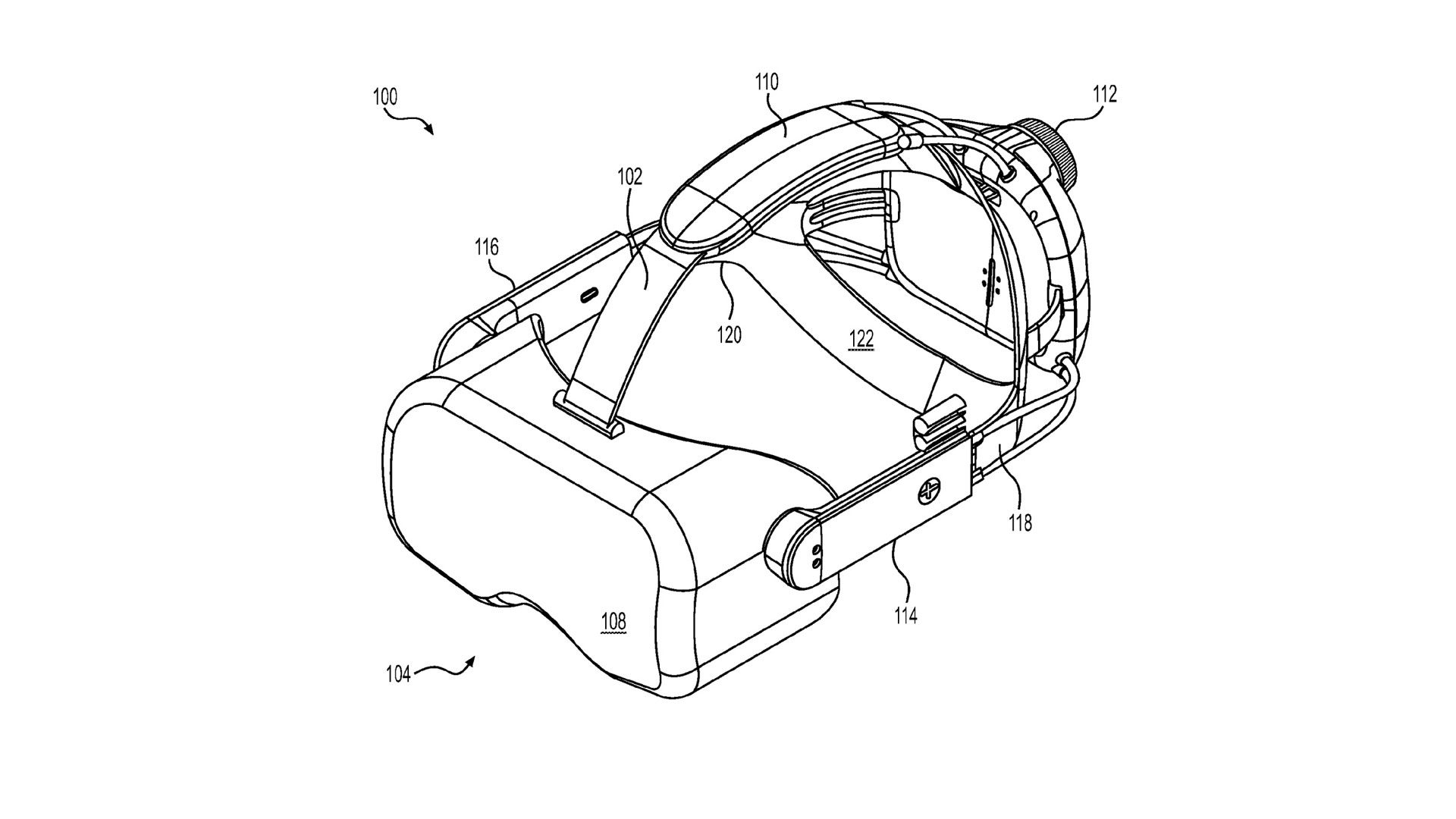
Valve XR Headset Patent from 2022 | Image courtesy Brad Lynch

From BlackHairSheriff’s article, it’s not clear precisely what sort of VR headset Valve is supposedly manufacturing right now, at least according to the XR Research Institute leak. The poster suggests Valve may name the device “Index 2”.

What’s more, the now-deleted article stated that Valve was manufacturing the device in Shandong, China, however the post was taken down following the revelation it may actually be a Taiwan-based company.

There is mounting evidence however that Valve is indeed producing a VR headset of some sort. Referred to as ‘Deckard’ or ‘Steam Frame’, rumors suggest Valve is creating a standalone headset that can also wirelessly stream PC VR games.

Additionally, XR data analyst Brad Lynch (aka ‘SadlyItsBradley‘) now suggests Valve may be finalizing developer versions of the hardware, indicated by ‘DV1’ and ‘DV2’ found in code within the most recent SteamVR beta.

SEE ALSO
'Evangelion: Cross Reflections' VR Game Officially Announced, Planned for Release in 2026

My Take

I find it pretty unlikely Valve would ever invest the time to release a purely PC VR follow-up to the 2019 Valve Index, which relies on SteamVR base stations and obligatory PC tether. Even in 2025, it’s a great headset, but increasingly bulky in comparison to its more recent thin and light competitors, like Bigscreen Beyond 2 and the soon-to-launch Pimax Dream Air.

Let’s suppose Valve slims down Index, removes the need for both base stations and tether, and replaces them with inside-out tracking and a neat wireless dongle for low-latency PC-to-VR streaming. Even with the supposed inclusion of eye-tracking, it doesn’t feel like that hypothetical ‘next-gen’ goes far enough. Valve is usually focused on moving the needle, and that alone doesn’t do it.

Half-Life: Alyx (2020) | Image courtesy Valve

To me, Valve is looking to move the needle by offering (for the lack of a better term) a Steam Deck for your face.

While I’m not suggesting Deckard will indeed be capable of natively driving all PC VR games, it may be enough for many prosumers to have a device capable of downloading flatscreen games on-device and playing on a giant personal theater screen. There have been leaks of Valve controllers late last year, codenamed ‘Roy’, that seem to include a gamepad-style button layout, which would make it easier for users to play flatscreen games.

Grain of salt here: it could also stream PC games wirelessly at ‘perfect’ quality and latency, and play some PC VR games natively too—maybe even an optimized version of Half-Life: Alyx (2020). According to a rumor by ‘Gabe Follower’ from earlier this year, Valve is also reportedly preparing “games or demos” that work natively for the device.

Whatever the case, all signs point to Valve unveiling something soon, so I’m hoping to learn more in the next few months.

This article may contain affiliate links. If you click an affiliate link and buy a product we may receive a small commission which helps support the publication. See here for more information.

Well before the first modern XR products hit the market, Scott recognized the potential of the technology and set out to understand and document its growth. He has been professionally reporting on the space for nearly a decade as Editor at Road to VR, authoring more than 4,000 articles on the topic. Scott brings that seasoned insight to his reporting from major industry events across the globe.
  • polysix

    "it may be enough for many prosumers to have a device capable of downloading flatscreen games on-device and playing on a giant personal theater screen"

    No, it may not be. Nobody wants to do that even if Valve thinks they do. That would be up there with mobile VR levels of 'fad'.

    All most want now is a PCVR HMD, pref wired and with micro OLED. If Valve uses LCD and doesn't have display port or something very close to it in wireless then the kinds of people who'd spend over 1k on such a thing won't buy it. The quest kids who have no clue what good VR is and don't mind standalone or LCD will just use quests as they're much cheaper.

    Hopefully Valve hasn't backed themselves into a corner here with a jack of all trades master of none thing.

    • Gonzax

      I don't think most people want 'wired' anymore; playing with VD wirelessly is so good these days that there's no need for a wire although maybe as an option it would be good.

      Same with external sensors, they're a thing of the past, I used to love my lighthouses but ever since I bought the Quest 3 I realised they're inconvenient and unnecessary.

      Wireless streaming is the solution IMO. I can't wait for this next HMD, I hope it won't disappoint.

      • STL

        Absolutely! Wireless connection with Wifi 6E to my Quest 3 is outstanding! Why would I go back?

    • NL_VR

      IIts best if there is a choice but a cable is def not something thats make most people want it. People want wireless.

    • Andrew Jakobs

      Oh hell no, anything with a wire is NOT prefered, it is dead on arrival… And more then enough people are still satisfied with the XR2(+) level graphics, not everybody is a graphics whore like you. BUT, anything coming out now using an older soc like the Quest3 is of course not good as that one is at least 2 years old now and many better sSoCs have been released since. Yeah, it would be great if standalone could have 5090 power, but hell, that is even ridiculous expensive for PCVR.

      Who are you to decide what 'good VR' is or isn't.

    • Vonklinkenhoffn

      @polysix is absolutely right! I want a PCVR HMD, pref wired and with micro OLED just the same, and I know I'm not the only one by far. If you want the same wireless XR2 stuff with downgraded childplay "VR" then why are you even waiting for the Index2? There's a Quest 3 for you already. I want to play real games in VR, and I don't care if a cable is what it's gonna take. So base stations are a "thing of the past" really? Well then have you tried a game that puts a ton of things on your back, and then see how your fantastic inside-out tracking sh!ts it's pants as soon as you try to reach them? I have an example for you, get yourself modded Skyrim VR, mod it up real nice, put some VRIK in there that lets you have shields, weapons, arrows etc on your back, not just your shoulders mind you, all over your back- lower back, higher back too. Now go try to do some Skyrim VR with inside-out tracking. I think you'll find that those "outdated base stations" would be real good to have.

      By all means, keep playing your low-grade kiddie-VR, but don't think for one second you speak for the high-end gamers if that's what you prefer. There are many of us high enders too, and we know what we want; No more XR2 nonsense, PCVR, micro OLED, no more LCD.

      @andrewjakobs:disqus who are YOU then to decide what's good VR, huh?

      • foamreality

        I agree 100%. There's no way I'd sacrifice realism and immersion for convenience. The wire to PC is minor, the gains are another level compared to wifi PCVR especially XR2 gaming. VR is about realism. Wireless mobile will never come close, at least for another decade or two. And there is nothing comparable to base stations for accuracy, they rarely fail, and the inconvenience is minimal. They don't need to be wired into a PC, just switch them on and done. And no need to worry about playing in low light (or pitch black) either.

        • Andrew Jakobs

          No it isn't, the wire is far from a minor inconvenience, and wired is far from much better as wifi pcvr, headsets like play for dream show wireless can be almost as good as wired, and it's even improving. And sorry to disappoint you, but even using basestations the headset and controllers loose tracking once in a while from my own experience, anything in range of the headset with inside out tracking like the Quest or Pico is just as good as basestations, these days. And basestations are just as inconvenient as you have to turn both on and have them positioned properly on a high point.

          • Christian Schildwaechter

            How annoying a cable is is still mostly down to personal preference, and a lot of people would be fine with it. But for the vast majority of users and use cases, an untethered HMD will the preferred solution, and XR companies will act accordingly. Future tethered HMDs will be restricted to some very specific use cases, like simulators where the users don't move, or environments where interference or multiple devices make wireless streaming unreliable.

            We already see that the only companies still releasing tethered HMDs are small companies that need the lighthouse infrastructure not necessarily because it is better, but because they are too small to offer all the other parts that would be required, like state-of-the-art inside out room/hand/controller tracking. There is pretty much zero chance that any large company like Meta, Apple or Valve will ever release a tethered(-only) HMD again.

            And I'm pretty sure that even a PSVR3 will be wireless, even though for a number of reasons Sony still has the most reasons to maybe consider using a cable. Except for the mentioned niches, the discussion has been pretty much over the moment Quest 2 released, with much better user acceptance than any tethered HMD before.

          • Tabp

            False. Base stations are much better than Quest/Pico, after setting them up perfectly I never lose tracking, I've done casual use (enough for vrchat non-fullbody) with them at low points on shipping boxes around the room, and they're left on automatically, not manually turned on every time. They're as convenient as putting up smoke detectors and leaving them there. Of course, the real issue is what you're trying to ignore: full body tracking with base stations is the only good full body tracking for consumers.

            I guarantee all the haters would reverse their positions if base stations and trackers cost $19.99 each and the quest and pico were $1000+ for base models.

            However, the headset's wire is in fact a very major problem, and the only viable way to make an Index 2 is an optional wire that allows the headset to be used in both wireless PC and wired PC modes (standalone wireless could be a third option).

        • mirak

          Wireless is really good when it's good, like on the HTC Vive Wireless Adapter with Wigig.

          There are games and shooters like Pavlov VR where you don't want to bother to untangle the cable with Turn Signal.

      • Arno van Wingerde

        Thing is everybody wants this to be something else: wired or not, OLED, FoV, standalone or PCVR… neither your & @polysix:disqus , nor @andrewjakobs:disqus nor @nl_vr:disqus.

        What matters is what Valve thinks will sell most Steam games. My money would be on Standalone plus likely wireless (?) PCVR Steam link. After all the Roy controls are supposedly wireless, which would be somewhat unnecessary if the user needs to be tethered to a PC anyways.

        • Christian Schildwaechter

          Very much agree with Deckard's design following what helps selling the most Steam games. We are in the 2% VR users bubble, but Valve also sells to the other 98%, and a lot more. No idea how many flat gamers they expect to sell too, but there is quite a chance that longterm more people will end up using Deckard (mostly) as a virtual flat game console than as a VR HMD. The Steam Deck has pretty much proven to Valve that there is a market of people willing to buy a secondary device in addition to their more powerful gaming PC.

          And the Steam Deck usually provides a worse experience due to the small display and performance restrictions, only in a much more convenient form. Deckard's display could provide a superior flat gaming experience that's not even possible in the same way on a PC with a regular monitor. People willing to buy a USD 1000+ gaming HMD will very likely also be those that spend a lot of money on Steam for games to play on it. And with flat games there isn't any lack of content like there is with VR games, where you simply cannot spend your money on AAA games, because they don't exist.

          The argument about the Roy controllers being wireless is somewhat strange though. Not counting the Xbox controller initially bundled with the Rift CV1, AFAIR the only VR controllers that weren't wireless were the Razer Hydra controllers from 2011, and only because they weren't originally developed for VR.

      • Christian Schildwaechter

        There are many of us high enders too, and we know what we want

        If that was true, none of this would be an issue. But in fact there are so few that almost the whole VR game development has re-focused on Meta standalone HMDs, because that's where the audience is. If there were more high end VR gamers, there would be more incentive to sell what these want, be it tethered or untethered. The Stream hardware survey apparently isn't all that accurate for the sim community that often doesn't use SteamVR, but everybody playing Skyrim VR will, and tethered high end HMDs are a minuscule percentage in the survey about the already small VR niche.

        And it's also not really true that the high end gamers "know what they want". You have different people setting higher resolutions, larger FoV, wireless streaming or DP-in, either lighthouse or inside-out tracking, OLED contrast or no mura and more as their highest priority, each loudly demanded. Sure, everybody would love to have all these things as options, but when you are a tiny minority in a niche market split into several groups with different ideas of specs and acceptable budget, you shouldn't be surprised that what you consider obviously essential isn't necessarily what the market will provide.

        And Andrew doesn't get to decide what good VR is, but his ideas align a lot more with what the companies serving the VR market currently see as the most promising direction to head towards. And unless you have a couple of billions to spend like Meta, Apple or Samsung to change that, that's where the market will be going. You can declare that shitty VR for yourself, but unfortunately high end VR turned out to not be the thing that took the world by storm, instead only a very small group of people cares enough about the best immersion technically possible to go all that way.

      • NL_VR

        There is wireless PCVR so wireless doesn't automatically means play standalone.
        and Quest is nothing like childplays. There are probably 10x "real vr gamers" more that use Quest standalone than PCVR that put 10 times more VR Game time than PCVR.
        PCVR is litterly VRChat and Gorilla Tag.
        im a PCVR user and probably play more real vr games than anyone saying quest are for kids.
        you are not a highend gamer….
        SkyrimVR modded is nothing impressive anymore.

  • Alex Soler

    A "Steam Deck for your face" would probably need to have an Apple Vision Pro form factor, and that looks like a completely outdated form factor to me, that even Meta and Apple seem to be pivoting from.

    Whay would make sense to me (purely speculation but it's what I'd do if I was Valve) is a wireless (optionaly wired) headset to connect to a PC but with also the capacity to be connected to an specific Valve standalone unit, wich would have the graphics power, part of the compute power, and which would wirelessly stream content to the headset. Something like the Steam Deck but more powerful. Something that could be called, for example, Steam Frame?

    • simon cox

      Sounds a bit convoluted having an additional standalone unit to be linked to…but optionally wired makes sense. I think they will have that base covered off

    • Christian Schildwaechter

      TL;DR: Nobody can build a very light and hires standalone HMD that connects wirelessly to anything today for a usable amount of time, you'll always end up with something close to the size and weight of a Quest. Right now a HMD like the Bigscreen Beyond is only possible tethered with lighthouse tracking. The reason to connect to a PC is not weight reduction, but accessing performance simply not available on any mobile SoC, and necessary for driving games on high resolution displays beyond 2K. Valve's best option is to release a HMD with a form factor and weight similar to other standalones, but with much better balance on the head.

      AVP's form factor is restricted by Apple positioning it as a media device, with a seriously over-engineered backstrap that's not really sufficient to hold the high weight, but allows leaning the head back against a plane seat or bed for comfortable movie viewing. Its wide structure also stops it from messing with the wearers hair, and makes it very easy to put on, reducing friction. And as watching immersive video and high quality (3D) 4K video from Apple TV+ on the moon is one of its most popular uses, they apparently guessed right. Only the hardware wasn't really ready for a sufficiently light HMD in 2024, the rumored 2027 Vision Air with a 40% weight reduction might work much better in that form factor.

      Valve will be neither focused on watching movies nor saving hairdo, instead like with Index focus on an enthusiast market not only willing to pay more than USD 1K for an improved VR and probably also flat game on huge virtual display experience, but also dealing with a more complex headstrap requiring individual adjustments. So they can use a much more balanced strap with the battery at the back, as seen in the 2022 patent drawing, a strap going across the head and more adjustability.

      The problem with AVP isn't so much the total weight, but all the weight being sitting on the front. Its on-head weight (not including the battery pack) is basically the same as with the Quest Pro, which is much better balanced with the halo strap putting the weight mostly on the forehead and the battery at the back for balance. And despite its many flaws, the Quest Pro is one of the most comfortable HMDs to wear (for those with matching skull shapes).

      Unless you go ultra-minimalistic like the Bigscreen Beyond, you still end up with a brick in front of your face, partly because for technical reasons you have to do most sensor analysis close to the sensors. The Beyond is basically a pair of displays with lenses, microphones, an IMU for 3DoF tracking and a couple of tiny lighthouse sensors just reporting timing data from which the 6DoF position is calculated, with a tiny controller to collect and send back the very limited sensor data. No powerful SoC, no RAM, no flash, no battery, no audio, no tracking or passthrough cameras, no WiFi, no bluetooth, nothing. The Beyond 2 adds very light sensors (possibly not cameras) for eye tracking. If you add more, you need a very different setup. Even the PSVR2 connected to a powerful PS5 with a very fast USB-C connection contains a dedicated onboard SoC with RAM and flash for doing room, controller and pupil tracking on the HMD itself, sending only the results back to the console.

      For a pure wireless steaming HMD not usable as a standalone, Valve would still need a SoC at least for processing local sensor data, sending the results wirelessly to "Steam Frame" standalone, receive the signals that would be encoded in something like H265, decode them, possibly perform some form of space warping, like VirtualDesktop does on the Quest with SSW, and a matching battery. They'll probably no longer require lighthouse bases, so they need cameras, and I'd expect them to also include decent passthrough cameras, and audio comparable to the Index. Which means you are already close to the weight of a Quest 3 just from that.

      For the time being, very low weight will only work with tethered headset. For anything pushing what technology can do, you'll end up with considerable weight on the head, and your best option is to properly balance it. The reason we haven't seen a lot of HMDs with compute pucks is technical limitations that don't allow to remove a lot of the weight from the HMD itself. The SoC containing CPU and GPU only weights a few grams, and concepts like Meta's Orion mostly place them outside the HMD for a similar extremist approach like the Beyond, pushing down the weight as much as possible. But this comes with a high price, the Orion isn't really wirelessly streaming a video like PCVR to a Quest, instead it only occasionally updates the image rendered on the compute update and sleeps most of the time to save energy.

      Wireless transfer, video decoding, camera analysis for tracking all require a lot of power, and anything with inefficient pancake lenses needs very bright/power hungry displays plus matching cooling onboard, plus a battery capable of driving all this for a few hours. For the time being these constraints how much you can benefit from moving compute off the HMD itself. The main benefit of streaming isn't reducing the HMDs weight, but that you can connect to much more powerful machines with power budgets that would burn through any HMD battery in minutes, with performance simply not available in any mobile SoC.

      • Alex Soler

        I never said "very light". But probably lighter than having all the GPU and fans required for having a 'SteamDeck in your face'. Not that is not inimaginable, but I think it would be a mistake.

        • Christian Schildwaechter

          Not a lot lighter, because you still need a SoC, battery, fans etc. anyway. The Quest Pro placed two separate fans behind the displays because they run very hot thanks to the pancake lenses losing 90% of the light. So yes, lighter, but not significantly lighter, unless Valve decides to go with a 2K OLED panel and Fresnel lenses like Sony on the PSVR2. Not enough to convince someone who otherwise would consider a much cheaper Quest 3 or a much lighter Beyond 2.

          Maybe like an Oculus Go with tracking cameras and audio, but the Go was only about 50g lighter than a Quest 3. With no significant weight reduction technically achievable on a wireless streaming HMD, the main benefit to still get one might be 3.5K microOLEDs, which are currently only available on AVP or HMDs from Samsung or Play for Dream you cannot actually purchase, also in headsets at least as heavy as a Quest 3, with large fans and active cooling.

          And weight is not the issue, balance is. There is no way around the Quest/AVP form factor unless you go absolute minimalist style like Bigscreen, which Valve won't do, which makes it extremely unlikely that Valve will be going for a streaming-only visor. Besides a dozen other reasons like standalone being the more popular form factor and all the benefits a HMD capable of playing flat/VR Steam games anywhere would provide. But you can do much better than Meta or Apple by just placing the battery at the back and proper headstrap design, something Valve already proved they can do with the Index.
          https://uploads.disquscdn.com/images/03a1395f99a5147d5656be84f2200ec3dcb199cb1ff0a057c82c2a4aed895702.jpg

          • Alex Soler

            I disagree about weight is not an issue. I think it is, and also the bulky form factor. (And also balance, of course!). I have Quest 3 with BoboVR S3 Pro, and sometimes I almost prefer using it with the default strap. The S3 is good and comfortable, but also makes the headsed too bulky and heavy. Personal preferences play a role there, but I think the friction generated by those form factors is more important for adoption that what the industry has historically aknowledged.
            In any case if that's the road Valve takes, I'll be happy not to have cancelled my BSB2 order.

          • Christian Schildwaechter

            Okay, I'll be more precise. The weight and clumsy form factor of current HMDs are an issue and part of the reason why so few people are willing to use them. What I'm trying to point out is that balance is much more of an issue, and many of the comfort problems attributed to weight are really balance issues. The Quest Pro that can be worn without a facial interface, basically floating in front of the head, pretty much resolves all the issues with pressure on the face and being sweaty. Unfortunately almost all people only focus on weight, even though there are heavy headsets like the ~800g Index (~900g with cable) that are much more comfortable to wear than a Quest 3, despite being 50% heavier.

            Aftermarket options like the BovoVR S3 Pro help, but of course designing the HMD with proper balance will provide a better solution than something that adds a large battery at the back to counterbalance a small battery at the front, when moving the small battery to the back in the first place would have achieved the same better. Technically it is much easier to improve balance than to reduce weight with using lighter or less components, Meta and Apple just had very specific design goals with Quest 2/3 or AVP that made them decide against a strap that would resolve many issues.

            But depending on use case, all added weight is negative, esp. during fast head turns. So ideally we want the lightest HMDs possible that extend as little as possible from the face, and move everything not essential away from the head. And I absolutely get what you want and why you want it, and would like the same. My argument is mostly about current technical limitations that make it very hard to achieve this today.

            HMD design is always about compromise, with power consumption being a big factor for everything. You pay either in weight, runtime, brightness or clarity. Onboard tracking is probably the smallest problem, with very light cameras and fast DSPs on SoC, but pancakes require a lot brighter displays. The Quest Pro had 50% more battery capacity than Quest 2, but a shorter runtime, most of which was due to the brighter displays required. The performance really tanked if you enabled ETFR, which not only requires detecting the current pupil position (which is cheap), but a rather compute heavy process for deriving the accurate eye movement. And to drive 3.5K displays even with a PC, you want ETFR enabled, esp. with a large FoV that both adds compute costs and makes ETFR more effective.

            All this makes it currently rather hard to produce a weight reduced streaming HMD, as you have a lot of the power cost you'd have on a standalone HMD too. You can outsource the rendering of the game to a PC/console, but that is responsible for only a (significant) part of the HMDs power consumption. All that doesn't change the fact that HMDs are too heavy and uncomfortable to be acceptable for most people, but it limits what Valve can technically achieve, and will very likely guide their design.

          • Alex Soler

            Ok. I'd just like someone to make the experiment. Someone to give weight (and confort) so much priority as it has to the Bisgscreen team, but with the constraint of having inside out tracking and wireless. I'd really want to know how much they could reduce the form factor and weight Even if it's not much it would be probably ok for me. If it's not noticiable at all, then I would "vote" for some kind of tethered format, from pc or from a puck (I'm really curious about what Meta is able to show next year). But if it is somehow noticiable, even if it's not a big difference from full standalone, I think it should be one of the dominants configs, at least for those of us that prioritize realism and also have seen confort dragged by weitght and questionable industrial designs from de CV1 (wich for me was one of the most comfortable headsets of all time)

          • XRC

            My Pimax Crystal original with all the trimmings is 1.3kg, this includes additional counterweight from studio form creative

            i can wear it for hours (it has customized harness and padding) it feels like a plush padded motorbike helmet, it's very well balanced

            In comparison my previous KBC composite motorbike helmet was also 1.3kg

            the only issue with the higher weight of the Pimax is inertia and it's effect on optical alignment if snapping your head about quickly

            so I use my Index for rhythm games where it's light enough and fits snuggly enough I don't experience interia

          • Christian Schildwaechter

            Any weight that doesn't sit very close to the skull will cause trouble during movement and turns thanks to inertia, so less will be more. But the perception is somewhat distorted due to Meta and Apple going for the worst way to distribute weight, placing everything on the front and pressing the HMD into the face. This has caused lots of people to ask for lighter HMDs, but those come at a cost, both due to less features being available at a lower weight, and higher component prices for lighter materials.

            It's a bit like everybody asking for rear spoilers, reduced ground clearance and hidden car door handles to improve a car's performance, when the real problem is that they haven't changed the oil for the last 250,000km. Sure, all these changes will improve performance a bit, but none of them solve the real issue (bad balance). Solving it wouldn't even be that hard, as many headsets already have proven. Unfortunately not the most popular ones that shape people's opinions.

          • ZarathustraDK

            There's also the possibility that they're going with a BSB2-like + Puck formfactor. I'd even venture to say that would be the most reasonable design in Valve's case.
            – HMD would have all the I/O and sensors. Puck would have the SOC + battery. Controllers are self-tracked.
            – It would bring down the weight on the head significantly.
            – It would modularize the system in a way that makes sense for the usecase (HMD-part can connect to Puck for wireless operation, or PC, rumored Fremont-console or Handheld with a wire as needed, again without adding an unnecesary battery on the head in the PC and handheld case). All the HMD-part would need is something that runs SteamOS and provides power. Whether that's a puck, brick, backpack-laptop, pc or whatever would be irrelevant.

          • Christian Schildwaechter

            – HMD would have all the I/O and sensors. Puck would have the SOC + battery. Controllers are self-tracked.

            – It would bring down the weight on the head significantly.

            I've already written several walls of text pointing out why it wouldn't, mostly because you need the sensor processing on the HMD. The main benefit of a puck in relation to weight would be removing the battery weight from the head, which is why AVP and Project Moohan use an external battery pack, but keep the SoC and all processing on the HMD itself.

            Apple in theory could move the M2 to the puck, as AVP uses a separate R1 signal processor to connect to all the sensors, handle all the sensor data and do things like passthrough all by itself, reporting only the results back to the M2. Samsung couldn't, because all of Project Moohan's twelve cameras and the depth sensor are directly connected to the Qualcomm XR2+ Gen 2 via dedicated CSI ports the SoC provides. So if they moved the SoC to the puck, they'd have to put another powerful SoC back into the HMD just to connect to the cameras again. Which can make sense for using a much more powerful/hotter SoC in the puck, but doesn't significantly reduce HMD weight.

            BSB2 works via a single thin tether because it is just two displays that get fed a DP signal, and microphones, an IMU and lighthouse sensors, all of which generate much less data than camera sensors would, so it can all be send over a back channel on the same USB-C connection running in ALT DP mode. This simply won't work the moment you start putting more camera sensors on the HMD, and you have to if you want decent inside-out tracking or passthrough. And most HMDs use a lot of these, with Qualcomm continuing to increase the camera ports, from seven on the XR2 Gen 1 in Quest 2 to now 13 in the latest iteration used by Samsung. The Quest Pro already required some FPGA trickery because Meta ran out of CSI ports for eye and face tracking.

            Older tethered HMDs with inside-out tracking used much thicker and more expensive cables, and were still limited to a few low resolution b/w tracking cameras. Unless you magically find a way to squeeze all the sensor data now generated on modern HMDs through a cable that is not as thick as your thumb, you either have to keep the HMD "dumb" like the BSB2, or you have to keep a powerful SoC on the HMD to do the sensor data processing there.

          • Excellent points. I found this out eight years ago, when trying to use micro OLEDs in a tiny HMD design. Also, tear apart a Microsoft WMR and you can see all the USB/DP circuity to allow for two black & white cameras and IMU to feedback data to the Windows platform over a USB-3 data cable.

            Whatever Valve does, it will have a dedicated spatial processor, or use the XR2 Gen 2 like the new Samsung XR HMD, but also refine SteamLink to allow wireless connection (I know my WiFi 7 setup works really well with the Quest 3) to the…

            … the strongly rumored Steam Box based on SteamOS 8 (yes it does SteamVR, I have done it), could be that hub for flat and immersive gaming and media content. And the “box” doesn’t need to be more than 5” x 5” x 3” (like my AOOSTAR G370, AMD Ryzen AI 9 GX37O, 890M GPU dual booting Windows 11 25H2 w. Game Experience layer and Bazzite SteamOS with SteamVR).
            https://uploads.disquscdn.com/images/ed400fa94aa8d35e039a98135d7dd1efe573a3f01f79f3ca01a1704023e48e2b.jpg

          • Christian Schildwaechter

            I'd still expect Valve to go with an AMD mobile APU standalone capable of playing existing PCVR games without any emulation or requiring streaming from an external box. And the rumored Valve Fremont console running Steam OS more an upgraded version of Steam Machines that could serve as a higher performance device like a PC for PCVR streaming, but not a part of Deckard, instead an optional add-on for those that want higher fidelity than a mobile APU would allow, and still mostly targeting flat games as a PlayStation/Xbox like console.

            But for SteamLink there are a few interesting options. Wi-Fi speed isn't really the issue anymore, current solutions like VRDesktop spend most times with the encoding and decoding of the signal, the transfer actually takes up only a small part of the available bandwidth, and the connection idles most of the time. So faster speeds mostly reduce latency a tiny bit.

            The most important part would be faster video decode, with was already the bottleneck on the Quest 2, and would be a much bigger bottleneck when targeting 4K displays with almost four times the pixels. The XR2(+) Gen 2 has faster decoders, but the XR2 line is still derived from smartphone SoCs that rarely need to decode multiple hires streams at the same time, giving a modern AMD APU a performance advantage for PCVR streaming.

            Encoding on the PC side is another bottleneck. And while rendering cost can be reduced with ETFR thanks to eye tracking on Deckard, the encoding to h264/h265AV1 still has to deal with the full resolution, even if parts were rendered more coarse. I forgot what it is called, but I recently saw references to variable encoding that like ETFR only encodes the part where the eyes currently look at full resolution, and the rest at a lower one, sending the result as separate streams that will be reassembled on the HMD. Thinking this a bit further and adding FSR upscaling and VR specific frame generation like Meta's ASW or Valve's motion smoothing, Valve could only render and encode a small part of the image at full speed and resolution, and parts in the peripheral view at lower resolution and only every other frame, or even just generated from temporal data, significantly reducing latency while at the same time increasing perceived resolution.

            Not sure if this could be implemented on a Windows PC with Nvidia or AMD drivers, but it could on a streaming box running Steam OS. SteamOS also already makes it possible to create a direct connection between for example a Steam Deck and a Quest, while Windows' Wi-Fi hotspot function has always been so embarrassing slow that you need either a Wi-Fi router, or buy 3rd party software for this. Valve can work around that by releasing a dedicated hardware Wi-Fi 6e/7 stick that also offers the new and still pretty empty 6GHz band to work around package collisions in densely populated areas, which cause much more performance and latency issues with PCVR than the raw Wi-Fi speed it self.

            Take this another step further, and Valve could use a proprietary protocol that does not rely on the Wi-Fi connection methods. One big issue with Wi-Fi is the time it takes to reconnect a client when the connection is somewhat dropped, though this has improved a lot. This causes some of the power issues with Wi-Fi. As mentioned, the connection now idles most of the time, waiting for the encode/decode on the PC/Quest side, and in theory it could completely shut down, as the time when the next frame will arrive is known. Bluetooth LE does something similar, allowing for very low energy consumption.

            A Valve specific protocol that "guarantees" instant reconnection would allow Deckard to basically shut down between frames. HMD displays use low persistence, shortly flashing the display at the beginning of each frame and then keeping it dark for the rest to improve comfort. So a Valve HMD streaming from SteamOS with a proprietary protocol at 90Hz could quickly decode the sent video signal, assemble the full frame from several streams plus upscaled or generated sections for the peripheral vision, flash the screen and then turn almost everything off for the next 10ms when the next frame arrives. This has been a power saving measure since the 80's when MIPS RISC processors could power down between user keyboard inputs during typing. It's also why ARM processors with similar, much better power saving modes dominate mobile. But the latest AMD mobile APUs have seriously improved power management, now allowing for similar runtimes like Apple's ARM MacBooks, and could allow Deckard to have a significantly longer battery runtime when used for streaming than in standalone mode. Just getting rid of Windows will allow for a ton of improvements based on tech that already exists, but so far isn't easily integrated into existing VR systems.

          • Andrew Jakobs

            No thank you, anything with a wire, even to a puck, from my own experience with the HTC Vive Pro and 'wireless'module, is a dead on arrival for me. I really hate any wire going down from the headset to anywhere. My Pico 4 shows that it isn't necessary if you have a decent headstrap, and even that headset can be made much more comfortable.

          • Herbert Werters

            Battery to the rear! The Pico 4 is the best example of balance. With my Quest 3, I attached a 400 g lead weight to the standard headband to balance it out. This extra weight would not be necessary if the battery were moved to the back. The Pico 4 with the Quest 3 lenses would be a dream come true. I hope Valve decides to do this.

    • kakek

      Pretty much my opinion to, yep.
      Doable with current tech, withing their hardware expertise from steam deck, filling niche that could make sense.

  • xyzs

    I hope it's more than a Quest 3.5

    With all these years and teasing, it better be 150 FoV minimum, 4k micro-OLED, with eye tracking into a sub 400g form factor.

    If not, déjà vu before it's even born…

    • STL

      I hope so too. Hope is what you have before you get disappointed.

      • xyzs

        VR is the undisputed best school for disappointment training.
        I am ready lol

    • kakek

      They didn't do much teasing. The community teased itself with digging for any sign that they might be working on something.
      It will obviously NOT be what you describe. Steam deck was not pushing tech. It WAS deja vu before. No reason to think deckard would be anything different.
      It could be a very good headset, being to VR what the deck was to mobile PC. A well balanced specs, supported by a good OS that manage to leverage most of the steamVR library in a mobile device. But it won't do so at 4K and 150 FoV. That's not within the current tech, and Valve is not creating new techs.

      • Christian Schildwaechter

        TL;DR: The Steam Deck covered the lower end market of the PC handheld market that was a niche with USD 1000 devices before, but this segment is firmly occupied by the Meta Quest in VR. What is missing is something like a Quest Ultra, with much higher resolution and performance, and games running on the device actually making use of it. It's much more likely that Valve is aiming for such a higher end enthusiast device, just like they did with the Index, to fill this gap.

        The Steam Deck occupied a not yet covered part of the market: a PC gaming handheld at about half of what the existing models offered. And it pushed technology, not necessarily with its technical specs, which were constrained by power needs, but with software and input. Using SteamOS and Proton, it can do things that weren't previously possible on Windows based handhelds like instant-sleep and extreme on-the-fly customization, and the resulting experience is why most still recommend the now three years old Steam Deck over other, more powerful Windows handhelds that have become available since. The low price was only a small part of the Steam Deck.

        In VR the low end segment is covered by Meta with the Quest 3/3S, with no way to out-price them. Which is probably one of the reasons why we still have no HorizonOS HMDs from other manufacturers. What is missing is a higher end standalone focused on gaming. Apple mostly ignores gaming, and even though they now allow using PSVR2 Sense controllers, very few will own these. A couple of other hires standalones based on Android(XR) are now (almost) available, but these won't offer any local games besides a few ports of Quest apps, not really utilizing their displays. Their gaming use will be mostly wireless streaming, still requiring a PC, and all of them cost more than USD 1500.

        So there is a gap for a device that is higher end than a Quest 3, but still capable of running local apps, and ideally not a lot more than USD 1000. Meta isn't really interested in this enthusiast segment, because it is too small, and their sole step in this direction was the ill-fated Quest Pro launched at USD 1500 for the business market. This is a gap that Valve could fill with a Deckard featuring at least a 2.5K display. eMagin showed a 4K microOLED prototype with true RGB pixels at DisplayWeek 2022, suspiciously labeled "Steamboat" on the PCB, saying it was developed as a proof-of-concept for a partner company. So there are signs that Valve is actually aiming for a 4K display.

        I'm still willing to bet that Valve will again use an AMD APU, simply because this is the only way to run existing flat and VR games from Steam at reasonable speed/power consumption on the device (with the option to stream them from a more powerful PC instead). And the latest mobile AMD APUs have been very impressive in raw CPU, GPU and NPU performance, memory bandwidth and low power consumption. Combined with eye tracking this could enable Deckard to run (VR) games in 4K with ETFR and dynamic upscaling using FSR4, which now also uses machine learning for good looking results very similar to DLSS 4.

        Apple has created a similar upscaler with MetalFX that runs mostly on the NPU integrated in Apple Silicon, and due to the unified memory model, this comes with very little performance costs, significantly reducing CPU/GPU/bandwidth load. Recent AMD APUs like the horribly named Ryzen AI Max+ 395 also use shared memory with very powerful GPUs and fast NPUs, and using one of these would allow Valve/Deckard to punch way above the weight class one would expect from a mobile x86 chip, pretty much leaving the XR2+ Gen 2 HMDs in the dust.

        Combined with the highly customizable SteamOS and its Gamescope compositor that allows for a lot of nifty tricks like an overpowered ReShade. Like running existing VR games on a GPU that would be way underpowered for that on a Windows Desktop, but can rely on similar tricks as the PSVR2 does on PS5, saving up to 72% of the render time. And this is only possible on Steam OS, because the Gamescope compositor acts like a virtual frame buffer, already allowing to apply FSR1 and more on the Steam Deck, with many more options on a VR HMD that has access to motion vectors from Steam's OpenVR. A number of pieces required for this to work are currently falling into place, like a leaked version of FSR4 no longer only running on RX9000 series RDNA4, but also on RDNA3.5 as featured on AMDs latest mobile APUs.

        I suspect that the two main reasons why it took Valve until 2026 is that they had to wait for the required microOLEDs and AMD APUs offering the technological leap they wanted to achieve with Deckard at more reasonable prices than AVP. And that again the software will be the more impressive part, as we have gotten a lot of very cool tools for improving VR render performance that so far nobody managed to bundle into one powerful set that works with existing games without requiring extensive hacks. And that's exactly what Valve could do on a SteamOS based Deckard.

        Even if it beats the pants out of most other standalone HMDs in terms of pure performance, the hardware will "only" be some AMD APU with hires microOLEDs in a nice and well balance package. Nonetheless I expect Valve to seriously push the tech. Just not in the meaning of extremist performance or fancy new silicon, more as in extremist optimization. In a way "creating new techs", but mostly in clever software.

        • NicoleJsd [She/Her]

          Reading this made me seriously salivating, I could pay you to write about it 24/7 you know

          • Christian Schildwaechter

            I already write excessively long comments, but even I would run out of stuff pretty quickly, because none of this is confirmed in any way, it is mostly derived from what Valve has done in the past and what will technically be possible in the near future. And while esp. the technological limits allow for a somewhat accurate estimate of that they can actually build, for the software the sky is the limit.

            When the Steam Deck was announced, the main focus was on the neat and cheap hardware, but that quickly shifted to the experience that using SteamOS allowed. Initially seen as a weakness due to compatibility issues Linux had with games in the past, it quickly turned out to be its main strength, because Valve had done a number of small, but important tweaks that made the Deck such a streamlined gaming device. They recently released an official SteamOS version for a Lenovo gaming handheld that initially shipped with Windows, and the switch to SteamOS improved the whole experience a lot on the same hardware.

            I've been salivating for Deckard for a while, partly because I've been speculating on what the hardware could look like for years, and by now a lot of very interesting tech is available that nobody has yet used to create a very powerful gaming VR HMD. But more because I have been extremely impressed with what Valve has delivered with Index and Steam Deck, and even more with the constant support and improvements for SteamOS.

            So I put a lot of trust in Valve that they will again come up with some very clever things that nobody has thought of so far, but that will become obviously great the moment you see them. VR so far is still a lot of hassle, nobody has managed to drag a lot of flat gamers into it. One area where I expect to be massively surprised is how they will optimize Deckard for flat gaming, where my imagination didn't go far beyond the virtual screens we already know from VR, but where they can probably do a lot more to make the whole experience a lot smoother.

          • MarcDwonn

            Do you think it possible that Valve could introduce a translation layer that generates a stereo3D image from flat games running on PC, and then streams it to the HMD onto the virtual screen? Similar to what nVidia did in the past with their driver based synthetic 3D?

          • Christian Schildwaechter

            Depends on what exactly that layer would do, but basically could yes, would no. I've written a lot about the how and why (not) when the Valve Roy controllers first leaked in several comments, mostly about automatically turning flat games into VR games like vorpX

            www_roadtovr_com/valve-deckard-controller-leak-roy-steamvr/#comment-6600835297

            The basic issue is that Valve are limited to the same possibilities as vorpX for non-UE games. UEVR is kind of lucky because the Unreal Engine comes with a standard 1st/3rd person controller that already features everything needed for VR, it just isn't used in most games. So UEVR mostly has to connect to these already existing hooks, and there are readily available VR examples from Epic themselves showing this, and they can run pretty much every flat UE 4/5 game in VR.

            Valve could integrate something like UEVR by default, and could improve it a lot on Deckard. UEVR is known as a resource hog, as it basically doubles the render load of already compute heavy games that lack any VR specific optimizations that could lower it again. But Deckard will very likely offer eye tracking, and rendering into SteamOS's Gamescope compositor, so they could use the VRS/Variable Rate Shading used in fixed and dynamic foveated rendering to bring down the rendering costs with ETFR even for flat games.

            They could also implement the same box of tricks that vorpX offers, but integrated more cleanly, with game specific profiles like they already do for Steam Input on the Steam Deck. vorpX also comes with a bunch of profiles for the games it supports, plus the option for users to create their own. But I'm not sure they will, because both UEVR and vorpX are still rather rough solution regarding optimization and comfort, intended to allow experiencing some VR games at all.

            Just adding a stereoscopic view on a large virtual screen would be a lot easier, and is what vorpX recommends for a lot of games, either by again rendering everything twice at significant performance cost, or added as a fast post processing effect, resulting in less accuracy. And it still requires latching onto camera controls that aren't available for every game/game engine.

            Valve has aimed for a very smooth experience with both the Index and Steam Deck, and even the failed Steam Machine. And a lot of the immersion in VR doesn't actually come from stereoscopy, but the large FoV and being able to look around with head movement. Which is also why IMAX cinemas with huge screens covering most of your vision field are way more immersive than smaller screens, even without stereoscopy. So Valve may be counting on a huge screen alone for a massive improvement in immersion for flat gamers, which wouldn't add any rendering costs. Paired with ETFR it might even reduce it, allowing to render close to 4K on mobile hardware that wouldn't be able to do the same for a 4K gaming monitor where every pixel has to be rendered at the full resolution.

            In the end, I don't know. They could integrate these options in a more smooth way, but the still somewhat rough results may stop them from doing so. Stereoscopy is most impressive for things that are close due to the larger parallax. Someone calculated that on the Rift DK2 the eye-to-eye shift was less than one pixel for objects more than 9m away, so for a lot of 3rd person games most of the depths cues come from objects size, partial occlusion and shadows anyway, the same mechanisms that allow your brain to estimate depth even with one eye closed, or play 3D games on a flat screen. And artificially adding stereoscopy to flat games that usually move at a much higher paces than VR games comes with a significantly increased chance of causing motion sickness, esp. at higher FoVs.

            So while Valve could integrate translation layers, I don't expect them to, or at least only add them as experimental features because their philosophy is that you can do whatever you want with your device. They also said you can run VR games on the Steam Deck if you want to, they just don't recommend it. But with SteamOS being open, and Gamescope serving as an abstraction layer a step behind where for example ReShade applies, even third party implementations could be a lot easier. I strongly hope for FSR4 upscaling, variable rate shading via Gamescope applicable in most games and eye tracking support for both as system wide performance features, allowing for less hacky solutions. fholger's openvr_fsr and VR performance Toolkit allowed hacking FSR1 upscaling into VR apps like FO4VR by swapping a DLL, but some games like HL:A wouldn't work that way. With SteamOS/Gamescope (plus a number of extra requirements) this and similar tricks can be applied anywhere, because the game doesn't have to be modified, as it all happens inside the virtual display buffer. Where you (at least in theory) could also apply a post-processing based 3D stereoscopy pass to anything.

    • Shad Daffucup

      given that Meta just want to release IRL adware it's not like Valve has any competition now

  • Christian Schildwaechter

    I don't buy it. To be ready for the holiday season with 400K-600K units, they would have had to start producing them sometimes in spring. Valve has very limited manufacturing capabilities, and is supposed to build the HMD with Flex in Buffalo Grove, Illinois. They don't partner with a large OEM like Meta does with GoerTek, and those numbers would be similar to what Meta had for the Quest 3 launch. For a product at least twice as expensive and targeting the enthusiasts niche, selling 600K units in a few weeks would be insane numbers, equal to all users of tethered VR HMDs on Steam updating to Deckard instantly.

    And the timing is off in general. The Index was announced three months before it shipped in late June 2019. The Steam Deck was announced mid July 2021 with a targeted shipping date for November/December, which slipped to late February 2022. Pre-orders opened the day after the announcement, so even those that managed to get one of the first spots had to wait for at least 7.5 months before they got it, and due to limited production capacities, many waited for more than a year.

    Chinese language WeChat user ‘BlackHairSheriff008’ says in a now-deleted WeChat post that the device is targeting launching in Q4 2025 to capitalize on the Holiday shopping season.

    Besides the fact that a USD 1000+ Valve Deckard isn't a typical Christmas present like a Quest 3S currently selling for USD 250 to capitalize on the Holiday shopping season, they'd basically have to start selling them right now, or starting mid November at the very latest, and they would have to compete with the marketing budgets of Meta, Sony, and Microsoft all trying to push products at the end of the year. In contrast sales for Index and Steam Deck both started in summer, targeting enthusiasts instead of regular consumers.

    I take this rumor as mostly someone creating news around the highly anticipated Deckard to gather attention, probably based on some actual production news, but vastly exaggerating the timelines and then coming up with a standard reasoning (holiday season sales) to explain why this almost impossible time line might make sense. I still expect Deckard soonish (in Valve time), but would expect Valve to announce it several months ahead of the actual release, and am not sure that such an announcement would be made during a time when it will be drowned between Black Friday and Christmas sales.

    Production of parts starting now would make a launch in Q2 or Q3 2026 likely, with an announcement 3-6 months before the supposed shipments, which may then be slightly delayed, as this is Valve we are talking about.

    • XRC

      Index hmd and controller were manufactured in China (rumored to be goertek, having disassembled a number of VR products made by them, the manufacturing was very familiar when I've disassembled Index)

      index base station were assembled in USA (flex micro plant in Buffalo Grove) using foreign sourced components (China)

      its doubtful Flex have sufficient capacity in the US for manufacturing hmd and controller?

      • Christian Schildwaechter

        Should have checked, I had Buffalo Grove in mind from a discussion on how (reciprocal) tariffs might affect Deckard prices for European users if the HMDs were all manufactured in the US. Goertek would make sense, because Goertek makes basically everything VR related.

        Whether the manufacturing capacities are sufficient depends on the projected sales numbers. I doubt they could locally handle 400K-600K in two months, but the Index peaked at 21.5% on the Steam hardware survey in October 2023. Assuming about 2mn active Steam VR users, and most Index still in use by then, that would equal to about 430K Index sold between June 2019 and then, about four years. Or ~110K per year, ~9K per months (with a huge dose of statistical ignorance). That would be more realistic to do in the US.

    • The rumor states "Shandong", which most likely means Qingdao, which is where Goertek is based. So IF the rumor is true, it means the device is manufactured by Goertek

    • Tabp

      Yeah, these timelines make no sense and I think these guys are looking for publicity. I could see Valve getting it out for Fall 2026. Index customers tend to know what they want instead of requiring marketing, but the GPU upgrade cycle does matter, GPUs are popular presents, and Valve may want to let people know what GPUs to buy long in advance.

      I could see Valve doing a full production run all at once and expecting the supply to last for a long time, but I can't see them doing that without long lead times to hammer out the supply chains first.

      • Christian Schildwaechter

        TL;DR: due to the high setup costs for production pretty much all consumer electronics are build at a constant rate, with companies building up some stock for launch or seasonal sales.

        For complex devices that require significant effort to produce, companies will usually try to spread the production evenly so that the production facilities are always in use. It makes no sense to buy/build expensive production equipment to meet peak demand, then leave it unused in phases of lower demand. Even for devices with large seasonal changes in monthly sales, it usually makes more sense to build up stock for a few months instead of investing in larger production capacities.

        Meta knows that it will sell most HMDs shortly after launch and around Christmas, so they start months earlier to build more Quest in anticipation of a sudden rush in sales, which allows them to avoid idling production, meaning both machines and people trained to assemble them. It will also be cheaper to buy 3rd party components at a constant rate, because this again allows the component manufacturers to also fully utilize their production facilities.

        Valve sells more to an enthusiast market that doesn't really have a seasonal sales pattern except for a huge number of sales at the launch. As a USD 1000+ Deckard will not be a mass product, it makes more sense for them to build up stock for a few months to meet the initial rush, then keep production levels at a constant level for the following time. This is pretty much what happened with the Steam Deck. They didn't/couldn't significantly increase the production facilities despite having a lot more preorders than they could fulfill, leading to production only catching up 15 months after preorders opened.

        And they stretched it even further by initially offering the Steam Deck only in North America and Europe. People in Gabe Newell's chosen new home New Zealand that didn't find a way to import one themselves from NA/EU had to wait 33 months after the announcement to finally be able to order a Steam Deck from Valve. I'd expect Valve to do something similar with Deckard, mostly because it reduces the required investment costs, and allows them to benefit from falling component cost over time, while a multi-year stockpile of preproduced tech will only deprecate in value over time.

        • Tabp

          So basically it is one full production run, but you expect a really slow run so it'll be sold out for years instead of catching up to demand. 33 months would be a long wait.

          • Christian Schildwaechter

            Whether it will be sold out depends on how well Valve estimates demand. You don't want to sit on unsellable inventory, so companies often tend to keep their estimates low. They don't want to run out of inventory either, because this means lost sales, but Valve is selling their hardware at cost, at least the Steam Deck, so sales don't really mean earnings anyway, all the money comes from selling games on Steam.

            I'm pretty sure they will try to meet demand. The Index was basically sold out for years, but had the added effect of launching at the beginning of a global pandemic that caused shortages for all electronics. With the Steam Deck they apparently seriously underestimated demand.

            I tried to order my Steam Deck the second preorders opened, but couldn't reach the order page for hours due to the servers being hammered. I finally got through about six hours later, and luckily ordered the least popular model in Europe, where sales had been a lot more moderate. Apparently the different regions had different sales contingent, so while in the US all models had already shifted to shipping dates in spring 2023, I still got into the first shippment quarter. Which was then delayed from late 2022 to three months later anyway.

            In effect I waited 8.5 months, with the first Steam Decks shipped about one month earlier to the lucky few that got their orders in immediately. My strategy for Deckard will be similar. If Valve announces it, I will try to order as soon as possible. The last time they only asked for a USD 5 deposit, with the rest of the money only required the moment it ships. So you can still decide later if you actually want it, and one could cancel the preorder at anytime with the USD 5 refunded. And 8.5 months was plenty of time to learn more about what I actually preordered.

            Maybe this will be completely unnecessary, because this time Valve's estimates are spot on. But I will never trust Valve's release estimates due to Valve time, and I won't trust Valve's market demand estimates either. Why it took Valve till 2024-11 to sell the Steam Deck in Australia/New Zealand isn't fully clear. It wasn't just the demand, as production had caught up with at least the preorders almost two years earlier, and it seems unlikely that they outsold everything they could produce for the next 24 months, only then allowing to also ship to the rest of the world. There was probably some regulatory shenanigans involved too that added to the brutal delay.

          • Tabp

            This makes preordering sound like a good idea. I guess I'd better not waste any time when they start accepting the 5 bucks.

          • Christian Schildwaechter

            A lot of people initially had doubts about the Steam Decks capabilities, therefore waited for some more infos before ordering, and then regretted that when they were hit with waitings times of more than a year. If there is again a pretty much zero risk preorder option for Deckard, I'd strongly suggest using it, just in case.

  • XRC

    Replaceable joystick modules please, and no grip plates with plastic tabs that crack when repeatedly gripped by adult hands.

    My index controller rmas are nearly 30, the e-waste is embarrassing and unnecessary

    If you've ever used a motion controller with really high quality input components (i.e. not retail products) its provides much sharper feeling interactions, without untimely degradation

    • Christian Schildwaechter

      I really hope Valve repeats what they did with the Steam Deck, partnering with iFixit to not only provide detailed instructions on how to repair the device, but also selling all the original Valve part at mostly very moderate prices right from the start. www_ifixit_com/en-eu/Parts/Steam_Deck

      Initially you could even get the mainboard and build your own Steam Deck from scratch, for significantly more than buying one assembled from Valve would have cost you. But they apparently stopped selling those once refurbished Steam Decks on sale became cheaper than the USD 350 mainboard on the iFixit store. Everything else (displays, buttons, battery, speaker case and even SSD covers still available. Replacement OLED displays sell for USD 100, trigger buttons on a module for USD 7. The only thing outrageously overpriced are eight standard screws of two types for the back plate for USD 14.95, roughly 10x what you'd pay for two packs with 100 of each type on AliExpress.

    • Tabp

      Stop death gripping the controllers. It doesn't make input work any better. The touch zones are very finicky and the controllers do need higher quality components, so that point stands, but they work based on wrapping fingers all the way around (which is also a design flaw they need to fix) and training the software with consistent finger placement, not based on gorilla smashing.

  • STL

    Complete lack of any specification whatsoever! Halo headstrap? Wireless? FOV? FPS? Dynamic Range?

  • Oxi

    Oh thank god. I don't know if I believe this but if it does release this year, I'm picking it up right away along with a 5080 (hopefully the supers are out and push the price down) and firing up Pavlov and H3 and Alyx and all the random games (Saints and Sinners, Radius, Wanderer, vertigo 2, light brigade, Djinni) that I never ended up playing because my GPU was struggling or we. I have zero faith in new VR software coming up anytime soon.

    I hope Valve is pushing things forward with varifocal, some kind of VRR, new forms of control, just some kind of new technology that makes it a much better experience like the index did with higher refresh rates and the knuckles controllers. I very much hope it's not just "a deckard for your face." That seems like it would be making the same mistake the vision pro did, especially if it doesn't ship with great passthrough. An experience for flat content in headset only makes sense if Valve does the hard work of having lots of in headset displays and apps and overlays and so on that make a 3D spatial user experience feel like a massive step forward. Including having some machine vision where these windows/apps/etc can interact. Like spawning a little phone and playing pokemon go inside Skyrim VR, or grabbing text out of one window and throwing it into another like it's Windows Without Borders.

    If they are doing inside out and partially standalone, I'd love an open control platform where both valve and third parties sell a variety of control schemes. It would be great if it included a tracker in the box so apps can assume all users can: track their keyboard in space, know where their chair is, track a user's gamepad of choice, track a second person, etc.

    • Christian Schildwaechter

      TL;DR: The "Steam Deck on your face" aspect may actually turn out to be rather useful, as Valve would have to integrate a lot of features that may not be directly beneficial for VR gamers, but could attract much more numerous flat gamers, making the HMD a lot more capable.

      I'm afraid that it will indeed be "deckard for your face", as this seems to be the only useful place a head mounted display could be placed at. Of course you meant "Steam Deck for your face", but you brought up some interesting points regarding what it would require for flat gamers to consider using an HMD as a virtual display instead.

      I never really thought about that, and as a Steam Deck owner I would have been happy with just the large display. I always considered this as just a nifty side aspect of a VR HMD like Deckard, but Valve may indeed be aiming it a lot more at all the Steam flat gamers that outnumber PCVR gamer by 50:1. And these have different priorities, like very high refresh rates and minimal input lag, things I barely care about.

      Deckard will probably be the Anti-AVP in that it is mostly focused on gaming. I don't know if microOLEDs support VRR, or how well this would work in a HMD using low persistence, with the display just shortly flashing and then being turned off for most of the frame. But with flat gamers as a target group, I'd expect Valve to appease them as much as possible with such features. And I'm pretty sure they will nail the input side. Steam Input with SteamOS on the Steam Deck is already a match made in heaven for those that realize it is even there, and incredibly useful for those that dig a little deeper. Extending this to tracked controllers that can also include gestures and 6DoF rotation/translation would make it even more powerful.

      But one of my fears was that this focus on gaming could mean Valve won't push for "spatial computing" features like hires passthrough, or APIs that let developers/users place objects/displays/widgets in the room, like AVP allowing you to pin windows permanently to certain rooms. Simply because none of these matter for VR gaming, and there are barely any MR games that would justify the effort. These features may be a lot more important for flat gamers though that use Deckard as a large virtual display, but still want to see their environment/friends/family, or have all their steam achievements displayed in a golden rack next to the door for anyone (wearing the HMD) to see. Or stack game windows, discord chat, some OBS controls and monitors plus tons of overlays and customizations for quick access everywhere.

      Pretty much everything that could be useful for productive work in a HMD could be useful to enrich flat gaming too in a VR/MR environment, even if it would be useless for VR due to being bound to the real world environment. My optimism regarding Valve doing this right might be bordering fanboyism, but they really won me over especially with the open SteamOS. After some initial hiccups, it now not only provides an incredible smooth experience, better at running Windows games than Windows, with options to configure and customize everything up the wazoo. It also allows others to seriously extend the Steam Deck interface with tons of new functions and features. All that on top of being a full-blown PC capable of running Linux and Windows desktop apps.

      So if on a SteamOS based Deckard Valve somehow forgot to spawn phones for playing Pokemon Go inside Skyrim VR (with simulated GPS???), someone else can add it, or whatever else they want/need. Taking this only a tiny step further, this could mean integrating a VR/MR capable window manager like SimulaVR. Not the strange Simula One VR computer that may or may not ship one day, but a free Linux window manager, actually developed by the same people years earlier, allowing to place desktop windows in VR. For flat gamers this would mean they could place whatever Windows/Linux app they want to run in parallel to their game wherever they want in the room, as long as there is enough performance for all of them.

      Which might be a compelling argument for those that don't want 3-6 monitor setups permanently sitting in their living room. And would allow Deckard users to do what a lot of AVP user want, but aren't allowed to: run fully featured desktop apps, while Apple only allows iOS/iPadOS apps, even though AVP would be fast enough to handle macOS apps too.

      • Oxi

        “It also allows others to seriously extend the Steam Deck interface with tons of new functions and features”
        I don’t see this happening at scale on SteamOS and there are limitations valve put in place that you can get around but only with some doing. So I feel the opposite, that a steam deck on your face wouldn’t see deep customization and it wouldn’t be that successful. Yes it could appeal a little more to flat users, but not as appealing as a steam deck or other handheld. It’s a handheld you have to wear, with SDE, likely worse battery life, with a slightly different control scheme, that isolates you and prevents a lot of forms of multitasking. Valve has failed before and I think what would happen here is that they would release the device, have a split audience, the flat focused audience would fade away, and then they would cut resources to it while changing focus to just the VR crowd.

  • The rumor states "Shandong", which most likely means Qingdao, which is where Goertek is based. So IF (and is a big if) the rumor is true, it means the device is manufactured by Goertek

  • grindathotte .

    I'm not sure why Valve would want to be so secretive. I'm sure people would hold off on alternative purchases if they knew for certain what Valve was going to release something competitive.

    • Christian Schildwaechter

      TL;DR: usually not even Valve knows when they will actually ship until shortly before launch, but once they know, they are very open about everything. Deckard will probably follow the Steam Deck playbook, with lots of informations between announcement and shippment, esp. since this will not only be a VR HMD, but also a flat gaming HMD, something most people aren't familiar with.

      Valve hasn't been really secretive about their devices in the past, they just don't report on them until they are at least somewhat sure they will ship in the next year. Internally they kill and postpone tons of projects, and it would not be very clever to announce a HMD only to then keep delaying the shipment for years. It's not like Meta who two years ahead decide what they want/can to show at Connect, have thousands of people working on it, and production contracts with large OEM years ahead.

      And as long as Valve isn't sure, they better not overpromise anything. Half-Life: Alyx was developed in parallel to the Index to make full use of it, and was intended as a launch title. But Valve Time struck again, and it became ready only a year later. Imagine how pissed people would have been if Valve had promised the first Half-Life title since 2007 to launch with their new USD 1000 headset, and then not deliver on that.

      The Index was announced three months before it shipped, the Steam Deck about half a year. I'd expect Valve to announce Deckard months before the release, simply because this is a hybrid HMD also intended for flat gaming, and they need to introduce the concept to potential buyers first. Steam Deck pre-orders opened a day after the announcement, and many jumped right in, but a lot of people and media were very hesitant. There were doubts about the performance and usability, as previous handhelds used weak iGPUs and Windows, about the battery life, the speed of microSDs, the displays, how well it would be supported, esp. since Steam Machines had quickly died, etc.

      Valve countered this by very early on inviting press and YouTubers, with Linus Tech Tips posting an infamous hands-on that removed any doubts about Valve being very open about the device and letting users tinker with it. For months before the actual launch there was a constant flow of more inside information and demos, convincing more and more people that this might actually be a decent device, and leading to so many preorders that people set up special websites and databases to estimate individual shipment dates which quickly rose to more than a year after ordering. Production caught up with pre-orders in late 2022.

      If Deckard was only an Index 2, Valve could throw it onto the market, expecting current VR users familiar with the Index 1 or Quest 3 to understand what they are aiming for. But nobody has seriously tried to sell a VR HMD for flat gaming to flat gamers before (no, Xbox streaming on Quest doesn't count), so I'd expect Valve to follow a similar playbook, first announcing it once they know it will actually ship a few months later, then feed gamers more and more information how it works and what it can do up to the point where they actually deliver them.

  • Andrey

    You know, I love Valve. At the very least I loved Valve before, when they were releasing good games and weren't just sitting straight on their a*ses while getting all the profits in the world from selling hats in Team Fortress 2 and weapon skins in Counter Strike Global Offensive (which is now 2). When they did deliver products, in 99% of cases it was good.

    …yet there still were so-called Steam Machines. Artifact. And, kinda, Steam Controller.

    After all the relatively recent rumors about "Steam Deck for your face", I truly started to think that Valve, after Steam Deck's success, decided to change approach regarding VR – instead of moving it forward with some really cool gimmicks (like finger tracking on Knuckles) that most probably won't be used by most of developers, they will try to make it more accessible and interesting for non-VR gamers – mostly by making it playing "flat" games wherever and whenever on a big virtual screen (with downgraded graphics though); probably they will also try to make it smaller and comfortable as well, maybe by including battery/SoC in the puck, that "flat" gamer will be able to just place near them while playing.

    But it just won't work.

    Especially is this thing will cost 1200$. Hell, even if it will cost 1000$ – or even 800$ – almost noone sane will buy it. Flat gamers won't buy a device that is x2 (even more) of Deck's price, especially if they already have it. They won't want to play in it outside (where you usually take handhelds), because "it will look weird to others". Finally, it won't last long – just like any other standalone VR headset, it will "die" after [less than] 2 hours and there is no Valve magic that can solve this problem, at the very least not now.

    VR enthusiasts, on the other hand, want something more. MicroOLED screens, wider FOV, eye and face tracking, optional DP connection, etc. Perosonally I would like to see some results of Valve's and OpenBCI's cooperation with some kind of neurointerface add-on that would do what Gabe was talking about years ago (nothing too fancy, something like reading players emotions and, if they got bored, adding enemies and raising difficulty like in Left 4 Dead series with it's Director system). But this headset won't have anything close to any of that and I saw hundreds of comments from VR enthusiasts on Reddit that they won't buy it in this state. Hell, only die-hard Valve (and Index's) fans are ready to buy it day one no matter what.

    Additionally, on release date – am I the only person in the world who don't think that it's possible for them to release in in 2025 anymore? I am not familiar with manufacturing and logistics, but there are literally less than 3 months till the end of the year and if manufacturing process has only started in october… I just can't see how they will be able to ship it this year, even if the quantity of headsets is not that comparable to the Meta Quest of even Sony's PSVR2.

    So, generally, I am very concerned about it being a DOA on release, a very niche product in the niche industry. I don't want to think that it will be another Apple Vision Pro fate-wise, but for now I can't see what Valve can do to make this product succsesful.

    • Andrew Jakobs

      But AVP might look like it wasn't a success to you, but I doubt if Apple feels the same, it probably did what Apple expected it to do, otherwise they wouldn't think about upgrading it with a M5 and just keep it as it is.

      • Christian Schildwaechter

        Apple apparently expected to sell more, otherwise they wouldn't have had to tell their suppliers to stop creating more AVP components earlier this year. They never expected to sell anywhere near what their other devices sell, were restricted to less than 450K per year just by Sony's microOLED production facilities, and I'm pretty sure that they internally see the first AVP as mostly a very polished prototype for developers and early adapters to collect information how people will actually use it outside their labs.

        Whether they consider it a success or not is hard to tell. The upgrade to M5 might be more about unifying their development tools than driven by demand, as the M2 from 2022 is no longer produced/used anywhere else. The SoC-only upgrade allows them to use up the remaining stockpile of AVP components, and will be welcomed by enterprise users, who have apparently been more interested in AVP than expected, and now get a number of special features in visionOS only accessible in the enterprise edition.

        AVP was always a stepping stone to a more glasses form factor device, but that type of device is still many years off for anything with even close to the capabilities of AVP, so we will certainly see more Apple Vision models. They recently pulled developers from the rumored 2027 Vision Air, but that's most likely more due to them now scrambling to react to the surprise success of much more limited smartglasses like the Meta Ray-Bans. Not even Apple has an unlimited supply of trained hardware and software engineers, so at least temporarily pulling some from the related Apple Vision project, which won't become a mass market anytime soon, kind of makes sense.

        • XRC

          Roadtovr's Ben Lang has an interesting take on this (form factor – AVP and glasses) during his recent interview with Tony Skarredghost, well worth checking out.

    • Shad Daffucup

      That's not VR, it's a head mounted monitor. Just strap a phone to your face at that point.

  • Whathappenedtov1rg1n

    What happened to V1RG1N, he is the only reason I got on r2vr for a few years

    • Christian Schildwaechter

      Maybe he got laid?

  • The CAT

    the soon-to-launch Pimax Dream Air.

    That just made me Laugh

  • Lucas Martins Lousada

    Its unfortunate that I will have to wait for Meta Retaliation over this, I have too many games already bought in my Meta OS, and I am not sure I will feel comfortable in buying them all again on steam if I want to play them in high res :/

  • Fred

    Here's hoping for decent Linux support!

  • The CAT

    Mass Production but we don't know what its going to be.. specs

  • I have had to stay quiet, but yes it is coming. And yes it will have inside/out tracking.

    I don’t know more than that, but having tested SteamOS with the Quest 3 on the tiny Minisforum EM680 (and play at low quality, 60fps, Alyx: Half-Life, and more recently, tested the AOOSTAR G37 AMD AI 9 HX 370 with 890M GPU at 54W TDP and the Samsung Odyssey + (yes Dan, you can now use AMD Ryzen based GPUs and APUs with Oasis), I was easily able to run Alyx: Half-Life on medium settings at 90fps, as well as many other SteamVR titles.

    With the number of recent/upcoming handhelds using the (a lower powered, 35W TDP) due to less CPU cores, but the same RDNA 3.5 GPU as the AI 9 HX 370. The key issue is if mobile, you aren’t going to get more than an hour, unless you have decent Watt hour battery that you can attach to the HMD, which I hope has a smaller LiPoly that gives you 30 to an hour for light duty stuff, and then when the watts kick in, it pops up message telling you to plug in the larger battery pack. That’s the direction I am going with the ‘Gaming Lens’
    https://uploads.disquscdn.com/images/294cb12fdfb7ef16f9f6c028e9467f30f3ec5b0fa72799139a96317b7ade9632.jpg