
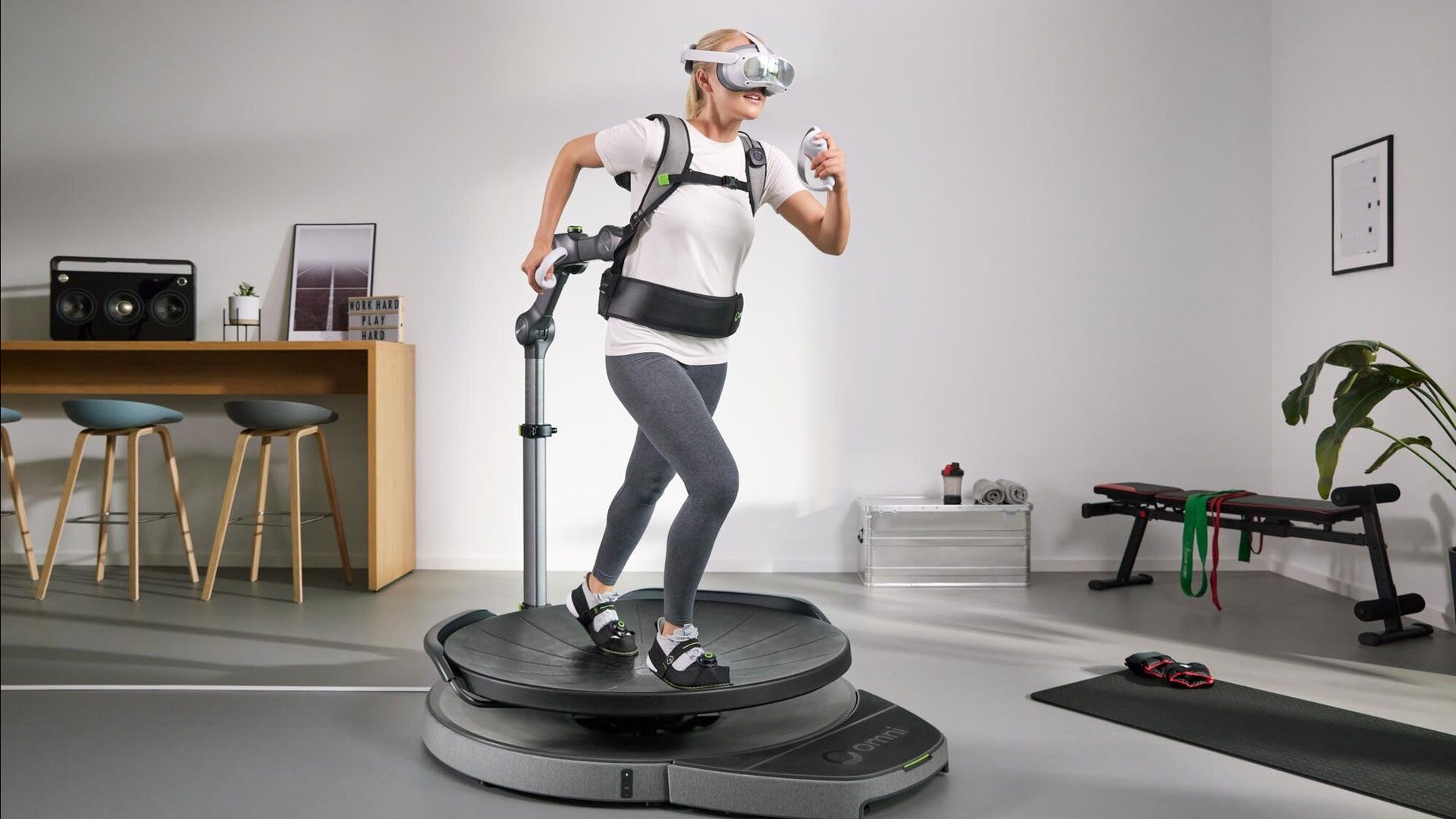
VR treadmill creator Virtuix is going public, as its Class A ordinary shares will start trading today on the Global Market tier of the Nasdaq. The company’s stock market debut comes as consumer VR investment and first-party content spending have slowed across the industry.
The News
Founded in 2013 by CEO Jan Goetgeluk, Virtuix initially started its journey on Kickstarter with the launch of the original Omni, which garnered $1.1 million from backers.
While the company first started out with pretty clear ambitions to enter the consumer market, market realities pushed the company into the out-of-home VR attraction space, forcing it to navigate a significant pivot in its business strategy.
Since then, the Austin, Texas-based company has attracted over $55 million in funding from major investors such as Mark Cuban, Maveron, and Scout Ventures, with its latest crowd investment campaign bringing in an additional $3.3 million.
Virtuix still sells its enterprise-focused ‘Arena’ solution, however the company made it next big bet by reentering the consumer market with the release of Omni One in 2024, which can be purchased as a full system (Pico headset included) for $3,500, or a bring-your-own PC VR headset system priced at $2,600.
Alongside its Nasdaq debut, which is trading under the ticker ‘VTIX’, Virtuix secured an additional $11 million investment from Chicago Venture Partners and established a $50 million equity line of credit, subject to conditions. The company says it plans to use the funding to scale sales of Omni One.
“We’re only getting started,” said Goetgeluk. “In a world where we explore increasingly photorealistic virtual worlds, the missing piece is the ability to move through those worlds naturally. We pioneered the technology to make that possible. Going public provides us with access to capital to fund our growth and develop new products.”
My Take
It’s an interesting time as a consumer-focused VR company to go public, what with Meta’s pullback from the VR games space following the reorganization of its Reality Labs, which saw a reported 10 percent headcount reduction. Granted, that focus is more on the high-end consumer, which likely includes a significant overlap with enterprise.
Still, Virtuix’s performance in the market will serve as an important data point as the next phase of consumer VR takes root—i.e. a moment when platform holder dollars have all but stopped flowing into the games ecosystem. After all, it’s one of very few publicly traded companies specializing solely in VR hardware right now that isn’t a major platform holder.
That said, it’s a pretty grim time for XR studios right now, as it seems investment dollars for big single-player content has dried up amid a flourishing of free-to-play multiplayer games on the medium’s dominant platform, Meta Quest 3. I’m also waiting to see how Valve’s Steam Frame fares, which still doesn’t have a price or specific release date yet.
This comes alongside the closure of three first-party Meta studios, Sanzaru Games (Asgard’s Wrath), Armature Studio (Resident Evil 4 VR port) and Twisted Pixel (Deadpool VR) in addition to layoffs at a number of veteran XR studios, including Mighty Coconut (Walkabout Mini Golf) and Cloudhead Games (Pistol Whip).