
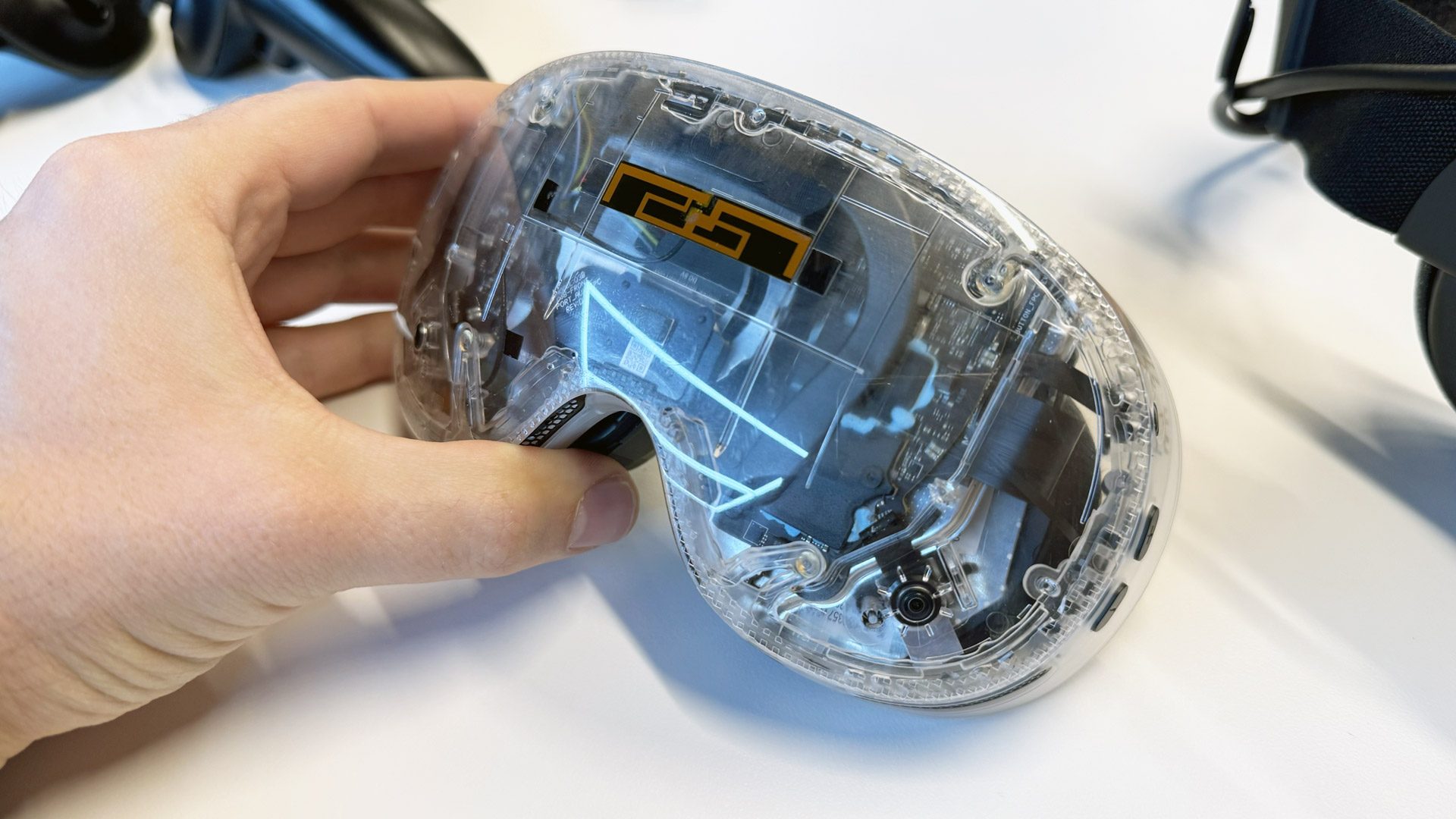
Valve Reconsiders Steam Frame Price & Release Date Amid RAM & Storage Shortage

23

Steam Frame is still shipping sometime in the first half of 2026, although now Valve says the current component shortage has led the company to revise both price and release date of the standalone VR headset.

Valve announced in a hardware news update that Steam Frame, Steam Machine, and Steam Controller are all being affected by the component shortage.

“When we announced these products in November, we planned on being able to share specific pricing and launch dates by now,” Valve says. “But the memory and storage shortages you’ve likely heard about across the industry have rapidly increased since then.”
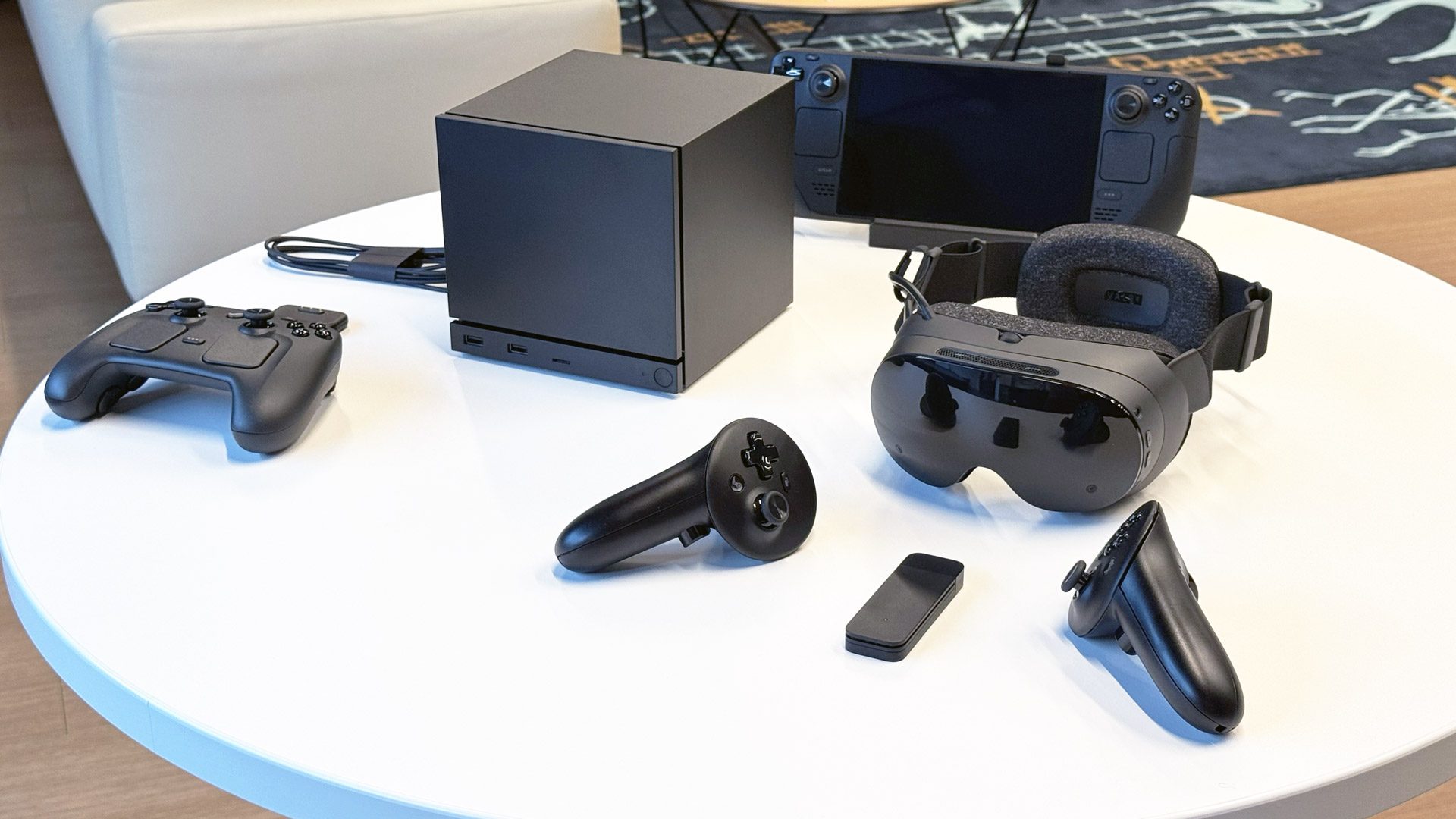
Photo by Road to VR

Due to a surge in demand from AI and data centers, RAM and storage prices have increased significantly since this time last year, with PCPartPicker data charting a 300 percent price increase in DDR5 RAM alone.

As component availability dwindles and prices rise, Valve says it “must revisit […] exact shipping schedule and pricing,” noting that both Steam Machine and Steam Frame have especially been affected.

Still, Valve says that its hoping to ship all three products in the first half of the year—ostensibly releasing sometime before July 1st.

SEE ALSO
Google's Project Genie Makes Real-time Explorable Virtual Worlds, Offering a Peek Into VR's Future

Valve told Road to VR in November that it expects the price of Steam Frame to be ‘cheaper than Index’, although the company didn’t qualify pricing further than that. At its 2019 launch, a Valve Index ‘full kit’ was priced at $1,000 (headset, controllers, SteamVR trackers), while the headset alone was priced at $500.

While Valve hasn’t commented on what Steam Machine will cost, it confirmed with YouTuber ‘Skill Up’ back in November the PC won’t be subsidized like a console.

Price estimations are fairly scattered at this point. Linus Tech Tips has suggested the lowest configuration could fetch somewhere around $700, based on a custom PC built on comparable parts.

In early January, Czech retailer Alza may have leaked Steam Machine’s pricing, with the  512GB model priced around $950 USD and the 2TB model at $1,070 USD.

Looking for more Steam Frame news?

Valve Unveils Steam Frame VR headset to Make Your Entire Steam Library Portable: Valve shows off Steam Frame, the standalone headset that can stream and natively play your entire Steam library—with only a few caveats right now.

Hands-on: Steam Frame Reveals Valve’s Modern Vision for VR and Growing Hardware Ambitions: We go hands-on with Valve’s latest and greatest VR headset yet.

Valve Says No New First-party VR Game is in Development: Valve launched Half-Life: Alyx (2020) a few months after releasing Index, but no such luck for first-party content on Steam Frame.

Valve is Open to Bringing SteamOS to Third-party VR Headsets: Steam Frame is the first VR headset to run SteamOS, but it may not be the last.

Valve Plans to Offer Steam Frame Dev Kits to VR Developers: Steam Frame isn’t here yet; Valve says it needs more time with developers first so they can optimize their PC VR games.

Valve Announces SteamOS Console and New Steam Controller, Designed with Steam Frame Headset in Mind: Find out why Valve’s new SteamOS-running Console and controller will work seamlessly with Steam Frame.

Steam Frame vs. Quest 3 Specs: Better Streaming, Power & Hackability: Quest 3 can do a lot, but can it go toe-to-toe with Steam Frame?

Steam Frame vs. Valve Index Specs: Wireless VR Gameplay That’s Generations Ahead : Valve Index used to be the go-to PC VR headset, but the times have changed.

This article may contain affiliate links. If you click an affiliate link and buy a product we may receive a small commission which helps support the publication. See here for more information.

Well before the first modern XR products hit the market, Scott recognized the potential of the technology and set out to understand and document its growth. He has been professionally reporting on the space for nearly a decade as Editor at Road to VR, authoring more than 4,000 articles on the topic. Scott brings that seasoned insight to his reporting from major industry events across the globe.
  • Fabian

    This thing is a sidegrade at best from the Quest3 that cost $499 3 years ago. Any delay that brings the frame closer to a Quest 4 release will make it even more rediculous.

    • dextrovix

      …so, you mean in your opinion, it's ridiculous already is it? Only until it's available and users can see exactly what experiencing it for its extended purposes are truly like, the ridiculousness cannot be judged at this point, irrespective of whether Meta bother with Quest 4 over Ray-Ban glasses…

    • Elite-Force Cinema

      Then how can they improve their ways just so that they can no longer be a sidegrade to the Quest 3 just so that you can no longer hate on them for the rest of your life without saying they should just be forced by you to just not exist forever until the point you need to force Valve to just go bankrupt and out of business for good just for you to make Meta Quest the only king of VR as a whole for the rest of their lives?

      • kraeuterbutter

        besides all the hate in one or the other direction..
        in some ways it is a sidegrade..
        *) it has about the same resolution as the Quest3 /Pico4 (a resolution we have seen already 6years ago with the Reverb G1 and G2)
        *) it has the same displaytechnologie (LCD) – so colors are not comparable with the other oled-headsets emerging in the moment on the market
        *) it has no color paththrough, so not suitable for mixed reality (which is a benefit for many apps in VR – many user prefer the XR-version over a normal VR-version with the same program) -> frame cant do that
        *) the controllers: we will see if they are that great, with all that buttons on it.. for vr-usage

        eyetracking with foveated Streaming on the other hand sounds great, battery at the back as well (like on pico4)
        so iam still looking forward
        will get it if it stays under 1200 Euro

        2880×2880 resolution .. still i would have liked if it was that..
        i would have been completley happy with that resolution (no need for 4k, would depend monster-gpu)..
        so – with only 2160×2160 – its like my reverg G2 6 years ago
        or the quest3 for half probably half the price – a little underwhelming

        • Christian Schildwaechter

          TL;DR: Specs and actual user experience are only loosely related, and most of the discussion on Frame focusses on the wrong part simply because we haven't seen the rest yet.

          The whole specs discussion is somewhat moot. Valve hardware isn't about top specs, it is about the overall experience when paired with their software. The Steam Deck wasn't top off the line hardware at launch in 2022, and Valve has made clear that we won't see a Steam Deck 2 for quite a while.

          This hasn't led to people saying nobody should no longer buy a Steam Deck. There are literally hundreds of "Is the Steam Deck still worth it in 202X" videos on YouTube, and they pretty much all end in "yes, get one now". Instead of dropping it, people are asking for SteamOS to be made available on more 3rd party hardware because it improves the experience so much over Windows.

          Sure, if all one imagines Frame to do is replacing a Quest 3 for PCVR streaming, you can compare pixels or RAM and somehow try to rank them. Or make a wild guess about when a Quest 4 might release with what specs, and compare to that. If all people were looking for was higher resolution in a standalone for streaming, the HTC Focus 3 with 2448*2448 per eye has been around since 2021 for USD 1300, re-released in 2024 as the Focus Vision for USD 1000 with added DP-In and 16MP color passthrough cameras.

          But that very much misses the point of Steam Frame. If the Steam Deck is anything to go by, the Frame running SteamOS will make the Quest UI and UX look even more horrible, despite users already complaining about it for years. The Steam Deck was launched to complaints of "only" having a 1280*800 display instead of using a 1080p screen. But it actually turned out to be sufficient and was one of the reasons why it could run AAA games at full screen resolution. Sure, you can now buy 4K microOLED standalones for USD 1500+, but of course these can't render any games at native resolutions, you have to stream from a PC with a GPU that costs more than the HMD to actually utilize that resolution.

          The Frame was designed for use with the Steam Machine and SteamOS, and it will most likely be well balanced for that. We will know how good the experience is once we get detailed reviews, and not a second before that, because this will almost certainly not just be a slightly faster Quest 3 with similar specs. It will be a SteamOS VR device tuned to provide a very smooth experience that so far hasn't been available from anyone else. With the technical specs way less important than they might seem right now.

          The Frame hand-ons focused only on showing that foveated streaming can provide a latency and visual quality that wasn't distinguishable from a tethered connection, at least not during the short demos, with no compute heavy games shown running locally. We have heard almost nothing about the Frame UI/experience itself, only some very technical discussions about x86 emulation and game specific core configuration. So far nobody has really seen what Valve is actually cooking up, causing everyone to focus on the few information tidbits available, even though they will most likely end up being secondary.

  • XRC

    Memory pricing spike is brutual and will get worse as current DDR, GPU, CPU, SSD stock sells through, incoming stock will have further price increases.

    Just purchased DDR5 Expo 32gb 6000 kit for AMD X3D build; was selling at £130 in September last year, paid £340 for same kit at weekend and it was one of the more affordable options.

    Memory manufacturers already selling 2028 allocation…AI bubble reeks of cryptobros, part two

    • Christian Schildwaechter

      TL;DR: the RAM price increases will most likely only be indirectly related to the delayed Frame launch, as production had already started at lower prices.

      As Valve originally intended to launch Steam Machine and Steam Frame in early 2026, and allegedly already started mass production in 2025-10, they must have had some RAM stock or contracts in place before they even announced them. So the reason for the delay cannot be that they now simply can't get RAM at reasonable prices. And while DDR5 spot market prices have risen by up to 400%, LPDDRX5 as used in Frame has "only" about doubled, and a significantly delayed release of esp. Frame will make the tech more "outdated".

      The problem may be that they consider Steam Machine and Frame a bundle that has to launch together. The Machine designed for low cost, relying on a somewhat older, but cheaper CPU and GPU, but also using 16GB DDR5 plus 8GB GDDR6, would be much more affected by recent shortages. Probably not for the initial production run, which would have started around the same time as Frame, but for anything produced once the initial contracts run out.

      If Valve initially planned to for example sell both together for USD 1200, and then upped the internal estimates to USD 1400 around the time they announced them, they could now be facing production costs of USD 1600 or USD 1800 for the following batches, with no guarantee that prices won't climb further. So their main problem might be setting a long term sustainable price, as both huge price increases or production run stops due to lack of components could be very bad for the long term success of these products. And simply waiting could help here, as the full impact of the RAM crisis isn't felt yet due to still existing inventory.

      So if Valve launched the Steam Machine today with 16GB+8GB for USD 800-1000 instead of the USD 600-700 they initially planned, this would be considered (way too) high by many, esp. in comparison to consoles, leaving Valve with a perceived flop. By late June pretty much all current inventory will be gone, with only large manufacturers like Apple or Samsung with longer term contracts or their own production facilities able to somewhat keep costs at bay. It's quite likely we'll also see more console price increases. So compared to today, a few months down the line a Steam Machine for USD 800-1000 may be perceived as a bargain, even if it was already produced in 2025-10 at a price allowing to sell it for USD 600-700.

      • $600 would be a real competitor to Quest. $1200 and it's DOA.

        I never even connected HL:A with the Index. it ran great on their competitor, the Quest.

        This whole thing makes me think, if it wasn't for the Steam platform itself, Valve could never keep their business afloat. They are just TERRIBLE at making business decisions.

        • XRC

          terrible business decisions you claim, but 2025 saw Valve generate around$17 billion in revenue from only 350 employees = $50 million generated per employee

          Considerably more than pretty much every other tech company; perhaps not so bad at business decisions?

          • xyzs

            The question is will they invest some of their huge money into lower margins and allow their ecosystem to succeed, or will they play it cheap with high prices and sell much less than expected and fail their steam machine ecosystem a second (maybe last) time?

            They should understand that when you are the underdog, in front of Meta, PlayStation and even Xbox, you need to be humble and accept loosing money at first. Now is the time, if people are excited by the products, Meta/PS/Xbox are not at their best, their product line up is aging and no new announcement are even made. It’s not the time to be thinking margin, it’s the time to make things happen RIGHT NOW.

  • Definitely not good news

  • Mike Jones

    Release it already, I don't care about the price.

    • Christian Schildwaechter

      TL;DR: everybody should care about the price, because the price will determine Frame's success, and Frame succeeding will be very important for the future of VR.

      Oh, you do care about the price. Maybe not because it would bother you to pay more personally, but because the price will have a significant impact on how successful Frame will be overall. And with the Meta as the leading champion to popularize VR just having left the building, VR's future success in general will depend a bit more on how well Frame does.

      Valve is taking a very different approach than Meta, not going for affordability first, which proved to be quite important for the average Quest buyer going for Quest 3S instead for Quest 3. Valve is going for the part that Meta never really figured out, reducing the overall friction that caused many people to let their very affordable HMDs collect dust after just a few months, because the experience just wasn't worth the hassle.

      This is something VR enthusiasts never understood. How could anybody want to miss out on this incredibly immersive medium just because of a few minor inconveniences? But that's what 98% of Steam gamers actually did. And Frame tries to address that with its well balanced, low weight design, focused on a smooth gaming experience both with streaming and local content, also bringing flat games to the table for those that just want an updated couch gaming experience. Or are simply unwilling to give up on well known AAA, or having to rely on hacks and mods to play them in VR.

      Or one of the many other reasons for people to not pick up VR, despite the tech having vastly improved over the last decade, the libraries having grown to where you will always find something new to play, and the prices having dropped to where pretty much everyone not currently starving can afford at least a used Quest 2. There is still something missing, and Valve is betting on this being all the extra friction that currently comes with VR.

      We actually haven't seen a lot of Frame yet, but got statements from Valve that they want to make it super easy for someone to hop in and then on the go decide whether to play a flat or VR game, streamed or standalone, either x86 Windows or SteamOS ARM native, or simply using existing Android ARM APKs, or run any Linux/Windows flat apps, or one of the gazillion emulators already available on the Steam Deck. I'm personally hoping for someone to come up with a Frame Rift DK1 translator/emulator to revisit some "ancient" VR demos. The overall point of Frame is to get out of the way and just give you whatever gaming experience you crave at that moment.

      But all that can only work if enough people can be convinced. And that will depend a lot on the price, as based on the Steam Deck, I trust them to not mess up the experience. Valve releasing an HMD that only a few thousand VR enthusiasts will/can buy gives us nothing regarding VR seeing a wider use, which will be a precondition for more software getting developed for it, esp. now that Meta has shut down their XR money fountain that sustained a lot of 3rd party VR game development.

      Even if you yourself could afford to buy ten Steam Frames, you actually need hundreds of thousands of others to be able to afford at least one. Otherwise the Frame will end up like the Play for Dream, a nifty device for a select few that ultimately doesn't really push VR forwards, as it sells in so low numbers that nobody would consider developing for it.

      And what we want is the SteamOS based Frame doing the same for VR as the Steam Deck did for handhelds, not only providing a very nice and affordable device, but also triggering a number of established companies to launch their own devices in the same category after seeing that people actually want and continue to use them for more than the initial hype. The Steam Deck triggered sort of a reverse retention effect compared to VR HMDs, with a lot of people largely abandoning their much more powerful gaming PCs and playing mostly on the handheld.

      In a best case scenario, widespread Frame adoption will long term lead to an overall massively improved VR experience through the free SteamOS running on both Valve and 3rd party hardware, drawing more users and developers, even if the Frame itself never reaches anywhere close to the sales numbers of a Quest 2. Whatever the exact reasons for the delay may be, you may gain a lot more from Valve doing it right than them rushing it so you can get it a few months earliers.

      • Mike Jones

        I disagree, people will buy it regardless. Plus a higher price helps with their upcoming lawsuit. I’ll gladly spend a additional 500$ to help keep valve on top.

        • Christian Schildwaechter

          TL;DR: Do you have any historical examples for people buying products regardless of actual price? [Outside of pandemic toilet paper mass hysteria, or artificial scarcity. And people as in actual consumers, not OpenAI buying half the world's RAM production in an insane bet paid for with money from investors that clearly need an AI to explain to them the actual feasible ROI of pumping billions into superscalers.]

          Despite featuring much worse technology, Quest 2 outsold Quest 3 by at least 3:1 (on Amazon US) during the 2022 holiday season, the year Quest 3 launched, simply because it sold at half the price. A year later the newly launched Quest 3S outsold Quest 3 by a similar margin, despite still being mostly just a Quest 2 with a beefed up SoC and color passthrough. Sony's PS5 sales dropped by ~15% during the last holiday season compared to the year before, at least partly attributed to a USD 50/~10% price increase in August. More price increases are expected for 2026, so the next year will probably see another drop. Quest 2 sales absolutely tanked when Meta raised the base price from USD 299 to USD 399 in August 2022 due to pandemic related component cost increases.

          People in general will not buy (non-essential) products regardless of price. Of course some will buy at any price. Some bought USD 17K 18-karat gold Apple Watches in 2015 that lost support at the same time as Apple's other 1st Gen Watches. But that is a tiny minority. And despite Apple being known for having some affluent hardcore fans that will buy pretty much everything at any price, the USD 3500 AVP didn't even sell enough to reach their already moderate expectations of 450K units, limited by Sony's microOLED manufacturing capacities.

          Early on Oculus market research showed that the magic number was around USD 300. Below that people (on average) would just impulse buy devices, as the possible loss in case they turn out to be duds was perceived as limited. Which is why they tried so hard to stay below that price with the Go, Quest 2 and 3S, and why Quest 2 sales tanked after the 2022 increase. Above that threshold people consider it an investment, and want to see a guaranteed value for their money. The more you increase the price without also improving the value proposition, the fewer people will buy. And even though IMHO Frame tries to be something very different, people will inevitably compare its price/value to the USD 499 Quest 3, and even the USD 299 Quest 3S, just like they compared AVP to them.

          I'll give you that right now many people may be willing to pay more, as electronics prices are expected to explode further. Most that liked AVP except for the price never showed interest in Quest 3 though, instead saying they'd rather wait for Apple to release a cheaper one. So large parts of the Frame (non-VR enthusiast) target group would probably just skip it for now instead of adjusting their already stretched gaming hardware budgets to a higher price.

          Feel free to personally donate USD 500 to Gabe Newell's next yacht. It probably won't help much with pushing Frame though, as Valve has more than enough money to pay for the development. Even if the now third attempt by the same party to sue them with very shaky arguments for unfair steam prices actually leads to a conviction. Valve is primarily constrained by only having around 350 employees, a deliberate choice to keep up their company culture.

          They don't have billions to spare for a large consumer electronics launch, and due to rising component costs recently stopped producing the USD 399 Steam Deck version they sold basically at cost, while keeping the always profitable USD 549 and USD 649 models without increasing the price. These won't make them a lot of money either, just like the Frame won't, but that doesn't really matter, as most of their money comes from either Steam game sales or MTX in CS/TF/Dota.

          You could probably help VR more with buying a second Frame once it releases, and donating it to your local library or high school. Or somehow getting Valve to reduce the price by USD 100 or even USD 200, as this would result in significantly larger sales.

        • Thank you for your opinion, Richy Rich.

  • Paul Bellino

    If you love VR, if you love Half-life, if you love steam. Just go into your wallets and send Steam some money to make up for the prices of ram and chips. Please this shit is driving me crazy. I cannot wait anymore. For how long do they want us to wait…

    • NicoleJsd [She/Her]

      Lmao what has xxi century turned people into…

      Waiting for an entertainment toy so hard that it is affecting their brain

  • Oxi

    Manufacturers should be doing recycling programs for old devices at this point to harvest their ram.

  • Herbert Werters

    merde!

  • Reconsidering a price that they never bothered to tell us… is that news? If it wasn't for the promise of eye tracking, I don't think I'd even give a passing moment's thought to a headset that is likely TWICE the price of the Quest. There is SO little difference here.

    The Quest doing PCVR over WiFi is peak. I don't feel like I'm lacking anything…. expect EYE TRACKING! Been waiting a full decade for eye tracking!

    • johngrimoldy

      You nailed it about Quest doing PCVR. I'm delighted about the Frame, but don't expect to get one for the reasons you mentioned. I've never liked Zuck or FB, but I like that they have deep pockets, and Zuck has a stiffie for VR. Going from a Vive to Index to Q3, the Quest was a much more remarkable change. Prior to that, firing up VR was a chore that almost always involved updates and tweaking. Doing VR was an intentional act. The Q3 was a huge shift, where it can be used much more casually. The absence of color passthru is quite limiting for the frame. Fanboys will say that one can be added – that does little to drive the tech forward. If it's not already built in, much of the potential and incentive for developers is gone.

  • Kev

    Whole thing is a joke, the steam frame is ancient stuff in almost every way.