
Apple Design Lead Heads to Meta, Hopefully to Fix Longstanding Quest UX Issues

19

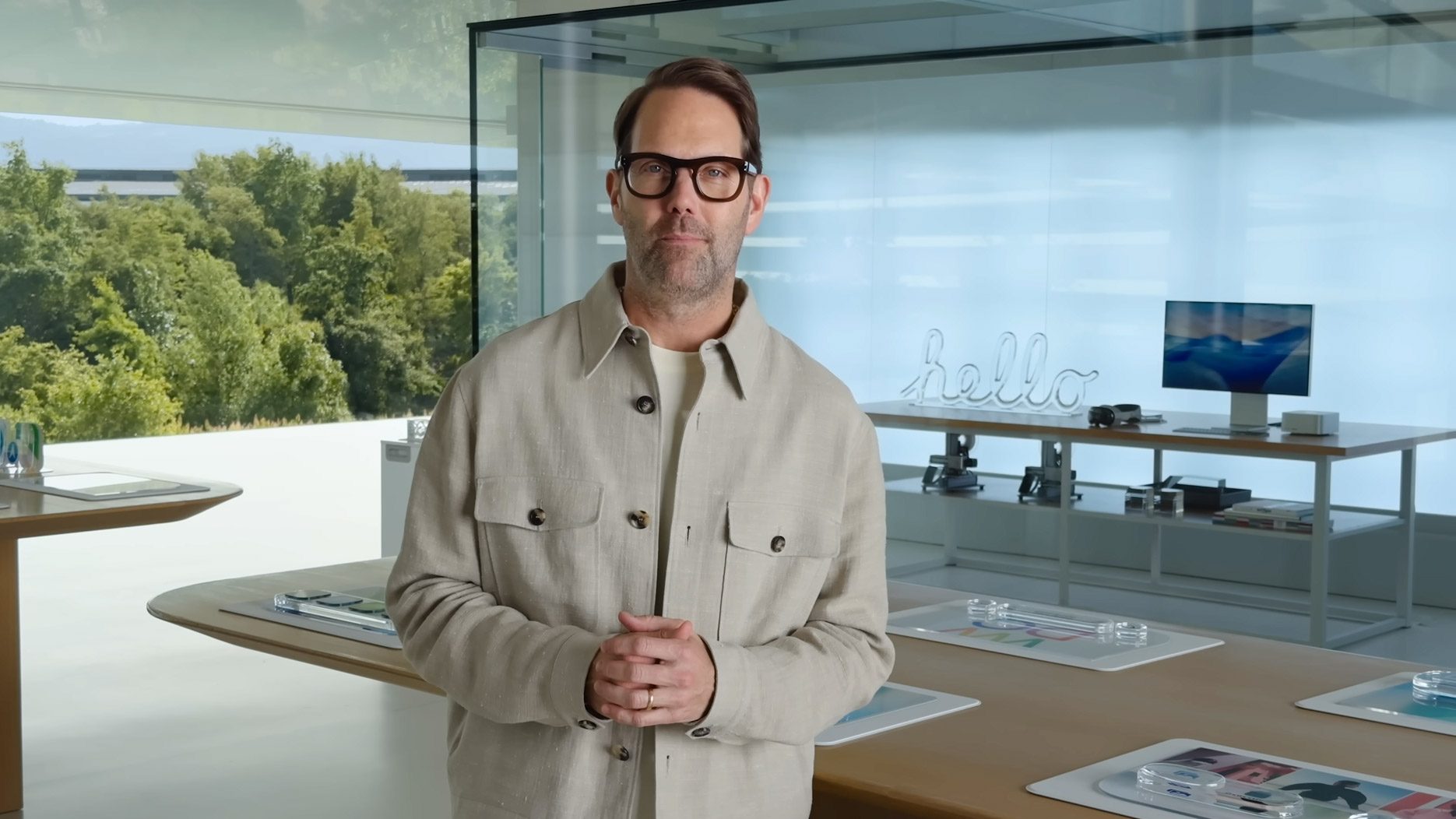
Apple’s Vice President of Human Interface design, Alan Dye, is leaving the company to lead a new studio within Meta’s Reality Labs division. The move appears to be aimed at raising the bar on the user experience of Meta’s glasses and headsets.

The News

According to his LinkedIn profile, Alan Dye spent nearly 20 years as Apple’s Vice President of Human Interface Design. He was a driving force behind the company’s UI and UX direction, including Apple’s most recent ‘Liquid Glass’ interface overhaul and the VisionOS interface that’s the foundation of Vision Pro.

Now Dye is heading to Meta to lead a “new creative studio within Reality Labs,” according to an announcement by Meta CEO Mark Zuckerberg.

“The new studio [led by Dye] will bring together design, fashion, and technology to define the next generation of our products and experiences. Our idea is to treat intelligence as a new design material and imagine what becomes possible when it is abundant, capable, and human-centered,” Zuckerberg said. “We plan to elevate design within Meta, and pull together a talented group with a combination of craft, creative vision, systems thinking, and deep experience building iconic products that bridge hardware and software.”

SEE ALSO
Anduril Shows First Look at Capabilities of ’EagleEye’ Military XR Headset

The new studio within Reality Labs will also include Billy Sorrentino, another high level Apple designer; Joshua To, who has led interface design at Reality Labs; Meta’s industrial design team, led by Pete Bristol; and art teams led by Jason Rubin, a longtime Meta executive that has been with the company since its 2014 acquisition of Oculus.

“We’re entering a new era where AI glasses and other devices will change how we connect with technology and each other. The potential is enormous, but what matters most is making these experiences feel natural and truly centered around people. With this new studio, we’re focused on making every interaction thoughtful, intuitive, and built to serve people,” said Zuckerberg.

My Take

I’ve been ranting about the fundamental issues of the Quest user experience and interface (UX & UI) for literally years at this point. Meta has largely hit it out of the park with its hardware design, but the software side of things has lagged far behind what we would expect from one of the world’s leading software companies. A post on X from less than a month ago sums up my thoughts:

It’s crazy to see Meta take one step forward with its Quest UI and two steps back, over and over again for years.

They keep piling on new features with seemingly no top-down vision for how the interface should work or feel. The Quest interface is as scattered, confusing, and unpolished as ever.

The new Navigator is an improvement for simply accessing app icons, but it feels like it’s using a completely different paradigm than the rest of the window / panel management interface. Not to mention that the system interface speaks a vastly different language than the Horizon interface.

I have completely lost faith that Meta will ever get a handle on this after watching the interface meander in random directions year after year, punctuated by “refreshes” that look promising but end up being forgotten about 6 months later.

It seems Meta is trying to course-correct before things get further out of hand. If pulling in one of the world’s most experienced individuals at creating cohesive UX & UI at scale is what it takes, then I’m glad to see it happening.

Apple has set a high bar for how easy a headset should be to use. I use both Vision Pro and Quest on a regular basis, and moving between them is a night-and-day difference in usability and polish. And as I’ve said before, the high cost of Vision Pro has little to do with why its interface works so much better; the high level design decisions—which would work similarly well on any headset—are a much more significant factor.

Back when Meta was still called Facebook, the company had a famous motto: “Move fast and break things.” Although the company no longer champions this motto, it seems like it has had a hard time leaving it behind. The scattered, unpolished, and constantly shifting nature of the Quest interface could hardly embody the motto more clearly.

“Move fast and break things” might have worked great in the world of web development, but when it comes to creating a completely new interface paradigm for the brand new medium of VR, it hasn’t worked so well.

SEE ALSO
'I Expect You to Die' Studio Announces Free-to-Play Skydiving Party Game 'Project Freefall'

Of course, Dye’s onboarding and the new studio within Reality Labs isn’t only about Quest. In fact, it might not even be mostly about Quest. If I’ve learned anything about Zuckerberg over the years, it’s that he’s a very long-term thinker and does what he can to move his company where it needs to go to be in the right place 5 or 10 years down the road.

And in 5 to 10 years, Zuckerberg hopes Meta will be dominant, not just with immersive headsets, but AI smart glasses (and likely unreleased devices) too. This new team will likely not be focused on fixing the current state of the Quest interface, but instead trying to define a cohesive UX & UI for the company’s entire ecosystem of devices.

With Alan Dye heading to Meta, there’s a good chance that he will bring with him decades of Apple design processes that have worked well for the company over many years. But I have a feeling it will be a significant challenge for him to change “move fast and break things” to “move slow and polish things” within Meta.


This article may contain affiliate links. If you click an affiliate link and buy a product we may receive a small commission which helps support the publication. See here for more information.

Ben is the world's most senior professional analyst solely dedicated to the XR industry, having founded Road to VR in 2011—a year before the Oculus Kickstarter sparked a resurgence that led to the modern XR landscape. He has authored more than 3,000 articles chronicling the evolution of the XR industry over more than a decade. With that unique perspective, Ben has been consistently recognized as one of the most influential voices in XR, giving keynotes and joining panel and podcast discussions at key industry events. He is a self-described "journalist and analyst, not evangelist."
  • ErickTheDiver

    Liquid Glass is awful

  • ErickTheDiver

    How will his ability to create meaningful change with Meta be impacted by the 30% budget cut?

    • Christian Schildwaechter

      Not. UI/UX design isn't expensive, it is more a question of discipline and conceptual consistence than resources. The original Macintosh development team had about a dozen core members, and of these Andy Hertzfeld, Bill Atkinson and Susan Care were responsible for most of the UI and application look and feel. Much of which is still found 40 years later in the current MacOS with the UI running on top of a completely different operating system, plus every other OS with a graphical interface.

  • Christian Schildwaechter

    "Our idea is to treat intelligence as a new design material and imagine what becomes possible when it is abundant, capable, and human-centered,” Zuckerberg said.

    Bla bla bla bla bla bla, bla bla bla bla.

    A great experience requires having a vision and focusing on making it a reality. Apple is famous for being ruthless in cutting features that don't match their vision, even if this can be very painful. Microsoft has always been the opposite, keeping backwards compatibility forever and allowing a dozen different approaches in parallel, now making it even worse by adding AI to everything, regardless of whether it makes sense or people hate it.

    You don't change the way a company approaches the user experience just by hiring someone from a company that is extremely focused on user experience. Sure, it will help somewhat, but you also have to be willing to accept the painful cuts required, and have to unite everyone under one single banner. Meta not only never managed to release a decent VR UI, they also created tons of partly redundant projects, throwing things at the wall to see what sticks. Their social VR attempts were abandoned again and again, and while they now stick to Horizon Worlds, this is very apparently only to counter Fortnite or Roblox, not because it would improve the VR experience. Quest users didn't exactly beg Meta to please please shove more Horizon Worlds stuff down their throats by polluting their feeds, apps, searches etc. with it.

    Meta is lacking the clear vision that drives a lot of Apples designs, and unless Zuckerberg gives Alan Dye the power to radically kill things that stand in the way of a better user experience, I don't see how Meta's culture would allow for more than superficial changes that will still lack coherence.

    • Alex Soler

      Also, Dye will still report to Bosworth :-|

    • XRC

      The insane cash burn since the acquisition has been horribly painful to witness, considering how many opportunities were wasted on confused bloat and throwing the baby out with the bathwater

      for small players focused on genuine innovation it's just a depressing state of affairs seeing all that cash pissed up the wall, the subsidized hardware killing competition

  • Sven Viking

    “…seemingly no top-down vision for how the interface should work or feel…”

    This is where I wonder if putting it all under one person with a specific vision and direction might theoretically be an improvement almost regardless of who it was.

  • So they're gonna put the guy who made the WORST UI design in Apple history in charge of fixing the Quest's UI issues? Good luck with that.

    • Andrew Jakobs

      That's the problem with UI's, what works fir one person might be awful for others. UI's are in the eye of the beholder, some hate the AVP UI, others love it.

      • bobobj

        Putting the Close button at the bottom of the window, when it has been at the top ever since Apple put it there, was certainly a decision that was made.

        • Andrew Jakobs

          You mean, like in most OSes?

      • Alex Soler

        Yes and no, you can conclude an UI is bad if a considerably hight % of people has troble understanding it or interacting whith it. And that is an objective mesure, even if for some people it will be fine.

        • Andrew Jakobs

          Not really, as you're still dealing mostly with a limited group when doing those measurements, coming from my own experience.

          • Alex Soler

            Wha I'm saying is that bad UX exists. If one interface is designed to fulfill and objective, specially to help people who whants to do X to succeed, but too many do not, because they do not understand it, because he does not find the feature, or because it's too complicated, then you have a bad UX. That's not opinion.
            Then, as you point, there can be good data or bad data -or not enough data- to reveal that flaw or not, there are good tests and bad tests. Limited test groups help. But since not all is limited to that, but also to general statistics of the use of the diferent feature, you can see that sometimes you change something that did not seem important to you, but then like magic, people find and use the feature. So you know you had a UX problem before.
            Or you may not find the problem. But the problem will still be there.
            So of course there is ground for personal preference, but still, bad UX exists.

    • Arno van Wingerde

      But… the worst Apple UI is still miles ahead of Meta‘s best… so it might help!

  • This has been an awesome move by Zuck

  • Torsten Balle Koefoed

    I really hope this will have a significant impact on the UI in the headsets. I ended up going back to the old, more primitive interface. While the new interface initially seems better and more advanced on the surface, it's just so confusing and unintuitive to use in practice.

  • Nevets

    I hope he does get some focus on Quest UX. I suspect his work will be predominantly on upcoming glassware…

  • Octogod

    Meta's issues are not UI and UX relayed.

    They change the interface every six months and that every version of the OS for the past year and half has had massive performance issues.

    They don't even QA anymore. They push, then revert if they get enough reports of issues.

    Unless design can hold back releases, the same issues will occur.