
Meta Reportedly Set to Raise VR Headset Prices, Keep Existing Devices in Market Longer

33

Meta appears to be planning to raise the price of its VR headsets moving forward, according to a recent internal memo, which company leaders hope will combat rising costs. Meta may also be retiring the Quest 3 and 3S line a little later than expected.

The News

As reported by Business Insider, a December 4th memo from metaverse leaders Gabriel Aul and Ryan Cairns notified employees that Meta has “made a shift” in its VR efforts which could include price increases to combat costs associated with tariffs, as well as keep existing hardware in the market for longer.

“Our devices will be more premium in price going forward, but we’ll have a healthier business to anchor on and free ourselves from feeling existential about any singular device’s success,” Aul and Cairns’ memo reads.

The memo, which thus far has only been viewed by Business Insider, also includes a call for high-quality software experiences meant to match the “excellence” of its devices. Additionally, Aul and Cairns’ said Meta will “ship new hardware at a slower cadence going forward.”

“We’re committed to VR for the long-haul so we need to align our business model and roadmap to an approach that will make this possible,” the memo says. “We’ve been working hard to bend the curve and accelerate ahead of the category’s natural growth rate, which means running multiple programs in parallel as well as carrying costs like tariffs and subsidies for content, GTM, and devices.”

Notably, the memo also included info on a critical delay of a puck-tethered XR headset, and a new Quest headset which is set to be a “large upgrade” in capabilities from current devices, and will “significantly improve unit economics.”

Meta currently sells Quest 3, starting at $500, and Quest 3S, starting at $300—the latter of which is currently on sale for $250.

SEE ALSO
Mixed Reality's Best Laser Tag-style Multiplayer Gets Better Spatial Stability, New Enemies & More

My Take

Meta regularly subsidizes Quest in an effort to recoup on software sales, making them technically cheaper than they might otherwise be. It’s a strategy console platform creators have been doing for ages, and it certainly works at getting people through the door.

But now, it seems we’re headed for another rough patch that Meta needs to navigate if it wants to continue its role as the holder of the most popular VR platform. And above all, I’m curious how Meta will keep serving the entry level user while pushing prices higher. It’s basically stemmed the flow of cash to third-party studios, making platform exclusives few and far between nowadays. And competition is coming from both sides: Google’s Android XR represents a threat to the low end, and Valve’s Steam Frame on the enthusiast end of things.

While the memo said the next Quest will “significantly improve unit economics,” I’m afraid that doesn’t really mean much since it didn’t come with a supporting statement. Relative to what? Previous pricing estimations? Current prices?

Anyway, Meta could hike prices in a number of ways we’ll be watching out for in the coming year: Quest 3 may get a price bump over its regular $500 MSRP, leaving Quest 3S at the low end. This could keep the flow of new users coming at the regular pace, while effectively only “taxing” users looking for the technically better headset.

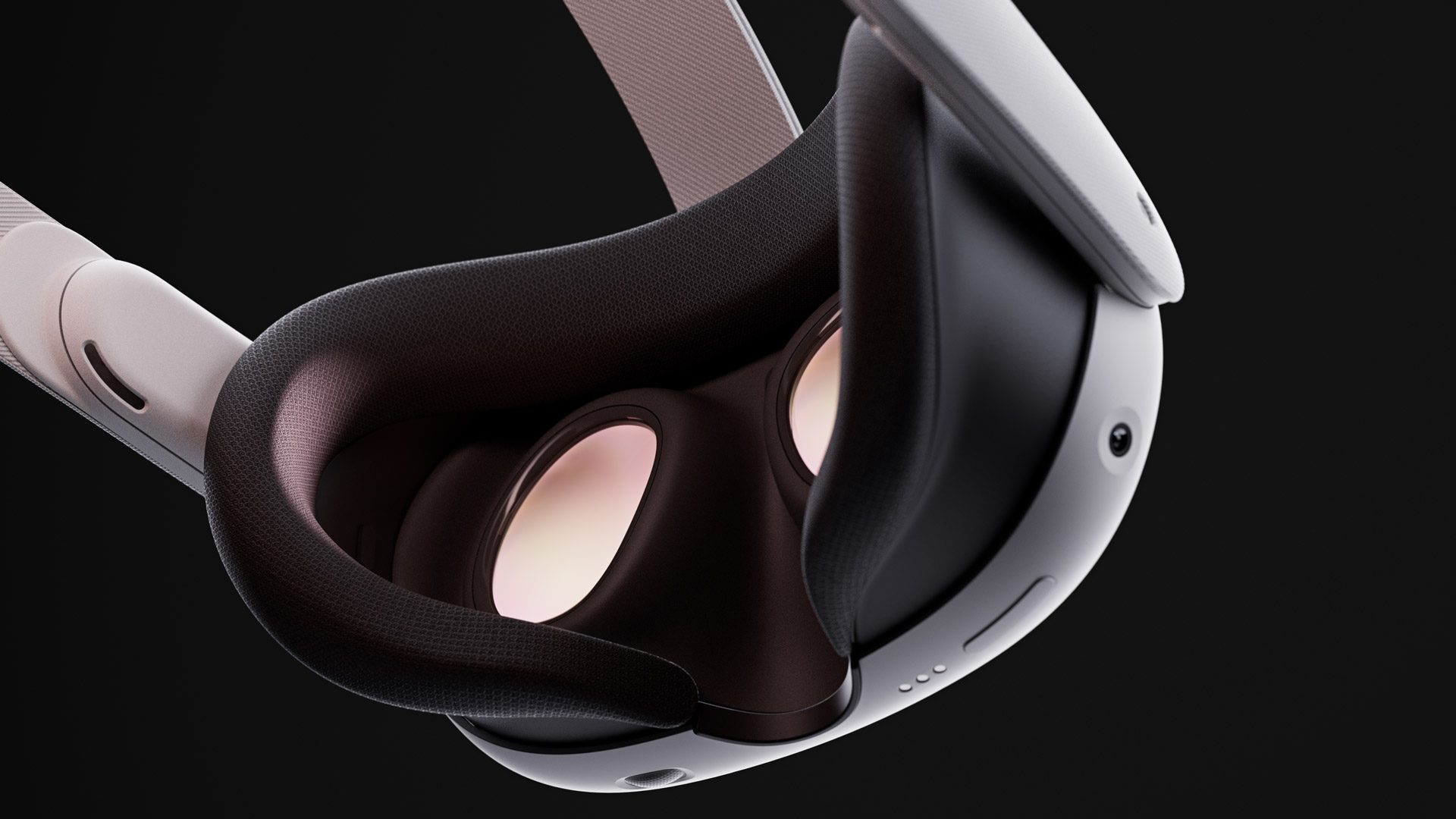
Quest 3S (left), Quest 3 (right) | Images courtesy Meta

Then again, both headsets may see a modest price bump, which is then teased down in successive sales periods, like it did with Quest 2 when that one was hiked from $300 to $400 following supply chain shock stemming from the COVID-19 pandemic. The company could also equally leave pricing the same, and only apply hikes on forthcoming devices.

Any which way, I’d expect Meta to attempt to soften price shock with included first-party games (even older ones) and possibly longer free memberships to Horizon+, its monthly game service.

And whatever the case, it’s pretty clear the Quest 3 platform is going to be around for a while, which means developers will need to keep it in mind even as Meta tries to push better hardware, which could include more powerful chipsets, higher pixel density displays, and stuff like built-in eye-tracking.

This article may contain affiliate links. If you click an affiliate link and buy a product we may receive a small commission which helps support the publication. See here for more information.

Well before the first modern XR products hit the market, Scott recognized the potential of the technology and set out to understand and document its growth. He has been professionally reporting on the space for nearly a decade as Editor at Road to VR, authoring more than 4,000 articles on the topic. Scott brings that seasoned insight to his reporting from major industry events across the globe.
  • Fritz

    That's what happens when there's no competition in sight. It's clear that they will be letting off the gas and cruising with Q3 for the next couple of years. The Frame's paper launch this time of year with 5-year-old tech didn't achieve its only possible purpose of stopping potential Quest buyers. Not enough are willing to wait for the Frame and Meta can even raise the prices and still sell them now.
    I'm not blaming Valve. The market economics aren't there yet for a high-end HMD, unless you're Apple or Samsung and can afford burning money. The Frame is just a software test platform, which explains its launch to devs only.
    The next gen won't be here until late 2027. So we wait or shovel bags of money to startups that promised the moon but deliver dirt.

    • Herbert Werters

      I don't understand how you can say that without knowing the price of Steam Frame. This has nothing to do with old technology or anything else. Frame is a VR headset, and Steam offers VR and flat games. Why would Valve sell a VR headset for $1,800 to $3,500? Who would it be for? Look at the Steam statistics to see which VR headset is used most often. It makes sense to do something similar. MR from Quest doesn't offer much on Steam, so you can cross that off the list. I understand the dissatisfaction, but this is so off base.

      • Fritz

        They did offer a high-end HMD with the popular Index and I would buy an Index2 for 2K if they made one that was any good. I wouldn't buy a Frame no matter the price because it offers nothing new.
        The Frame is more or less a Q3 competitor because it is similar. Both can do PCVR and low-end standalone 3D. Quest is the #1 VR used on Steam, far from being irrelevant. If Valve wants that market back they will need to come up with something better than Q3. It's not just me saying this, but this news reflects the fact that Q3 sales went up when the Frame was announced. Most people waiting for it, just bought a Q3 instead. Meta wouldn't be raising their prices and delaying their future products if everyone was waiting to buy a Frame.
        I'm disappointed no doubt, and maybe even off base as you say. I just want a better VR than what I've had 3 years ago. Don't you?

        • Herbert Werters

          So I’m going to sell my Quest 3 because it’s so heavy, despite the 300g lead weight on the head strap. This HMD weighs almost 900g in total. The Pico 4 was so much better in terms of comfort. For that reason alone, the Quest 3 has to go. Add to that the more powerful SoC and Steam OS, the controllers that let me play my VR-modded flat games without having to use another controller, and the ability to play flat and VR games on the go. And who knows what else you’ll be able to do with it because anything is possible. Then there’s the repairability if something breaks, like the battery or the speakers. The wireless dongle is supposed to have super low latency. Etc. I don’t know where you get your information, but I have a really long list and MR on the Quest 3 is absolutely awesome. Oh, and an SD card slot. ;-) And a huge selection of games. A complete desktop OS. OMG

          • Acurisur

            Quest 3 can also play every single game on Steam, but Steam Frame can't play any of the Quest exclusives, or any MR games that require colour pass through. Most people care about the games, not some Quest 3 rip off that Valve are producing.

          • Christian Schildwaechter

            Quest itself currently cannot play a single game released on Steam, it can at best stream them from a PC like any other standalone HMD too. And unless you use a gaming laptop, that pretty much means you can play only Quest native games while on the road. The Frame will of course allow streaming too, but with significantly better quality due to eye tracking driven foveated streaming. And it can play both flat and PCVR games natively, though limited to more casual, not compute heavy games. And Android OpenXR apps like those used on Quest via Waydroid.

            In theory someone/Meta could go, take the open source FEX x86 emulation and run PC games on Quest too. But I'm pretty sure that we will see workarounds for Meta's DRM much sooner allowing people to play (some) Quest exclusives on Frame, which, depending on where you live, will be either completely legal or illegal if you bought the game on Quest.

            Quest apparently has a pretty bad piracy problem, so this might happen on day one, with the limiting factor only if these games are using only OpenXR (as Meta now recommends), or if they still call functions in Meta's older, proprietary runtime. These would require someone to add matching call translations in Waydroid or extensions to OpenXR first, and in the past Meta has done some nasty shit to stop people from using alternatives runtimes at least on PC.

          • Channeler1

            That's just a silly view… Steam Frame Compute Hardware is COMPARABLE to the Q3 – Not some Next-Gen blowout device – It will play no more games Natively than the Q3 does…. It's basically ADVERTISED as a PCVR Device that can play some games natively as well. So that's a Moot Point.

            The Steam Frame Tech is Great. But it in no way makes the Q3 Irrelevant, and I say that as someone that owns a Q3 and will be buying a Steam Frame to use as well… if you wanna be a pirate and steal all your things do you. but as someone that doesn't mind paying devs for great games the Q3 library is damn impressive, and has saved VR all by itself for mainstream average Users…. Steam Frame will easily be $800 with the Tech, that still makes Q3 the best VALUE in VR…

            What the Steam Frame will bring is ease of use with an OPEN system for all the pirates, and advanced tracking features at the expense of native AR experiences, at least no AR without shelling out more money for color lenses.

            Don't get me wrong! I'm All for Steam Frame, i'm going to get it Day1 – but I also have disposable income to waste on such things – LOL
            Its not going to dethrone the Q3 for mainstream normal gamers until it's PRICE competitive, which it won't be at launch…. :)

          • Christian Schildwaechter

            TL;DR: Snapdragons are faster than their XR2 equivalents, the Frame SoC is one year newer, and Frame will come with much improved cooling aided by SteamOS, allowing for much higher raw/peak performance than Quest 3. Or any other Qualcomm SoC based HMD currently available.

            I said nothing about making Quest 3 irrelevant, and Frame will no doubt be way more expensive than Quest 3S, which will continue to be the most selling VR HMD for the next few years.

            But the Frame no doubt offers better hardware, with higher performance than any non-Apple 4K HMD, twice the RAM of Quest 3 and practically unlimited storage due to the microSD slot. They just limited it to 2160p displays, increasing the Quest 3 pixel count by a mere 2%.

            Frame will use an SD8 Gen 3 with 1/5/2 high performance/performance/efficiency cores.
            Quest 3/3S use an XR2 Gen 2 SoC based on SD8 Gen 2 with a 0/2/3 configuration, giving the Frame a significant performance advantage just from the number and type of cores, plus a speedup due to being on SD generation newer. The cores on SD8 Gen 3 run at up to 3.3GHz/3.15GHz/2.3GHz, while Meta clocks the XR2 Gen 2 at a max of 2.05Gz.

            The SD high performance cores that are lacking in XR2 are a lot larger and faster (and more power hungry), intended to do tasks very quickly to allow the phone to fall back to a low power mode faster. So if you just add up the peak performance of all the cores with the much higher clock rates on the SD8 Gen 3, it will absolutely outclass the XR2 Gen 2 in Quest 3, but only for a very short time.

            The core configuration on the XR2 is very deliberate to allow for long sustained performance under the constant load typical for VR, which is why it avoids the high performance core and uses lower clock rates. Meta may underclock esp. the CPU part even further to make it run with the limited cooling in the Quest 3/3S.

            Gamers Nexus posted a Frame engineering deep dive video in which the Valve engineers explained how they approached cooling on Frame, adding a separate heatpipe on the other side of the PCB, and creating game specific profiles that enable different cores according to the performance requirements, with some games requiring more sustained performance, while others have repeated compute spikes between phases of low activity.

            So while the Frame will not get anywhere close to the theoretical peak performance when adding the single cores at full speed, it should do a lot better than Quest 3 just due to the improved cooling and game specific core optimization, with the higher core count, frequencies and core generation adding on top.

            And just like Windows isn't really optimized for gaming, Android isn't really optimized for VR/XR. Oculus had to do a lot of optimizations in the early days, as the way Android rendered images added one frame of delay by default, and it is still not optimized for low latency. Valve has proven with the Steam Deck and esp. the Lenovo Legion Go S that runs both Windows and SteamOS, that a customized Linux version can significantly improve performance and experience on the same hardware.

            So yes, Frame won't dethrone Quest 3/3S, and will very likely be significantly more expensive than both, selling in much lower numbers. And yes, I wouldn't consider it a next-gen HMD either, even though it will be significantly faster than all other stand-alones HMDs expect AVP that plays in a different class performance wise, with the M5 AVP playing in a completely different league.

            And unless the Frame SteamOS user experience turns out to be absolutely stellar, for a number of reasons I'd probably still recommend the Quest 3/3S for most people wanting to give VR a try. I personally care a lot about the strange things one can do with SteamOS that are not at all related to gaming, and have massive issues with the comfort on Quest 3, but that is just me, for most people the closed Horizon ecosystem with cheap HMDs will do just fine.

            My comments about being able to play different types of apps were mostly about feasibility, not likelihood. Quest 3S will remain the best selling HMD, and Gorilla Tag and Beat Saber on Quest the most played games, at least for the foreseeable future. If production rumors are true, Valve will produce/sell at most 2.5M Frame in the first year, probably less, meaning way more people will play native Quest games on Quest than any type of game on Frame.

            I have a 150+ titles Quest and a 2.5K Steam Library, plus tons of Epic/GOG/itch games, all legally acquired and most of them are paid, not free games. If I try to run any Quest exclusives on Frame, it will mostly be to test it out of technical curiosity (and legal for me, as I live in Europe and own these titles on Quest, so thanks to EU law I am allowed to circumvent DRM to make media I paid for available on other devices.)

            As far as I can tell, pirated Quest games that are played on Quest headsets is a significant problem, while Valve in many ways discourages piracy with the high convenience of the Steam store with regular sales and steep discounts. I obviously only played a small part of my Steam Library, and will never have enough time to play them all, esp. since it keeps growing. In 2011 Gabe Newell famously said

            Piracy is almost always a service problem and not a pricing problem.

            And Meta/Quest obviously has a number of service problems.

          • Herbert Werters

            I’m not so sure that this is really as important to people as you’re making it out to be.

    • flynnstigator

      I was also disappointed when the Frame was announced, but the more time goes by, the more I can see myself buying one. The specs might be a letdown, but the experience is what matters. If Valve can nail the eye tracked foveation and offer frictionless wireless streaming without artifacts, stutter, or jank, that would be worth paying for, even if it’s not technically superior to my Quest 3.

      • Joer’ct Drew (Aiodensghost)

        Frankly, the freedom you get with the Frame is ludicrous compared to the Quest 3… I had to jump through hoops to play PS2 and MAME games on my Quest 3, on the Frame I can just do it, either via an Android app or a Linux package. I dont have to pay for Skybox, and I can load up VLC on a 100" virtual screen, plug in a dongle that lets me plug in a disc drive, and watch a movie or TV show off a disc. The nail in the coffin is that their dongle is gonna work without extra software on Linux. I personally dumped Windows, and PrismXRs dont like Linux. And the microSD slot… I can load up my games on my Steam Deck and put it in my Steam Frame

        • Christian Schildwaechter

          The microSD slot is a major feature most people overlook. When the Steam Deck launched, many people feared that the lower end model using eMMC or microSD would provide an inferior experience compared to the SSD models, despite Valve promising that you'd barely notice the difference. Which of course turned out to be true, and Valve now allowing to hot-swap your games library between Steam Deck, Frame and Machine is quite insane.

          And great for all the Steam sale hoarders thanks to now being able to cheaply acquire enough storage to hold their entire library. And then only ever play a small fraction of it, though the chance of once bought game getting actually played increased a lot with the Deck, and might increase even more with Frame.

      • Herbert Werters

        I suspect that developers will relatively quickly make eye tracking usable for eye-tracked foveated rendering. I've already read something about it. I think it was something in combination with the Pimax software or the Open XR toolkit.

        • Christian Schildwaechter

          [WTF RoadToVR. This is my fourth attempt to post an answer. The first three were rejected as spam. The first included a (sanitized) URL I removed in the second, where I still missed a dot in in Unity API name. The third had both the link and the API sanitized, but still got flagged as spam.

          I get that you need some level of protection against bots spamming, and that you cannot check every link manually. But you also NEVER check posts that allegedly are waiting to be reviewed, and flag thing with no transparent rules, leaving me to figure out via try and error what might have triggered it this time, and asking whether I might have been shadow banned for trying to post a similar response several times].

          Short version with all text replaced and nothing resembling a link:

          – There is a list of PCVR games with DFR/ETFR support on Pimax Crystal.
          – Eye tracking isn't yet standardized in OpenXR, but Unity has a cross platform eye tracking API, so a number of.most games ported to SteamOS on Frame will get it.
          – Frame running Android OpenXR apps, featuring faster hardware than Quest and selling in lower numbers will make some developers just re-release APKs from Quest/Pico without added features like ETFR.

          • Herbert Werters

            Ah, and I thought that wouldn't be a problem with the Open XR Toolkit. You can already activate and configure foveated rendering there. If you linked that to tracking, it would be pretty easy, wouldn't it? At least, that's how I imagine it. Shouldn't that work independently of any implementation on the part of the developers? I'm excited to see what happens. I'm really hyped just because of all the tinkering that the Frame headset makes possible.

          • Christian Schildwaechter

            TL;DR: OpenXR Toolkit relied on a number of Windows hacks that won't work on Frame, but I'd expect Valve to sort of enable the same options on their SteamOS OpenXR runtime. It may require 3rd party tools to force it onto some games.

            AFAIK the OpenXR Toolkit works/worked as an injector, it basically replaces the existing OpenXR runtime. It does this more elegantly than its "predecessor" openvr_fsr that required to manually replace the openvr_api DLL, but is still mostly a hack. It only works on Windows using a modified DLL, with features like foveated rendering only available on Nvidia RTX cards and AMD RDNA cards due to hardware limitations.

            And only Nvidia backported the required variable rate shading to DX11, while AMD only supports it in DX12. So for example HL:A doesn't work with openvr_fsr, because it rejects the replaced DLL, and won't support any foveated rendering with OpenXR Toolkit on AMD GPUs due to using DX11. The OpenXR Toolkit also does not work with Vulkan or OpenGL games. AFAIR the Linux GPU drivers never supported variable rate shading, though this may have changed by now. And eye tracking never worked with the Pico 4 Enterprise/Pro Gamer Edition because Pico only exposes the required API for games run on the device, not passing the required information for use with PCVR streaming. It's all a big hack.

            Valve should be able to force foveated rendering in games using their OpenXR runtime, and of course can add the required features to the SteamOS GPU drivers used on Frame. Mobile GPUs are organized differently than their desktop counterparts, rendering the image "tiles", and have therefore been able to support rendering different parts of the image at different resolutions for much longer than PCs, so that's not a problem either.

            I'm not completely sure about the license of Valve's OpenVR/OpenXR stack, which would influence how easy/legal it would be to modify their runtime on SteamOS. The older OpenVR is available on GitHub under BSD3, but I cannot find the OpenXR runtime there. The only FOSS OpenXR implementation I am aware of is from the Monado project that implemented a full OpenXR stack to support (tethered) HMDs on Linux, as all HMDs except Valve's Index only supported Windows.

            So a hack like the OpenXR Toolkit may or may not work on Frame, but the much better and more likely way is Valve adding ETFR support directly in the runtime. I kind of expected them to do so, and am sort of surprised that they didn't say users could just enable it on Frame. openvr_fsr only supported FSR1, a spatial upscaler delivering worse results than temporal upscalers like DLSS2/FSR2, because those need access to motion vectors and usually require integration by the developers, so just swapping the openvr_api DLL doesn't work. The Steam Deck also only offers system wide FSR1 for the same reason.

            But motion vectors have always been available to the OpenVR runtime, so Valve should be able to use FSR2/3/4 (experimental) for any VR game using their runtime on Frame, which combined with ETFR should allow for significant performance improvements when running games either locally or streamed from for example a Steam Machine with AMD GPU and drivers tuned by Valve, or a much faster Windows PC with a working hardware configuration.

            As foveated rendering can impact how good a game looks (depending on how aggressively you use it), Valve may leave it to developers to enable the feature, while their foveated streaming is apparently good enough that nobody was able to notice any deterioration, and therefore enabled by default. But if ETFR is available in their runtime on Frame, we will no doubt see at least 3rd party SteamOS plugins that allow users to force ETFR on games regardless of what the developers configured, similar to how Quest Game Optimizer allows overriding game settings by configuring the Quest runtime directly with ADB commands.

          • Herbert Werters

            Wow, very detailed. I’m excited to see what happens and that’s why I’m really keen on this device. Because it offers so many more possibilities than closed systems. I notice this every day with the Steam Deck with Decky and plugins, etc. Those who want to can use it, those who don’t want to can leave it.

          • Christian Schildwaechter

            I am actually way more excited to see what Valve does with VR on SteamOS than the hardware itself, even though I love that they integrated eye tracking and made Frame very light.

            During the early days of Steam Deck, esp. before it shipped, most of the discussion was about the mobile hardware and how well current games would run, with people expecting AAA to basically suck. It turned out that it actually worked pretty well due to the APU being well matched to the lower resolution screen, and Valve giving people a lot of control over things like power consumption and frame rate.

            Today barely anybody talks anymore about the speed being too low to justify getting a Steam Deck. People have accepted that you have to pick the proper games on a handheld, but there are more than enough of these, with people starting to work through their Steam Library backlog. And the main reason not to instead go for one of the more expensive, but also much faster alternatives is usually that they don't run Steam OS, as Windows is still a much worse OS for handhelds.

            Nobody has really seen yet what Valve will do with SteamOS on Frame except for the foveated streaming. And I think there is a decent chance that we will see a repeat of what happened on Deck, with people discussing mostly specs like resolution, SoC or passthrough up to the point where they can actually try the devices themselves, but then quickly pretty much drop that discussion and focus on the (hopefully) much improved and more polished experience.

            During the Frame hand-ons Valve talked a lot about reducing friction, and I think most VR enthusiasts cannot really appreciate that yet because they are so used to the still rather rough Quest experience. I seriously doubt that a year from now anybody will still argue that Frame is an inferior HMD compared to Quest 3 because it doesn't offer color passthrough for MR, simply because by then people will have seen all the things Frame can do better just thanks to its operating system and user interface. And I'm pretty sure that the combination of Steam Frame and Steam Machine will allow for some nifty tricks nobody is expecting yet, with the main discussion about Machine currently also mostly centered around "only 8GB VRAM", "only a mobile RDNA3 GPU" or "too slow for AAA", just based on comparisons to Windows PCs.

          • Herbert Werters

            I see it all exactly the same way.

      • Dragon Marble

        It does seem like more people are coming around to Steam Fame after insane hype from some YouTubers. I guess that's why they are called "influencers".

  • Jose Ferrer

    "Our devices will be more premium in price going forward", are they refereing to the current VR headsets or to the future devices?
    It looks like a marketing trick to boost the Christmas sales

    • Herbert Werters

      One might assume so. ;)

    • mwbrady

      Not enough people read that statement to make a difference in sales, IMO.

    • IncREDible GeniAss

      Im gonna buy one for that reason. Was hoping a Q4 would arrive but delay after delay and now this.

  • Christian Schildwaechter

    TL;DR: The "improved unit economics" are most likely about reducing high development and component costs by more relying on readily available and slightly less high end parts. They need to increase software sales to compete with other platforms, and higher HMD prices might actually help with that.

    Meta dug itself into a hole trying to dominate XR with both offering the latest tech and low prices. The first causing high development and component cost, the latter drawing a budget sensitive crowd not spending a lot on software. They no doubt bought themselves the pole position, and nobody tried to compete with Meta's prices. But like pretty much everybody in VR, Meta underestimated how much the still large friction would keep gamers away from using headsets, so all this effort led to neither a large user base nor significant software sales.

    "Significantly improve unit economics" should target the high total unit cost for HMDs. Meta sells HMDs at production cost or slightly below, but eats all the hardware development, software, service, platform and marketing costs. They also used the latest Qualcomm XR2 SoC, getting six months of exclusivity on the XR2 Gen 2 in Quest 3 also featuring still rather new pancake lenses. And at least on smartphones, Qualcomm raised the price of the latest Snapdragon from around USD 85 on the SD865 (~ Quest 2) over around USD 160 on SD 8 Gen 2 (~ Quest 3) to estimated USD 190 for the still current 2024 SD8 Gen 4.

    In 2024-12 a report from "The Information" said Meta would outsource "the design of components such as lenses and displays to Goertek", with a non-denial response from Andrew Bosworth stating that the HMD design itself would remain at Meta and that "We always partner with our manufacturers to some degree but nothing material is changing there." This was already a cost reduction attempt, feasible as the VR hardware market gets more commoditized around the Qualcomm reference platforms and Goertek components, allowing Meta to buy parts instead of paying to develop new ones themselves.

    And Valve points out another way to reduce cost. The first phones with SD 8 Gen 3, also used in Frame, appeared in 2023-10, so by the time Frame releases, it will be 2.5 years old, and the SD 8 Elite Gen 5 will be the latest and greatest. In the past Qualcomm significantly lowered the price of their older silicon once the successors became available, milking high end phones and recycling SoCs on mid range devices. So Valve will pay significantly less than the rumored USD 200 launch price that drove phone manufacturers to switch to MediaTek Dimensity SoCs.

    Similarly the Steam Machine will apparently use a mobile Radeon GPU that AMD couldn't really sell, now sitting on large inventory, allowing Valve to negotiate a very low price. And the APU in Steam Deck was originally intended for a Microsoft Surface tablet that never got produced. Valve is keeping development and production costs in check by using slightly older tech they can get at much lower prices, instead throwing their weight behind the software.

    Which works pretty well. The 2022 Steam Deck is still the most popular PC handheld despite much faster models being available, mostly due to the extremely polished experience. It also left competitors the more profitable higher end enthusiast market, with Valve even helping them by offering SteamOS for free with no further obligations. In contrast Meta already used the fastest available XR2, sold hardware at cost and demanded all software sales to use their Horizon store, which is probably why Horizon OS HMDs from ASUS and Lenovo never materialized, while Lenovo now sells a PC handheld running SteamOS. And despite the "old" hardware, Frame will be able to locally run at least some PCVR titles, many flat Steam games or ports from Quest. Even existing Android OpenXR game APKs thanks to Waydroid doing Android to Linux translation, and significantly faster than a Quest 3.

    And of course tiny Valve can afford all that thanks to lots of game sales on Steam. Thanks to lower hardware costs, more than 70% of all smartphones run Android, but (according to Google Gemini) 88% of Android users never buy a single app. The result is Android gaming driven by free-to-play, micro-transactions and ads, with many games releasing for pay only on iOS, making the Apple app store a lot more profitable. So Valve betting on slightly slower/much cheaper hardware will still make tons of money from software sales, while Meta effectively subsidizing higher end hardware now struggles with a very young user base due to many Quests being given as affordable Christmas gifts to teens, with these users then sticking to free-to-play options instead of buying software. And Meta's attempts to capitalize on that with Horizon Worlds alienated many of the earlier enthusiast VR adaptors that were actually willing to pay.

    So my guess is that Meta will adapt to these realities, start releasing HMDs at a slower pace and more relying on readily available parts, not necessarily the latest/most expensive ones. Less concerned with selling huge numbers each holiday season and instead going more with "the category’s natural growth rate", targeting the XR mainstream with smartglasses instead. They will instead focus more on improving the software, as the Quest user experience still significantly lags behind visionOS and AndroidXR. A Quest 4S will probably still use Fresnel lenses, and if Quest 4 uses microOLEDs, it will be (significantly) more expensive than Quest 3.

    Meta doesn't have to fear that anybody will take their VR throne anytime soon, with rumored Frame peak production at 133K-200K/month or 1.6M-2.4M/year, not a lot compared to 20M sold Quest 2. They still have to fear Apple's and Google's flat apps availability and Valve's both flat and VR gaming library, so a focus on software is important. The Horizon Store has grown to 10K+ titles thanks to integrating the former App Lab, but only a fraction of that is good games, with very few productivity apps. Valve has around 90K games, more than 5K of which support VR, with a USD 100 Steam publishing fee that kept away a lot of lower efforts apps that made it to the free App Lab. Android has more than 250K (mostly free) games, iOS over a million thanks to more higher end users willing to pay, and now even some AAA ports like RE8 , Death Stranding or AC Mirage.

    • Joer’ct Drew (Aiodensghost)

      Add to the Frame also being able to sideload and use Android apps, and it gets even crazier. I plan to not use my tablet as much after I get one

      • Christian Schildwaechter

        People running flat Android or Linux and Windows desktop apps on Frame will be a small minority, and the HMD isn't really designed for productivity use with 2160p displays and b/w passthrough (at PSVR2 resolution, aided by low-light optimized cameras and an IR illuminator, so not like the coarse flickering mess on Quest 2). But for those that want to and can live with the restrictions, Frame running SteamOS will be an absolute boon.

        The Steam Deck already proved how much the community can improve the experience on an open platform by adding tons of comfort or niche use case features that only a few people may care about. FEX translation should even allow running x86 MacOS apps in a VM (which Apple's license of course prohibits), while Apple's own AVP only supports iOS apps.

        And people got homebrew VR running on iPhone Pro with 6DoF head, hand/finger and eye tracking using nothing but the integrated cameras, Apple's ARKit and a number of FOSS projects. So I absolutely expect things like hand tracking on Frame to become available from the community very quickly, though in no way as polished and system integrated as a version provided by Valve would be.

        A lot of people complain about Frame using a 2023 SoC and 2160p LCDs instead of going for at least 2.5K microOLEDs and the latest hardware available. And of course the lack of color passthrough, even though a lot of people also complained that Meta was wasting effort for MR that VR users wouldn't care about, and which never made it to beyond mostly a nice convenience feature on the lores Quest. For me the really important things are the better comfort Valve is going for by balancing the very light HMD with a rear battery and high modularity allowing for customization, plus SteamOS allowing me to do whatever I want.

      • foamreality

        steam frame can run linux , windows and android apps. The others can't really compete on software except unfortunately steam decided to use monochrome passthrough shooting themselves in the foot at the last hurdle. Few will want to use apps without passthrough.

        • Christian Schildwaechter

          If Valve really wants to piss off Meta and Google, they could add sideloading to the Steam app, similar to what the Sidequest app does. And then offer cross-buy for Steam PCVR and Android OpenXR games. So a developer could publish an x86 VR game, plus an ARM Android version using OpenXR that runs on Frame, but also on any other Android based HMD like the Quest 3, Galaxy XR or Play for Dream, with an easy way to install on these via Steam.

          GXR allows sideloading by default, Quest requires activating developer mode in the settings and creating a free developer account with Meta, but after that everything could be done smoothly from within Steam. And with cross-buy users would have to pay only once and be able to play the game on a PC streamed to a HMD, or locally on Frame or any other Android standalone.

          If someone cannot live with the monochrome passthrough or the 2K displays, s/he can simply switch to a Play for Dream and still have access to the same games, either played locally or streamed. The money from the sale would still go to Valve, and the cross-platform library would make a game purchase a lot safer investment simply because users could switch to another HMD without losing all their games. People might stop buying games on the Horizon store and instead buy the exact same game/APK on Steam instead just to not lock themselves into one ecosystem.

  • mwbrady

    I'm just hoping that my Q3 hardware lasts until the next generation comes out. My Q3 has been fine, but I see a lot of people online talking about theirs going kaput.

    • Channeler1

      My Unit has been Solid in PCVR and standalone!
      I think people just don't take care of their stuff and then blame everyone else when it breaks LOL

  • That's ok. The store is dogsh*t and Meta spies on you with the oculus. Time to move on to better VR

  • xyzs

    I am tired dealing with good news in VR…