
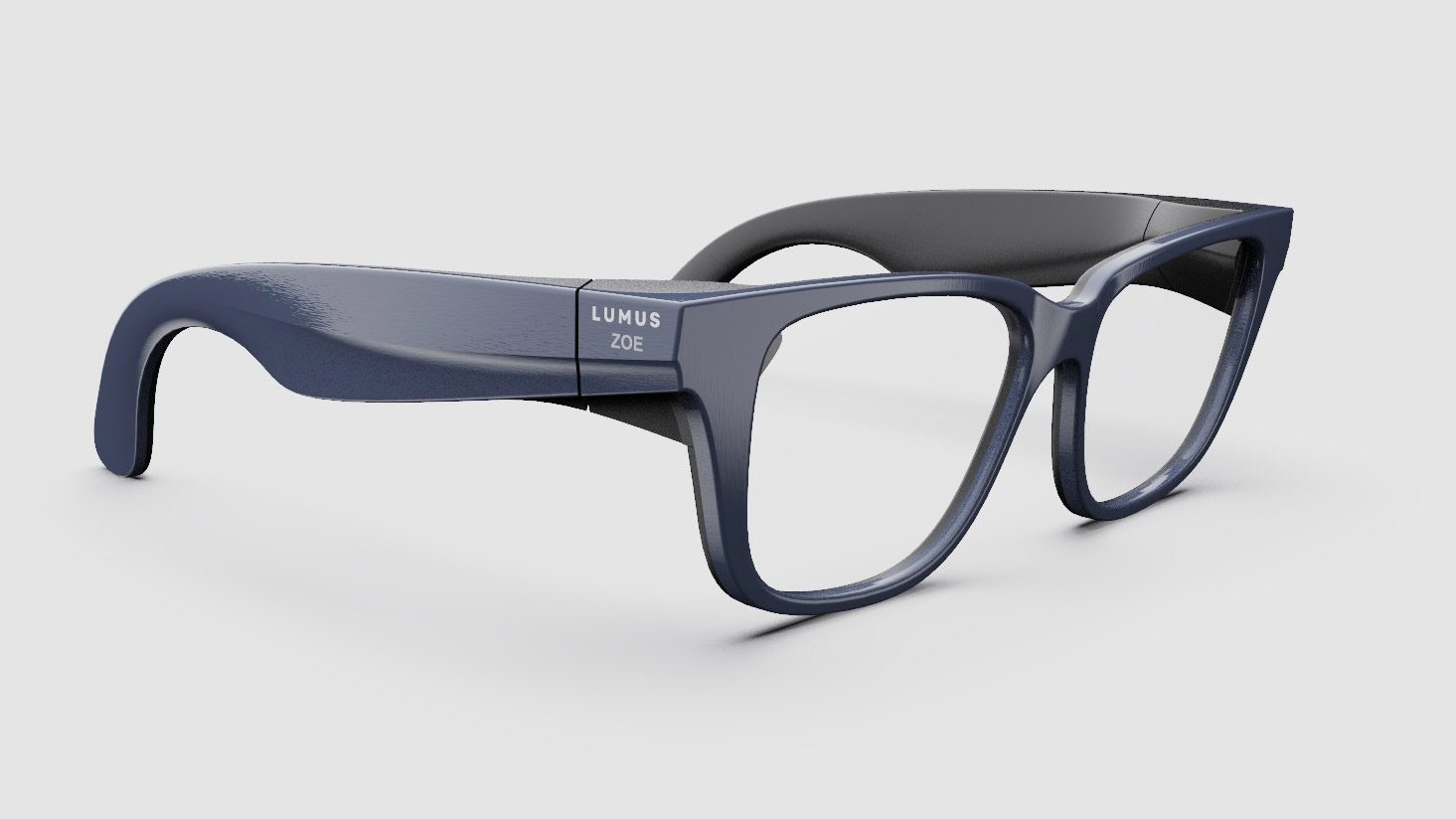
Lumus, the company that developed the waveguide optic used in Meta’s Ray-Ban Display smart glasses, says it has achieved a 70° field-of-view in a new design revealed this week at CES 2026. This conveniently matches the 70° field-of-view that Meta achieved in its ‘Orion’ prototype, but only with the use of novel materials.
The News
Back in 2024, Meta revealed its first AR glasses prototype, codenamed Orion. One of the prototype’s big innovations was its ability to squeeze a 70° field-of-view into such a small form-factor. This was made possible with the use of unique waveguide optics made with silicon carbide, a novel material that enabled the wider field-of-view thanks to its greater refractive index.
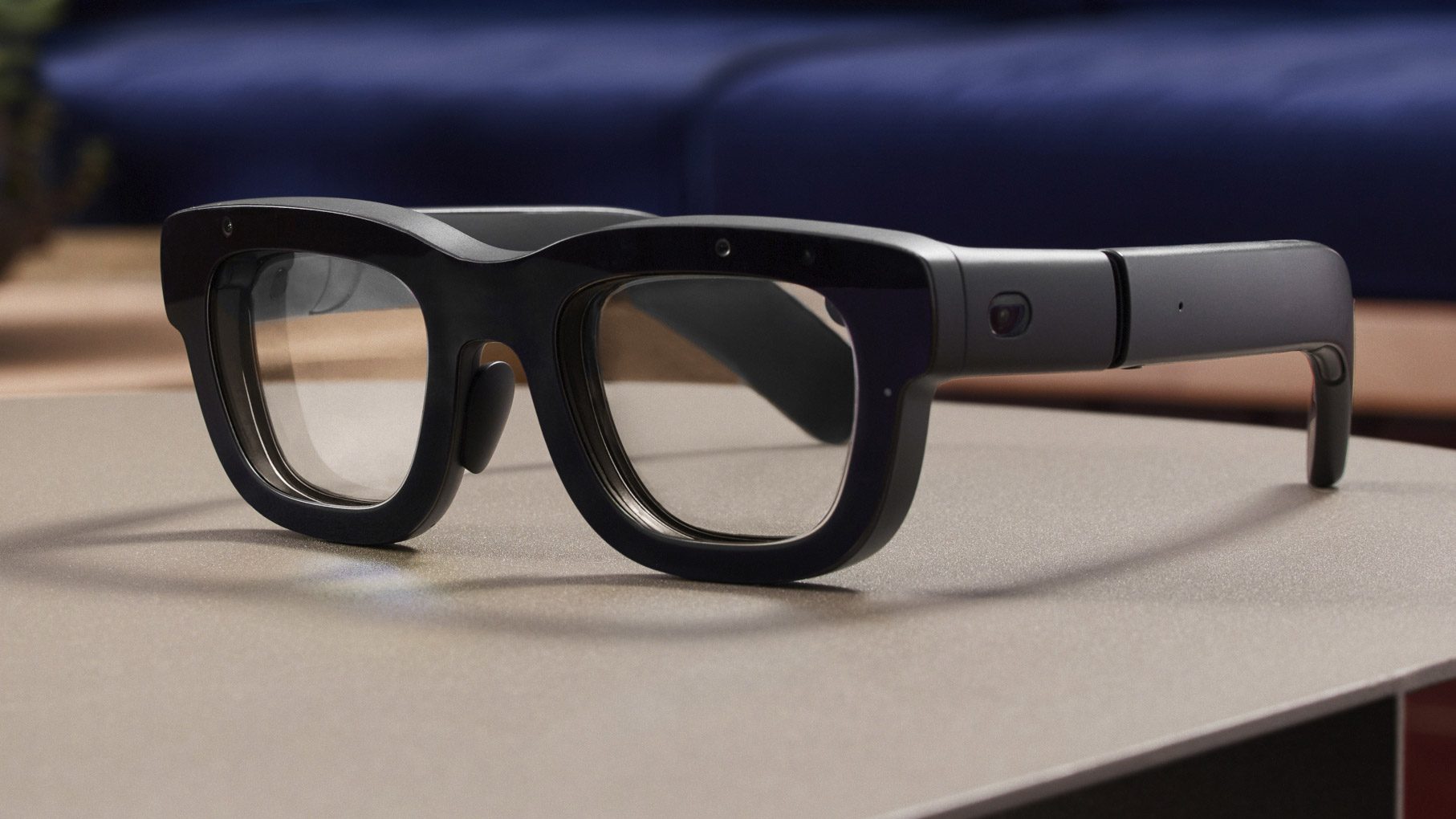
In 2025, Meta talked about the challenges of manufacturing silicon carbide waveguides, affordably, at scale. While the company said progress was being made, it still conceded that the work is ongoing.
“We’ve successfully shown that silicon carbide can flex across electronics and photonics. It’s a material that could have future applications in quantum computing. And we’re seeing signs that it’s possible to significantly reduce the cost. There’s a lot of work left to be done, but the potential upside here is huge,” the company said at the time.
But now Lumus, the company that developed the waveguides in Meta’s Ray-Ban Display glasses says it has achieved a 70° field-of-view in its glass waveguides. The company claims it’s the “world’s first geometric waveguide to surpass a 70° FOV.”
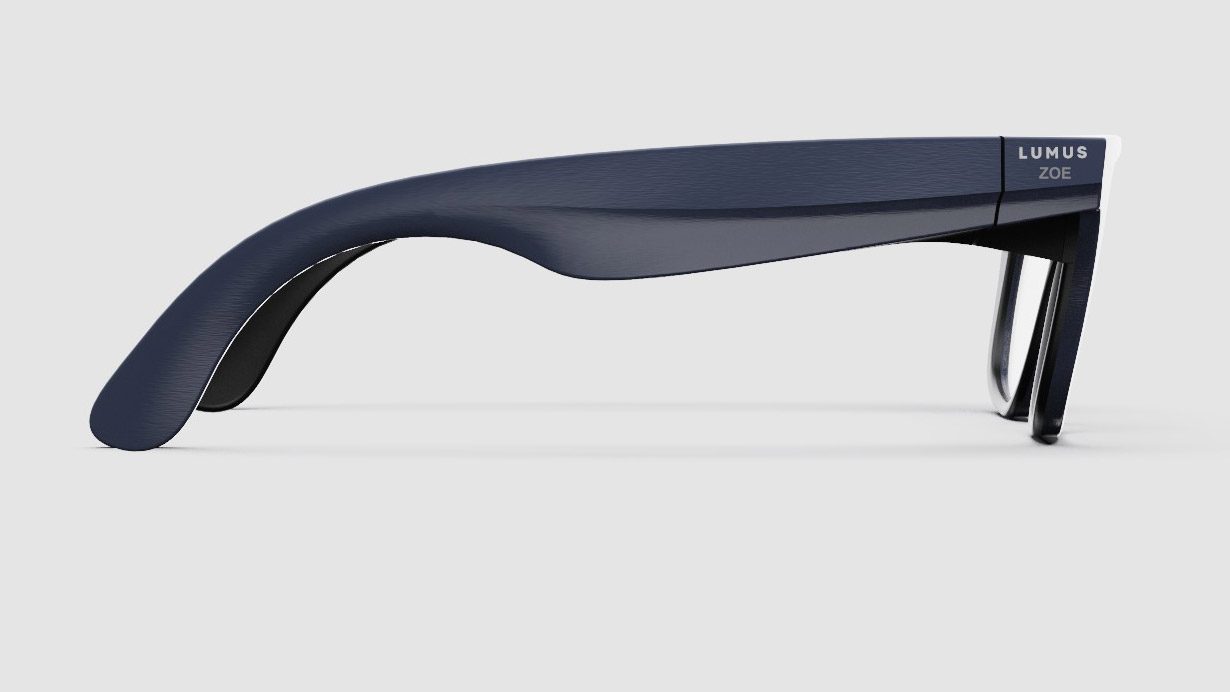
The company announced that it is showing the new ZOE waveguide this week at CES 2026. Renders provided by the company show the company’s latest prototype to include the ZOE optics (though it’s worth noting that Lumus’ prototypes typically do not include on-board battery, compute, or tracking hardware, which would add bulk to any real product based on ZOE).
My Take
My gut tells me it probably isn’t a coincidence that Lumus has been aiming for a 70° field-of-view, which just happens to match what Meta achieved with its Orion prototype. Most likely, the company was tasked (implicitly or maybe even directly) with doing exactly that—proving that its waveguides could reach the 70° benchmark without using silicon carbide.
Beyond simply achieving a 70° field-of-view as a proof-of-concept, Lumus says the ZOE optic is made with the same process as its other glass waveguides. That’s a big deal, because the company has already proven that such waveguides can be manufactured at scale, thanks to the use of its waveguides in Ray-Ban Display, Meta’s first smart glasses with a display.
That means Lumus’ ZOE waveguide is most definitely on the shortlist for what Meta could use in its first pair of wide field-of-view AR glasses, which the company said it hopes to bring to market before 2030.
Granted, field-of-view isn’t everything. When it comes to optics, everything is a tradeoff. Increased field-of-view can impact brightness, PPD, and various visual artifacts. Without being able to see the new ZOE optic for myself, it’s hard to say whether or not Lumus has something truly new here, or if they’ve simply boosted field-of-view by trading other downsides.
I expect I’ll have a chance to see the ZOE optic later this year at AWE 2026 where I usually meet with Lumus to see their latest developments. In the meantime, I’ve also reached out to the company to learn more about how it reached the 70° field-of-view and what tradeoffs it did or didn’t have to make to get there.