LG to Reveal VR Headset Prototype Based on SteamVR Tracking This Week
Valve has confirmed that LG is developing a VR headset that will utilize SteamVR Tracking and, ostensibly, the OpenVR platform.
Valve’s Joe Ludwig talks about the latest updates on the Khronos Group’s VR standardization process that is now being called “OpenXR.” Ludwig says that OpenXR is still primarily creating an open and royalty-free open standard for virtual reality, but that they wanted to plan for the future and eventually accommodate augmented reality as well. In my Voices of VR interview with Ludwig, he talks about the OpenXR standardization process from Valve’s perspective and how they want to see VR become an open of a platform just as the PC has.
HTC announced the new accessories, the Vive Tracker and Deluxe Audio Strap, back at CES 2017 earlier this year but didn’t provide pricing or release date info more specific than Q2. At $100 for each accessory, the pricing falls in line with expectations.
Sony is the first of the big three tethered VR headset makers to drop official PSVR sales figures: 915,000 PlayStation VR headsets sold as of February 19. And it likely could have been more, save for the fact that the device has been surprisingly hard to find in stock, the company says.
Today at Mobile World Congress in Barcelona, Samsung announced the brand-new Gear VR with Controller, with 70 titles coming soon. The controller is said to add a deeper level of immersion, using motion sensors, and an intuitive touch pad and trigger input.
Everyone in the VR industry can envision a world in the next 10 years that’s radically changed by virtual reality. From healthcare, education, social, training, cinema, gaming, and more, VR has a lot of Killer Use-cases. But it seems most of the industry is in agreement that the Killer App—a single, platform-defining piece of software that compels buyers—has not yet arrived. Unity’s Tony Parisi weighs in on how we might come to find it.
It’s emerged that last year’s Star Wars: Rogue One, used existing virtual reality technology – specifically HTC Vive’s Steam VR tracking – to allow the film’s director to compose visual effects shots for the movie. Watch how it was done.
Hardlight VR is a new haptic suit from Nullspace VR that launched its Kickstarter last week. It’s already set to pass its original goal and the team have announced the project’s first stretch goal.
This short but ingenious video snippet from eye-tracking specialists Tobii was built to tease a social VR demo they’ve been working on for GDC next week. It aptly highlights the subtle yet striking enhancements that eye tracking may being to social VR applications.
Danfung Dennis of Condition One has an ambitious vision for the potential of virtual reality, and it’s one of the most radical ones that I’ve come across. He believes that VR can be used as a tool to cultivate compassion through having an embodied experience of witnessing suffering within VR. He says that the process of witnessing suffering can be used as a type of advanced Buddhist mind training to focus your attention, contemplate on your visceral reactions, and grow compassion through taking action. These brief VR experiences have the potential to impact day-to-day consumer decisions that people make, which can taken collectively could radically change the world.
ARM Holdings and Sensormotoric Instruments (SMI) are teaming up at GDC to showcase the potential of powerful mobile GPUs, eye-tracking and foveated rendering technologies in a new made-for-VR demo that will debut at GDC next week.
Valve is increasingly opening its SteamVR Tracking technology—that which powers the HTC Vive’s room-scale tracking—to the world. The royalty-free system requires no permission from Valve to be embedded and launched as part of third-party products. And now one of the final barriers to entry has been removed: anyone can buy the development hardware to begin building products with the tech.
Qualcomm and Road to VR are teaming up to kick off next week’s GDC 2017 with a gathering of VR and AR industry insiders.
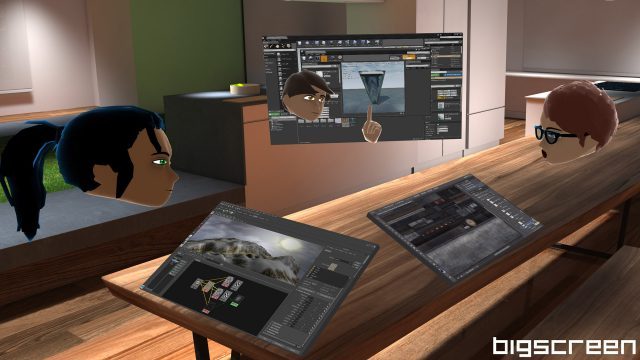
Bigscreen Inc, the company behind the social VR desktop app, Bigscreen, last year told us they’d raised a seed round from “Tier 1” VC firms. Today the company has announced details of that round and where they’re heading next.
Everyone in the VR industry can envision a world in the next 10 years that’s radically changed by virtual reality. From healthcare, education, social, training, cinema, gaming, and more, VR has a lot of Killer Use-cases. But it seems most of the industry is in agreement that the Killer App—a single, platform-defining piece of software that compels buyers—has not yet arrived. Epic’s Nick Whiting weighs in on how we might come to find it.