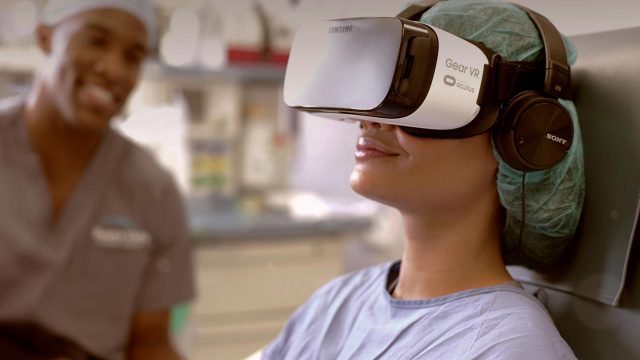
There’s been more than 30 years of research into the medical applications of virtual reality, but it’s not until the recent consumer VR revolution that the technology has been cost-effective enough to use. The research shows that the combination of immersion with interactivity can help to reduce pain up to 70%, and in some studies do as well or better as using morphine. AppliedVR was spun out of Lieberman Research Worldwide, and so they’ve been looking at previous medical VR research, creating new VR experiences, and then doing clinical research studies to prove out the efficacy of using virtual reality to manage pain and anxiety before, during, and after hospital procedures.
I had a chance to catch up with the President of AppliedVR Josh Sackman at the Experiential Technology Conference in May 2016. We talked about how VR can improve the overall patient experience metrics, the clinical metrics that VR could impact, and how VR can create a sense of connectedness, pleasure, and empowerment in patients. We also discuss the future of integrating biometric feedback like heart rate variability as a control input for VR experiences.




 In July, I was invited to give a talk about virtual reality at the bi-annual