
The Graphics Pipeline: Optimizing VR Experiences & Texture Compression

 Stephanie Hurlburt is a low-level graphics engineer who has previously worked on the Unity Game Engine, Oculus Medium, and Intel’s Project Alloy, and now she’s creating on a texture compression product called Basis at her company Binomial. I had a chance to catch up with her at PAX West, and we take a bit of a deep dive into the graphics pipeline and some of her VR optimization tools and processes. We also talk about how to determine whether an experience is CPU-bound or GPU-bound, an open source game engine being built by Intel, the future of real-time ray tracing in games like Tomorrow Children & Dreams, and why she sees texture compression as a bottleneck in the graphics pipeline worth persuing for the future of wireless streaming in VR.









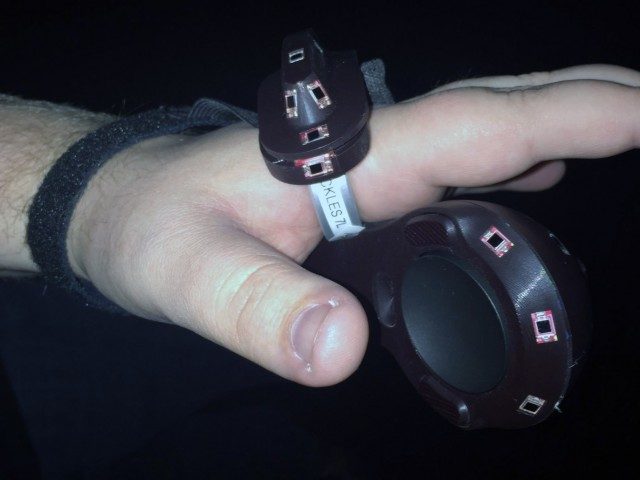
 Valve premiered a prototype of a new type of VR input controller at Steam Dev Days in order to get some preliminary feedback from developers. They’ve created a capacitive-touch controller that is attached to your hand so that you can open and close your hands to mimic the feeling of grabbing a tangible object. They used a modified scene from