
Running Amok in GTA V with an Oculus Rift, a Virtuix Omni and VorpX
What do you get when you piece together a Virtuix Omni VR treadmill, a DK2, and (with help from vorpX) a AAA title like GTA V? Madness. Pure madness.
What do you get when you piece together a Virtuix Omni VR treadmill, a DK2, and (with help from vorpX) a AAA title like GTA V? Madness. Pure madness.
In this video, the US Army demonstrates their proprietary Dismounted Soldier Training System (DSTS), a wearable VR system used to teach troops tactics and teamwork inside a virtual environment. It represents the current state of the art in military VR training, but rapid developments in the commercial VR sector mean it could be obsoleted by your home entertainment system in just a couple of years.
Virtual reality used to be the purview of government funded bodies and the military. Now of course, VR is heading towards a civillian market, albeit with very different R&D goals. So how does the cutting edge in Military virtual reality stand up to todays rapidly evolving entertainment focused VR technology?
Well, you can judge for yourself, as the 4th Joint Communication Support Element at the Air Force Base, Fort Stewart, Georgia demonstrate a typical training scenario using DSTS. The system is described as an “…innovative, out-of-the-box training system designed to be flexible, easily portable and transportable…”. The system can be rolled into use in under 4 hours, and can deliver ‘limitless’ training scenarios.
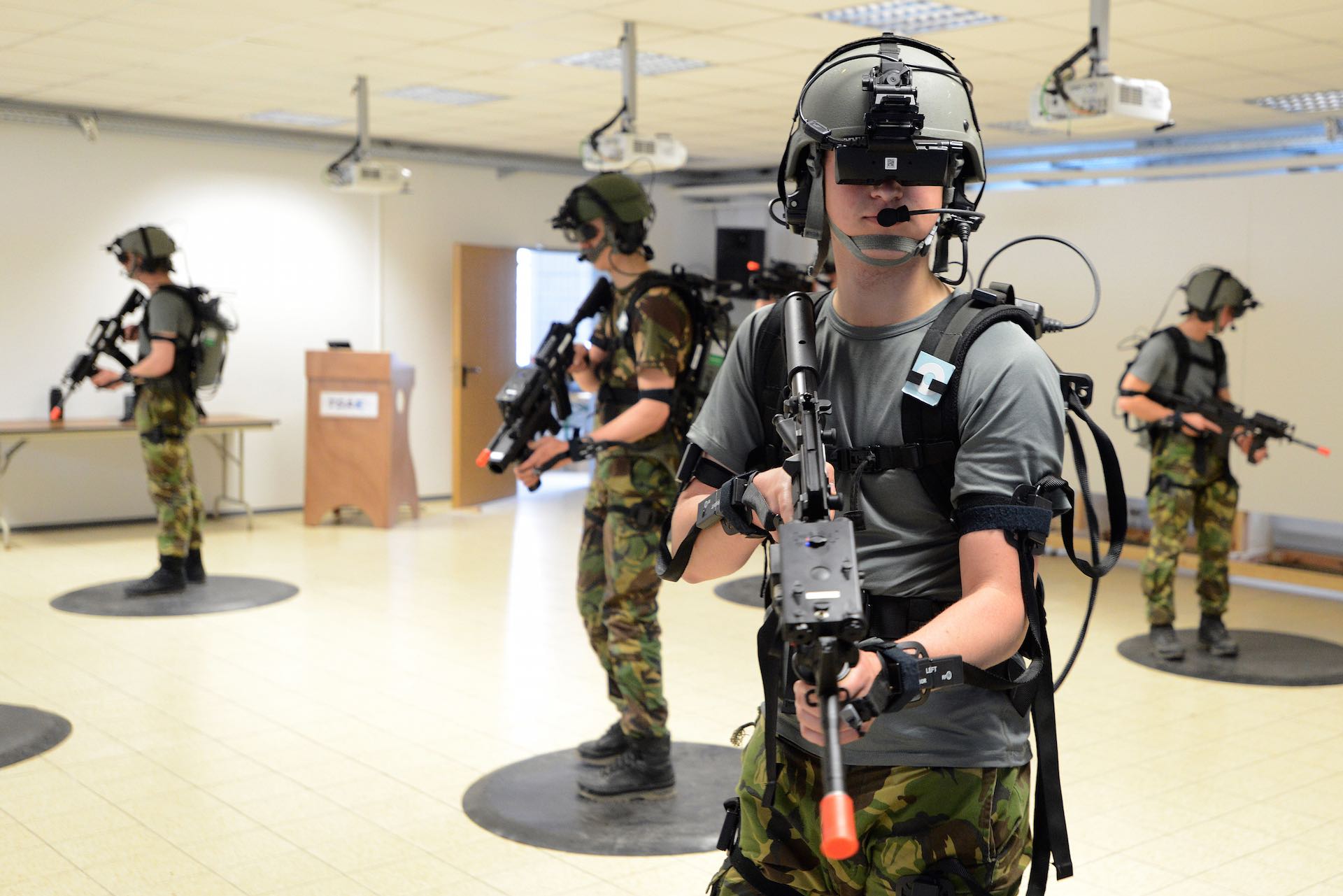
The video was filmed back in 2013, but considering the glacial pace technology evolves in government funded bodies, DSTS represents the cutting-edge in the military sector. Indeed, the system was first openly demo’d to attendees of the oft military focused simulation conference I/ITSEC back in 2011.
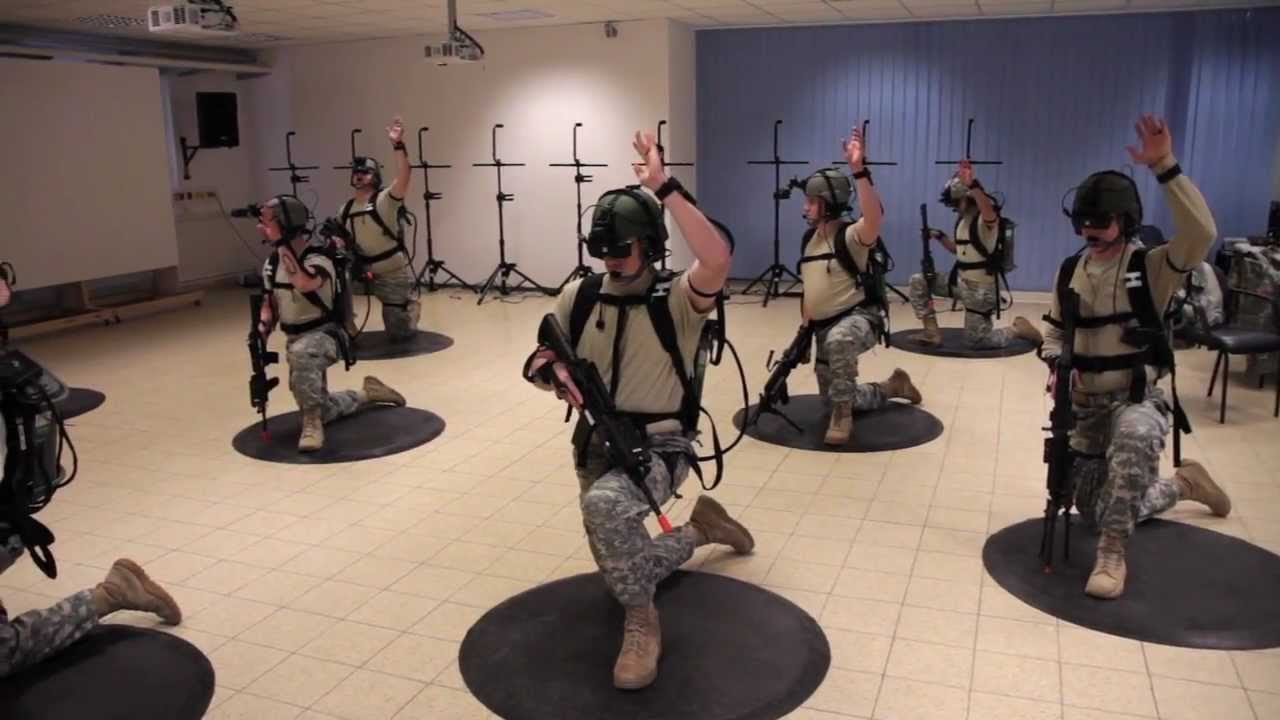
DSTS is a system developed by Intelligent Decisions and apparently represents years of research and millions in development costs. The visuals are provided by CryEngine with processing power delivered via back-mounted computers fed to stereo, helmet mounted displays. Audio is delivered via headphones within the helmet and body rotation and position are tracked by wearable IMUs.
For more on the system, feast your eyes on this painfully stereotypical promotional video.
It’s clearly a neat solution and I can see the instructional power it could potentially leverage for military personnel training. However, it’s indicative of VR’s rapid technical evolution that there are products on their way to market that would allow the average VR geek to build a system not just comparable, but in many ways superior to the DSTS system.
If you chose to build your own DSTS, you have have a surprising range of potential options, most of which could be found on this very website.
For IMU trackers you could opt for YEI’s PrioVR body tracking system or perhaps Noitom Technology’s Perception Neuron solution.

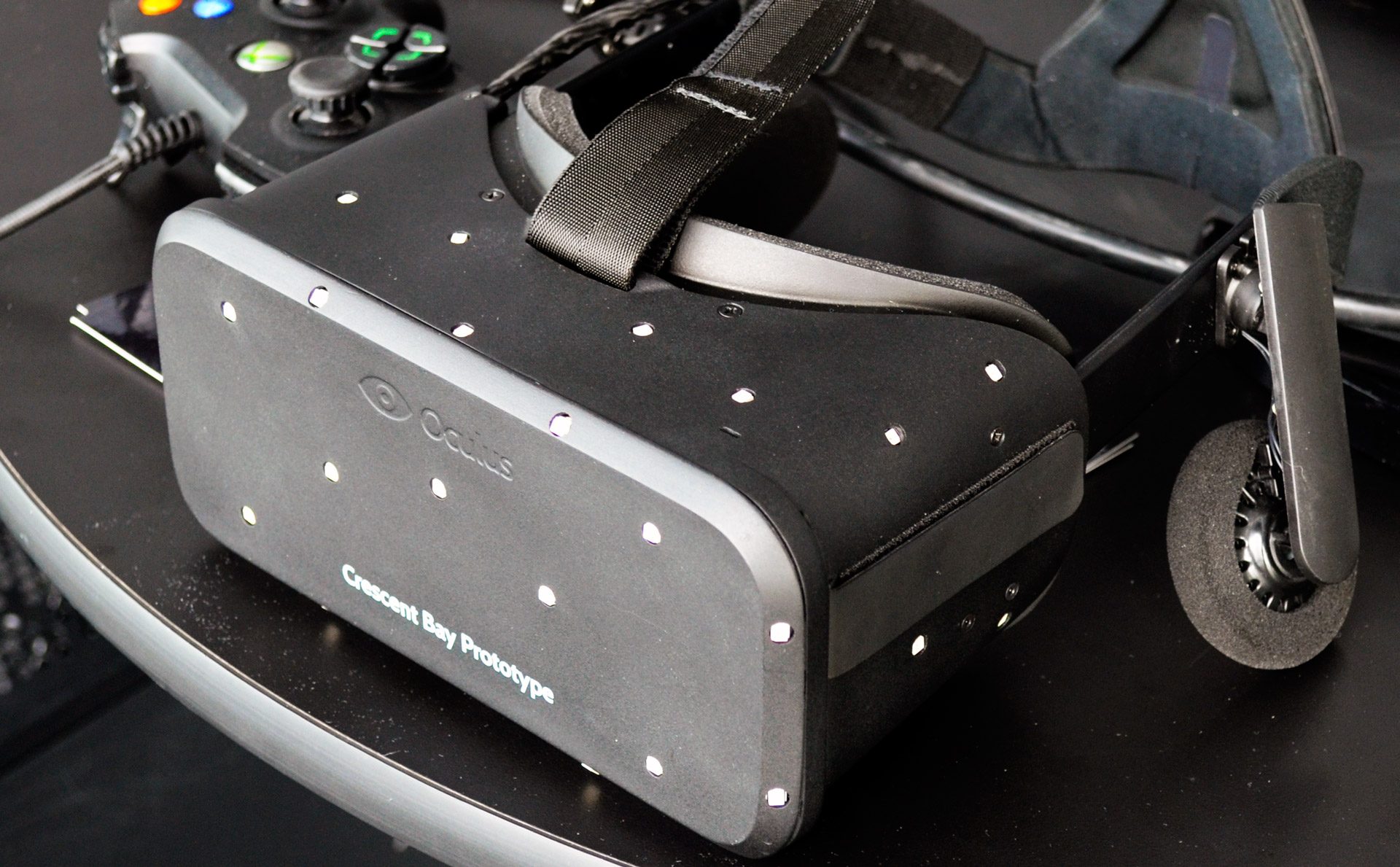
For your HMD, an Oculus Rift Crescent Bay might work or perhaps Valve’s Steam VR system and the HTC Vive, both of which will probably arrive in the next 12 months. And that’s without considering Valve’s powerful and precise room-space tracking system, Lighthouse.
For your weaponry, you’ve got the force recoil delights of HapTech’s (formerly Striker) controller, perhaps utilising a Sixense STEM unit for positional gun tracking.

Throw on a back-top harness for your gaming laptop, plug it all in and you have a system that arguably outclasses the military equivalent. And whilst you could also argue that the majority of these systems are not yet available for the average joe to purchase, this is all coming and soon too.
In short, it looks as if reversal of the traditional gulf between government funded virtual reality and consumer VR is continuing apace. At this rate, the military will be opting to piece their training systems together from the shelves of Best Buy. Oh my, how far we’ve come.
David Cole, Co-Founder of broadcast VR video company NextVR, speaks with Tony Reale from NextWaveDV.com at last weeks NAB (National Association of Broadcasters) Show in Las Vegas about the significance of the company’s use of light fields in broadcast VR video.
Next VR have been pushing at the forefront of broadcast virtual reality video for some time now and their recent announcement that they’re working with light field technology aims to keep them at the bleeding edge.
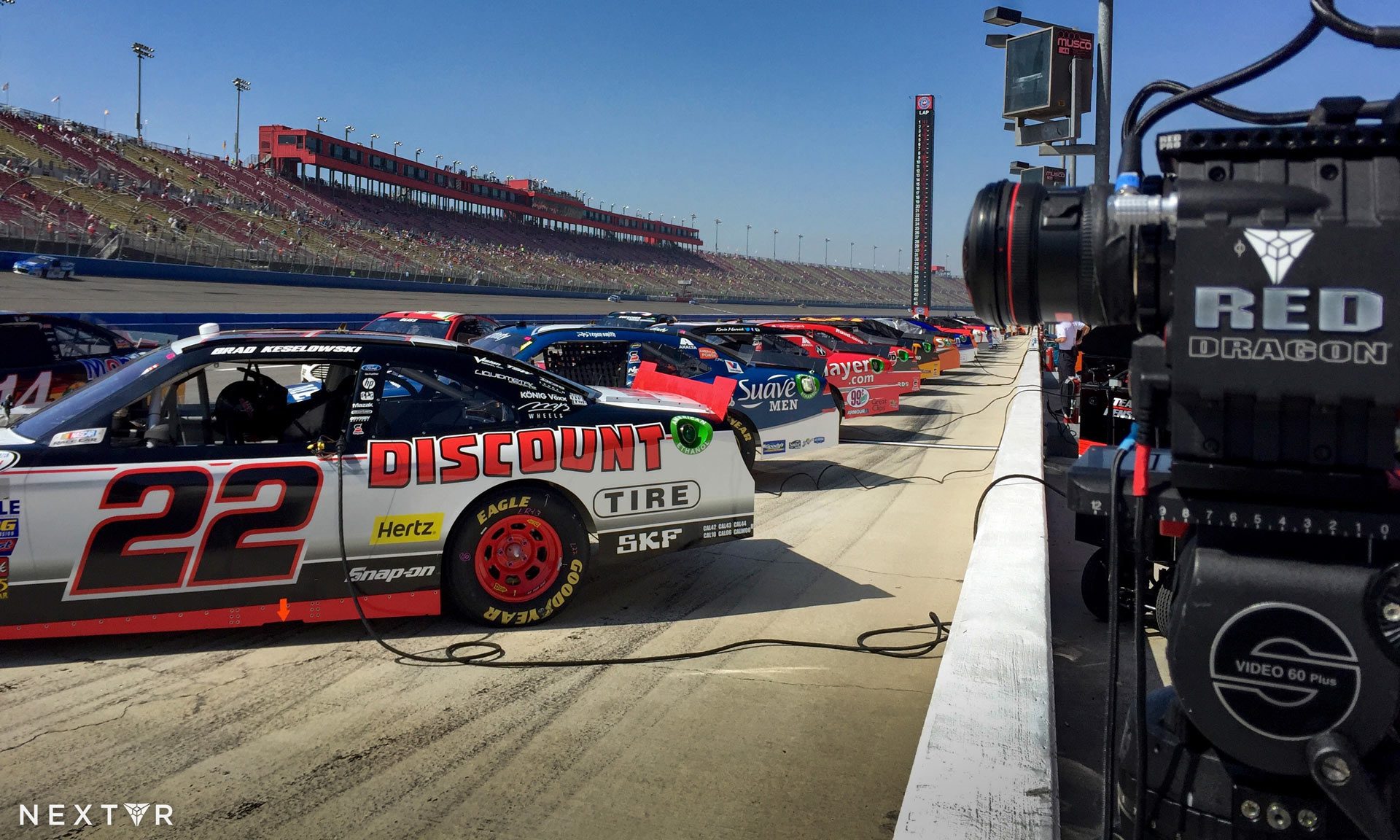
Light field cameras offer the ability to capture the intensity and directionality of light, making them ideal for producing auto-stereoscopic recordings of scenes. In summary, the process allows a viewer to have some degree of ‘peek around’ in a pre-recorded video, for virtual reality this mean positional head movement in 3D videos.
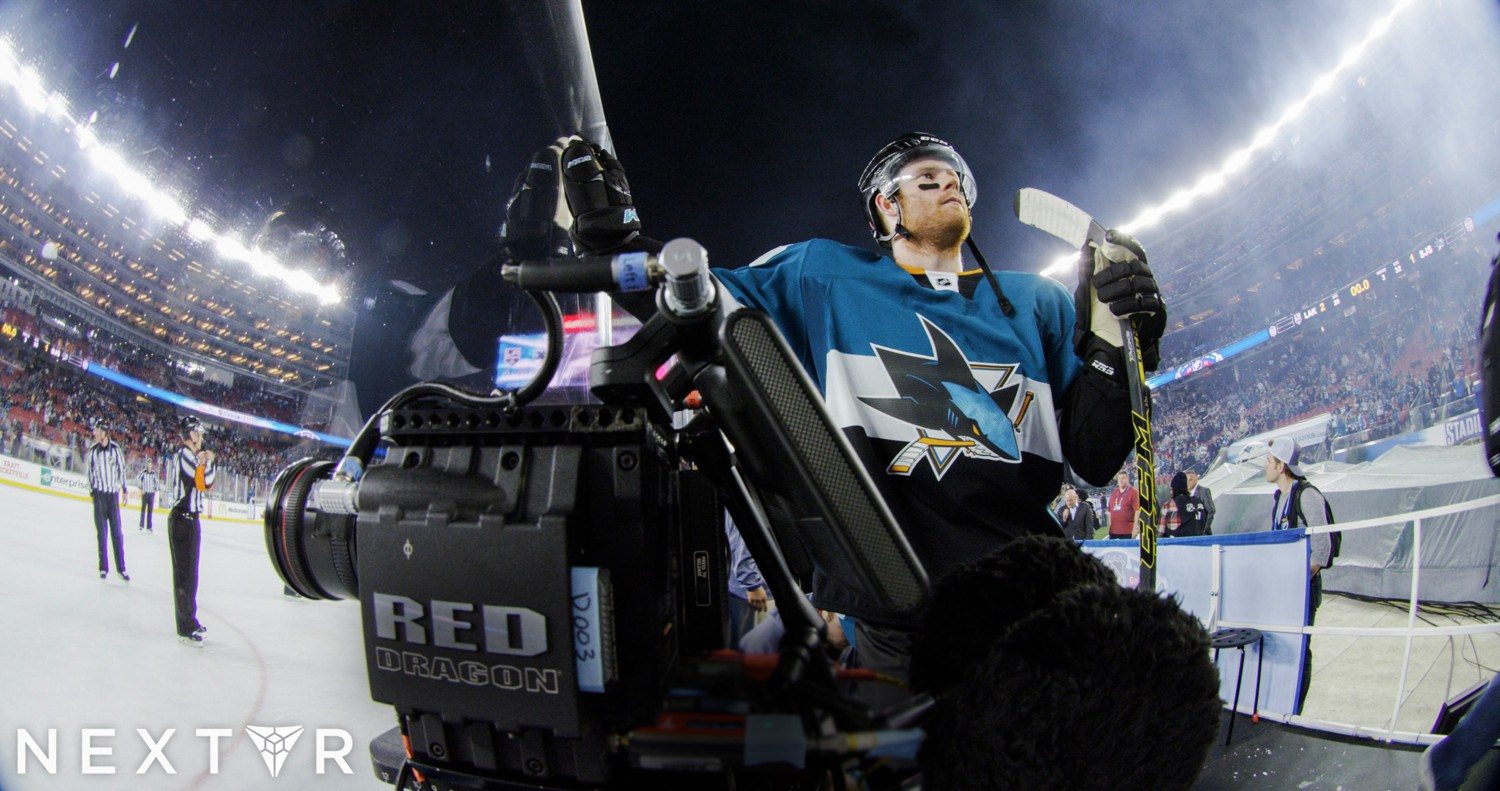
Light fields are important for VR. Not only does it give you a radically different and more immersive experience than static stereoscopic 3D video, it makes for a more comfortable VR video experience. As Cole states “…it gives you a much more accurate model of your head [and neck] … your natural torso and neck and head movements are represented inside the vide which sells presence so incredibly strongly.” and goes on “…we think that once you see it, it’s going to set the bar.”
Our thanks to Tony Reale from NextWaveDV for sharing the interview with us.

Project Cars, the extraordinarily pretty looking, multi-format racing simulation title, may finally arrive next month after a series of delays. Importantly, it will include work in progress Oculus Rift support on arrival.
Project Cars, a racing simulation title with impressively realistic visuals, has been promising virtual reality support for some time now. Unfortunately, after a series of delays, it felt as if it’d never see the light of day.
Happily the Project Cars website has now announced the title will release ‘starting’ May 7th.
After months of intense work on what will certainly be the ultimate racing experience, we’re extremely happy to confirm that Project CARS has now gone gold and will be releasing starting May 7th.”, said Ian Bell, Head of Studio at Slightly Mad Studios. “We know the wait of the game has been long but we’re confident the quality and realism level we have achieved will provide our fans with the game they have all been expecting and we look forward to seeing you on the track.
The Oculus Rift support is work in progress, but is in an advanced state of development. However, before you rush out and part with your hard-earned cash, check this thread detailing current outstanding issues with VR support to decide if it’s for you or not.

While VR on the web is still in its infancy, two new experiences highlighted by Mozilla’s ‘MozVR’ team reveal diverse takes on what kind of VR content will find a home in your browser.

Facebook’s CEO Mark Zuckerberg fielded a number of questions from the community in an hour-long online Q&A session recently, touching on everything from net neutrality to his personal tips on how best to learn Mandarin. The longest answer however came from a solitary question: “What is your vision for Oculus?”
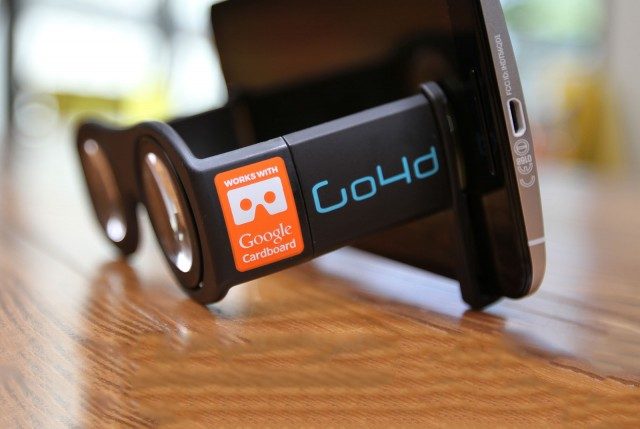
Today Google is taking the wraps off of a new certification program for VR smartphone adapters. ‘Works with Google Cardboard’ will allow Cardboard VR apps to adjust specifically for a given VR smartphone adapter and help users see which adapters are certified for use with those apps.

Google has today announced that it’s acquired two VR companies to add to its growing internal virtual reality team: Skillman & Hackett, the studio behind Tilt Brush, and Thrive Audio.
I met Alex and Kuangwei at Oculus Connect last year, and we had a great time talking about VR video and their company’s vision for the future. Now, they join me on the podcast to share their vision with the rest of the community.

In addition to competing for more than $1 million in prizes, developers can get a little boost during Oculus’ Mobile VR Jam in the form of a $50 credit to the Unity Asset Store.

VorpX, the VR driver that adds Oculus Rift support to your old games has just added support for Rockstar’s GTA V just hours after the game’s PC release.

Today WorldViz has announced that it received a “multimillion” dollar Series A investment from Intel Capital, the investment arm of the famed chip manufacturer. The company wouldn’t specify the exact amount, but says that the money will be used to “advance the development and distribution of WorldViz’s virtual reality applications for the enterprise.”
Reload studios, a development studio comprised multiple members of former Infinity Ward (Call of Duty) alumni, unveiled their multi-player made-for-VR shooter World War Toons at the VRLA Spring Expo last month. The studio, as promised, have released a new trailer for the game .. and here it is!
The trailer is in keeping with the cutesy, aesthetic unveiled in screenshots released last month but if you’re expecting footage revealing detailed gameplay information, I’m afraid you won’t find it here. Still, the trailer was supposedly constructed using pre-alpha assets, which means at the very least we can get a feel for the world and characters.
Reload is planning on a 2015 release date for World War Toons. We’ll keep you in the loop when we know more. In the mean time, take a look at our screenshot gallery from our unveiling coverage to get more insight into what you can expect from the game.


Oculus’ Mobile VR Jam begins today with prizes totaling $1 million. The company is incentivizing the creation of virtual reality games and experiences for the Samsung Gear VR headset, which Samsung built in collaboration with Oculus.