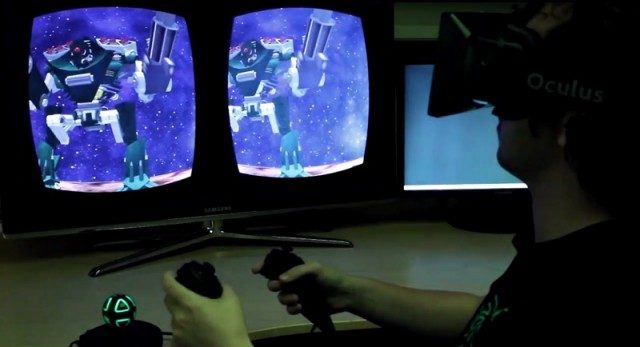
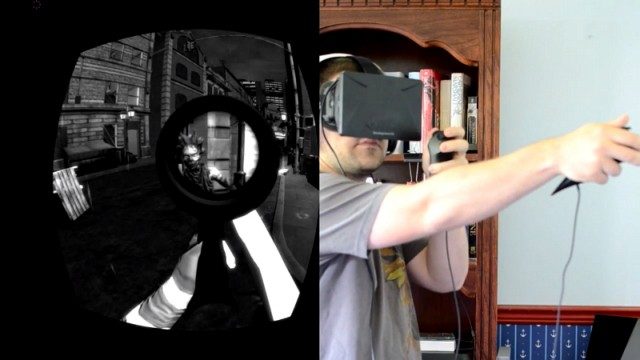
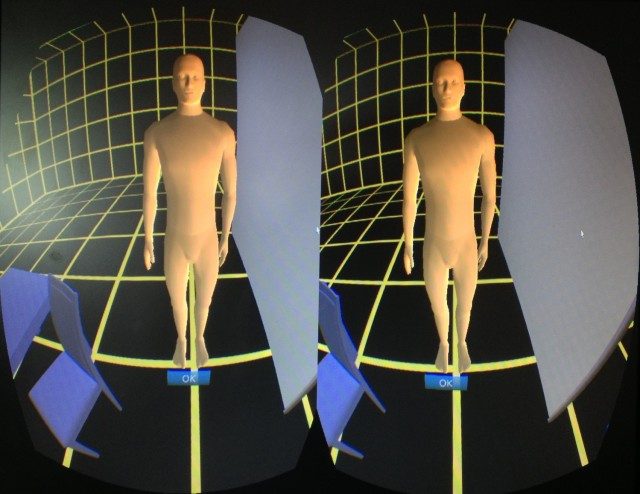
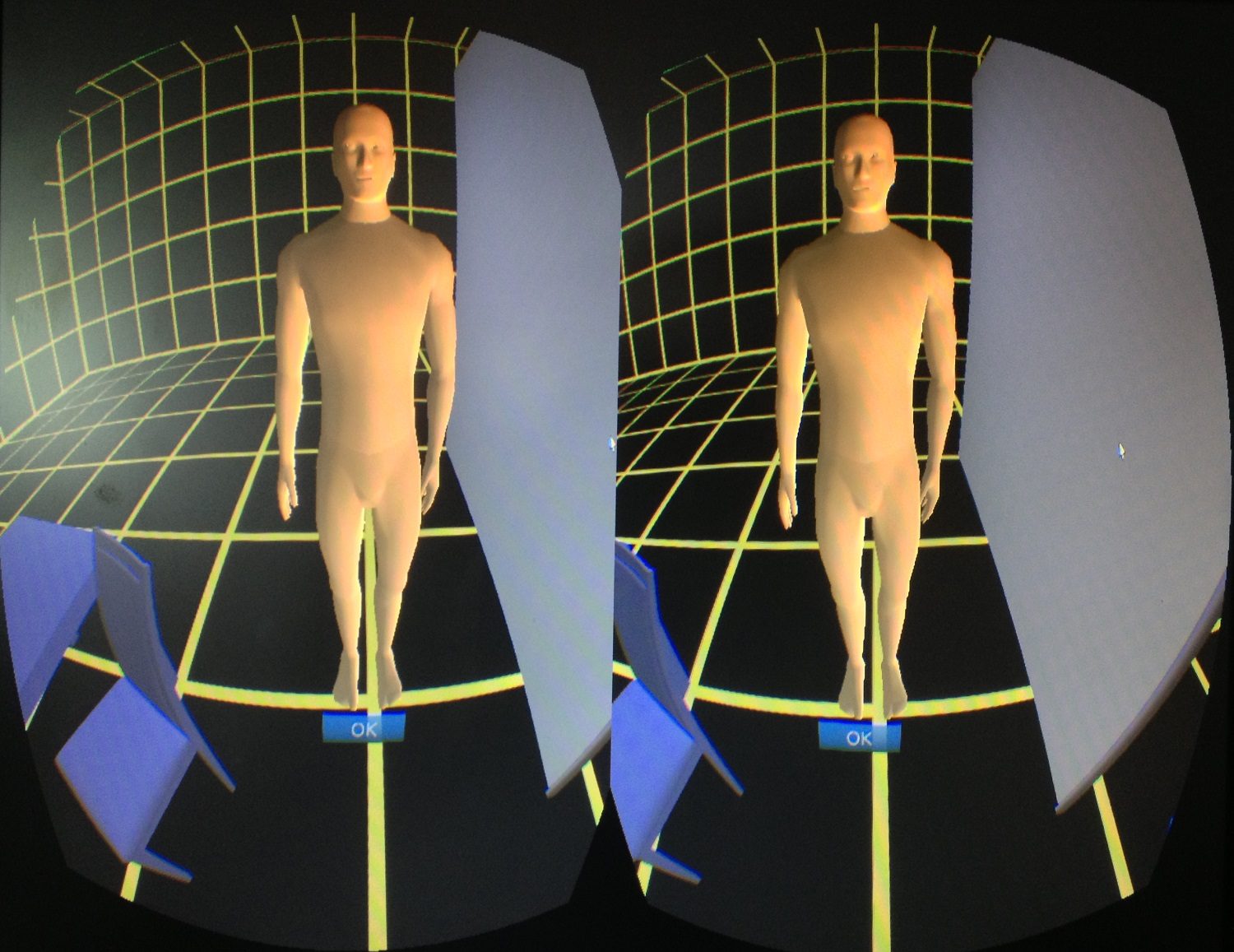
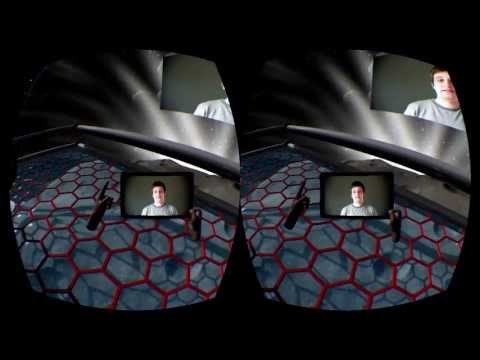
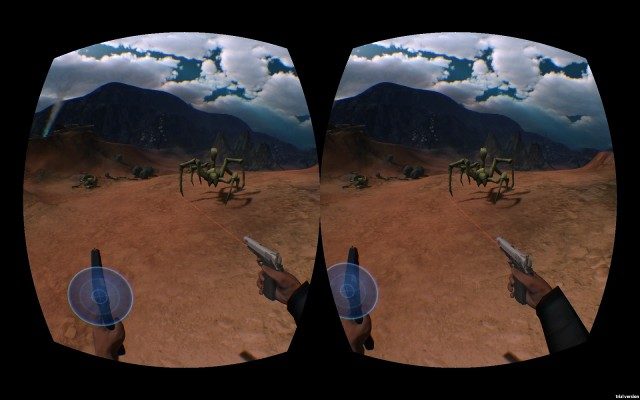
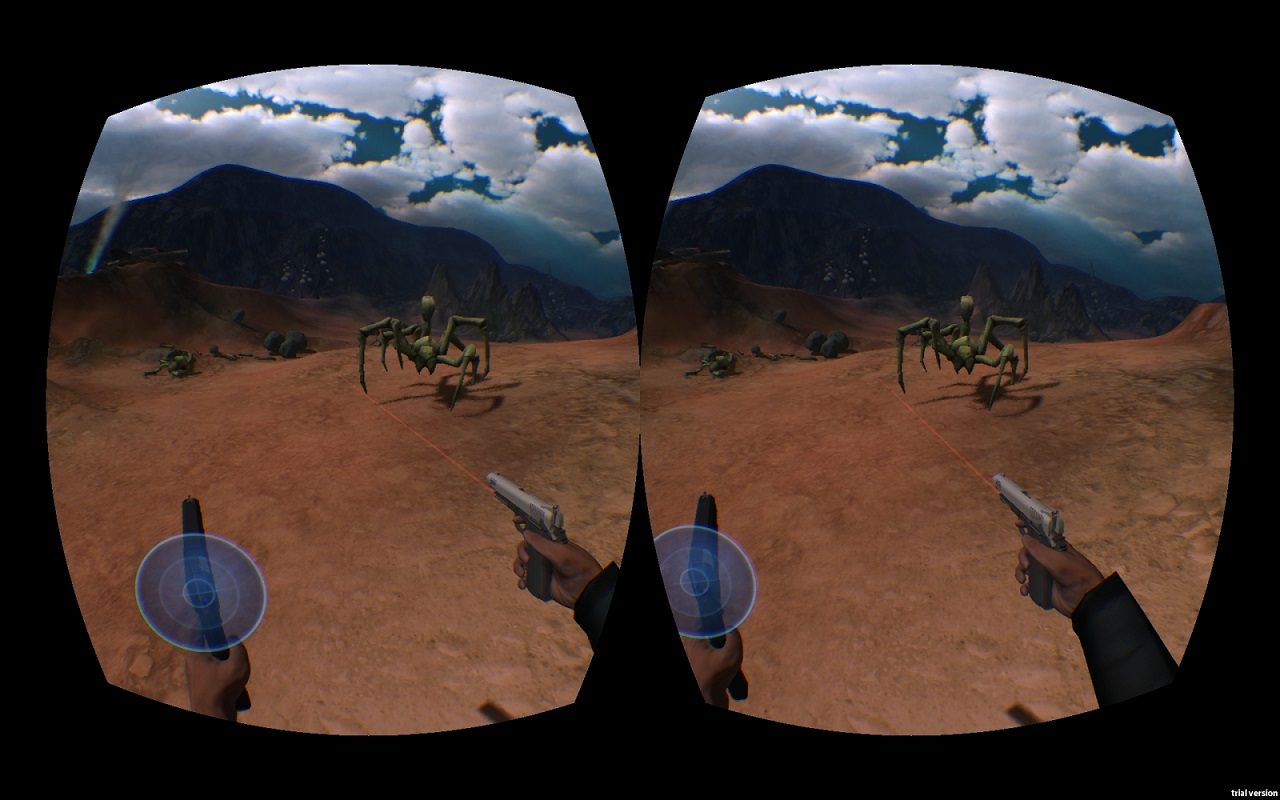
We have one of the first Oculus Rift development kits in house, and spend the day testing it in Team Fortress 2. Watch how this virtual reality head-mounted display works in-game with every available control setting, as Will practices rocket jumping and we discuss the promises and challenges of VR.
Sixense, maker of the Razer Hydra, is about to storm into the software arena with an impressive user-friendly computer aided design program called MakeVR. The software is built from the ground up with Oculus Rift and Razer Hydra support. The combination enables even entirely inexperienced users to make complex 3D models with ease, while at the same time retaining powerful CAD functionality. In addition to trying MakeVR for myself at GDC 2013, I sat down with Sixense’s Simon Solotko and Paul Mlyniec to learn more about this ambitious project.
Sixense is launching a Kickstarter campaign this month and they hope to use the funds to cram as much user-friendly functionality into the software as possible. They intend the end result to be a collaborative CAD environment that functions on natural interaction and is easy enough for the novice, but powerful enough for the master.
The smooth, intuitive control that you see above is not concept footage, it’s exactly how MakeVR works.
I used an alpha build of MakeVR at GDC 2013 with the Razer Hydra and a 3D HDTV. After a 30 second training session, I was easily navigating the design space, manipulating objects, and scaling to my heart’s content. Having depth-perception and independent 1:1 hand controls makes for an instantly natural experience which relieves the need to even grasp an X/Y/Z coordinate system.
When I saw what was possible with MakeVR I knew that Sixense was onto something — for a younger audience this will be like unlimited virtual Legos on steroids, except with the ability to share your imaginative creations with a worldwide audience (and without the $50/kit price tag).
For someone like myself — who has zero CAD experience — MakeVR suddenly opens up to me the possibility of building complex 3D models that would have formerly required software that was too expensive and complex to manage.
And for the advanced user, Sixense says that MakeVR is ready to make both 3D printing models (thanks to .stl exporting) and detailed virtual goods which could be distributed in other games. MakeVR can import models from other software and uses the industry standard .sat file format.
Another exciting possibility is for those working on virtual reality games for the Oculus Rift. To make 3D models you’d currently need to work outside of the Rift in a normal modeling program, then drop your models into the game and put the Rift on to see how they look to scale and in 3D. With MakeVR you could work directly with the medium in which the model will eventually be used.
MakeVR Made for Head Mounted Displays
MakeVR Head of Development, Paul Mlyniec, told me that using MakeVR with a head mounted display like the Oculus Rift is the quintessential usage of the software. While it’s natural enough using the Razer Hydra to manipulate and build models on a monitor, adding a head mounted display makes it feel like you are reaching out with your own hands — not unlike the Oculus Rift ‘Tuscany’ Razer Hydra demo.
“[MakeVR is] designed very much with head mounted displays in mind… you see from the tool panel that you have all the control that you need — you’re never groping for a mouse and keyboard — everything is self contained, and expected that [the software] is going to take over all the senses of the user,” said Mlyniec.
GDC 2013: Sixense MakeVR Interview
I had the chance to sit down with two folks from Sixense who are leading the MakeVR project — Product Manager, Simon Solotko, and Lead Developer, Paul Mlyniec, to learn more about the project:
At GDC 2013 I spent some time with the folks from Forth Dimension Displays, maker high-end microdisplays. The company’s CEO, Greg Truman, told me in an interview that they were at GDC mainly to evangelize VR. To that end they brought with them the NVIS SX60, a $15,000 head mounted display which uses their microdisplays. Inside was Half Life 2 in full 3D — when I put on the SX60 my first thought was, ‘I can’t wait for the Oculus Rift to have this kind of resolution!’
Had I known how much the SX60 cost before putting it on, I probably wouldn’t have touched it for fear of the ‘break-it, buy-it’ policy. This is a hand-built head mounted display made for research, military, and other high-end uses — not for consumer VR. As they say, ignorance is bliss.
Attached to the NVIS SX60 was an IntertiaCube IMU for head tracking. Inside was a retail copy of Half Life 2 with 3D drivers. When I put on the SX60 I was looking at the plaza scene from early in the game (before you get any weapons). The head tracking was tight and the 3D was great. I strolled around the scene with a controller. The guards in the plaza threatened me with their stun sticks as I approached — it’s bit more menacing in an HMD than on a screen a few feet away.
The 1280×1024 (per eye) resolution was excellent, the scene was very sharp. The moment I put on the SX60 I was thinking that I can’t wait for the Rift to achieve a similar resolution.
Not only was the resolution good, but there was no ghosting at all (blurring during movement) thanks to a very fast switching rate. The display technology in use, Liquid Crystal on Silicon, doesn’t use subpixels, opting rather to stack short pulses of color on top of one another. This means there’s no ‘screen door effect‘, however I did see a bit of color fringing when turning my head — but it’s a more than fair price to pay for the elimination of ghosting.
The 60 degree field of view doesn’t stack up to the Oculus Rift, however it isn’t limited by the display, it comes down to the optics. In the case of GDC, Forth Dimension Displays decided to bring with them an HMD that was quick to put on, like the NVIS SX60. HMDs with a higher field of view tend to be more bulky and have longer set up times not suitable for a demonstration environment.
Stretching out the 1280×1024 resolution over a larger field of view would reduce the clarity of the screen. However, Forth Dimension Displays has a remedy for that — their latest microdisplay has a whopping 2048×1536 resolution. That’s over 3.1 million pixels crammed into a 0.83 inch diagonal, putting the DPI off the charts at 3084.34!
The company told me that, at scale, they believe a VR headset could be sold with their latest display for $1500 — a price point which they think will represent the high-end consumer virtual reality enthusiast market if VR makes it mainstream.
At GDC 2013, I sat down with Greg Truman, CEO of Forth Dimension Displays, for a chat about the future of VR. Truman believes that the time is right for virtual reality. He told me that right now is “the best opportunity ever to get consumers wearing head mounted displays.” Forth Dimension Displays works primarily in high-end microdisplays for military and research industries which come with a suitably high-end price. The company was not really at GDC 2013 to sell their product. Instead, they were there to help evangelize VR in the hope that, this time, it will break into the mainstream. Truman told me he loves what the Oculus Rift folks are doing and hopes they succeed because it has the potential to benefit everyone in the HMD market.
At GDC 2013, the legendary Michael Abrash took to the stage to talk about the Oculus Rift and virtual reality. Abrash, now working at Valve, has been researching augmented and virtual reality technology for the company. When he began his talk I thought he was discouraging virtual reality because of the many problems that need to be solved for a truly perfect VR experience. However, as he continued, I realized that he was actually being encouraging — he sees the problems ahead as challenges ripe to be solved by eager developers; this is an opportunity to define the future of gaming. Keep your eye on his blog for more on VR from Abrash.
Updated (4/1/13): Added videos in middle of presentation.
Michael Abrash’s GDC 2013 Presentation: Why Virtual Reality is Hard (and where it might be going)
Good afternoon. I’m Michael Abrash, and I’m part of the group working on virtual reality at Valve. Today I’m going to share as much of what we’ve learned as I can cram into 25 minutes; I’m going to go fast and cover a lot of ground, so fasten your seat belts!
17 years ago, I gave a talk at GDC about the technology John Carmack and I had developed for Quake.
That was the most fun I ever had giving a talk, because for me Quake was SF made real, literally.
You see, around 1994, I read Neal Stephenson’s Snow Crash, and instantly realized a lot of the Metaverse was doable then – and I badly wanted to be part of making it happen.
The best way I could see to do that was to join Id Software to work with John on Quake, so I did, and what we created there actually lived up to the dream Snow Crash had put into my head.
While it didn’t quite lead to the Metaverse – at least it hasn’t yet – it did lead to a huge community built around realtime networked 3D gaming, which is pretty close.
Helping to bring a whole new type of entertainment and social interaction into existence was an amazing experience, and it was all hugely exciting – but it’s easy to forget that Quake actually looked like this:
At GDC 2013 I met with the good folks from Sixense, makers of the Razer Hydra controller. They put me into the Oculus Rift and loaded up the Tuscany demo (built in Unity). This particular version of the demo has full Razer Hydra support, thanks to Sixense. Scattered around the space is a myriad of physics-driven objects to interact with — and damn is it fun! The combination of the Oculus Rift and the Razer Hydra is potent and incredibly immersive. The Tuscany demo, infused with support for the Razer Hydra, is hands-down the most fun I’ve had in virtual reality yet.
The Oculus Rift and Razer Hydra Are a Winning Combo
If you intend to develop for the Rift and haven’t jumped on the Razer Hydra bandwagon yet, I highly advise that you do so (don’t miss their current sale).
Interacting with the Tuscany demo using the Razer Hydra was not only natural — it was fun! Reaching out and touching objects with your own virtual hands is miles more immersive than using a keyboard and mouse. You can do things with the Rift and the Hydra that you simply can’t do with a monitor and traditional input.
The moment that really sold me was when I tossed a basketball up into the air above my head (see 3:35 in the video). I threw it in a way that the trajectory of the ball would have it landing somewhere slightly behind me. My natural reaction was to look at the ball as it was coming down, lean back, and grab it — and that’s exactly what I did. I didn’t have to think to myself, ‘how do I need to move the controls in order to do what I want to do,’ I simply followed the ball as it flew through the air, reached up behind me, and plucked it out of the air.
I was blown away the moment I caught the ball and realized what had just happened. The immersion that comes from the Rift and the Hydra is extremely impressive and vividly promising. The barriers that separate humans and computers are falling away before our very eyes.
A Visit to Tuscany
There was more to the Oculus Rift Tuscany Razer Hydra demo (we’re going to need a shorter name) than the basketball. There were plenty of objects: books, chairs, logs, barrels, etc. Interacting with things felt incredibly natural.
Picking up a book and bringing it close to your face to see detail was really cool. With a book in my hands I couldn’t help but want to open them to see the pages inside — something Sixense says they would have added given more time. Also exciting was the ability to hold out your finger using one of the Hydra’s buttons and trace a line from the cover art on one of the books; the accuracy is quite impressive (0:45 in the video).
Maybe it was that I was tossing heavy barrels hundreds of feet like a superhero, but throwing objects was immensely fun. At first I was releasing objects just a bit too soon, but eventually I got the hang of it and was launching objects clear off of a cliff into the sea below. I nailed the underhand volleyball serve on my first try which was quite satisfying (7:11).
You can easily grab two objects at the same time, or pass and object back and forth between your hands as you manipulate it. There are clear implications for gameplay here: being able to do something with one hand while doing something entirely different with the other hand is natural and useful. Examples that come to mind include holding a flashlight in one hand while pushing open doors with the other, holding a magnifying glass while inspecting an object, hooking two interlocking pieces of something together to form a key or other useful object, or loading shells into a shotgun.
The Tuscany Razer Hydra demo is absolutely the most fun I’ve had yet with virtual reality. Soon, game developers will be wrapping these new natural interactions in compelling narratives and enticing gameplay and I can’t wait to step into those experiences. This is an extremely exciting time to be a gamer!
Sixense tells me that they intend to release this demo to the public in due time — more on that as we hear it.
Joe’s daughter enjoys stepping through the Tuscany demo using the Oculus Rift.
Oculus Rift Developer Kits are finally arriving at people’s doors. The first 300 units are either on their way or have already landed. One of the earliest recipients of a kit and seemingly the first to publicly announce his new arrival, has torn himself away from his new prize long enough to talk to us about himself and his first few hours with the Rift.
The first few early Kickstarter backer have begun receiving their Oculus Rift Development kits. We collate initial impressions and early arrival screenshots. As if that weren’t enough, Oculus has finally opened the virtual doors to it’s online Developer’s Area, we take a peek.
Looking for a 5 minute ‘interview’ montage about the Oculus Rift? You won’t find it here. I sat down with Palmer Luckey (Founder) and Nate Mitchell (VP of Product) at GDC 2013 for an 18 minute chat about the Oculus Rift.
For those of you who shared your questions on Reddit, I do apologize that I wasn’t able to include all of them in the interview. There were some 130 comments on the thread and there’s no way I could use them all! But I do thank you for contributing and I incorporated those questions where I could.
You may be interested to know what lengths we go to in order to get you this precious Oculus Rift news out of GDC 2013; to get this video out to you today I stayed at the conference hall, long after everyone had cleared out, to get the necessary bandwidth to upload the video:
Stay tuned for more Oculus Rift coverage at GDC 2013!
We take a look at a new, Kickstarter-funded title from indie developer CloudHead Games that promises not only to support the Oculus Rift but to actively develop the core experience around it. In the game’s first Kickstarter update, Denny Unger, Creative Director at CloudHead Games, demonstrates how the Razer Hydra motion control peripheral might be used to further enhance immersion.
Peripheral manufacturer Razer has launched a sale offering 50% off its motion controller the Hydra through April 25th. Oculus included the promo in its latest email update and indicates the promotion was organised in association with them, presumably to coincide with GDC 2013. The Razer Hydra offers 1:1 positional tracking of hands and is quickly becoming the go-to peripheral for virtual reality gaming.
The Razer Hydra has been used to great effect with in-development virtual reality games like Project Holodeck and Armored Ops. With the controller, developers can easily integrate 1:1 hand tracking. Each controller has a thumbstick and buttons on it as well, meaning you get the benefits of hand tracking without taking away the fidelity of traditional inputs. This makes the Razer Hydra a highly flexible peripheral for virtual reality interaction.
A little while back I had a chance to test out Project Holodeck, an immersive multiplayer virtual reality game that a team at USC is working on. the Razer. In the game you can grab a virtual joystick to fly an airship, swing swords, wield guns, and shoot cannons — all thanks to the Razer Hydra. The experience of naturally interacting with a VR game world with my hands, instead of just tapping buttons or moving thumb sticks, was a significant factor in immersing me in the game. You can see our time in Project Holodeck here:
Oculus have announced that Oculus Rift developers will enjoy ‘Day One’ support from Epic Games’ ubiquitous Unreal Engine 3. Not only that but early adopters will also be able to jump straight into developing for free with the company’s UDK (Unreal Development Kit).
The Oculus Rift is at GDC 2013 this week. Earlier today I met with the Oculus team and got to test out he developer kit with the brand new Hawken, TF2, and DriVR and more. I also sat down for an interview with Oculus’ Palmer Luckey and Nate Mitchell which will come in due time. For now, take a look at the latest Oculus Rift demos:
The first thing you’ll notice when you put the Oculus Rift developer kit on your head is the low resolution. The second might be the ghosting that occurs when you rotate your head. This is, by all accounts, a developer kit that is not made for consumers. Oculus has said this time and again, and I want to reiterate it here. However, I have to say that once you start to move around, you lose sight of the ghosting and the low resolution and you start to become immersed in the world.
Both of the above mentioned ills will almost certainly be cured for the launch of the Oculus Rift consumer version; the company is well aware of which direction the hardware needs to go. The good news is that the developer kit should be sufficient for devs to get a head start on Oculus Rift development and — dare I say — even at this point it’s quite possible to have fun with the Rift.
Hawken
Today was the first day that the company demoed Hawken with the Oculus Rift. They dropped me into a map populated by bots. Around you is a highly compelling and immersive cockpit. The Hakwen team has built out a 360 degree cockpit. The back of it behind your seat is understandably dull, but the controls up front make you want to reach out and touch them. I can already see someone building a cockpit simulator for Hawken and the Rift. When I looked down I was confused to not find my own two legs; it seems like they should just be there, because your brain is telling you that you’re inside the cockpit of a mech.
In front of you is the game world, but you are protected from it by the glass of the cockpit. Scratches on the glass give an incredible sense of depth. It really looks like that windshield is a few feet in front of you. To the right and left you can see your mechs arms/weapons. Also on the right is some dust on the glass that, again, really drove home the depth effect.
I started cruising around in my mech and shooting at enemies. There’s no reticle at the moment, but it was easy enough to feel where your weapons would land. I’m thinking that a virtual HUD (fighter pilot-style) projected onto the mech’s windshield might work really well for Hawken.
One fun thing to do was to fly up as high as possible, look straight down, and then drop to the ground. Not only do you get a satisfying ‘smash’ into the ground, but the feeling of actually falling is nearly present.
Combat wasn’t significantly more compelling than vanilla Hawken, but the sense of depth definitely helps immerse you into the game. A pair of surround-sound headphones and some careful sound design to complement the VR visuals would make for an incredible experience.
After about 10 minutes in Hawken I started to feel a bit dizzy. I took the Oculus Rift off for a minute or two before jumping into the next demo and fortunately the feeling didn’t return for any of them. It seems some games might be more prone to this than others.
DriVR
DriVR is a virtual reality racing game that Oculus put together in Unity with some pre-made assets. Although it’s just a tech demo, it’s damn fun. Maybe more fun than Hakwen… that said, I only played for a few minutes. Part of the fun might have been from the force-feedback wheel that Oculus had me using.
In the game you are sitting in the driver’s seat of a red car. There’s almost no HUD, but if you look glance up through the big sunroof, you’ll see a virtual clock which I imagine will be used for lap times.
The car was placeholder art and had nothing more than a bland steering wheel inside. There’s obvious promise of how cool it would look to be inside once it is fully developed with gauges, pedals, and levers.
In the game you just cruise around and drift through turns with ease. After a few crashes into the wall, I got the hang of the drifting and it felt really cool to fly around the turns just right. I really hope that they continue to work on DriVR for the Oculus Rift!
Team Fortress 2
I didn’t have a chance to play TF2 myself, though I watched a few others take a stab at it. The control scheme looked like it would take some getting used to. Valve has programmed some 8 or so experimental control schemes so finding your ideal one might be part of it as well.
The game is what you expect out of TF2 except you are inside of your character. Valve still has some things to fix and update, such as preventing a third-person view when the player dies (as it can cause some weird feelings to suddenly be yanked out of first person). Valve is known to issue tons of updates to TF2 though so it’s likely that we’ll see continuous tweaks.
Epic Citadel
Epic Citadel has been shown before. It is the Unreal Engine showcase and although I spent the least amount of time in it of any of the demos, it left me wanting much more.
The game is much slower paced than the other demos. Instead of boosting around in a mech, cruising around in a car, or rocket jumping in TF2, you are slowly strolling around a detailed medieval castle. Snow falls around the landscape and each flake is a discernible distance from you thanks to the great 3D.
As I wandered down a slim alley, I looked up toward the enclosing buildings and really felt their scale. It wasn’t that they were extremely tall or anything, but the tops of the buildings actually felt far above me. The towering chapel gave the same great effect.
I can’t wait to see someone turn this space, or a similar one, into a puzzle/adventure game. The methodical exploration of a detail environment like Epic Citadel could be the first big thing for virtual reality gaming with the Oculus Rift.
In another update to Oculus Rift Kickstarter backers, Oculus have announced that a 4 month free trial of Unity Pro is to be supplied as part of the soon-to-be-shipped Developers Kit. However, many early adopters have been disappointed by the revelation that there’s now to be no Oculus Rift support in the free version. We take a look at the details and Palmer Luckey’s response to the criticism.
The hotly anticipated Oculus Rift developer kit is set to ship on March 29th, said Oculus VR, Inc. in their latest update.
We hope you’re ready– Dev kits should start shipping out to the earliest backers on March 29th (we may slip a day or two in either direction depending on customs). When your kit ships, you’ll receive confirmation info so you can track your Rift as it makes the journey from Oculus to your front door.
The company says that they expect to ship 1000 – 1500 Oculus Rift developer kits per week until everyone’s orders have been fulfilled. Oculus says they’re shipping around 7500 units (which would correspond to Kickstarter orders, not direct website orders). At 1500 units per week, the last unit would be delivered the week of April the 28th. However, they say that “weekly shipments will ramp up as we go,” so it’s possible that those on the tail end of the queue won’t have to wait that long. Orders through their website will start shipping after all of the Kickstarter orders have been fulfilled.
“Shipping 7,500+ development kits will take time, especially for the international backers out there. Just know that we’re moving as fast as we can to get great hardware out the door. No one wants the dev kits to arrive at your doorstep more than we do. Thanks for your patience!” read the latest update.
Oculus Rift Unboxing
Oculus Rift creator Palmer Luckey and CEO Brendan Iribe took the liberty of unboxing the first unit from the factory. We detailed what was in the box earlier this week, but we’re happy to now have confirmation that there are not one, but three international power adapters. Kudos to the Oculus folks for that! The company says that nearly 50% of Oculus Rift orders came from outside of the U.S.
The official contents of the Oculus Rift developer kit are as follows:
1x Rift Development Kit + Control Box (6ft cable)
1x Hard-Shell Case
1x 3ft Mini USB Cable
1x 3ft DVI Cable
1x 3ft HDMI Cable
1x 6ft HDMI Cable
1x HDMI / DVI Adapter
3x Pairs of Lens Cups (Focal Adjustment)
1x Power Cord with Adapter
3x International Plug Adapters
For those who backed Kickstarter tiers which awarded shirts and/or posters, the company says that they’ll begin shipping “within the next two weeks.”