Samsung Galaxy XR Offers Comparable Vision Pro Specs & Features at Half the Price

17

Samsung is finally launching its long-anticipated Android XR headset, officially dubbed Galaxy XR. The headset clearly aims to deliver a Vision Pro experience (plus some of its own unique abilities) all at a much more affordable price.

Vision Pro is an incredible headset in many ways, but as I’ve opined previously, it’s too bulky and too expensive for the average person to justify its $3,500 price point.

Samsung’s Galaxy XR headset might not move the needle on size, but it’s offering a similar experience to Vision Pro at a huge discount. The launch price of $1,800 isn’t cheap by any means, but considering the similarities between Vision Pro’s specs & features, it’s far more affordable. For a full breakdown of the specs, check out our Galaxy XR announcement article here, and read on for my thoughts after trying the final version of the headset myself.

Mirror, Mirror
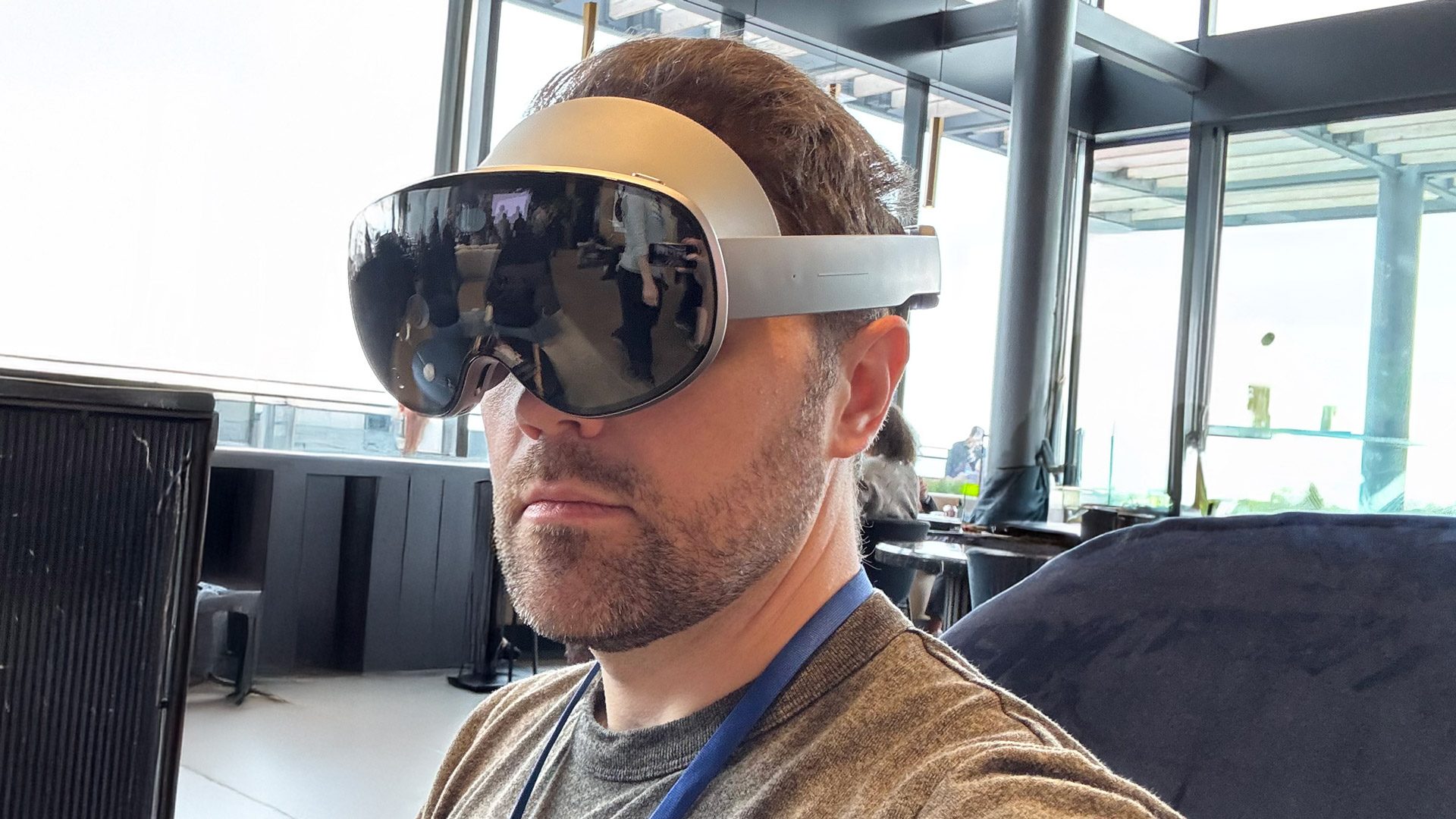
Photo by Road to VR

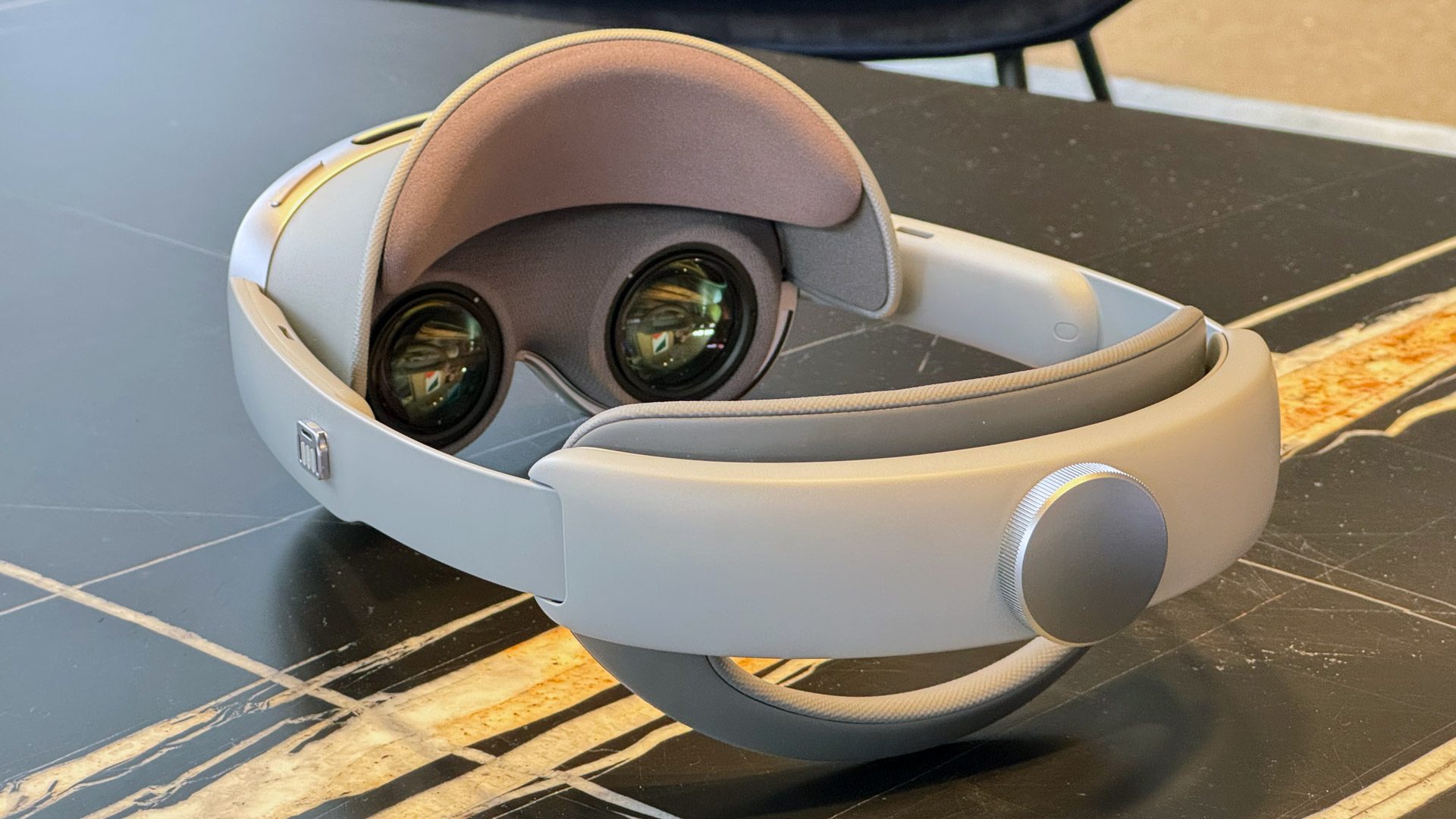
There’s little doubt that Galaxy XR is pulling a lot of inspiration from Vision Pro. The headsets are both in the same ergonomic class with Galaxy XR weighing in at 545g vs. Vision Pro (M2)’s 600g. Both headsets offload additional weight with a tethered battery.

From a display standpoint, both headsets are using micro-OLED displays, with Galaxy XR at 13.6MP (3,552 × 3,840) vs. Vision Pro at 11.7MP (3,660 × 3,200).
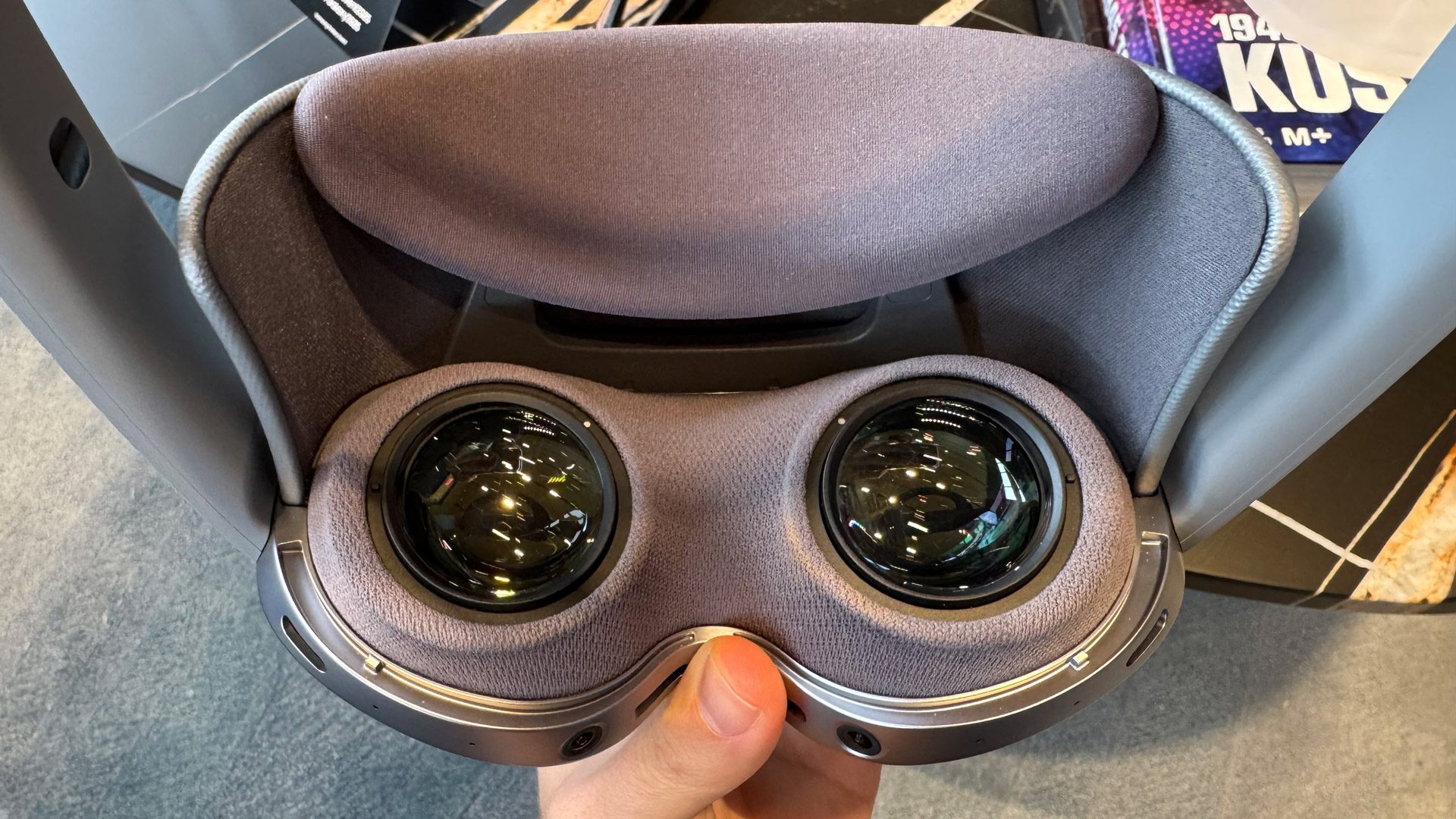
Photo by Road to VR

At its core, Android XR offers up many of the same capabilities as VisionOS.

For instance, the OS is built around a multi-windowed interface where apps float in windows around you and can be freely repositioned using Vision Pro’s ‘look & pinch’ modality (with laser-pointer input as an additional option).
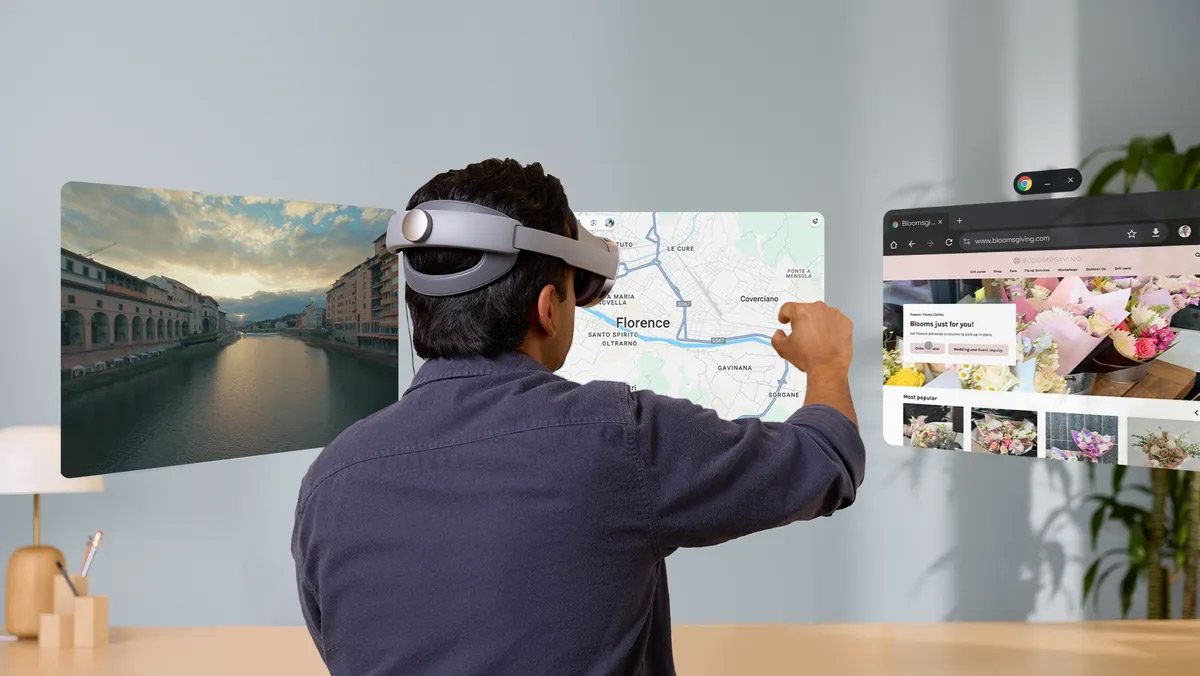
Image courtesy Google

And, like iPad apps on Vision Pro, Android XR can run practically any flat app from the Android store, even if the app hasn’t been customized to take advantage of Android XR.

If you launch Google Photos, you’ll see a version of the app that’s largely flat but has been customized to take advantage of the larger canvas of XR. And, wouldn’t you know it, you can easily make photos in your library 3D with the push of a button. But, unlike Photos on VisionOS, Google Photos can bring your photos to life by turning them into short videos.

View post on imgur.com

Android XR is even getting its own version of photorealistic avatars to compete with Apple’s ‘Personas’. My understanding is that these are being called ‘Lifelike’ avatars, but it’s unclear at this point if they will be included on the headset on day one, or released with a future update.

Google says Galaxy XR will also be able to stream the desktop from your computer to work on a big virtual desktop screen. And, like Vision Pro, Galaxy XR supports optional controllers for more precise input while playing immersive games.
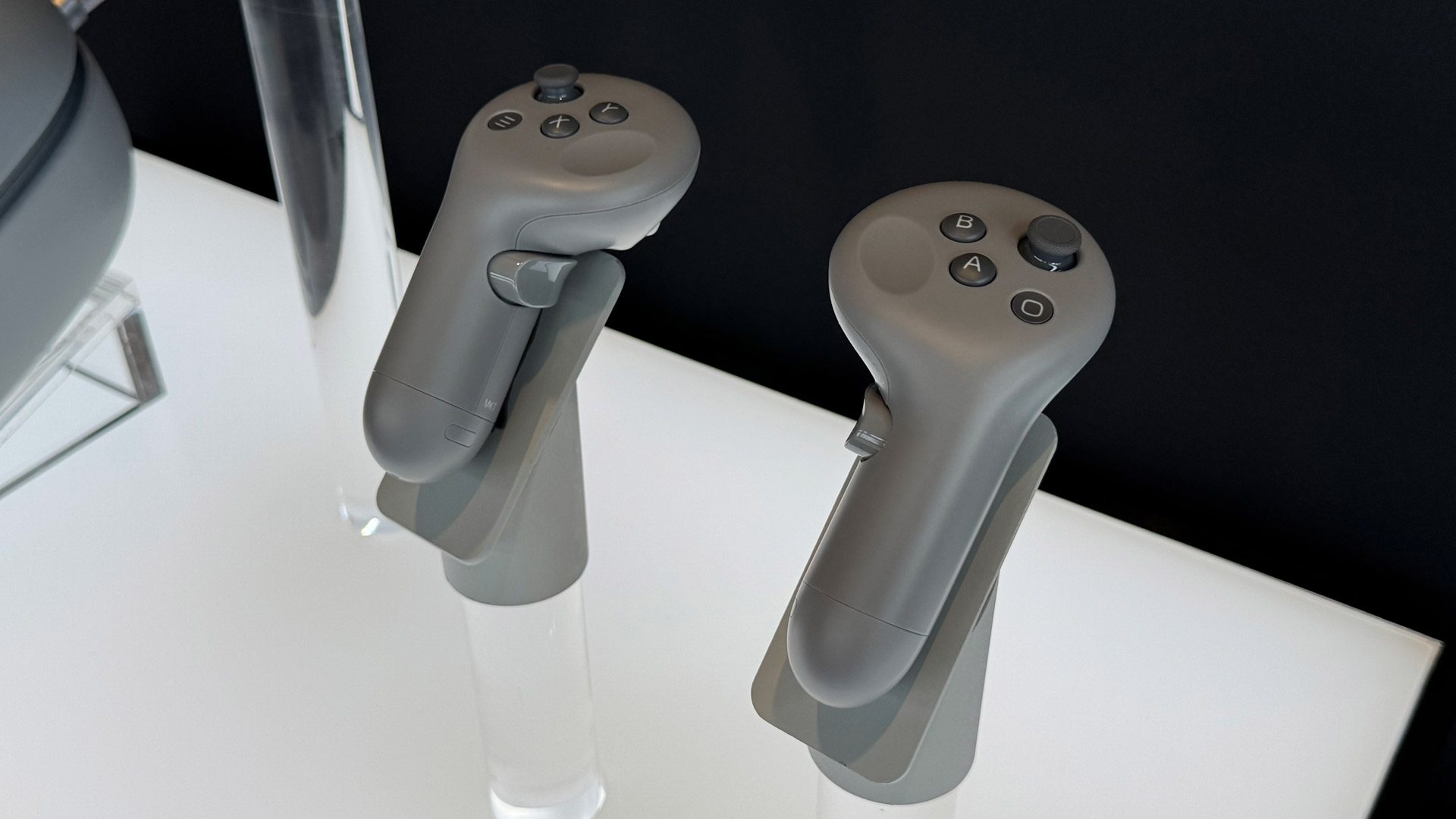
Photo by Road to VR

Unfortunately my brief hands-on with Galaxy XR didn’t include a look at virtual desktop streaming or the headset’s controllers.

Ecosystem Leverage
Feature for feature, Galaxy XR covers most of the basics that are available on Vision Pro. And while Apple has significant ecosystem leverage that makes Vision Pro effortless to use with other Apple devices and services, Google has its own ecosystem leverage that’s being applied to Galaxy XR.

Google has built out custom versions of some of its core apps for Android XR—apps which aren’t even available in their basic iPad form on Vision OS. Perhaps the most consequential of those is YouTube.

Google says the YouTube app supports the large existing library of 180, 360, and 3D content. Additionally, the company is currently working with select channels to automatically convert 2D videos into 3D for a more immersive viewing experience when watched in Galaxy XR. Eventually, the company could open this conversion feature up to any YouTube channel that wants to make their content available in 3D.

SEE ALSO
Valve Says Steam Frame Development Started Even Before Index Was Released

Then there’s Google Maps which offers an experience that’s quite similar to Google Earth VR. So instead of focusing on navigation, users can easily browse an immersive view of the globe to revisit favorite places or explore new ones.

Google is also touting revamped versions of the aforementioned Google Photos, along with Chrome, Search, Meet, and Google TV.

A Contextual Foundation

So we talked about how Galaxy XR has a strong overlap of features and capabilities. And we talked about how Google has its own kind of ecosystem leverage that’s being applied to Android XR. Beyond that, Android XR leverages Google’s Gemini AI assistant in a way that’s clearly superior to what Siri is capable of on Vision Pro.

It’s not just that Gemini is smarter and capable of answering a wider range of questions. In Android XR, Gemini has the ability to ‘see’ both the real-world and the virtual one, just as you see it. This added context amplifies much of what the headset already does.

Take YouTube, for instance. Let’s say you stumble upon a cool game trailer. You could easily ask “Gemini, is this game out yet?” And after an answer you could add a contextual follow-up question like “how much does it cost?”.

Or let’s say you’re swiping through shorts on TikTok and a video with a unique location catches your eye. “Gemini, where is this?” will get you the answer (within reason). And a quick follow-up with “take me there in Google Maps” will launch the app and show you the area so you can keep exploring.

SEE ALSO
'Thief VR: Legacy of Shadow' Comes to All Major VR Headsets in December, New Gameplay Here

You can also ask about what you see in the real-world, and use ‘circle to search’ by circling anything you see to get search results. Though frankly I’m struggling to come up with anything but niche examples where this would be useful. This capability is probably more useful on future devices that you might actually want to take outside of your own home, but Galaxy XR isn’t there yet.
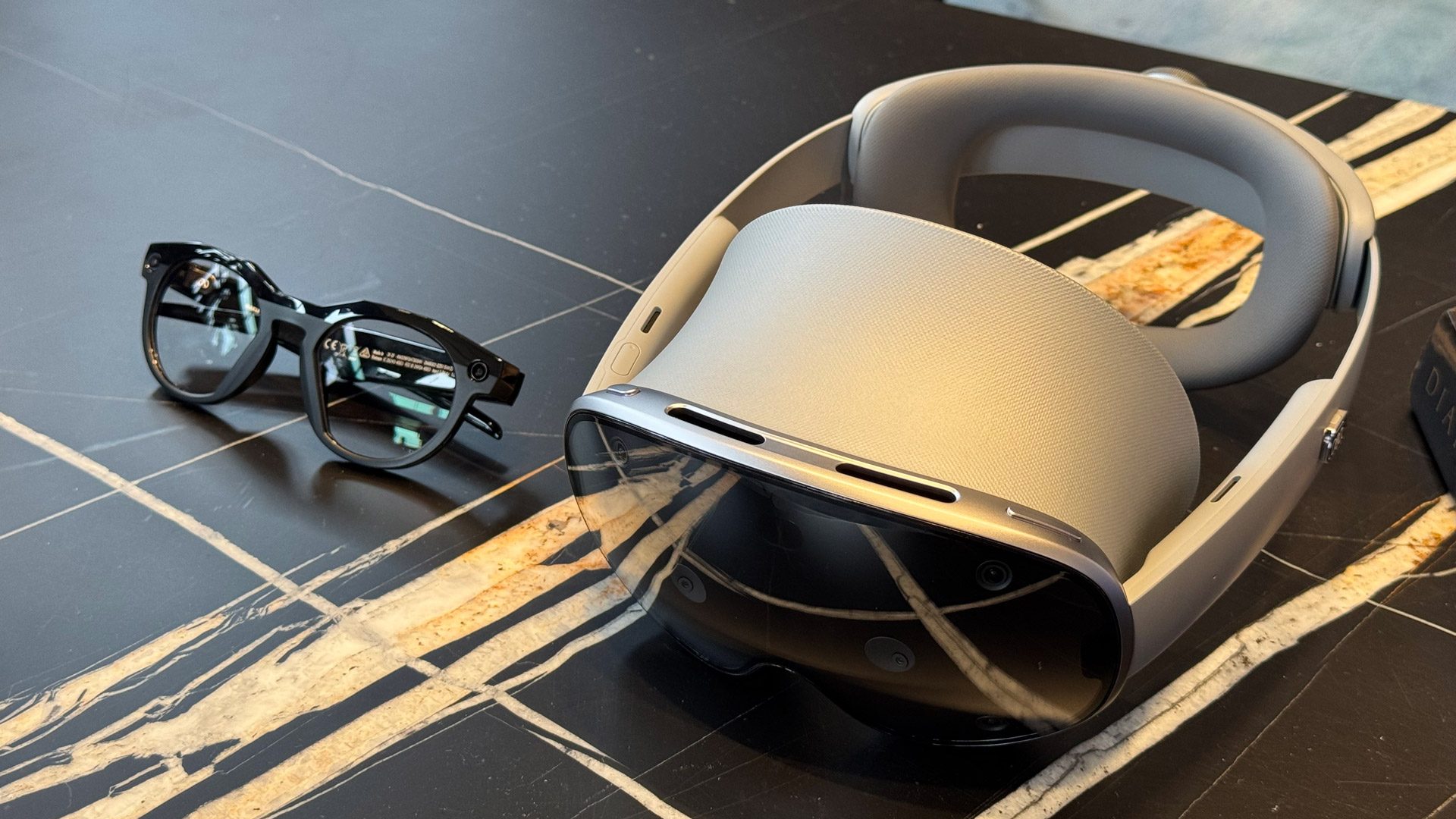
Galaxy XR next to Meta AI glasses | Photo by Road to VR

– – — – –

All-in, Galaxy XR and Android XR look like they’re shaping up to be pretty mature and fully featured. Part of that comes from copying what others have done, but there’s no doubt that there’s some unique aspects to the headset that you won’t find anywhere else, including a surprisingly deep integration with Gemini. Offering this hardware and software at a price that’s half of Vision Pro is a big step forward for the industry at large.
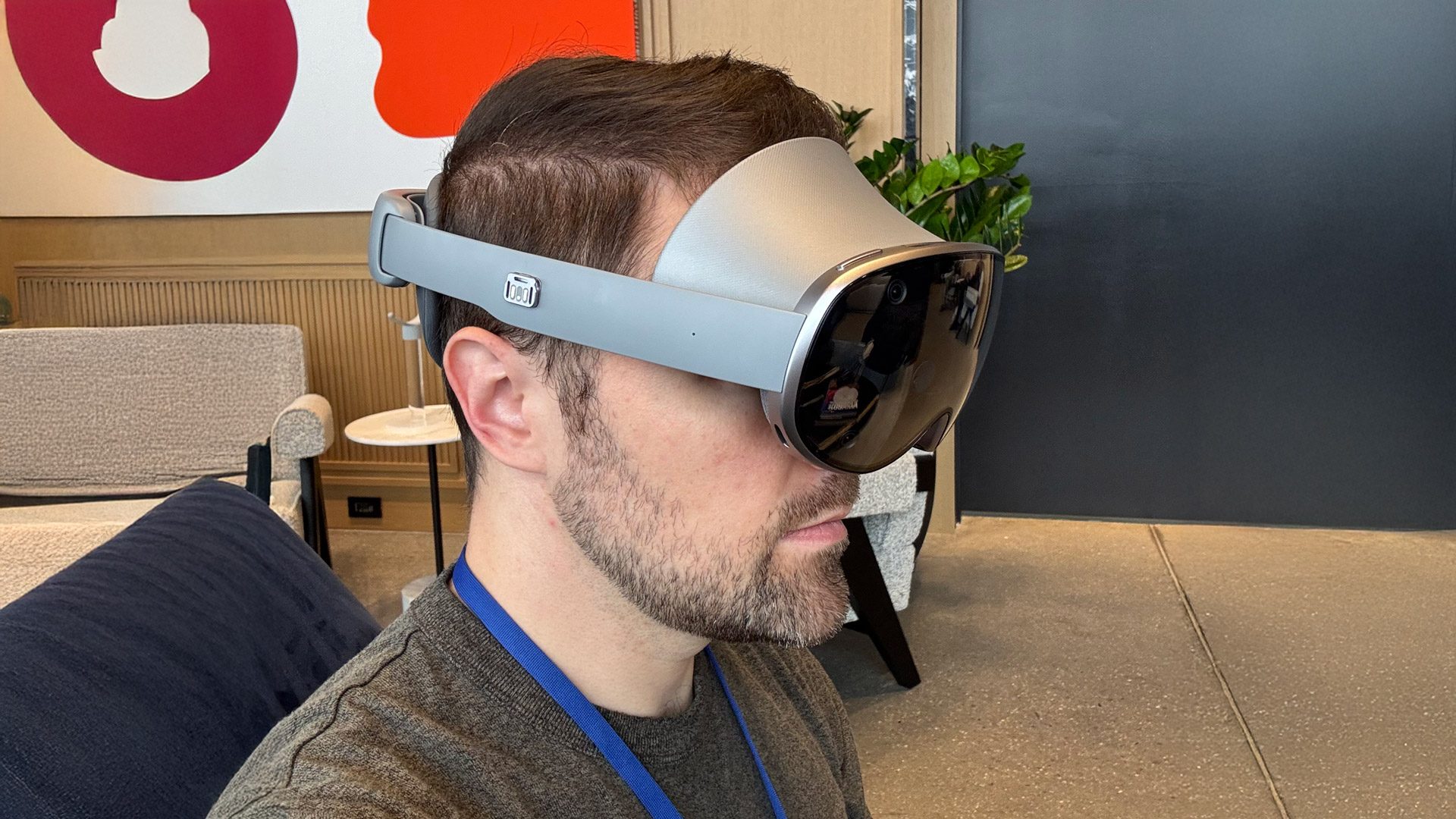
Photo by Road to VR

Even so, will Galaxy XR at ‘only’ $1,800 be worth it? I’ll have to wait for my full review to find out.


This article may contain affiliate links. If you click an affiliate link and buy a product we may receive a small commission which helps support the publication. See here for more information.

Ben is the world's most senior professional analyst solely dedicated to the XR industry, having founded Road to VR in 2011—a year before the Oculus Kickstarter sparked a resurgence that led to the modern XR landscape. He has authored more than 3,000 articles chronicling the evolution of the XR industry over more than a decade. With that unique perspective, Ben has been consistently recognized as one of the most influential voices in XR, giving keynotes and joining panel and podcast discussions at key industry events. He is a self-described "journalist and analyst, not evangelist."
  • XRC

    Look forward to a demo at Samsung Experience (brand store) in London's Kings Cross, once it's available.

    hopefully it will come to the UK unlike the previous Odyssey VR hmd which were never distributed into the UK (or Europe) for the simple reason "not part of our range for the territory" ( straight answer from their marketing staff)

  • Johna

    I think, this device will be as relevant (or irrelevant) for existing vr users, as APV is. Better price, similar issues.

  • Rayza

    No mention of it having the same 3D movies that are on Vision Pro? That's what i was really hoping for

    • bobobj

      It can play 3d content, just not the Apple-produced content for sale on Apple TV+

      • Rayza

        There’s loads of 3D films from the likes of Disney on there, that’s what I’m interested in

  • kakek

    2k vs 3.5k does not place it in a significantly different price bracket.
    I don't know if the SOC is the same level, specially not with the refresh of the vision pro with a M5.

    • Christian Schildwaechter

      TL;DR: M5 3x faster in both CPU and GPU, actually (a lot) more †

      Geekbench 6 Mult-Core CPU benchmark:
      M5: 17,973
      SD8 Gen 2: 5,299

      Geekbench 6 Single-Core CPU benchmark:
      M5: 4,399
      SD8 Gen 2: 1,991

      GFXBENCH Aztec 1440p Offscreen (Metal/Vulkan) GPU benchmark:
      M5: 173.7 FPS
      SD8 Gen 2: 49 FPS

      The M5 values are from the new 14" MacBook Pro. The Pros are actively cooled, which allows them to maintain their speed with almost no thermal throttling even when running on battery, while x86 laptop performance usually crashes the moment you unplug them. This is relevant for the XR2 too.

      I used the Snapdragon 8 Gen 2 for comparison, because it is the base for the XR2 Gen 2, and useful benchmarks for the XR2 are not only hard to come by, but also come with a couple of caveats in actual HMDs. This is being "nice" to Qualcomm, real world XR2(+) results will be worse for a number of reasons.

      For one Meta seriously underclocks the XR2 CPU part in Quest 3 to leave more thermal headroom for the GPU, so the Geekbench values above show more what the silicon could do than how it actually performs. Which is relevant because Samsung could incorporate much better cooling and drive the SoC at higher clock speeds.

      Galaxy XR actually uses an improved XR+ Gen 2 allowing for a 20% higher CPU and 15% higher GPU clock. But all XR2 Gen 2 have a different core configuration, lacking the single 3.2GHz high performance core found in the Snapdragon, instead adding a fourth performance core, but running all performance cores slower. While these run at 2.8GHz on the SD8 Gen 2, Meta said that on Quest 3 they run at 2.05GHz for CPU heavy apps, and only 1.6GHz in GPU heavy apps. The different core configuration is due to VR being a constant load application, while phones mostly switch between burst and idle using high performance or low power cores, both of which were dropped for the XR SoC. To add insult to injury, at least the XR2 (without plus) is manufactured on an older process node sufficient for the overall lower clock speeds, making it less efficient than the matching SD8.

      † This in effect means that the SD8 should score significantly higher in a (short) benchmark than the XR2, while the XR2 could sustain a lower performance level for longer without resorting to thermal throttling that would be very disruptive for a VR experience. Practically this means that just based on the SoC, the difference between M5 and XR2+ Gen 2 is even larger than the benchmarks above suggest. And because the AVP uses an additional R1 signal processor that does all the sensor data analysis, image processing and passthrough by itself, leaving the M5 completely to OS and apps. while all sensors connect directly to the XR2+ Gen 2 that has to do all these tasks in parallel to OS and apps, the peak performance gap grows even more.

  • MosBen

    At $1,800 it's well outside what most people will be willing to spend on a toy, so in order to justify itself it has to be something that people use for productivity on a regular basis. I just don't see it, at least yet. I think that at half the weight and half the price you get into the realm of an iPad, which most people don't really need, but they're useful enough and fun enough to be a big splurge every few years. Until then it seems like this will may see some adoption in the Enterprise sector, where I remember reading that AVP has done a bit better. It's good that the AVP has some competition, and hopefully both Apple and Samsung stick with it for at least a couple more generations, which will hopefully let them create something a bit more consumer friendly.

  • xyzs

    Good to see they cut the price to make it less unaffordable than AVP.

    I am curious to see how well Android XR OS will do now, and if this gain traction.
    I still think that it would be unfair that Google after abandoning XR for years, gets more popularity than Meta with their ecosystem, but Meta really did a poor job at doing a very homogeneous and polished OS (not even mentioning their store that is more of a mess than a garage sale)

    The specs are interesting: 4k per eye OLED, eye tracking, battery offloaded, basically all the specs (minus a decent FOV) we would be dreaming for a Quest 4 (Pro).

  • Dragon Marble

    This is a 4k micro-OLED PCVR + Standalone headset with eye tracking from Samsung backed by Google. Whatever Valve still has in its slow cooker is irrelevant now.

    • Christian Schildwaechter

      TL;DR: Samsung has built a neat prototype to demonstrate what Google believes people will do in the future with their Gemini AI on smartglasses. That prototype has great displays and eye tracking, which make it usable for PCVR, but otherwise is pretty useless for gaming, and you won't be able to buy one anyway. Valve will release a much faster gaming HMD capable of playing PCVR games, with tons of speed improvements and customization options thanks to running an operating system optimized specifically for gaming, and sold basically at cost, because their money comes from Steam. Guess which one will become irrelevant to gamers.

      Samsung has apparently only build 100K units that will only be released in South Korea to test user reception. They won't bundle 6DoF controllers which almost certainly is not due to price, but because Google wants to force AndroidXR developers to target hand and eye tracking. The optional controllers costing as much as a Quest 3S during an Amazon sale will only be used by a few (mostly ported) games and PCVR streaming. With the low sales and limit to Samsung's home market, there won't be a lot of incentive for game developers to even port Quest games, and basically zero incentive to create custom games that might actually utilize the 4K displays anytime soon.

      But the XR2+ Gen 2 used in Galaxy XR isn't powerful for that anyway at only about 15% more GPU, 20% more CPU than the XR2 Gen 2 in Quest 3 that only has to drive 1/3rd the pixel count. And it will still struggle with ETFR like the XR2+ Gen 1 in Quest Pro, because ETFR requires a lot of CPU power, and the performance gains from Gen 1 to Gen 2 were mostly about the GPU. This basically relegates the Galaxy XR for gamers to a 4K streaming device similar to the Play for Dream or Pimax Dream Air, only the latter may actually be available outside of South Korea.

      If Valve is indeed working on a standalone HMD and manages to ship it by mid 2026, it will very likely be able to play existing Steam games, both flat (90K+) and VR (5K+), in addition to streaming from a high end PC at a higher quality than even the latest AMD mobile APUs would allow. It will definitely include controllers, with Valve probably also offering a hand tracking solution for convenience, but otherwise heavily relying on the Roy 6DoF controllers suitable for both flat and VR games, supported by the incredible powerful Steam Input system on SteamOS. Simply because Valve as a gaming company will release a gaming focused HMD for gamers, while Google is a search/advertising company longterm aiming for the largest possible audience with AndroidXR by making it a mostly AI driven preview of future smartglasses.

      And with Google draining all the software revenue in their Play Store, Samsung has to sell even future versions that may ship outside of South Korea with a significant margin, while Valve is making all their money from game sales on Steam. The Steam Deck was already offered pretty much at cost, with Valve even hoping others would copy it, and offering SteamOS for free, as more people playing games on Steam Deck or clones still means more game sales for them. They will probably do something similar with Deckard, so besides being optimized for gaming with more powerful hardware and actually targeting gamers, the cost/benefit of Valve's HMD will very likely be a lot better simply because they don't have to make money from the hardware. The rumored price for Deckard is USD 1200, while a Galaxy XR with controllers goes for USD 2050, about 70% more. And if you live in Northern America or Europe, you'll actually be able to order a Deckard.

      AndroidXR is mostly a bet on the future that may in ten years lead to lots of cheap, capable HMDs from lots of companies selling lots of them due to being able to also run flat Android apps, and thereby drawing both existing Android users and (game) developers. Or zero Android HMDs, because Google shifted all their attention to smartglasses. As a Steam Deck owner I am pretty sure that Deckard using SteamOS instead of AndroidXR alone will make whatever Samsung can offer today pretty much irrelevant for VR gamers.

      Today Galaxy XR is basically a polished prototype without a lot of useful (XR) apps and relying on AI functionality that nobody really asked for as its unique selling point. Maybe that's what most people are actually looking for, but I seriously doubt that's what most VR gamers want or care about. The sole reason it gets attention here is that it offers hires microOLEDs at half the retail price of extremely expensive AVP, which kind of makes it look a relative bargain. It is not.

      • Dragon Marble

        As a PCVR user I do not want an HMD that can render the games by itself. More weight to my face for lower performance, why?

        How many Steam users have Steam Deck? 1%? That's how much people are interested in playing their Steam flat games away from their PCs. If Steam Frame end up being standalone it'll be 1% of 1%.

        • Christian Schildwaechter

          The last official number of Steam users we got was 130M from 2021. About 6M Steam Decks had sold by February 2025, so about 4.5% of all active Steam users.

          The comparison comes with some caveats. The 130M were given during the CoViD-19 pandemic, when gaming experienced an all time high, falling back later. Steam itself has grown a lot during the last few years, so the number of active users might be higher. A lot of that growth was from Chinese users playing in dedicated internet cafes though, so people who don't even play on/have their own computer, so it is unclear if they should be included.

          And finally the Steam Deck was exclusive to North America and Europe for the first year, then released in Japan, South Corea, Taiwan and Hong Kong, while Australia and New Zealand only got it less than a year ago, 33 months after the launch, or three months before the 6M sold Steam Decks were reported this February. So it is very likely they sold more by now, and that a lot more than 4.5% of the active Steam users that actually could order a Steam Deck did so, it just isn't available in most places.

          And yes, there is a (tiny) enthusiast market with already decked out PCs for VR that only want the lightest possible untethered HMD for streaming, but this market will only ever be targeted by a niche company like Bigscreen at high prices. And a lot of enthusiasts will probably be disappointed how similar it will be in size and weight to standalones due to power and processing needs for pancake lenses, Wifi streaming, video decoding and camera data analysis for tracking.

          The vast majority plays on standalone HMDs, and will tolerate a higher weight for the added functionality and often lower price. With Deckard Valve is apparently also aiming for the 98% of Steam users not playing VR games, a group where many have adopted the standalone Steam Deck to stream flat games from their regular gaming PC via Steam Remote Play to their bed/bath/living room, not unsimilar to what PCVR gamers do. But these are again a minority.

          While at least initially most Steam Deck buyers already owned a PC with a huge Steam games library that justified buying another device, and you could play AAA titles in a decent way, over time the common usage pattern turned towards playing more indie titles that benefit a lot from the convenience of play-everywhere and instant-pause, while most AAA can't really play out their graphical strength on a small 7" display. It didn't stop people from using the Steam games, instead they adapted their play style to what works best while playing on the standalone. These would look better on a virtual 150" screen inside an HMD that might even be able to play them locally on a mobile APU if Valve finds a way to run ETFR on flat games with the help of the SteamOS Gamescope compositor/virtual framebuffer, something that couldn't have worked on a Steam Deck.

          [I'll probably start using "Frame" once it is announced and not just some data mined trademark.]

  • Christian Schildwaechter

    (Way) TL;DR: Both AVP and Galaxy XR will only become relevant with future lighter and cheaper consumer versions, with the first iteration mostly targeting a small number of devs and first movers serving as guinea pigs; while Apple uses AVP to extend their existing ecosystem into XR, Google is mostly positioning AndroidXR as super-powerful smartglasses that currently can't be worn outside; both approaches, picked to utilize each company's strengths, are currently mostly impractical for price/weight/technical reasons, and again will only become viable with future consumer devices, but are already interesting due to their very different goals and ways to get there.

    I doubt that at USD 1800 Samsung sees the Galaxy XR any more as a consumer mass device than Apple does with AVP at USD 3500. Both are very polished development kits to test their XR HMDs in the wild and see how the few first movers/buyers actually use them. AFAIR Samsung's sales projections were even way lower than Apple's. This makes the price comparison somewhat moot.

    The more interesting part is how the devices are positioned, with Apple mostly counting on people already in their ecosystem to pretty much continue doing what they did before, only in a souped up way wearing a headset. AVP heavily relies on existing iPad apps, content from Apple TV and services like FaceTime that connect AVP users with users on other Apple device, often with extra content available/viewable only on the HMD. In that way AVP is much more evolutionary, aiming for a very smooth experience and integration into what users already know and use.

    Samsung/Google on the other hand assume that users will use the HMD in very new ways that so far haven't been available. They also rely on Google apps/services, but emphasize their integration with the Gemini AI, not just using the same apps with hand/eye tracking. This is a much bigger bet than Apple is making, but Google doesn't really have a choice here. They lack a service like Apple TV with plenty of licensed high bitrate content and self-produced high profile productions like Severance. You can buy/rent movies on YouTube, but it is more known for its high compression rates, aimed more at phones than 4K HMDs. Google's multiple attempts to establish a messenger also didn't work out, with Meta's WhatsApp dominating in most of the world, and Apple's FaceTime/iMessage service dominating in the US. AVP users have about 1B other FaceTime users to connect and talk to as their Personas, while it is not entirely clear with whom AndroidXR users are supposed to communicate as their ‘Lifelike’ avatar. Google is instead focusing on an area where Apple is currently trailing, AI and capable personal assistants.

    While the basic HMD technology is somewhat similar, the concepts are rather different. AndroidXR's suggested use cases seem much closer to Meta's smartglasses than to AVP, with the problem that these use case make most sense outside where smartglasses are worn, but XR HMDs are not. But this again may be irrelevant if the current Galaxy XR is mostly a test balloon for developers, and only later iterations can show how viable the concept is. And it makes AndroidXR a prototype for future, much more powerful smartglasses. So Google's bet could eventually pay out a lot even if XR HMDs themselves never gain a lot of traction, but smartglasses do.

    The Meta smartglasses themselves are somewhat unproven. They no doubt sell a lot, but so far their main uses seem to be protecting the eyes from the sun and making a fashion statement, followed at some distance by taking pictures, and then with much larger distance by the actual smart features AndroidXR is betting on. The newly released Meta Ray-Ban Display glasses apparently increase the usefulness of the smart features a lot, but at the same time double the price while being a lot clunkier, interfering with the very important "fashion statement" function. So their success is not ensured either.

    The technical differences between AVP and Galaxy XR are mostly driven by necessity, and much more boring. Both use Sony microOLEDs, Apple an earlier version that suffered from low yields, leading to a very high price of USD 700, (close to) half of the production costs. Apple has access to faster SoCs from their notebook/tablet lines, and added another very fast/expensive R1 co-processor to handle sensors/tracking/passthrough, while Samsung has to rely on a Qualcomm SoC derived from their 2023 top chip SD 8 Gen 3 targeting mobile phones, now slightly faster (15% GPU, 20% CPU) due to process improvements.

    Build cost estimates for AVP were USD 1400-1800, meaning AVP would be sold with a 49%-60% markup on top of production costs, much higher than Apple's 40% average margin on iPhones etc. (all models, high and lower end). Apple can significantly lower the cost in future Vision models by switching to their cheaper A-series SoC from iPhones that would also lower the power requirements and possible the extra R1 chip, and no longer using the insanely expensive 1st gen Sony microOLED displays.

    Samsung's profit margin on their (high end) phones is about 55%-63%, but until we see teardowns and BOM estimates, we have no way of knowing whether for the Galaxy XR they apply a higher than average margin like Apple does on AVP, or actually a lower than average one to establish the device. Samsung uses slower/simpler silicon (esp. compared to the new AVP M5), very likely heavily relied on Qualcomm's reference platform, and avoided expensive in-house silicon development. But as Qualcomm has dramatically increased SoC prices in the last few years, it is unclear if this gives them advantage in lower build costs. They should at least pay less than Apple for the microOLEDs, simply by using 18 months newer ones created on a less "experimental" process. It seems very likely that the Galaxy XR build costs are significantly lower overall, though probably not only half that of AVP as the retail price implies. As Samsung uses AndroidXR and Google's Play store, they won't make extra profits from app sales like Meta or Apple, instead they'd have to rely on the device price for all their (future) earnings.

    Basically both AVP and Galaxy XR in their current form won't be representative regarding used technology, weight or price for the XR HMDs Apple and Samsung release in a few years, but they hint where both Apple and Google expect XR to go conceptually.

  • gothicvillas

    Reports of FOV noticeably smaller than Quest 3… Wow. I find quest 3 almost unbearably small. Totally lost any interest

  • I can't wait for the full review

  • eadVrim

    I don't trust Samsung gadgets anymore, except for smartphones cause of my obsolet Gear 360 camera after 3 years of launching. they removed the Android App without any respect for customers.